The best leaf-cleaning robot depends on whether the leaves are floating or sunk.
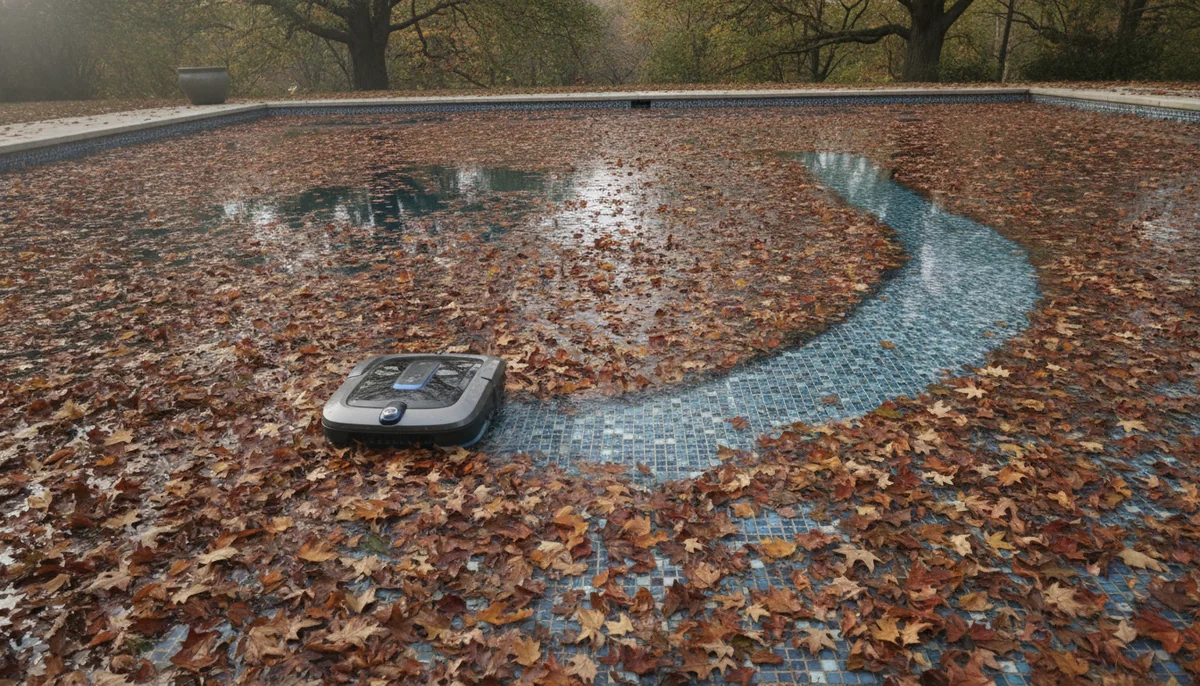
Leaves create two separate cleanup jobs. A surface skimmer intercepts dry leaves, blossoms, insects, pollen and grass before they become waterlogged, while a conventional pool robot vacuums the material that reaches the floor. Wall climbing, waterline scrubbing and surface parking do not turn an underwater vacuum into a skimmer.
That distinction puts the Betta SE Plus at the top of this page. Its solar patrol, simple top-access basket and adapter-charging fallback make it the most convincing preventive choice for a pool receiving steady leaf fall. The drawback is fundamental rather than cosmetic: it never cleans the floor, walls or steps.
If leaves are already on the bottom, the recommendation changes. The Beatbot Sora 70 is the strongest one-machine compromise because it has an actual surface mode as well as underwater cleaning, while the Dolphin Proteus DX3 and Nautilus models make more sense when repeatable floor cleanup matters more than eliminating a cord. None of them makes a leaf rake obsolete after a storm.
Readers deciding between two separate machines should start with our guide to a robotic skimmer versus an underwater vacuum. The short version is simple: a dedicated skimmer prevents tomorrow’s floor pile, and a floor robot removes the pile that prevention missed.
Choose the debris zone before the machine.
A pool beneath trees usually exposes the weakness of a single all-purpose ranking. Continuous fallout rewards a robot that can remain at the surface, but wet leaves, acorns and seed pods eventually demand a larger underwater basket and enough traction to cross the floor. When both layers stay dirty, two specialists can work simultaneously and place less pressure on either basket.
Floating leaves should be intercepted.
Choose a dedicated surface skimmer when the debris spends hours drifting before it sinks, especially if the fixed skimmer misses wind-driven corners or the pump does not run continuously.
Settled leaves need suction and retention.
Choose an underwater robot when the difficult chore is recovering waterlogged leaves from the floor, then favor basket access and repeat-cycle practicality over an impressive flow-rate claim.
Storm debris still needs triage.
Net out branches, palm fragments and dense leaf mats before deploying a robot because an oversized object can obstruct the intake and a packed basket can end useful cleaning long before the battery expires.
| What you see | Best tool | What matters most | The catch |
|---|---|---|---|
| Fresh leaves drifting all day | Dedicated surface robot | Patrol time, basket retention and charging resilience | It cannot vacuum the bottom |
| Waterlogged leaves on an open floor | Underwater pool robot | Intake size, basket capacity and easy repeat cycles | It cannot intercept new floating debris |
| Leaves on both levels | Two specialists or a true combination robot | Simultaneous coverage versus one-machine convenience | Two machines add maintenance, while one machine divides its time |
| Leaves followed by sand or silt | Coarse pass, then fine-filter pass | Preserving flow during the first load | Fine media can clog early during leaf cleanup |
| A post-storm mat with sticks | Leaf net before any robot | Protecting the intake and preserving basket space | No maintenance robot is a debris excavator |
Basket capacity beats fantasy runtime.
A seven-hour battery is irrelevant if wet leaves pack the filter in forty minutes. An overfilled basket can reduce flow, weaken wall traction or hold an intake flap open during retrieval. Empty the container before it is compressed solid, and use standard or coarse filtration for the first pass. Save the fine insert for the remaining dust, sand or silt; our separate guide covers robots designed for fine settled debris.
Pool geometry gets the final vote.
Random routes and branded navigation systems both lose time around raised drains, ladders, sharp transitions, narrow steps and tanning ledges. Brush stranded leaves onto the open floor before a run, and judge a skimmer during the first pump-on cycle because return jets and built-in skimmer suction can dominate its route. A cleaner advertised for a large area is not guaranteed to cover every feature in one cycle.
Corded and cordless cleaners fail differently.
A corded Dolphin can start another cycle as soon as its basket is rinsed, which is valuable during seasonal leaf fall. Cordless robots remove the cable but add wet retrieval, charge-port drying, battery aging and recharge delays. The broader tradeoff is covered in our corded versus cordless guide.
The ranking follows the leaves, not the feature count.
The first three picks are dedicated surface skimmers because floating debris is the job most ordinary pool vacuums cannot perform. The underwater cleaners that follow earn their places for particular pools, leaf loads or budgets, and the weakest entries remain here so their tempting claims can be judged against the evidence.
Betta SE Plus is the best first line against daily floating leaves.
Its solar operation, top-access basket, remote and adapter-charging fallback make it the most resilient dedicated skimmer for most leaf-prone pools.
Random coverage can leave corner piles waiting, and the robot can be trapped by strong skimmer suction, hoses, shelves or awkward pool furniture.
Dolphin Nautilus CC is the established corded pick for routine bottom leaves.
Its active brush, convenient top basket and repeatable two-hour cycles suit straightforward pools where oak leaves, acorns, pine straw and ordinary debris settle on the floor.
The non-swivel cable can tangle, the basket may need an interim empty during heavy fall, and steps or ledges usually need brushing.
Betta SE is the simpler solar-only choice for reliably sunny pools.
It has a strong record of collecting leaves, bugs, pollen and pet hair with an easy top basket and no app setup.
Persistent shade or gloomy weather can stop it because there is no plug-in charging fallback, and propulsion failures appear in the ownership record.
AIPER EcoSurfer S2 favors pollen control and app features over heavy leaf speed.
Its finer listed mesh, DebrisGuard basket, solar and wired charging, battery status and scheduling controls make it appealing for petals, tiny insects, hair and fine floaters.
The modest basket and slower intake are weaker under concentrated leaf fall, while repeated propeller, impeller and basket-drive complaints cloud the ownership case.
AIPER Scuba V3 is the quickest targeted hunter for visible sunk leaves.
Its camera found every deliberately placed leaf in eight minutes during a standardized comparison, making it useful for a fast pre-swim floor pass.
It showed much weaker coverage on walls and pool features, stirred fine sediment and still cannot collect anything floating above it.
WYBOT A1 is a budget floor sweeper rather than a leaf specialist.
It can collect loose dirt, insects and smaller leaves when its random route crosses them in a flat, obstacle-free pool.
Large leaves are inconsistent, capacity is limited, there is no active brush and slopes, wrinkles or drains can stop it.
Betta Flex is an interesting soft-touch skimmer that remains largely unproven.
Its solar-only design, dual cleaning modes and stated compatibility with several pool types make it a plausible alternative for gentle surface patrol.
The available record is too thin to show that it handles leaves better or lasts longer than the established Betta SE models.
Aiper Scuba S1 suits open floors with leaves followed by fine residue.
Its coarse basket and replaceable fine layer support a sensible two-pass routine for ordinary leaves first and finer settled material afterward.
The fine layer loads quickly, complex geometry reduces coverage and charging, motor, corrosion and water-ingress reports make durability the central concern.
Lodoba SAT25 is a documentation-light gamble for routine sunk leaves.
Working examples support ordinary leaf pickup, straight-wall climbing and useful maintenance cleaning in a straightforward pool.
Basket size, filtration, wet weight, warranty, parts supply and long-term battery support remain unresolved despite ambitious runtime and coverage claims.
Dolphin E10 is the corded floor pick for a smaller above-ground pool.
Its active brush, top-load basket and immediate repeatability after a ninety-minute cycle give it an advantage during recurring bottom-leaf cleanup.
It does not reliably clean walls or the waterline, and cord reach, tangling, lid problems and support complaints deserve attention.
iGarden K36 offers capacity and runtime without dependable coverage.
A healthy unit can collect leaves, insects, hair and ordinary dirt into a roomy basket during long cordless runs.
Broad missed strips, flipping, short-runtime reports and early errors make its headline endurance a poor reason to choose it.
AIPER Seagull SE is a cheap helper for scattered leaves on a flat floor.
It is light, simple to deploy and capable of collecting small leaves, bugs and pine needles when its random route reaches them.
The small chamber, floor-only scope, inconsistent route and recurring battery or charging failures keep it out of serious tree-duty service.
Beatbot Sora 30 in blue is the premium underwater pick for leaf-covered ledges.
Its large basket, long battery reserve and ability to reach a sufficiently deep tanning ledge give it a coherent role where ordinary leaves settle on several underwater levels.
Its fourth cleaning zone is a shallow platform rather than the surface, and the included filter is not designed to polish the finest silt.
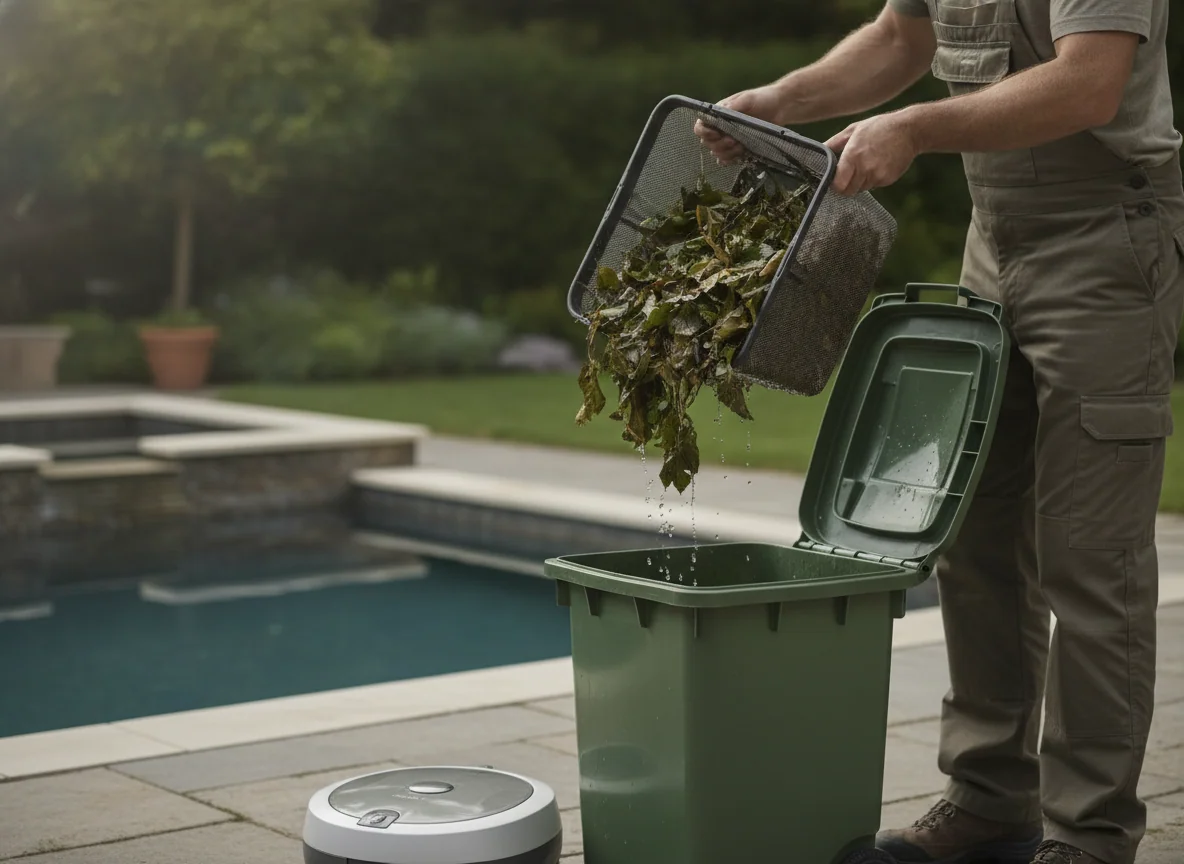
Vidapool’s large-basket solar skimmer is too failure-prone to recommend.
The unusually large open basket can hold substantial leaves, pollen and pet hair when the robot is working correctly.
Power failures, torn mesh, corroded solar contacts, broken propulsion parts and poor parts support outweigh that capacity advantage.
AIPER Scuba 2025 is a small floor helper for a maintained above-ground pool.
It can recover scattered leaves and larger loose debris from a smooth, flat floor without a hose or power cable.
Random movement, a small chassis, floor-only reach and early battery problems make it unsuitable for heavy loads or uneven liners.
WYBOT B1 brings wall climbing to routine leaf pickup with too many caveats.
Working units collect ordinary leaves, grit and visible debris while remaining lighter to carry than many full-size tracked cleaners.
The small basket, repetitive coverage, awkward latch, retrieval spillback and a reported water-ingress failure weaken the value proposition.
Lodoba SAT20 Pro is a plausible value vacuum for uncomplicated pools.
Its working record supports routine leaves, bugs, sand and credible wall climbing when the floor and transitions are straightforward.
The route can be random, rounded steps and drains can trap it, and no established basket capacity or service path supports a heavy-leaf claim.
Dolphin Nautilus CC Pro is the corded choice for larger inground pools and real waterline work.
Its roomy top basket, active brush, swivel cable and immediate repeat cycles form a strong underwater package for ordinary leaves and grit.
Coverage can remain incomplete around complex features, fine filtration may require another kit and exact warranty or repair logistics need verification.
Nepturox SAT25 cleans leaves when it works, but buying one is a quality-control wager.
A healthy unit can collect leaves, grass, dirt and grit while delivering credible wall and waterline climbing.
Arrival-day charging failures, repetitive routing, drain hang-ups, unclear basket capacity and uncertain parts support prevent a best-pick verdict.
BUBLUE F10 is the powered skimmer for small pools with concentrated surface litter.
Its active intake and large basket have convincing support for leaves, blossoms, insects and thin needles in pools where daily manual charging is acceptable.
Shorter owner-reported runtime, occasional fine-debris escape, step stranding and a bulky wet lift limit its set-and-forget appeal.
ZYERCH is a poor long-term bet for dependable leaf duty.
A healthy new unit can collect routine dirt and some organic debris while climbing conventional walls.
Inconsistent leaf pickup, narrow repeated lanes, charging failures and a concentrated pattern of second-season deterioration make avoidance the safer decision.
Beatbot AquaSense 2 Pro is the luxury one-machine compromise for both pool levels.
It can collect ordinary bottom leaves and perform genuine surface passes for a buyer who refuses a cord and does not want two separate robots.
Surface capture is inconsistent, debris can escape during turns, fine silt remains difficult and the heavy body must still be lifted, rinsed and charged.
BOTLUXE PC10 has leaf-friendly hardware without trustworthy ownership support.
Its large basket and routine-debris filtration can handle leaves, bugs, hair and visible grit in a simple pool.
Runtime variation, wheelies, deep-end parking, early movement failure and unclear warranty responsibility make it difficult to recommend.
iGarden KN Series is better with small leaves than broad tree debris.
Its basket and long cordless cycle can collect routine dirt, insects, sand and dispersed smaller leaves in a predictable pool.
An exact owner found that it pushed larger debris, while ladders, steps and raised fixtures can consume the cycle without useful coverage.
Dolphin Proteus DX3 is the best corded alternative for repeated settled-leaf cycles.
It has credible support for leaves, blossoms, oak tassels, insects and sand, plus a top basket that can be rinsed before an immediate second run.
The non-swivel cord can twist, the basket is not oversized and steps, ledges or sustained waterline cleaning remain inconsistent.
Beatbot Sora 30 in orange is the same ledge-focused underwater cleaner in a brighter shell.
Its large basket, tracked movement and shallow-platform capability make it useful when leaves collect on a broad ledge as well as the main floor.
Surface parking only aids retrieval, so floating leaves still require a skimmer and fine residue may defeat the standard filter.
This green Aiper Scuba is promising only after the exact model is confirmed.
The available ownership record supports ordinary oak leaves and a useful coarse-first, fine-second cleaning routine resembling the Scuba S3.
The vague listing identity, early cord and battery complaints, drain hang-ups and short ownership history make checkout verification essential.
Curalk H1 is the nominal surface robot that should be avoided.
Its exact record repeatedly shows a machine moving around the surface without creating enough useful intake flow to fill the basket.
Owners reported empty baskets amid leaves, pine needles and bugs, along with failed solar charging, water ingress and early breakdowns.
Beatbot Sora 70 is the strongest true all-in-one for floating and settled leaves.
Its active surface mode, large basket and underwater floor, wall, waterline and shallow-zone cleaning make it the best alternative to owning two machines.
Surface patrol is intermittent rather than continuous, broad leaves can obstruct flow and the standard filter is not a fine-silt specialist.
Aiper Scuba S1 2026 is a conditional pick for leaves followed by fine sediment.
Its standard basket and documented fine layer support staged cleaning in a simple pool with an open floor.
The longest runtime applies only to Eco maintenance, the fine layer can choke flow and the wider S1 record carries substantial durability concerns.
TALOSBO C1 is the value pick for settled leaves and sand in a simple pool.
Its two-stage filtration and credible mixed-debris pickup offer useful cordless maintenance when a conventional shape lets repeated routes cover the floor.
Oval and obstacle-heavy pools expose inefficient navigation, while the small basket and thin construction limit confidence under heavy leaf fall.
Pooleco S110 is an inexpensive floor helper with an immature record.
Early owners report useful collection of leaves, insects, grass and sand in smaller, relatively open pools.
The evidence is uniformly early and positive, with no meaningful record for durability, replacement parts, battery service or demanding geometry.
PoolMr is the cheap above-ground helper for smaller routine leaves.
Repeated passes can clean ordinary leaves, twigs, sand and dirt from a flat or gently sloped floor without reconnecting a hose vacuum.
Large leaves, storm debris, ladders and missing documentation for chargers, filters and service sharply narrow the recommendation.
This renewed Aiper is a low-cost gamble for a perfectly flat floor.
It can provide useful daily debris pickup in a simple round above-ground pool when the battery arrives healthy.
Creases can strand it, dead algae may be spread rather than retained and the renewed listing does not resolve battery history.
The renewed Aiper Scuba N1 needs written battery and warranty proof before purchase.
The underlying N1 design can collect baskets of bottom leaves while cleaning walls and the waterline in compatible pools.
The listing does not clearly document the refurbisher, battery test, included accessories, exact warranty or even consistent model identity.
Beatbot A100 Pro is an underwater cleaner first and a weak skimmer second.
The closely related AquaSense Pro platform showed strong open-floor leaf recovery, so the machine is most credible as a large cordless vacuum.
Controlled surface results were poor enough that the five-in-one label should not replace a dedicated skimmer recommendation, and exact-model evidence remains sparse.
Renewed Beatbot AquaSense 2 Ultra is the camera-guided choice for conspicuous sunk leaves.
Testing showed the camera deliberately finding nine of ten newly added floor leaves after the original debris had already been cleared.
Surface collection remained weak, the body is exceptionally heavy and renewed battery or sensor condition can erase the advantage.
BUBLUE Bubot 300P is a narrow bet for a smooth above-ground floor.
When it keeps moving, the lightweight body can recover leaves, bugs, grit and sand while remaining easy to lift.
Repeated wall stops, liner sensitivity, random coverage and premature parking make even a favorable pool dependent on return protection.
BUBLUE Bubot 800P Gen2 is the high-capacity corded alternative for settled leaves.
Its twin top baskets and continuous power allow substantial leaf collection followed by another cycle without waiting for a battery.
Cable knots, incomplete-coverage reports, app failure, warranty conflict and an immature support record prevent a safe default recommendation.
iGarden K70 is the long-runtime option for recurring leaves on an open floor.
Its tracked chassis, active brushes and extended floor-only program provide substantial cordless headroom for light or moderate recurring debris.
The basket can fill long before the battery expires, and the heavy wet lift, unclear fine-filter contents and charging-port care remain real obligations.
WYBOT C1 is a conditional budget cleaner for ordinary settled leaves.
Working units can collect large leaves and sand from an open maintained pool with simple walls and a manageable one-charge route.
Peak leaf fall requires multiple basket loads, while incomplete runtime, electrical longevity and difficult support remain unresolved risks.
WYBOT C2 Vision is the staged-filter choice for visible leaf piles and later fine cleanup.
Its camera can revisit conspicuous floor debris, while the standard basket handles leaves and the removable fine insert tackles remaining sediment.
Colored finishes, drains and stains can confuse the vision system, and no camera feature gives it any ability to skim floating leaves.
Frequently Asked Questions
Can an ordinary robotic pool vacuum collect floating leaves?
No, most pool vacuums work underwater and require leaves to sink before the intake can reach them.
Is surface parking the same as surface skimming?
No, surface parking brings a finished cleaner near the top for retrieval, while surface skimming actively draws floating debris into a basket.
Should I buy one combination robot or separate skimmer and vacuum robots?
Choose separate specialists for continuous tree fallout, but consider the Beatbot Sora 70 when one-machine convenience matters more than simultaneous coverage.
Will a robotic cleaner handle a pool full of leaves after a storm?
Remove branches and dense mats with a net first, then expect at least one basket empty or repeat cycle for the remaining submerged leaves.
Does a larger suction number mean better leaf pickup?
No, intake shape, route coverage, basket volume and one-way retention determine whether a leaf is reached, admitted and kept.
Should the fine filter stay installed during a heavy leaf run?
Use the standard or coarse basket for the first leaf pass when the model permits it, then install the fine layer for leftover sand or silt.
Are robotic pool cleaners worth buying for leaves?
They are worthwhile for recurring maintenance loads, but they do not remove the need for a net when large debris, fronds or storm piles overwhelm the intake.
Our Top Recommendation
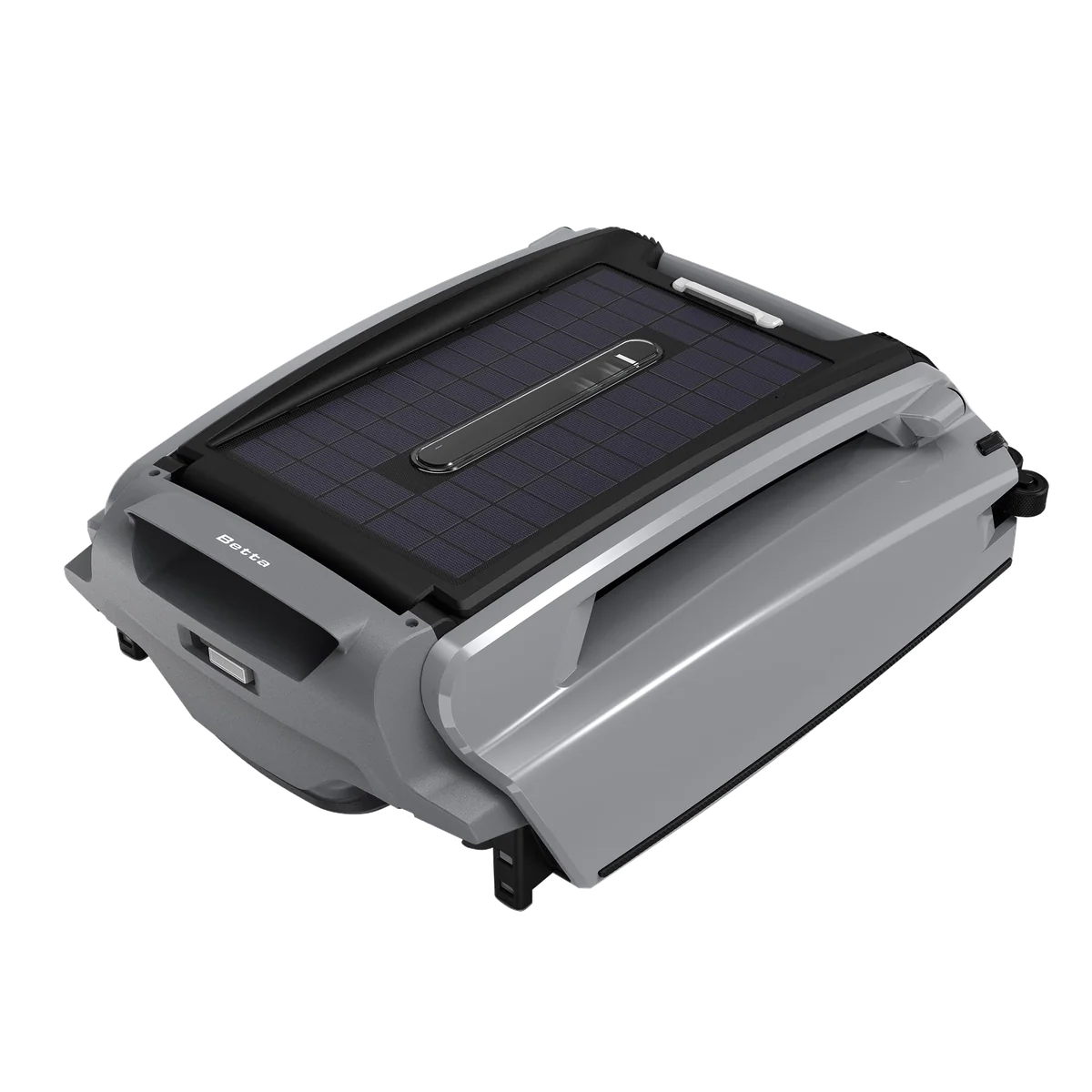
Based on our research, the Betta SE Plus is our top pick — leaves.
Sources (3)
- Amazon listings and customer reviews
- Owner and reviewer video, 3 channels
- Pcworld — Article — www.pcworld.com