The Dolphin Nautilus CC Is the Best Dolphin Pool Cleaner for Most Buyers
Dolphin’s range is harder to shop than it should be. Similar names conceal meaningful differences in pool size, wall behavior, waterline coverage, scheduling, filtration, and cable design. The safest way through the catalogue is to decide which surfaces must be cleaned, then ignore every family feature that is not documented for the exact model in the cart.
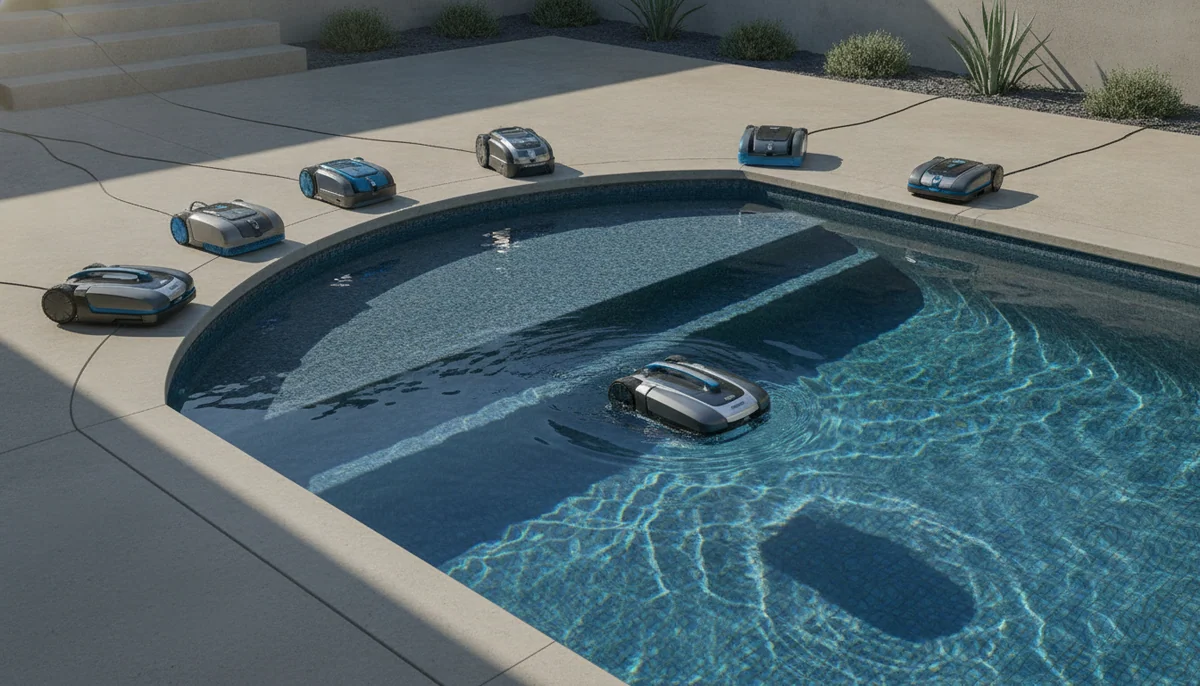
The Nautilus CC is our winner because most pool owners need dependable floor pickup, a useful active brush, manageable retrieval, and a filter that does not turn every rinse into a wrestling match. It climbs walls in suitable pools, but its real strength is the repetitive basin work that replaces much of a manual-vacuum routine. Owners consistently describe strong pickup of ordinary dirt, leaves, acorns, sand, and plant debris, while the top-load basket makes the inevitable cleanup comparatively painless.
This is not a claim that the least elaborate Dolphin is secretly the most capable one. The base CC does not provide sustained sideways waterline cleaning, app control, or a repeating weekly schedule, and its non-swivel cable can twist badly enough to become the dominant ownership complaint. Dolphin lists it for above-ground and in-ground pools up to 33 feet with an approximately two-hour cycle, so larger or more complicated pools need a different answer rather than optimism.
Buy the winner if
Your pool is within the stated limit, most debris settles on an open floor, and you are willing to brush steps, corners, and the tile line. In that setting, paying for connected controls or more ambitious waterline hardware can add complexity without removing the chores that awkward geometry still leaves behind.
Reject the winner if
A visible waterline ring is the main problem, your in-ground pool approaches 50 feet, or handling a floating cable will ruin the experience. The right response is to change models or compare the broader field, not to pretend the base CC will grow features after delivery.
At a Glance: All Dolphin Robotic Pool cleaners Compared
| Feature | Editor's Pick Dolphin Nautilus CC | Dolphin E10 | Dolphin Nautilus CC Pro | Dolphin Proteus DX3 |
|---|---|---|---|---|
| Price Range | $500–$1,000 | $500–$1,000 | $500–$1,000 | $500–$1,000 |
| Check Price on Amazon | Check Price on Amazon | Check Price on Amazon | Check Price on Amazon |
Four Dolphins, ranked by the job they can honestly finish
These cleaners share a brand and a top-loading approach, but they do not share one cleaning brief. The ranking favors the machine that makes sense for the broadest ordinary use case, then identifies the narrower pools where each alternative becomes the better fit.
1. Dolphin Nautilus CC — The Nautilus CC is the best overall Dolphin for straightforward pools up to 33 feet.
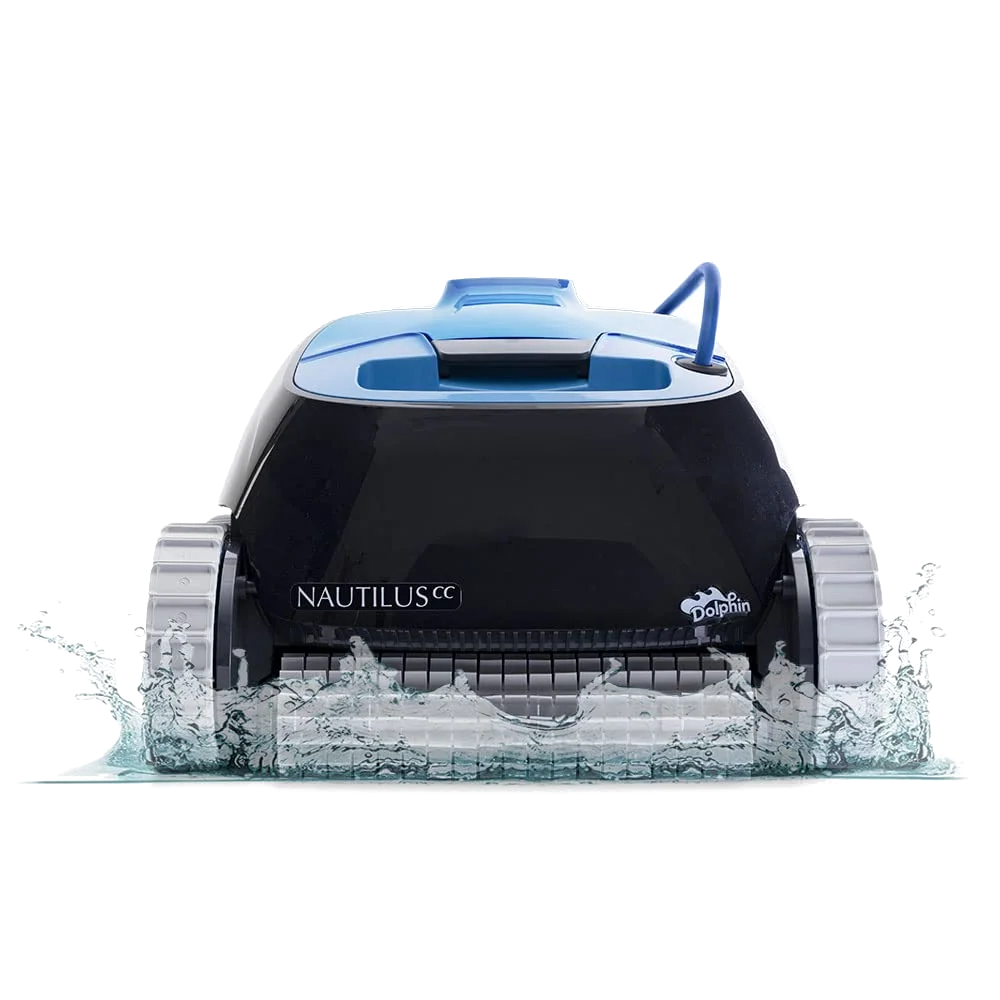
It earns first place by combining convincing floor pickup, credible wall climbing, a manageable body, and an easy top-load basket without making an app part of routine cleaning.
Its non-swivel cable can tangle, and touching the surface during a climb is not the same as cleaning sideways along the waterline.
The CC is strongest when the pool has a broad, uncomplicated basin and the recurring mess is leaves, insects, ordinary dirt, grit, or sand. Its active front brush helps loosen attached material before the intake passes over it, while the self-contained basket keeps that debris out of the pool’s primary filtration system. A heavy leaf fall can still fill the basket, and very fine pollen, silt, or dead algae may justify compatible finer media after the included filter has been assessed in the actual pool.
Wall climbing should be treated as assistance rather than complete perimeter detailing. The robot can drive high on a vertical surface and may briefly break the water, but steps, benches, square corners, tanning ledges, and the tile line remain unreliable territory. Brushing those trouble spots toward the open floor before starting a cycle gives the cleaner a job its route and intake are much more likely to finish.
Ownership is deliberately low-tech. The current base model uses manual start and one cleaning cycle, so the owner still deploys the robot, straightens the floating cable, retrieves it, rinses the basket, and stores it after use. That division of labor is sensible for someone who wants the floor vacuumed without pairing another appliance to Wi-Fi, but it is a poor fit for anyone expecting a week of unattended scheduled runs.
Read the full Dolphin Nautilus CC review for its debris performance, cable-wear record, repairable components, and the difference between occasional surface contact and dedicated waterline travel. Buyers choosing between the two most similar 33-foot models can also use the direct Nautilus CC versus Proteus DX3 comparison.
Strengths
- Open-floor cleaning is strong enough to replace most routine manual vacuuming.
- The top-load basket is simple to remove, empty and rinse.
- At about 14 pounds dry, the robot is comparatively manageable at retrieval.
- It collects common dirt, leaves and larger plant debris without loading the pool’s primary filter.
- Replaceable tracks, wheels, bushings, brushes and filter media support practical repair.
Limitations
- The non-swivel floating cable can twist, tangle and eventually wear.
- Wall climbing does not provide dedicated sideways waterline cleaning.
- Steps, sharp corners, benches and tanning ledges often still need a brush.
- The current base model has no app, remote or repeating weekly schedule.
- The standard filter can struggle with persistent ultra-fine dust, pollen and dead algae.
- A one-year warranty leaves more long-term risk with the owner.
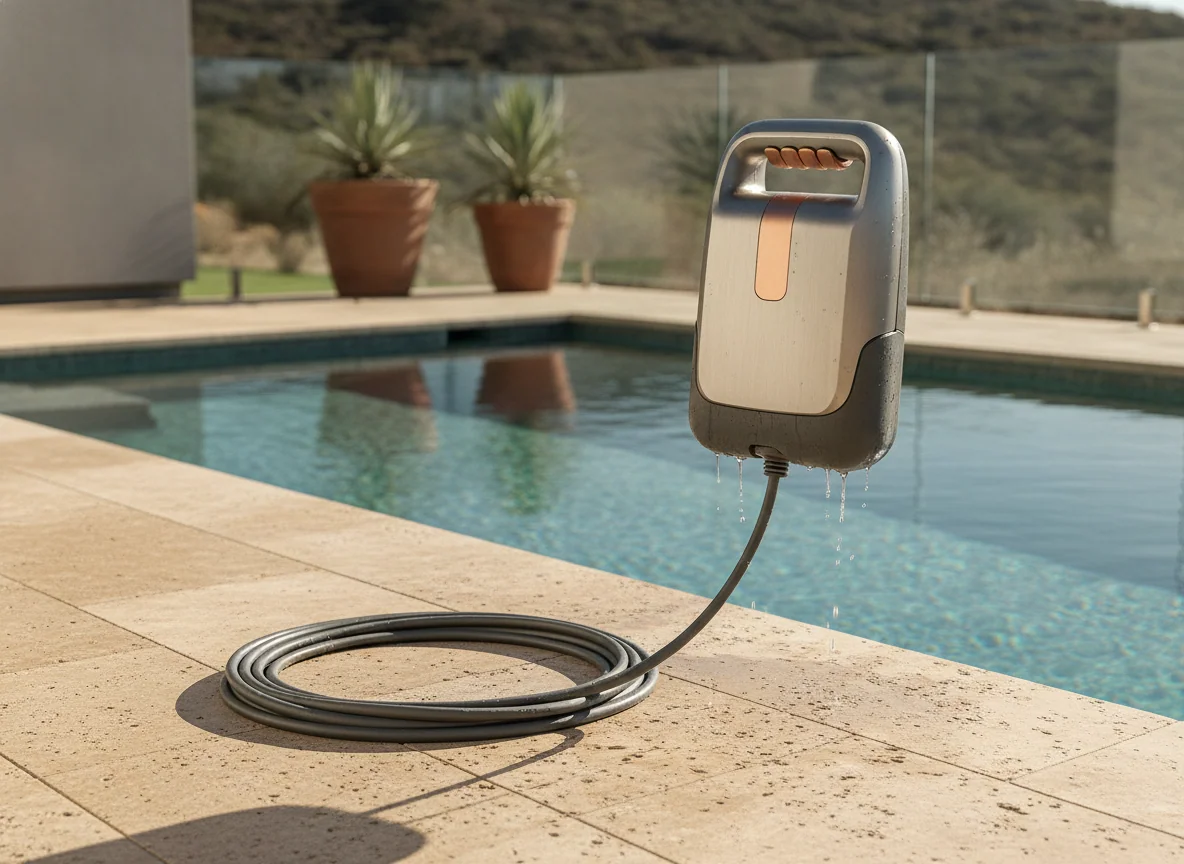
2. Dolphin E10 — The Dolphin E10 is the specialist choice for a simple above-ground pool.
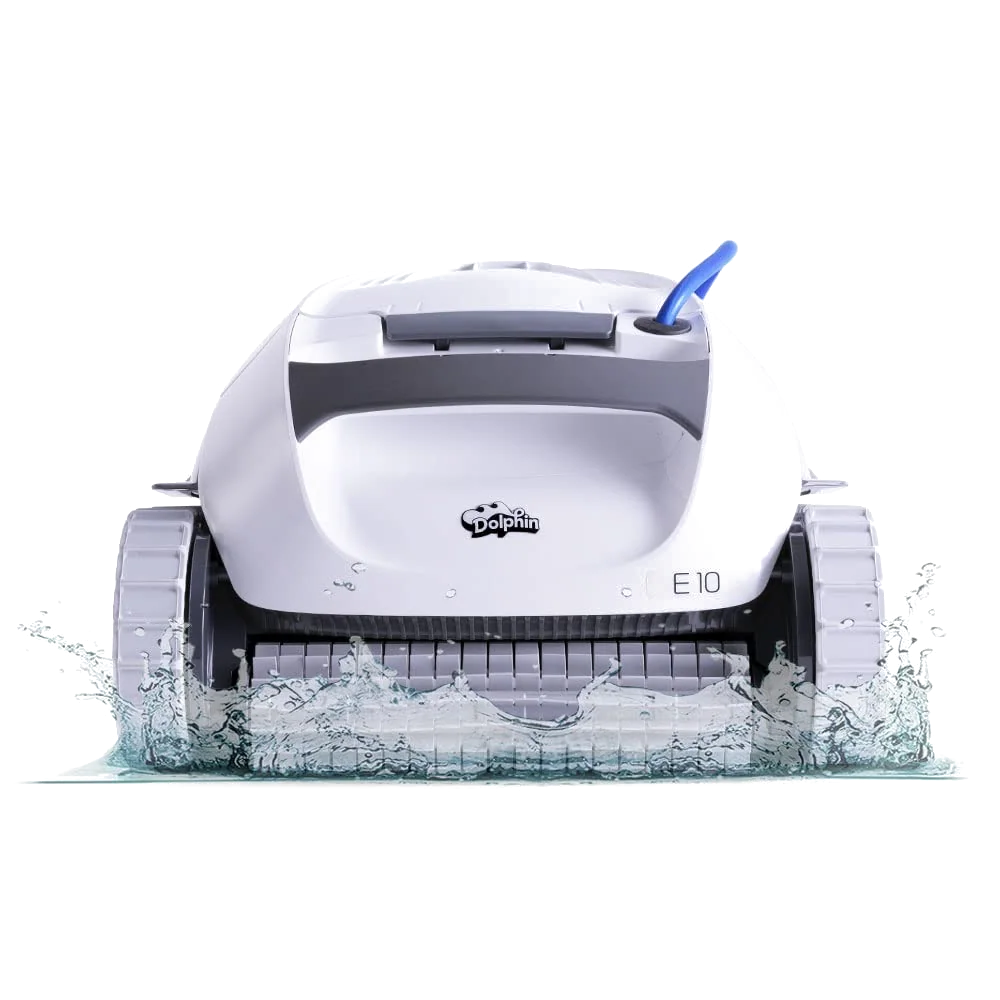
Its active brush, useful floor pickup, short operating sequence, and accessible basket make sense when cleaning the bottom is the entire assignment.
The E10 offers no verified wall or waterline coverage, and exact owners report cable tangling, limited far-side reach, lid faults, debris leakage, and an early service failure.
The E10 is the narrowest cleaner in this group, which is useful information rather than an insult. Dolphin lists the current model for above-ground pools up to 30 feet, with corded operation, top-load filtration, an active scrubber, and a 1.5-hour cycle. Direct evidence for the established E10 design supports floor cleaning rather than wall climbing or tile-line work, so buyers should not import capabilities from larger Dolphins simply because the shell looks familiar.
On the floor, the evidence is encouraging. Owners describe pickup of leaves, sand, small debris, and fine dirt, with the brush reducing how much manual agitation the bottom needs. The basket is easy to remove and rinse, and corded power allows another cycle immediately after emptying it rather than imposing a recharge delay.
The E10 becomes the wrong purchase as soon as expectations expand beyond that basin. A 30-by-15-foot owner reported untangling the cable after every use and failing to reach the most distant edges, while other exact-product reports describe a lid opening during operation, broken latch tabs, debris escaping during retrieval, and a unit that stopped after six weeks. Those cases cannot establish a defect rate, but they do make first-run inspection, cable measurement, seller verification, and a clear service route part of the buying decision.
The complete Dolphin E10 review explains its floor-only boundary and filtration uncertainty. Owners who want to compare it against machines designed around the same pool type should continue to the above-ground robotic pool cleaner guide.
Strengths
- The active brush and suction handle ordinary floor debris well.
- The top-load basket makes routine emptying and rinsing unusually straightforward.
- Corded power permits another cycle without waiting for a battery to recharge.
- The simple controls avoid app setup and connectivity problems.
- Direct owners report a meaningful reduction in manual vacuuming.
Limitations
- The verified cleaning brief stops at the floor.
- The cable can tangle or limit far-side reach near the advertised pool-size ceiling.
- The included filtration package is not clearly established for dead algae and very fine silt.
- The directly reviewed E10 lacked a weekly scheduler.
- Exact-product reports include lid faults, debris leakage during retrieval, an early failure, and poor support follow-through.
3. Dolphin Nautilus CC Pro — The Nautilus CC Pro is the feature pick for a conventional in-ground pool whose waterline matters.
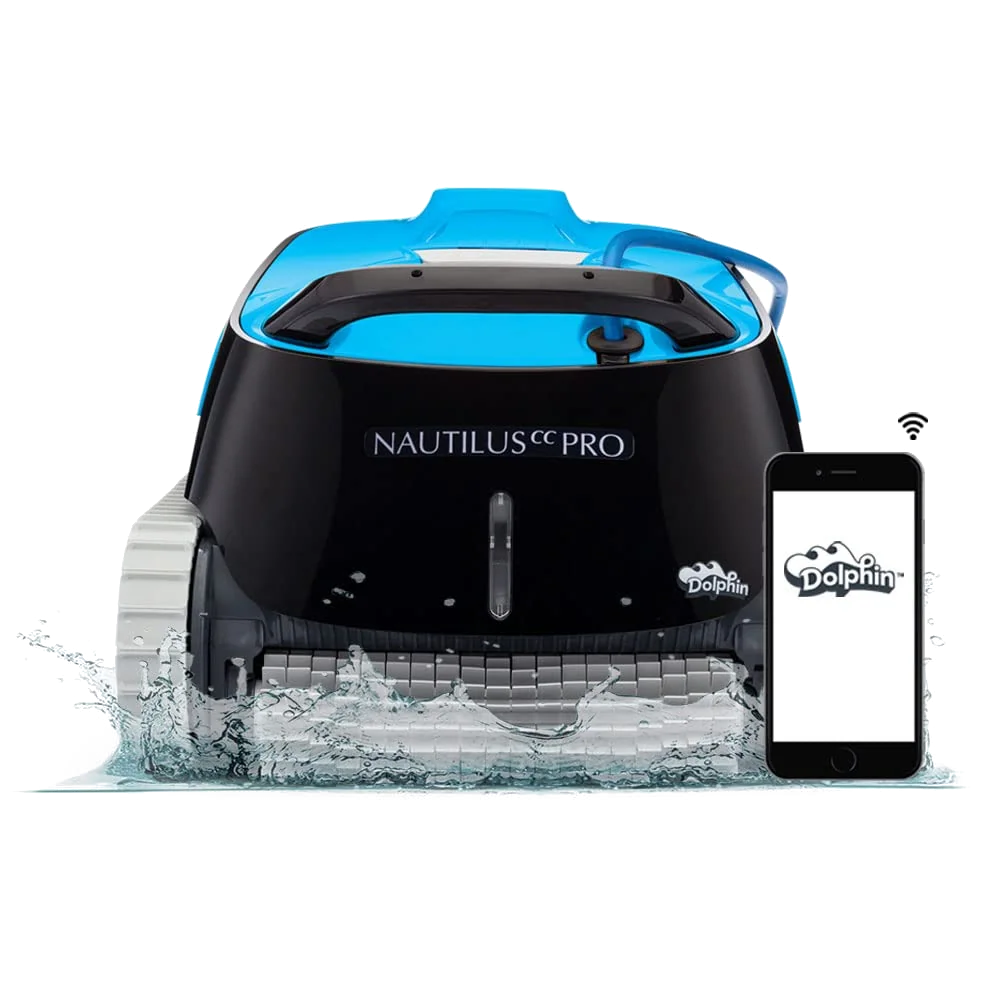
It is the most capable cleaner here for a larger in-ground pool because it combines floor pickup, wall climbing, genuine lateral waterline movement, a swivel cable, Wi-Fi scheduling, and manual app steering.
The stock mesh filtration can disappoint on fine sediment, while exact-owner failure reports and uncertain seller-specific warranty terms make this a conditional purchase rather than the overall winner.
The CC Pro is where the Nautilus name starts matching a more ambitious cleaning brief. Dolphin lists it for in-ground pools up to 50 feet and promotes connected scheduling, wall climbing, active scrubbing, and top-load filter access. Unlike the base CC, exact-product evidence supports actual lateral movement at the waterline rather than a brief touch followed by a descent.
The hardware is compelling in a simple pool. It handles ordinary leaves, dirt, insects, and grit, while the swivel cable is less prone to twisting than the cables on the smaller models. The app can schedule cleaning and manually steer the robot toward an isolated missed patch, although it does not turn the route into a remembered map or guarantee that every section of a large pool will be covered during one two-hour cycle.
Filtration is the first reason to pause. Exact owners report that the supplied flat mesh panels can stir fine sand, silt, and dead-algae residue back into the water, with compatible pleated panels materially improving retention but adding another part to identify and obtain. Buyers should ask the seller to confirm the filters in the exact box and identify a currently compatible pleated set before treating the CC Pro as a fine-debris solution.
Reliability and service are the second pause. The exact-owner record includes failures involving a controller, power supply, impeller motor, drive motor, cable surface, connectivity, and chassis stability, followed by sharply different repair experiences. These are individual cases rather than a measured failure rate, but they justify obtaining the warranty duration, freight responsibility, authorized-service route, and post-water return terms in writing before the first run.
Read the full Dolphin Nautilus CC Pro Wi-Fi review before accepting those conditions. The Nautilus CC versus CC Pro comparison isolates what the larger machine adds, while the walls and waterline guide shows whether another cleaner better fits a perimeter-heavy pool.
Strengths
- It removes ordinary floor debris well and can spare the owner most routine manual vacuuming.
- Its wall climbing and lateral waterline scrubbing are genuine capabilities rather than borrowed claims from another Nautilus model.
- The roomy top-loading basket is straightforward to dump, rinse, and reinstall.
- The 60-foot swivel cable is generally resistant to operational tangling.
- Manual app steering provides a practical way to target a missed patch.
Limitations
- The included mesh panels can let sand, silt, and dead-algae residue escape.
- The two-hour route has no demonstrated stored map and may miss floor or waterline sections.
- Steps, shelves, raised drains, and abrupt transitions can defeat otherwise strong climbing.
- Exact-ASIN owners report failures across the controller, power supply, motors, cable, app, and chassis stability.
- The package does not include a caddy, and current warranty terms require seller-specific verification.
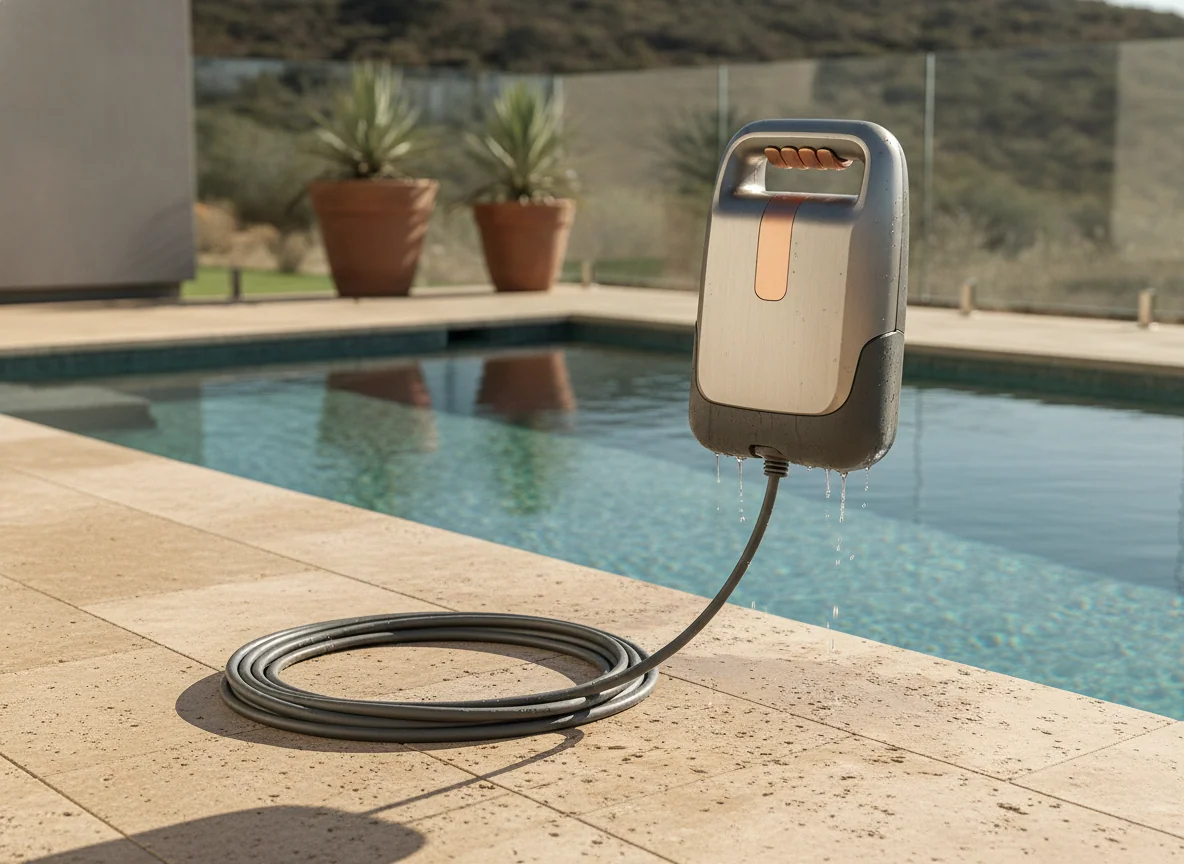
4. Dolphin Proteus DX3 — The Proteus DX3 is the sensible alternate for conventional in-ground pools up to 33 feet.
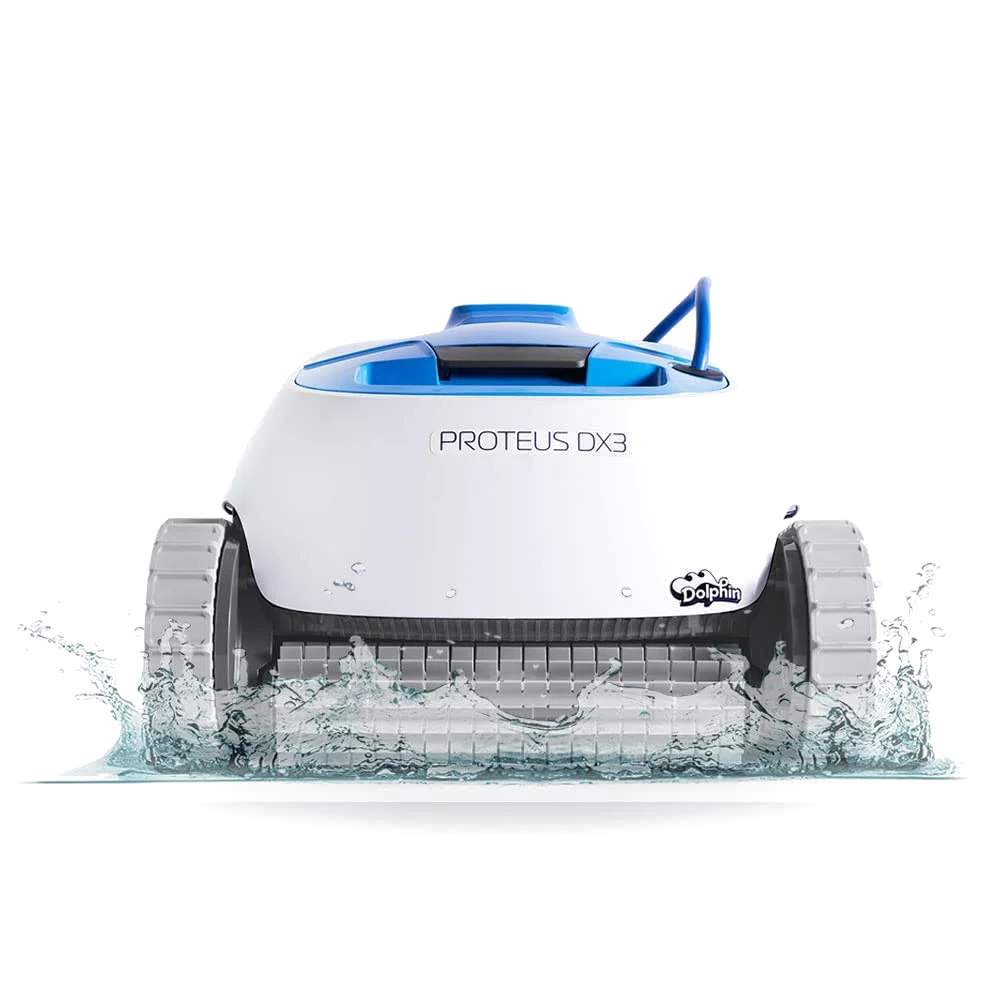
Its active brush, capable floor pickup, wall climbing, easy basket, corded repeatability, and basic seven-day scheduling reduce routine work without involving an app.
The DX3 lacks dependable waterline coverage and a cable swivel, while power-supply complaints make repair access more important than its simple controls suggest.
The Proteus DX3 occupies similar territory to the Nautilus CC but is aimed specifically at in-ground pools up to 33 feet. Dolphin documents wall climbing, active scrubbing, top-load filter care, and an approximately two-hour cycle. Its best work remains the ordinary mess across the floor, where owner accounts describe pickup of leaves, oak tassels, blossoms, insects, sand, and dirt.
The basket earns praise for capacity and cleanup, and corded power keeps the robot ready for another run after a heavy load. Several owners found the finished floor more persuasive than the route, which can include stops, reversals, repeated patches, and wheelies before producing a useful result. Larger fronds and sticks should still be netted first, while steps, ledges, raised drains, and the tile line remain places to watch or brush manually.
The DX3’s scheduler can trigger daily, alternate-day, or every-third-day cycles during a seven-day period, but the convenience has boundaries. The robot cannot empty its basket, straighten its non-swivel cable, escape every drain, or protect its power supply from weather. It also has no Wi-Fi, remote steering, or saved pool map, so a buyer who wants digital intervention should move up rather than hoping a generic Proteus description applies.
Long-term value is the unsettled part. One exact-product owner reported repeated power-box replacement followed by another unit that ran only briefly, while other owners describe successful routine use and a major reduction in manual cleaning. The sensible response is not to declare the whole line unreliable, but to verify warranty coverage, seller authorization, module availability, freight responsibility, and the nearest practical repair option before purchase.
The detailed Dolphin Proteus DX3 review covers its debris strengths, cable routine, service questions, and geometry limits. Buyers whose pools are larger or more intricate should start instead with the in-ground robotic pool cleaner roundup.
Strengths
- It removes ordinary leaves, blossoms, sand, bugs, and floor dirt well enough to reduce manual vacuuming substantially.
- The top-loading basket is straightforward to remove, empty, rinse, and inspect.
- Its active brush and wall climbing provide more surface agitation than a floor-only pickup robot.
- Corded power avoids recharge delays and keeps the robot ready for repeated cleaning cycles.
- The controls are simple for buyers who do not want another pool app.
Limitations
- Waterline, step, ledge, corner, and irregular-wall coverage is too inconsistent to replace manual brushing.
- The non-swivel cable can twist and requires periodic straightening.
- Its route can repeat areas, miss patches, and waste time around incompatible drain geometry.
- The standard filtration may struggle with extremely fine silt or dead algae.
- Power-supply and other component complaints make warranty terms, parts pricing, and local service unusually important.
Our #1 Pick: Dolphin Nautilus CC
Check Price on AmazonHow Smart Pool Bots separated four similar-looking Dolphins
Smart Pool Bots treated each ASIN as its own appliance rather than averaging the Nautilus and Proteus families into one imaginary super-cleaner. Current exact-product listings established the advertised pool fit and included features, while exact-owner reports carried more weight for debris handling, missed surfaces, cable behavior, filtration limits, early failures, and repair friction.
The ranking rewards completion of a realistic job, not the longest feature list. Strong floor pickup, accessible filtration, sensible pool-size fit, and tolerable ownership work matter more than an app that cannot improve traction or a wall-climbing label that never becomes reliable tile-line coverage. Conflicting reports remain visible because pool finish, shape, debris, cable position, chemistry, and maintenance can all change the result.
We also kept isolated failures in proportion. A detailed component failure deserves disclosure because it identifies a risk the buyer may have to manage, but a retained set of complaints cannot produce a defensible failure rate. That is why service access and written warranty terms affect the recommendation without turning every owner report into a prediction.
Choose the surface first and the model name second
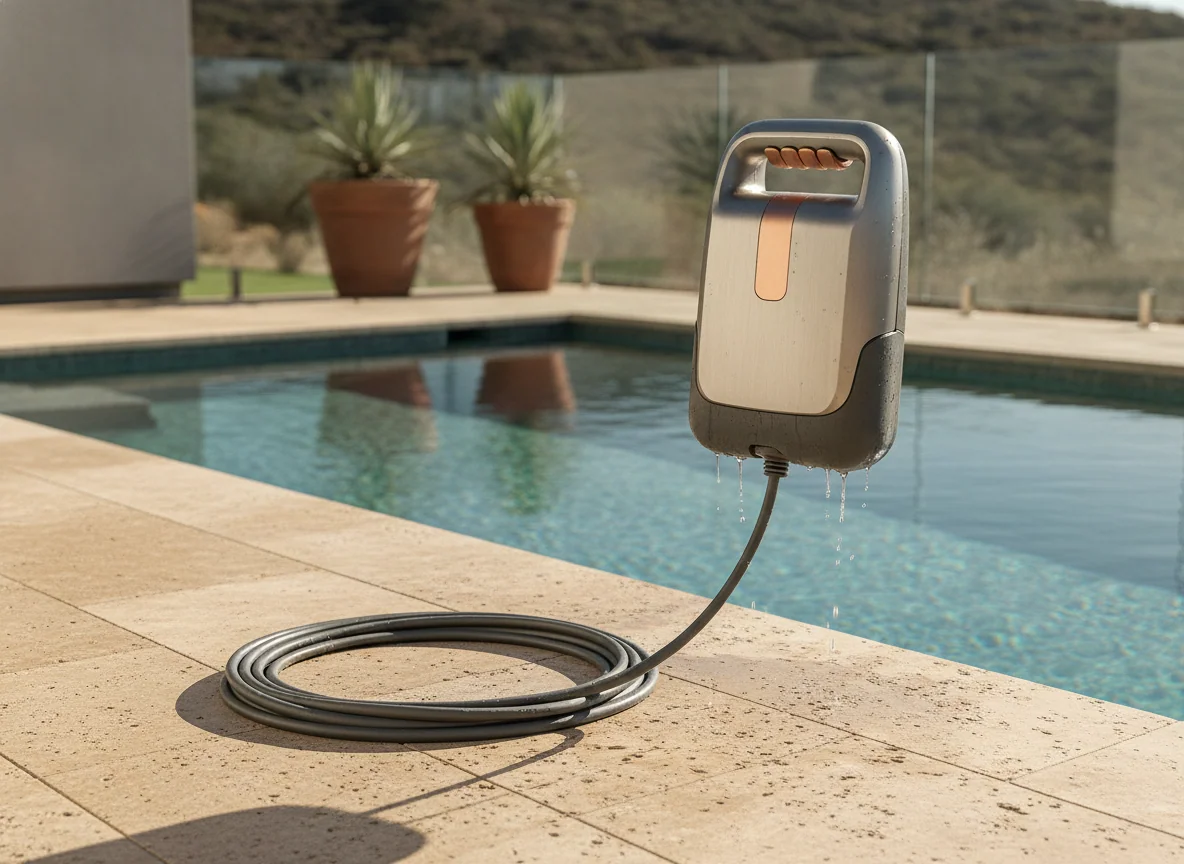
A Dolphin comparison becomes much easier once “clean the pool” is divided into separate jobs. Floor pickup, vertical climbing, sustained waterline movement, step coverage, fine-particle retention, scheduling, and cable management are different capabilities. No model here completes all of them equally well, and awkward pool geometry can defeat a feature that works convincingly on a broad uninterrupted surface.
| Decision | What to verify | The common mistake |
|---|---|---|
| Pool size | Measure from the intended power-supply position to the farthest underwater point, including depth and required deck setback. | Assuming the advertised pool length guarantees enough usable cable from any outlet. |
| Cleaning surfaces | Separate floor cleaning, vertical wall climbing, and sustained sideways waterline travel. | Calling any robot that briefly reaches the surface a waterline cleaner. |
| Pool geometry | Inspect steps, benches, tanning ledges, sharp corners, slopes, ladders, and raised drains. | Believing a maximum-length rating proves compatibility with every shape inside that length. |
| Debris | Match the supplied filter to leaves, sand, pollen, silt, or dead-algae residue and confirm compatible finer media when needed. | Assuming every top-load basket retains the same particle sizes. |
| Automation | Distinguish manual start, a short repeating timer, Wi-Fi scheduling, manual steering, and persistent mapping. | Treating “smart navigation” as proof of a saved map or guaranteed one-pass coverage. |
| Ownership | Confirm warranty duration, authorized-seller status, freight, local service, major replacement parts, and wet-return rules. | Checking repair logistics only after the cleaner stops moving. |
A 33-foot rating is not a cable measurement
Pool length is only the headline dimension. The power supply must sit where the current manual permits, depth consumes cable, and an outlet near the wrong end can leave a nominally compatible cleaner short of its farthest corner. Measure the actual route before ordering, then allow enough slack for free movement without dropping the entire cable into the pool.
Wall climbing and waterline cleaning are different claims
A robot can climb a vertical wall, reach the surface, lose suction, and descend without ever traveling around the tile line. Dedicated waterline behavior requires stable contact and lateral movement, yet even that does not guarantee complete perimeter coverage during every cycle. If the waterline is the purchase-defining chore, judge the route at the top rather than the height of a single climb.
The filter should match the dirt you actually see
Leaves, insects, grit, sand, pollen, silt, and dead algae do not ask the same thing of a basket. A coarse or standard mesh may be ideal for easy rinsing and ordinary debris while allowing the finest material to escape or return to suspension. Confirm the included media and compatible fine-filter availability before buying when powdery sediment is the reason the pool looks dirty.
Corded is not obsolete, and cordless is not effortless
Corded Dolphins avoid charging delays and battery aging, which matters when a storm load requires repeated cycles. Their trade is cable deployment, twist management, outlet planning, retrieval, and careful storage. If the cable is already a deal-breaker, compare the site’s best cordless robotic pool cleaners and read the full corded versus cordless guide before choosing a different inconvenience.
Parts availability matters before anything breaks
Search by the exact model number or ASIN rather than by “Dolphin,” “Nautilus,” or “Proteus” alone. Baskets, filter panels, cables, power supplies, brushes, tracks, motors, and caddies can differ within a family even when the shells and listing language look similar. Our robotic pool cleaner lifespan guide explains why wear parts and repair economics deserve attention alongside cleaning performance.
Frequently Asked Questions
Which Dolphin pool cleaner is best for most buyers?
The Nautilus CC is the strongest general recommendation for a straightforward pool up to 33 feet when floor cleaning matters more than waterline travel, connectivity, or a swivel cable.
Do all Dolphin robots climb walls?
No, wall coverage depends on the exact model, and the floor-focused E10 should not inherit climbing claims from larger Dolphin cleaners.
Does wall climbing mean a Dolphin cleans the waterline?
No, a cleaner may touch the surface during a vertical climb without remaining there to scrub sideways around the tile line.
Are the Dolphin models ranked here cordless?
No, all four models in this roundup use an external power supply and floating cable rather than an onboard rechargeable battery.
Do Dolphin pool cleaners remember the pool layout?
The evidence for these models supports autonomous route changes rather than a persistent room-vacuum-style map that remembers completed coverage between cycles.
Can a Dolphin clean steps and tanning ledges?
Some models may reach a broad lower step or submerged shelf, but shallow features and abrupt transitions remain too geometry-dependent to promise reliable coverage.
Can a Dolphin remove algae from a green pool?
No, a robot can collect some loosened or dead residue, but an active algae problem requires corrected water chemistry, circulation, and brushing.
Will a standard Dolphin filter capture fine silt?
Results vary by model and particle size, so buyers dealing with powdery sediment should confirm the supplied media and compatible ultrafine-filter options before purchase.
How should a buyer find the correct Dolphin replacement part?
Match the part to the exact ASIN or documented model number because similarly named Nautilus and Proteus cleaners do not necessarily share filters, cables, power supplies, or drive components.
What should be checked when a Dolphin stops moving?
Check power connections, visible cable damage, basket seating, cord entanglement, tracks, the intake, and accessible impeller debris before arranging authorized diagnosis for repeated or electrical failures.
Can a Dolphin cleaner stay in the pool between scheduled cycles?
Follow the current exact-model manual because scheduling does not remove the need to empty the basket, inspect the cable, protect the power supply, or limit unnecessary chemical and sunlight exposure.
Our Top Pick
The Dolphin Nautilus CC earns the top spot. The Nautilus CC is the best overall Dolphin for straightforward pools up to 33 feet.
Compare Top Picks
Sources (2)
- Amazon listings and customer reviews
- Owner reports across r/pools threads