Aiper Scuba S1 vs V3: Buy the S1 unless you need the camera
Choose the Aiper Scuba S1 for the better balance of coverage, fine-debris cleaning and simplicity, and pay for the Scuba V3 only when fast camera-guided leaf hunting solves a problem you regularly have.
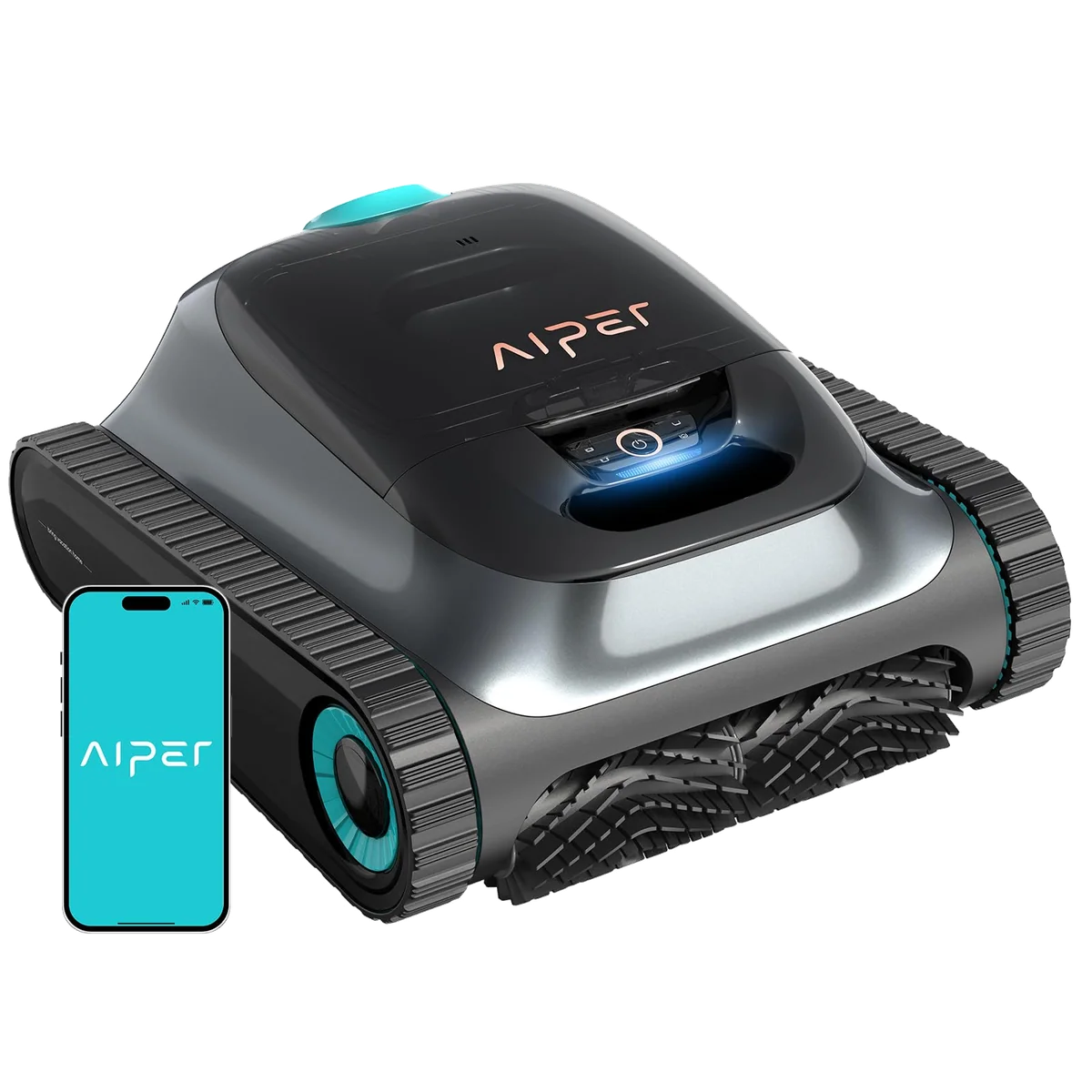
Aiper Scuba S1
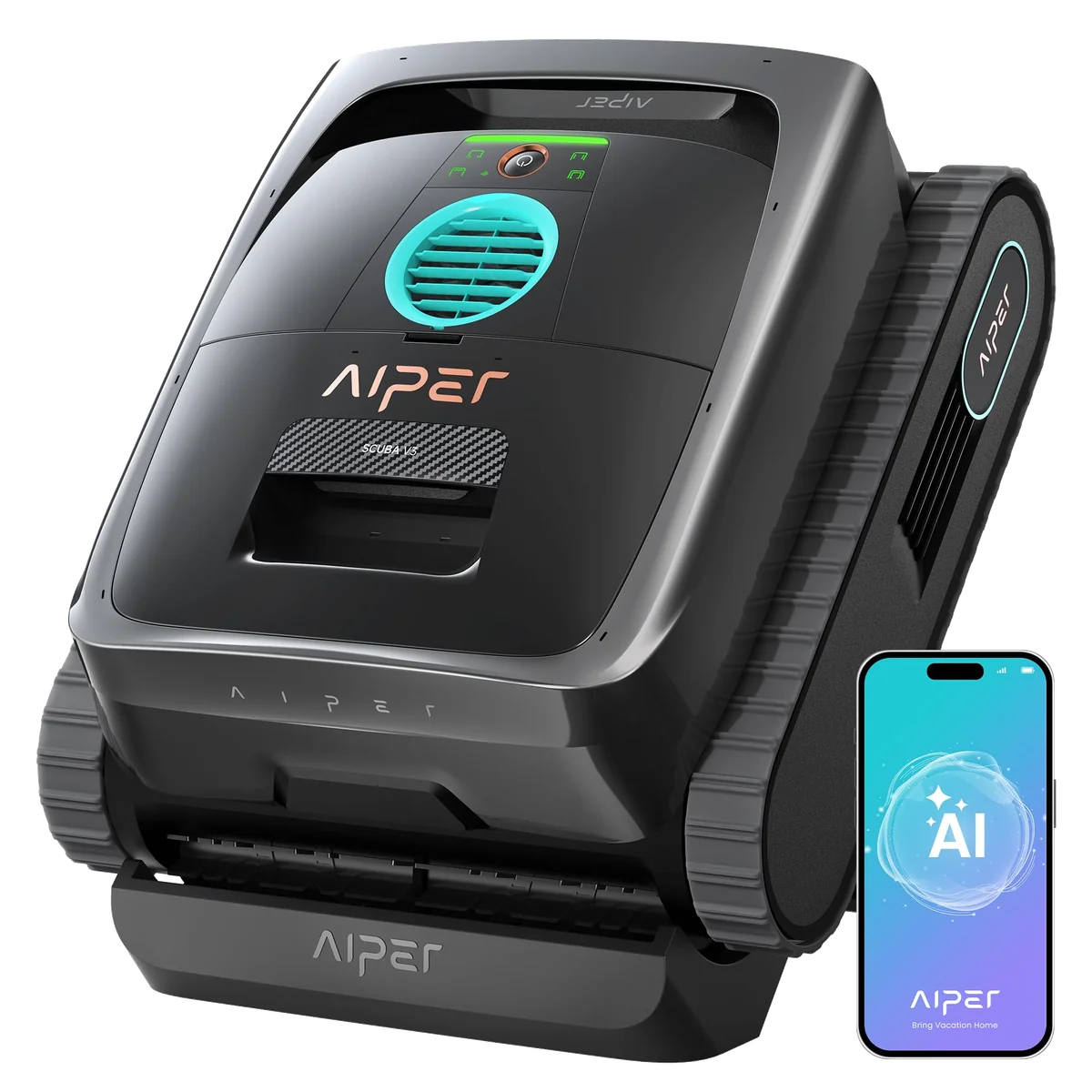
Aiper Scuba V3
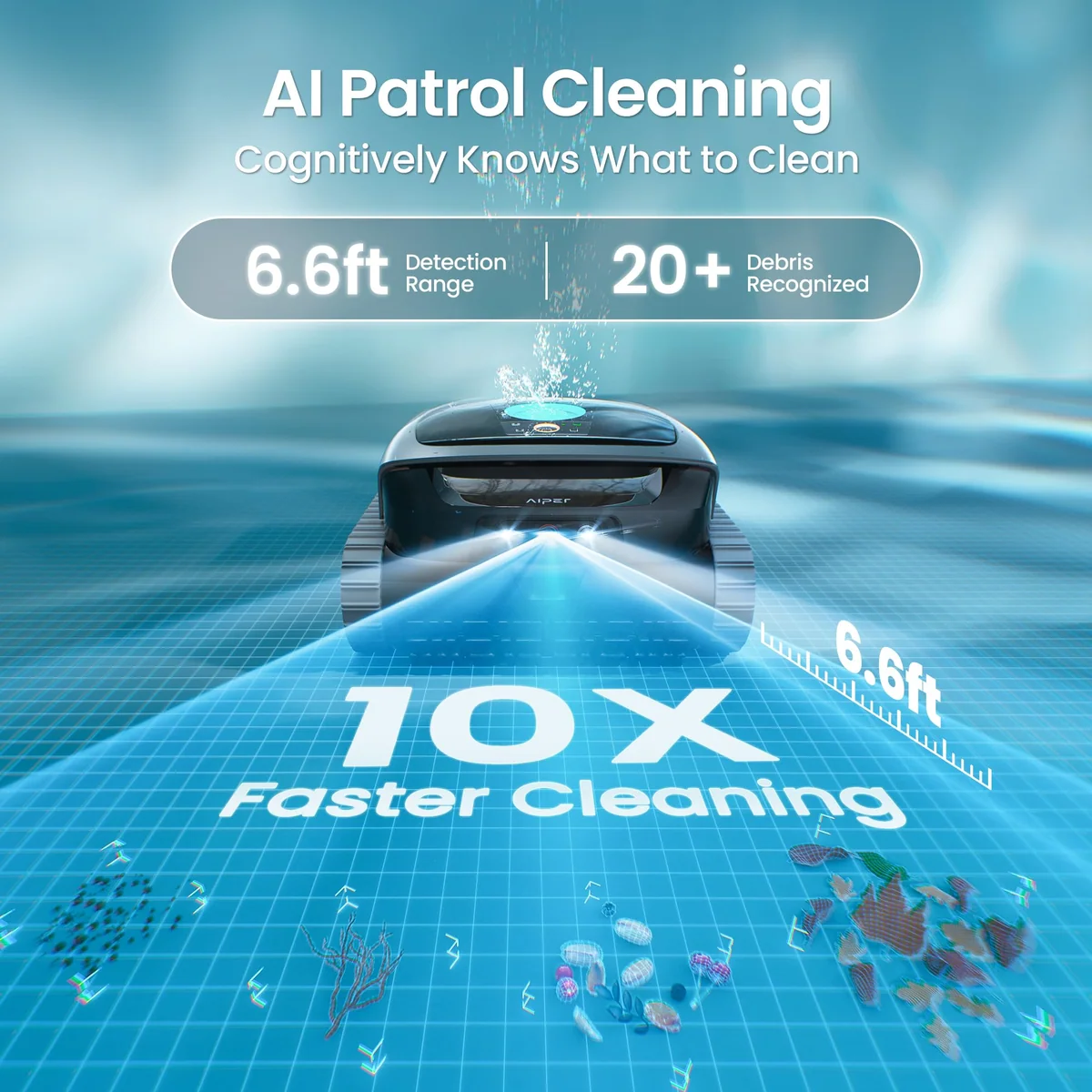
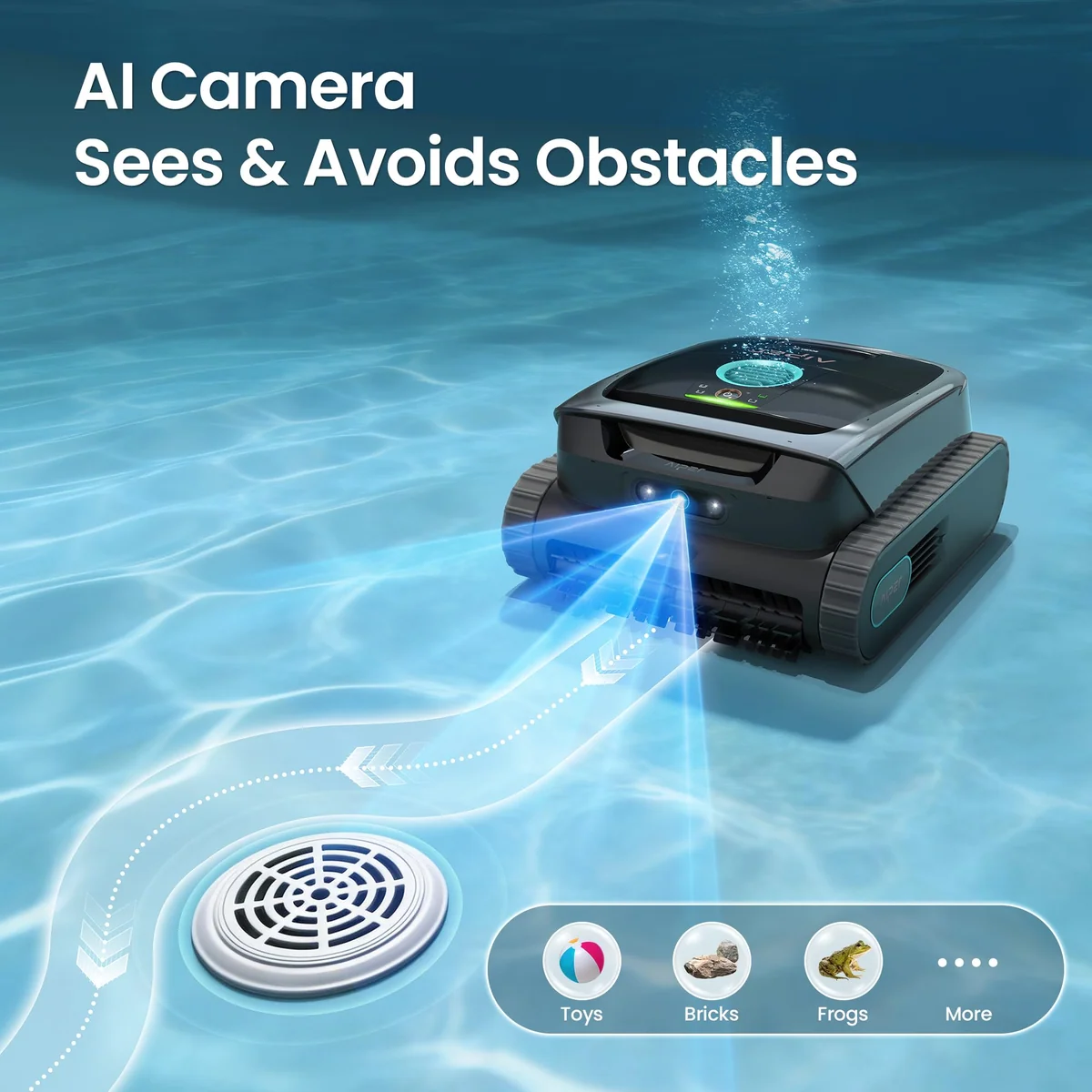
The newer Aiper Scuba V3 wins the demonstration that looks most like the future: it can scan a pool floor, recognize visible leaves and drive directly toward them. In a standardized comparison, it collected every deliberately placed leaf in eight minutes. If a storm drops a few conspicuous piles shortly before people want to swim, that shortcut is genuinely useful.
It does not make the V3 the better cleaner overall. In the same pool, both machines reached 99% floor coverage, while the older Scuba S1 covered 86% of the walls against the V3’s 69% and 62% of the stairs and bench against the V3’s 10%. The S1 also handled sand and silt more convincingly in that comparison, even though both products offer a secondary fine-filter layer.
That produces a less glamorous but more useful verdict. The S1 is the default choice because it performs the ordinary work at least as well and often better. The V3 is the specialist: buy it when visible leaves arrive in isolated patches and reaching those patches quickly matters more than maximizing coverage across walls, features and fine sediment.
Choose the S1
Your priority is a thorough conventional cycle across an open floor, usable wall coverage and better odds with settled dust, sand or silt.
Choose the V3
Your pool receives obvious leaf piles and you will regularly use its camera to replace a long full-pool run with a targeted cleanup.
Aiper Scuba S1
Aiper Scuba V3
At a Glance
| Feature | Aiper Scuba S1 | Aiper Scuba V3 |
|---|---|---|
| Price Range | $500–$1,000 | $500–$1,000 |
| Claimed runtime | — | Up to 180 minutes |
| Check Price on Amazon | Check Price on Amazon |
The camera wins a task; the S1 wins the comparison
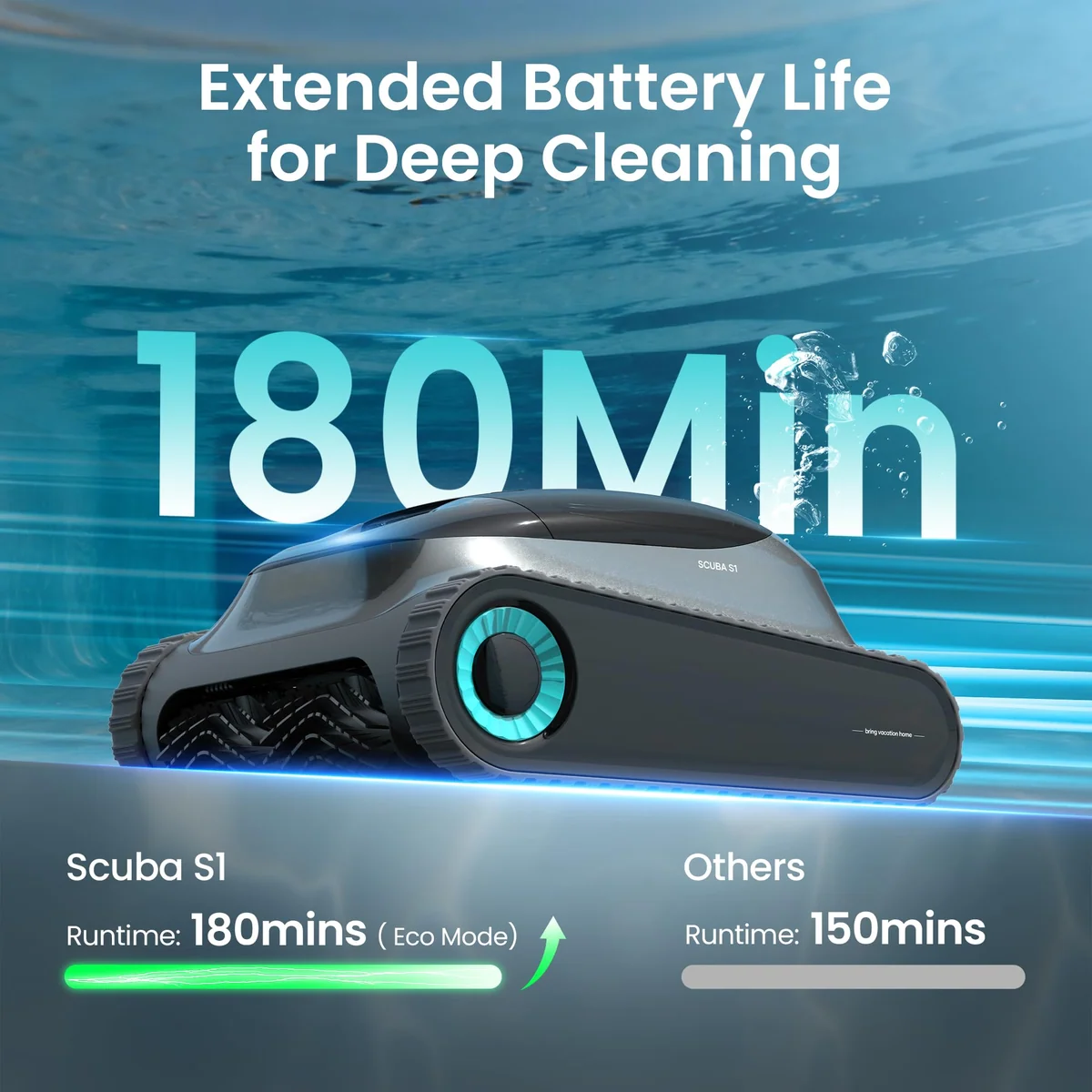
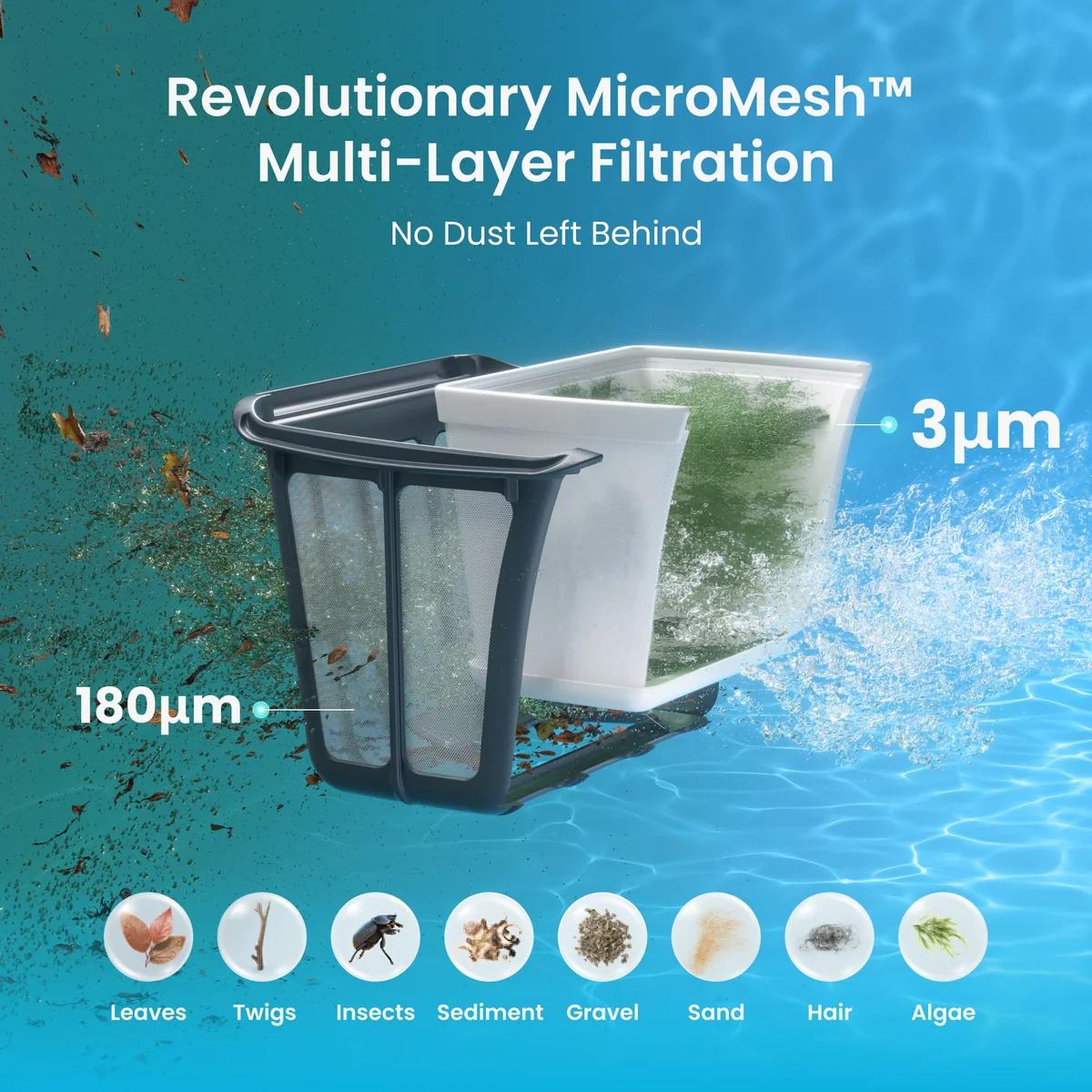
These are not two generations separated by a clean line from basic to superior. They are closely related cordless robots with overlapping fundamentals: floor, wall and waterline cleaning, app-assisted setup, a coarse basket paired with a 3-micron secondary layer, and a listed maximum runtime of 180 minutes. The meaningful difference is how each machine uses its time in the water.
| Decision point | Scuba S1 | Scuba V3 | Advantage |
|---|---|---|---|
| Measured floor coverage | 99% | 99% | Tie |
| Measured wall coverage | 86% | 69% | S1 |
| Measured stair and bench coverage | 62% | 10% | S1 |
| Targeted visible-leaf hunt | Conventional route | Camera-guided detection | V3 |
| Fine sediment in the comparison | More convincing retention | Some sand and silt recirculated | S1 |
| Charging method | Charging cable and dry connection | Manual dock with dry contacts | V3 for convenience |
Coverage and debris observations come from one standardized comparison pool, so they establish the head-to-head result in that environment rather than a guarantee for every pool shape.
Why 99% on the floor does not settle it
Equal floor coverage means either robot can make sense in a conventional pool with a broad, accessible bottom. The separation begins at the transitions. Walls, coves, steps, benches, shelves and slopes demand traction as well as navigation, and a camera cannot widen a narrow tread or keep a robot’s tracks planted when its belly rests on a curved step.
The S1’s 62% feature-area result is not a promise that it will clean an elaborate staircase. It is evidence that, between these two machines, it was markedly less compromised in the difficult zones. Owners of either model should still expect to brush narrow steps and awkward shelves onto the main floor, especially when those areas are the hardest parts of the pool for a full-size robot to occupy.
The V3’s intelligence is useful but optional
The V3 is most persuasive when the camera has a distinct target. A few leaves gathered near a drain or in one corner create exactly the job that AI Patrol can shorten. A uniform layer of dust does not. Neither does a generally dirty pool that needs the same systematic pass regardless of where the first visible object lies.
Exact-model owners also show that the cleverest mode is not always the cleanest one. Firmware updates and a switch to Adaptive routing improved some V3 results, while other owners obtained a better grid and more complete routine coverage by disabling AI functions. That does not invalidate the successful leaf hunt; it means object recognition is more mature than whole-pool decision-making.
Both apps stop being impressive underwater
The apps are primarily setup tools. They can help select modes, review information, configure schedules and install updates before a run, but ordinary Wi-Fi and Bluetooth communication do not remain dependable after submersion. Neither machine becomes a live remote-controlled vacuum simply because an app appears in the feature list.
The V3 makes this limitation more noticeable because its defining camera mode depends on software configuration. Choose the job before launch. If the cleaner becomes preoccupied with an obstacle or you want to change modes, expect to retrieve it rather than steer it from a lounge chair. The underlying communication problem is explained in Smart Pool Bots’ guide to how robotic pool-cleaner apps behave underwater.
Cordless still means a retrieval and charging routine
Both machines remove the floating cable, deck-side power box and dependence on the pool pump. Neither removes the owner. After a substantial cycle, the robot must be found, hooked, lifted, allowed to drain, carried, opened, rinsed, dried where required and charged again.
The V3’s dock is tidier than inserting a charging plug into the robot, but it still uses contact surfaces and still requires manual placement. Its waterline parking can shorten the search when the robot remains at an accessible edge, yet the parking period is brief and the chosen edge may be inconvenient. Buyers seeking true continuous scheduling should compare the broader trade in our corded versus cordless cleaner guide.
The Scuba S1 is the better all-round choice for a conventional pool.
The S1 earns first place by matching the V3 on measured floor coverage while doing substantially better across walls, stairs, benches and fine sediment.
Its cleaning remains sensitive to curved steps, compound slopes and awkward transitions, and its ownership record contains enough charging, motor and control failures to make easy return rights important.
The S1’s case is refreshingly ordinary. It follows a structured route across open floor areas, offers dedicated floor and wall modes, and uses its removable fine layer when settled grit or dust would pass through a coarse basket. In the head-to-head comparison, that conventional approach produced the more complete result even though it lacked the V3’s visual debris hunt.
Pool shape remains the decisive caveat. Exact-listing owners describe everything from strong floor and wall cleaning to repeated routes, wheelies, missed corners and treads stranded on steps. The pattern is not that the S1 never works in a free-form pool; it is that complicated geometry makes its result harder to predict.
The secondary filter is a real benefit rather than a decorative specification, but fine media loads quickly and takes more effort to rinse. Heavy leaf runs may be better with the insert removed, followed by a fine-debris pass once the large material is gone. The exact listing advertises up to 180 minutes, app support, over-the-air updates and a two-year warranty.
The reliability record prevents an unconditional recommendation. Detailed reports include power-switch trouble, a jammed drive, charging concerns, premature failures and replacement units, alongside examples of Aiper responding quickly and paying for exchanges. Good support reduces the damage from a failure, but it does not make failure irrelevant.
The Scuba V3 is the specialist for fast, visible-debris hunting.
The V3 earns second place because its camera can remove deliberate leaf targets remarkably quickly, but that advantage did not translate into better overall coverage.
Its AI can spend time scanning or miss routine areas, while steps, fine sediment, underwater connectivity and manual dock placement remain stubbornly conventional problems.
The V3’s camera is not empty marketing. The standardized leaf test gave it a clear, useful victory, and exact-model owners have seen it identify a visible object, turn toward it and resume a conventional route after the targeted cleanup. That behavior can save meaningful time when the pool is already mostly clean.
Its weak point is assuming that seeing debris equals understanding the entire pool. The same comparison found much lower wall and feature coverage than the S1, and the V3 stirred some sand and silt back into the water despite its secondary insert. For pools dominated by powdery sediment rather than leaves, the camera premium solves the wrong problem.
The dock improves the charging ritual without automating it. The robot still has to be lifted out, drained, cleaned, dried and placed on the stand, and the underside contacts must be dry. Owner reports also confirm that the app loses its ordinary connection in the water, so waterline parking and preselected modes matter more than remote control.
Aiper lists up to 180 minutes of runtime, camera recognition for more than 20 debris types, a weekly planning mode, waterline parking and a two-year care program. Those features make the V3 the more ambitious product, but the supplied evidence is still too young to establish multi-season durability for the camera, battery, seals, motors or dock.
Aiper Scuba S1
Aiper Scuba V3
Match the robot to the dirt, then to the pool
Buy the S1 for routine whole-pool work
The strongest S1 buyer has a rectangular, oval or otherwise uncomplicated pool with a broad floor, conventional walls and only a few elevated features. The usual debris is settled grit, dust, silt, small leaves or a mixed weekly load, so consistent coverage matters more than reaching one obvious pile as quickly as possible.
Buy the V3 for leaf events
The strongest V3 buyer has an accessible pool edge, a broad main floor and recurring clusters of recognizable leaves or storm debris. That owner wants to deploy a cordless robot shortly before swimming, use the camera to shorten the cleanup and accept that a later full cycle may still be needed.
Be cautious with either around elaborate features
Narrow stairs, wide tanning shelves, raised benches, circular spas, abrupt depth changes and sharp vinyl transitions are not minor details. They are the places where both machines can miss debris, lose traction or repeat an unproductive approach, so buyers with feature-heavy pools should start with our guide to cleaners for steps, ledges and shallow shelves.
Choose another design if the battery ritual is the problem
A corded cleaner such as the Dolphin Nautilus CC trades charging and battery uncertainty for a cable and deck-side power supply. Read the Dolphin Nautilus CC review if continuous mains power and simpler scheduled operation matter more than a cable-free pool.
The return window is part of the decision
Pool geometry changes robot performance enough that the first week should be treated as an acceptance test. Run the chosen machine across the floor, walls and waterline; watch its behavior at the main drain, deepest transition, widest step and tightest corner; then inspect what remains rather than judging the debris basket alone.
For the S1, pay particular attention to repeated routes, wall grip, charging behavior and the fit of the fine filter. For the V3, update the firmware, compare AI Patrol with a conventional route, test whether waterline parking occurs somewhere reachable and confirm that the dock location works once drying and shade requirements are considered.
Smart Pool Bots recommends the Scuba S1 to most buyers because it wins the less exciting tests that determine whether the whole pool gets cleaner, while the V3 is worth choosing when rapid camera-guided leaf collection will be used often enough to justify its narrower advantage.
Frequently Asked Questions
Is the Aiper Scuba V3 better than the Scuba S1?
The V3 is better at camera-guided leaf hunting, but the S1 is the stronger general recommendation because it matched floor coverage and performed better on walls, features and fine sediment in the standardized comparison.
Which model is better for leaves?
The V3 is better for isolated visible leaves because its camera-guided mode collected every deliberate target in eight minutes during the comparison.
Which model is better for sand and silt?
The S1 is the safer choice for fine settled debris because the comparison found the V3 recirculated some sand and silt despite its secondary filter.
Do both cleaners climb walls and clean the waterline?
Both are designed for wall and waterline cleaning, but measured coverage favored the S1 and neither machine guarantees complete contact in every pool geometry.
Will either cleaner reliably clean pool steps?
No, the S1 performed much better on the comparison pool’s stairs and bench, but both models remain too geometry-dependent to replace manual brushing on every step.
Can either app control the robot underwater?
No, modes and smart features should be configured before submersion because ordinary Wi-Fi and Bluetooth communication do not provide dependable live underwater control.
Does the Scuba V3 dock itself after cleaning?
No, it may wait near the waterline briefly but still has to be retrieved, drained, dried and placed manually on its charging dock.
Do the S1 and V3 use the same kind of filtration?
Both listings describe a 180-micron debris basket paired with a removable 3-micron layer, although actual fine-particle retention can still differ during use.
Which one should owners of a simple rectangular pool buy?
The S1 is the better default for a simple rectangular pool unless recurring visible leaf piles make the V3’s targeted camera mode especially valuable.
Ready to Choose?
Sources (2)
- Amazon listings and customer reviews — Aiper Scuba S1 and Aiper Scuba V3
- Owner and reviewer video, 1 channel