The Beatbot Sora 30 Is the Best Robotic Pool Cleaner for Walls and the Waterline
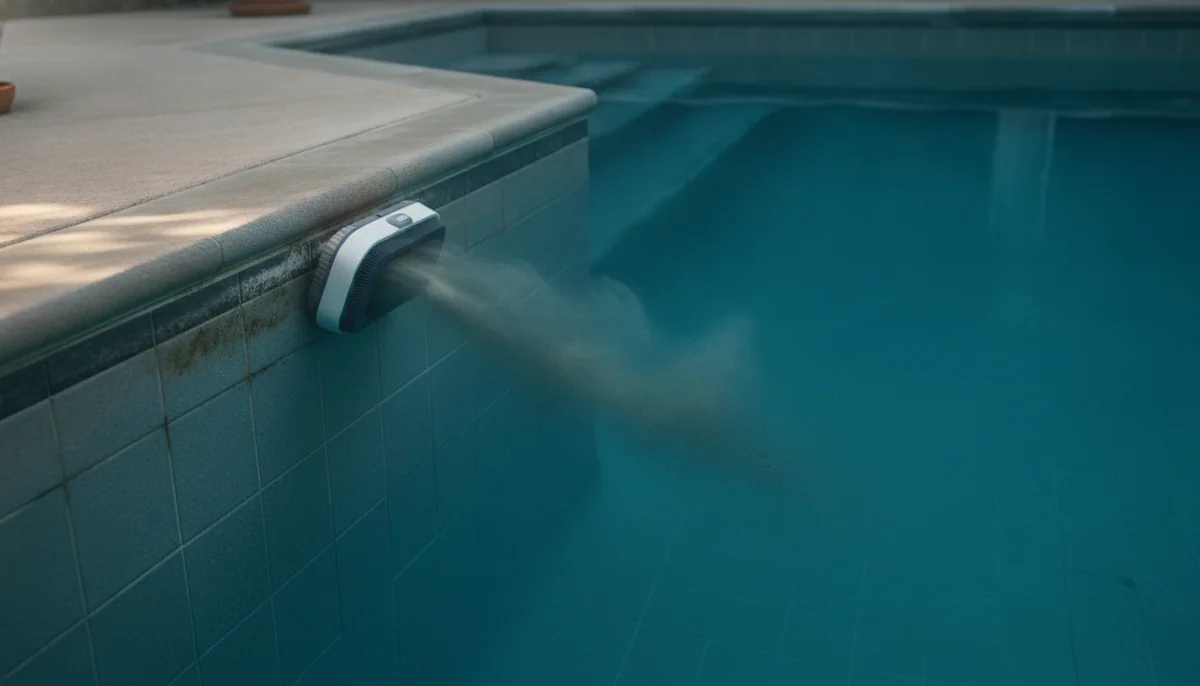
A robot that climbs a wall is not necessarily a robot that cleans the waterline. Plenty of machines drive upward, touch the surface, scrub one vertical strip, and fall away; the useful ones either move along the tile band or return to enough of it that manual brushing becomes occasional rather than routine.
The Sora 30 gives the strongest overall case because its advantage survives beyond a feature-list promise. It has credible wall and waterline results in large, deep, irregular, saltwater, and fiberglass pools, and its downward-facing platform sensing gives broad submerged ledges a better chance than they get from most tracked cleaners. That does not make it omniscient: narrow curved treads still confuse it, its included filter is ordinary rather than truly fine, and its long-term battery record is young.
The best corded counterargument is the Dolphin Nautilus CC Pro. It shows genuine lateral tile-line movement, avoids charging downtime, and can be steered toward a missed patch, but its stock mesh filtration, uneven automatic coverage, component-failure reports, and unsettled warranty terms keep it behind the Sora 30. The Aiper Scuba V3 is the sharper cordless choice for visible leaves and deliberate horizontal waterline work, while the TALOSBO C1 is the value play for a geometrically simple pool.
The distinction matters because even a convincing ascent can be misleading. A cleaner must make the floor-to-wall transition, retain traction as its basket loads, and spend productive time near the surface rather than merely appearing there for a moment.
Judge the wall, not the brochure
Floor pickup is the entry ticket here, not the prize. The real test begins where the floor curves upward: can the tracks stay planted, can the brush maintain contact, and can the robot repeat the climb after it has collected debris?
Wall reach and waterline work are separate abilities
A credible waterline cleaner stays near the surface long enough to work along the tile band or returns across enough of the perimeter to reduce hand brushing. The base Dolphin Nautilus CC and Proteus DX3 are useful examples of the weaker behavior: both can climb ordinary walls and reach the top, but neither provides dependable lateral tile-line travel.
Geometry defeats specification sheets
Straight walls, open floors, and broad transitions are friendly terrain. Compound slopes, rounded stairs, beach entries, narrow shelves, ladder gaps, raised drains, and shallow platforms can suspend the tracks, high-center the body, or consume the battery in repeated escape attempts. A smaller freeform pool can therefore be harder than a much larger rectangle.
That is why the Sora 30 wins rather than the robot with the largest sensor count or longest headline runtime. Its broad-ledge evidence is unusually good, but even it needs sufficient water depth, body clearance, turning room, and a usable approach. For more detail on the geometry problem, the site’s guide to what robots can actually climb and clean separates walls, steps, drains, slopes, and ledges instead of treating them as one feature.
Fine filtration can weaken climbing
Fine media catches silt that coarse baskets recirculate, but it also restricts flow as it loads. Because water movement helps press many robots against the wall, a packed insert can turn a strong early climb into a weak late one. The practical routine is often two passes: collect leaves with the coarse basket, rinse it, then install the fine layer for settled dust.
The Aiper Scuba S1 illustrates the trade well. In one comparison pool it covered 99% of the floor, 86% of the walls, and 62% of the stairs and bench, while the camera-equipped Scuba V3 covered the same 99% of the floor but 69% of the walls and only 10% of the stairs and bench. Those figures are not promises for another pool; they show why more sensors and a newer camera do not automatically produce better vertical coverage.
Cordless removes a cable, not the work
A cordless robot still has to be hooked, lifted while wet, drained, rinsed, dried around its charging connection, recharged, and launched again. Its app normally selects modes before immersion because ordinary Wi-Fi and Bluetooth do not provide dependable underwater steering. A corded cleaner trades that ritual for cable deployment, straightening, storage, and a power box beside the pool.
If cable freedom is the deciding issue rather than wall performance alone, compare the broader field in our guide to the best cordless robotic pool cleaners. If repairability and repeatable mains-powered cycles matter more, the best Dolphin robotic pool cleaners are the more relevant branch of the decision.
A robot maintains a waterline; it does not restore one
Routine film and loose grime are fair assignments. Established calcium scale, attached algae, and persistent staining remain chemistry and manual-brush problems, even when a machine reaches an inch or two above the current water level. Lower the expectation from “erase the line” to “make the line less often your job,” and the good machines become easier to distinguish from the merely theatrical ones.
The complete ranking
The ranking rewards repeatable wall and waterline behavior first, then asks whether filtration, retrieval, power management, service, and durability make the cleaner worth living with. Products near the bottom are not there because they can never climb; they are there because a successful first ascent does not outweigh weak coverage, uncertain identity, early failures, or an undocumented battery.
Choose the Beatbot Sora 30 for walls, waterline, and a broad submerged ledge.
It combines the strongest evidence here for repeated wall climbing, useful waterline contact, complex transitions, long mixed-zone runs, and qualifying shallow-platform cleaning.
Its included 150-micron basket is a poor match for fine silt, and narrow curved steps can still remain untouched.
Choose the Dolphin Nautilus CC only when ordinary wall climbing is enough.
It is a simple, established corded cleaner with credible floor pickup, an active brush, easy top-load filtration, and useful climbs on straightforward walls.
It does not travel laterally along the waterline, and its non-swivel cable is a recurring ownership nuisance.
Choose the Dolphin Proteus DX3 for scheduled floor cleaning with some wall help.
It handles routine leaves, dirt, sand, slopes, coves, and portions of conventional walls while retaining the immediate-rerun advantage of corded power.
The tile-line ring, steps, and ledges still belong to the owner, and its non-swivel cord needs regular straightening.
Choose the Dolphin Nautilus CC Pro for genuine corded waterline travel.
It reaches the surface, moves laterally along the tile band, scrubs there, and offers a swivel cable plus manual phone steering for isolated missed areas.
Automatic coverage can remain patchy, the stock mesh struggles with fine sediment, and exact failure reports make written warranty and freight terms essential.
Skip the Beatbot A100 Pro unless removing the cable overrides every other objection.
Its related platform supports capable underwater floor, wall, and accessible-waterline cleaning, but the exact A100 Pro record is too thin for a confident premium recommendation.
Weak surface collection, heavy wet handling, ordinary 150-micron filtration, charging-contact concerns, and unsettled durability undermine its all-in-one pitch.
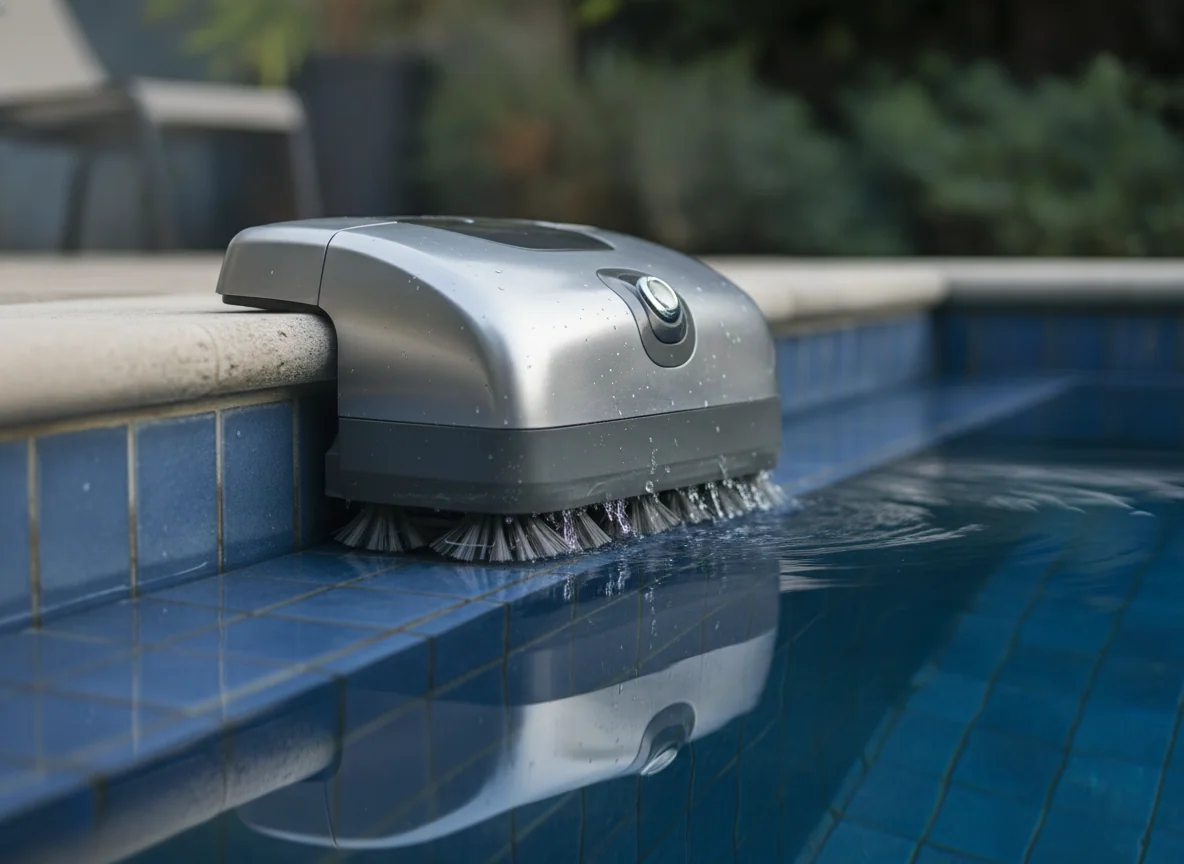
Skip the ZYERCH SAT20 as a dependable wall cleaner.
A healthy unit can climb and reach the waterline area, but that day-one ability does not survive the product’s broader ownership record.
Six of eight retained exact accounts described failure, serious deterioration, charging trouble, or replacement, with weakening wall adhesion among the recurring problems.
Choose the Beatbot AquaSense 2 Pro only for a premium multi-function experiment.
It can deliver strong wall and waterline cleaning in conventional geometry while adding occasional surface collection, clarifier dispensing, and edge-side parking.
Owners disagree sharply about wall reach and full coverage, while its weight, coarse filtration, long charging routine, and inconsistent skimming make the premium difficult to defend.
Choose this Aiper Scuba S1 for fine debris in a simple pool.
Its 180-micron basket and replaceable 3-micron layer make a persuasive cordless filtration case, and healthy units can provide strong floor coverage with useful wall and waterline work.
Climbing remains sensitive to finish and geometry, the fine insert adds rinsing and flow restriction, and exact switch, motor, charging, and early-unit faults prevent a stronger recommendation.
Skip the BOTLUXE PC10 unless easy returns make a gamble acceptable.
Good units can cover open floors, climb favorable walls, and scrub the waterline for buyers who want simple physical controls rather than an app.
Wheelies, short runs, deep-end stranding, movement failure, uncertain battery replacement, and an unclear warranty chain make ownership too speculative.
Choose the Aiper Scuba V3 for visible leaves and real horizontal waterline work.
Its camera can hunt obvious debris quickly, its pattern mode covers open floors well, and its dedicated waterline behavior includes genuine lateral travel rather than a brief surface touch.
Measured wall and feature coverage lagged its floor result, fine sand can be disturbed or returned, and the launch-period product lacks a multi-season durability record.
Consider this Aiper Scuba listing only after the seller confirms the exact model.
Owner evidence resembles a capable Scuba S3 with long runs, useful fine filtration, physical modes, and horizontal waterline cleaning in uncomplicated pools.
The listing calls it only an Aiper Scuba, conflicts over its color, and does not document the model clearly enough to support a confident purchase.
Choose the iGarden K36 only when long floor endurance matters more than certainty.
Healthy units can reach the waterline, clean ordinary debris, and provide useful physical controls with several wall-and-floor mode choices.
Filter restriction, algae, charge level, and exhaust flow can change climbing behavior, while wheelies, flipping, one-hour runtime, and Error 3 appear in exact first-unit reports.
Choose the iGarden KN35 for wall-first maintenance in a conventional pool.
Its purple mode prioritizes walls and waterline before the battery is spent on the floor, and exact owners support useful vertical cleaning in compatible basins.
Steps, tight corners, ladder gaps, raised fixtures, adhered silt, and random near-wall parking keep it from becoming a specialist recommendation.
Consider the Lodoba SAT25 only as a budget cleaner for conventional walls.
Exact demonstrations support genuine climbing and waterline contact on straightforward geometry, making it more than a title-only wall claim.
Fine-silt results, complete perimeter coverage, filter specifications, battery service, parts, and warranty protection remain too poorly established for a primary recommendation.
Skip the WYBOT B1 for dependable vertical cleaning.
It is light and physically capable of climbing five-foot walls, reaching the waterline, crossing a raised drain, and entering a tanning ledge.
Confused wall routes, skipped transitions, early loss of climbing, awkward basket access, coarse filtration, and one water-ingress failure make that capability unreliable.
Skip the Nepturox SAT25 despite its convincing wall traction.
Working units can stay planted on walls, cross transitions, brush the waterline, and collect ordinary dirt without requiring an app.
Severe first-unit charging and electrical failures, debris-sensitive climbing, mixed navigation, and unclear parts and warranty support create too much risk.
Consider the Lodoba SAT20 Pro only for straight walls and easy retrieval.
Several exact owners report climbs to the top and visible tile-line scrubbing in compatible vinyl, sloped-wall, and conventional pools.
Random routes, rounded-stair sticking, main-drain hang-ups, missed waterline sections, unreliable edge parking, and unknown filter and warranty details weaken the value case.
Choose the deep-blue Beatbot Sora 30 when you want the winner in another color.
It is the same RCMPM021 platform as the orange winner, with the same compelling case for walls, waterline, broad ledges, endurance, and surface-side retrieval.
Changing the color does not improve its coarse standard filtration, uncertain narrow-step coverage, app limitations, or young long-term record.
Choose the TALOSBO C1 as the value pick for a predictable pool.
It delivers credible tracked wall climbing, useful waterline scrubbing, dual-stage filtration, and physical wall modes without charging a premium for elaborate extras.
Its preset routes can repeat, drift, miss deep ends, or strand the robot around bowed walls and raised fixtures, so oval and freeform pools are poor bets.
Choose the BUBLUE Bubot 800P Gen2 only when continuous power is the priority.
Its corded design supports immediate reruns, large twin baskets, physical controls, active scrubbing, and credible wall and waterline contact without battery downtime.
Cable knots, heavy wet retrieval, app-pairing failure, incomplete coverage, contaminated marketplace reviews, and contradictory warranty language prevent a safe default recommendation.
Skip this WYBOT C1 revision when steps or durable wall coverage matter.
It can clean leaves and sand on open floors and plausibly climb continuous simple walls when battery, routing, and pool geometry cooperate.
The exact revision has almost no ownership history, while C1-family evidence flags missed shelves, trapped seats, battery shortfalls, early failures, and difficult support.
Skip the renewed Aiper Scuba N1 listing.
The underlying N1 can climb ordinary walls and reach the tile line, but renewed condition is part of the cleaning specification when every wall pass depends on usable battery capacity.
The listing does not identify the refurbisher, battery testing, remaining capacity, complete accessory set, or applicable warranty, and it even mixes N1 and S1 naming.
Choose the 2026 Aiper Scuba S1 as a floor-first cleaner with useful wall reach.
It pairs long standard-mode endurance with a valuable 3-micron insert and can turn wall and loose-waterline brushing into touch-up work in a simple pool.
Its 270-minute headline applies to Eco maintenance rather than full wall cleaning, while slow vertical routes, geometry-sensitive traction, strandings, and charging and motor concerns limit confidence.
For most buyers, the decision narrows quickly. Buy the Sora 30 if walls and a submerged ledge are the hard parts of the pool, choose the CC Pro if continuous corded waterline work matters more than charging convenience, take the Scuba V3 when visible leaves and deliberate tile-line travel dominate, or save with the TALOSBO C1 only when the pool is geometrically boring.
If the real nuisance is a tanning ledge or staircase rather than the wall itself, the more focused guide to robots for steps, shelves, and shallow areas applies a stricter geometry test. If floating leaves are the problem, none of these underwater claims substitutes for one of the best robotic pool skimmers.
Frequently Asked Questions
Will a wall-climbing robot clean the entire waterline?
No, because even genuine tile-line cleaners can descend early, repeat familiar sections, or miss perimeter areas where geometry or water flow interrupts traction.
Why does a robot climb well at first and then start falling?
A filling basket, clogged fine filter, weakening battery, slippery algae, obstructed exhaust, or poor track contact can reduce the water flow and traction that hold it against the wall.
Can a robotic pool cleaner remove calcium scale from the tile line?
No, a robot can agitate loose film and routine grime, but established calcium scale and attached deposits usually need suitable chemistry and manual brushing.
Will a waterline cleaner also clean steps and a tanning ledge?
Not reliably, because a broad submerged platform is a different obstacle from a narrow tread, and the robot still needs enough water, width, clearance, and track contact to turn and move.
Can the app steer a cordless cleaner while it is underwater?
Usually not, because Wi-Fi and Bluetooth are mainly useful for pre-run settings, schedules, logs, and updates rather than dependable submerged steering or recall.
Is surface parking the same as surface skimming?
No, surface parking helps retrieve the underwater cleaner at the end of a cycle, while skimming means collecting leaves, insects, and other debris floating on top.
Is a corded robot automatically better at climbing walls?
No, continuous power avoids battery fade and permits immediate reruns, but brush contact, suction, cable behavior, pool finish, and geometry still determine whether the wall gets cleaned.
How should I test a wall cleaner during the return window?
Watch repeated climbs on several walls, inspect sustained waterline behavior, add some debris to the basket, and test the drain, ladder gap, widest step, shallow shelf, parking routine, charger, app, and filter seal.
Are robotic pool cleaners worth buying just for the walls?
Yes, if a compatible cleaner turns frequent wall and tile brushing into occasional touch-ups, but the broader value calculation is explained in our guide to whether robotic pool cleaners are worth it .
Our Top Recommendation
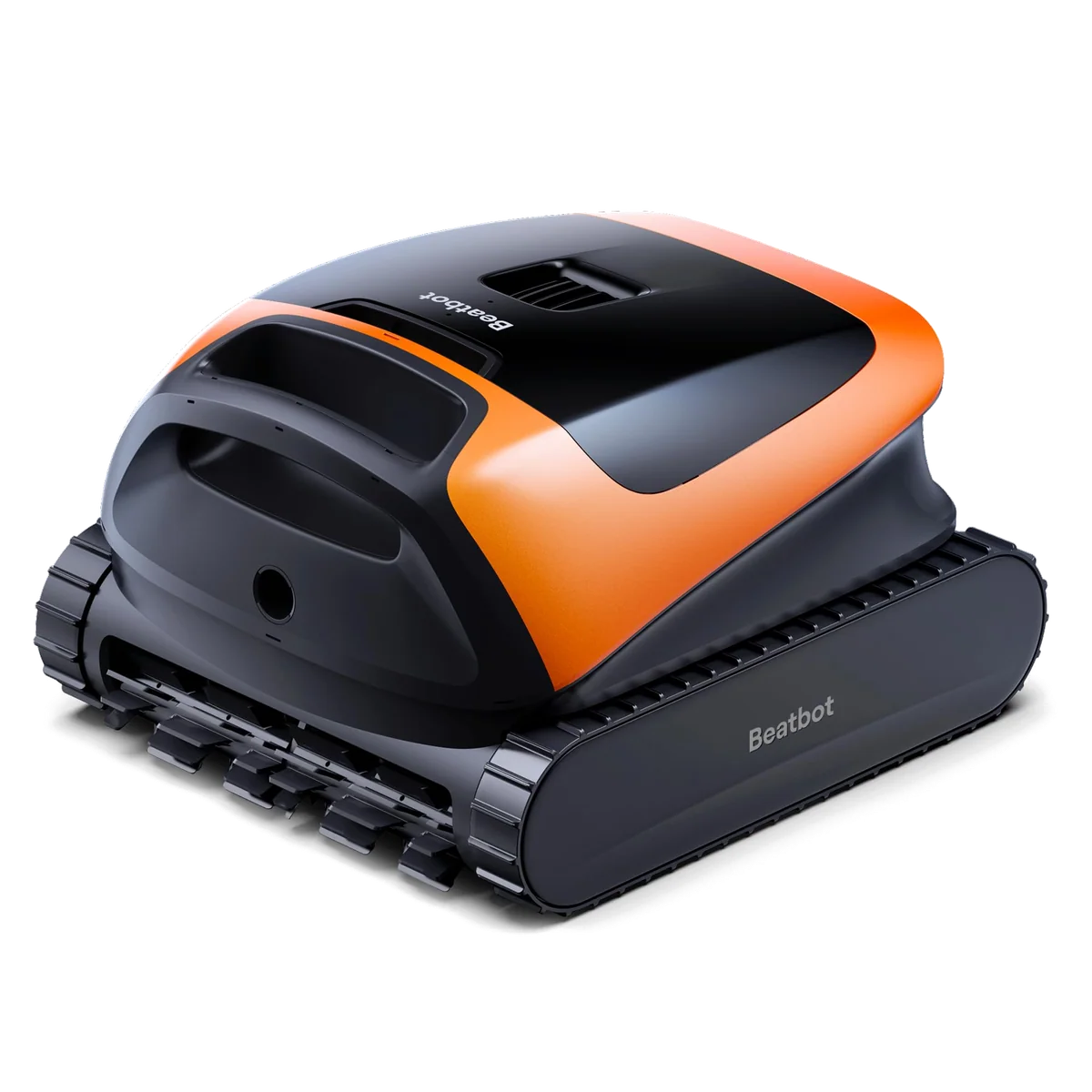
Based on our research, the Beatbot Sora 30 is our top pick — walls and waterline.
Sources (2)
- Amazon listings and customer reviews
- Owner and reviewer video, 3 channels