ZYERCH’s cordless cleaner makes a good first impression and a poor long-term case
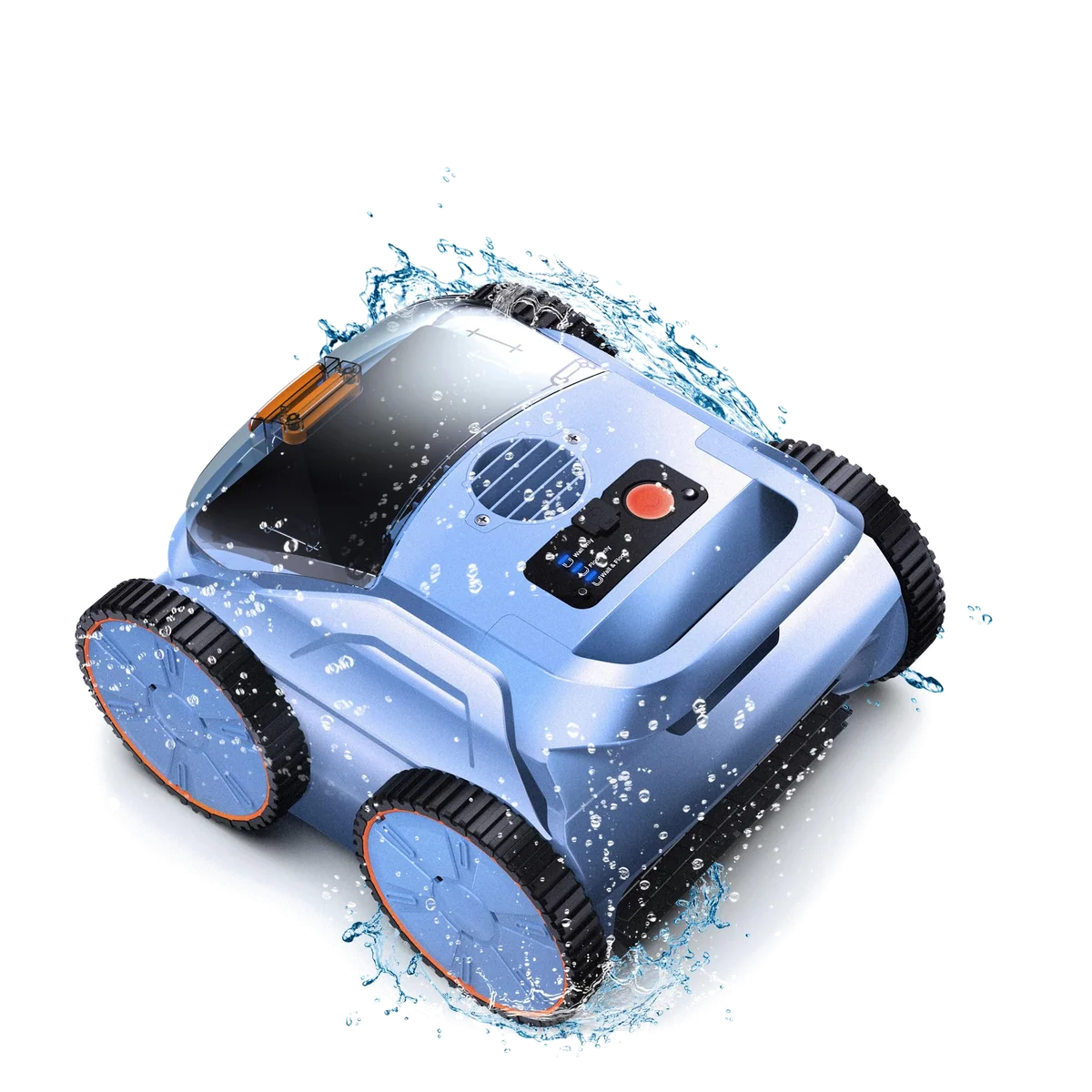
Skip the ZYERCH as a dependable main cleaner; consider it only as a budget gamble if cordless convenience matters more than proven durability and the current written warranty is unusually strong.
The final call
Do not buy the ZYERCH expecting it to replace a dependable cleaner for several seasons. The initial performance can be genuinely good, and the no-hose routine has obvious appeal, but the exact-product evidence puts too much risk into the battery, charging system, navigation, wall adhesion, and support path.
The narrow exception is a buyer treating it as an inexpensive cordless experiment rather than durable pool equipment. That buyer should have a simple inground pool, moderate routine debris, a dry storage and charging area, tolerance for retrieval after every cycle, and a saved copy of unusually favorable warranty terms. Everyone else should pay for a clearer ownership proposition, not merely a longer feature list.
A convincing first season is not the same thing as a durable pool robot. That distinction decides this review. Some owners describe strong initial pickup on textured pool floors, simple onboard controls, and wall climbing that made an obvious difference. The same exact-product record contains a far more consequential pattern: six of the eight retained reviews describe a breakdown, charging failure, substantial deterioration, or warranty replacement.
The attractive version of this product is easy to understand. It removes the hose, works independently of the pool pump, offers selectable cleaning modes, and can climb from the floor toward the waterline when healthy. The unattractive version is a cordless appliance whose battery, propulsion, navigation, or wall adhesion may deteriorate just as the next swimming season begins.
Consider it only if
You want an inexpensive-feeling route into cordless floor and wall cleaning, have a relatively uncomplicated inground pool, can retrieve and recharge the robot after each cycle, and are prepared to document the warranty before the return window closes.
Walk away if
You expect a multi-year primary cleaner, need dependable coverage around raised drains or complex transitions, rely on long sessions for a large pool, or want easily verified replacement batteries and parts.
Key Specifications
The specification sheet promises more certainty than the evidence allows
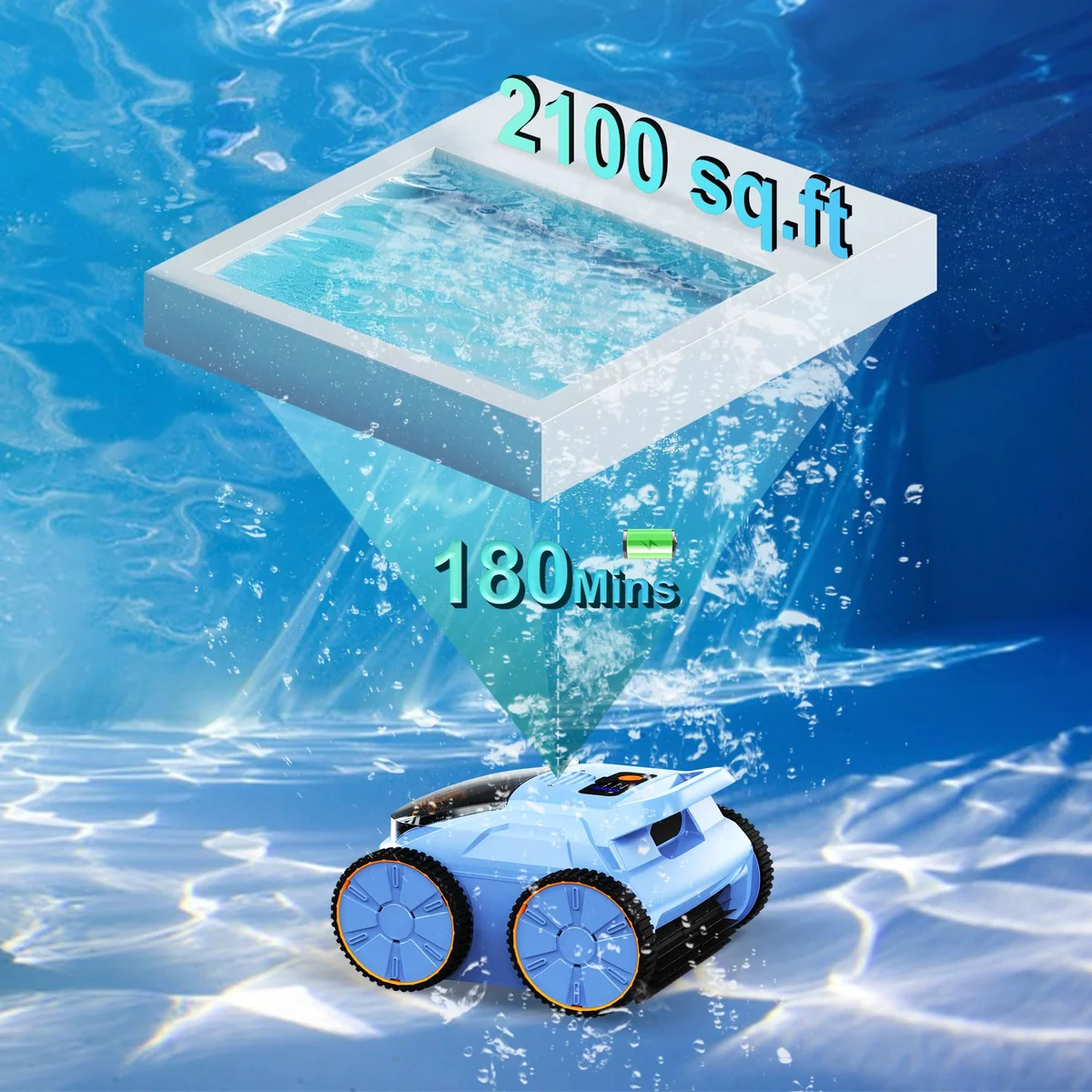
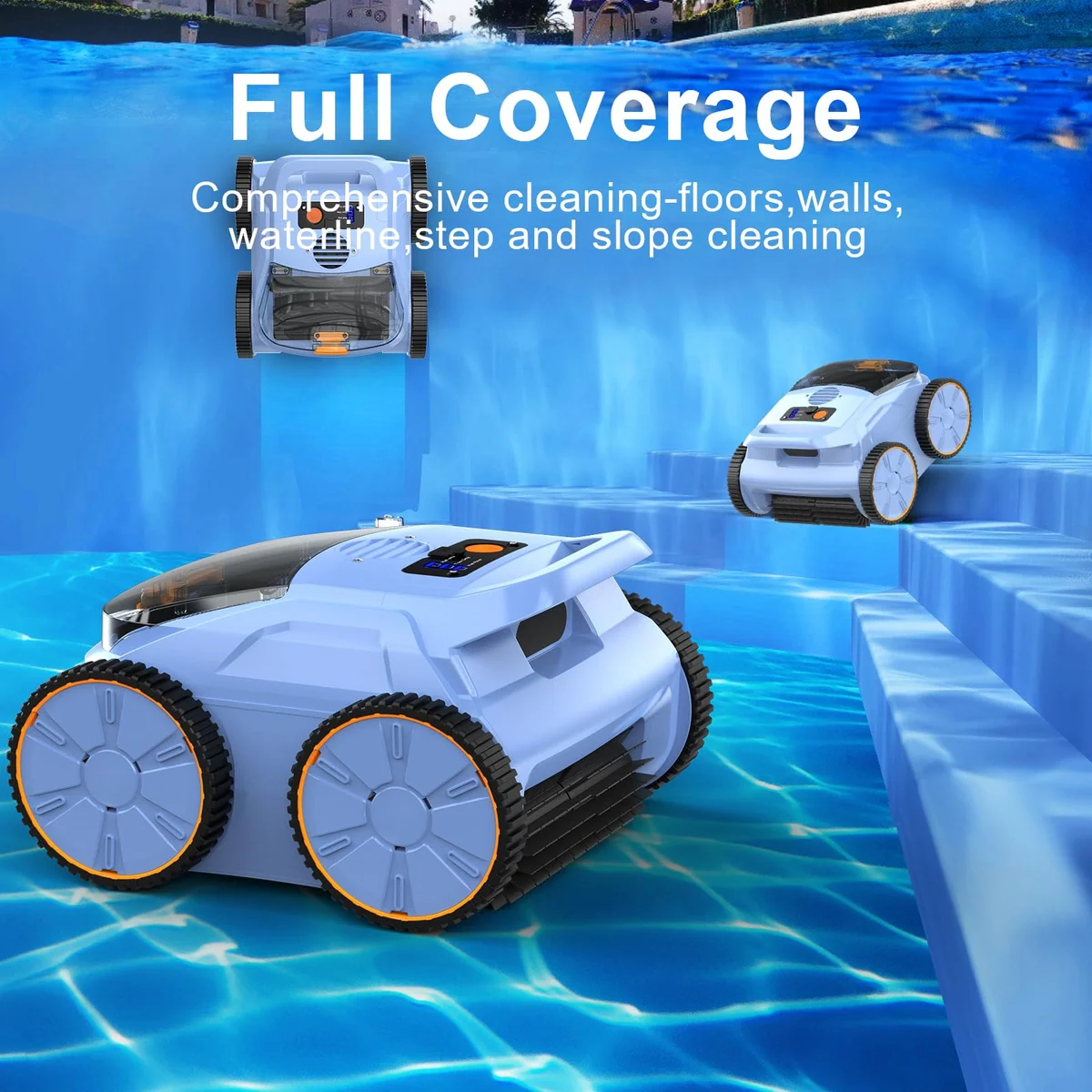
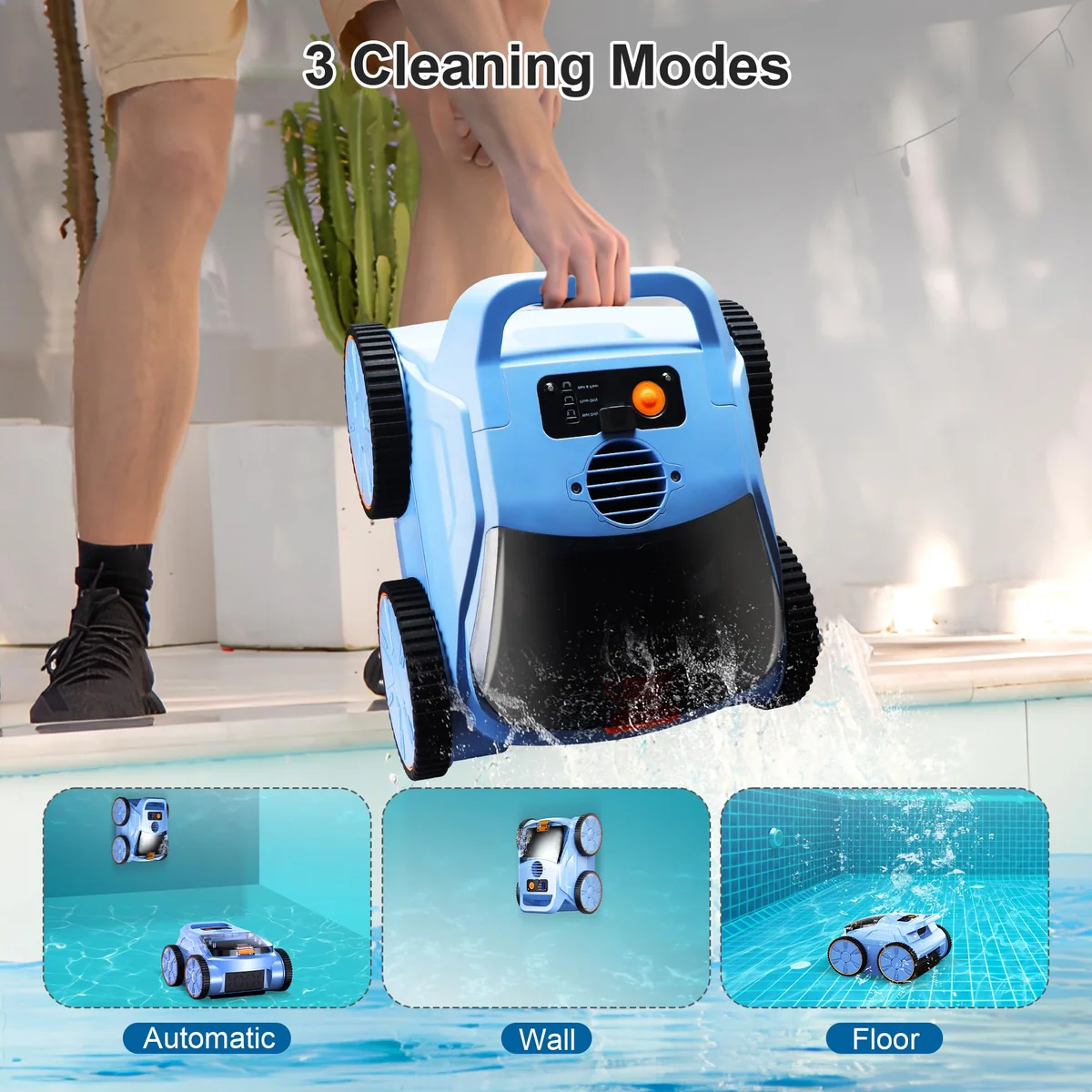
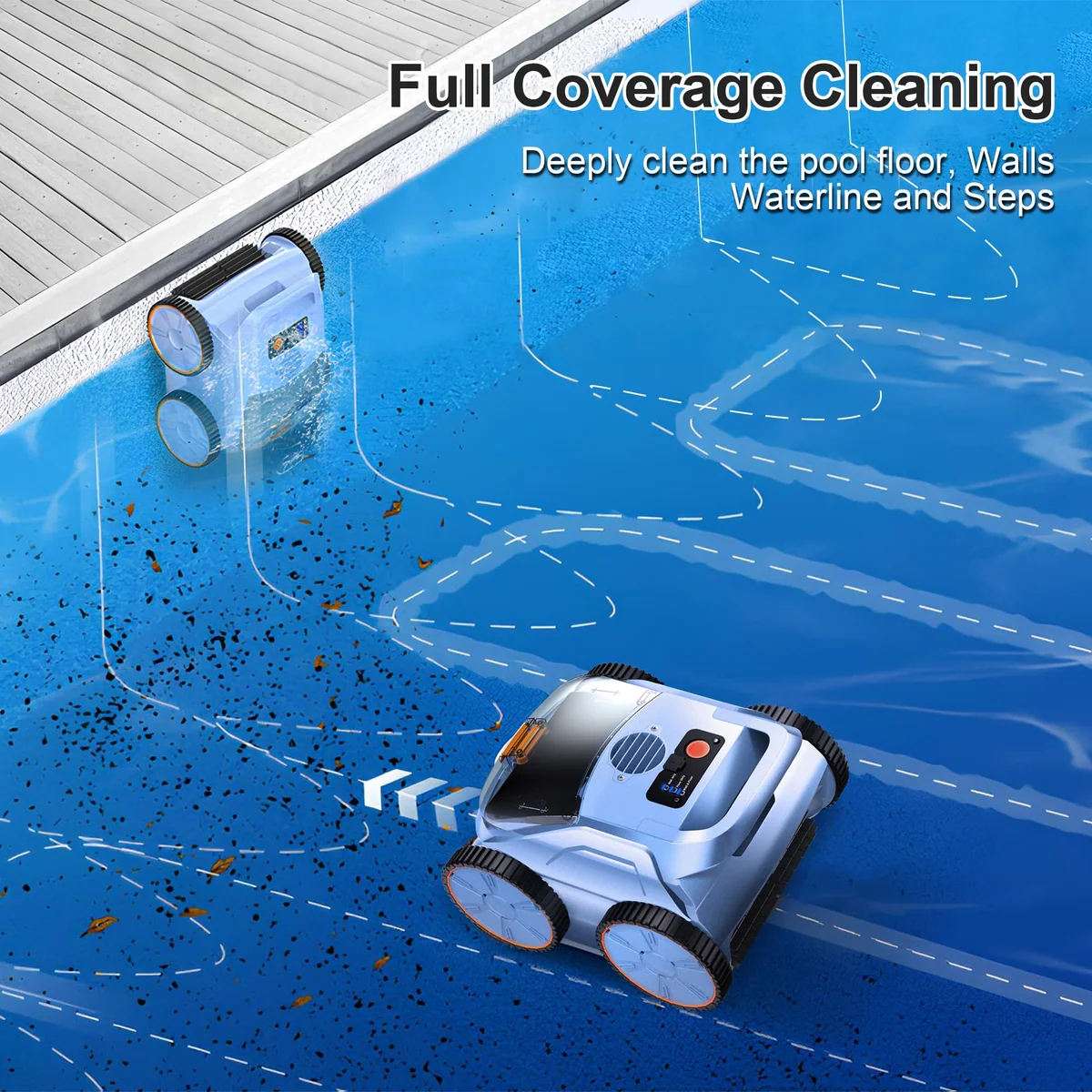
ZYERCH advertises a 7,800mAh battery, 180W brushless motor, 300 μm filter, four-wheel drive, more than 20 sensors, and an N-shaped route. The listing also promises floor, wall, and waterline cleaning. Those are meaningful features for a cordless robot, but sensor count is not the same as complete coverage, and the listing does not establish pool mapping, route memory, an app, or remote steering.
Pool sizing is especially muddled. The title says up to 2,000 square feet, a marketing bullet narrows that to 1,614 square feet, and the FAQ recommends pools up to 10 meters or 32.8 feet without explaining which dimension it means. A buyer should not treat the largest figure as a promise that the robot will cover every surface before its battery expires.
| Claim | What survives scrutiny | What remains uncertain |
|---|---|---|
| Up to 150 minutes | A seller-stated maximum for the exact listing. | One exact owner reported only 45 to 50 minutes, while several reported battery or charging deterioration. |
| Smart navigation | The intended behavior includes an N-shaped route and selectable modes. | Owners describe repeated lanes, wall stalls, object-contact confusion, and large missed areas. |
| Wall and waterline cleaning | Multiple owners watched healthy units climb walls, and one associated that cleaning with fewer wall-algae problems. | Wall adhesion and climbing were also among the functions reported to weaken after months of use. |
| Large-pool coverage | The battery and modes make broad coverage plausible in a simple pool. | The listing gives three incompatible sizing descriptions, and none demonstrates full coverage in a real 2,000-square-foot pool. |
| Powerful debris pickup | Some owners found substantial dirt and debris, including material missed by an existing cleaner. | Leaf pickup was inconsistent, with another owner repeatedly finding an almost empty basket despite visible leaves. |
The listing’s 300 μm filter is also a reason to keep expectations disciplined. It establishes a mesh specification, not proven capture of algae, pollen, or very fine silt. The seller’s own troubleshooting advice says to clean the basket if the robot stops climbing walls, which means filter loading can affect more than debris capacity.
Strengths & Limitations
Strengths
- Healthy units can climb walls and reach the waterline area.
- Some owners report strong routine dirt pickup on pebble and coarse gunite finishes.
- Onboard floor, wall, and combined modes avoid dependence on Wi-Fi.
- Cordless operation removes the hose and keeps debris in a separate basket.
- Two owners received complete replacement robots after charging failures.
Limitations
- Breakdowns and serious deterioration cluster around the transition to a second season.
- Reported navigation failures include repeated lanes, wall stalls, missed areas, and drain hang-ups.
- One exact owner measured only 45 to 50 minutes from a full charge.
- Leaf pickup is inconsistent even when debris remains visible on the floor.
- Reported warranty terms conflict, and post-window support access is not assured.
- The listing contradicts itself about the maximum pool size.
Good floor cleaning is real, but coverage can erase it
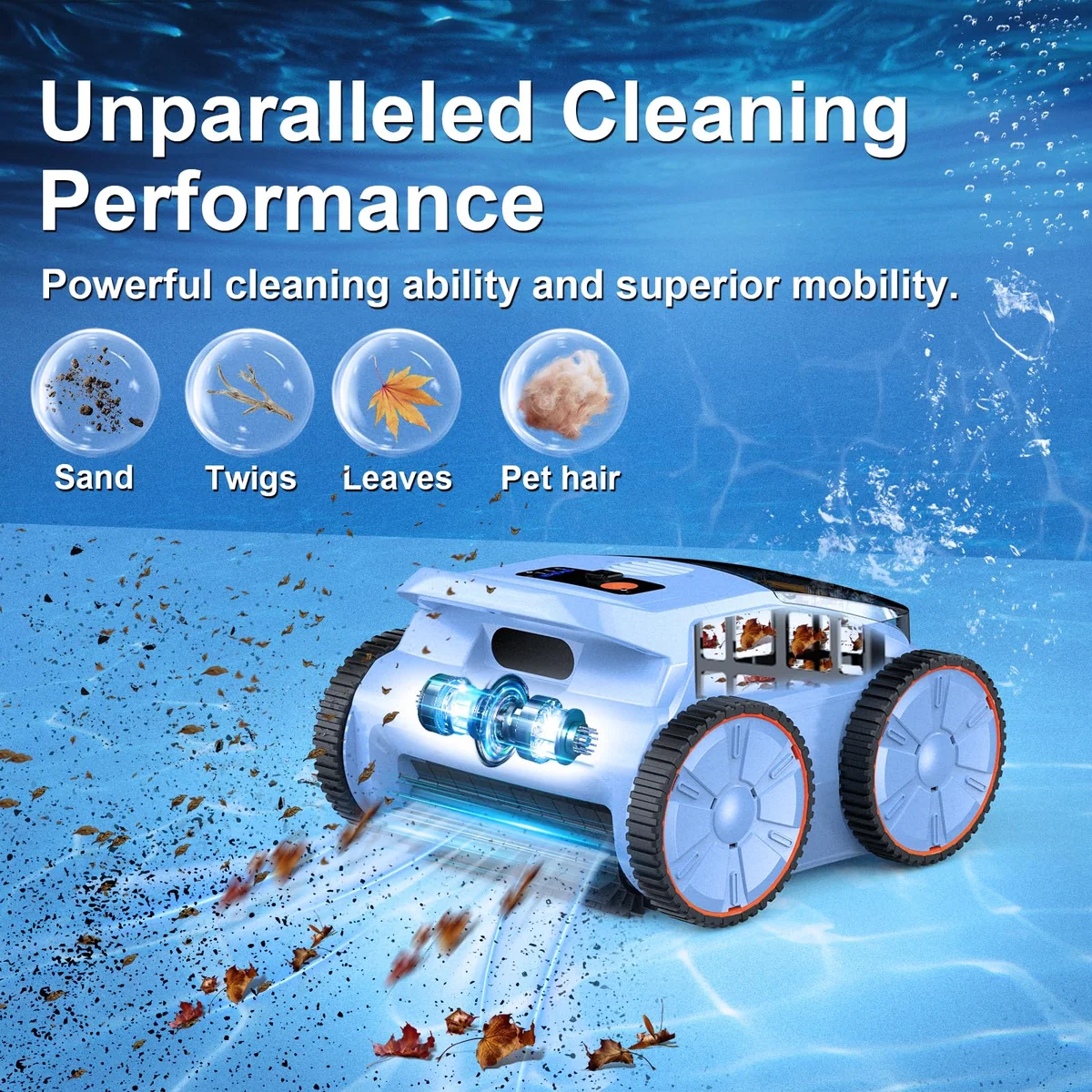
The best owner reports are specific enough to matter. One unit found dirt on a pebbled finish that a booster-pump cleaner had missed. Another picked up an unexpectedly large quantity from coarse gunite. Several owners saw satisfactory floor and wall cleaning during the first season, so this is not a case of a robot that never works.
The problem is that suction only helps where the intake actually travels. Dissatisfied owners saw units remain against a wall while the wheels spun, repeat one narrow lane, lose their pattern after touching an obstacle, or miss most of the floor. Main drains appear repeatedly as a trouble spot. One owner said a replacement with tank-like tracks stopped hanging on the drain, but that improvement also suggests hardware revisions may materially change what arrives under the same broader product identity.
Walls are an ability, not a guarantee
A healthy ZYERCH can climb. That point is supported by more than marketing copy, and wall cleaning is the clearest upgrade over a floor-only vacuum or a pressure cleaner that barely rises from the bottom. It is still unsafe to promise complete waterline scrubbing. The exact owner record proves that some units reach the wall and waterline area, but it does not establish full-perimeter coverage, consistent scrubbing pressure, or lasting performance.
The closest controlled adjacent test involved a Seauto SAT20, not this exact ZYERCH ASIN, so its numbers cannot be transferred directly. That related machine covered about 95% of the floor but only about 40% of the walls, struggled with a deep-end ledge, and performed poorly at the waterline. Its leaf pickup was below average while sand, silt, and small-rock pickup was stronger. The resemblance makes those results a useful warning about the platform’s likely priorities, not proof of the ZYERCH’s exact performance.
Routine dirt is a better assignment than storm debris
The evidence fits a maintenance cleaner better than a rescue machine. Settled dirt and moderate debris on open floor areas are its most defensible jobs. Broad leaves, twigs, loaded baskets, corners, steps, ledges, raised drains, and abrupt transitions introduce too many ways for nominal power to become irrelevant. Owners with a simple pool and frequent cleaning schedule give this robot its best chance; owners who wait until the floor is covered are asking it to solve the least-supported problem.
Cordless convenience is not the same as automatic ownership
A robotic cleaner is already a pool vacuum: it carries its own motor, intake, filter, and drive system instead of depending on suction from the pool pump. The term “cleaner” describes the broader machine, while “vacuum” describes one of its jobs. For the underlying mechanics, our guide to how robotic pool cleaners work explains the water path and cleaning cycle.
Compared with a suction-side cleaner, the ZYERCH removes the hose, keeps collected debris out of the main pool filter, and can attempt walls and the waterline. The trade is a hands-on cycle of charging, inserting, retrieving, draining, rinsing, drying, and storing. Suction cleaners are usually simpler to repair and can operate while the pump runs, although they leave a hose in the pool and add debris to the pool’s filtration system.
That makes this product a poor fit for anyone imagining permanent, unattended automation. It suits a pool owner who actively chooses each cleaning cycle and values a clear swimming area between runs. Our broader robotic versus suction-side cleaner guide is the better next stop if the hose, pump load, repairability, and retrieval routine are still competing priorities.
The captured listing positioned the ZYERCH as a budget model, but its 3.2-star rating from 168 ratings already signaled that the aggressive feature list was not producing uniformly happy ownership. If cordless operation remains non-negotiable, compare it with the models in our cordless robotic cleaner guide. If multi-season confidence matters more than removing the cable, the Dolphin Nautilus CC review covers an established corded alternative without pretending the two ownership routines are identical.
The second season is where the recommendation collapses
The long-term reports are unusually coherent for a small retained set. One robot was completely dead after one year and two months. Another worked well through its first summer, then returned with weaker wall adhesion, erratic routing, and poorer pickup. A third had been used only about six times before it failed to move the following season. Another progressively lost battery life, wall climbing, obstacle handling, and route variation until it cleaned little more than a narrow strip.
Two positive support stories began with the same unwelcome event: a unit that would no longer charge or power on. Full replacement robots are generous warranty outcomes, and one replacement apparently included a useful track redesign, but service success does not cancel the first machine’s failure. It merely changes who absorbs the loss.
The warranty is both the safety net and another uncertainty
Owner accounts refer to one-year, three-year, and lifetime coverage. Those terms cannot all be treated as the settled warranty for this exact listing. Two owners received complete replacements, while another could not find a way to reach the company after Amazon’s ordinary support window closed.
Save the product page, order record, seller identity, serial and model details, support address, and written warranty terms as soon as the robot arrives. Confirm whether the battery can be replaced, whether filters and drive parts can be purchased, and whether the seller handles claims after Amazon’s interface stops offering routine support. If those answers are vague, the low entry cost is financing uncertainty rather than eliminating it.
Frequently Asked Questions
Does the ZYERCH really climb pool walls?
Yes, multiple owners saw healthy units climb walls, but several also reported that climbing weakened or stopped after months of use.
How long does the ZYERCH run on one charge?
The exact listing claims up to 150 minutes, while one exact owner reported only 45 to 50 minutes and others described battery deterioration.
Is the ZYERCH good at picking up leaves?
Leaf performance is inconsistent, with some useful debris pickup but one owner repeatedly finding the basket nearly empty despite leaves remaining on the floor.
Does it get stuck on main drains?
Several owners reported drain hang-ups, although one said a replacement with tank-like tracks solved the problem in that particular pool.
Does this cleaner have an app or remote control?
The exact evidence supports onboard mode selection but does not establish an app, remote control, live steering, or room-vacuum-style mapping.
Can the ZYERCH clean steps and tanning ledges?
Step and ledge performance is too dependent on depth, shape, transitions, and traction to promise from the supplied exact-product evidence.
Can the ZYERCH remain in the pool between cycles?
Treat it as a remove-after-use cleaner that must be retrieved, rinsed, dried around the charging area, recharged, and stored before its next cycle.
Is ZYERCH the same brand as Zurich?
No, ZYERCH is the spelling shown on the pool-cleaner listing and the supplied evidence establishes no connection to Zurich, Switzerland, or Zurich Insurance.
What warranty does the ZYERCH include?
The retained owner reports conflict between one-year, three-year, and lifetime coverage, so only the current written terms for the exact seller and ASIN should guide a purchase.
Is the ZYERCH robotic pool vacuum worth buying?
It is worth considering only as a warranty-backed budget gamble for cordless convenience, not as a confidently durable primary cleaner.
Sources (2)
- Amazon listings and customer reviews — Zyerch Robotic Pool Vacuum
- Owner and reviewer video, 2 channels