A Pool Robot’s Real Lifespan Is Decided by Its First Expensive Failure
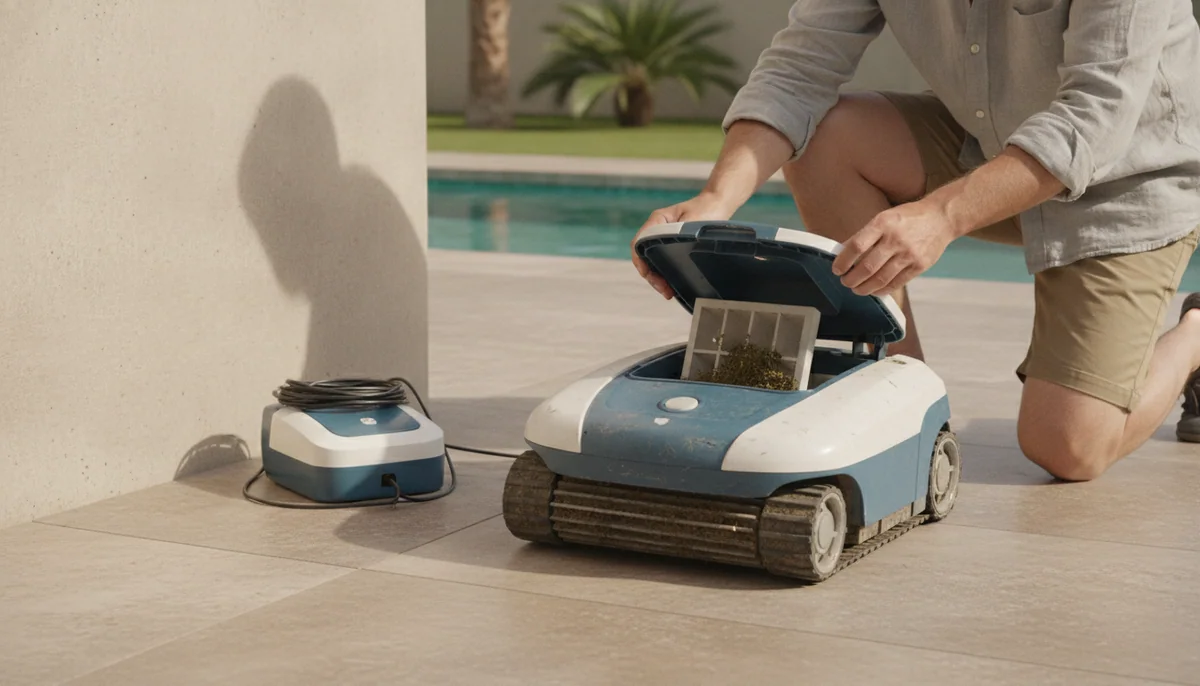
There is no defensible single number for the life of every robotic pool cleaner. The record supplied to Smart Pool Bots runs from machines that failed on their first few uses to established corded cleaners still doing useful work in years two and three, plus individual histories of older Dolphins lasting much longer. Those outcomes cannot be averaged into a trustworthy category promise because the models, workloads, care routines and evidence windows are radically different.
A convincing first clean proves that a robot can clean. Its second spring begins to prove that it can survive ownership. One ZYERCH record captures that distinction unusually well: cleaners that impressed during the first summer later returned from storage with shorter endurance, lost wall adhesion, repetitive routing or no electrical response at all. That cluster is a serious warning, but its small review set still cannot establish how often the outcome occurs across all units.
The practical answer is therefore conditional. A cleaner can serve for several seasons when its first worn or failed component is identifiable, obtainable and worth replacing. Its useful life can end within months when the decisive component is sealed, proprietary, unsupported or expensive enough to make another machine the rational choice.
Minutes on a charge are not years in the pool
Pool-cleaner listings crowd the reader with 90, 180, 270 or even 300 minutes. Those numbers describe a cleaning session under particular conditions. They do not say how many charge cycles the battery will retain, whether the charging contacts will corrode, whether a replacement pack exists or whether the robot will still navigate properly next season.
| Term | What it actually describes | What it does not establish |
|---|---|---|
| Runtime | Minutes or hours available for one cleaning cycle or operating mode. | Battery health after repeated charging or years of ownership. |
| Warranty | The contractual remedy for qualifying faults during a stated period. | Uninterrupted operation, fast service or survival through the coverage period. |
| Service life | The period during which the whole cleaner remains useful for its intended pool. | That every original component remains fitted or performs as it did when new. |
| Repairable life | The additional service gained by replacing wear parts or failed modules. | That a theoretically replaceable part is available, affordable or supported. |
The distinction matters most with cordless robots. A healthy new unit completing a long cycle with battery remaining has useful capacity headroom today, but that result says nothing about the rate of future cell aging. A five-hour recharge claim is equally silent about battery replacement, seal life and charging-port durability.
The machine dies when the repair path disappears
A robot rarely wears out as one indivisible object. Brushes abrade, tracks stretch, hair wraps around shafts, filter media loads up, cables deteriorate, batteries lose capacity and power electronics fail. Ordinary wear becomes terminal only when the owner cannot isolate the fault, obtain the part or justify the repair.
Battery and charging system
Declining runtime, refusal to charge, wet contacts, damaged port covers and proprietary chargers can end cordless ownership even while the brushes and chassis remain sound. The important question is not whether an aftermarket teardown is physically possible; it is whether safe battery service is documented and supported.
Power supply and electronics
Corded cleaners avoid traction-battery aging, but they still depend on an external power supply, controller, floating cable, connectors and internal motor modules. A dead control box after a few uses can make a mechanically new robot look finished.
Water protection
Seals, charging caps, cable entries and sensor windows must tolerate repeated immersion, heating, cooling and chemical exposure. Factory water testing can catch an immediate leak, but it cannot prove that every seal will remain sound across seasons.
Small structural parts
Basket gears, filter latches, guide wheels, paddles and charging-port attachments receive less attention than motors, yet one unavailable piece of plastic can determine the economic life of the complete machine.
Filters and debris paths
A packed basket or restrictive fine insert can reduce flow, shorten cycles, weaken climbing and increase load. A robot that seems tired may need a clean filter, cleared impeller or correctly seated basket rather than a funeral.
Software and sensing
Firmware can rescue poor routing or configuration, but it cannot restore corroded contacts or exhausted cells. Camera lenses, sensor windows, account binding and app support also become part of useful life on feature-heavy machines.
Corded and cordless cleaners age in different places
Corded
The repairable platform has the stronger long-life case
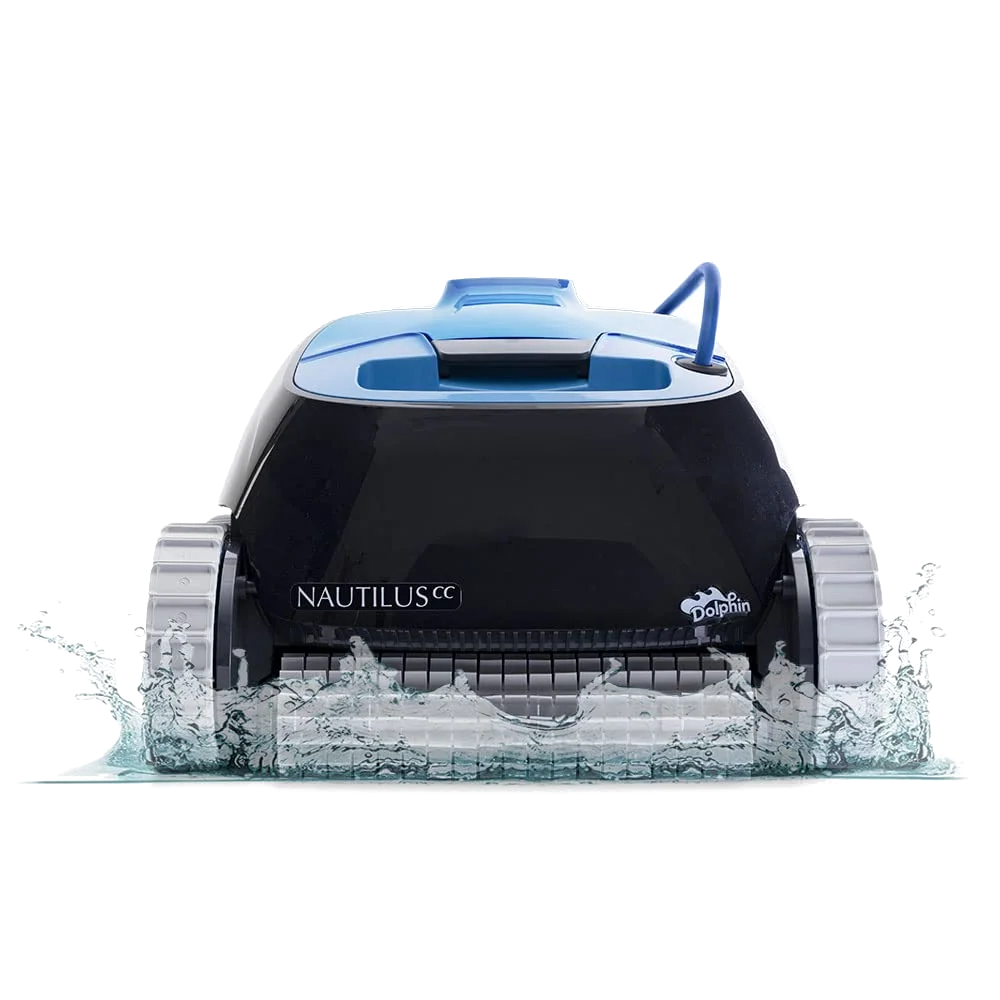
The Dolphin Nautilus CC supplies the clearest exact-model example in this record. Owners tied to the current product identity reported useful cleaning into years two and three, sometimes after replacing tracks, brushes, a wheel or a deteriorating cable. One rear-wheel problem was repaired inexpensively, while replacing the deteriorating cable near year three cost roughly ten times as much.
That is not three years of untouched operation, and it is not a promise for every Nautilus. It is evidence of what repairable longevity looks like: the cleaner survives the first worn component because there are recognizable parts and repair knowledge. Replacement demonstrations for the Nautilus platform cover items such as tracks, brushes, cables and other service pieces rather than treating the entire chassis as disposable.
The honest drawback is that corded does not mean carefree. The Nautilus record also includes very early power-supply failure, cable tangling and chemical deterioration, while the current base CC lacks an anti-tangle swivel and carries only the one-year coverage established in this record. Readers considering it for its mature service path can see the full trade in the Smart Pool Bots Nautilus CC review.
Cordless
The battery adds convenience and a second clock
Cordless ownership removes the in-pool cable and external transformer, but every substantial cycle ends with retrieval, drainage, filter cleaning, contact drying and charging. The sealed battery ages whether the rest of the machine looks worn or pristine, and its declining capacity can end practical usefulness before complete electrical failure if it no longer covers the pool.
The AIPER Seagull SE 2025 makes the risk plain. Exact owner reports include original units failing after days, replacements that stopped charging after a few uses and a seasonally used cleaner that stopped holding a charge after only a handful of active months spread across two summers. A documented battery replacement required opening and resealing a motor housing, which is technical possibility rather than sensible owner maintenance around water and a lithium battery.
The more capable Scuba S1 record is mixed rather than uniformly grim. It includes apparent first-cycle failures, a power-switch failure around ten months and positive examples at roughly 12 to 15 months. Responsive warranty replacement protected some owners from total financial loss, but the failed originals remain failure evidence and the packing, shipping and seasonal downtime remain ownership costs.
Cordless cleaners are not automatically short-lived, and corded cleaners are not automatically durable. The evidence supports a narrower conclusion: an integrated battery and wet charging routine create additional life-limiting components, so battery service and charging support deserve the same weight as suction and navigation.
The owner record spans days, seasons and thousands of hours
The examples below are not a reliability ranking. Review sets differ in size, exact models differ in age and unhappy or delighted owners self-select into public reviews. A documented failure establishes that the failure can occur; it does not reveal the percentage of all units affected.
| Cleaner | What the record shows | What it does not prove |
|---|---|---|
| Dolphin Nautilus CC | Useful service into years two and three, including examples extended by wear-part replacement. | That every current unit will reach three years or avoid an early power fault. |
| Betta SE | Multiple owner accounts around two years, including near-continuous surface operation and replaceable propulsion hardware. | That two years is the model average or that sun, chemistry and constant motor hours are harmless. |
| AIPER EcoSurfer S2 | One diary recorded 1,904 cleaning hours before a second-season propeller failure, followed by repair and another basket-drive problem. | That 1,904 hours is an expected service interval. |
| Dolphin E10 2026 | An exact unit reportedly stopped after six weeks, while other complaints involved hatch tabs, debris retention and support friction. | That the older E10 family or Dolphin brand history predicts this revision’s lifespan. |
| iGarden K36 | One exact cleaner produced an Error 3 on the second attempted use, while other units supplied several hours of useful early cleaning. | That either outcome represents the typical K36. |
| Beatbot Sora 30 | Positive reports reach about 30 cycles or three months, while one owner reported an unusable machine within two months after fitting an ultra-fine accessory. | That strong early capacity or a two-year warranty establishes multi-season durability. |
| Vidapool solar skimmer | The retained set contains a concerning cluster of contact, mesh, paddle, plastic and power failures within roughly one to four months. | That every unit lasts only four months or that the retained reviews form a representative failure rate. |
Calendar age also hides workload. A solar skimmer patrolling almost continuously can accumulate thousands of motor hours in two seasons, while a floor robot used once or twice a week may have completed far fewer cycles after three years. The EcoSurfer’s recorded operating hours are therefore more informative than the phrase “second season,” even though one owner’s number still cannot become a product-wide expectation.
Surface skimmers live a harder-looking but different life
A robotic surface skimmer is not directly comparable with a submerged floor vacuum. It spends longer in direct sun, runs its propulsion hardware for extended periods and continually encounters leaves, hair, pollen and floating fibers. Its basket, panel, exposed propellers and guide hardware can see much more continuous work, even though it avoids climbing walls and scrubbing a pool floor.
The Betta SE has the strongest encouraging skimmer history in this record. Owners reported about two years of service, including nearly continuous Florida use, and documented replacement routes for anti-stranding feet, a guide wheel and threaded motor or propeller modules. Its honest drawback is exposure: it is solar-only, lives at the surface and still requires basket cleaning, shaft inspection and indoor storage for long shutdowns.
The EcoSurfer S2 shows the other side of modularity. A propeller problem received free repair, but a replacement-basket shortage led to whole-unit replacement in another case. Generous support can save the purchase while simultaneously revealing weak parts logistics. The reader who wants a skimmer should compare those ownership paths in our robotic pool skimmer guide, not assume that “24/7” is a lifespan claim.
A new model cannot have an old reputation
Product age is an evidence limit, not a defect. The Lodoba SAT25 was released in March 2026, so it cannot honestly possess a five-year exact-model record by September 2026 regardless of its rating, claimed runtime or resemblance to an older chassis. Its battery replacement, exact wear-part supply, repair channel and warranty administrator were not established in the supplied record.
The same caution applies to sophisticated newcomers. The AIPER Scuba V3 has favorable early support accounts and a two-year product-care claim, but no exact-model evidence yet follows its battery, seals, motors, camera and electronics through multiple seasons. Calling it durable or short-lived now would be a forecast dressed as a finding.
Brand history cannot fill that gap. An older Dolphin lasting nine or fourteen years shows that long service is possible on a different machine with a different supply chain, not that a newly revised E10 will repeat it. A new model deserves credit for current cleaning performance and written protection, then earns a longevity reputation one season at a time.
More intelligence creates more things that must stay intelligent
Cameras, mapping, apps, ultrasonic sensors and elaborate parking systems can make a cleaner more capable. They also add lenses, windows, control boards, software dependencies and proprietary modules that may need support later. Component count alone does not predict failure, but it enlarges the set of systems that must remain functional for the buyer to receive the product they paid for.
One AquaSense 2 Ultra owner reported front and side sensor covers becoming cloudy and opaque after two summers. Other limited reports describe unresolved standby behavior around ten months and a year and a half. Those cases are too few to establish prevalence, but they show how a premium robot can lose useful capability through sensing or control problems while its shell and brushes remain intact.
Renewed cordless machines intensify the uncertainty. Cosmetic condition says little about remaining battery capacity, sensor exposure or prior account status. A renewed robot is worth considering only when the refurbisher, battery test or replacement, accessories, return rights and exact warranty eligibility are documented.
A warranty buys a remedy, not an uninterrupted season
A one-, two- or three-year term can reduce financial exposure to an early fault. It cannot tell the buyer whether service will mean a small part, a depot repair, a whole-unit replacement or a dispute over seller authorization. It also says nothing about packing a wet appliance, keeping the original box, paying outbound freight or waiting through peak leaf season.
Seasonal ownership makes short coverage especially awkward. A cleaner bought near the end of summer can consume much of a one-year warranty while stored, then expose a weak battery at the start of the next swimming season. Calendar coverage and active months of use are not the same thing.
Conflicting warranty language is itself a purchase warning. When a marketplace listing, manufacturer page and enclosed paperwork disagree, save the controlling terms and ask the seller to identify the legal warrantor, covered components, freight responsibility and remedy in writing. “Lifetime support” means access to a conversation; it is not lifetime parts, repair or replacement.
Care can reduce avoidable wear without curing a bad component
Good maintenance cannot transform weak seals or defective cells into durable hardware. It can keep packed filters, wound hair, wet charging contacts, careless lifting and chemical exposure from becoming preventable reasons for early retirement.
- Remove ordinary floor cleaners after their intended cycle. Let retained water drain, then lift by the chassis handle rather than the electrical cable, basket handle or charging hardware.
- Empty the filter before debris compacts. Rinse primary baskets and fine inserts because restricted flow can reduce pickup, climbing and cycle completion.
- Clear moving parts early. Inspect impellers, propeller shafts, wheels, tracks and brushes for hair, twine, dog fur and plant fibers when motion weakens or noise changes.
- Dry every charging surface. A rubber cap does not make a wet recess ready for current, so clean and dry ports, pins, contacts and dock surfaces before connection.
- Protect the power equipment. Charge in a ventilated dry location on a heat-tolerant surface, keep non-waterproof supplies away from the pool and follow the exact manual’s distance requirements.
- Reduce ultraviolet and chemical exposure. Store the cleaner shaded and dry, protect corded controllers and straighten floating cables instead of forcing tight coils.
- Follow exact off-season battery instructions. Storage charge and recharge intervals vary, so generic lithium advice should not replace the model’s manual.
- Test before opening day. Charge and run the robot well before the pool must be ready so a storage-related fault does not become an emergency purchase.
Continuous submersion is a service-life trade, not a free convenience: one Nautilus owner obtained years of heavy use while leaving the robot deployed for long periods, but the same history included worsening tangles and a chlorinated cable jacket that deteriorated and shed flakes.
The return window is your first durability test
Long-term life cannot be compressed into a few weeks, but early faults and poor pool compatibility often can. Use the return period as a deliberate proof test rather than saving the robot for later.
Before checkout
- Match the exact model number, revision and seller to the written warranty.
- Confirm whether the battery, charger, cable, power supply, motors and water ingress share the same coverage.
- Identify who pays freight and whether the remedy is repair, replacement or retailer exchange.
- Find current listings for the exact filter, basket, tracks, wheels, brushes, charger and other wear parts.
- Ask whether battery service is owner-supported, authorized-service-only or unavailable.
- Preserve the listing, order record, serial number, warranty terms and packaging.
Before the return deadline
- Run every advertised mode in the actual pool rather than a shallow visual check.
- Record useful runtime across several charges so future battery decline has a baseline.
- Test drains, seams, wrinkles, slopes, ladders, walls, steps and retrieval position.
- Empty and reassemble the entire filter system to expose weak latches or confusing alignment.
- Watch for error lights, intermittent starts, excessive charger heat, sparks or GFCI trips.
- Inspect charging contacts, cable jackets, port caps, sensor windows and hidden recesses after use.
- Reject recurring random stopping or second-cycle failure instead of accepting it as normal navigation.
The buying decision is really about the first repair
Best-supported longevity bet
Choose a mature, repairable corded platform when years of service matter more than eliminating the cable
The Nautilus CC is the clearest example here because exact owners reached multiple years and replacement paths exist for ordinary wear. Its limitation is substantial: early power-supply failures are documented, the current cord can tangle and deteriorate, and its established one-year coverage is not generous.
Cordless buying rule
Choose the service ecosystem before choosing the longest runtime claim
A useful cordless purchase has written battery coverage, a dry and repeatable charging routine, obtainable filters and a seller that can actually replace or repair the unit. Its limitation is unavoidable uncertainty when the exact revision has not survived enough seasons to reveal battery, seal and port aging.
Surface-skimmer exception
Consider the Betta SE when continuous debris interception matters and modular propulsion offsets some wear risk
Its exact owner history reaches about two years and motor-related service is documented. Its limitation is that solar-only operation and long surface residence leave the panels, propellers, battery and plastics continually exposed while plug-in rescue is absent.
Walk-away condition
Skip any cleaner whose warrantor, battery route and essential replacement parts cannot be identified
Strong first-use suction cannot compensate for an unavailable charger, basket, paddle, cable or sealed battery. The limitation of this strict rule is that it excludes some inexpensive new products that may ultimately prove durable, but the buyer should not finance that experiment without a clean return route.
Readers still choosing among current machines can use our overall robotic pool cleaner guide, while buyers committed to battery power should narrow the field with the cordless cleaner guide. In either case, the model with the longest cycle is not necessarily the model with the longest life.
The useful answer is not a year count
A pool robot can fail in days, serve through several seasons or remain economical far longer through ordinary repairs. The records do not justify calling any one of those outcomes typical for the whole category. They do justify a firm buying stance: favor machines whose battery, cable, power supply, filters, tracks and other predictable failure points have a documented route back to service.
Plan around the written warranty until the exact model earns a longer record, then treat every additional repairable season as value rather than entitlement. The machine that survives is not always the one with every original part; it is the one whose first failed part did not end the conversation.
Frequently Asked Questions
Can a robotic pool cleaner serve for ten years?
An older repairable corded cleaner can reach that age in an individual owner history, but such a survivor is not a promise for a current model or a sealed cordless design.
Does a cordless cleaner necessarily wear out before a corded one?
No, but a cordless cleaner adds battery aging and wet charging hardware while a corded cleaner shifts its major risks to the cable, external power supply, controller and motor modules.
Does a three-year warranty mean three years without failure?
No, because a warranty specifies remedies for qualifying faults and may still involve exclusions, freight, diagnosis, downtime or whole-unit replacement.
Should the cleaner remain underwater between cycles?
Follow the exact manual, since extended submersion increases chemical and ultraviolet exposure for many floor robots even though surface skimmers are designed for longer deployment.
How can an owner recognize battery aging?
Compare useful runtime and completed coverage with a baseline recorded when the cleaner was new while ruling out a clogged filter, heavier debris load, colder water and a different cleaning mode.
Is a robot dead when it stops moving?
Not necessarily, because a full basket, wrapped impeller, stiff propeller, worn track, damaged wheel, wet charging contact, cable fault or failed power supply can imitate terminal motor failure.
Do careful cleaning and storage guarantee a longer life?
No, but rinsing filters, clearing moving parts, drying charging hardware and reducing chemical and sun exposure can prevent avoidable stress while revealing faults sooner.
Is a renewed cordless cleaner a safe way to save money?
Only when the refurbisher, remaining battery health, included accessories, return period and exact warranty coverage are documented for the unit being sold.
Sources (3)
- Amazon listings and customer reviews
- Owner reports across r/pools, r/Beatbot_Tech threads
- Owner and reviewer video, 2 channels