The Aiper Scuba V3 beats the S3 only when the camera matters
The Scuba V3 wins because its camera has proved useful and its exact identity is clear, but the S3 is the more rational concept for routine cleaning if the seller can confirm the model and you accept its thinner reliability record.
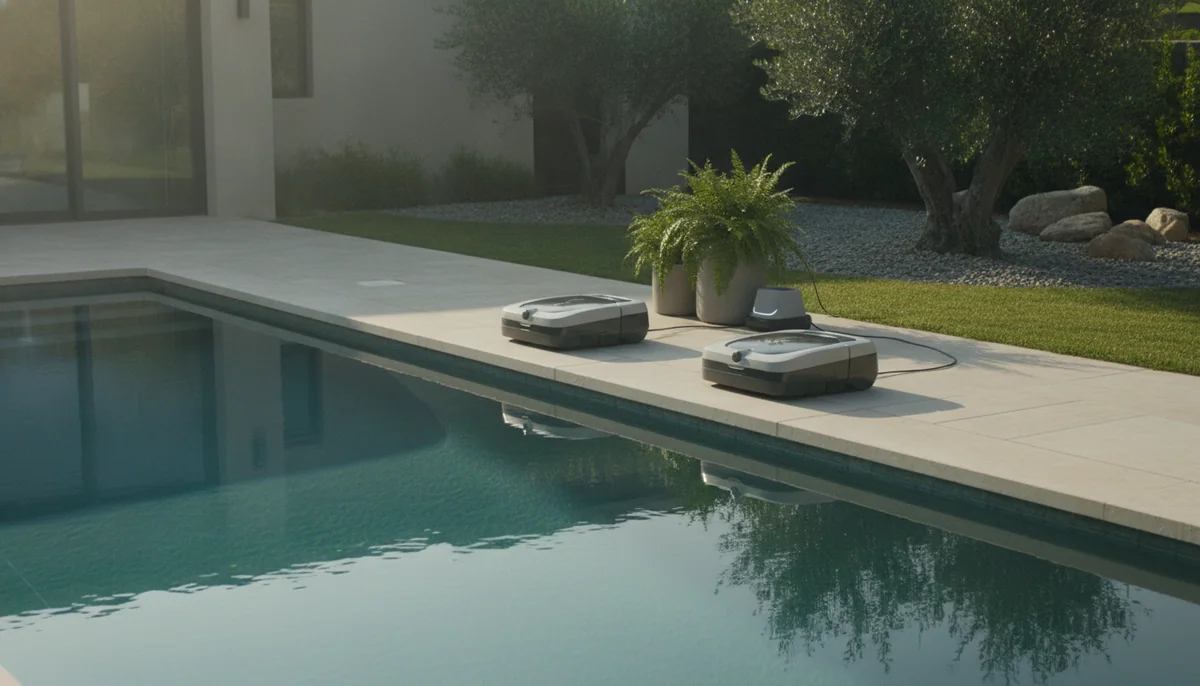
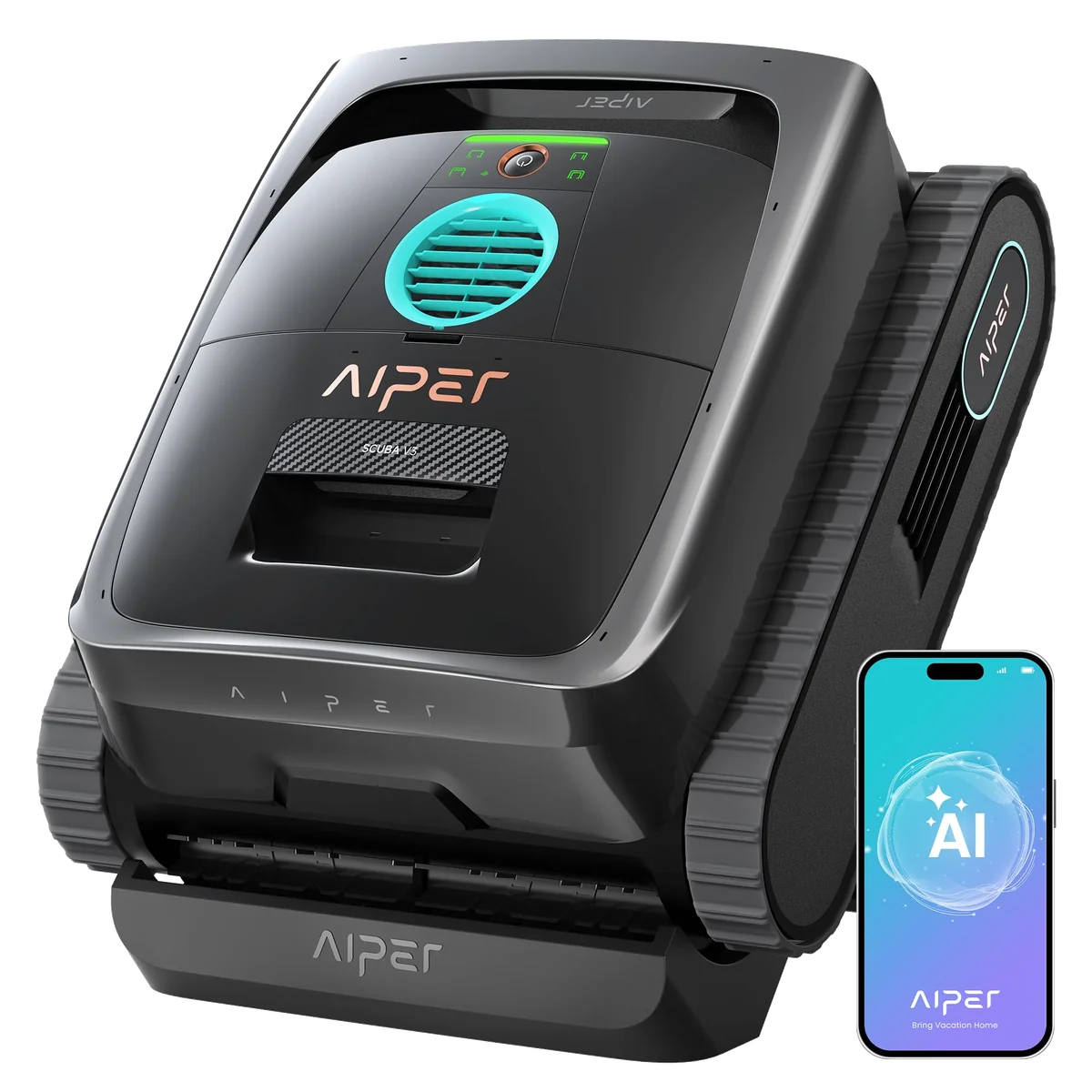
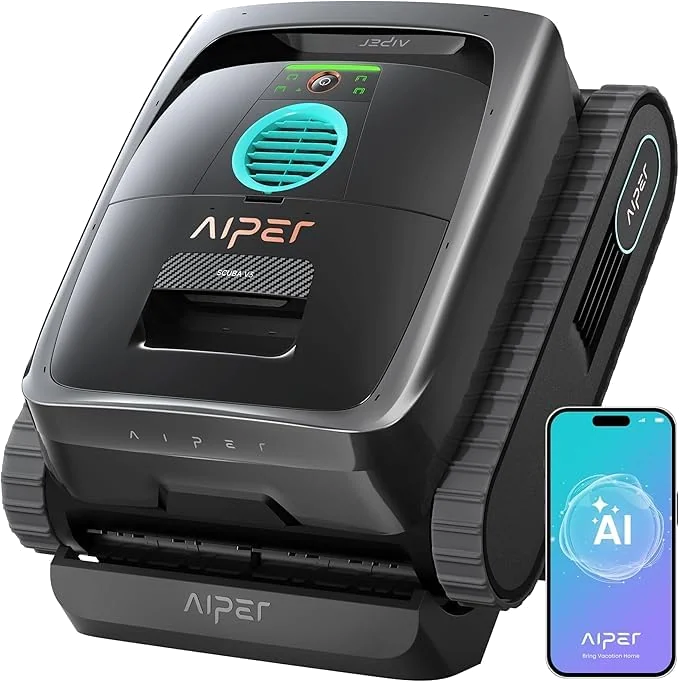
Aiper Scuba V3
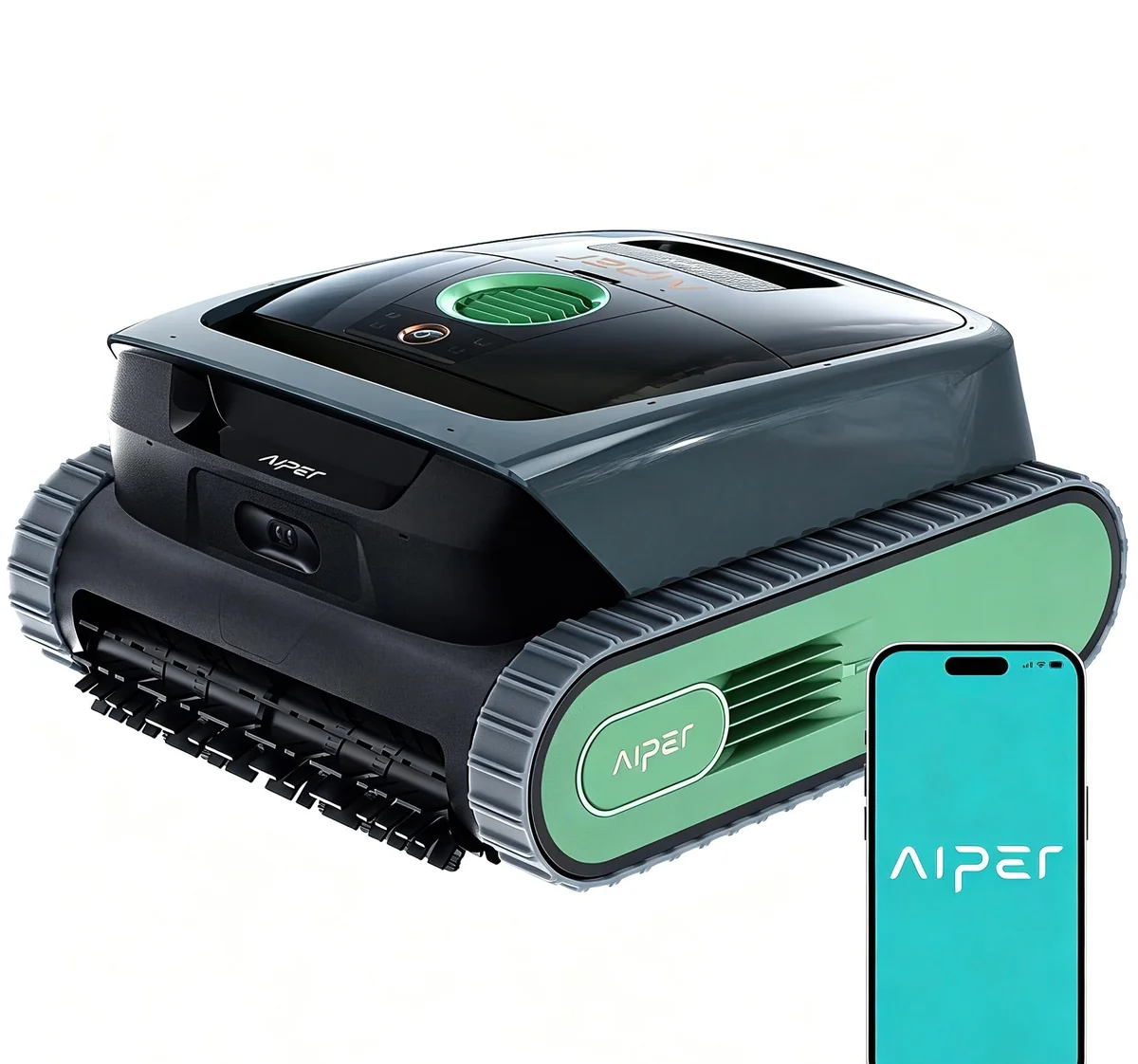
Aiper Scuba S3
This is not a contest between a clever robot and a crude one. Both are cordless cleaners built to handle the floor, climb walls, work along the waterline and spare an owner from wrestling with a hose. The meaningful difference is whether a front-facing camera can save enough time to justify another layer of software, settings and cost.
It can, but only for a particular kind of mess. The V3 has demonstrated an unusual ability to look for visible leaves, turn toward them and collect them before beginning a conventional coverage route. That is useful when a storm leaves three obvious piles and somebody wants to swim soon. It adds much less when the job is uniform dust, settled silt or a routine pass across an already tidy floor.
The S3 makes the opposite argument. Its appeal is the core cordless cleaning loop without camera-guided hunting: choose a mode, lower the cleaner, retrieve it later and rinse the basket. The trouble is that the exact Amazon listing supplied for this comparison calls the product only “Aiper Scuba Robotic Pool Cleaner, Green,” even though one retained owner identifies it as an S3. A model comparison should not pretend that omission is harmless.
Neither cleaner abolishes pool work. Both lose ordinary app connectivity underwater, both can miss steps or awkward transitions, and both must be lifted out, drained, cleaned, dried and recharged. The winner is therefore the machine with the more defensible specialty, not the machine with the longest list of automation words.
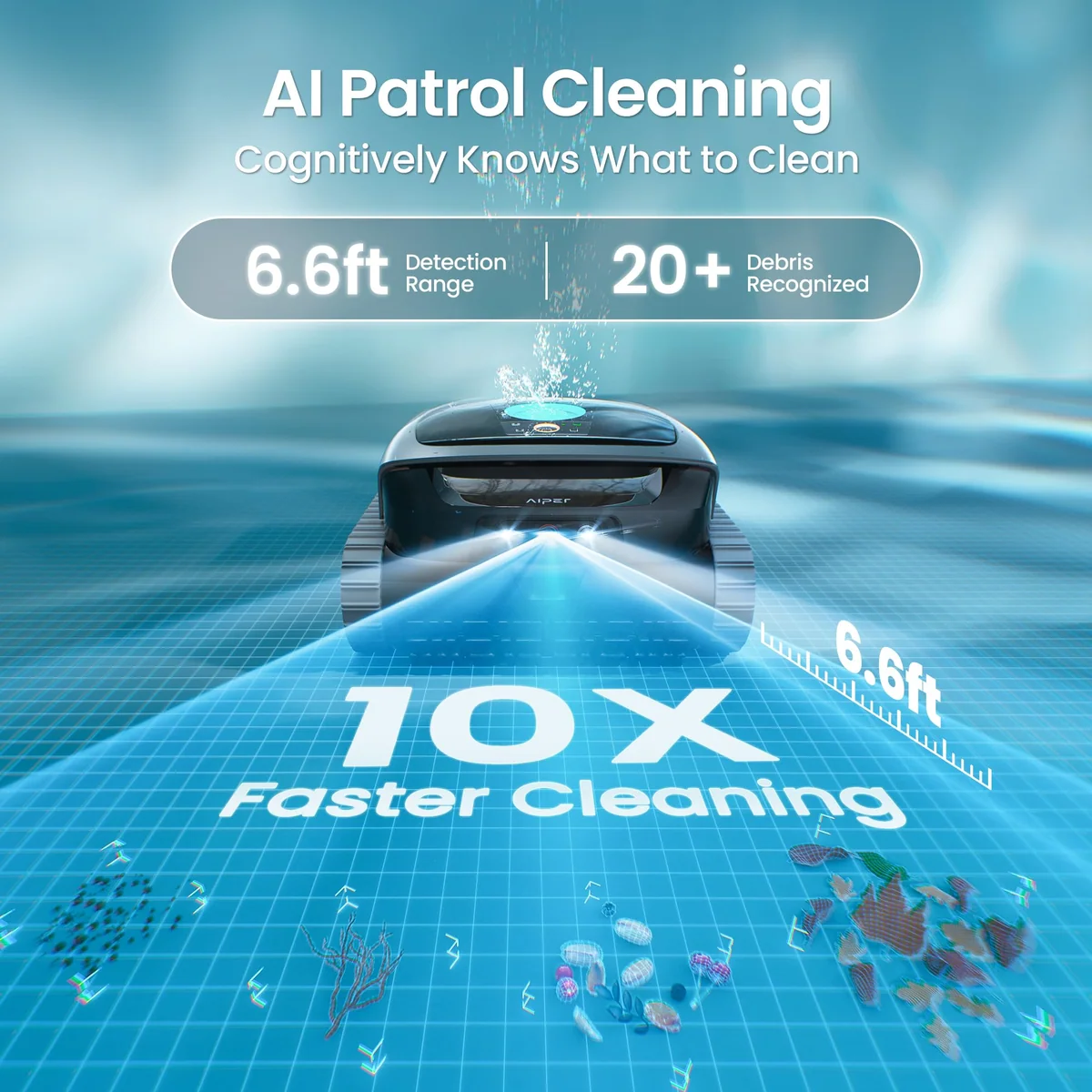
Aiper Scuba V3
Aiper Scuba S3
At a Glance
| Feature | Aiper Scuba V3 | Aiper Scuba S3 |
|---|---|---|
| Price Range | $500–$1,000 | Under $200 |
| Claimed runtime | Up to 180 minutes | — |
| Check Price on Amazon | Check Price on Amazon |
The V3 has a proven trick; the S3 has a proof problem
Pick the V3 when the camera will chase a real mess.
The V3 earns first place by turning visible-debris recognition into a measurable shortcut rather than a decorative AI feature.
Its camera does not fix weak stair coverage, fine-sediment recirculation, underwater app silence or the need to lift and clean the robot after every serious run.
The best evidence for the V3 is pleasingly concrete. In a standardized multi-robot comparison, it found and collected every deliberately placed leaf in eight minutes. The same test recorded 99 percent floor coverage, which shows that the camera sits on a capable floor cleaner rather than compensating for a fundamentally weak machine.
Those numbers also put the hype back in its lane. Wall coverage reached 69 percent, while the stairs and bench received only 10 percent coverage. The robot could travel horizontally at the waterline, but it did not climb high enough to erase the full mark left by a changing water level. A broad floor and conventional walls suit it much better than narrow steps, elaborate benches or shallow shelves.
The camera itself is more convincing than the whole-pool intelligence around it. Exact owners have reported that firmware updates and a switch to Adaptive mode transformed poor early results, while others obtained a cleaner grid by turning off the AI functions and leaving the camera available. In one simple rectangular pool, camera-assisted cleaning repeatedly skipped two areas that the ordinary patterned route covered.
Where the V3 earns its lead
A visible pile of leaves gives the camera a target and gives the buyer a reason not to wait through a complete blind route. The V3 can also dedicate a run to the floor, walls or waterline, so the owner can reserve targeted hunting for the days when it actually helps.
Where the lead disappears
Fine sediment exposes a different problem. The standardized comparison found sand and silt being stirred back into the water even with the secondary insert installed, so a nominally fine filter does not guarantee that powdery debris reaches or remains in the basket.
Aiper markets recognition of more than 20 debris types, weekly planning, a 3-micron secondary layer and up to ten-times-faster cleaning. The timed leaf hunt supports the narrow proposition that recognition can accelerate a targeted cleanup, but it does not validate a universal tenfold advantage or turn several short scheduled runs into a week of full cleans.
The app should be treated as a setup panel. Wi-Fi and Bluetooth contact disappear after submersion, so the phone cannot reliably show live battery status, change modes or rescue a robot circling an obstacle. Waterline parking is also temporary and may occur at an inconvenient edge. The included hook still matters, especially because the roughly 18-pound dry body is heavier during the first part of a wet lift.
Charging language deserves the same literal reading. The dock avoids inserting a plug into the robot, but underside metal contacts remain part of the system and owner instructions call for those surfaces to be dry. The V3 is cord-free in the pool, not contactless on the stand and not self-docking on the deck.
The reliability verdict is still immature. Exact owners describe strong intervention from Aiper support, including firmware guidance, setting changes and replacement or refund offers, but several improved ratings reflect successful troubleshooting rather than flawless first-run behavior. That is encouraging service evidence, not proof that the battery, seals, camera and dock will survive multiple seasons.
Choose the S3 only after the seller proves what it is.
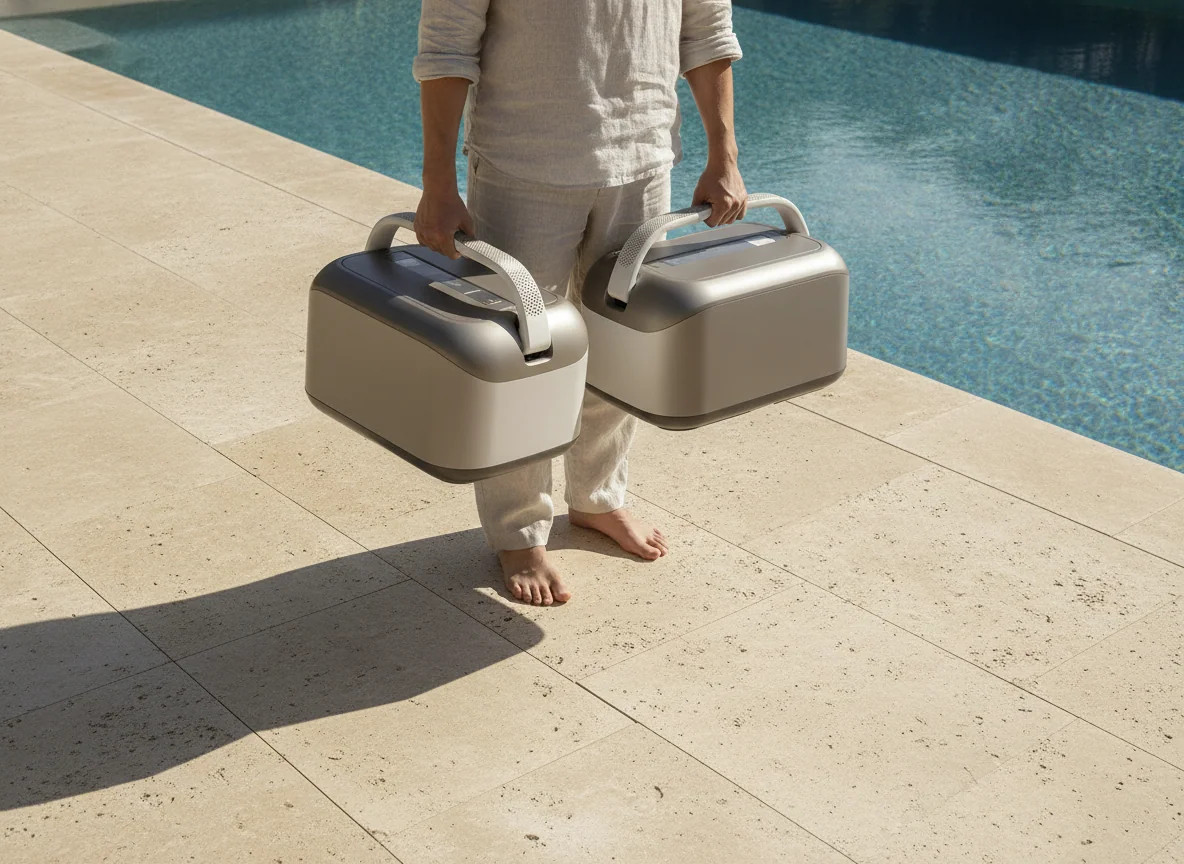
The S3-style cleaner is the sensible alternative when ordinary floor, wall and waterline cleaning matters more than camera-guided leaf hunting.
The generic listing, repeated navigation gaps and exact-owner reports of an early cord failure and rapidly declining battery performance make it the riskier order.
The product record begins with an avoidable ambiguity. Amazon identifies ASIN B0GGQZSV9K as “Aiper Scuba Robotic Pool Cleaner, Green” and supplies no useful model number or specification sheet. One exact owner explicitly says the purchased machine is a Scuba S3, while the reported cleaning modes, ultrafine insert and behavior fit an S3-style product, but the listing itself never closes the loop.
Once identity is provisionally settled, the cleaning record is good. Owners report baskets carrying leaves, grime, algae residue and very fine particles, with the open floor producing the most dependable results. One freeform-pool owner described an almost spotless pool after a week, and another credited the cleaner with removing a remarkable amount during its first full-charge run.
The ultrafine insert is a genuine advantage for settled residue, but it should not be asked to swallow the entire debris hierarchy at once. A sensible routine is to run the coarse basket first when leaves dominate, empty it, and install the fine layer for the follow-up pass. That preserves capacity for larger debris before the denser media is asked to catch dustier material.
Pool shape determines how much manual work remains. Exact owners saw better results on the floor than on curved walls, repeated passes through the same part of a deep-end bowl, missed curved corners and occasional trouble at a main drain. Steps also remain a touch-up job. Wall climbing belongs on the feature list, but complete wall coverage does not.
Healthy examples have run beyond three hours, which is enough for a substantial maintenance cycle in many residential pools. That favorable result sits beside an owner who saw the machine slow after roughly an hour and another whose useful battery performance deteriorated over only a few outings. Runtime claims cannot settle a battery-quality question raised this early in ownership.
The most serious warning is hardware rather than navigation. One exact owner reported that the charging cord failed after three days, that a replacement was unavailable and that the refund remained unresolved; another returned the cleaner after the battery declined rapidly. Eight retained reviews cannot establish a failure rate, but two early electrical complaints are too consequential to hide beneath otherwise favorable debris pickup.
The app does not rescue the S3 from these practical limits. Owners say the Wi-Fi connection disappears in the pool, patterns must be selected before submersion and useful mapping or notifications may be absent. Basic modes remain available on the cleaner itself, which is preferable to making an ordinary cycle depend on a phone, but “smart” still does not mean live underwater control.
The decisive differences are narrower than the names suggest
Visible leaves favor the V3
Its camera can shorten the time between deployment and a presentable pool when debris is obvious and concentrated. The S3 may collect the same leaves during a normal route, but the available record does not show it deliberately seeking them.
Routine floor work narrows the gap
Once the entire floor needs a pass, a conventional pattern is often enough. Paying for the V3 becomes harder to defend if the camera spends its life disabled or if the usual mess is spread evenly rather than gathered into visible targets.
Fine debris remains unsettled
S3 owners praise its ultrafine insert, while the V3 produced a disappointing sand-and-silt result under standardized comparison. Those are different forms of evidence rather than a controlled S3 victory, so a fine-sediment-first buyer should consult the site’s recommendations for sand, silt and powdery debris.
Neither is an underwater remote-control robot
Select the intended mode before lowering either cleaner. If live control is part of the purchase fantasy, our explanation of why cleaner apps lose contact underwater is more useful than comparing app screenshots.
Complex pools defeat both promises
Steps, ledges, benches, tight corners, drains and abrupt transitions are physical problems before they are software problems. Buyers with those features should start with the guide to cleaners for steps and shallow areas rather than assuming that “floor to waterline” includes every surface in between.
The S3 carries more purchase uncertainty
The V3 has an exact PRN31 identity and stronger comparative evidence, while the S3 listing does not even print the model name. That administrative defect matters because Aiper sells several visually related Scuba cleaners with materially different abilities.
Buy for the pool you have, not the acronym you like
The V3 buyer has visible targets
Choose the V3 for a leaf-prone pool with a broad main floor, conventional walls and an accessible retrieval edge. Its camera earns the premium when quick spot hunting regularly saves a complete blind cycle, and its dedicated waterline mode adds useful attention to the tile band.
Walk away if the hardest jobs are narrow steps, elaborate benches or fine sediment. Also skip it if a phone-controlled robot beneath the surface or a machine that docks itself outside the water is central to the expectation.
The S3 buyer values a simpler route
Choose the S3-style unit for an uncomplicated pool where open-floor cleaning does most of the work, occasional corner touch-ups are acceptable and camera-guided hunting would be unnecessary. Confirm the identity in writing and test every mode, drain and transition while the return window is open.
Walk away if the seller cannot identify the model, if early battery behavior declines, or if a charging fault is dismissed as routine. Cordless convenience is not valuable enough to justify uncertain hardware and a vague product record.
The V3 is the winner, but its victory is deliberately narrow: buy it to find visible debris faster, not to purchase the idea that a camera has solved coverage, sediment, connectivity or maintenance.
Frequently Asked Questions
Is the green Aiper listing definitely a Scuba S3?
No, an exact owner identifies it as an S3, but the captured Amazon listing does not state that model name or provide a confirming specification sheet.
Does the Scuba V3 camera make it clean the whole pool better?
No, the camera can accelerate visible-leaf pickup, but measured wall, stair and bench coverage remained far less complete than floor coverage.
Which cleaner is better for fine debris?
The S3 has encouraging owner reports for its ultrafine insert, while the V3 recirculated some sand and silt in a standardized test, but the evidence is not a controlled head-to-head result.
Can either Aiper be controlled through the app underwater?
No, ordinary Wi-Fi contact disappears after submersion, so cleaning modes and patterns should be chosen before either robot enters the pool.
Will either cleaner handle steps and tanning ledges reliably?
No, both records show that width, angle, approach direction and traction can leave shallow or elevated surfaces partly untouched.
Does the Scuba V3 return to its charging dock by itself?
No, it can wait near the waterline temporarily, but an owner must retrieve it, let it drain, dry the contacts and place it on the dock.
Which model has the safer reliability record?
The V3 has the less alarming exact-model record and stronger reports of support intervention, although neither product has enough multi-season evidence for a confident durability verdict.
Ready to Choose?
Sources (2)
- Amazon listings and customer reviews — Aiper Scuba V3 and Aiper Scuba S3
- Owner and reviewer video, 1 channel