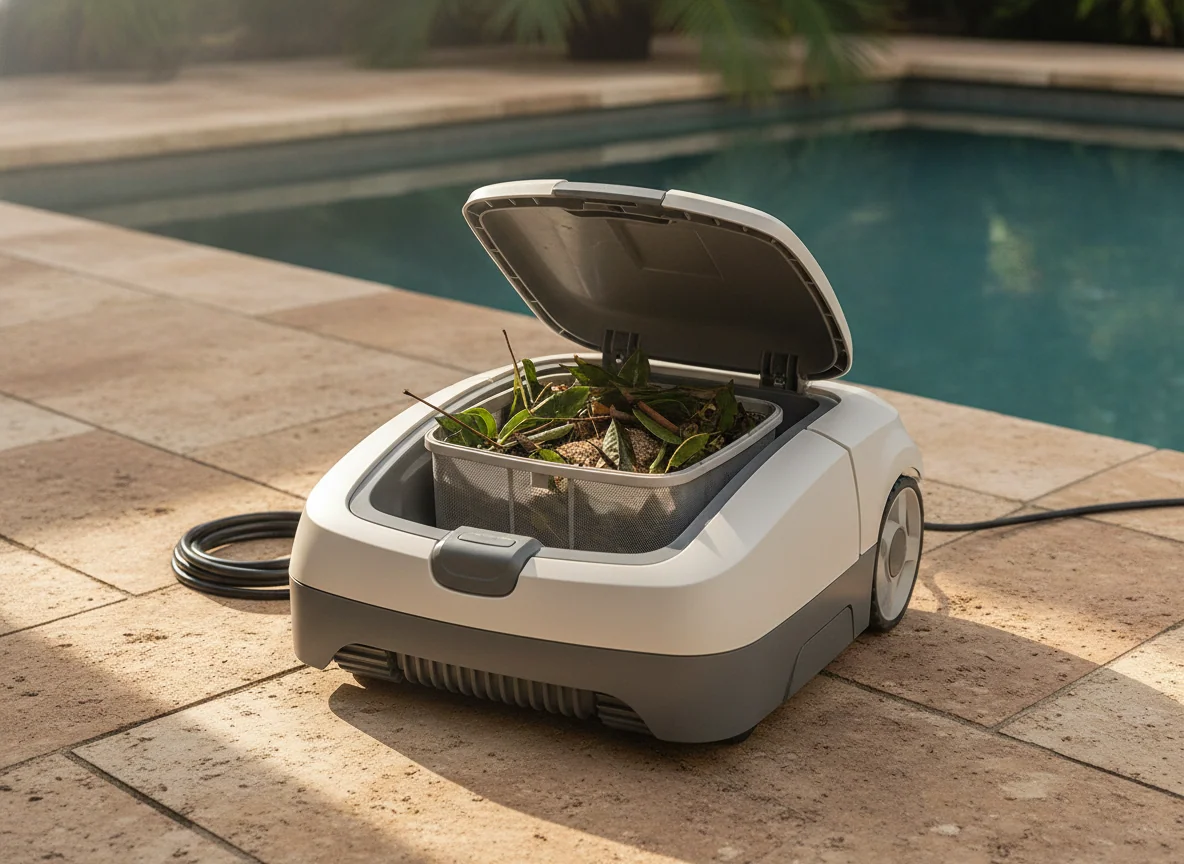
The best robotic pool cleaner for most pools is still the Dolphin Nautilus CC
A pool robot should remove the chore you actually resent. For most owners, that is vacuuming settled dirt, leaves and insects from the floor, so Smart Pool Bots gives the overall award to a submerged cleaner rather than the newest cordless machine or a solar skimmer.
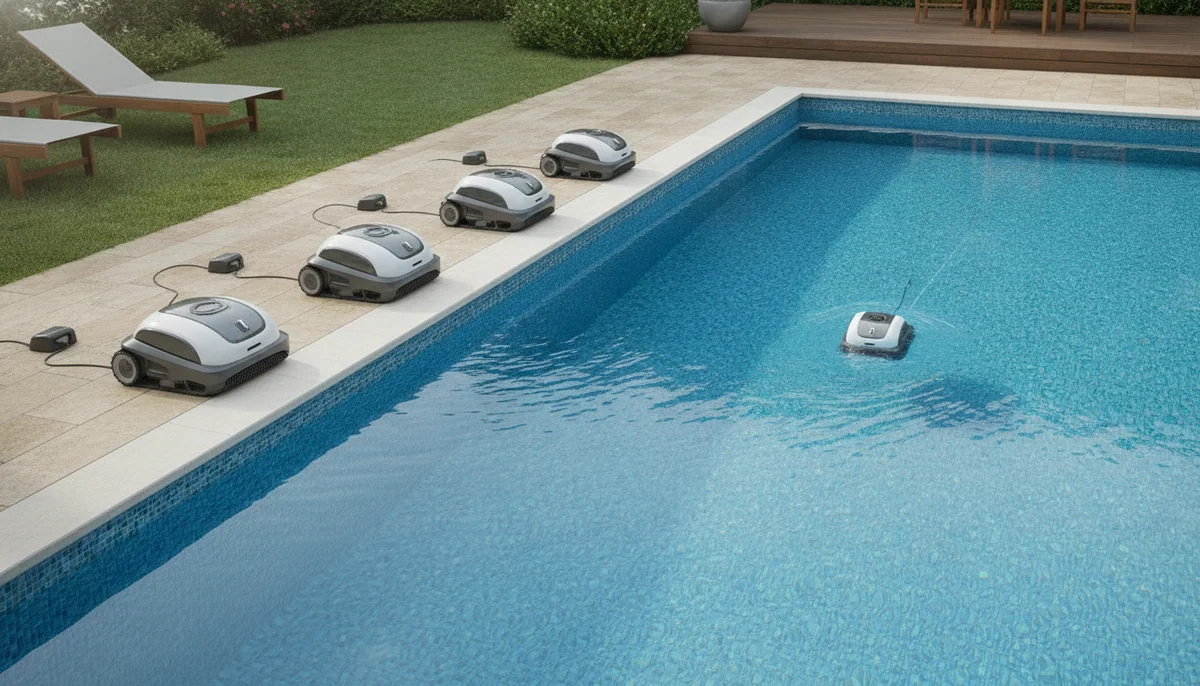
The Nautilus CC wins by being coherent. It plugs in, runs an approximately two-hour cycle, carries its debris in an accessible top basket and can begin another run immediately after a storm. Its roughly 14-pound dry weight is restrained beside many full-pool cordless cleaners, and replacement tracks, brushes, wheels, filters, cable parts and other wear items are easier to identify than they are for most young marketplace brands.
The objections are real. Its non-swivel cable needs straightening, the current base version is manually started, and wall climbing does not turn into persistent horizontal tile-line travel. Steps, benches, tanning ledges and awkward wall-floor transitions can still demand a brush or manual vacuum.
If floating leaves, pollen, bugs and dog hair are the daily nuisance, the answer changes completely: a robotic surface skimmer intercepts that material before it sinks, while an underwater robot waits for gravity to finish the delivery. A skimmer and a vacuum are complementary machines, not interchangeable shapes with the same job.
The shortlist below therefore rewards job fit rather than the biggest runtime, square-foot ceiling, gallons-per-hour figure or sensor count. The overall Dolphin is the safest broad choice, but several specialists are decisively better when a particular ledge, debris type or surface problem defines the pool.
At a Glance: All Robotic Pool cleaners Compared
| Feature | Editor's Pick Dolphin Nautilus CC | Betta SE | Aiper EcoSurfer S2 | Betta SE Plus | Aiper Scuba V3 | WYBOT A1 | Betta Flex Solar-Powered Robotic Pool | Aiper Scuba S1 | Lodoba SAT25 | Dolphin E10 | IGarden K36 | Aiper Seagull SE | Beatbot Sora 30 Pool Vacuum | Vidapool solar Pool skimmer | Aiper Scuba 2025 | WYBOT B1 | Lodoba SAT20 Pro | Dolphin Nautilus CC Pro | Nepturox SAT25 | BUBLUE F10 | ZYERCH Robotic Pool vacuum | Beatbot AquaSense 2 Pro | BOTLUXE PC10 | IGarden KN35 | Dolphin Proteus DX3 | Beatbot Sora 30 | Aiper Scuba S3 | Over-Ground Robotic Pool Cleaner,APP Support | Beatbot Sora 70 | (2026 Upgrade) Aiper Scuba S1 | TALOSBO C1 | Robotic Pool Cleaner, Pool Vacuum | PoolMr cordless Robotic Pool cleaner | (Renewed) Aiper Cordless Robotic Pool | Aiper Scuba N1 renewed | Beatbot A100 Pro | Beatbot AquaSense 2 Ultra | BUBLUE Bubot 300P | BUBLUE Bubot 800P | IGarden K70 | WYBOT C1 | WYBOT C2 Vision |
|---|---|---|---|---|---|---|---|---|---|---|---|---|---|---|---|---|---|---|---|---|---|---|---|---|---|---|---|---|---|---|---|---|---|---|---|---|---|---|---|---|---|---|
| Price Range | $500–$1,000 | $200–$500 | Under $200 | $200–$500 | $500–$1,000 | $200–$500 | $200–$500 | $500–$1,000 | $200–$500 | $500–$1,000 | Under $200 | Under $200 | $500–$1,000 | Under $200 | Under $200 | Under $200 | $200–$500 | $500–$1,000 | $200–$500 | Under $200 | Under $200 | Under $200 | $200–$500 | $200–$500 | $500–$1,000 | $500–$1,000 | Under $200 | Under $200 | $1,000–$1,500 | $200–$500 | $200–$500 | Under $200 | Under $200 | Under $200 | $200–$500 | Under $200 | $1,500–$3,000 | Under $200 | $500–$1,000 | $500–$1,000 | $200–$500 | $500–$1,000 |
| Claimed runtime | — | — | — | — | Up to 180 minutes | — | — | — | Up to 190 minutes | — | Up to 220 minutes for the floor, with materially less time in full-coverage mode | Up to 90 minutes | — | — | Up to 95 minutes | Up to about 120 minutes in eco floor mode | Up to 190 minutes | — | Up to 150 minutes | — | Up to 150 minutes | Up to 5 hours underwater or 11 hours in surface mode | Up to 120 minutes | Up to 210 minutes | — | Up to 300 minutes of floor cleaning from a 10,000 mAh battery | — | — | Up to five hours on the floor and seven hours on the surface | — | Up to 180 minutes in Eco mode; approximately 90–100 minutes in Full Pool mode | — | Up to 120 minutes per charge | — | Up to 150 minutes | — | About five hours on the floor or up to ten hours skimming | Up to 90 minutes | — | Up to 7 hours on the floor or 3.75 hours in full coverage | Up to 160 minutes | Up to three hours in Eco Floor mode, with standard cleaning reported at about two hours |
| Check Price on Amazon | Check Price on Amazon | Check Price on Amazon | Check Price on Amazon | Check Price on Amazon | Check Price on Amazon | Check Price on Amazon | Check Price on Amazon | Check Price on Amazon | Check Price on Amazon | Check Price on Amazon | Check Price on Amazon | Check Price on Amazon | Check Price on Amazon | Check Price on Amazon | Check Price on Amazon | Check Price on Amazon | Check Price on Amazon | Check Price on Amazon | Check Price on Amazon | Check Price on Amazon | Check Price on Amazon | Check Price on Amazon | Check Price on Amazon | Check Price on Amazon | Check Price on Amazon | Check Price on Amazon | Check Price on Amazon | Check Price on Amazon | Check Price on Amazon | Check Price on Amazon | Check Price on Amazon | Check Price on Amazon | Check Price on Amazon | Check Price on Amazon | Check Price on Amazon | Check Price on Amazon | Check Price on Amazon | Check Price on Amazon | Check Price on Amazon | Check Price on Amazon | Check Price on Amazon |
The complete ranking
The first eight machines have clear jobs that justify choosing them. Farther down, the differences become less about missing extravagances and more about weak evidence, confused identity, coarse filtration, awkward geometry or failure patterns that make a retailer’s return policy part of the product.
1. Dolphin Nautilus CC — This is the best overall cleaner for an uncomplicated pool.
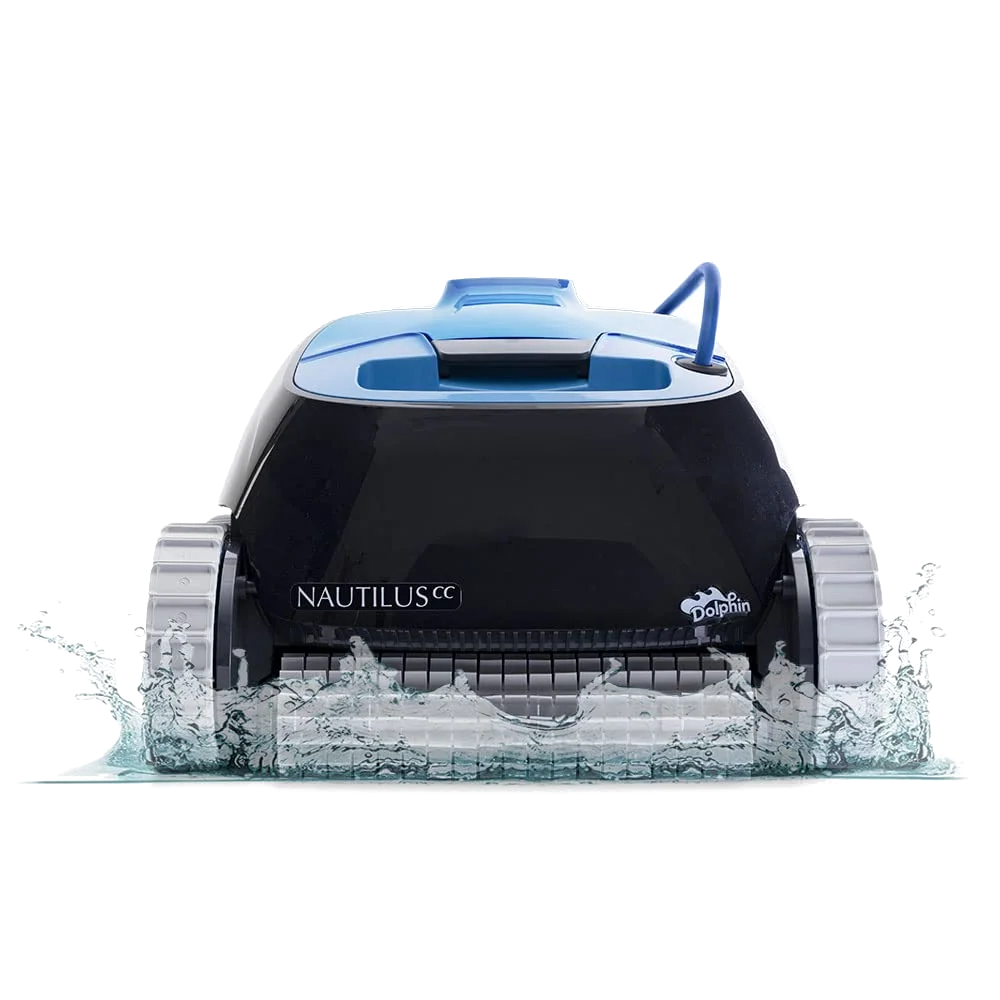
The Dolphin Nautilus CC combines strong routine floor cleaning, credible wall climbing, a light dry weight, an easy top basket and an unusually mature supply of wear parts.
Its non-swivel cable twists, its current base controller requires manual starts, and it does not travel persistently along the waterline or clean complicated steps and ledges well.
Strengths
- Open-floor cleaning is strong enough to replace most routine manual vacuuming.
- The top-load basket is simple to remove, empty and rinse.
- At about 14 pounds dry, the robot is comparatively manageable at retrieval.
- It collects common dirt, leaves and larger plant debris without loading the pool’s primary filter.
- Replaceable tracks, wheels, bushings, brushes and filter media support practical repair.
Limitations
- The non-swivel floating cable can twist, tangle and eventually wear.
- Wall climbing does not provide dedicated sideways waterline cleaning.
- Steps, sharp corners, benches and tanning ledges often still need a brush.
- The current base model has no app, remote or repeating weekly schedule.
- The standard filter can struggle with persistent ultra-fine dust, pollen and dead algae.
- A one-year warranty leaves more long-term risk with the owner.
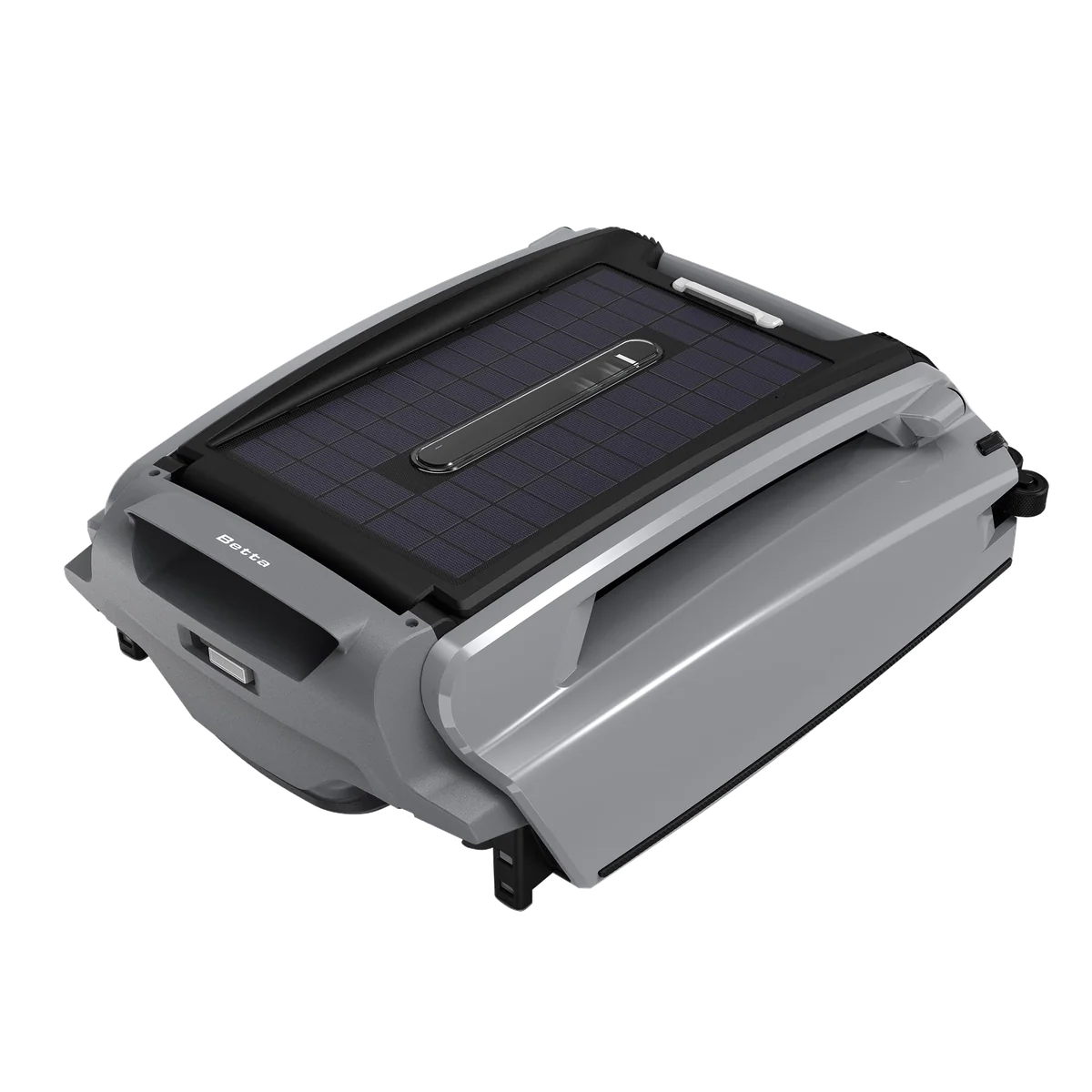
2. Betta SE — This is the best-value surface skimmer for a reliably sunny pool.
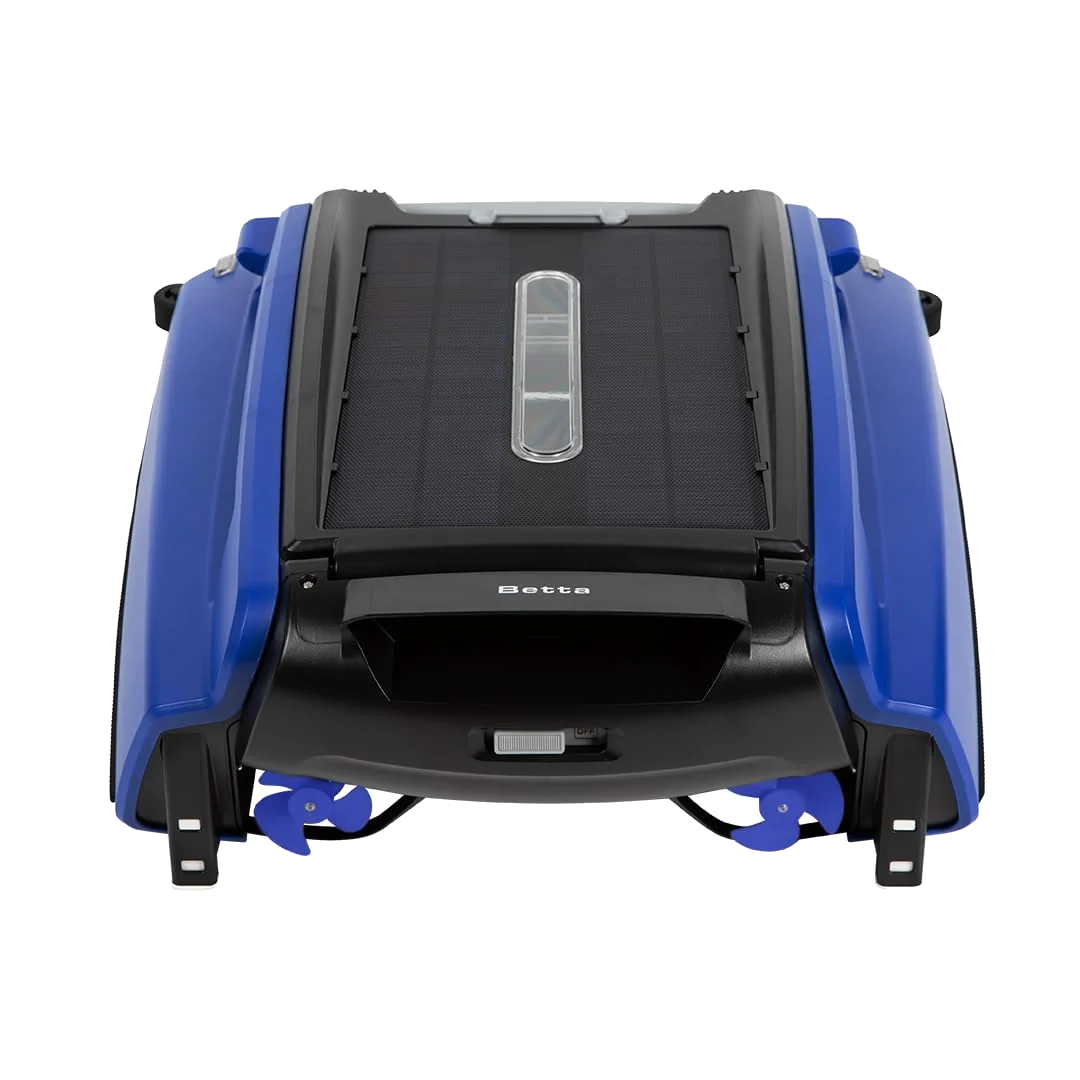
The Betta SE can patrol for floating leaves, pollen, petals, insects, grass and pet hair without an app, while its top basket can be removed at the pool edge.
It is solar only, so shade, screened surroundings, winter sun or several cloudy days can stop it, and it never cleans the pool floor.
Strengths
- It quietly intercepts leaves, bugs, pollen, blossoms and floating pet hair before much of that debris sinks.
- Solar charging removes the routine of retrieving and plugging in the machine after each cleaning cycle.
- The top-access 200-micron basket is quick to remove, empty and rinse from the pool edge.
- Physical controls and an included remote avoid app accounts, gateways and Wi-Fi setup.
- Its current listing supports both freshwater and saltwater pools.
Limitations
- It cannot vacuum the floor, scrub walls or replace the pool’s circulation and filtration system.
- Several cloudy days or persistent shade can stop the solar-only SE because it has no plug-in backup.
- Random navigation can leave tight edges untouched and can become troublesome around skimmer mouths, shelves, cords or hoses.
- The open-top basket can spill captured debris if the entire machine is lifted at an angle.
- Owner records document both an early electrical failure and propulsion-motor failures after several months.
3. Aiper EcoSurfer S2 — This is the app-enabled skimmer alternative for fine surface litter.
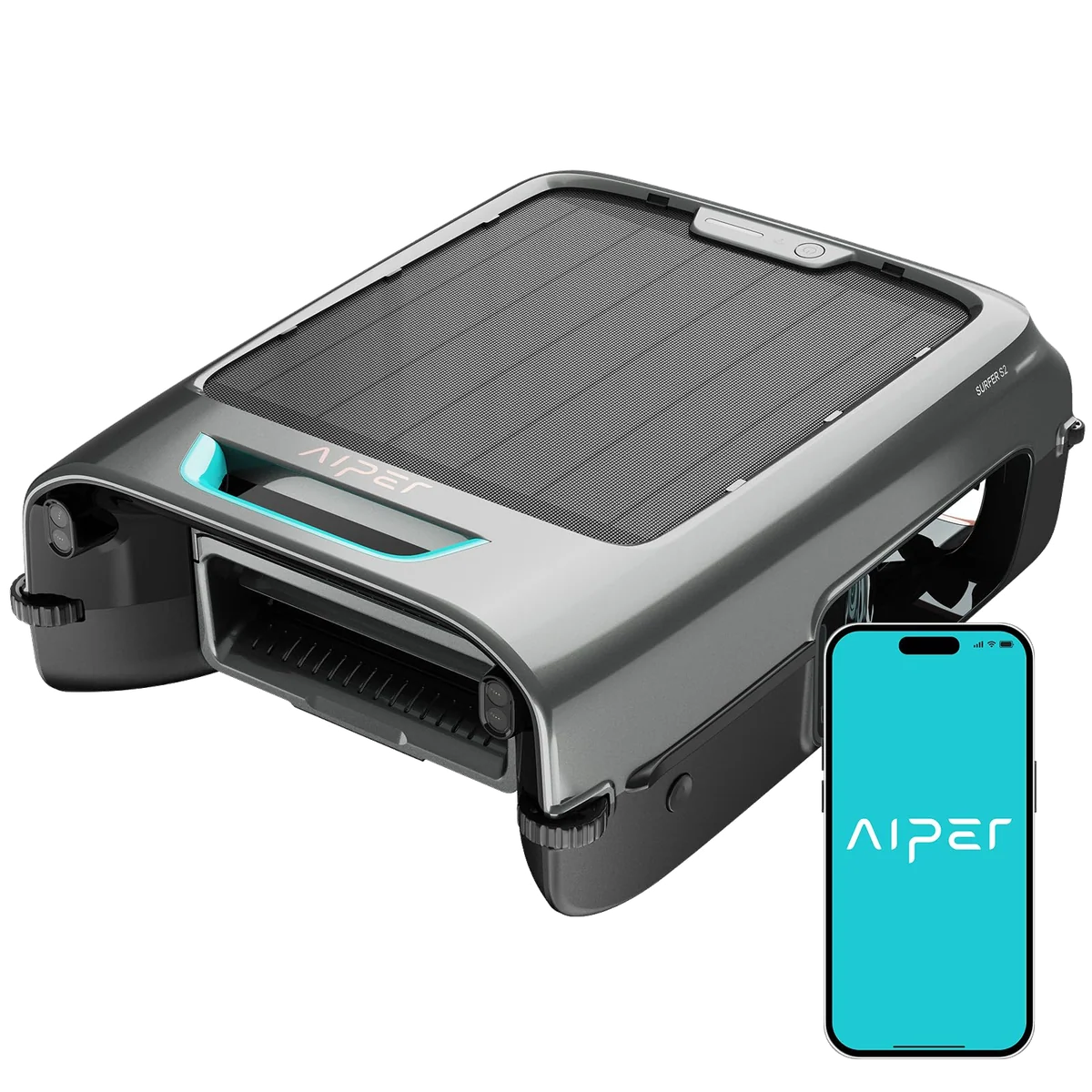
The AIPER EcoSurfer S2 pairs a 150-micron filter and retention flap with solar charging, adapter backup, scheduling, battery information and manual surface steering.
It works slowly on heavy leaves and has a concerning exact-model record of frozen propellers, one-sided drive loss, false jam errors and basket-drive trouble.
Strengths
- Solar charging can sustain scheduled operation for long stretches in a sunny pool.
- The 150-micron filtration is especially persuasive against pollen, tiny insects, lint, and fine surface debris.
- DebrisGuard usually keeps collected material inside the basket while the robot reverses or is retrieved.
- The included wall charger, schedules, battery display, manual steering, and jam alerts make daily ownership flexible.
Limitations
- Slow, semi-random coverage is poorly suited to urgent cleanup after a heavy debris dump.
- The four-liter basket can require frequent emptying beneath shedding trees.
- Return jets, wind, hoses, skimmer openings, and shallow entries can interrupt otherwise automatic operation.
- Repeated motor, propeller, impeller, and basket-drive complaints make durability the purchase’s largest uncertainty.
4. Betta SE Plus — This is the best robotic surface skimmer overall.
The Betta SE Plus keeps the regular SE’s effective continuous-interception idea but adds adapter charging for shade, cloudy periods and winter conditions.
Its route is random, cords and cleaner hoses can ensnare it, and it cannot replace an underwater vacuum.
Strengths
- It removes leaves, pollen, insects, hair and fine floating debris before much of that material can sink.
- Solar charging can sustain day-and-night operation in favourable conditions.
- The adapter makes cloudy weather, shade and winter easier to manage.
- The top-loading fine-mesh basket is quick to lift, rinse and replace.
- Operation is quiet, and the handheld remote is useful for retrieval or concentrated debris.
Limitations
- It cannot vacuum the floor, climb walls or scrub the waterline.
- Its random route can leave corners or wind-driven debris waiting longer than expected.
- Wall-skimmer suction, cleaner hoses, cords, shelves and pool furniture can trap it.
- Some leaves can be pushed aside or escape when the robot reverses.
- There is no app, battery percentage, mapping or scheduling interface.
- Continuous solar operation becomes less dependable during shade, winter and prolonged cloud.
5. Aiper Scuba V3 — This is the best cordless cleaner for concentrated visible leaves.
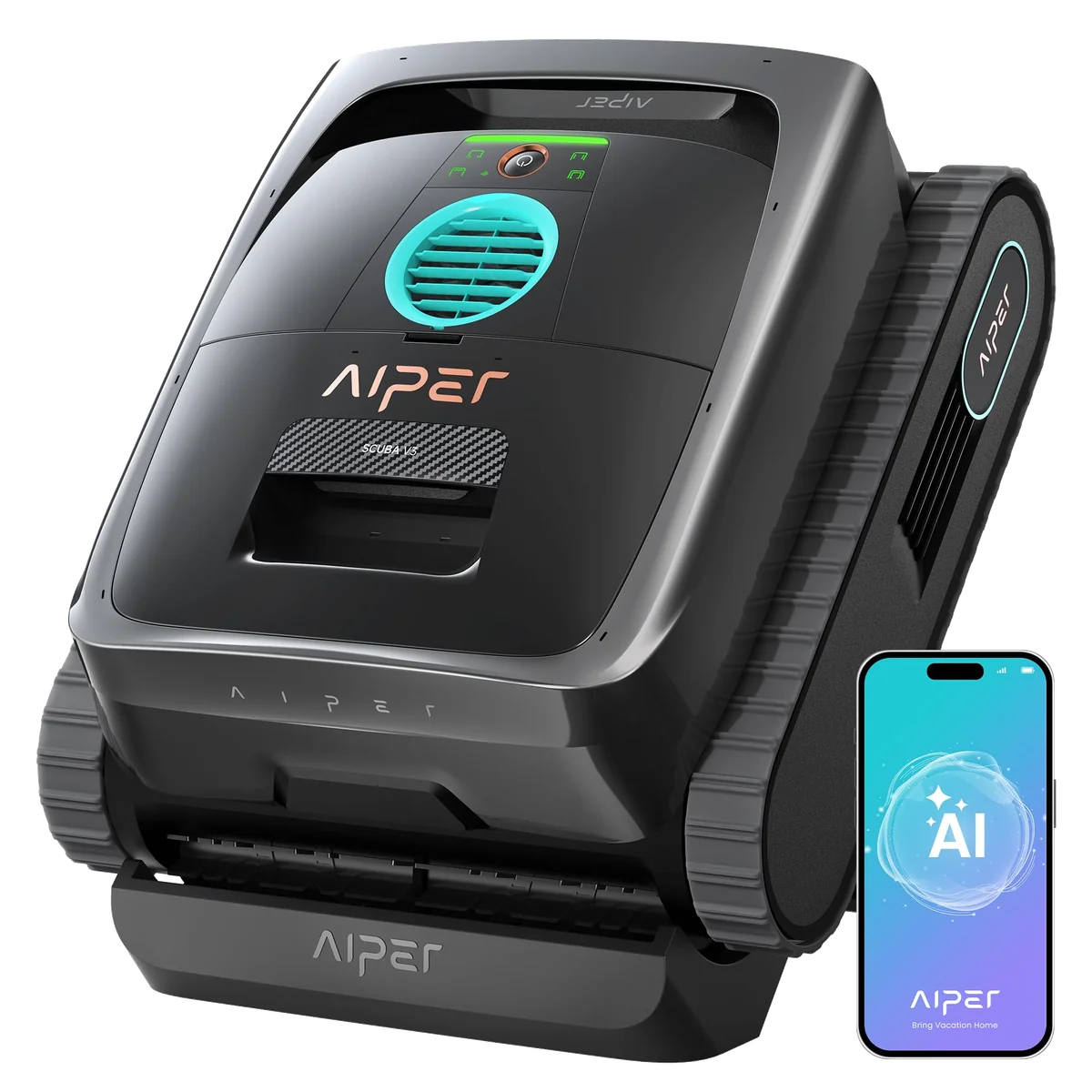
The AIPER Scuba V3 earns its artificial-intelligence claim by turning toward visible debris, and one standardized comparison recorded complete collection of seeded leaves plus 99 percent floor coverage.
Its coverage fell to 69 percent on walls and 10 percent on stairs and a bench in that comparison, while fine sand and silt can be disturbed even with the fine insert.
Strengths
- The camera can find and collect deliberately placed leaves much faster than a blind coverage route.
- Floor coverage can be excellent in a conventional pool area.
- Dedicated horizontal waterline travel gives the tile band more attention than occasional vertical contact.
- The included fine insert gives owners a useful second-stage filter for follow-up cleaning.
- The 18-pound dry body is lighter than many premium full-zone cordless robots.
- Physical controls preserve ordinary automatic, floor, wall and waterline cleaning without requiring the app for every cycle.
Limitations
- AI can waste time scanning or produce worse routine coverage until firmware and navigation settings are adjusted.
- Steps, benches, narrow platforms and awkward transitions remain inconsistent.
- Independent testing found sand and silt recirculation despite the secondary fine filter.
- The app loses its ordinary connection underwater, so live control and battery monitoring disappear during a run.
- The dock uses contacts that must be dry even though the charging language can sound contactless.
- Waterline parking lasts only briefly and may occur at an inconvenient edge.
- The top-loading basket is slower to rinse than a true bottom-opening design.
- The robot still requires wet lifting, filter cleaning, drying, charging and redeployment.
6. WYBOT A1 — This is a narrow floor-only helper for a smooth above-ground pool.
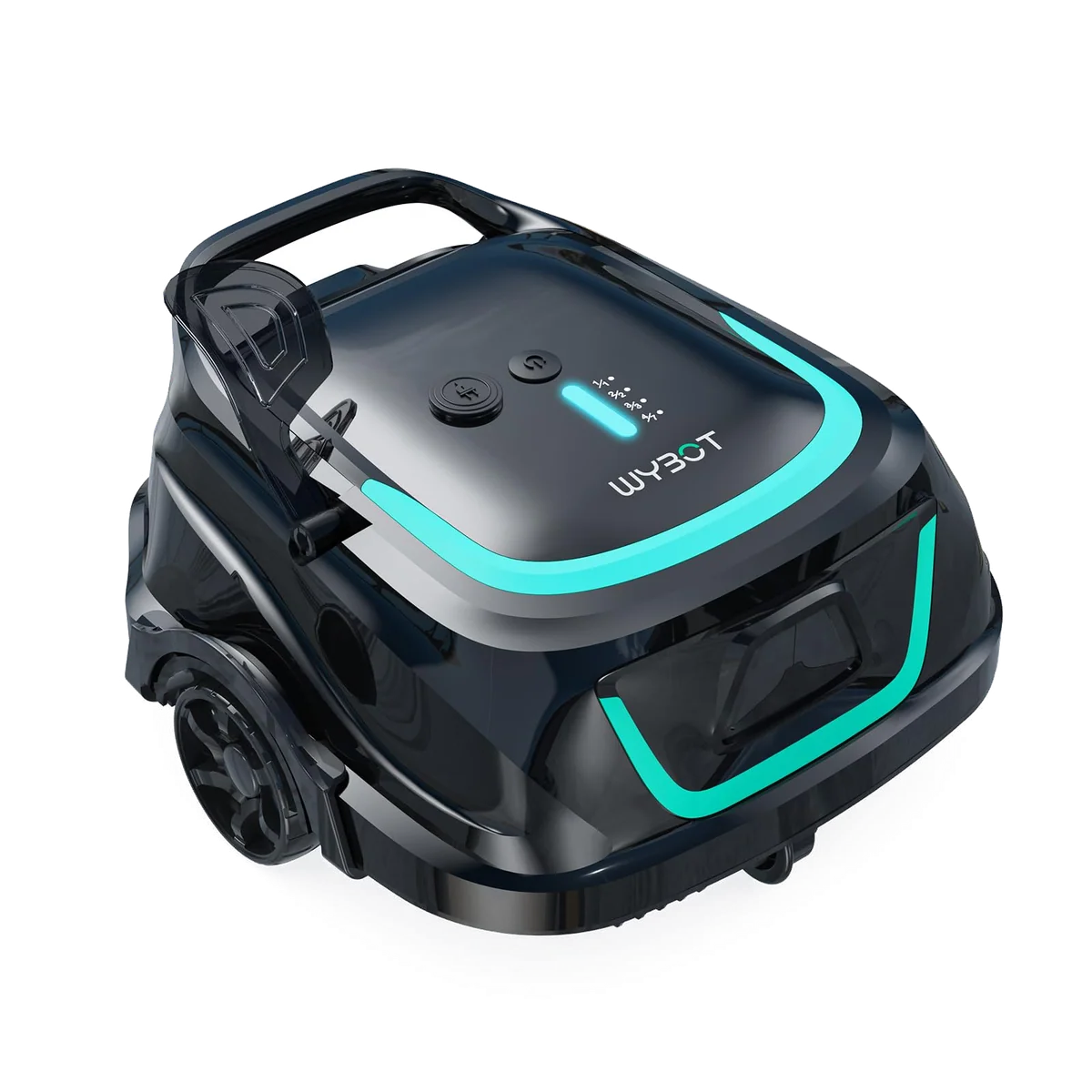
The WYBOT A1 is light, cordless and simple enough for loose sand, bugs, pebbles and modest leaf loads on an obstacle-free flat floor.
It has no active scrubber, wall cleaning or systematic map, and wrinkles, drains, ladders, seams and meaningful slopes can stop it.
Strengths
- The cordless body avoids a floating power cable, hose setup, and tangles.
- The dual-layer filter is useful for loose fine sediment that reaches the inlet.
- The light body is easier to lower and retrieve than many full-size corded robots.
- Filter rinsing is straightforward once the housing is aligned correctly.
Limitations
- Random travel can repeat routes while leaving other parts of the floor untouched.
- The lack of an active brush leaves attached algae and grime behind.
- Wrinkles, slopes, drains, ladders, and floor transitions can stop or trap it.
- Owners report early shutdowns, charging failures, broken clips, and other durability problems.
- It cannot clean walls or the waterline.
7. Betta Flex Solar-Powered Robotic Pool — This is a cautiously interesting skimmer for an infinity-edge pool.
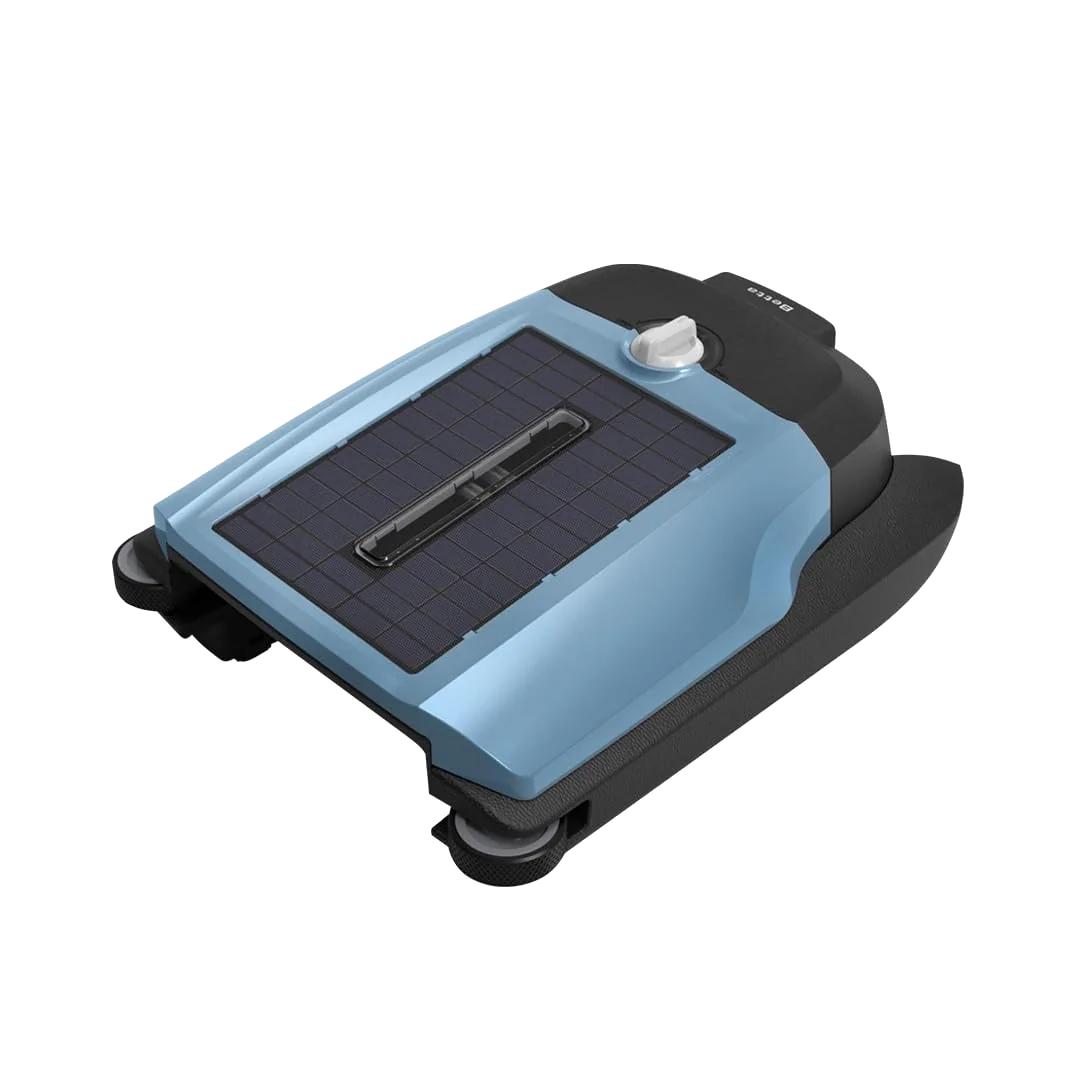
The Betta Flex is worth investigating when its listed infinity-edge compatibility, soft-touch casing and Normal or Eco surface-cleaning modes match a specific installation.
The infinity-edge result is a manufacturer claim rather than a demonstrated outcome, and its exact filtration, capacity and ownership history are too thin to challenge the Betta SE models.
8. Aiper Scuba S1 — This is the best cordless cleaner for fine debris in simple geometry.
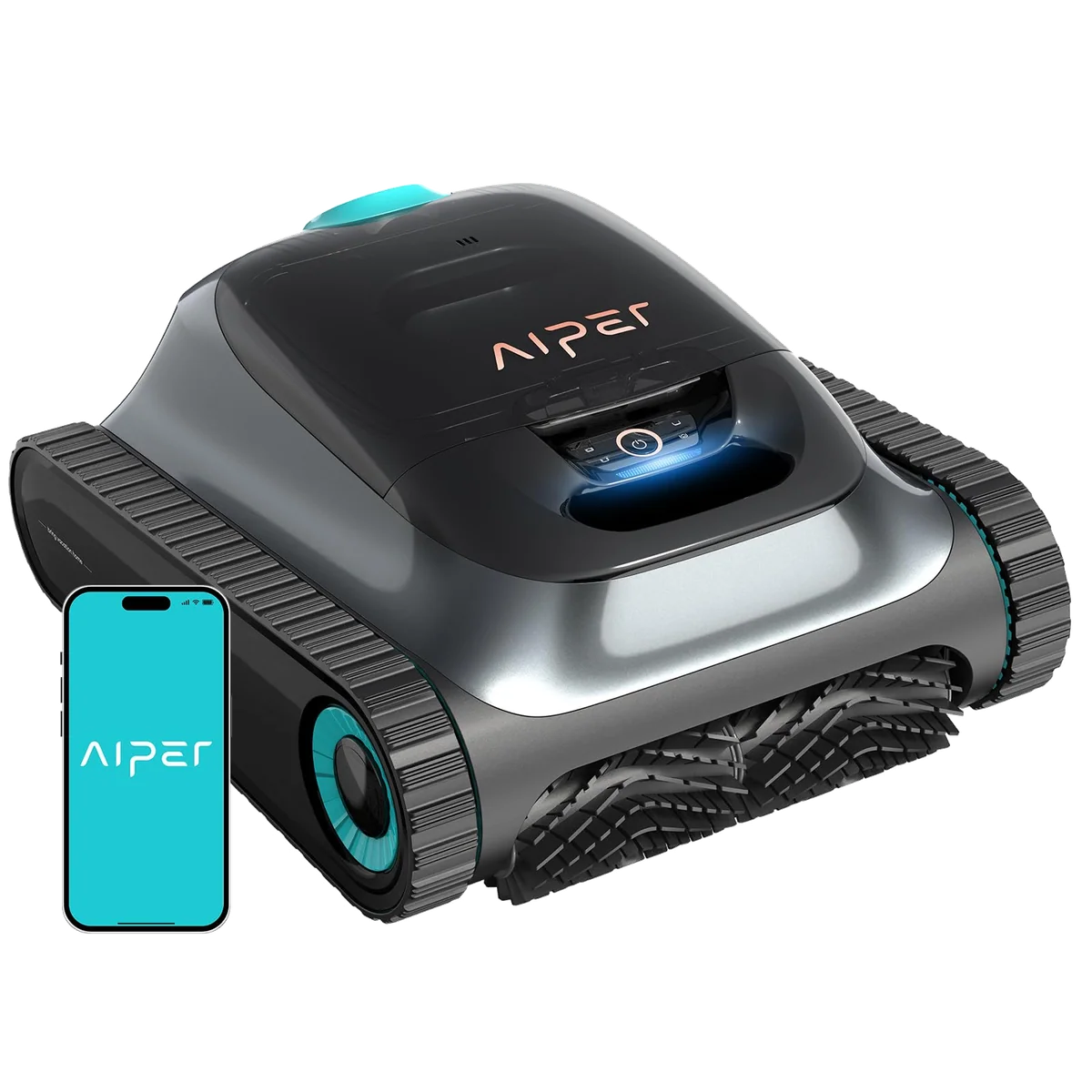
The updated AIPER Scuba S1 combines 99 percent controlled floor coverage with a 3-micron secondary layer and useful wall, waterline and broad-feature performance in compatible pools.
Curved steps, benches, compound slopes and shelves can provoke wheelies or repeated paths, while exact reports of charging, motor, switch and control failures make easy returns essential.
Strengths
- Systematic routing can deliver excellent coverage across an unobstructed pool floor.
- The removable 3-micron layer catches much finer debris than the standard basket alone.
- Cordless operation removes the hose, floating cable, and deck-side power equipment.
- Healthy updated units can run long enough to finish a typical residential-pool cycle.
- Physical controls preserve basic operation even when the underwater connection disappears.
- The listed two-year warranty is backed by several examples of fast replacement service.
Limitations
- Steps, benches, sharp slopes, curved transitions, and circular areas can defeat its route or traction.
- The secondary filter adds rinsing time and may load before the outer basket is full.
- Owners must retrieve, drain, clean, dry, and recharge the robot between substantial cycles.
- Detailed reports show a concerning mix of charging, motor, control, and water-ingress failures.
- The app should not be mistaken for reliable live control while the robot is submerged.
- Waterline contact is not strong enough to guarantee removal of scale or attached buildup.
9. Lodoba SAT25 — This is an evidence-light full-zone bargain rather than a proven recommendation.
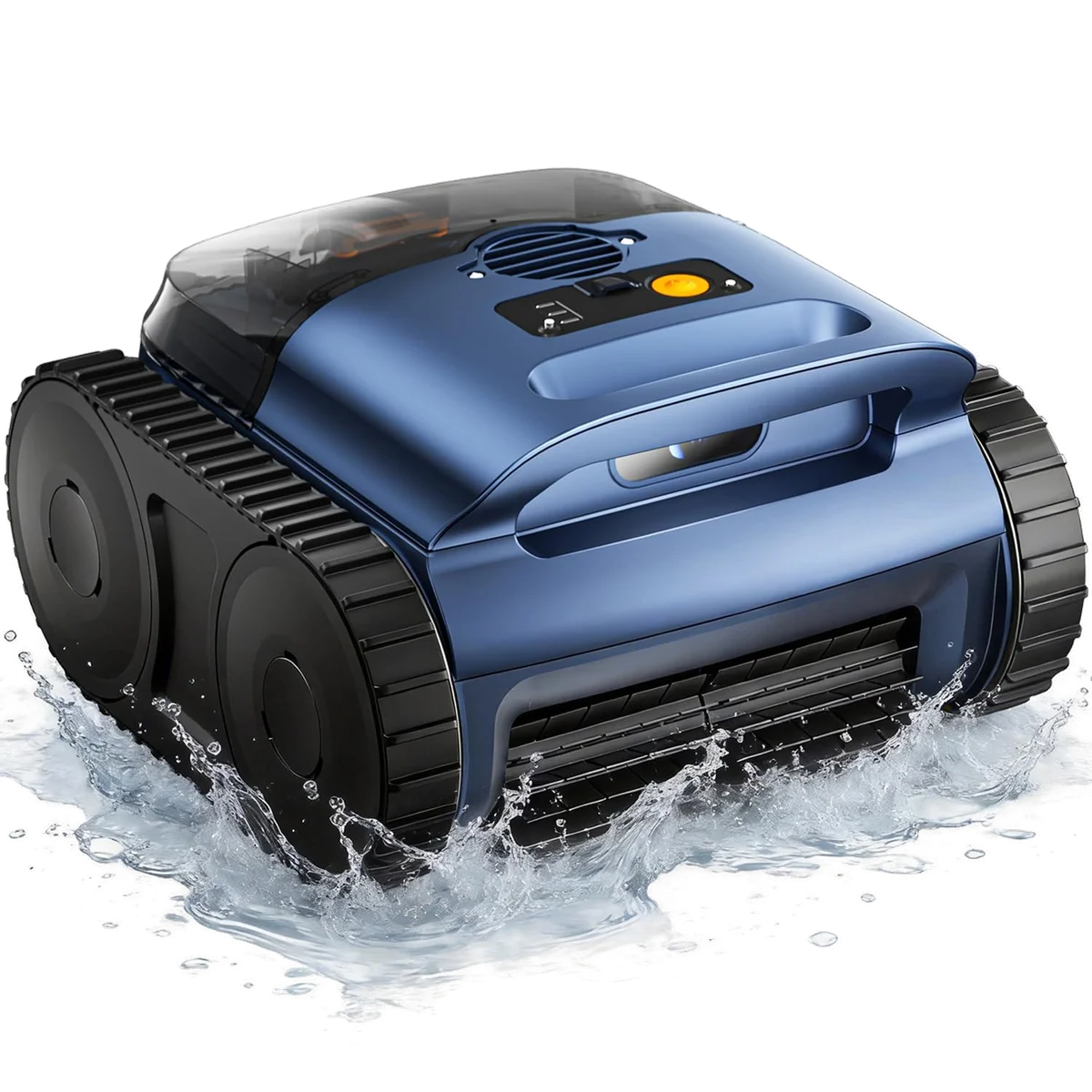
The Lodoba SAT25 offers physical floor, wall and full modes with enough supporting evidence for ordinary leaves, dirt, bugs and some sand in straightforward pools.
Its filtration, basket capacity, wet handling, warranty, parts route and difficult-feature coverage remain unresolved, and listing language about drains and skimmers does not establish surface skimming.
Strengths
- Cordless setup avoids hoses, floating cables, and cable tangles.
- Exact-model reporting supports useful pickup of ordinary leaves, dirt, bugs, and some sand.
- Tracked wall climbing and waterline contact appear credible on conventional straight walls.
- Separate floor, wall, and full-coverage modes make routine cleaning easier to target.
- The top-access cleaning routine appears simple enough for frequent use.
Limitations
- Fine silt, pollen, and powdery debris may escape or resettle.
- No controlled SAT25 test establishes runtime, coverage, filtration, stair performance, or wet lifting weight.
- Warranty terms, battery replacement, spare parts, and repair support remain unresolved.
- A depleted battery prevents an immediate full second cycle during heavy debris events.
- The drain and skimmer language is broader than the demonstrated cleaning behavior.
- Curved steps, ledges, and freeform transitions may still require manual touch-up.
10. Dolphin E10 — This is the best above-ground cleaner when the floor is the whole assignment.
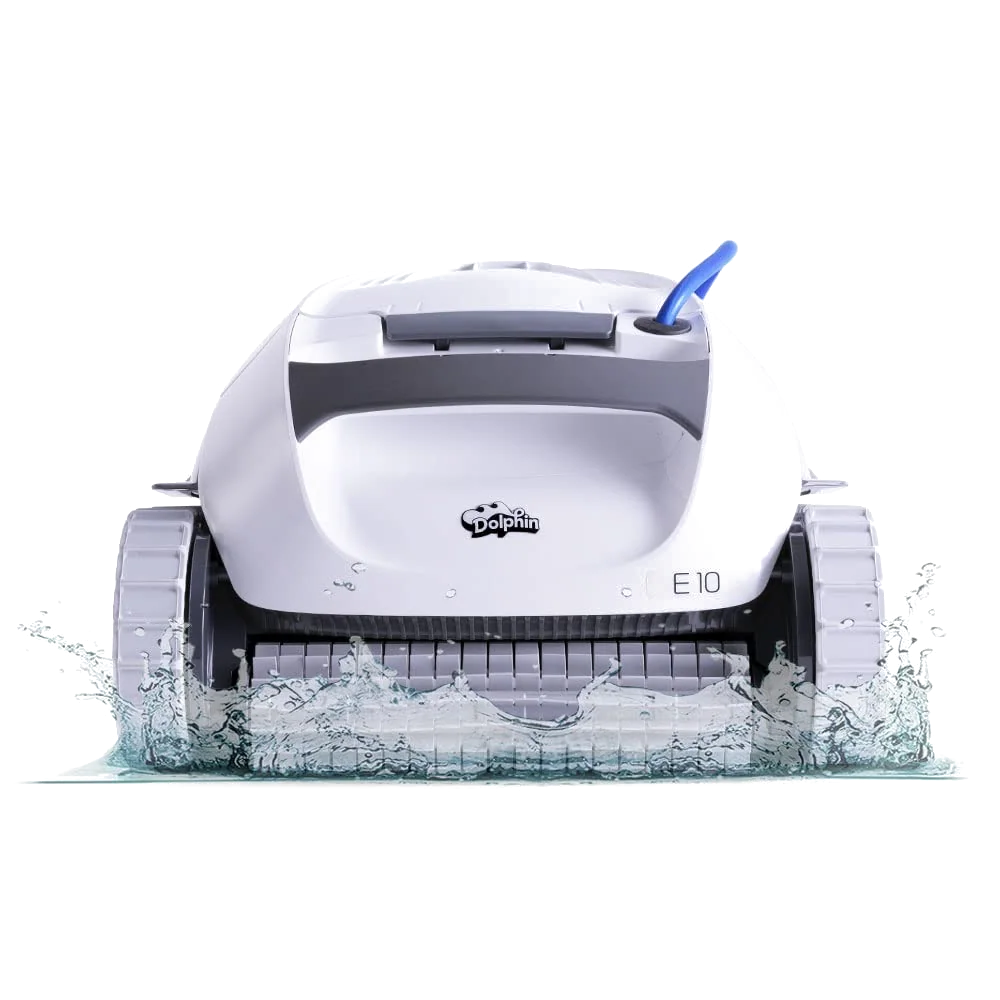
The Dolphin E10 uses corded repeatability, an active scrubber, a top basket and a 90-minute cycle to make sense of small, simple above-ground pools.
It has no verified wall or waterline cleaning, and cable reach can become marginal near the advertised 30-foot pool limit.
Strengths
- The active brush and suction handle ordinary floor debris well.
- The top-load basket makes routine emptying and rinsing unusually straightforward.
- Corded power permits another cycle without waiting for a battery to recharge.
- The simple controls avoid app setup and connectivity problems.
- Direct owners report a meaningful reduction in manual vacuuming.
Limitations
- The verified cleaning brief stops at the floor.
- The cable can tangle or limit far-side reach near the advertised pool-size ceiling.
- The included filtration package is not clearly established for dead algae and very fine silt.
- The directly reviewed E10 lacked a weekly scheduler.
- Exact-product reports include lid faults, debris leakage during retrieval, an early failure, and poor support follow-through.
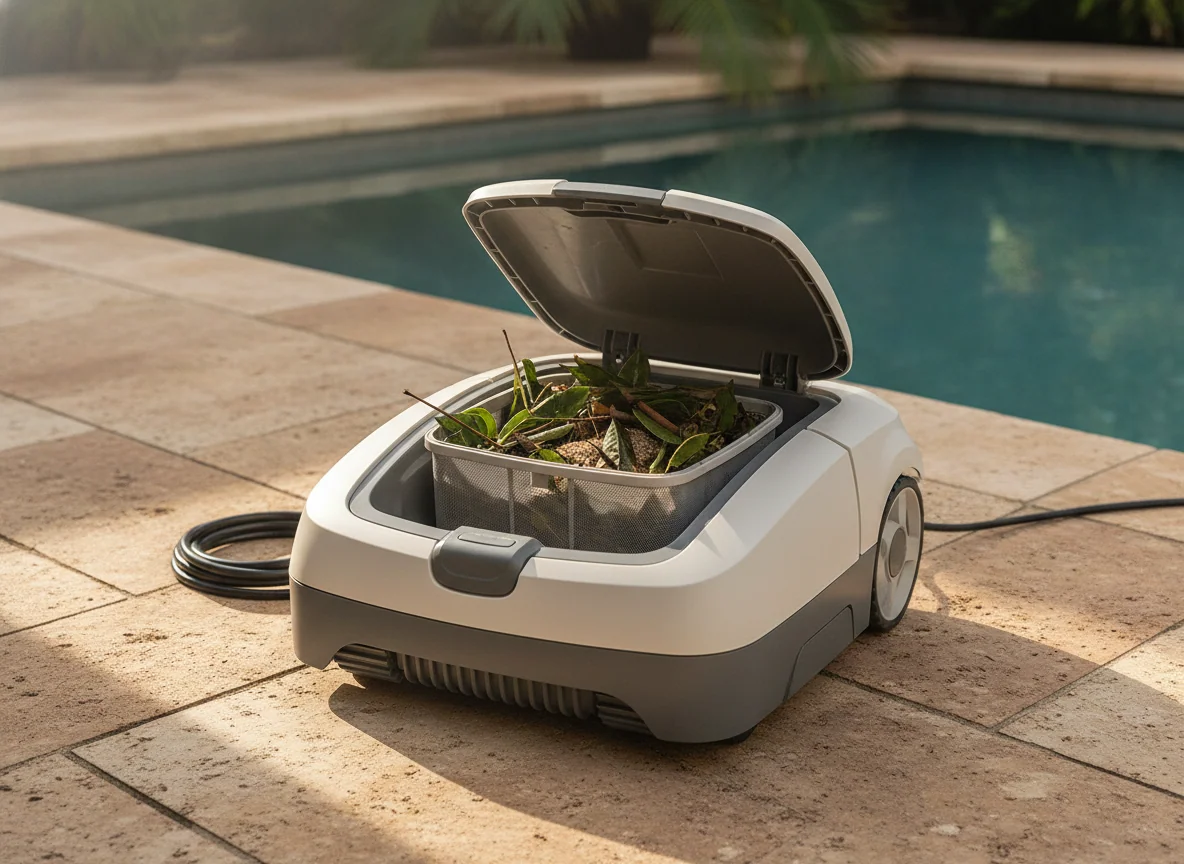
11. IGarden K36 — This is long-runtime hardware undermined by inconsistent execution.
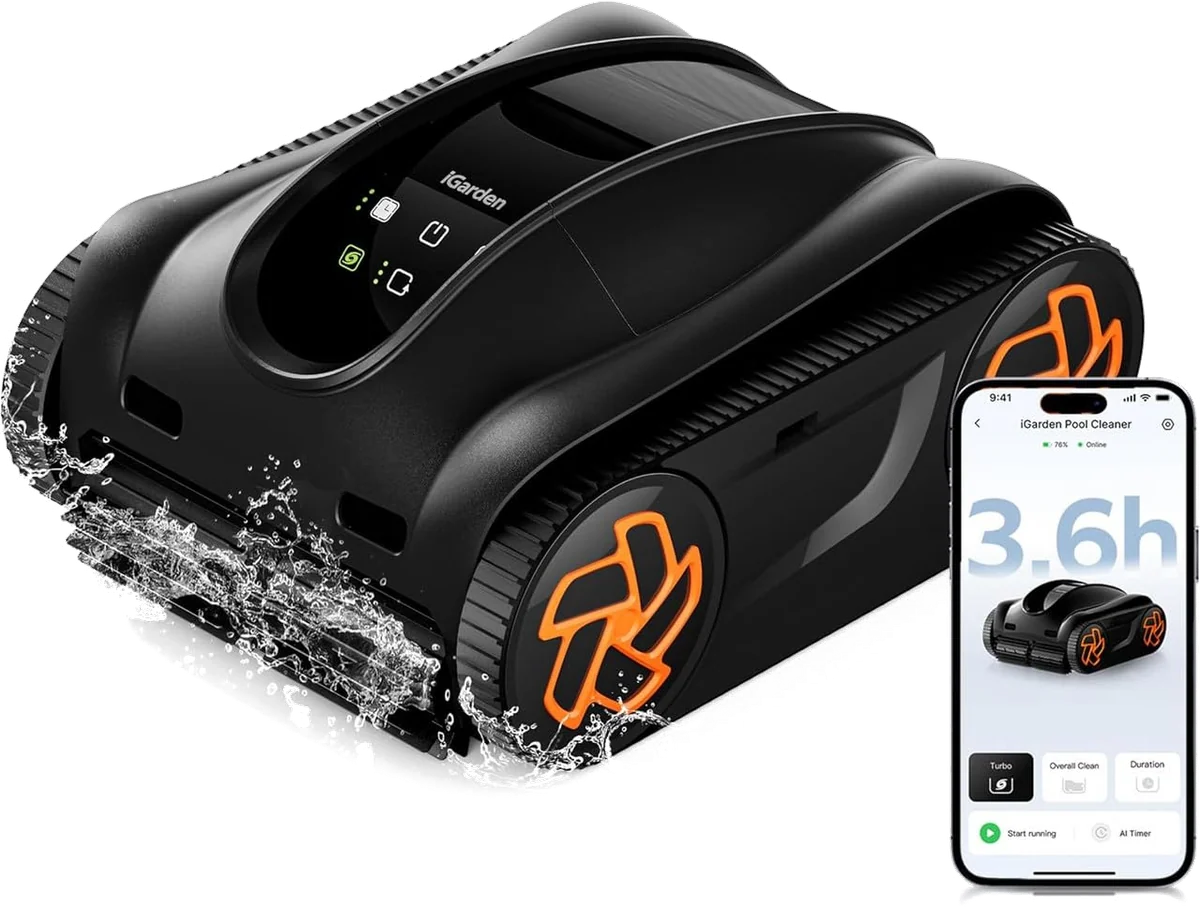
The iGarden K36 can deliver long floor runs, real wall climbing, waterline contact and a large top basket when the unit and pool geometry cooperate.
Broad coverage gaps, wheelies, flipping, short-battery examples, charging-area concerns and second-use failures keep it outside the recommended tier.
Strengths
- Healthy units provide unusually long floor-only endurance for a cordless cleaner.
- The 4-liter top-loading basket handles routine leaves, insects, hair, sand and settled dirt well.
- Physical controls keep normal cleaning available without an app account.
- The robot can climb suitable walls and reach the waterline when traction and flow are favorable.
- Cordless operation removes the floating cable and external power supply from the cleaning cycle.
- Customer support has a documented pattern of responding with troubleshooting, refunds and replacements.
Limitations
- Direct owners report serious first-unit faults, including flipping, wheelies, short runtime and an Error 3 failure.
- Its organized navigation can still leave wide strips, corners, steps and ledges untouched.
- Full-coverage runtime is much shorter than the headline floor-only maximum, and iGarden publishes conflicting figures.
- The app cannot steer, recall or meaningfully monitor the robot underwater.
- Retrieval is awkward because the cleaner is heavy, dark underwater and easy to catch in the wrong place.
- The charging port requires careful drying, and one tested power brick became hot enough to damage a table finish.
12. Aiper Seagull SE — This is a cheap sweeper only for an already-maintained flat pool.
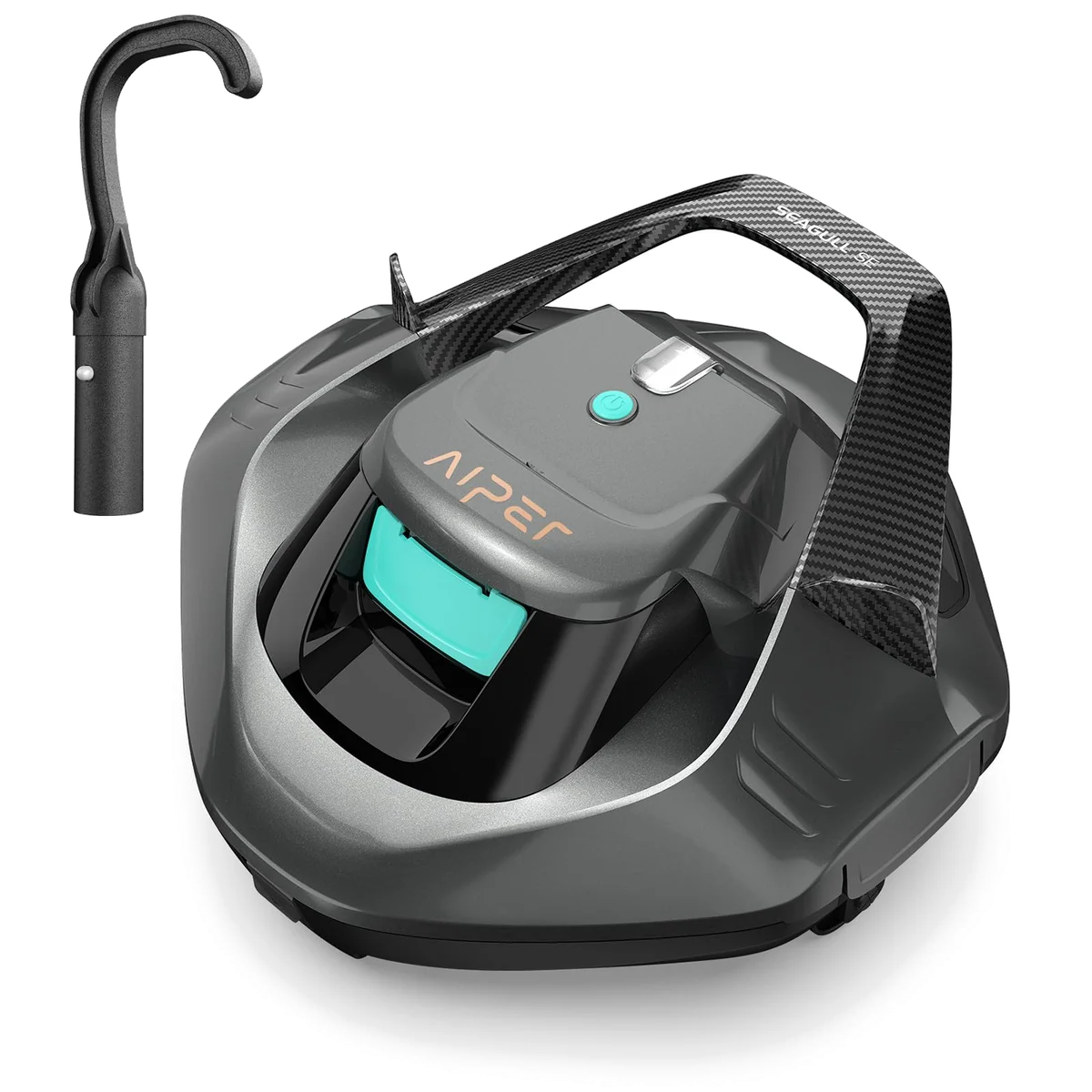
The AIPER Seagull SE 2025 can collect small leaves, bugs, pine needles and coarse grit without a hose or cable.
It is floor only, passes or suspends fine material, struggles around wrinkles and obstacles, and carries exact reports of short runs, charging failure and no-power failure.
Strengths
- Cordless operation removes the hose or power cable from the pool.
- Its light body is easy to carry, deploy and retrieve.
- It can collect useful amounts of loose leaves, bugs and coarse floor debris.
- A healthy unit can approach the advertised 90-minute runtime.
- The simple drop-in routine suits passive maintenance while the owner handles other jobs.
Limitations
- The flat mesh is unreliable for fine silt, dead algae and very fine sand.
- Random movement misses areas and provides no mapping or manual direction.
- It cannot clean walls, stairs, ledges or the waterline.
- Slopes, liner wrinkles, drains and ladders can slow or trap it.
- Exact owners report short runtimes, charging failures and complete power loss within months.
- The one-year warranty and weak evidence of readily available replacement parts limit long-term confidence.
13. Beatbot Sora 30 Pool Vacuum — This is the best specialist for a broad tanning ledge.
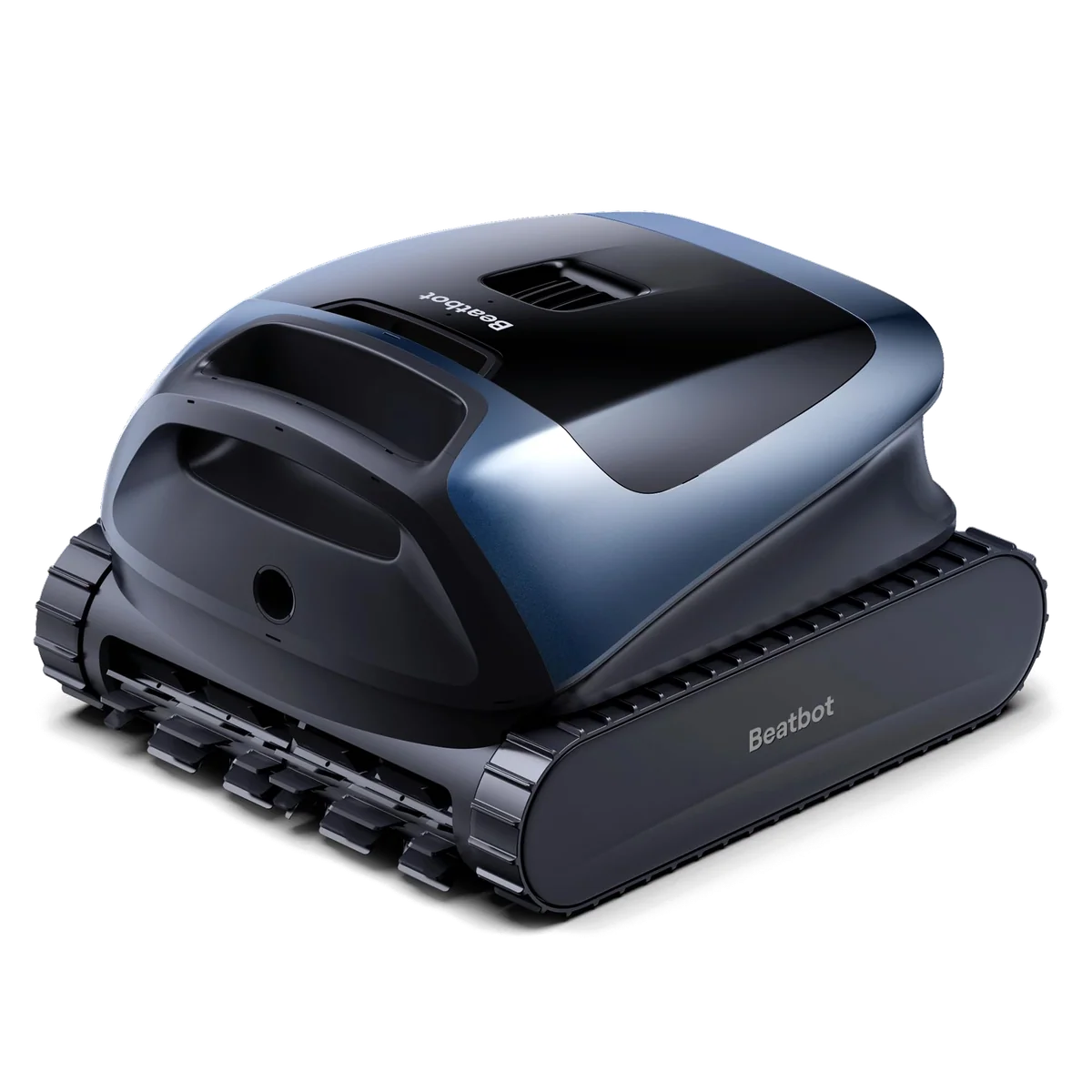
The blue Beatbot Sora 30 has direct evidence of mounting a broad submerged shelf, detecting its drop, reversing safely and continuing while also cleaning the main floor, walls and waterline.
Its roughly eight-inch shallow-water threshold is not a promise for narrow stairs or every approach, and the included 150-micron filter is weak for pollen, dead algae and powdery silt.
14. Vidapool solar Pool skimmer — This solar skimmer should be skipped despite its large basket.
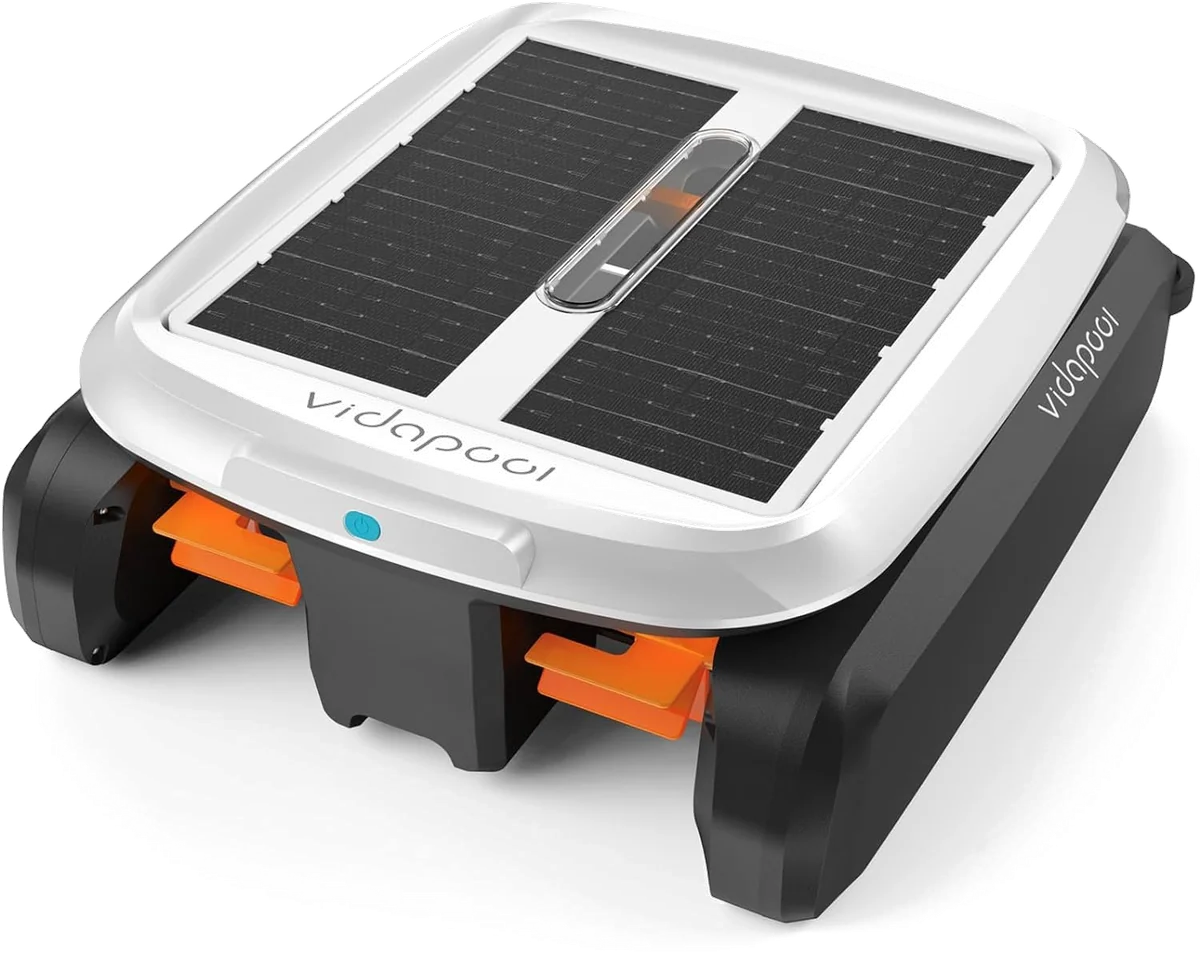
The Vidapool surface robot can collect leaves, blossoms, bugs, pollen and dog hair while carrying an unusually large open basket.
Repeated early power, paddle, mesh, plastic and corrosion failures combine with weak parts and support evidence to make it an unsafe purchase.
Strengths
- The reported 10-liter basket is unusually large for a robotic surface skimmer.
- Owner reports and demonstrations support useful pickup of leaves, pet hair, pollen, bugs and other ordinary floating debris.
- The lift-out basket is simple to empty and rinse when its mesh remains intact.
- A physical remote provides direct steering without an app, account or Wi-Fi connection.
Limitations
- Five of eight retained exact-product reviews describe a material failure within roughly one to four months.
- Solar-only charging provides no cable fallback during poor sunlight or a charging-system fault.
- The paddle-wheel drive is noticeably louder than quieter propeller-driven competitors.
- Owners repeatedly report missing replacement parts and unresponsive customer support.
- The open basket can spill when tilted, and one owner reported mesh shredding before a full season.
- Basic reversing behavior does not establish systematic coverage or universal compatibility with every pool.
15. Aiper Scuba 2025 — This is a small flat-floor helper rather than a full Scuba cleaner.
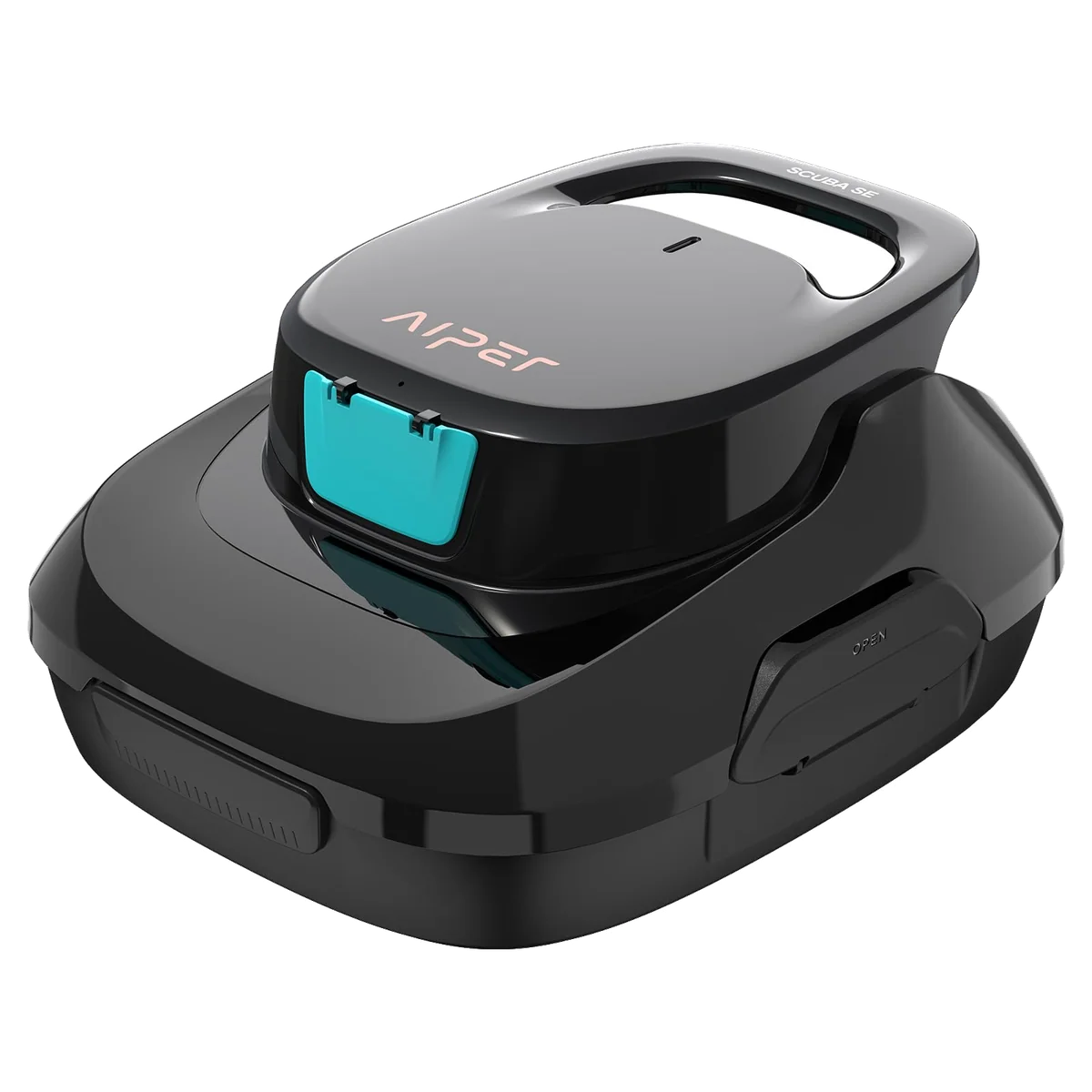
The compact AIPER Scuba 2025 offers uncomplicated cordless pickup of leaves and ordinary loose debris in a small above-ground pool.
It has no tracks, wall cleaning, app or systematic coverage, and exact units have died mid-pool, lost useful charge within weeks or failed to start.
Strengths
- The cordless routine removes suction-hose and operating-cable setup.
- It can collect leaves and ordinary loose bottom debris on a suitable smooth floor.
- Exact-product owners describe the cleaner and its filter as easy to remove and rinse.
- Aiper sent no-cost replacements in two retained owner cases.
Limitations
- It is a floor cleaner with no supported wall, stair or waterline mode.
- Random movement can miss sections or leave the cleaner discharged in the middle.
- Wrinkles and uneven liner areas can strand its small chassis.
- Fine material may remain on the floor or be stirred back into the water.
- Exact-product reviews include early battery failure and a replacement that would not turn on.
16. WYBOT B1 — This is a light full-pool cordless cleaner with too much variance.
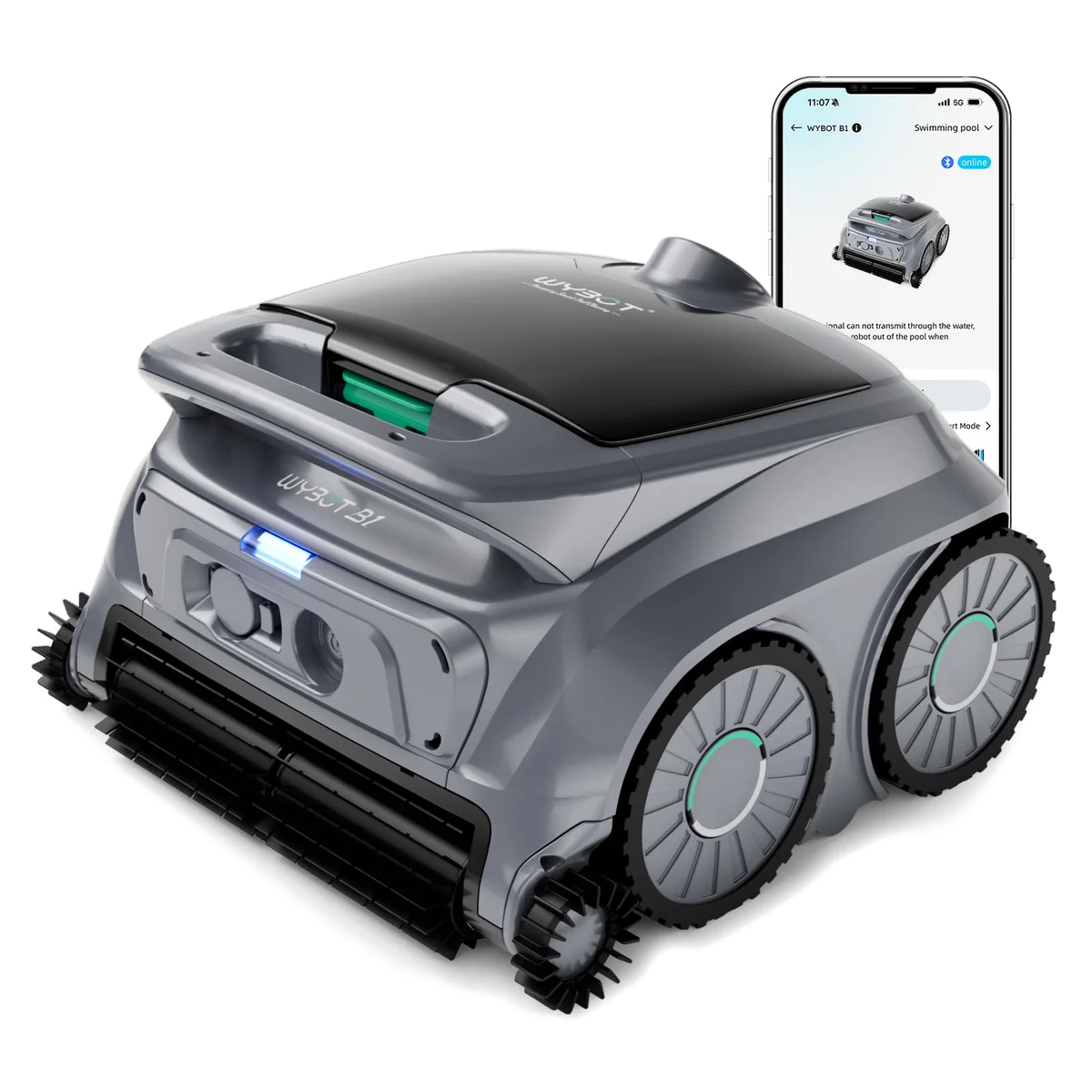
The WYBOT B1 can cross drains, climb compatible walls, reach the waterline and collect visible debris, sand and pebbles while remaining relatively easy to lift.
Corner repetition, missed areas, step stranding, weakening wall performance, occasional debris loss and an exact water-ingress report prevent a default recommendation.
Strengths
- At roughly 14 pounds dry, the B1 is relatively easy to carry for a robot that attempts full-pool cleaning.
- Cordless operation removes cable drag, tangles, and the need to position a transformer near the pool.
- Direct evidence supports useful pickup of leaves, bugs, sand, pebbles, and ordinary settled dirt.
- It can climb vertical walls, reach the waterline, cross a raised drain, and park near an edge.
Limitations
- Coverage can become repetitive or incomplete in pools with slopes, steps, shelves, or awkward corners.
- The 180-micron basket lacks the ultra-fine secondary filtration needed for serious silt or water-polishing work.
- The app-dependent mode selection, unlabeled controls, and absence of a weekly timer limit the “smart” claim.
- The hood latch is awkward enough to turn routine basket cleaning into a daily annoyance.
- A direct two-month failure and recurring WYBOT support complaints make the easy-return policy part of the product.
17. Lodoba SAT20 Pro — This is a cautious budget option for simple geometry.
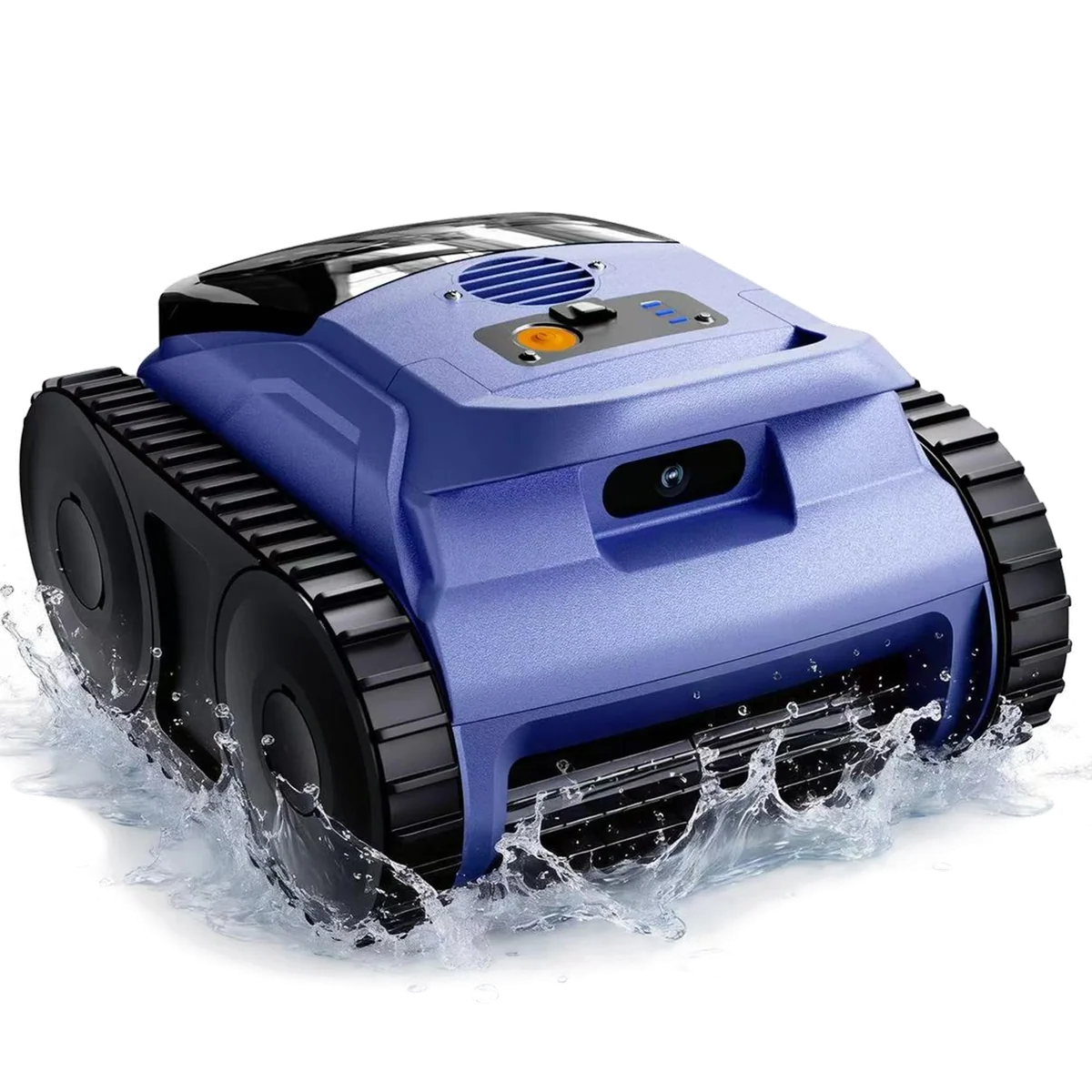
The Lodoba SAT20 Pro can collect ordinary leaves, bugs, sand and dirt while climbing straight walls and making useful waterline contact.
Its routes can repeat, push debris and miss obvious areas, while drains, rounded stairs, unreliable parking and an unresolved warranty weaken the ownership case.
Strengths
- Setup is simple, with mode selection and drop-in cordless operation.
- Exact owners report useful pickup of leaves, bugs, sand and ordinary debris.
- Wall climbing and waterline scrubbing work well in several compatible pools.
- There is positive evidence from an above-ground vinyl pool and a pool with sloped walls.
- The feature set is ambitious for a value-positioned full-coverage cleaner.
Limitations
- Navigation can look random and may repeat clean areas while missing dirty ones.
- The robot can push debris ahead instead of capturing it in some conditions.
- Main drains and rounded stairs can trap it, while edge parking is not dependable.
- Every cycle still requires retrieval, basket care and battery charging.
- Warranty terms, replacement parts, battery service and repair support remain unverified.
- An owner identified the charging-port attachment as a potentially fragile critical part.
18. Dolphin Nautilus CC Pro — This is the corded upgrade for genuine waterline travel, but only conditionally.
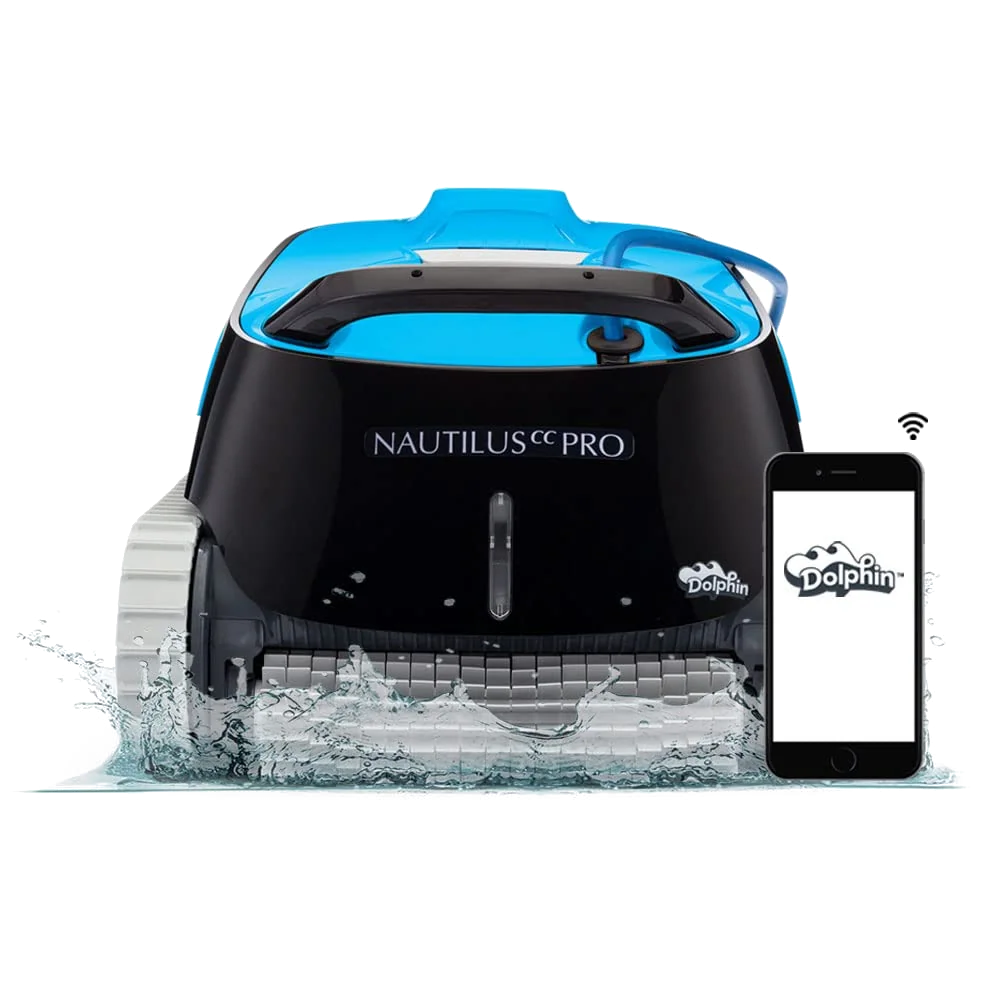
The Dolphin Nautilus CC Pro adds a swivel cable, active scrubbing, scheduling, manual steering and real lateral tile-line movement to the immediate-repeat advantages of corded power.
Its stock mesh filtration is weak for powdery sediment, compatible pleated-filter availability is uncertain, and component failures, warranty conflict and possible repair freight make purchase verification mandatory.
Strengths
- It removes ordinary floor debris well and can spare the owner most routine manual vacuuming.
- Its wall climbing and lateral waterline scrubbing are genuine capabilities rather than borrowed claims from another Nautilus model.
- The roomy top-loading basket is straightforward to dump, rinse, and reinstall.
- The 60-foot swivel cable is generally resistant to operational tangling.
- Manual app steering provides a practical way to target a missed patch.
Limitations
- The included mesh panels can let sand, silt, and dead-algae residue escape.
- The two-hour route has no demonstrated stored map and may miss floor or waterline sections.
- Steps, shelves, raised drains, and abrupt transitions can defeat otherwise strong climbing.
- Exact-ASIN owners report failures across the controller, power supply, motors, cable, app, and chassis stability.
- The package does not include a caddy, and current warranty terms require seller-specific verification.
19. Nepturox SAT25 — This is a wall-climbing cordless candidate with an unacceptable first-unit risk.
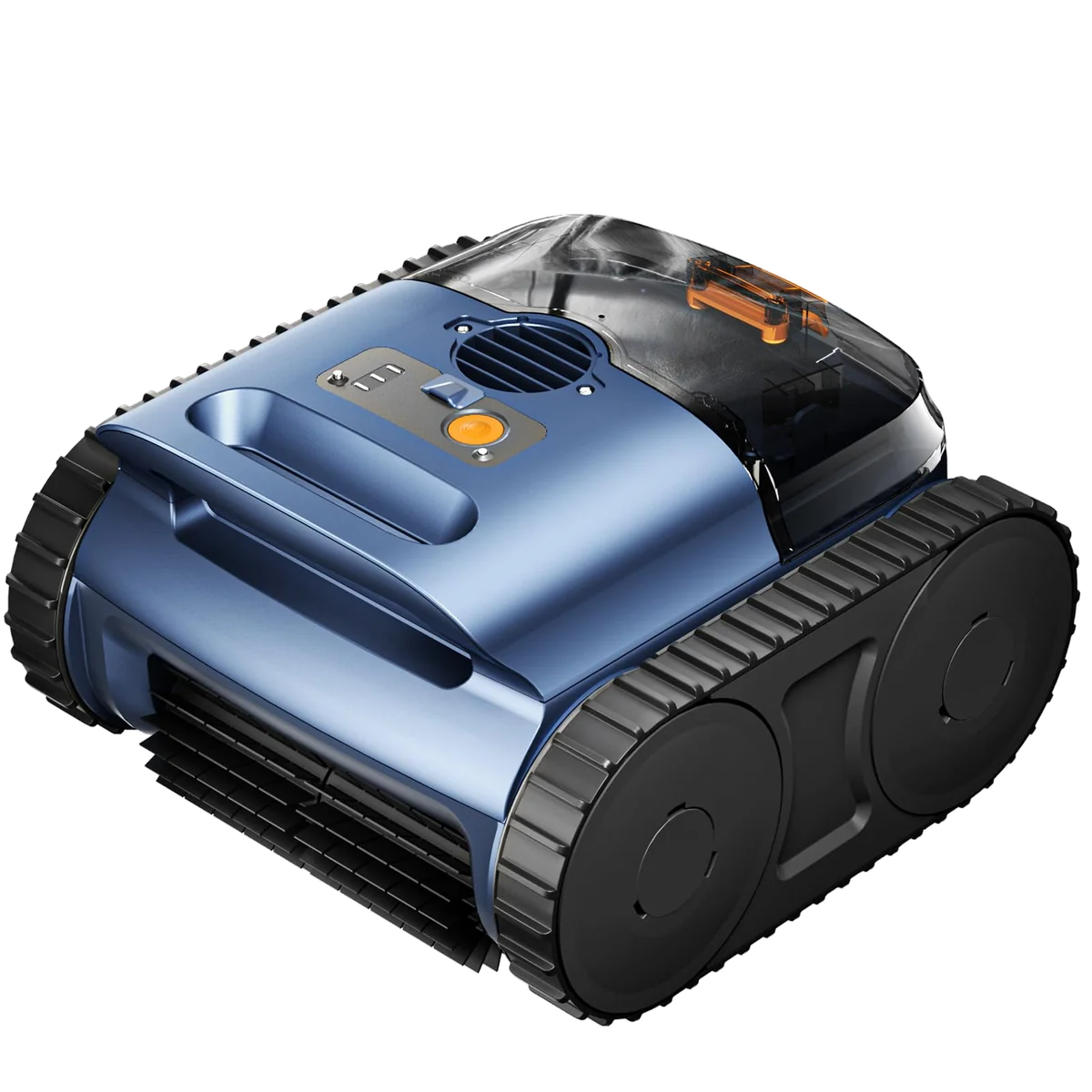
The Nepturox SAT25 can collect routine dirt, leaves, sand, rocks and small particles while its tracks provide real vertical climbing.
Severe charging and electrical faults, repeated routes, fixture hang-ups, uncertain parts support and confidence-damaging review-pressure behavior make it a skip for most buyers.
Strengths
- Cordless operation removes the hose or floating power cable from the cleaning cycle.
- Functional units show credible pickup of leaves, grit and routine settled debris.
- Track-driven wall climbing has stronger support than most of the listing’s other premium claims.
- Three physical cleaning modes keep operation simple for buyers who do not want an app.
Limitations
- Two retained owners received first units with severe charging or electrical failures.
- The warranty, replacement-parts supply and battery-service path remain unclear.
- Navigation can repeat areas or struggle around drains, stairs and skimmers.
- Fine-sediment performance is unsettled because pickup reports conflict with a resuspension complaint.
- Retrieval still requires lifting, draining, basket cleaning, dry-port charging and redeployment.
20. BUBLUE F10 — This is a powered skimmer for a small pool or skimmerless spa.
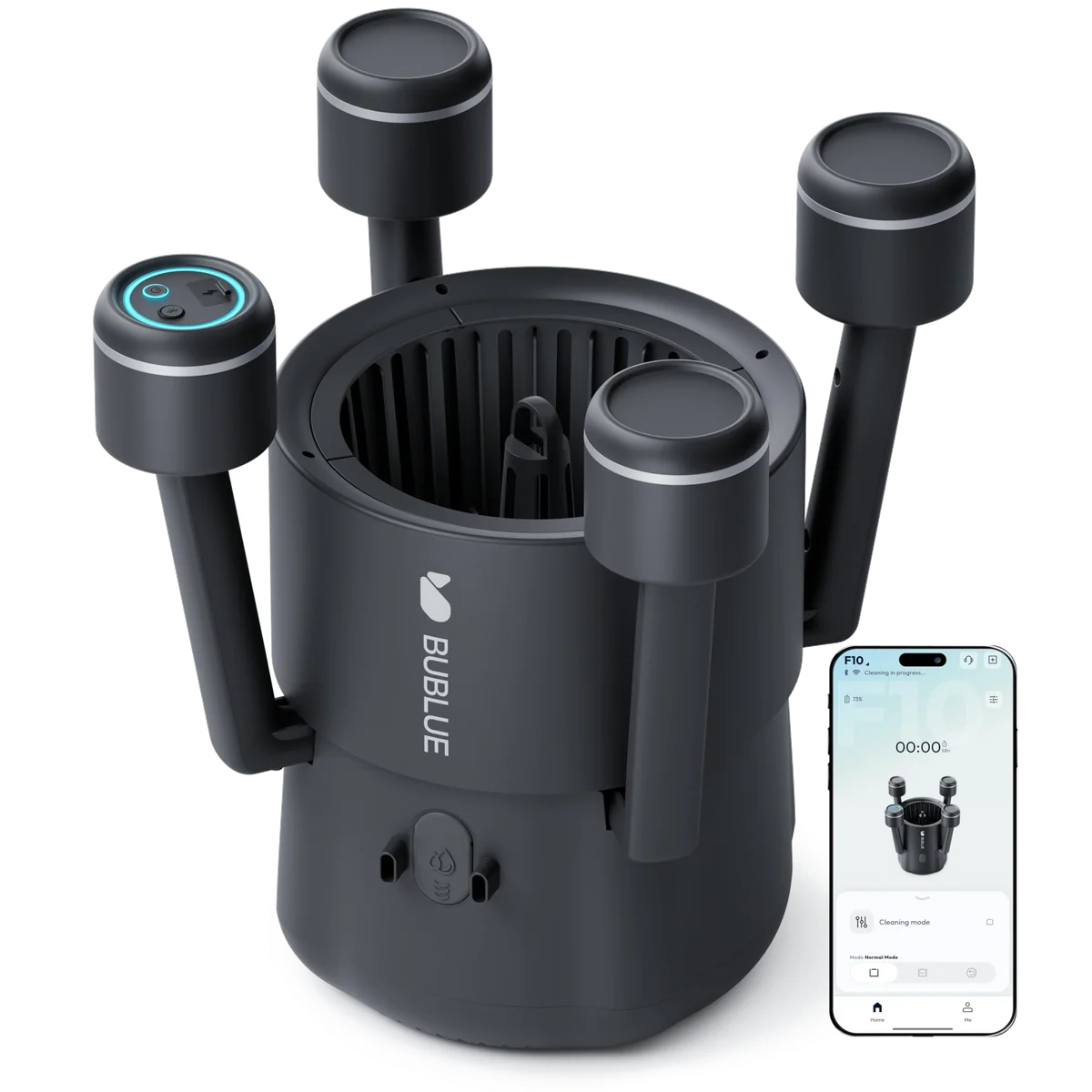
The BUBLUE F10 creates visible surface flow, carries a five-liter basket and can collect leaves, insects, flowers and needles while offering app-based return-to-edge control.
It needs frequent wired charging, exact owners report far shorter runtime than the promotion suggests, and walls, slopes, steps and cords can strand it.
21. ZYERCH Robotic Pool vacuum — This cleaner should not be trusted as a primary pool robot.
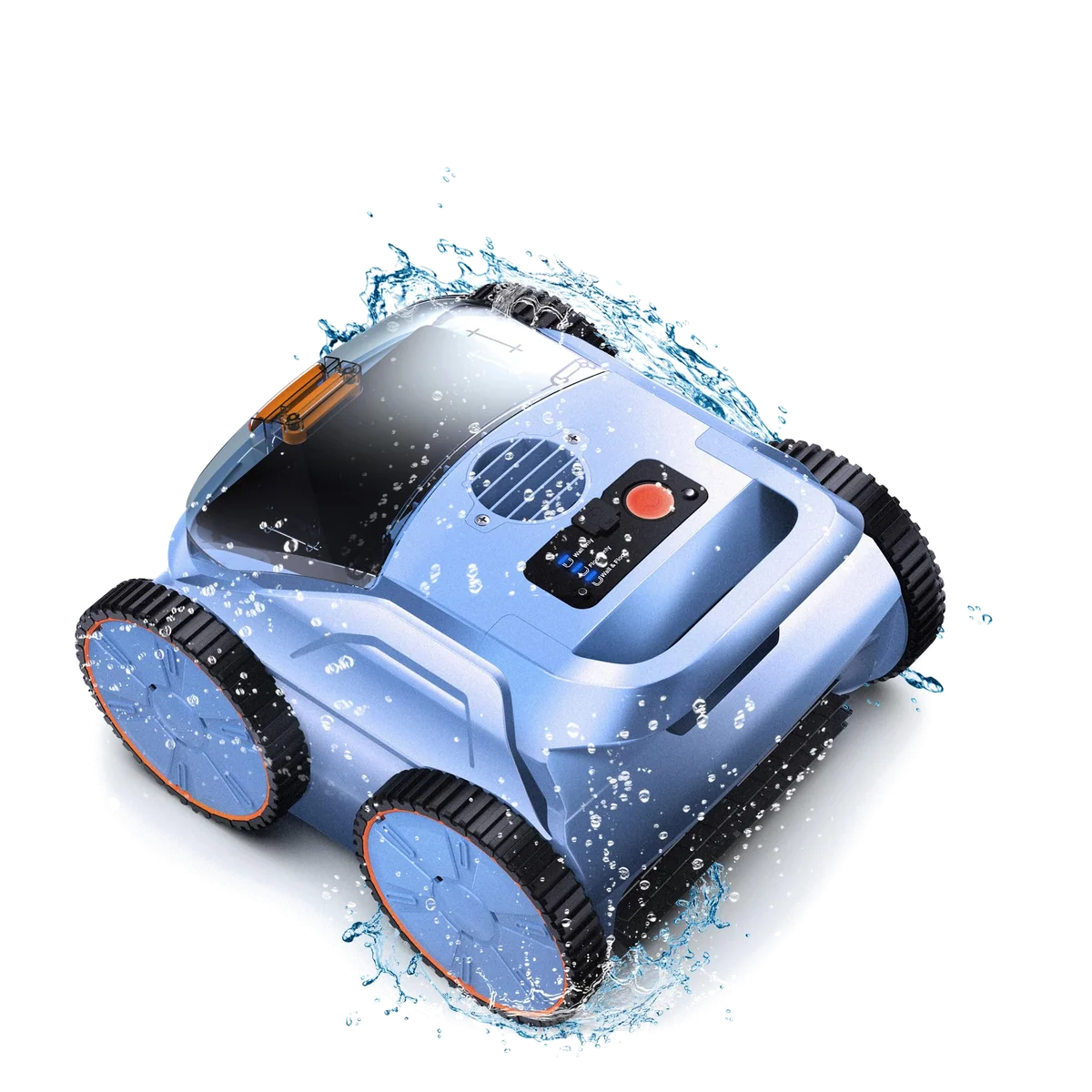
The ZYERCH SAT 20-3P5S can begin with strong pickup and credible wall climbing on compatible finishes.
Its concentrated record of second-season deterioration, charging failures, navigation decline, short runtime and replacement dependence overwhelms those initial results.
Strengths
- Healthy units can climb walls and reach the waterline area.
- Some owners report strong routine dirt pickup on pebble and coarse gunite finishes.
- Onboard floor, wall, and combined modes avoid dependence on Wi-Fi.
- Cordless operation removes the hose and keeps debris in a separate basket.
- Two owners received complete replacement robots after charging failures.
Limitations
- Breakdowns and serious deterioration cluster around the transition to a second season.
- Reported navigation failures include repeated lanes, wall stalls, missed areas, and drain hang-ups.
- One exact owner measured only 45 to 50 minutes from a full charge.
- Leaf pickup is inconsistent even when debris remains visible on the floor.
- Reported warranty terms conflict, and post-window support access is not assured.
- The listing contradicts itself about the maximum pool size.
22. Beatbot AquaSense 2 Pro — This premium hybrid is too compromised for most buyers.
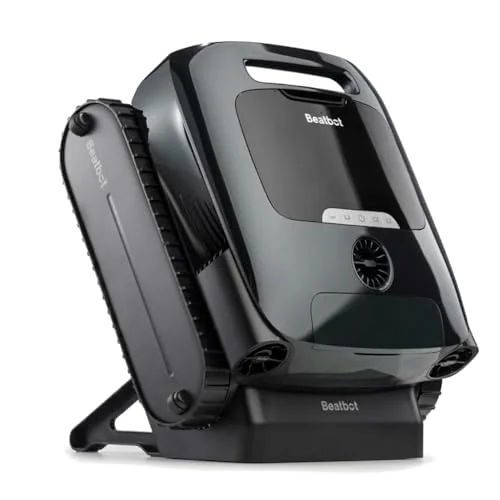
The Beatbot AquaSense 2 Pro can deliver long underwater runs, strong ordinary-debris pickup, compatible wall cleaning, surface parking and occasional floating-debris collection in one body.
It is heavy, expensive, inconsistent on full-floor coverage and surface retention, limited by 150-micron filtration and still dependent on manual lifting, draining, rinsing and charging.
Strengths
- Floor cleaning can be excellent on leaves, acorns, insects and ordinary visible debris.
- Cordless operation removes cable tangles, a deck transformer and an underwater tether.
- Wall climbing and double-pass waterline scrubbing work well in compatible pool geometry.
- Surface parking and SmartDrain make retrieval easier than lifting a water-filled robot from the pool floor.
- Surface steering helps target visible floating leaves and move the robot toward an accessible edge.
- Long claimed runtimes give the robot a plausible chance to cover a large residential pool in one mode-specific cycle.
Limitations
- Coverage can remain incomplete even after repeated cycles and apparent mapping.
- The 150-micron mesh is a weak fit for pools dominated by fine sand, silt, ash or dead algae.
- Surface skimming may miss pollen, lose captured debris during reversals or neglect shallow edges.
- App steering does not work while the robot is performing its underwater cleaning.
- Shallow steps, tanning ledges, benches, jets and unusual transitions can require manual cleanup or rescue.
- The robot remains a substantial lift after drainage, especially with a full basket.
- Every depleted cycle ends with manual removal, basket rinsing and several hours on the charging dock.
- The clarifier adds a consumable without replacing water testing, sanitation or the main pool filter.
23. BOTLUXE PC10 — This is a tempting specification bargain without enough protection.
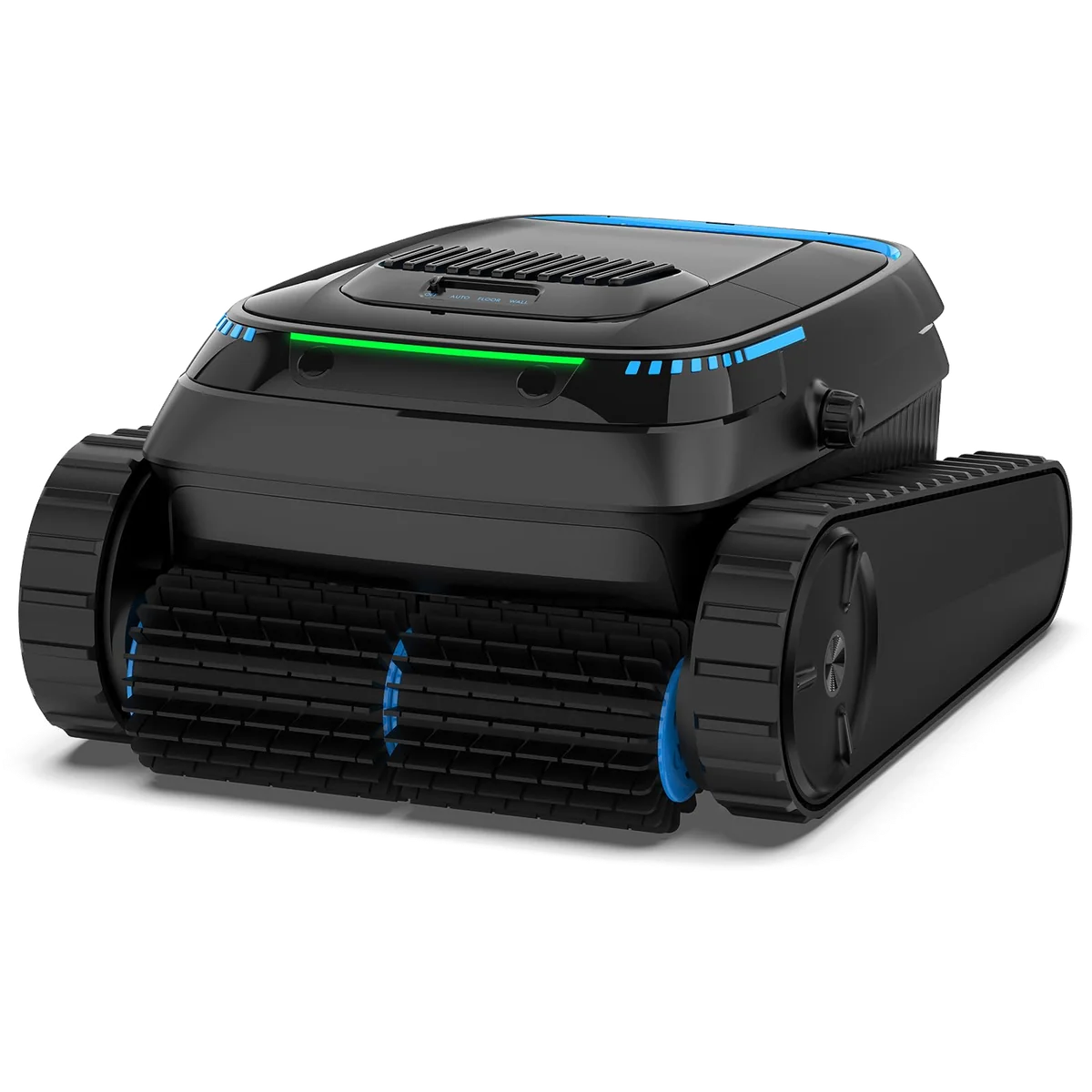
The BOTLUXE PC10 can provide vigorous brushing, a large basket and useful floor, wall and waterline cleaning when a healthy unit meets cooperative geometry.
Runtime and coverage vary sharply, exact failures include deep-end parking and early loss of movement, and its warranty, support and battery economics remain unclear.
Strengths
- The physical mode selector makes setup unusually simple.
- The cordless body avoids hoses and a floating power cable.
- Several exact owners report strong floor, wall, stair, and waterline cleaning.
- The 4 L top-access basket is repeatedly described as easy to rinse.
- Auto, Floor, and Wall modes give useful control without requiring an account or app.
Limitations
- Exact-owner runtime ranges from about one hour to more than two hours.
- Parking near an edge can still leave the cleaner inaccessible in a deep end.
- Fine sand and dead-algae pickup are inconsistent.
- One exact unit stopped moving in under three months, while another behaved badly from its first cycle.
- Warranty responsibility, parts availability, and battery replacement remain insufficiently clear.
24. IGarden KN35 — This is a balanced midpriced cordless option for an open pool.
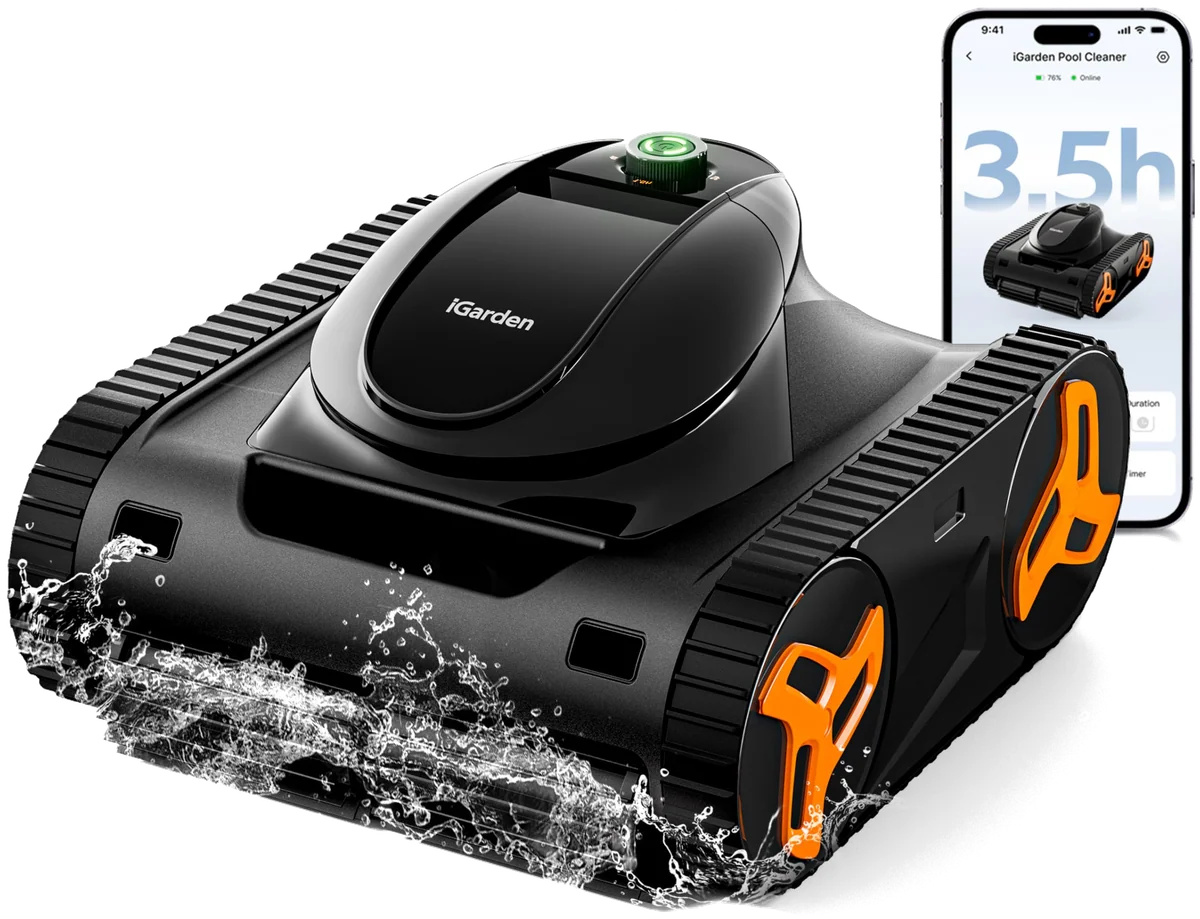
The iGarden KN Series offers selectable cycle lengths, useful open-floor cleaning and credible wall and waterline work for ordinary dirt, insects, hair, loose sand and small leaves.
Its 180-micron basket is not fine-silt filtration, and ladders, raised fixtures, steps and corners expose navigation limits that its disconnected underwater app cannot fix.
Strengths
- Cordless deployment eliminates the hose and floating power cable from routine cleaning.
- The selectable cycle lengths make the large advertised battery capacity useful for both quick and extended maintenance.
- Owner reports support capable floor, wall and waterline cleaning in pools without troublesome geometry.
- The 3.2-liter top basket is large enough for ordinary maintenance loads and easy to rinse.
- Floor-only and broader coverage modes let the owner match energy use to the actual chore.
Limitations
- Steps, tight corners, ladder gaps and raised floor fixtures can remain dirty or trap the robot.
- Large leaves and adhered fine silt are less dependable targets than loose dirt and smaller debris.
- The app disconnects underwater, so it cannot steer, recall or reconfigure the robot during a cycle.
- Wet retrieval can demand real effort, and a little collected material may fall back during draining.
- The exact KN35 lacks a convincing long-term record for battery life, repairability and replacement-part access.
25. Dolphin Proteus DX3 — This is a straightforward corded alternative for a conventional in-ground pool.
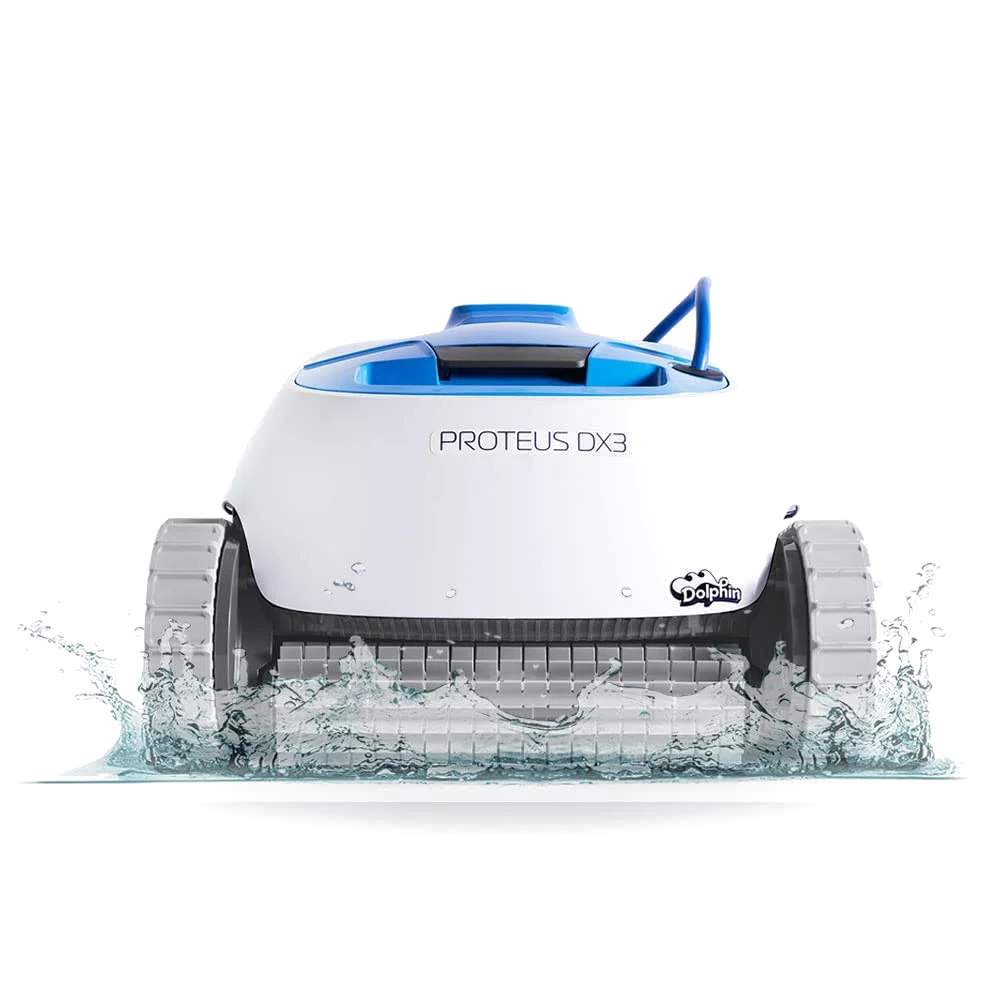
The Dolphin Proteus DX3 combines an active brush, top basket, credible floor and wall cleaning, immediate repeat cycles and a basic weekly scheduler.
Its non-swivel cable needs management, its waterline contact is not sustained lateral cleaning, and raised drains, ledges, steps and microscopic sediment remain weak points.
Strengths
- It removes ordinary leaves, blossoms, sand, bugs, and floor dirt well enough to reduce manual vacuuming substantially.
- The top-loading basket is straightforward to remove, empty, rinse, and inspect.
- Its active brush and wall climbing provide more surface agitation than a floor-only pickup robot.
- Corded power avoids recharge delays and keeps the robot ready for repeated cleaning cycles.
- The controls are simple for buyers who do not want another pool app.
Limitations
- Waterline, step, ledge, corner, and irregular-wall coverage is too inconsistent to replace manual brushing.
- The non-swivel cable can twist and requires periodic straightening.
- Its route can repeat areas, miss patches, and waste time around incompatible drain geometry.
- The standard filtration may struggle with extremely fine silt or dead algae.
- Power-supply and other component complaints make warranty terms, parts pricing, and local service unusually important.
26. Beatbot Sora 30 — This is the same ledge specialist in a different color.
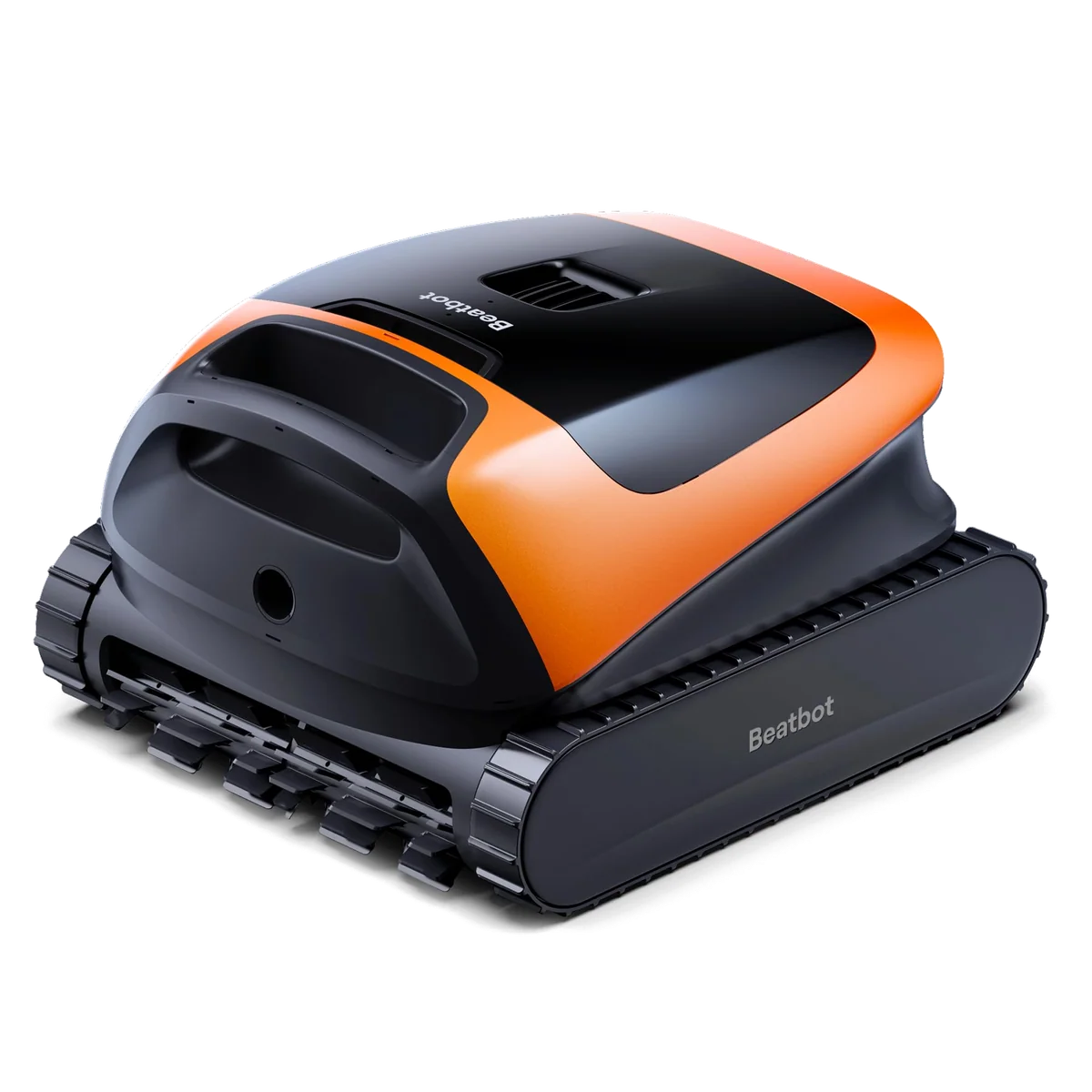
The orange Beatbot Sora 30 offers the blue model’s meaningful shallow-platform ability, large basket, long cordless endurance and surface-return retrieval behavior.
It does not skim floating debris, its ledge still needs adequate depth and width, and its standard filtration does not make it a fine-sediment cleaner.
Strengths
- Qualifying tanning ledges and broad shallow platforms receive unusually credible cleaning coverage.
- Floor, wall and waterline performance is convincing for routine leaves, bugs and ordinary dirt.
- The 10,000 mAh battery has substantial reserves in several large-pool owner reports.
- The 5-liter top-access basket is spacious and simpler to rinse than many multi-part filter assemblies.
- Surface parking and drainage can make retrieval much easier than pulling a water-filled robot from the bottom.
- Cordless operation removes the cable without sacrificing credible wall climbing or long runtime.
Limitations
- The included 150-micron filter is a poor match for persistent pollen, storm dust, dead algae and the finest silt.
- The optional ultra-fine filter is separate, and one owner reported a severe mobility failure after installing it.
- The app cannot provide dependable live communication while the cleaner is submerged.
- Narrow steps, curved approaches and shallow shelves below about eight inches remain uncertain territory.
- Parking can fail or leave the floating robot out of reach, so the retrieval hook is still necessary.
- The detachable cover, unusual toggle and proprietary plug expose cost-cutting in daily use.
- Long-term battery durability and owner-serviceable replacement economics are not established.
27. Aiper Scuba S3 — This ambiguous AIPER listing needs identity confirmation before purchase.
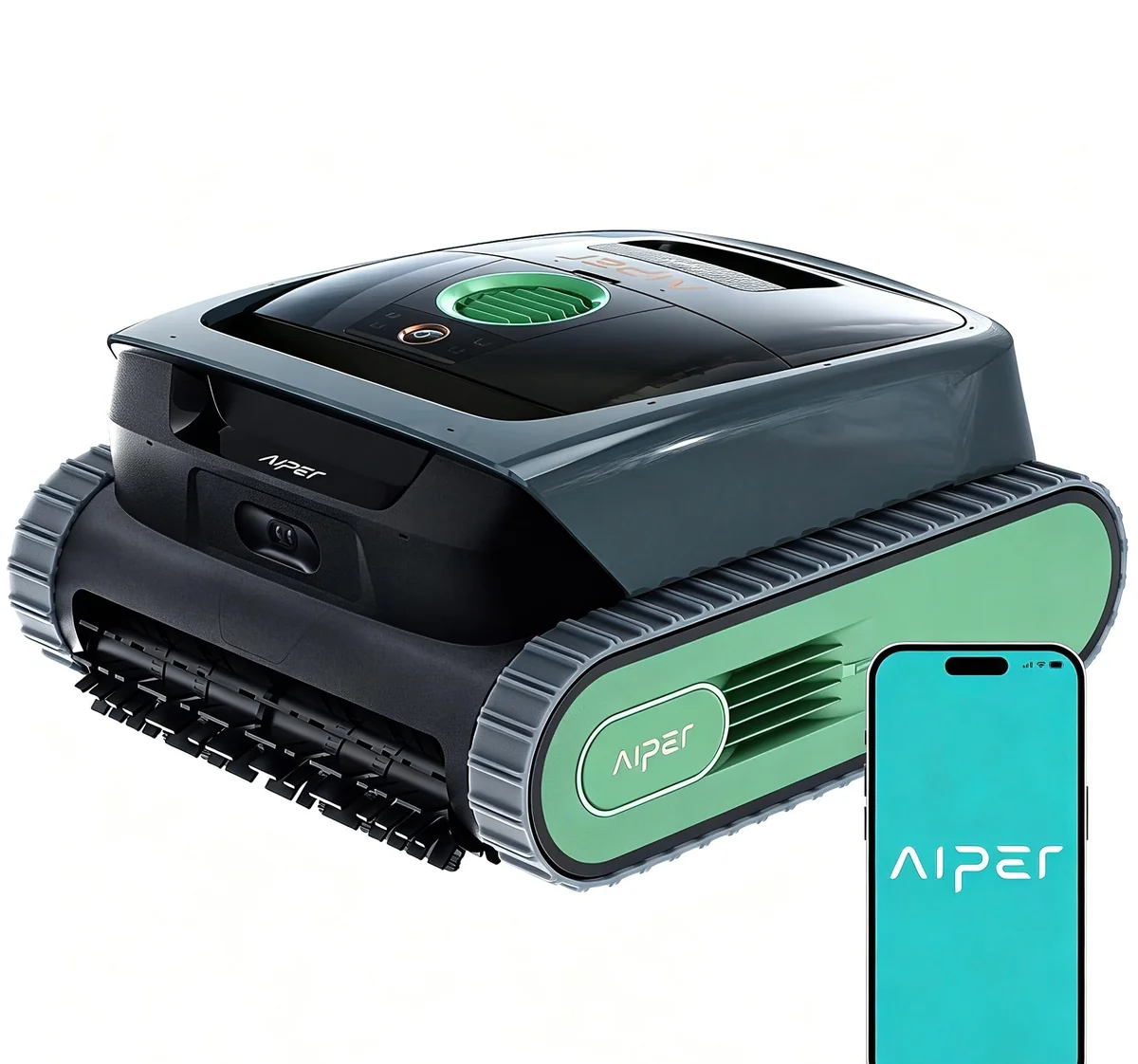
The green machine appears capable of strong ordinary debris and fine-particle collection if the seller can document that it is the S3-like configuration described by owners.
The listing names no dependable model, and exact reports include main-drain trapping, missed features, early battery trouble and a failed charging cord without prompt replacement stock.
Strengths
- Fine debris and ordinary leaves are the strongest parts of the exact-owner record.
- Floor cleaning can replace much of the hose and pole-vacuum routine.
- Basic cleaning modes can be selected on the machine without opening the app.
- Wall and waterline modes add useful coverage in pools with straightforward geometry.
Limitations
- The generic Amazon title does not confirm that B0GGQZSV9K is the S3.
- Curved bowls, corners, steps, ledges, and main drains can defeat or redirect it.
- Wi-Fi drops underwater, so mid-cycle app changes are unavailable.
- The exact-owner sample includes an early cord failure and rapid battery deterioration.
- Long-term durability remains unproven for this exact listing.
28. Over-Ground Robotic Pool Cleaner,APP Support — This confused listing is a clear avoid.
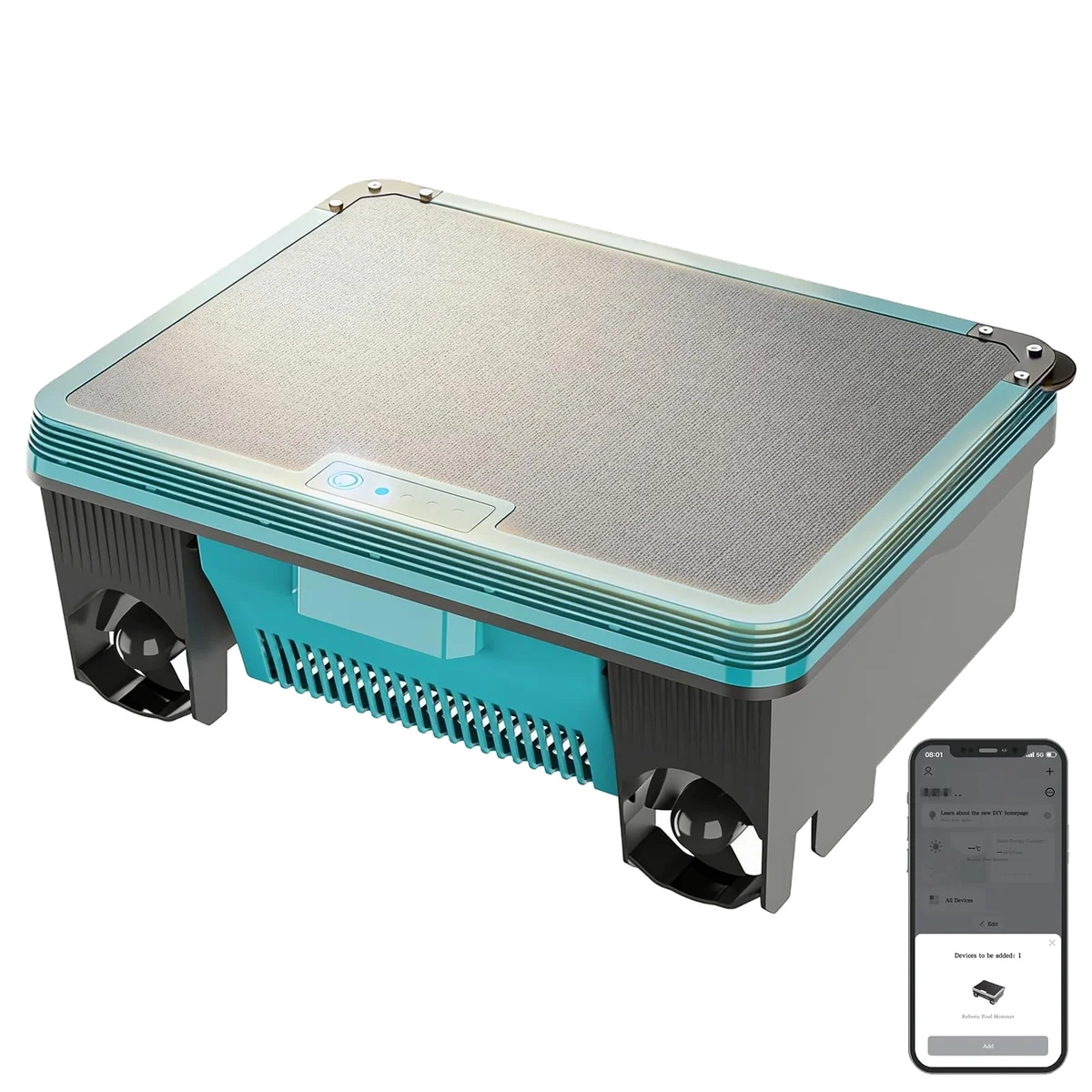
The Curalk H1 has no defensible role because its underwater-cleaning claims conflict with owner descriptions of an ineffective solar surface skimmer.
Owners report empty baskets, short runtime, failed solar charging, water ingress, cover detachment, uncontrolled edge impacts and failure after limited use.
29. Beatbot Sora 70 — This is the best one-body cleaner for underwater work plus burst skimming.
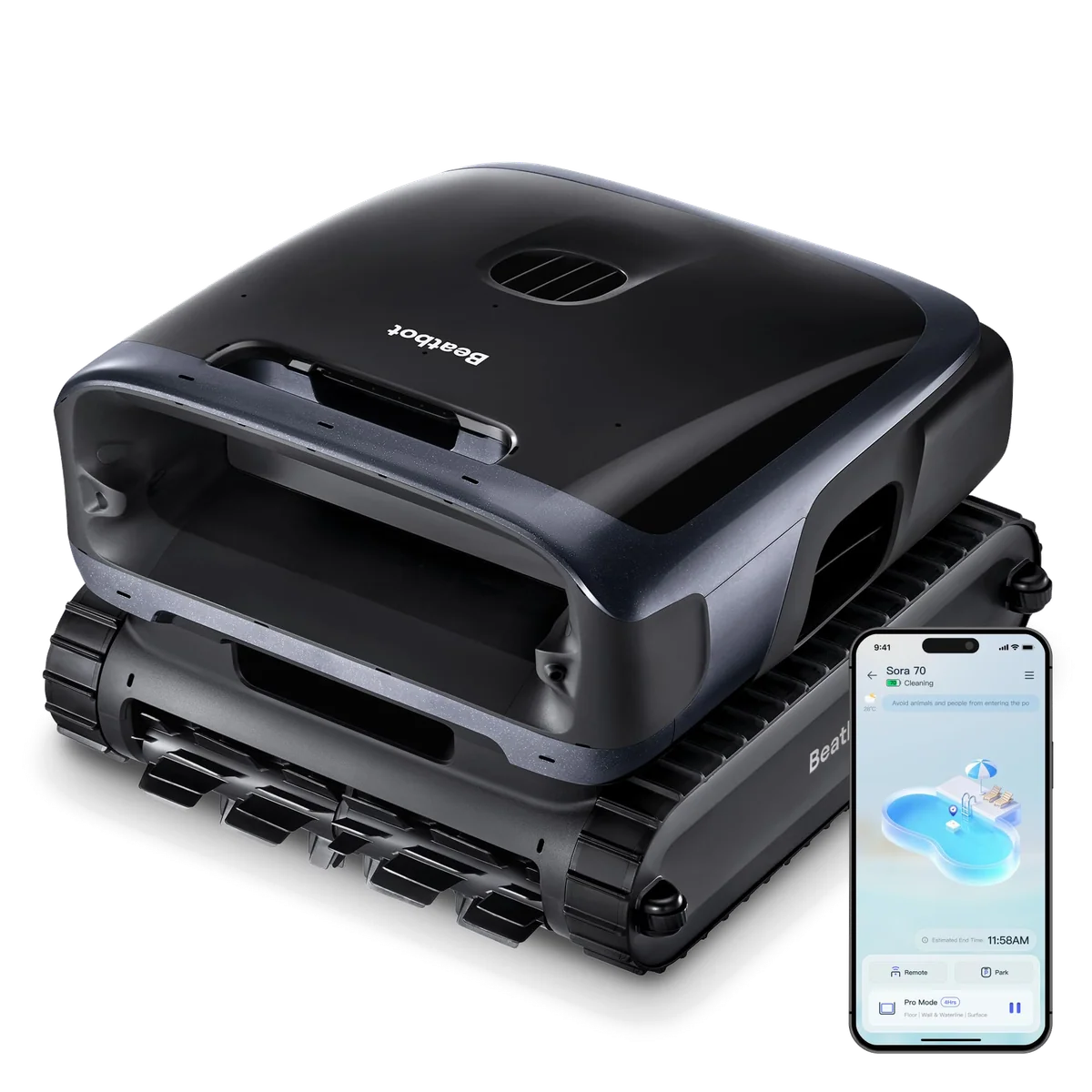
The Beatbot Sora 70 handles floors, walls, waterline, qualifying ledges and active surface pickup while carrying a six-liter basket and returning to the surface for easier retrieval.
Its 150-micron filtration performs poorly on powdery silt, its surface mode is intermittent rather than continuous, and the bulky body shares one finite battery across every job.
Strengths
- The six-liter top-access basket holds substantial coarse debris and rinses quickly.
- Floor, wall, waterline, shallow-area, and surface functions all have direct supporting evidence.
- Real-world reports support long cycles, including at least four hours in one demanding mixed-mode test.
- Automatic surfacing, edge parking, and drainage make retrieval less frustrating.
- JetPulse skimming is genuinely useful for bugs, leaves, and fast pre-swim cleanup.
Limitations
- The standard basket is an uncertain choice for powdery silt, pollen, and very fine settled dust.
- The app loses its connection underwater and cannot provide dependable live control.
- Very shallow shelves, narrow steps, coves, and awkward transitions can remain untreated.
- Cordless ownership still requires deployment, retrieval, basket rinsing, charging-port care, and redeployment.
- The large wet body may be difficult for smaller or mobility-limited owners to lift safely.
30. (2026 Upgrade) Aiper Scuba S1 — This is the longer-runtime Scuba S1 for buyers who understand the mode distinction.
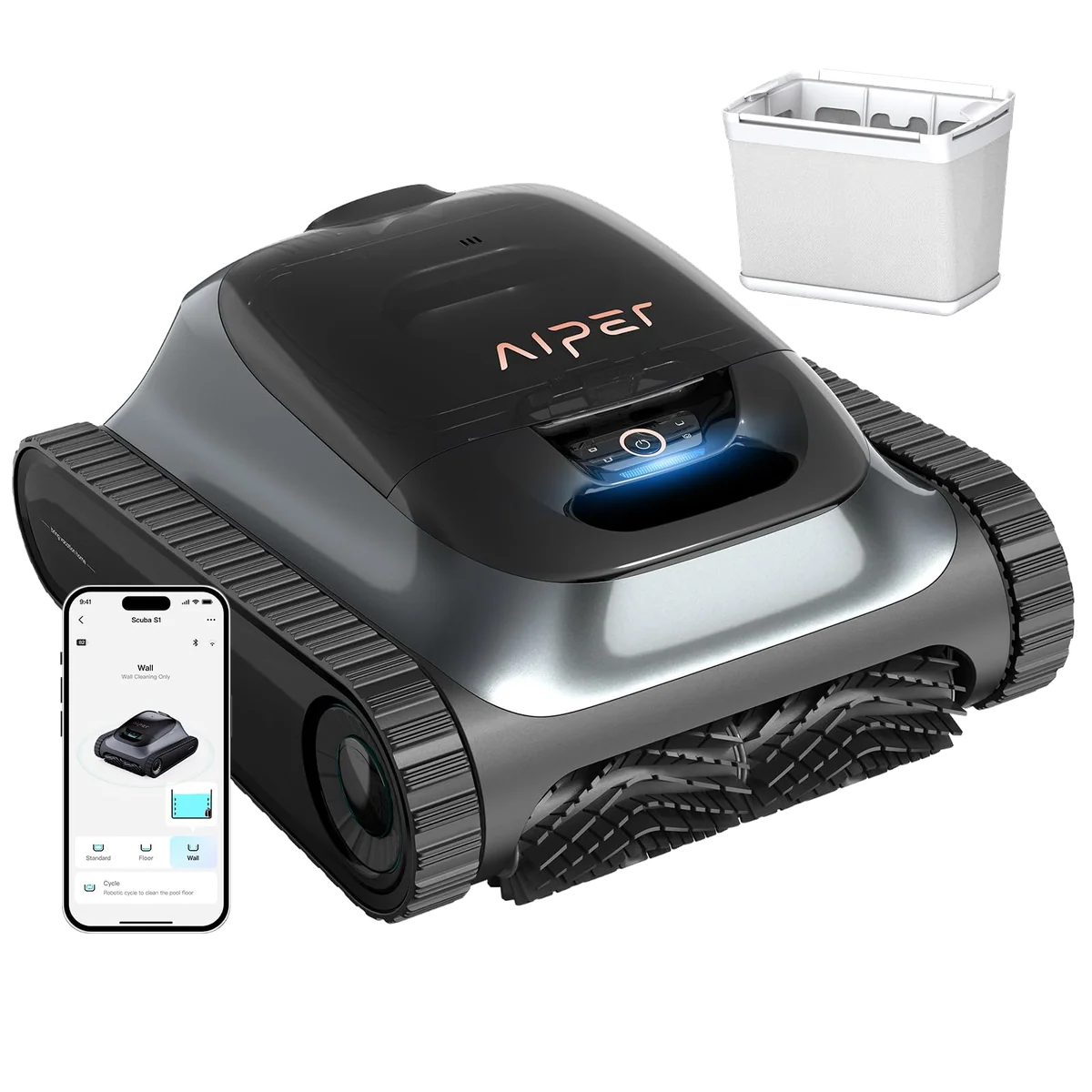
The 2026 Scuba S1 preserves the model’s strong broad-floor and fine-filtration case while extending operation to as much as 270 minutes in Eco maintenance mode.
The ordinary Auto, Floor, Wall and Scheduled modes are listed for shorter operation, while the S1 family’s geometry, charging and reliability reservations still apply.
31. TALOSBO C1 — This is the strongest low-cost wall-climbing candidate for a simple pool.
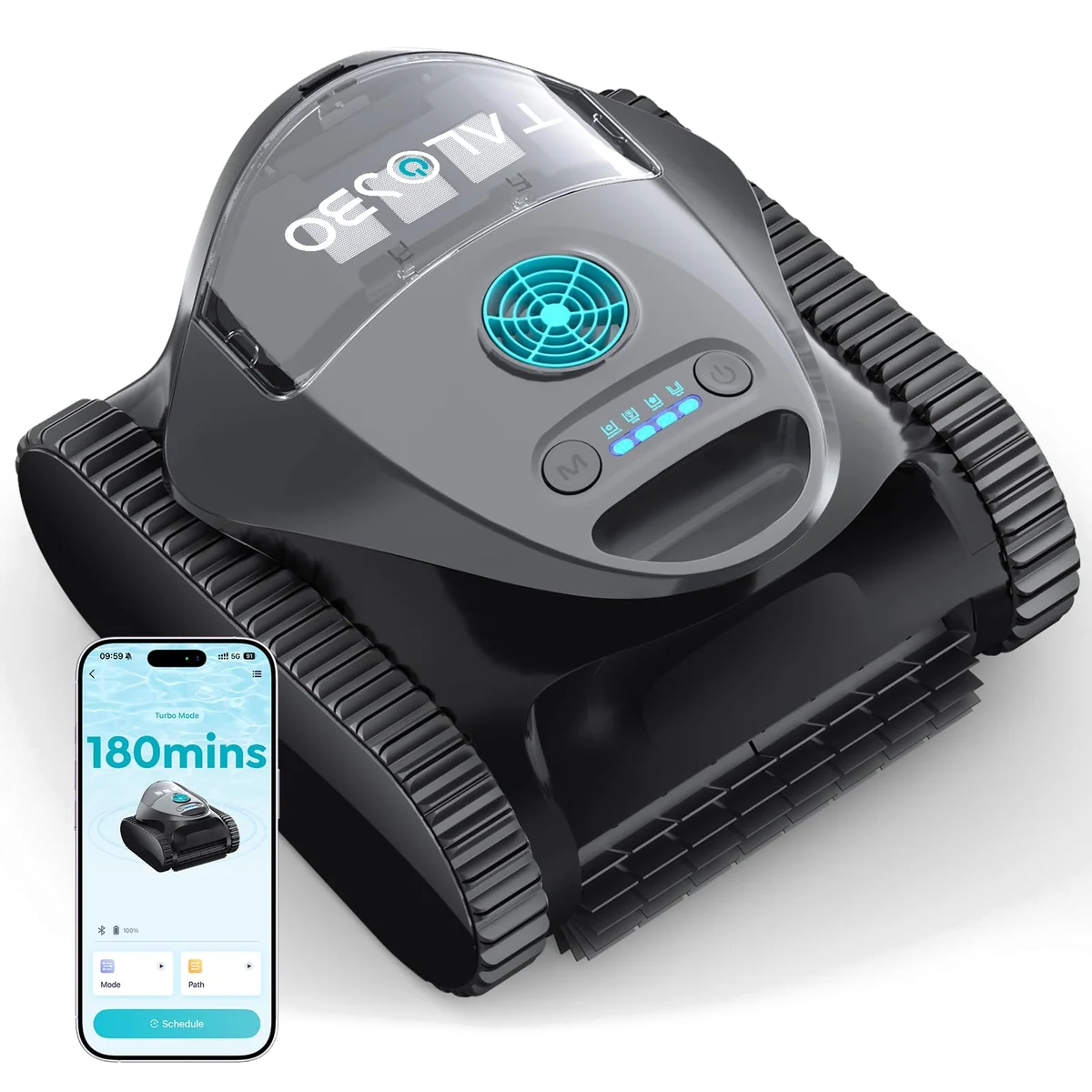
The TALOSBO C1 combines credible wall contact with a two-stage basket-and-foam filter that gives fine dirt, sand, pollen and silt a better chance than ordinary coarse media.
Its navigation weakens in large oval and freeform pools, the foam can reduce climbing grip, and the app, basket construction, warranty terms and replacement-parts path remain unsettled.
Strengths
- It has credible pickup for leaves, sand, silt, insects, dirt, grass, pet hair, and other settled debris.
- Its tracks usually provide useful wall climbing on conventional vinyl and plaster surfaces.
- Eco mode can approach three hours, giving the robot time to compensate for some repeated movement.
- The top-load basket and secondary foam are easy to reach without turning the robot over.
Limitations
- Preset routes can repeat cleaned areas, miss patches, and perform poorly in oval or irregular pools.
- The app does not maintain an underwater connection and feels unfinished to some owners.
- The thin basket and secondary foam can require careful alignment and two-part cleaning after every run.
- Long-term battery health, replacement-part access, and even the stated warranty term remain unclear.
32. Robotic Pool Cleaner, Pool Vacuum — This is a promising ultra-budget floor robot with too little history.
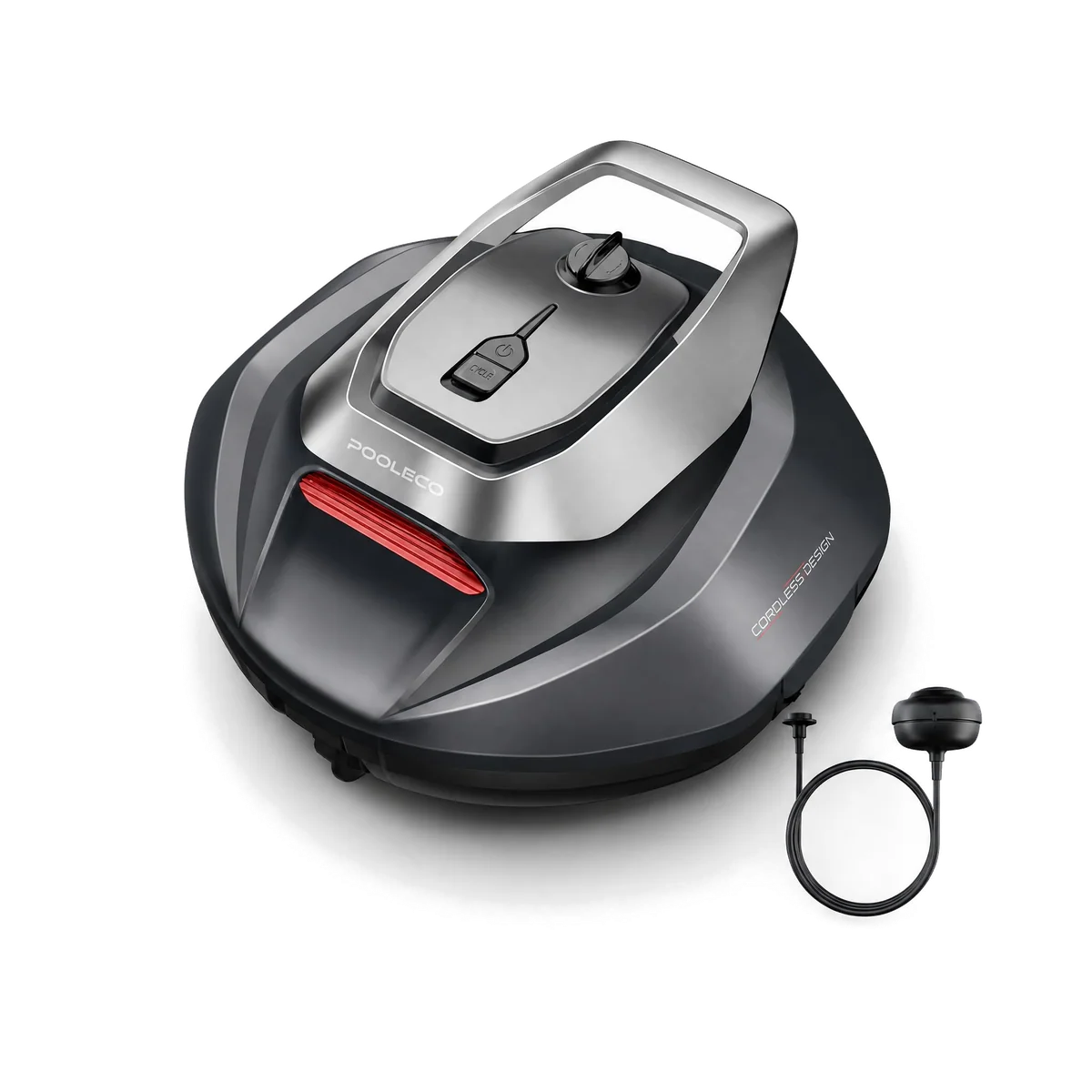
The Pooleco S110 is light, simple and capable of collecting leaves, insects, grass and sand from a small, uncomplicated floor.
Its written evidence is uniformly positive but tiny, with no meaningful record for battery aging, seals, motors, chargers, parts, wall cleaning or warranty handling.
33. PoolMr cordless Robotic Pool cleaner — This is the best-developed cheap helper for a flat above-ground floor.
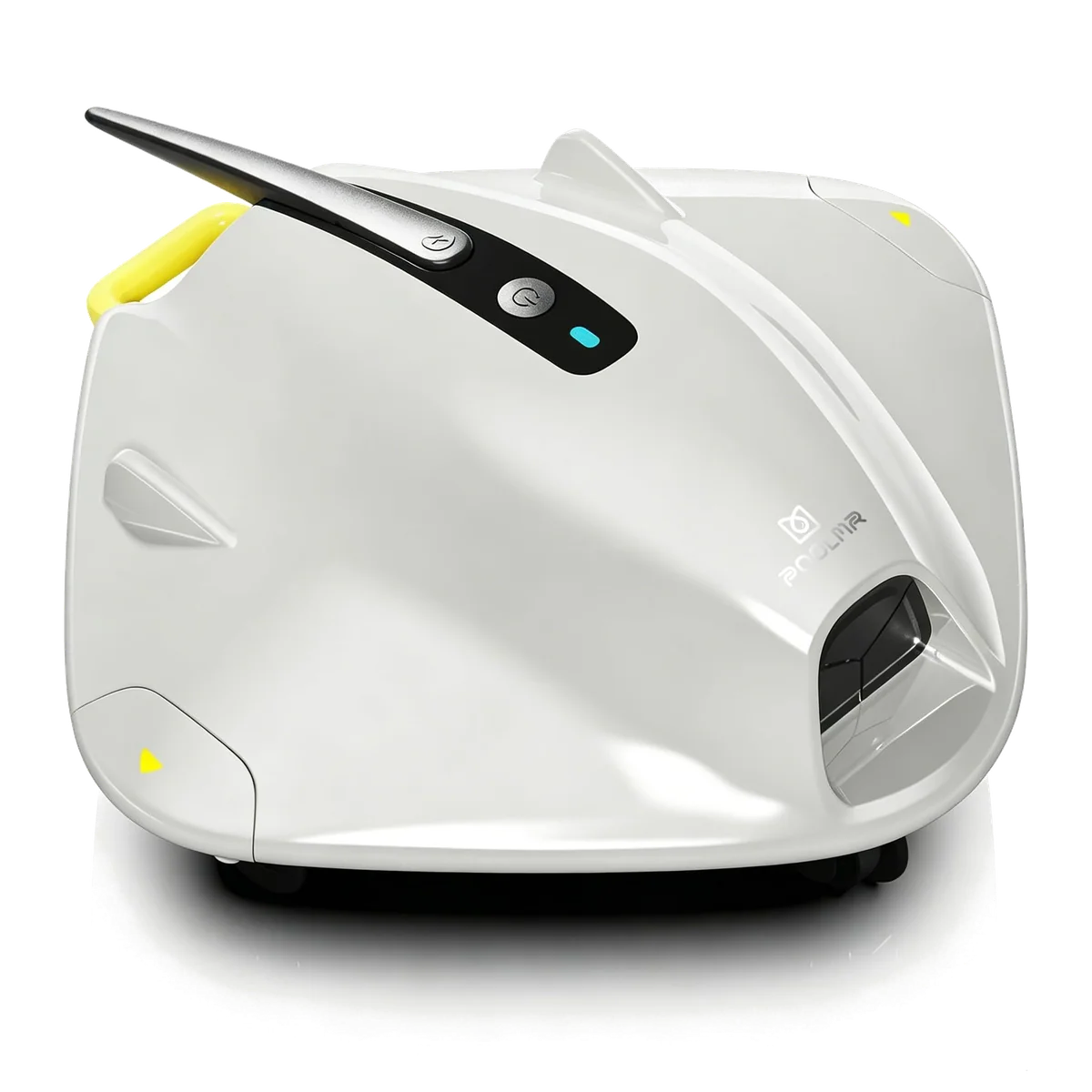
The PoolMr cleaner has a useful exact-owner narrative for long cordless floor runs and repeated pickup of dirt, sand, silt, twigs and ordinary leaves through mesh and sponge filtration.
It can stir fine silt, become trapped by a ladder and leave its owner without a clear route to replacement chargers, sponges, wheels, baskets or batteries.
Strengths
- The roughly two-hour runtime is supported by the most detailed exact-model owner account.
- The mesh-and-sponge filter gives fine dirt a better chance of staying captured than a coarse basket alone.
- Cordless operation removes cable management from routine floor cleaning.
- Owners report useful pickup of dirt, sand, silt, twigs and ordinary leaves.
- Edge stopping can place the robot within reach of the supplied retrieval hook.
Limitations
- Large leaves, heavy post-storm debris and algae-laden cleanup can overwhelm its fast single-speed approach.
- It does not claim wall, step or waterline cleaning.
- A ladder can trap it, and repeated passes are not the same as systematic mapped coverage.
- The advertised maximum area is not independently demonstrated by an exact-model owner.
- Replacement-charger, filter, battery, warranty and service details remain unverified.
34. (Renewed) Aiper Cordless Robotic Pool — This renewed AIPER is only a cheap experiment for a perfectly flat floor.
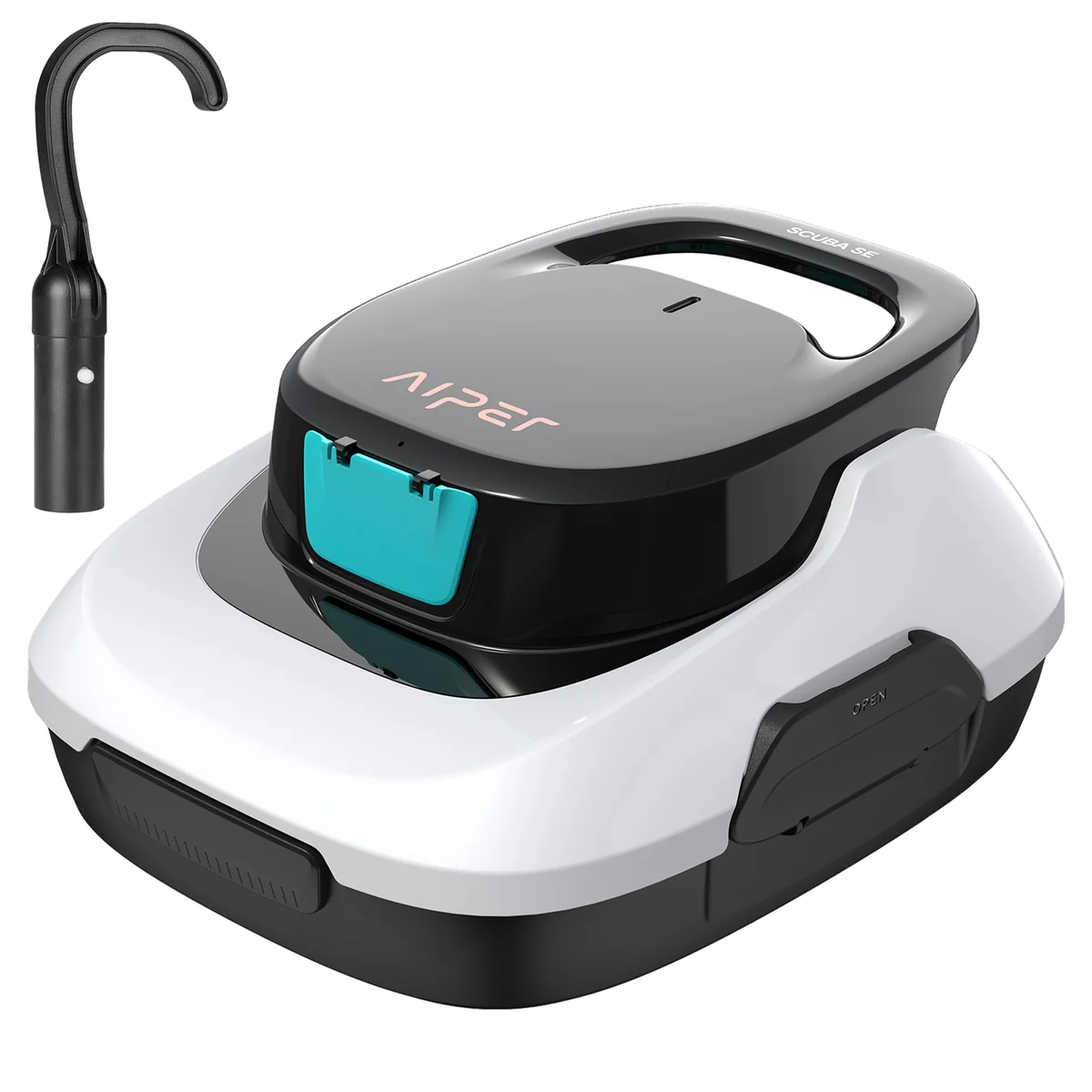
The renewed floor cleaner can support frequent low-effort pickup in small round pools when the battery and propulsion system arrive healthy.
Small liner creases can stop it, dead algae can be spread, and the listing does not establish renewed battery health, seasonal durability or meaningful protection.
35. Aiper Scuba N1 renewed — This renewed Scuba N1 should be skipped without written refurbishment details.
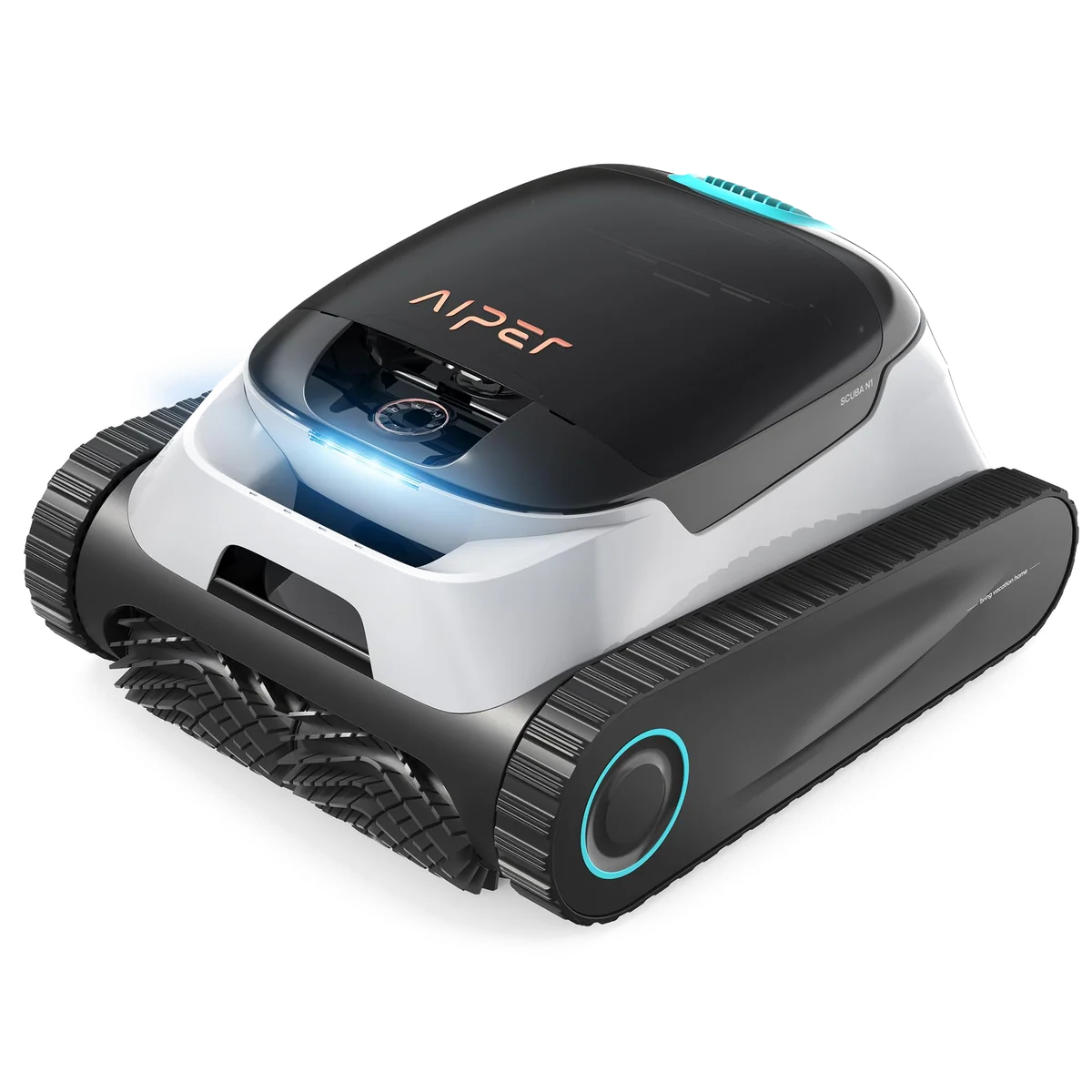
The underlying N1 design can clean an open floor and climb compatible walls while offering several physical programs and a convenient top basket.
The listing confuses N1 and S1 identity and does not establish the refurbisher, battery test, included accessories, guaranteed runtime, warranty coverage or repair work.
Strengths
- Cordless operation removes the floating cable or hose from the pool.
- Floor-only mode has produced excellent routine coverage for some exact-model owners.
- The top-loading basket is easier to service than many bottom-access filter systems.
- The tracked body can climb ordinary walls and reach the waterline in compatible pools.
- Successful runs have collected leaves, pollen, hair, dirt, and fine sand.
Limitations
- The renewed listing does not document battery condition, refurbisher identity, included accessories, or warranty coverage.
- Navigation can repeat lanes, miss patches, and struggle with curved transitions or shallow shelves.
- Fine debris may clog the filter, bypass it, or leak back into the pool during retrieval.
- Wall climbing does not eliminate manual algae brushing on every finish.
- Every cycle ends with lifting, draining, rinsing, charging, and redeployment.
- Replacement filters, batteries, seals, and other parts may be difficult to obtain.
36. Beatbot A100 Pro — This ambiguous Beatbot hybrid is not a safe all-in-one choice.
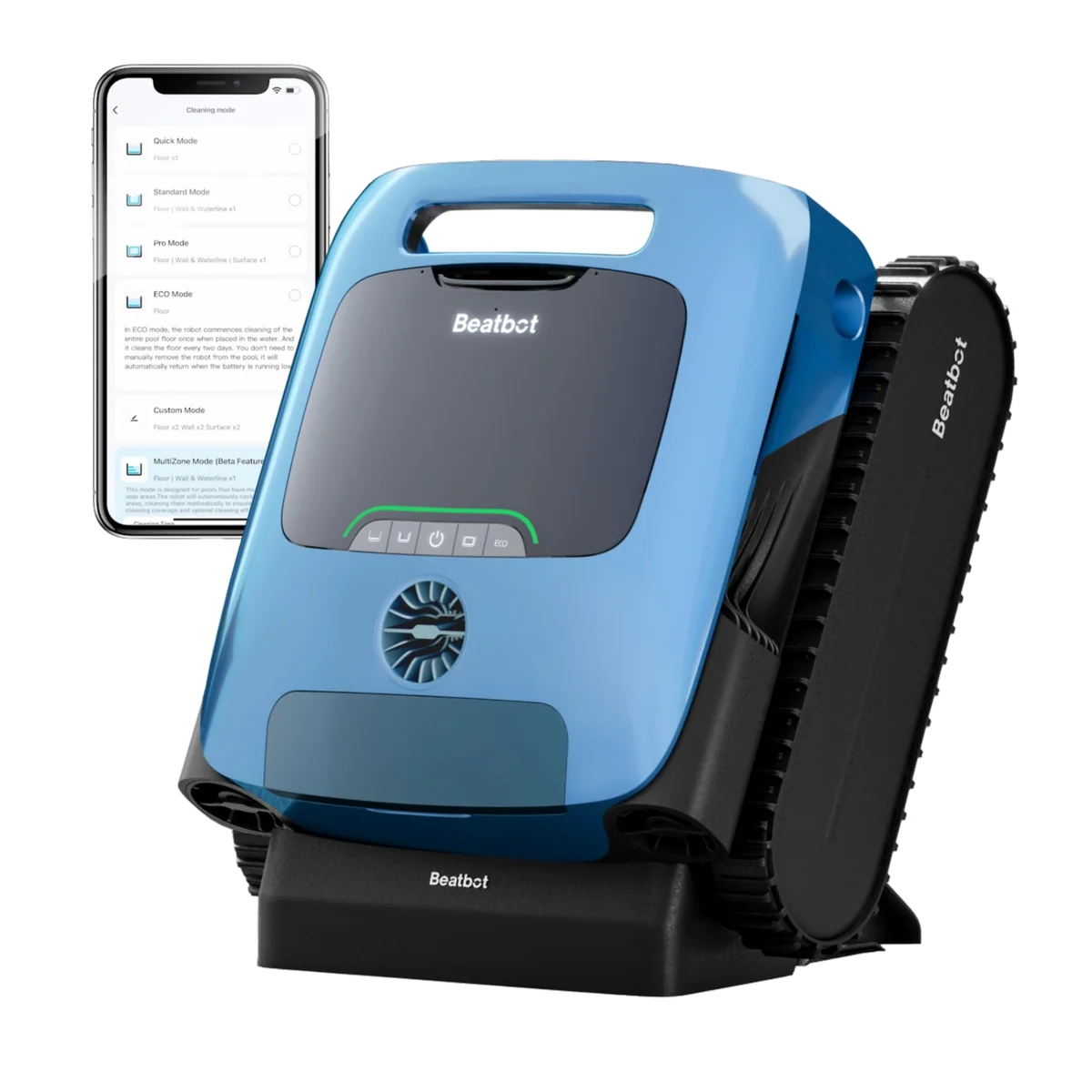
The A100 Pro platform may deliver good floor, wall and waterline cleaning plus occasional surface operation and retrieval-friendly parking.
The exact listing has confused branding, only a tiny written-review sample and a debris-retention complaint, while related-platform evidence shows weak surface capture and no dependable underwater app control.
Strengths
- Open-floor, wall, and waterline cleaning are the strongest and best-supported parts of the platform.
- The large battery can support unusually long custom routines when navigation and obstacles cooperate.
- Cordless operation removes the deck cable and avoids dependence on the pool’s pump or pressure line.
- Surface parking can spare the owner from fishing the cleaner off the deep floor.
- The nested basket can capture leaves, visible grit, and fine sand under favorable conditions.
Limitations
- Surface skimming is too situational to replace a dedicated pool skimmer.
- Steps, curved corners, coves, and shallow tanning shelves remain unreliable cleaning zones.
- The app cannot provide dependable live control while the robot is submerged.
- A roughly 24-pound dry platform remains a demanding wet lift despite surface parking.
- Repeated saltwater reports identify corrosion at the exposed charging contacts.
- Exact-model accounts include debris-retention failure after months and replacement by the next season.
37. Beatbot AquaSense 2 Ultra — This renewed flagship asks buyers to assume too much hidden wear.
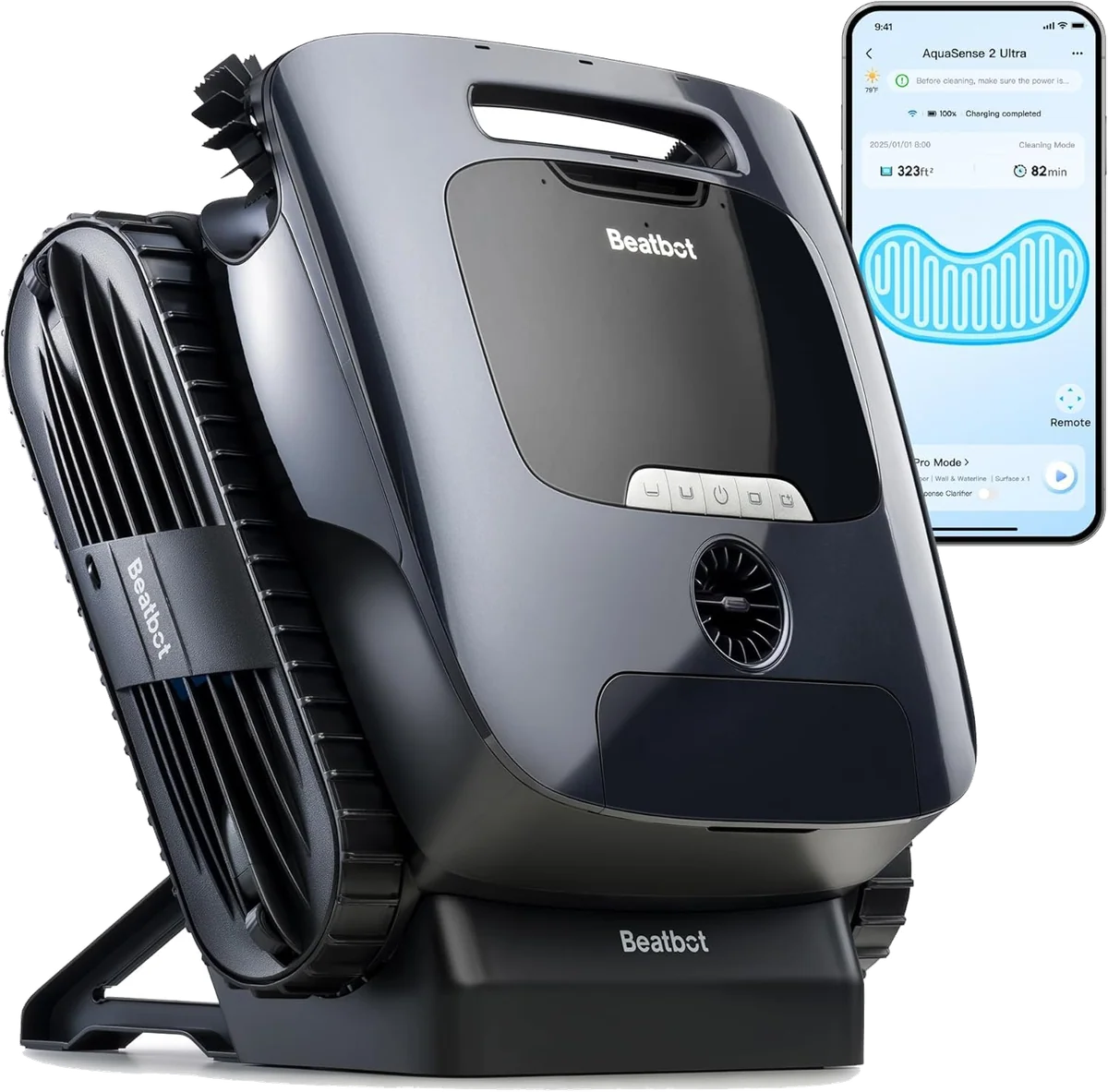
The Beatbot AquaSense 2 Ultra platform can deliberately hunt visible debris, clean several submerged zones and return to the surface with drainage assistance.
The renewed listing does not establish battery capacity, sensor condition or protection eligibility, while the machine is extremely heavy and only modestly effective as a surface skimmer.
Strengths
- Floor cleaning has strong evidence across visible leaves, sand and ordinary pool debris.
- Camera-guided debris hunting can recover material missed during the first planned pass.
- Long nominal runtime suits large pools when the renewed battery is healthy.
- Cordless operation removes the deck cable, power supply and in-water tether.
- Surface parking and draining make retrieval better than fishing a dead robot from the floor.
- Filter access and routine rinsing are straightforward once the heavy machine is out of the water.
Limitations
- The roughly 29-pound dry weight rules it out for buyers with back, shoulder or lifting limitations.
- Surface skimming is too inconsistent to replace a dedicated skimmer in a leaf-heavy pool.
- Stairs, Baja shelves, rounded transitions and tight corners remain geometry-dependent.
- The app cannot provide dependable live control while the robot is submerged.
- The mesh filtration is less persuasive for ultra-fine silt than systems offering pleated fine-filter media.
- A renewed unit adds uncertainty about battery capacity, sensor condition, accessories and warranty eligibility.
38. BUBLUE Bubot 300P — This lightweight above-ground cleaner should be skipped.
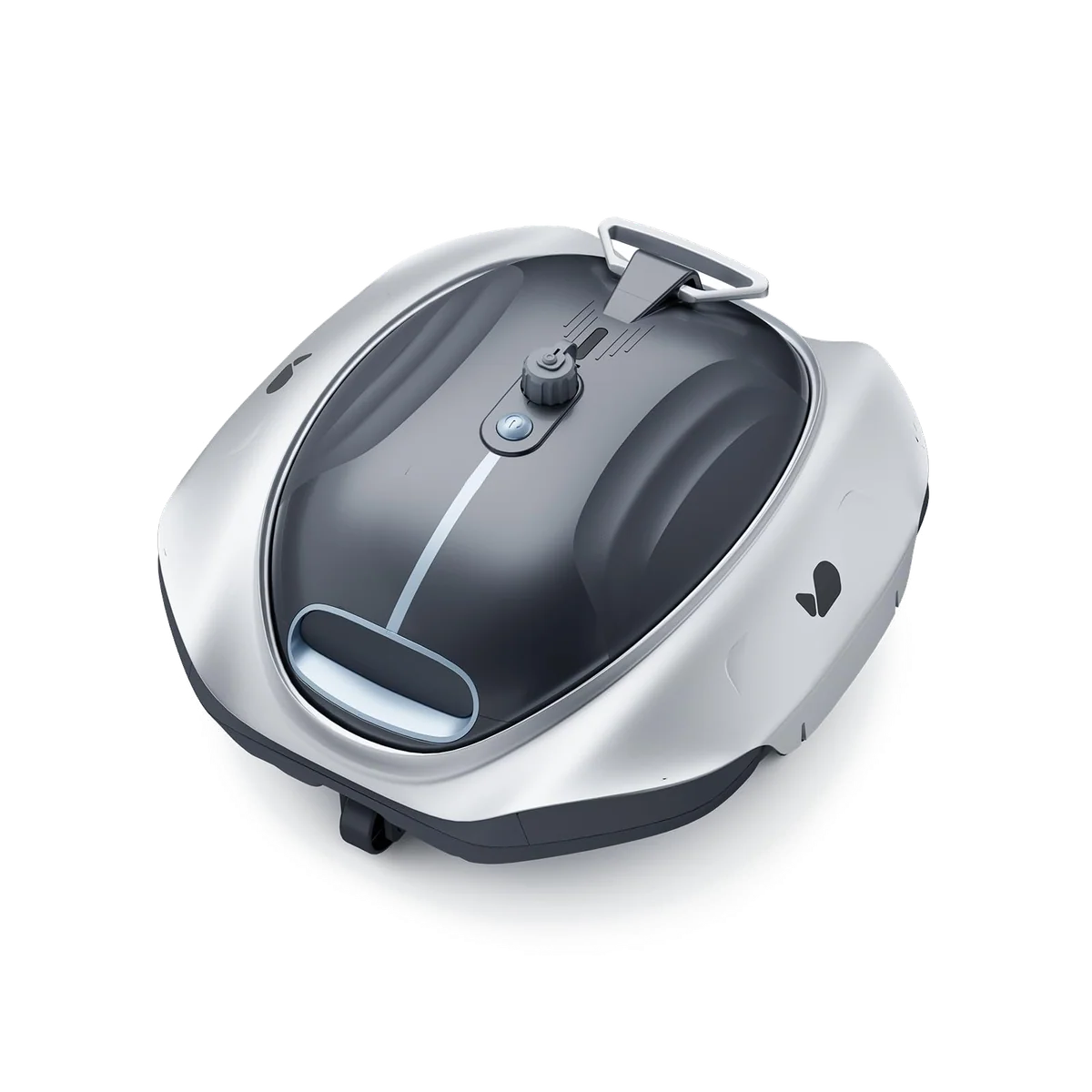
The BUBLUE Bubot 300P can collect sand, fine dirt, insects, hair and leaves when it remains in motion.
Repeated exact reports describe premature stopping at the pool edge with charge remaining, sometimes after seconds, which defeats the core promise of an unattended floor run.
Strengths
- It collects sand, fine dirt, insects and leaves effectively when it remains in motion.
- Its cordless design avoids a power cable or vacuum hose in the pool during cleaning.
- The 7.72-pound dry body is relatively easy to carry and handle.
- The filter compartment opens for rinsing, and the body drains water quickly during retrieval.
Limitations
- Repeated owner reports describe premature stopping at walls or after only a short distance.
- Liner wrinkles, bumps and low spots can turn an unattended run into a babysitting job.
- It cleans only the floor and cannot handle walls, the waterline or sloped transitions.
- Random routing can revisit clean patches while leaving perimeter debris behind.
- Fine sediment may seep from the body seam if the cleaner is lifted vertically.
- Official materials conflict on charging time and warranty length.
39. BUBLUE Bubot 800P — This is an interesting corded newcomer rather than a proven default.
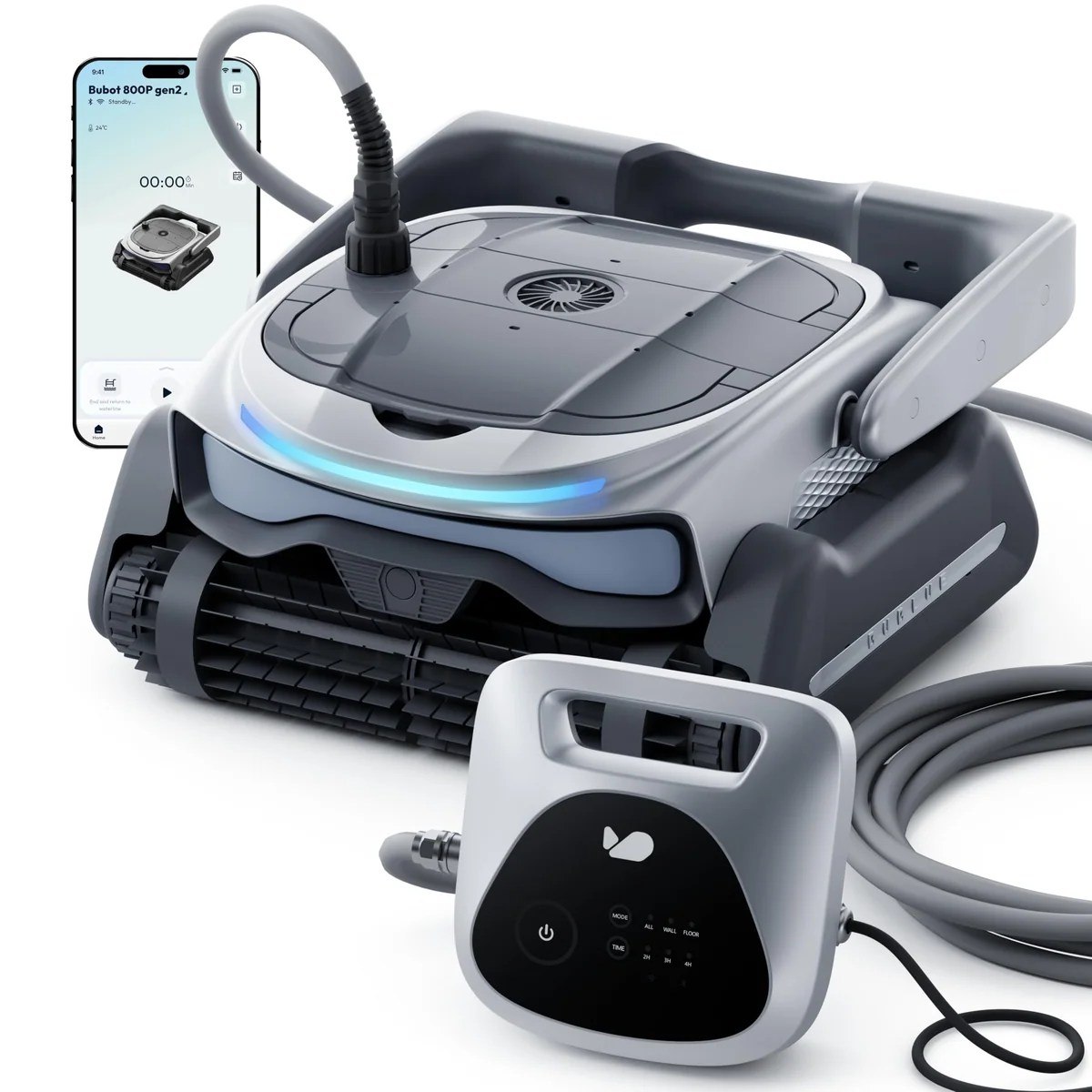
The BUBLUE Bubot 800P Gen2 offers immediate repeat cycles, physical controller operation, active rollers and six liters of combined basket capacity without battery aging.
Its cable can knot and alter routes, retrieval is awkward, Bluetooth pairing and support have disappointed an exact owner, and warranty terms conflict.
Strengths
- Continuous 28-volt corded power removes recharge waits and battery-limited cleaning cycles.
- Two top-loading 3-liter baskets provide substantial capacity without requiring the robot to be inverted.
- Floor, wall, and auto modes remain available from the physical control box if the app is unavailable.
- Four brushes, tank-style tracks, and dual suction ports give the machine credible floor, wall, and waterline hardware.
- Manual steering and return-to-waterline controls add useful convenience when app pairing succeeds.
Limitations
- The floating cable still needs careful deployment and can develop route-disrupting knots over time.
- Retrieval requires handling a substantial wet machine, and an included hook is not reliably established.
- An exact buyer reported failed Bluetooth pairing, incomplete coverage, and support that did not solve the problem.
- The advertised warranty conflicts with both the manufacturer page’s reassurance strip and one buyer’s enclosed paperwork.
- Steps, drains, shallow transitions, and irregular geometry remain less proven than ordinary floor and wall cleaning.
40. IGarden K70 — This is the best long-runtime cordless cleaner.
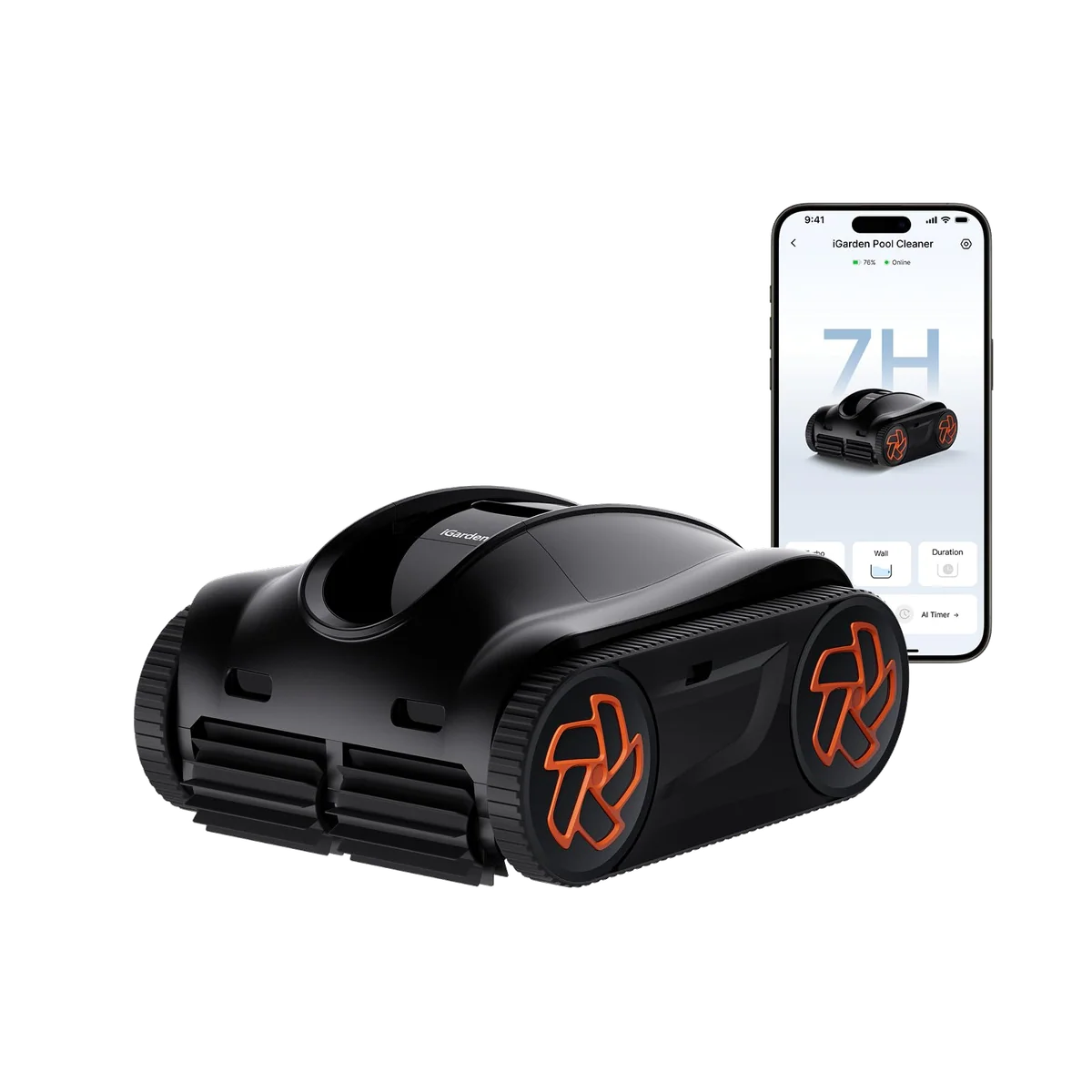
The iGarden K70 suits a conventional medium or large pool when ordinary leaves, insects, hair, sand and settled dirt require one extended floor run or several shorter runs from a charge.
The seven-hour headline applies only to standard floor mode, while full-zone runtime is shorter and the robot is heavy, limited to a published 8.2-foot depth and weakly established for powdery fine debris.
Strengths
- The seven-hour floor-only rating gives routine maintenance far more headroom than a typical short-cycle cordless cleaner.
- The 4-liter top-loading basket suits leaves, bugs, hair, sand and other common residential-pool debris.
- Four cleaning modes let owners spend battery on floors, walls or the waterline instead of treating every run alike.
- Tracked drive and active brushes provide credible wall climbing and waterline scrubbing on conventional pool geometry.
- One-hour to two-hour cycle choices make several maintenance runs per charge practical in a lightly soiled pool.
- Replaceable brushes, removable tracks and an accessible impeller improve the routine maintenance story.
- Brand-level support reports show a strong pattern of responsive troubleshooting and replacement handling.
Limitations
- Full-coverage runtime is only 3.75 hours, and Turbo full coverage reduces it to 2.75 hours.
- The app loses communication underwater and offers little mapping, history or live operational detail.
- The touchscreen, master switch and three-minute deployment sequence are less intuitive than the marketing implies.
- Retrieval requires a pole hook and a careful manual lift of a dark, slippery, 21.6-pound dry chassis.
- Related K-series reviewers repeatedly found water around the charging pins despite the rubber cover.
- Shallow ledges, rounded steps, tight corners and complex transitions can remain unfinished.
- The exhaust can disturb fine debris, and the exact Amazon package may include only the 180-micron filter.
- The published 8.2-ft depth ceiling rules out deeper diving pools.
41. WYBOT C1 — This is a budget full-pool cordless option only with strong retailer protection.
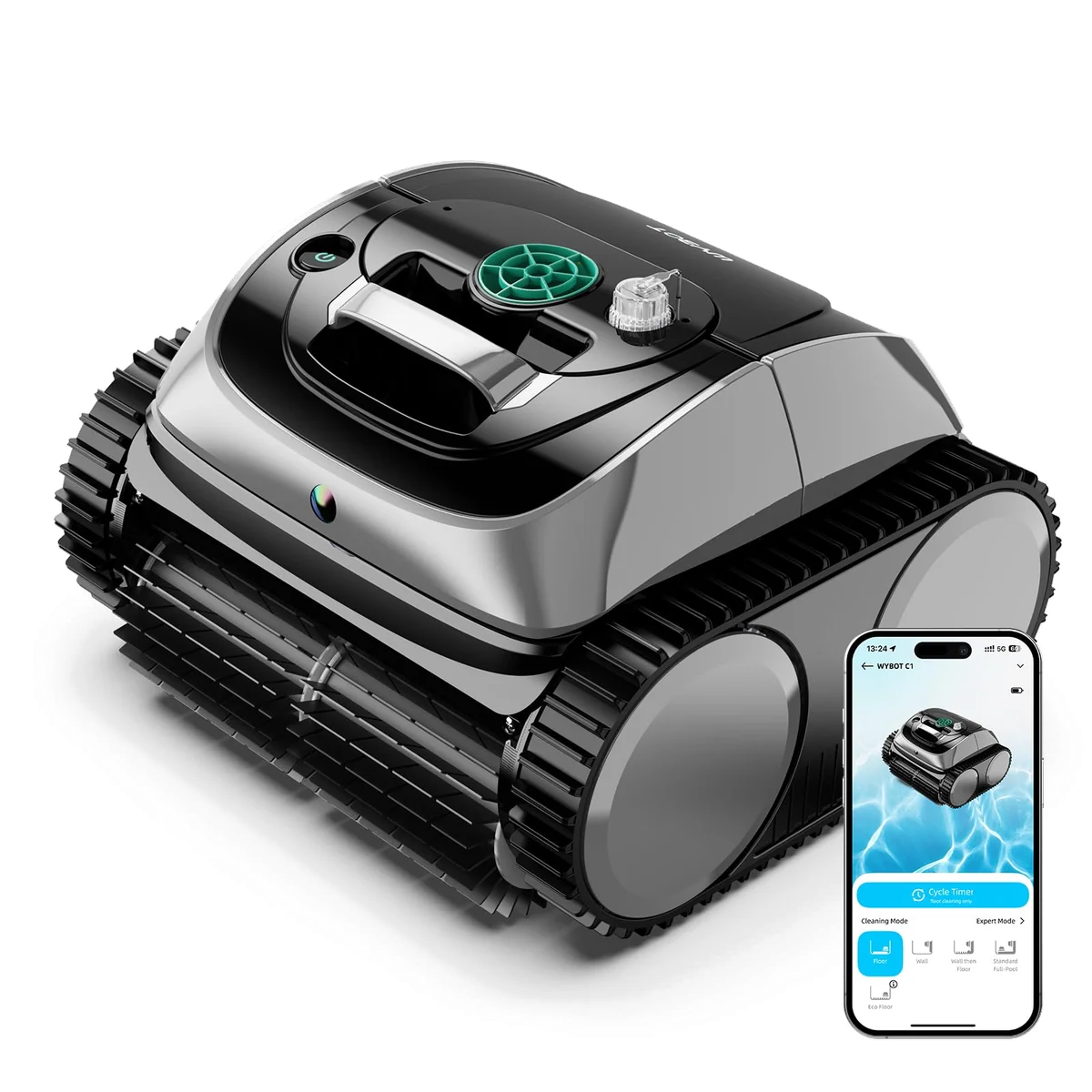
The WYBOT C1 can collect ordinary dirt, large leaves and fine sand while offering floor, wall and waterline programs at a comparatively accessible tier.
Its exact sample is tiny, one owner still lacked enough battery to finish, and earlier C1 generations add meaningful warnings about charging failures, short service life and difficult support.
Strengths
- Open floors and routine maintenance debris are its strongest cleaning case.
- Wall and waterline cleaning can be convincing in pools with simple continuous surfaces.
- The top-access filter and cordless form make an ordinary cleaning cycle easy to manage.
- Exact-product reports support pickup of sand and at least some large leaves.
Limitations
- Steps, shelves, benches, and awkward shallow transitions can derail coverage.
- The advertised runtime may not finish a large or complicated pool on one charge.
- The app appears more useful before launch than while the cleaner is underwater.
- Earlier C1 reports raise credible concerns about electrical or battery failures and difficult support.
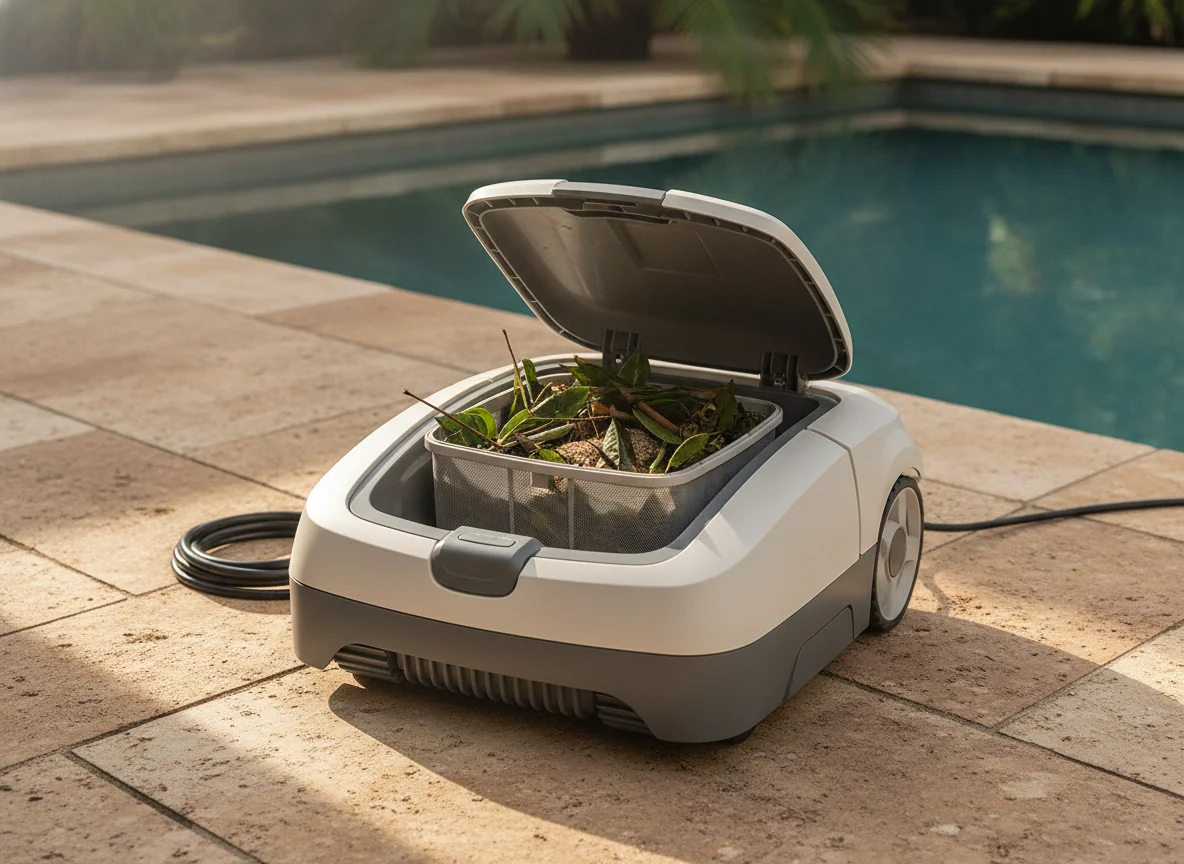
42. WYBOT C2 Vision — This is the fine-debris specialist for a visually uniform pool.
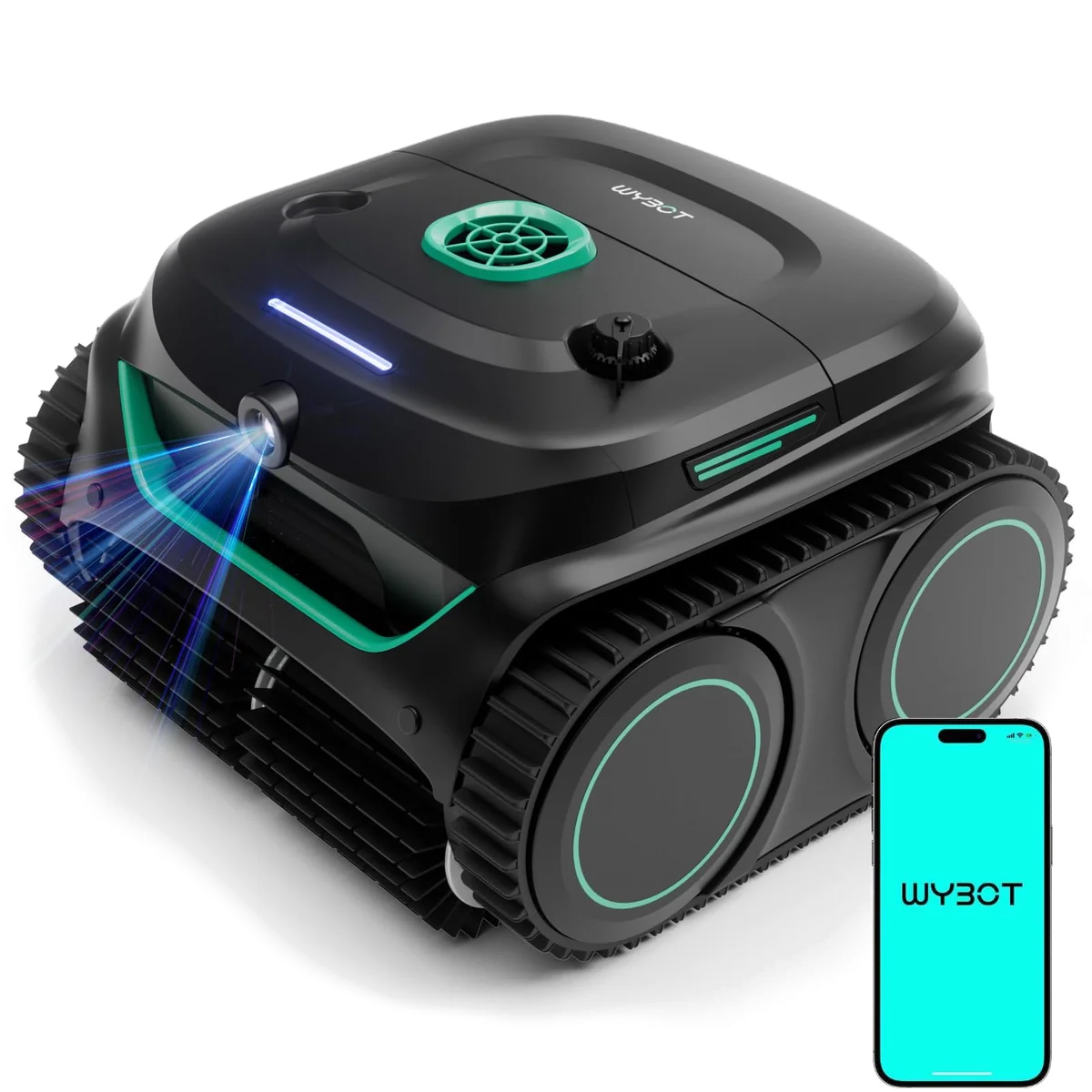
The WYBOT C2 Vision pairs a concrete 10-micron insert with multiple routes and camera-guided spot hunting that can focus on obvious dirt piles in an open, consistent-color finish.
Stains, multicolored surfaces and contrasting fittings can become false targets, while upper steps, shallow shelves, pairing friction and immature longevity weaken its intelligence premium.
Our #1 Pick: Dolphin Nautilus CC
Check Price on AmazonWe ranked the job, not the specification sheet
We separated floating debris from settled debris first, then weighed filtration, pool geometry, retrieval burden, power arrangement, parts availability and the depth of the ownership record. A machine did not gain credit merely because its route looked organized, and it did not lose automatically because its path looked foolish if the final floor was clean.
Runtime is endurance, not cleaning quality. Flow is not filtration. A micron number is useful only when the media seals properly, remains unclogged and does not restrict the robot so severely that traction or pickup deteriorates. Likewise, “smart navigation” does not establish a stored pool map, and self-parking can mean nothing more than stopping near a wall.
Applications received similarly little automatic credit. Ordinary Wi-Fi and Bluetooth communication disappears underwater, so most apps choose modes, install firmware or show completed-run records before and after submersion rather than steering a robot around the bottom in real time. Published tests and owner reports repeatedly show why feature labels need translation into actual pool behavior.
| The job | Our pick | The qualification |
|---|---|---|
| Routine cleaning in a simple pool | Dolphin Nautilus CC | Corded, no swivel and no sustained lateral waterline travel |
| Continuous surface interception | Betta SE Plus | Surface debris only |
| Visible leaf piles without a cable | AIPER Scuba V3 | Weak specialist for fine silt, stairs and benches |
| Fine settled debris in simple geometry | AIPER Scuba S1 | Reliability and difficult transitions require a strict return-window test |
| Broad tanning ledges | Beatbot Sora 30 | The shelf still needs adequate depth and track room |
| Underwater cleaning plus burst skimming | Beatbot Sora 70 | Not a continuous solar skimmer or fine-silt specialist |
| Above-ground floor cleaning | Dolphin E10 | No verified wall or waterline cleaning |
| Maximum cordless endurance | iGarden K70 | The seven-hour claim applies to floor-only operation |
Buy for the pool you have, not the robot in the advertisement
Start with where the debris is
Floating leaves, blossoms, pollen, bugs and hair call for a skimmer. Settled leaves, grit, sand and loose dirt call for an underwater vacuum. If both are relentless, two specialists can work simultaneously, while a hybrid such as the Sora 70 has to divide one body and battery between surface and submerged work.
A submerged robot is usually the better first purchase because floor vacuuming is the harder manual chore. The exception is a pool under trees, around shedding dogs, without an effective built-in skimmer or with a daily surface-netting burden that dominates maintenance. Our guide to surface skimmers versus underwater vacuums develops that distinction before you buy the wrong category.
Match filtration to the smallest recurring mess
Use a coarse basket first when the pool contains a heavy load of leaves and twigs, then install the fine layer for remaining silt, pollen, dust or powder. Starting with ultra-fine media during a storm cleanup can clog the filter early, reduce flow and sometimes weaken wall traction.
Visible sand in a basket proves only that the robot retained some sand. It does not prove reliable capture of dead algae or the cloud-forming particles that return through a coarse seam. For a pool defined by sediment rather than leaves, compare the Scuba S1 and WYBOT C2 Vision against our dedicated fine-debris recommendations.
Measure geometry before runtime
A large open rectangle can be easier than a much smaller pool with curved steps, a raised drain, a circular spa, a sharp deep-end transition and a narrow tanning ledge. Long runtime can compensate for inefficient routing across an open floor, but it cannot create enough track contact to mount a narrow shelf or prevent a chassis from high-centering on a drain.
For a tanning ledge, measure water depth and usable track width, then inspect the approach from the main floor. A broad 10-to-14-inch-deep platform is a very different problem from a curved stair tread. Buyers whose ledges and steps dominate the job should start with the geometry-specific shortlist rather than a generic pool-area claim.
Choose the inconvenience you prefer
Corded cleaners bring a deck-side controller, cable reach calculations, twist management and storage. In exchange, they provide continuous power, immediate repeat cycles, no sealed traction battery to age and, in Dolphin’s case, a more legible parts ecosystem.
Cordless cleaners remove the floating cable but substitute wet lifting, drainage, filter rinsing, contact drying, charging and eventual battery uncertainty. The better choice depends on the outlet and deck, not on whether “cordless” sounds more modern. Our corded-versus-cordless guide makes that trade explicit.
Treat the return window as a pool-compatibility test
- Charge the robot fully and time a floor-only run.
- Inspect the entire floor afterward instead of judging the load in the basket.
- Watch the widest ledge, sharpest transition, main drain, ladder gap, wall cove and shallow shelf.
- Test wall and waterline mode separately from the general program.
- Perform one actual wet retrieval before accepting the listed dry weight.
- Check whether low-battery parking leaves the machine within safe reach.
- Rinse the filters and inspect every latch, seal, charging cap and contact.
- Pair the app and install firmware before submersion.
- Document wheelies, flipping, repeated route failure, short runtime, error codes and charging trouble before the return deadline.
No robot balances chemistry, restores a severely neglected green pool, replaces circulation or kills live algae. These machines collect loose debris; sanitation, filtration and brushing attached growth remain pool-maintenance jobs.
Frequently Asked Questions
Do robotic pool cleaners actually work?
A well-matched robot can remove most routine loose debris from compatible surfaces, but it will not correct bad chemistry, kill live algae or guarantee coverage of every step and ledge.
Should most buyers choose a corded or cordless robot?
Choose corded power for repeat cycles, lighter handling and established service, or choose cordless operation when cable management is the larger practical obstacle and regular lifting and charging are acceptable.
Does wall climbing mean that a robot cleans the waterline?
No, a robot may touch or briefly breach the surface during a vertical climb without traveling horizontally along the tile line.
Can a pool-cleaner app steer the robot underwater?
Usually not, because ordinary Wi-Fi and Bluetooth communication disappears underwater and most apps configure modes, schedules and firmware before the robot is submerged.
Which robot should I buy for heavy leaves?
Choose the Dolphin Nautilus CC for repeated settled-leaf runs, the AIPER Scuba V3 for concentrated visible leaves without a cable or the Betta SE Plus when stopping leaves before they sink is the real objective.
Which robot is best for fine sand and silt?
The updated AIPER Scuba S1 is our broader fine-debris choice for simple geometry, while the WYBOT C2 Vision is the more specialized alternative for a visually uniform pool.
Can I leave a robotic cleaner in the pool all the time?
Do not assume that scheduling or Eco mode makes permanent submersion acceptable, because filters still need rinsing and prolonged chemical exposure can age seals, cables, finishes and charging components.
How long should a robotic pool cleaner last?
Service life varies widely with seals, motors, battery design, chemical exposure, storage and parts support, so replaceable wear items and a credible repair route matter more than a single promised lifespan.
Our Top Pick
The Dolphin Nautilus CC earns the top spot. This is the best overall cleaner for an uncomplicated pool.