Beatbot Sora 30 review: buy it for the ledge, not the app
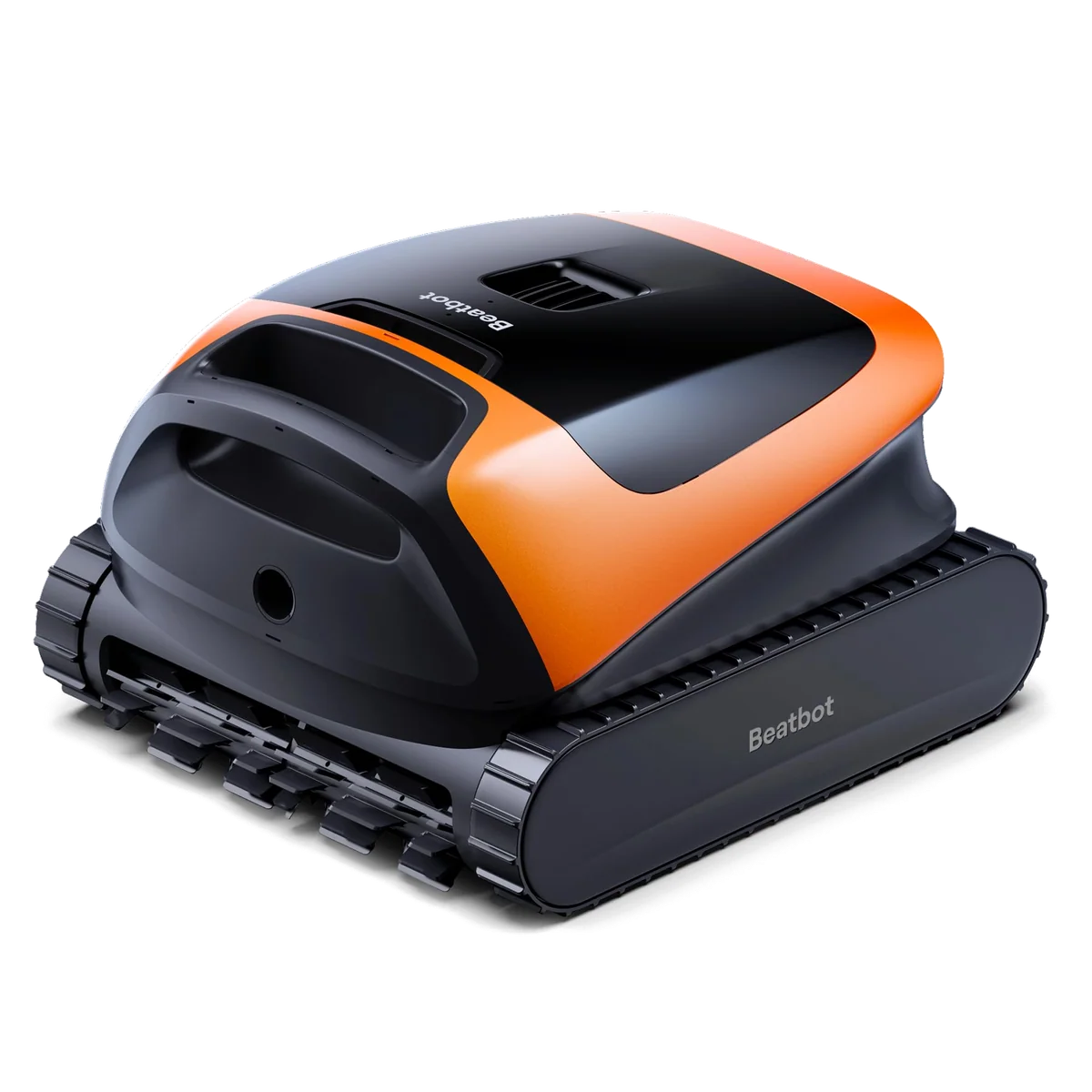
Buy the Beatbot Sora 30 if a sufficiently deep tanning ledge or complex shallow zone is the part other robots neglect, but skip it for fine silt, continuous surface skimming or polished underwater app control.
The final measure is eight inches of water
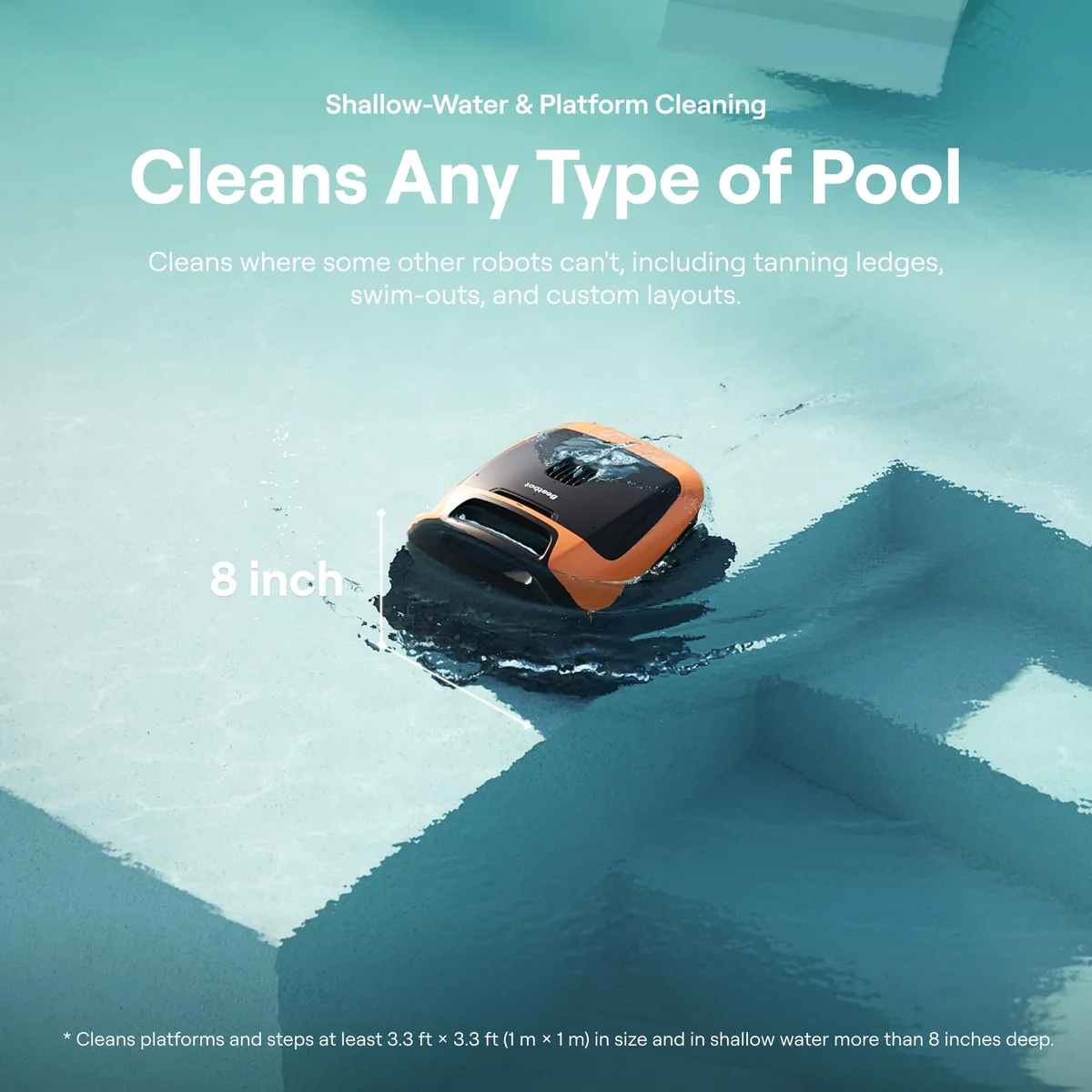
Measure the actual water above the shelf, not the shelf’s construction depth. Then inspect its width, approach angle and fixtures. A broad ledge with enough water and no troublesome bubblers gives the Sora 30 a job that distinguishes it from cheaper cordless robots; a six-inch sun deck or a collection of narrow curved steps does not.
Next, identify the debris. Leaves, insects, grass, petals, twigs and routine visible dirt suit the included basket. Persistent dust, pollen, dead algae and cloud-forming silt point toward a cleaner selected for finer filtration, especially because the separately purchased filter carries an unresolved exact-owner failure report.
Finally, decide which nuisance you are buying your way out of. The Sora 30 removes the in-pool cable, climbs credible walls, tackles an unusually useful shallow zone and normally returns to the surface. It does not remove charging, basket rinsing, physical lifting, app friction, occasional hook retrieval or the need for a separate skimmer.
The Beatbot Sora 30 is a buy for the pool owner whose neglected tanning ledge has become a weekly chore, but it is an expensive detour when the real problem is floating debris, microscopic silt or a desire for hands-off scheduling.
Best for: Walls and waterline
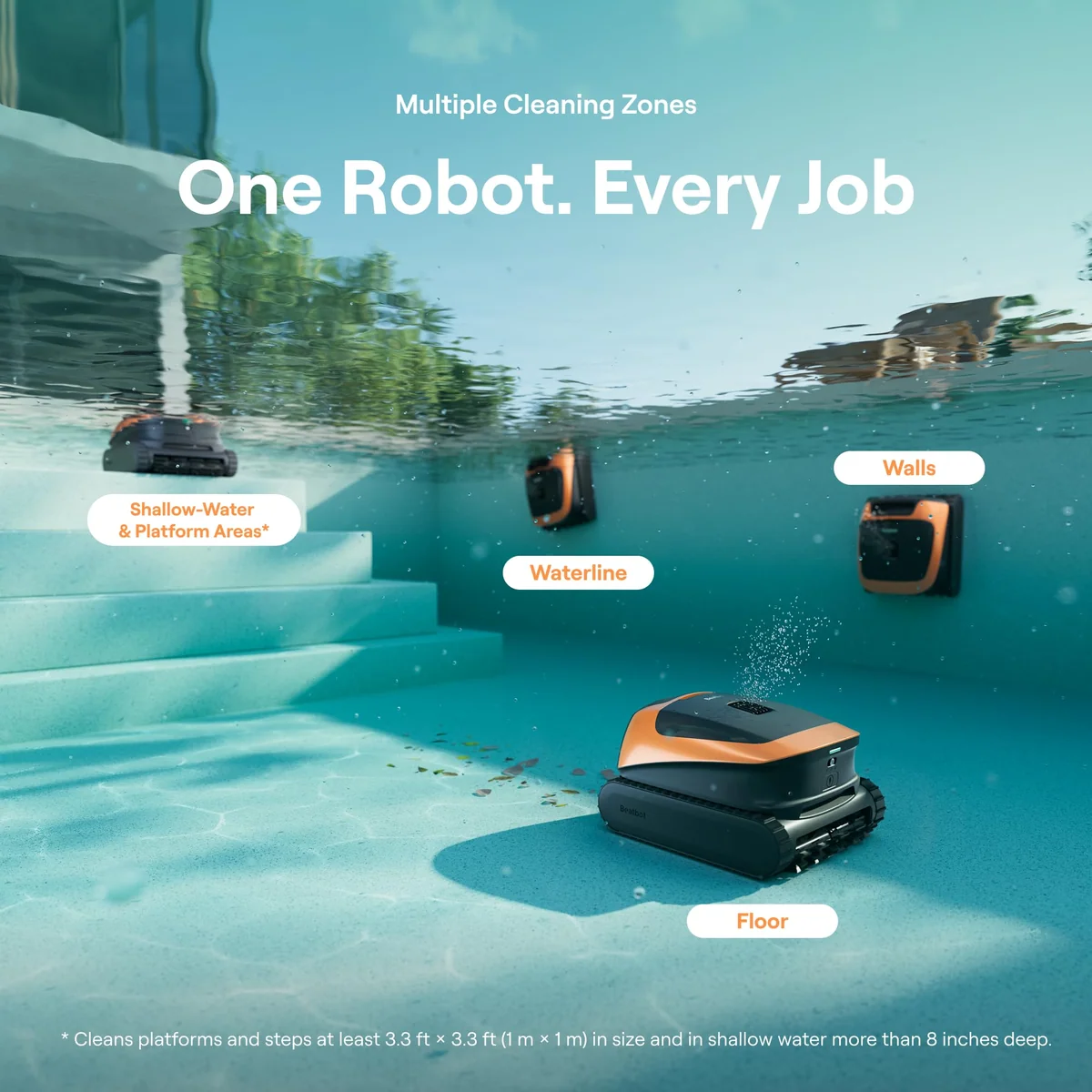
Most robotic pool cleaners are easy to distinguish on a specification sheet and difficult to distinguish once they reach the water. The Sora 30 is different. Its reason to exist is a downward-facing sensor, front and rear brush groups, and enough shallow-water ability to climb onto broad Baja shelves and tanning ledges that many midrange robots merely inspect from below.
That ability has survived more scrutiny than the grander language around its intelligence. Direct demonstrations showed the robot climbing a roughly four-foot transition onto a 14-inch-deep shelf, recognizing the drop at the shelf edge, reversing and continuing to work instead of immediately tumbling back into the pool. A separate ledge-focused review found the shallow cleaning useful and repeatable, although not perfect. Those are meaningful results for the owner who still brushes a sun shelf by hand every week.
Do not confuse that talent with surface cleaning. The fourth zone in the Sora 30’s “4-in-1” description is the shallow platform, not the water surface. Smart Surface Parking means the robot rises and drains after a cycle so that it can be retrieved; it does not cruise around collecting floating leaves, insects or pollen. The Sora 70 is the sibling that adds active skimming.
The Vibrant Orange and Deep Blue listings describe the same Sora 30 specification set, so color choice does not change this verdict.
Buy it for
A pool with a broad, adequately submerged shelf, complex elevations, ordinary leaves and dirt, and an owner who wants cordless cleaning without paying for integrated surface skimming.
Walk away for
A plain pool where a cheaper cleaner can cover the main floor, a dust-heavy pool that needs ultra-fine filtration, or a household that wants unattended scheduling without charging and retrieval.
Key Specifications
The app belongs on deck
The Beatbot app can select modes and durations, assign the preset control, show battery and cleaning records, deliver completion notices, handle maintenance reminders and install firmware. Those are useful conveniences, but they happen before deployment or after the robot returns close enough to reconnect.
Wi-Fi and Bluetooth do not provide dependable communication through pool water. Once submerged, the Sora 30 cleans autonomously, so there is no credible promise of live underwater steering, continuous progress monitoring, an instant mid-cycle mode change or a guaranteed recall command from the deep end. A phone does not turn this into a remote-control submarine.
App quality is also inconsistent beyond that physical limitation. Some owners paired easily, received notifications and described the software as reliable. Another repeatedly reset and reconnected the robot over four days simply to find Eco mode and change back to a normal cleaning mode. The machine can still clean well when its software annoys you, but app polish should not be part of the buying justification.
Its first few minutes can look like failure
Starting the Sora 30 involves an unusual spring-loaded left-and-right switch with little immediate feedback. After deployment, the robot can spend roughly two to three minutes floating, venting air, sinking and settling before it begins to travel. Several accounts compare the process to filling ballast tanks, and a critical reviewer initially thought the cleaner had not switched on.
Patience is the correct first troubleshooting step. If the robot remains inert after the normal settling period, then retrieve it, confirm the selected mode and charge state, and try again on deck rather than repeatedly operating the switch underwater.
Parking makes retrieval easier, not automatic
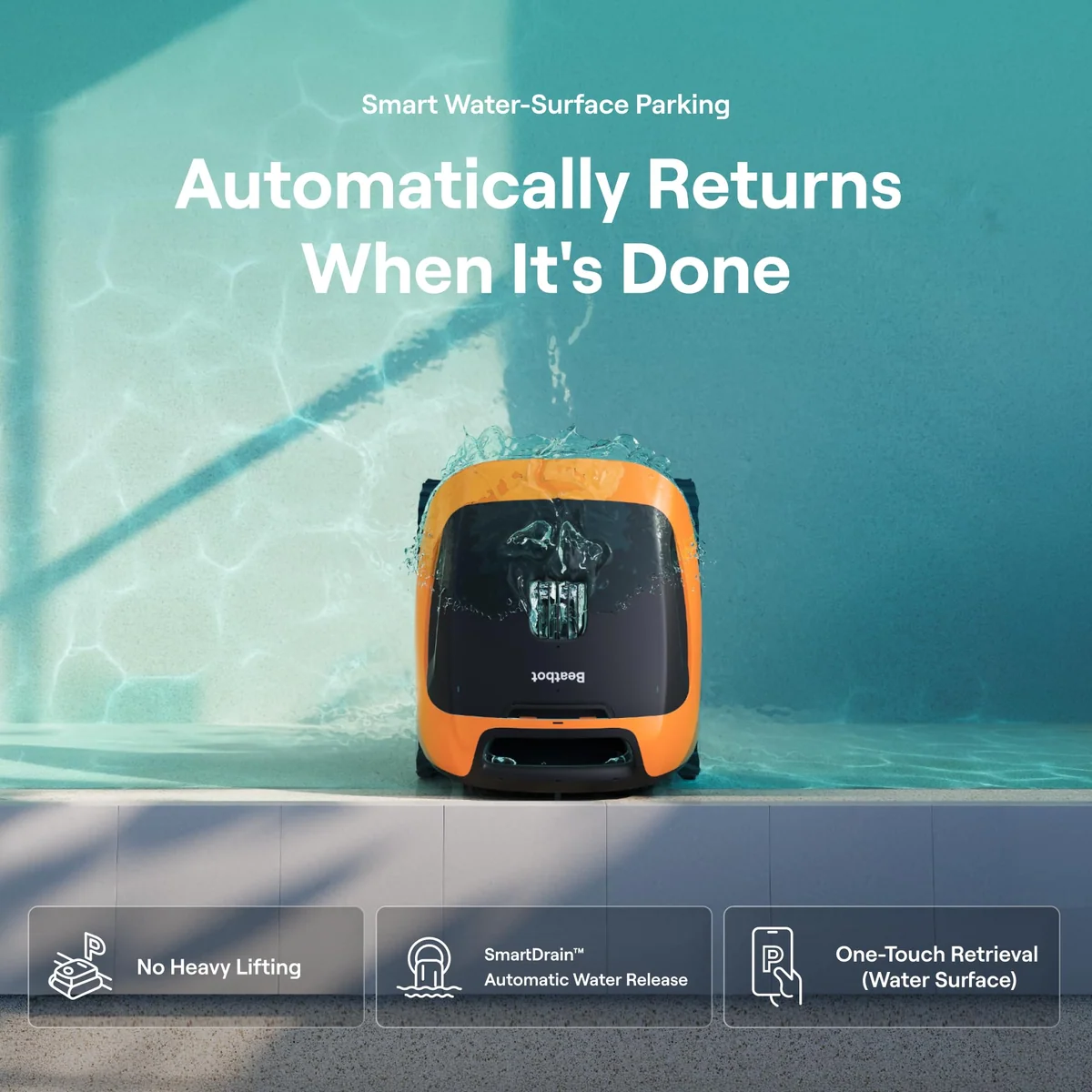
At the end of a normal cycle or near the low-battery threshold, the Sora 30 is designed to rise, move toward the edge, release internal water and remain afloat. This is a genuine usability advantage. Several owners found it easier to remove than older cleaners because drainage began before the full lift, and the app’s completion notice prevented unnecessary checking.
The included hook still has a job. Pool circulation can move the floating cleaner away from the wall, Eco mode left one owner fishing for it, and a critical reviewer found parking inconsistent. The machine weighs about 19.6 pounds dry, so a failed parking sequence or premature lift can turn a reasonable deck task into an awkward waterlogged pull.
Eco mode spreads one charge across several days
Eco mode runs a 45-minute floor session every 48 hours while the robot remains in the pool, repeating until the finite battery charge is spent. That can keep light settled debris from accumulating between longer cleans, but it is not the same as a mains-powered weekly scheduler that can launch fresh full cycles indefinitely.
The distinction matters because cordless ownership still includes deployment, retrieval, basket rinsing, drying the charge-port area and connecting the proprietary plug. Eco changes the timing of those chores; it does not eliminate them. Owners considering extended submersion should also read the site’s guidance on leaving a robotic cleaner in the pool.
Strengths & Limitations
Strengths
- Qualifying tanning ledges and broad shallow platforms receive unusually credible cleaning coverage.
- Floor, wall and waterline performance is convincing for routine leaves, bugs and ordinary dirt.
- The 10,000 mAh battery has substantial reserves in several large-pool owner reports.
- The 5-liter top-access basket is spacious and simpler to rinse than many multi-part filter assemblies.
- Surface parking and drainage can make retrieval much easier than pulling a water-filled robot from the bottom.
- Cordless operation removes the cable without sacrificing credible wall climbing or long runtime.
Limitations
- The included 150-micron filter is a poor match for persistent pollen, storm dust, dead algae and the finest silt.
- The optional ultra-fine filter is separate, and one owner reported a severe mobility failure after installing it.
- The app cannot provide dependable live communication while the cleaner is submerged.
- Narrow steps, curved approaches and shallow shelves below about eight inches remain uncertain territory.
- Parking can fail or leave the floating robot out of reach, so the retrieval hook is still necessary.
- The detachable cover, unusual toggle and proprietary plug expose cost-cutting in daily use.
- Long-term battery durability and owner-serviceable replacement economics are not established.
The shelf is the reason to pay attention
Eight inches is a water-depth threshold, not a universal promise about every step built eight inches below the coping. The robot still needs enough submerged space for its body, a transition that both tracks can engage, and freedom from protruding fittings. A broad tanning ledge with 10 or 14 inches of water is a much stronger candidate than a narrow stair tread that happens to meet the minimum depth.
The most useful direct demonstration showed both the success and the boundary. The Sora 30 climbed onto a deep shelf and stayed there by shutting down its pump at the edge, reversing and choosing another path. When it approached a curved transition with only one track planted, it could not complete the climb. It backed away rather than remaining stranded, but that part of the shelf went untouched until it found a better angle.
Owner reports point in the same direction. One complex fiberglass pool included curved entry geometry and a long shallow ledge only slightly wider than the cleaner, and the robot reportedly navigated areas that had driven the purchase in the first place. Other owners praised stair coverage, while a critical two-week review found step performance weak. The contradiction is credible because “steps” can mean anything from a four-foot-wide submerged platform to three cramped curved treads.
| Pool feature | Evidence-based expectation | What can defeat it |
|---|---|---|
| Open floor | Strong routine pickup with long cycle capacity | Fine silt, clogged filtration and incomplete route coverage |
| Straight wall | Convincing climbing and waterline contact | Poor track contact, unusual curves and slick transitions |
| Broad tanning ledge | The product’s most distinctive and best-supported use | Less than about 8 inches of water or an awkward approach |
| Narrow step | Possible, but substantially less dependable than a full ledge | Short tread depth, tight curves and insufficient turning room |
| Main drain | Successful crossings appear in direct and owner reports | Drain height and cover geometry vary from pool to pool |
| Water surface | No active cleaning function | Floating debris requires a built-in, manual or robotic skimmer |
Floor and wall cleaning are good enough to support the niche feature
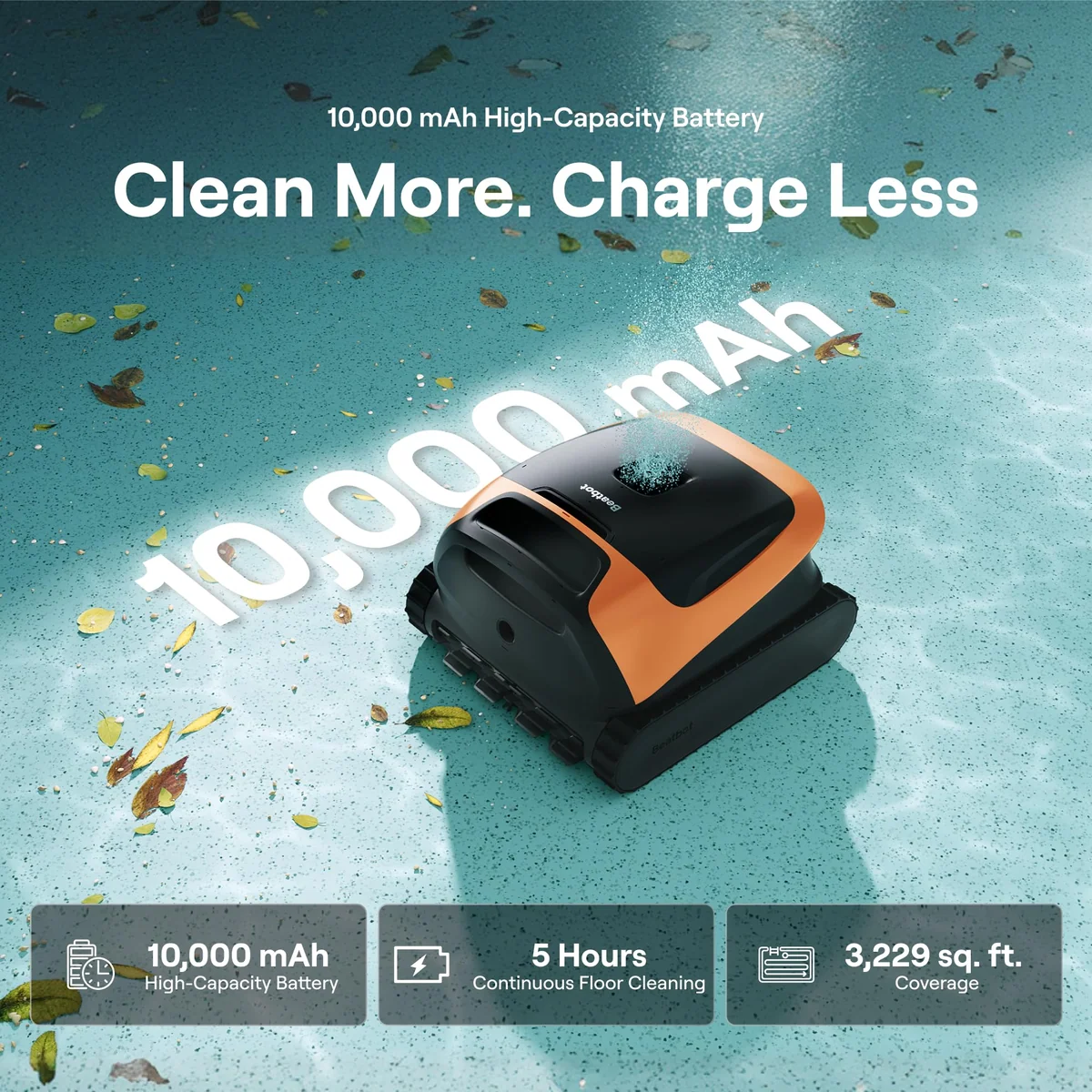
A clever shelf routine would be worthless if the basic vacuuming were weak. Here, the ordinary cleaning record is encouraging. Owners describe collection of grass, leaves, insects, seed pods, petals and visible dirt, while former Dolphin users praise the Sora 30’s wall climbing, waterline work and lack of a cable. One owner reported about half the battery remaining after cleaning a 42 × 24-foot pool with a nine-foot deep end; another reported 55 percent remaining after a 180-minute floor, wall and waterline cycle in a 16 × 40-foot irregular pool.
Those reports support endurance, not guaranteed maximum-area coverage. The rated 3,229-square-foot figure says the battery and design are intended for large residential pools. It does not prove that every freeform pool at that limit will receive one complete pass over every corner, step and transition.
Waterline performance also deserves a normal-sized claim. Direct footage shows five-foot wall climbs and contact at the waterline, and owners report visibly cleaner tile. A ledge-focused review judged wall cleaning very good but waterline cleaning merely decent. The Sora 30 climbs, scrubs for a period and descends; it is not evidence of perfect horizontal tracking around the entire perimeter.
The included filter defines the debris limit
The 5-liter basket is large, easy to lift out and straightforward to hose clean. Its one-way intake helps keep collected leaves inside during removal, and owners coming from multi-part filter assemblies repeatedly preferred the simpler routine. The fully detachable cover is less elegant: it has to be put somewhere during basket removal, and one owner thought the plastic felt too cheap for the machine.
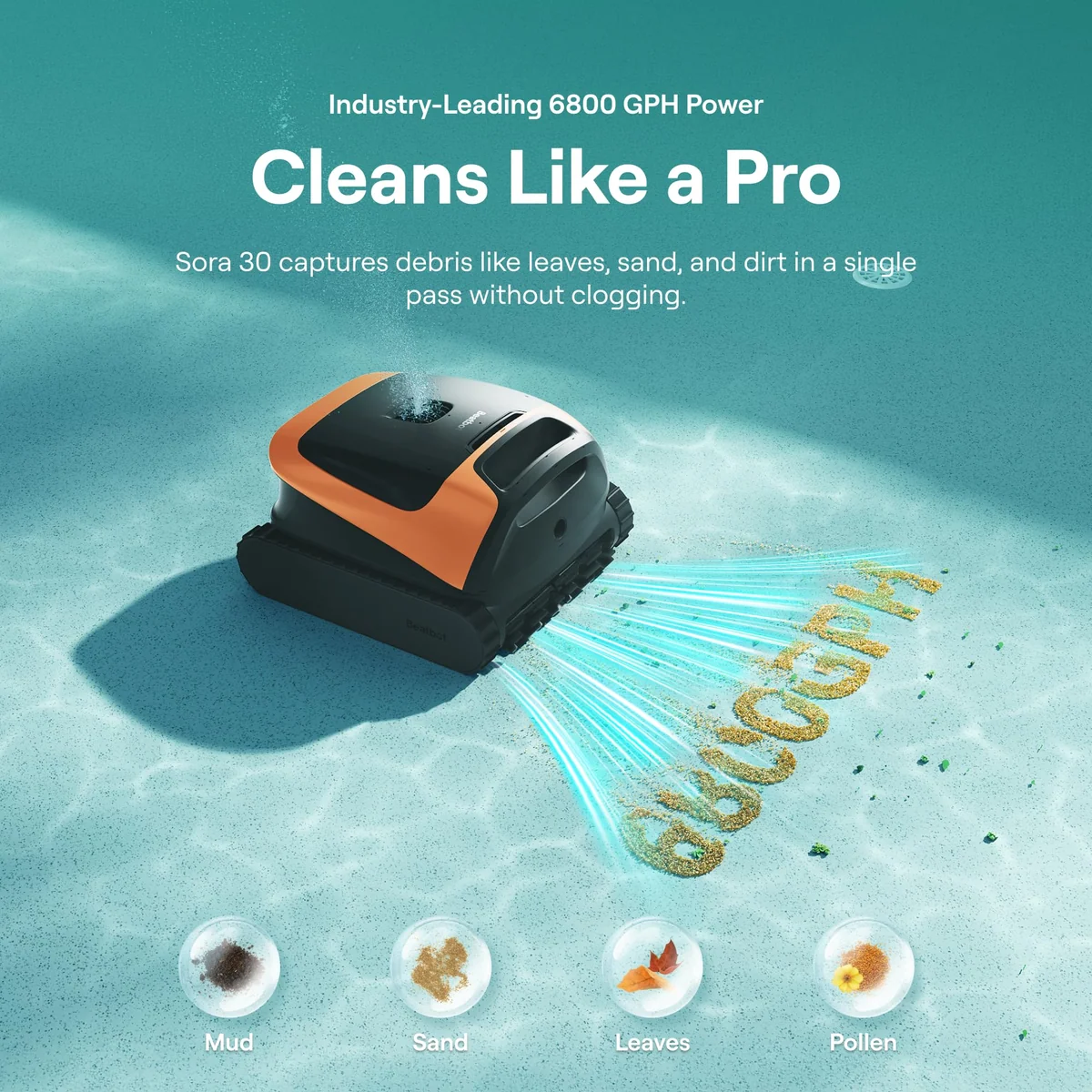
The 150-micron mesh is an everyday-debris filter. It can retain leaves, bugs, twigs, grass, visible grit and some ordinary settled dirt, but it is not the same thing as a polishing filter for storm dust, pollen, dead algae or the finest silt. Conflicting owner descriptions of “fine dirt” are not surprising because a visible grain of sand and a cloud-forming dust particle are very different filtration jobs.
Beatbot lists an ultra-fine accessory separately, so buyers should not assume finer filtration arrives in the box. More seriously, one owner reported that after installing the optional filter, the rear of the robot lifted from the floor, the cleaner repeatedly tried to move and then shut down. That single report cannot establish a model-wide defect, but it is specific enough to make the Sora 30 a poor recommendation when ultra-fine material is the main reason for buying.
If sand, silt, pollen or dead algae matters more than ledges, start with the site’s cleaners selected for fine debris rather than paying for the Sora 30’s shallow-zone hardware and hoping an accessory changes its character.
Sensor-guided does not mean dirt-seeking
The front and downward ultrasonic sensors appear materially useful. They help the machine recognize walls, slopes, platform edges and bad approaches, and they support structured S-shaped floor movement. Direct observations of ledge-edge reversal and recovery from an unsuccessful curved climb are better evidence of intelligence than a dramatic app label.
The record does not establish a persistent visual map, camera-based dirt recognition or room-vacuum-style learning. One owner saw repeatable travel toward a familiar deep-end dirt area, while another described slow, random-looking movement with no memory at all. Smart Pool Bots would buy this machine for traction and transition handling, not for an expectation that it will identify a dirty corner and hunt it down.
Pay for geometry, not the model number
The Sora 30 earns its place between the Sora 10 and Sora 70 by solving a specific problem. Compared with the Sora 10, it adds the downward-facing platform sensor, front and rear brush groups, a larger battery, stronger complex-pool traction and full surface parking with drainage. Both models carry the same 6,800-GPH manufacturer rating, so the upgrade is not primarily about headline suction.
The value test is therefore simple. If the pool has a broad tanning ledge near the eight-inch threshold, difficult transitions or a deep-end retrieval problem, the Sora 30’s additions can affect every cleaning cycle. If the pool is a plain rectangle with a conventional floor and walls, an independent multi-cleaner comparison found the cheaper Sora 10 capable of excellent floor and wall coverage, strong leaf pickup and a long run, although it failed the artificial eight-inch shelf test and remained limited by 150-micron filtration.
Buyers making that decision can see the features side by side in the Sora 30 and Sora 10 comparison. The Sora 30 is the better machine for the pool feature that justifies it; the Sora 10 may be the better purchase when that feature does not exist.
The Sora 70 adds a different job
Moving from Sora 30 to Sora 70 does not buy a larger underwater flow rating or a larger battery. It buys active water-surface skimming, a 6-liter rather than 5-liter basket, additional motors and modes, and an extra year in the stated warranty. The core underwater endurance, shallow threshold and rated pool area remain closely aligned.
That makes the Sora 30 versus Sora 70 comparison a debris question rather than a status question. Choose the Sora 70 when floating leaves and bugs need attention during the same machine’s cycle. Choose the Sora 30 when the built-in skimmer is adequate, manual skimming is acceptable or a dedicated surface robot already handles that layer.
A separate robotic skimmer can patrol the top while the Sora 30 works underwater or charges, which is often the stronger arrangement under trees. The trade is ownership of two baskets, two machines and two maintenance routines. The site’s guide to robotic skimmers and underwater vacuums explains why those jobs should not be treated as interchangeable.
Cordless convenience moves the work to the deck
Former Dolphin owners repeatedly valued the absence of a cable, the top-access basket and the drained surface return. Those are substantial daily conveniences, especially where cord tangles, storage or a failed cable drove the replacement. Their experience also demonstrates why “cordless” can be more important than an abstract cleaning score.
A corded robot answers the opposite annoyance. It avoids battery charging, can be ready for another cycle immediately and may support a true timer, but it leaves a cable to manage in and around the pool. Readers who prefer constant power should consider the Dolphin Nautilus CC as an honest alternative, while those committed to cable-free operation can compare the broader field in the cordless cleaner roundup.
Within Beatbot’s range, the Sora 30 and AquaSense 2 comparison is the more useful next step for buyers considering a more premium underwater model rather than paying specifically for the Sora 70’s skimming hardware.
The warranty is longer than the evidence
Beatbot states a two-year warranty for the Sora 30. The available owner record is much younger: favorable reports commonly cover a handful of uses, several weeks, three months or about 30 cycles rather than multiple seasons. That is enough to judge early usability, but not battery aging, seal durability, charger longevity or the cost and practicality of an eventual repair.
One early failure deserves proportionate attention. An owner reported that the cleaner became unusable within two months when paired with the separately purchased ultra-fine filter, then described slow technical troubleshooting through one overnight email per day. Other owners praised prior Beatbot support or expressed confidence that the warranty would be honored. The evidence supports neither “excellent support” nor “avoid the brand at all costs”; it supports preparing for a potentially slow diagnosis if a hardware and accessory interaction is not straightforward.
Build impressions split in a similar way. The tracked chassis and brush hardware look substantial, but the detachable cover, simple toggle and plug-in charging arrangement reveal where the Sora line trims cost relative to Beatbot’s more elaborate machines. One owner expected the cover to break, while others called the robot well made. No available record establishes a widespread cover failure.
Routine care remains part of the deal
Rinse the basket after each meaningful load rather than treating its 5-liter capacity as permission to ignore it for days. Check the intake flap and brushes for trapped stems or stringy debris, allow the robot and charging area to dry, keep the proprietary connector protected, and store the detachable lid where it cannot be dropped or stepped on.
Use the Sora 30 to maintain a pool that is already under control. A muddy seasonal opening, a floor buried under heavy leaves or an algae-heavy recovery can overwhelm flow and filtration before the robot has a chance to demonstrate its navigation. Remove the bulk contamination first, then use the cleaner for the recurring work described in the robotic pool cleaner maintenance guide.
Frequently Asked Questions
Does the Sora 30 skim leaves from the water surface?
No, it rises to the surface for parking and retrieval but cleans the floor, walls, waterline and qualifying shallow platforms rather than floating debris.
How deep must the water be over a tanning ledge?
Beatbot specifies about eight inches, but the shelf also needs enough area and a workable approach for both tracks to mount and turn.
Will it clean every pool step?
No, broad submerged steps can work well while narrow, curved, obstructed or overly shallow treads remain inconsistent.
Does the app control the Sora 30 underwater?
No, the app is chiefly useful for configuration, firmware, records and notifications because dependable Wi-Fi and Bluetooth communication is lost below the surface.
Why does the robot float for several minutes after deployment?
It normally needs roughly two to three minutes to vent air, sink, settle and begin moving, so the delay alone does not indicate a dead unit.
Does the included filter collect pollen and fine silt?
The included 150-micron basket is intended for everyday debris and visible dirt rather than dependable polishing of pollen, dead algae or the finest suspended silt.
Is the ultra-fine filter included?
No, it is a separate accessory, and one owner reported that the robot could not remain planted on the floor after that filter was installed.
Does Smart Surface Parking always put the robot within reach?
No, it often surfaces and drains successfully, but circulation, Eco mode or an incomplete parking sequence can still make the included hook necessary.
How long does the battery last?
Beatbot rates floor cleaning at up to 300 minutes, while several owners completed three-hour mixed-zone cycles with roughly half the indicated charge remaining.
Is the Sora 30 better than the Sora 10?
It is the stronger choice for targeted shallow ledges, complex transitions and persistent surface parking, while the Sora 10 can be better value for a simple pool.
What does the Sora 70 add over the Sora 30?
The Sora 70 adds active water-surface skimming, a larger basket, more motors and modes, and a longer stated warranty while retaining similar headline underwater flow and battery capacity.
Can the Sora 30 replace professional pool service?
It can reduce routine vacuuming and brushing in a compatible pool, but it does not balance chemistry, inspect equipment, service the main filter or rescue a severely neglected opening.
Does the orange version perform differently from the blue version?
No performance difference is documented between the Vibrant Orange and Deep Blue listings, which carry the same Sora 30 specification set.
Sources (2)
- Amazon listings and customer reviews — Beatbot Sora 30
- Owner and reviewer video, 6 channels