The Beatbot Sora 70 cleans four zones, but fine dust exposes its limit
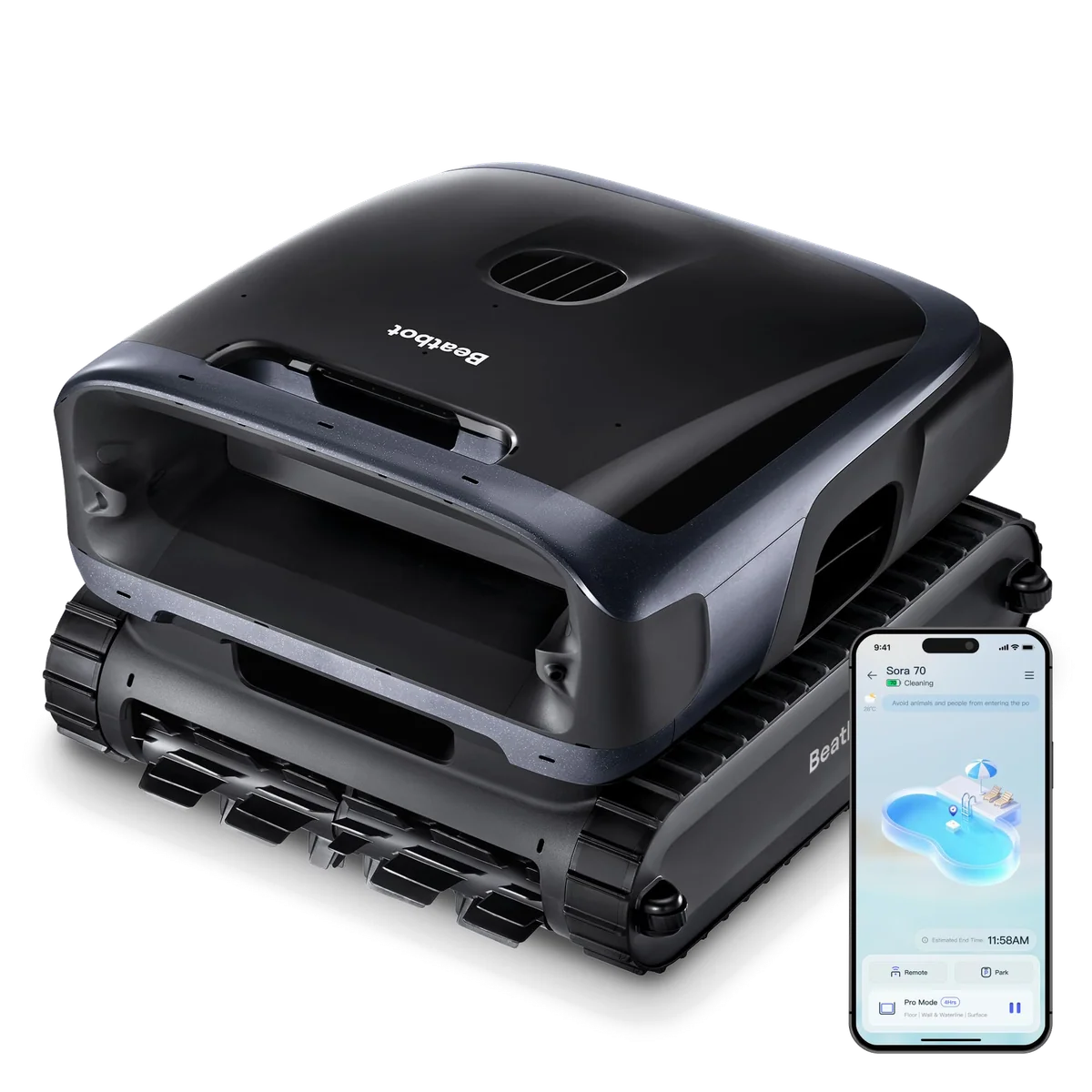
Buy the Sora 70 if you want one cordless machine for floors, walls, the waterline, and useful burst skimming, but skip it if fine silt is your main problem or you expect an app-controlled robot to run unattended for days.
The final call
The Sora 70 succeeds as a maintenance all-rounder rather than a fine-particle specialist. Its large basket, long useful runtime, shallow-zone ambition, real surface mode, and reliable-looking return behavior address genuine annoyances in cordless pool cleaning. For an owner dealing mainly with leaves, insects, grass, ordinary grit, and a troublesome tanning ledge with enough water, those advantages can justify choosing it over a simpler underwater-only robot.
Do not buy it because “AI navigation” sounds inevitable, because the app appears to promise underwater control, or because an ultra-fine filtration number appears near the product family. Buy it because the four-zone hardware matches your debris and your pool, and walk away when fine dust, truly unattended scheduling, or easy lifting matters more than freedom from a cord.
Best for: Large pools
A genuinely ambitious pool robot with one awkward blind spot
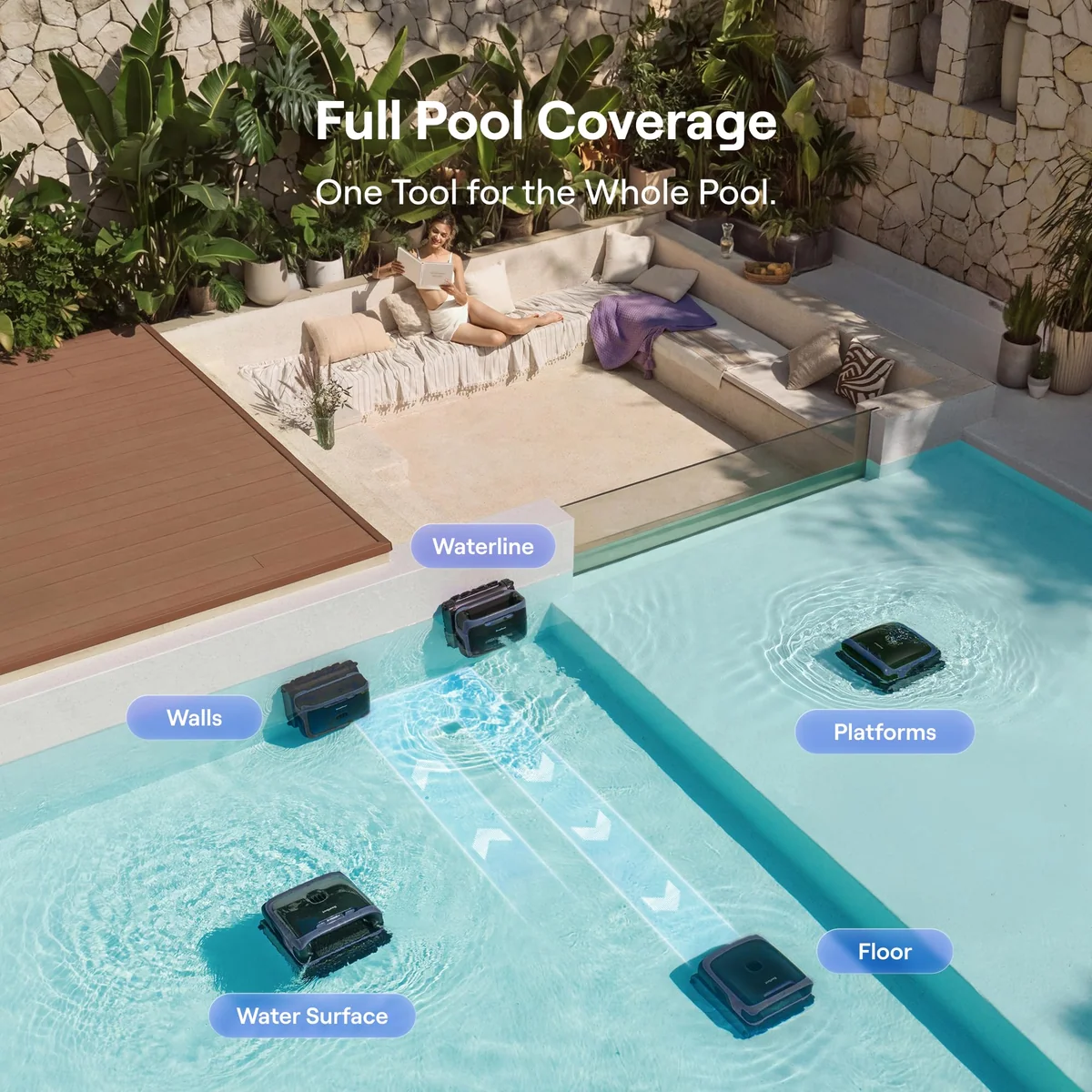
The Sora 70 is the most complete member of Beatbot’s less elaborate Sora family, not the company’s technological flagship. It combines cordless floor vacuuming, wall and waterline scrubbing, shallow-area travel, and active surface collection in one substantial machine. That combination matters because most robotic pool vacuums spend their entire lives beneath the floating leaves they never touch.
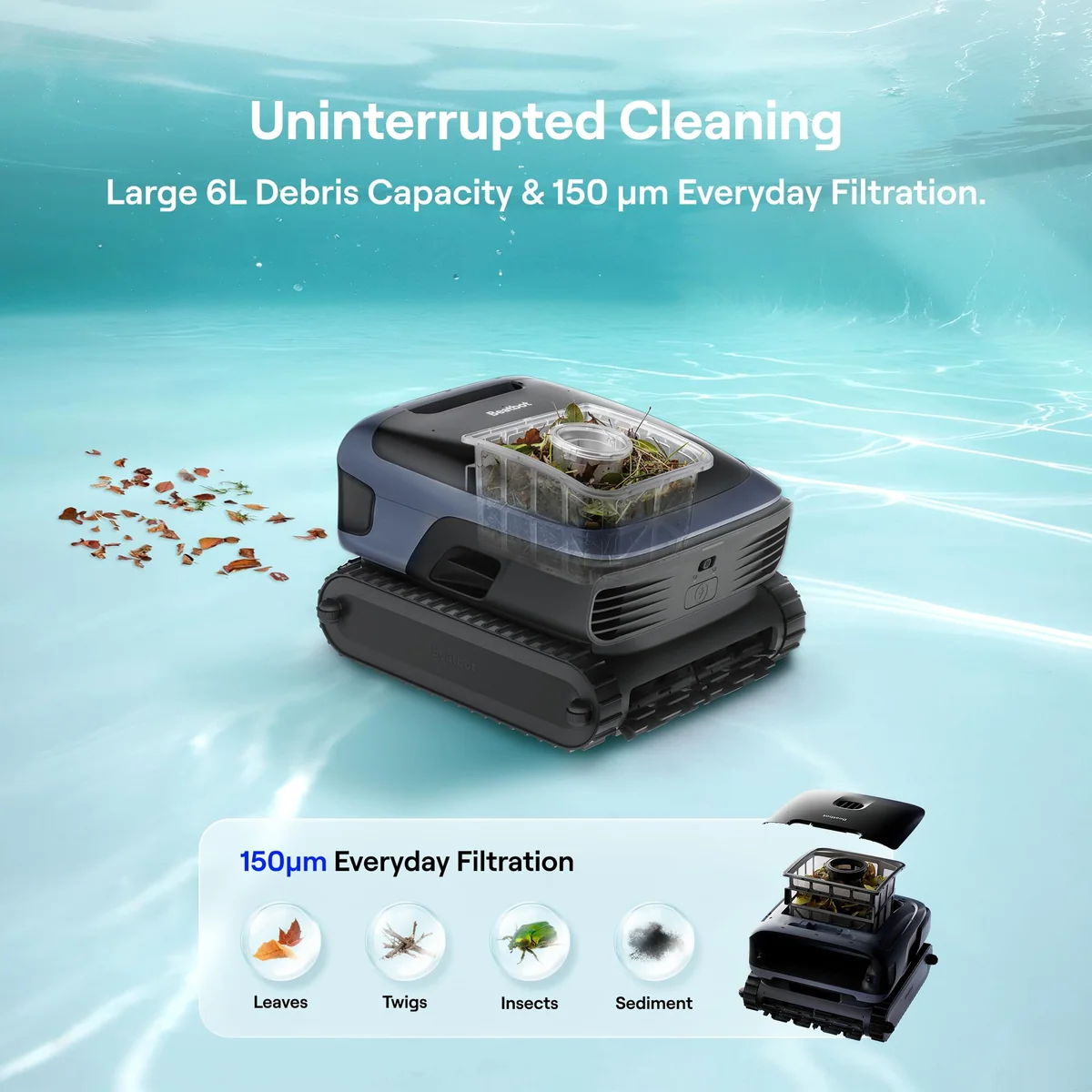
The good news is that its extra functions are not merely labels in an app. Direct demonstrations and owner reports show the Sora 70 climbing walls, scrubbing at the waterline, collecting floating bugs and leaves, returning to the surface, and navigating submerged seating in suitable pools. Its six-liter basket is unusually generous, and several owners found that it lasted through debris loads that would have filled smaller robots early.
The bad news is more consequential than a clunky menu or oversized charger. The standard 150-micron basket produced sharply divided results with fine material. One direct reviewer found it packed with sand, dirt, bugs, and plant debris after repeated cleaning, while another deliberately tested settled country dust and saw nearly as much on the floor afterward. Those findings can coexist because coarse sand and extremely fine silt are not the same filtration challenge, but buyers should not pretend the distinction is academic when the bottom of their pool is brown after every windy day.
That makes the Sora 70 easy to place. It is a convincing premium maintenance robot for pools that collect leaves, grass, insects, twigs, ordinary dirt, and some sand. It is a much riskier purchase when pollen, cement dust, dead algae, or powdery silt is the problem you most need the robot to solve.
Key Specifications
Surface skimming is useful, not perpetual
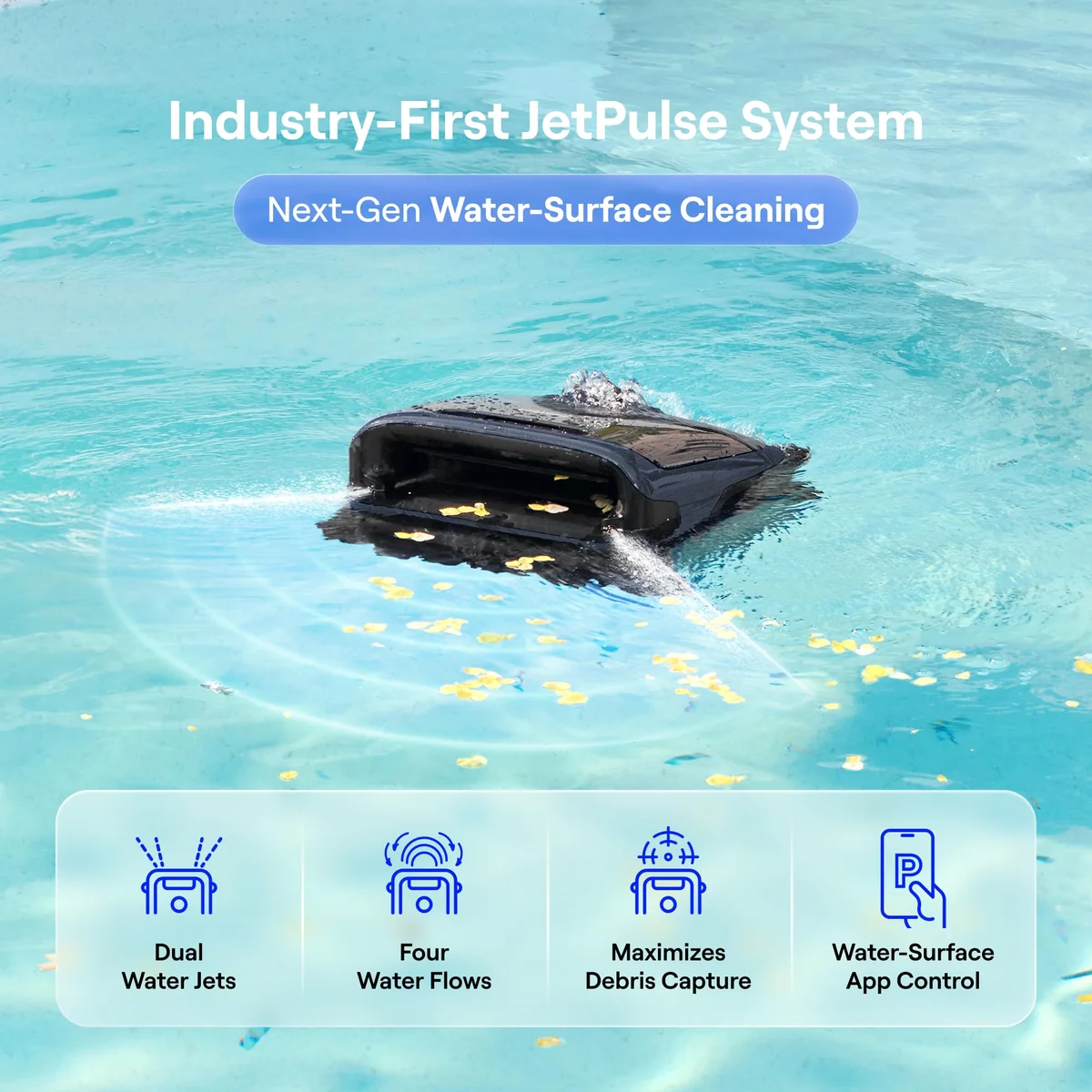
The Sora 70 reaches the surface, opens its intake, moves on small propellers, and uses paired JetPulse outlets to influence floating debris near the mouth. Two direct reviewers with very different overall opinions agreed that the feature collected bugs and leaves. One began the review expecting surface mode to be a gimmick and finished persuaded that it added real value.
Its best role is a burst of surface cleanup during a chosen cycle or before people enter the pool. It can catch material that fixed wall skimmers miss, and the app can steer it slowly toward a visible patch while it is floating. It is not equivalent to a dedicated solar skimmer roaming all day, because the Sora 70 shares one battery among surface, floor, wall, and waterline work, then has to be removed and charged.
If surface debris arrives continuously, read our guide to choosing between a robotic skimmer and an underwater vacuum, then compare the Sora’s all-in-one compromise with the site’s dedicated robotic skimmer picks. One machine is simpler to store and maintain; two specialized machines can work independently at different layers.
The app stops being a remote once the robot sinks
The app is useful on deck. It handles initial setup, firmware, mode selection, cycle duration, cleaning history, battery status after reconnection, surface steering, and parking commands. The physical switch also starts a preset without a phone, which is important because basic cleaning should not depend on a successful app handshake.
Once submerged, normal Wi-Fi and Bluetooth communication disappear. You cannot reliably steer toward a missed patch, change the mode, watch live progress, or recall the robot from the bottom. The connection returns at the surface, at which point notifications and remote surface controls can work again. The app is therefore a configuration tool and surface remote, not an underwater command center.
Scheduling language deserves equal care. A cordless robot cannot lift itself from a charger, walk to the pool, deploy, empty its basket, and plug itself back in. Even if the app stores a future routine, a person still has to put the charged machine in the water and later perform the after-cycle work. Buyers who want repeated daily cleaning with minimal intervention should first understand the practical difference between corded and cordless robots.
Surface parking fixes the worst part of retrieval
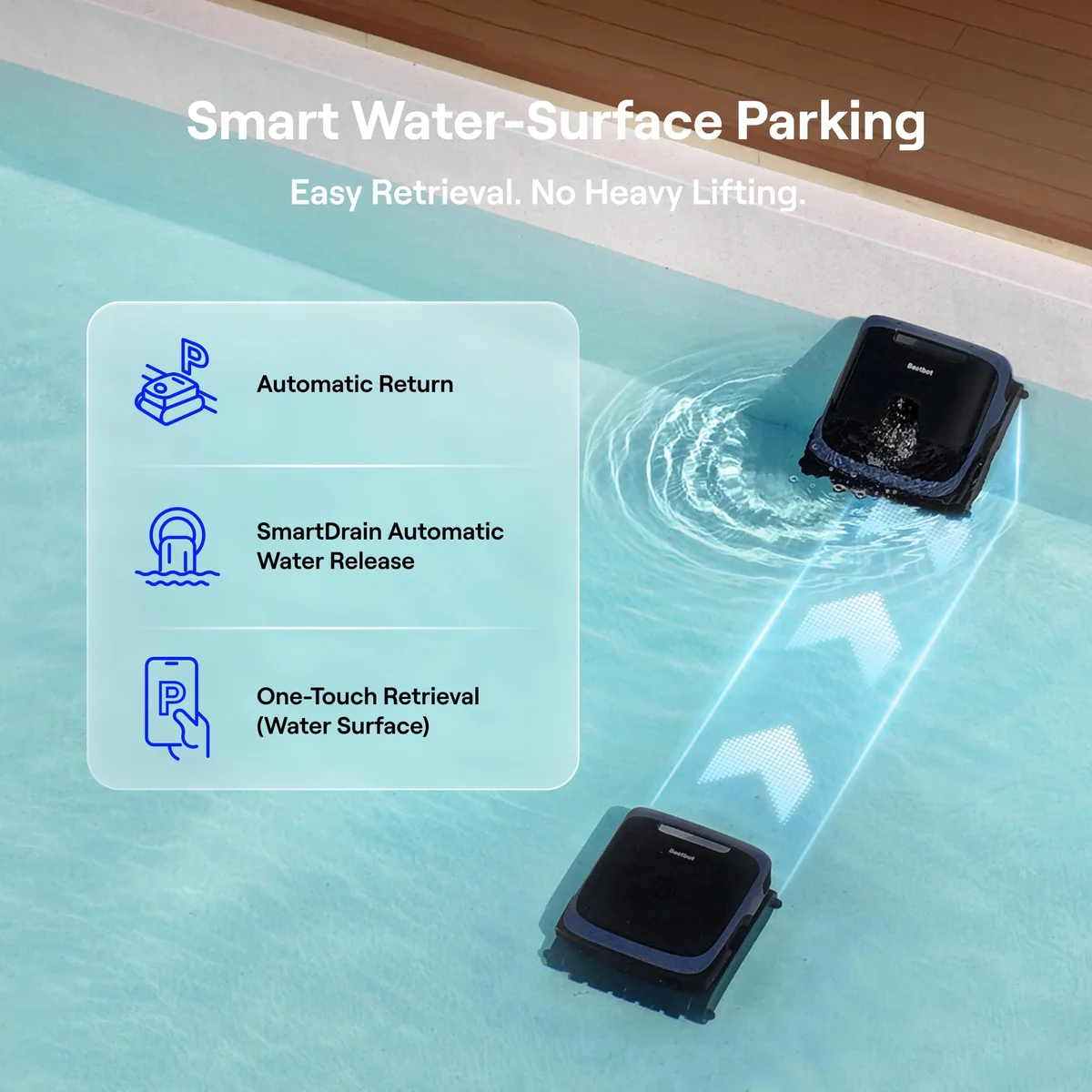
At the end of an ordinary cycle, the Sora 70 is designed to rise, move toward an edge, remain afloat, and drain as it is lifted. That behavior worked in both positive and critical direct accounts, and owners consistently preferred it to fishing a dead cleaner from the pool floor. A rescue hook remains in the box for the occasions when parking is unavailable or ECO mode intentionally leaves the robot underwater.
Do not mistake self-parking for weightlessness. The body is bulky, and retained water makes any pool robot appreciably harder to lift. Let the drain routine work before hauling it over the coping, and consider whether the person responsible for cleaning can safely control a wet machine with both hands.
Strengths & Limitations
Strengths
- The six-liter top-access basket holds substantial coarse debris and rinses quickly.
- Floor, wall, waterline, shallow-area, and surface functions all have direct supporting evidence.
- Real-world reports support long cycles, including at least four hours in one demanding mixed-mode test.
- Automatic surfacing, edge parking, and drainage make retrieval less frustrating.
- JetPulse skimming is genuinely useful for bugs, leaves, and fast pre-swim cleanup.
Limitations
- The standard basket is an uncertain choice for powdery silt, pollen, and very fine settled dust.
- The app loses its connection underwater and cannot provide dependable live control.
- Very shallow shelves, narrow steps, coves, and awkward transitions can remain untreated.
- Cordless ownership still requires deployment, retrieval, basket rinsing, charging-port care, and redeployment.
- The large wet body may be difficult for smaller or mobility-limited owners to lift safely.
The debris test is really two different tests
Robotic pool cleaner claims often collapse every contaminant into the word “debris,” as though an oak leaf and a cloud of mineral dust ask the same thing of a filter. They do not. The Sora 70’s brushes, intake, and large open basket make a strong case with visible, physical material. Owner reports describe successful pickup of grass, leaves, small sticks, palm nuts, insects, stones, and sand, while direct video testing showed substantial material retained in the basket.
Heavy loads still require judgment. In a staged surface test, accumulated leaves obstructed part of the flow area and reduced suction before the nominal basket volume had been fully exploited. The JetPulse jets also sometimes pushed broad leaves away instead of guiding them inward. Emptying the basket restored performance, which is useful to know but does not rescue the listing’s absolute language about single-pass pickup without clogging.
| Pool problem | Evidence | Buying interpretation |
|---|---|---|
| Leaves, bugs, grass, and twigs | Consistently positive pickup reports, with capacity to spare in several ordinary cleaning cycles. | Strong fit, although storm loads may still require an interim basket rinse. |
| Sand and gritty dirt | Several reports found substantial sand collection, including visible accumulation after repeated use. | Promising, but results will vary with particle size and pool finish. |
| Fine dust, silt, and pollen | Direct evidence conflicts, and one focused dust test ended with little material in the basket. | Do not buy on the assumption that the standard basket is an ultra-fine filter. |
| Dead algae or cloudy-water residue | No supplied test establishes dependable removal or water clarification. | Leave the finest suspended material to the pool filter or an appropriate manual cleanup method. |
Beatbot promotes an optional ultra-fine insert for the Sora 70, but the supplied evidence does not establish whether it comes in the standard package, how it is priced, or whether it is readily obtainable. One reviewer specifically reported that the advertised three-micron accessory was not available when his review was produced. Treat included filtration and optional filtration as two different products until the contents of the package in front of you say otherwise.
Walls and waterline are more convincing than the filtration hype
The Sora 70 repeatedly demonstrated the ability to climb vertical walls and hold its brushes against the waterline. Owners generally describe good wall coverage, and one large-pool report says the robot worked methodically without hanging on a raised drain. A more critical owner called waterline performance merely adequate, which is a useful calibration: this is a maintenance scrubber, not a promise to erase an established scale or scum line in one pass.
Programmed routes and dual ultrasonic sensors help it slow near obstacles and work through several pool zones, but the evidence does not justify camera-style language about seeing dirt, identifying debris, or learning every pool. Some owners saw methodical coverage; others saw wandering and missed coves. “Sensor-guided” is the honest description, while “full coverage” remains an objective rather than a guarantee.
Steps and tanning ledges depend on depth and geometry
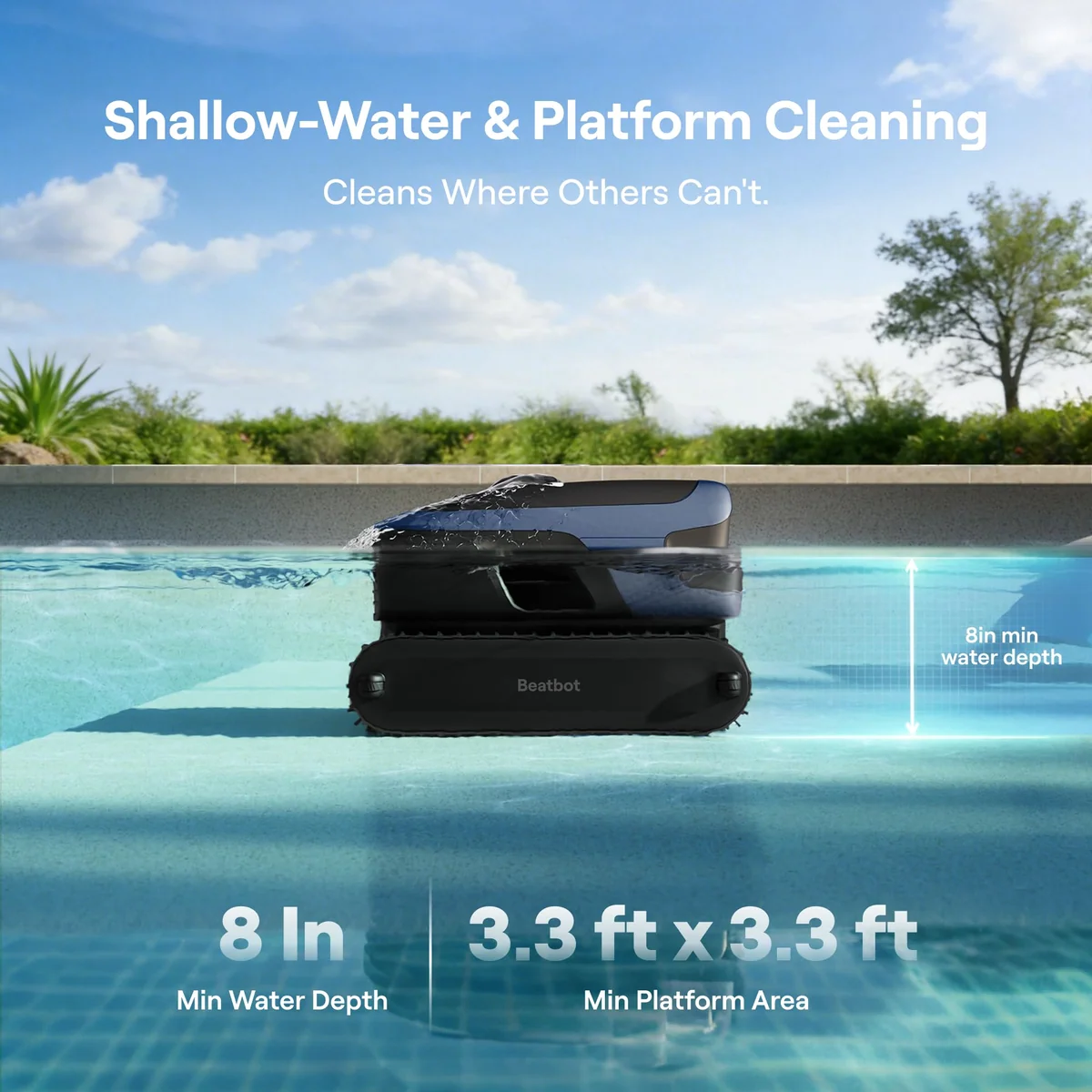
This is where the Sora 70 can distinguish itself from ordinary floor-and-wall robots. One direct test in a complex saltwater pool showed it moving onto submerged seats, crossing them, and continuing upward to the true waterline instead of mistaking the seat edge for the end of the wall. An owner with a large irregular pool also reported successful cleaning of a swimout, steps, and a tanning ledge at roughly 7.5 inches of water.
That encouraging result does not repeal the eight-inch qualification. A five-inch sun shelf went essentially uncleaned, another owner reported trouble on steps and a ledge, and a separate direct demonstration had a platform too shallow for the robot to enter. Narrow stair treads may also offer too little room for a machine of this size to settle and scrub. Buyers with a sun shelf should measure water depth and usable tread area rather than trusting the word “shallow” on its own.
Pay for the combination, not the word “AI”
The value case is not mysterious. The Sora 70 consolidates a large-capacity underwater cleaner and a useful intermittent surface skimmer while eliminating an in-pool power cable. It also reaches qualifying shallow areas that many conventional robots ignore and brings itself back to the edge. Those are physical conveniences, not speculative software promises.
The expensive mistake is buying it for the wrong form of dirt. If fine sediment is your main complaint, the large basket and 6,800-gallon-per-hour claim do not answer the filtration question. Verify exactly which ultra-fine accessory is included or obtainable before committing, and do not assume a high advertised flow rate can compensate for media that does not retain the particles passing through it.
When a cheaper Sora may be enough
If you care about floor, wall, waterline, and shallow-area cleaning but do not need active surface collection, the lower Sora models deserve attention before paying for the 70. Our Sora 30 and Sora 70 comparison isolates what the surface hardware and larger basket add, while the Sora 30 review examines the cheaper cleaner on its own terms.
When another Beatbot makes more sense
The Sora 70 and AquaSense 2 comparison is the useful branch for buyers deciding between Sora’s surface mode and AquaSense’s different charging and cleaning priorities. Buyers considering the still more elaborate model should use the Sora 70 and AquaSense 2 Pro comparison rather than assuming every extra feature produces a cleaner pool.
When a corded cleaner is the better bargain
Choose constant power over cable-free deployment if you want immediate back-to-back cycles, a genuine weekly timer, and no battery recharge between runs. A corded model will not skim the surface the way the Sora 70 does, but it can remain ready for repeated underwater maintenance without being carried to a charger after every full cycle. The Dolphin Nautilus CC Pro review covers an honest alternative for buyers who value that operating pattern more than a cord-free pool.
No robot here replaces full pool service. The Sora 70 can reduce vacuuming, brushing, and net work, but it does not balance chemistry, inspect pumps and heaters, clean the main filtration system, diagnose leaks, or repair equipment. Judge its value against the cleaning labor it can actually remove, not the entire service invoice.
The cord disappears, but the chores move to the deck
A normal ownership cycle is straightforward: select a mode, allow the robot several minutes to vent and sink, wait for cleaning, retrieve it at the edge, remove and rinse the basket, let the charging-port area dry, plug in the proprietary charger, and deploy it again later. Cordless design removes tangles and a live cable from the water, but it does not remove handling.
The delayed start deserves advance warning because it can look like a fault. Multiple accounts describe the Sora 70 floating for several minutes while trapped air escapes before it dives. The sparse physical control provides little reassurance during that pause, so first-time owners should resist the urge to drag it out and restart it immediately.
Battery longevity is the unresolved ownership cost. The pack is proprietary and not presented as a simple user-replaceable component, while the supplied research contains no long-term Sora 70 aging record or confirmed replacement procedure. A stated three-year warranty is reassuring, but buyers should read the actual terms for battery coverage, shipping, labor, and replacement conditions instead of treating the duration as a complete repair plan.
Build impressions also conflict. Several owners describe the cleaner as substantial and tank-like, yet one direct unit arrived with side trim pieces coming loose before its first cycle. That may have been an isolated assembly defect, but it is concrete enough to justify checking panels, tracks, brushes, the basket seal, and the charging-port cover during the return window.
For the recurring work that keeps any robot effective, see Smart Pool Bots’ robotic pool cleaner maintenance guide. A large basket delays cleaning; it does not make decaying leaves, clogged mesh, hair around brushes, or moisture at an electrical connector harmless.
Frequently Asked Questions
Can the Sora 70 maintain a pool while I am away?
ECO mode can divide one charge into short periodic floor cycles while the robot remains underwater, but it is not an endlessly repeating daily schedule and may require hook retrieval afterward.
Does the Sora 70 work in a saltwater pool?
One direct reviewer used it successfully in a large saltwater pool, although the supplied evidence does not establish a Sora-specific maximum salinity.
Should the circulation pump run while the robot cleans?
Strong returns or fixed-skimmer suction can disturb its route or hold it near an inlet, so reduce or pause circulation when your pool’s flow visibly interferes.
Can the Sora 70 replace professional pool service?
No, because it removes and scrubs debris but does not manage chemistry, maintain circulation equipment, inspect the pool, or diagnose faults.
Sources (2)
- Amazon listings and customer reviews — Beatbot Sora 70
- Owner and reviewer video, 4 channels