Beatbot’s Sora 70 beats the AquaSense 2 by cleaning at the surface, not merely parking there
Buy the Sora 70 for the more complete cleaning machine, choose the AquaSense 2 only if its charging dock and double-pass waterline routine matter more than surface debris and basket capacity, and skip both when fine silt is the problem.
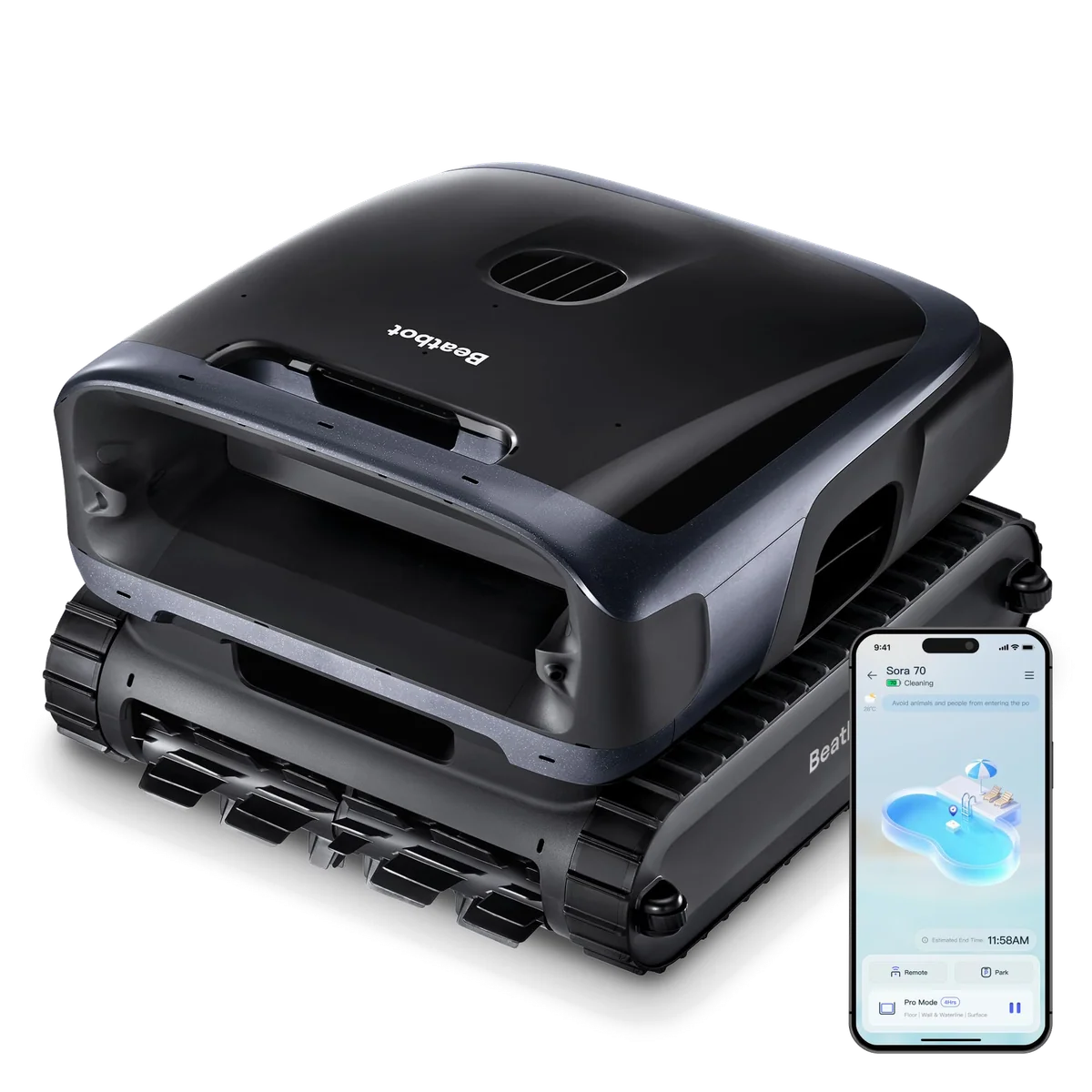
Beatbot Sora 70
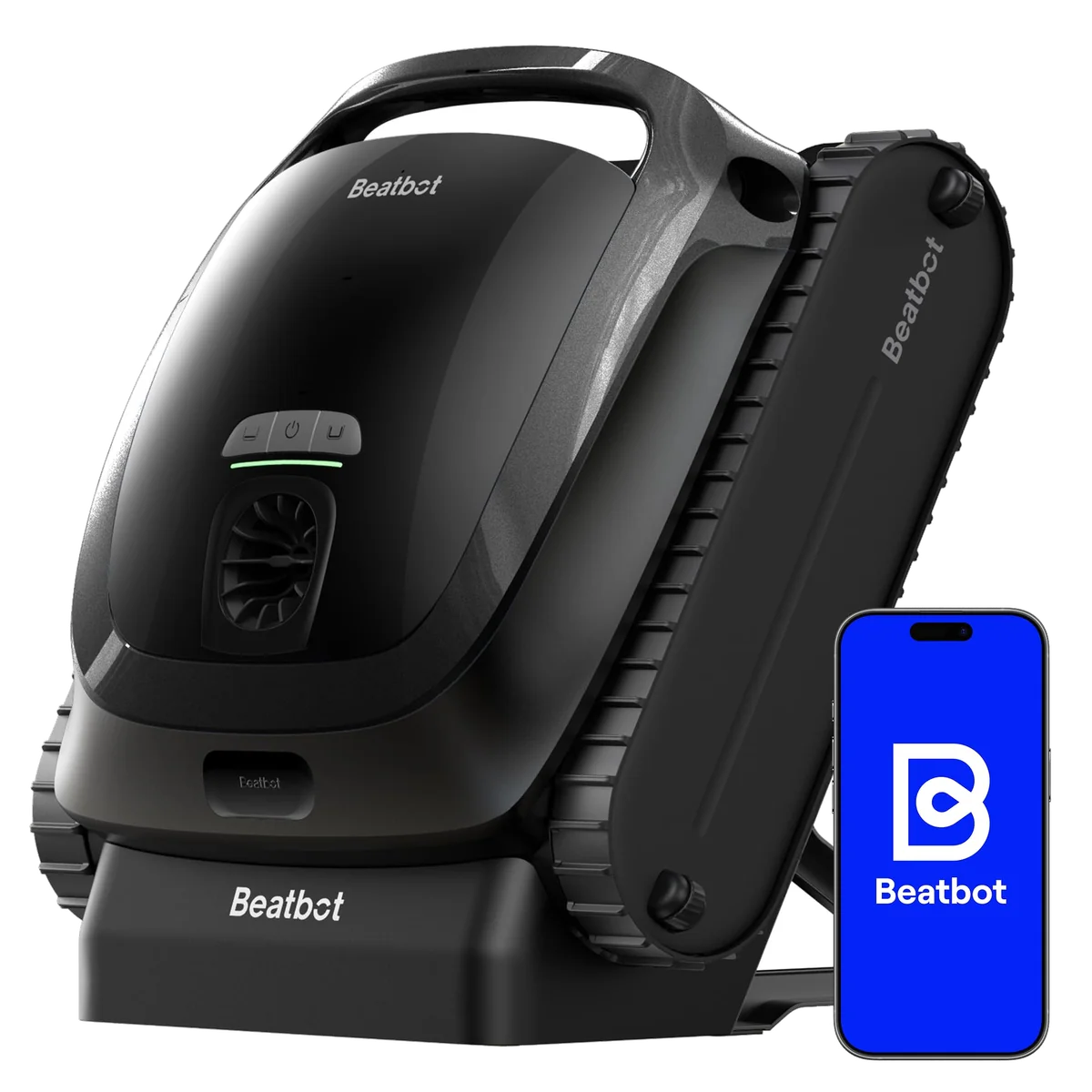
Beatbot AquaSense 2 Cordless Robotic
The decisive difference is not artificial intelligence
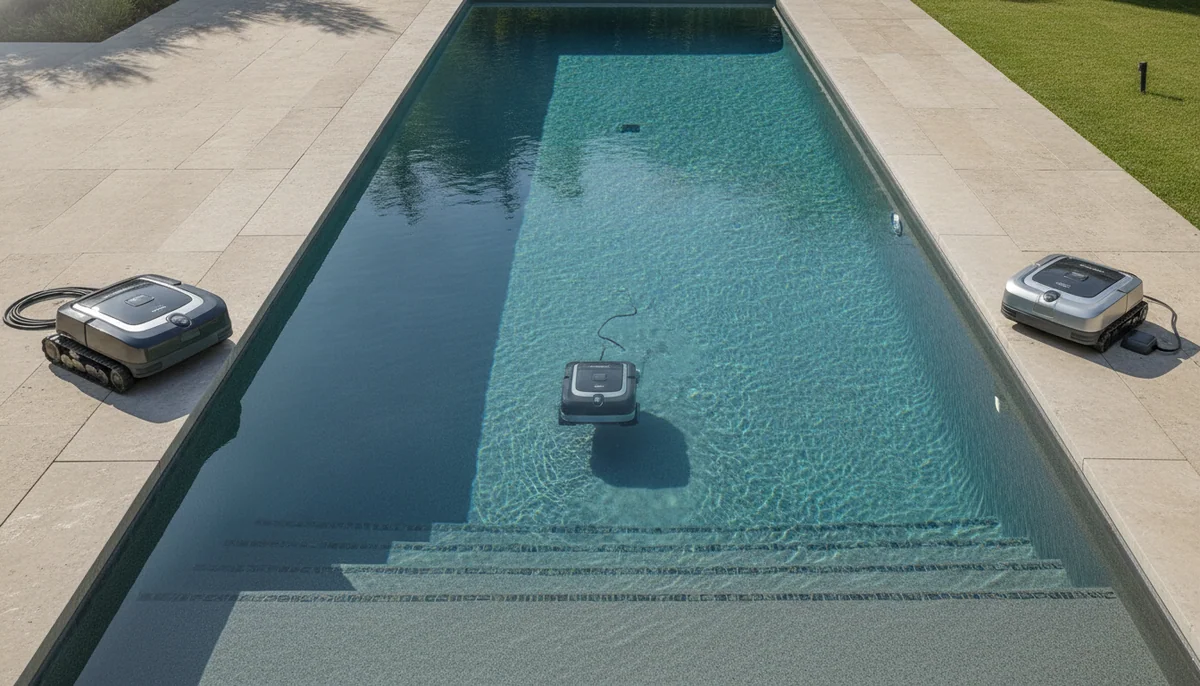
The Sora 70 and AquaSense 2 share enough family traits to look interchangeable from the pool deck. Both are cordless, use sensor-guided routes, climb walls, scrub the waterline, return to the surface, and require a person to empty and recharge them. Neither becomes a live underwater remote-control robot merely because it has an app.
Their real jobs are different. The AquaSense 2 is an underwater maintenance cleaner with an unusually polished retrieval and charging routine. The Sora 70 expands that job upward and outward: it collects floating debris, carries a much larger basket, and attempts submerged shelves that are deep and broad enough to support it.
That broader work envelope makes the Sora 70 the better buy for most people comparing these two. Its advantage is largest in pools beneath trees, pools with usable tanning ledges, and pools where one machine must address both settled and floating debris. The AquaSense 2 retains a narrow but credible case for buyers who want straightforward floor, wall, and waterline maintenance while avoiding both a power cable and a charging plug.
There is one shared warning that matters more than any navigation label. Neither machine should be bought as a specialist for powdery silt, pollen, cloudy residue, or algae-sized particles. High flow and long runtime do not compensate for filtration media that lets the problem pass through.
Beatbot Sora 70
Beatbot AquaSense 2 Cordless Robotic
At a Glance
| Feature | Editor's Pick Beatbot Sora 70 | Beatbot AquaSense 2 Cordless Robotic |
|---|---|---|
| Price Range | $1,000–$1,500 | $500–$1,000 |
| Claimed runtime | Up to five hours on the floor and seven hours on the surface | — |
| Check Price on Amazon | Check Price on Amazon |
The Sora wins on cleaning range, while AquaSense wins one deck-side ritual
The Sora 70 goes first because it can remove more kinds of pool work from the week, not because it has the more futuristic name.
Choose the Sora 70 for the broader cleaning job.
Its six-liter basket, active surface collection, claimed five-hour floor runtime, and eight-inch shallow-water target make it the more capable all-rounder.
The standard basket is not a trustworthy answer to powdery silt, and its bulky wet body still has to be lifted and charged by hand.
It cleans a layer the AquaSense 2 leaves alone
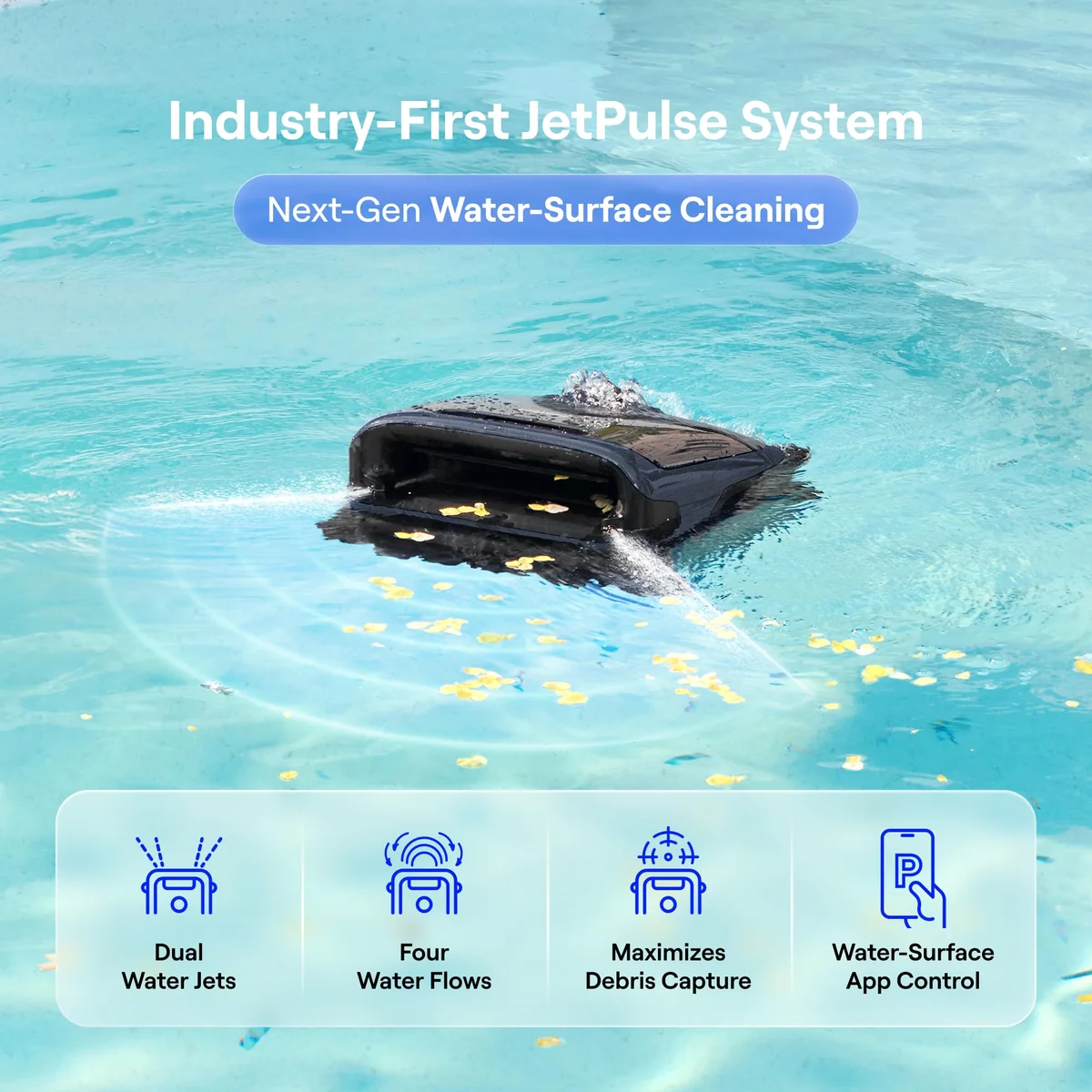
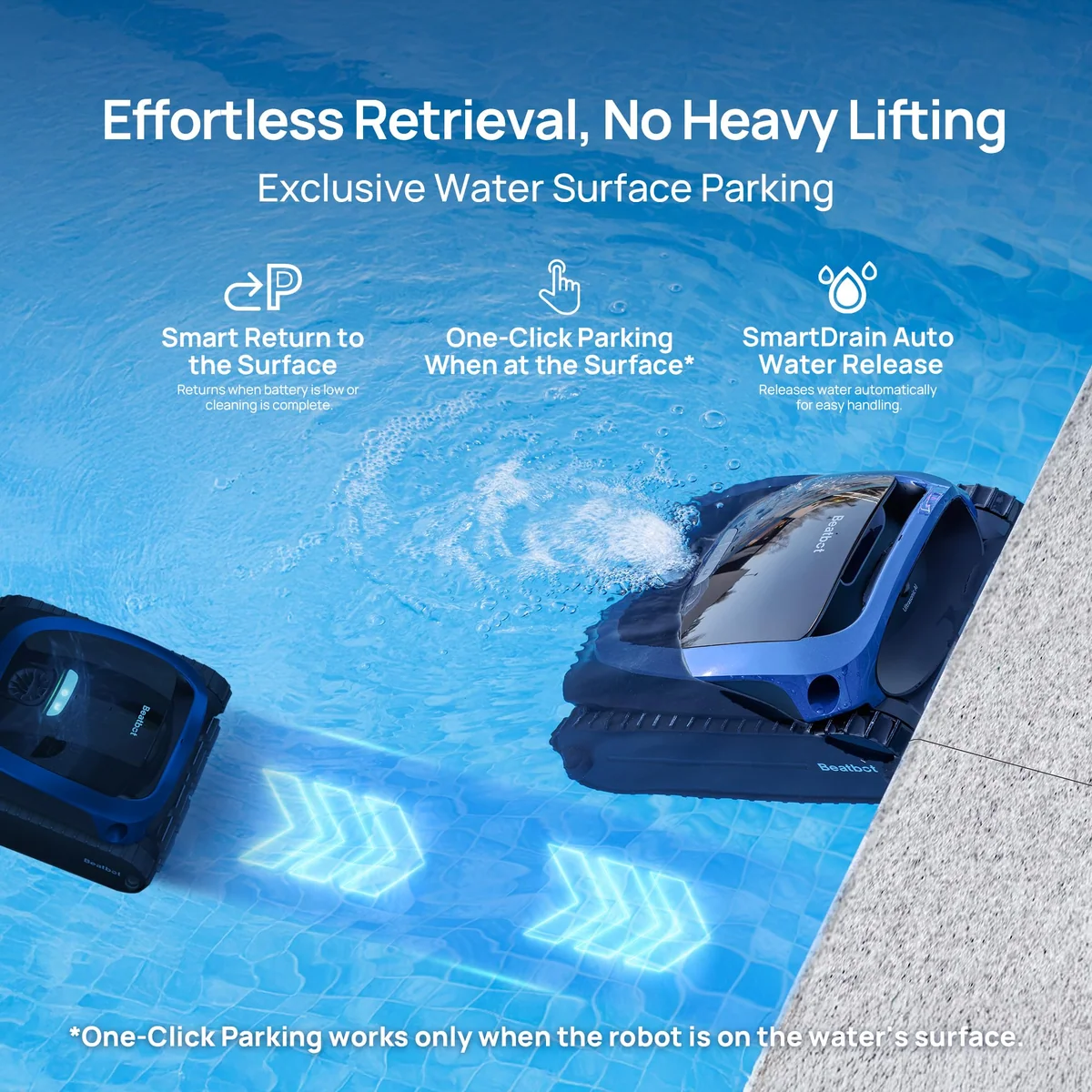
The most useful distinction appears above the waterline. The Sora 70 rises into an active skimming mode, moves across the surface on propellers, and uses paired water jets to direct floating leaves and insects toward its intake. The AquaSense 2 rises only to be retrieved. Its use of the surface is a parking maneuver, not a cleaning mode.
The Sora’s surface work is not equivalent to a dedicated solar skimmer roaming throughout the day. It shares one battery among the floor, walls, waterline, shallow areas, and surface, then must be removed and recharged. It is best understood as useful burst skimming during a chosen cycle or before swimmers enter, especially when fixed skimmers have left a visible patch behind.
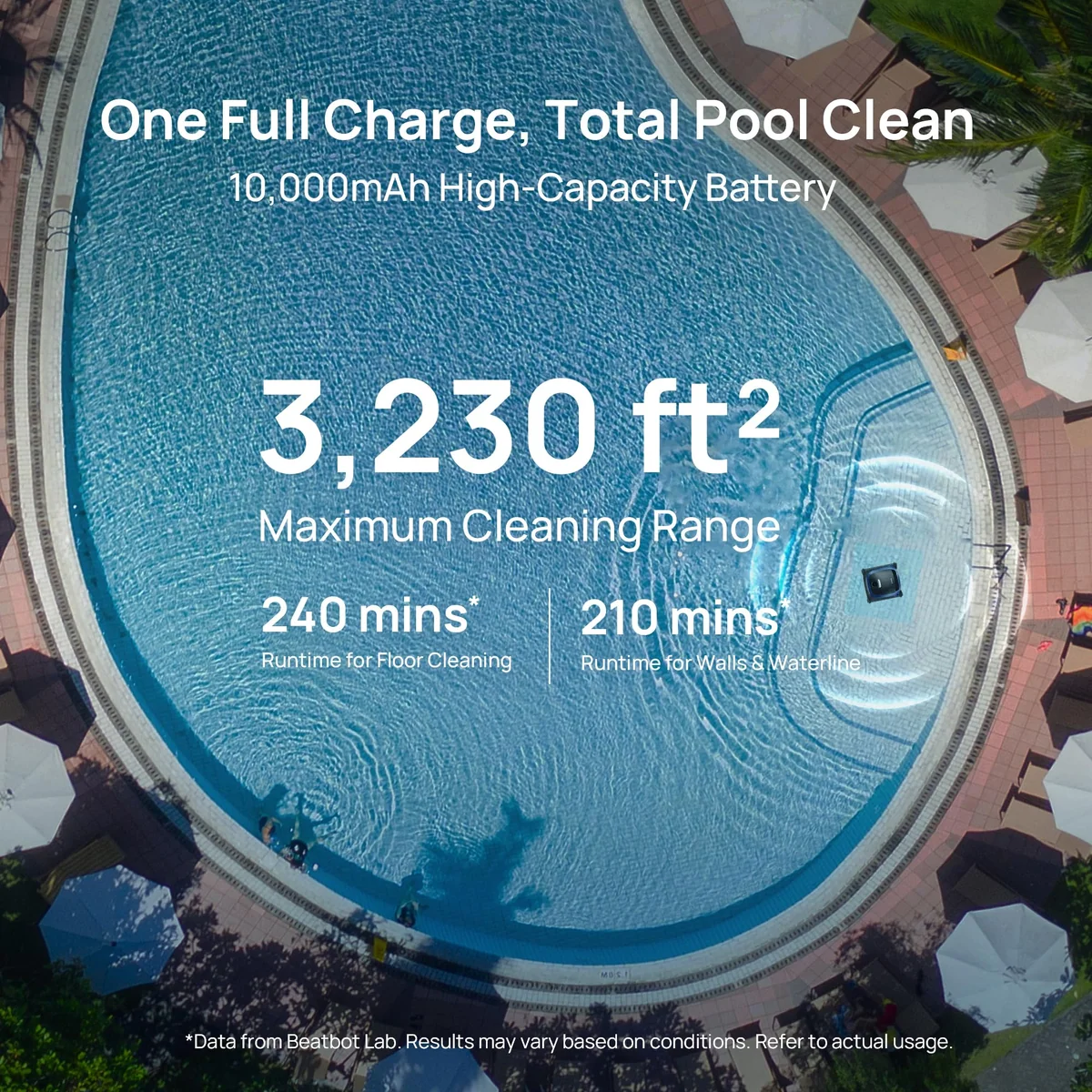
Beatbot pairs that extra cleaning zone with a claimed 10,000 mAh battery, up to five hours of floor cleaning, coverage up to 3,200 square feet, a six-liter top-access basket, and a stated shallow-water minimum of eight inches. Those are manufacturer specifications rather than guarantees of runtime or complete coverage in every pool.
The basket changes how often debris interrupts the cycle
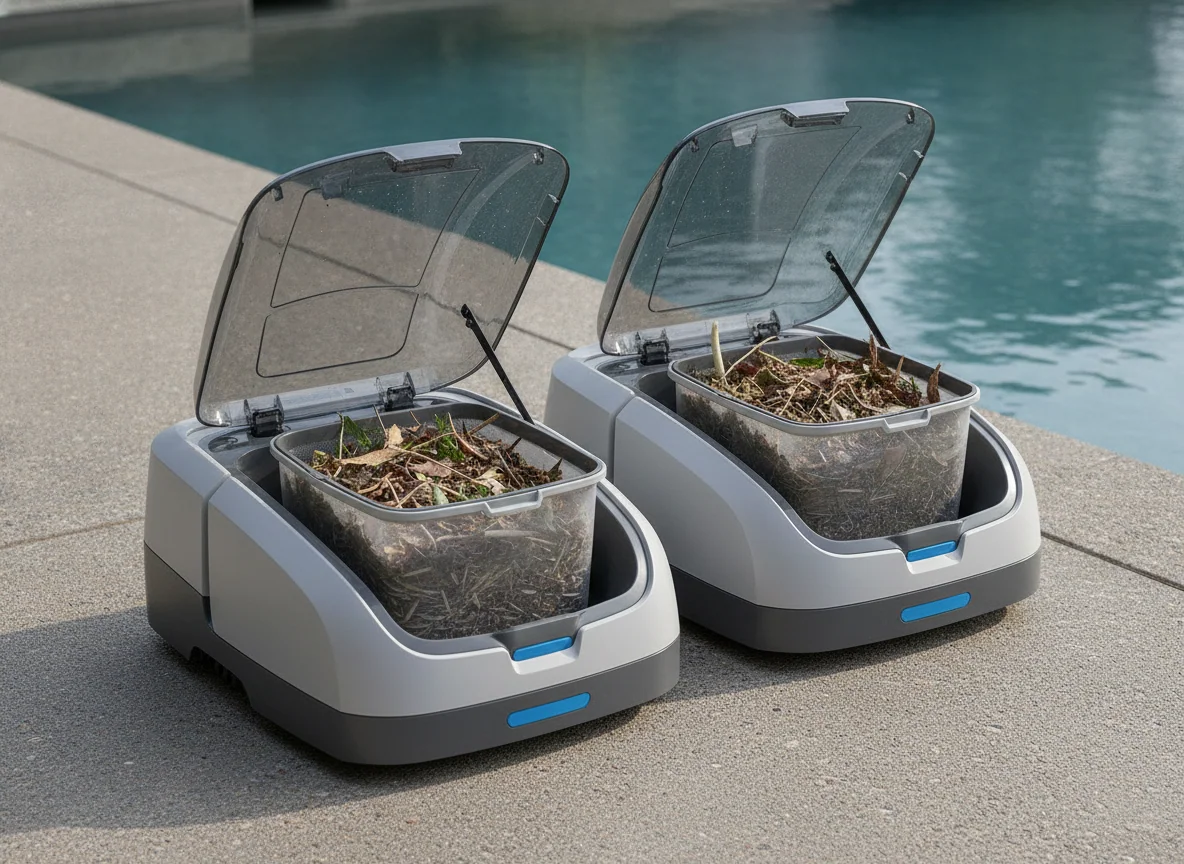
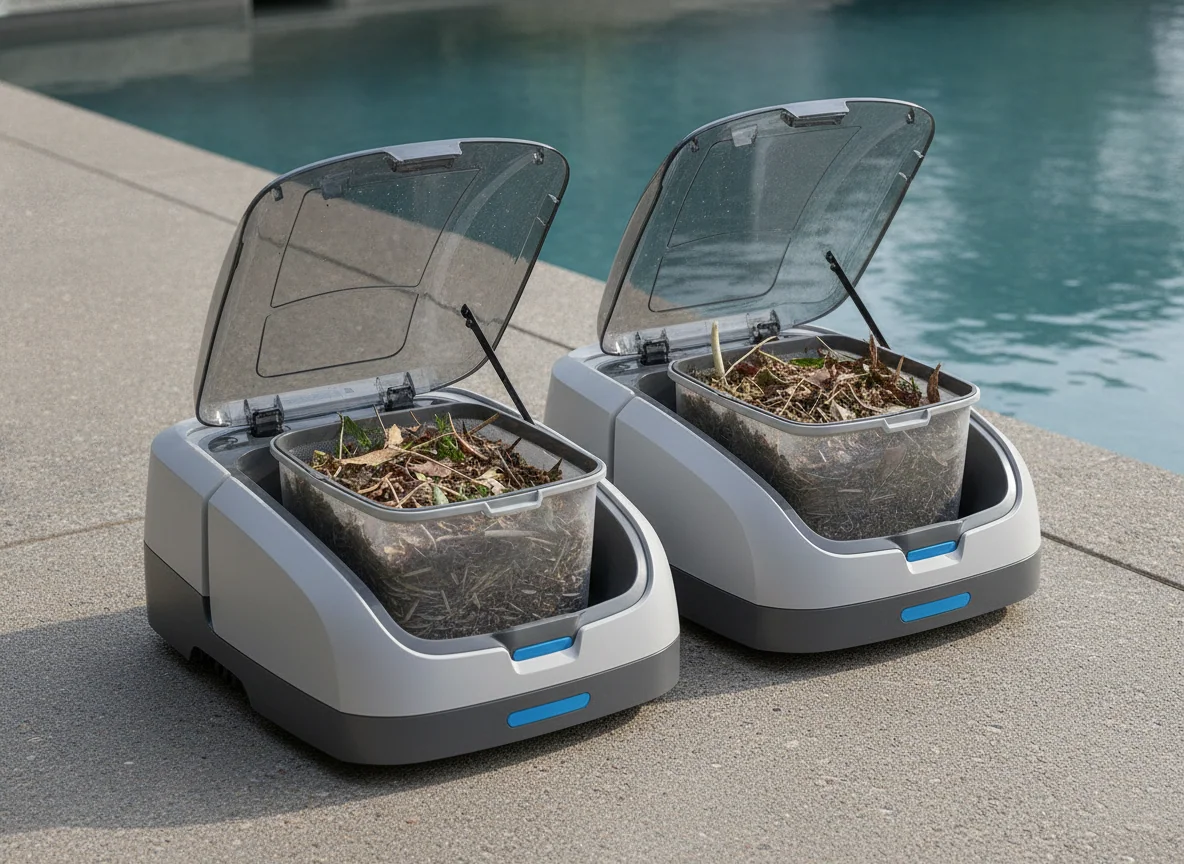
Capacity is the Sora 70’s less glamorous but more dependable advantage. Six liters gives leaves, grass, insects, twigs, and ordinary gritty debris far more room than the AquaSense 2’s two-liter basket. Reports from tree-exposed and irregular pools describe the Sora completing heavy ordinary maintenance without filling early, while the top-access basket is straightforward to remove and rinse.
A large nominal volume does not make the basket immune to obstruction. Broad leaves can cover part of the flow area and reduce suction before every corner is packed. Storm cleanup may still require an interim rinse, but the Sora begins with substantially more debris headroom than its rival.
Shallow-water ability is conditional, but it is real
The Sora also has the stronger case for pools with submerged seating, swimouts, and tanning ledges. Direct evidence shows it crossing seats and reaching a ledge in roughly 7.5 inches of water, while a shelf around five inches deep remained effectively out of reach. The honest rule is to measure both water depth and usable tread area: a narrow step or barely submerged platform can defeat a robot whose specification says “shallow.”
Walls and waterline cleaning are credible maintenance functions rather than reasons to expect restoration in one pass. The robot can climb and hold its brushes at the waterline, but curves, coves, fittings, narrow stairs, and abrupt transitions may still create missed areas. Sensor guidance improves the odds of an orderly route; it does not let the machine see dirt or promise that every surface will receive equal time.
Fine filtration is the reason not to buy it
The standard 150-micron basket produced sharply different outcomes with visible sand and powdery settled dust. Some reports found substantial sand and tiny debris in the basket, while a focused country-dust test finished with much of the fine material still on the floor and little retained by the filter. The disagreement is plausible because coarse sand and suspended silt ask different things of the same screen.
Do not assume an optional ultra-fine insert is included, available, or proven merely because accessory filtration is mentioned around the product family. Confirm the exact package before buying. If powdery sediment is the reason you want a robot, start with the site’s guide to cleaners for sand, silt, and fine debris instead of trying to make the Sora’s large basket solve the wrong problem.
The app helps on deck and goes quiet underwater
The app can configure modes, update firmware, display history after reconnection, steer the robot while it is floating, and request parking when communication is available. Wi-Fi and Bluetooth do not travel dependably through pool water, so live underwater steering, continuous progress reporting, and midcycle mode changes are not reliable expectations. Our guide to what pool-cleaner apps can actually do underwater explains why this limitation is physical rather than unique to one Beatbot.
Automatic surfacing, edge parking, and drainage make the end of a successful cycle easier, but the Sora uses a plug-in charger rather than the AquaSense 2’s stand. It also remains a large machine that becomes harder to control when wet. Let it drain, lift with both hands, and judge whether its handling routine suits the person who will perform it every week.
For the complete evidence behind this recommendation, the Smart Pool Bots review of the Sora 70 separates its proven cleaning functions from the claims that still depend on pool geometry and debris type.
Choose the AquaSense 2 only when deck handling is the priority.
Its surface parking, automatic drainage, charging stand, and genuine double-pass waterline routine form a persuasive convenience package for routine underwater maintenance.
The two-liter basket, coarse fine-particle retention, unreliable shallow-step coverage, and unsettled durability record make it a weaker default choice.
Its best performance begins when cleaning ends
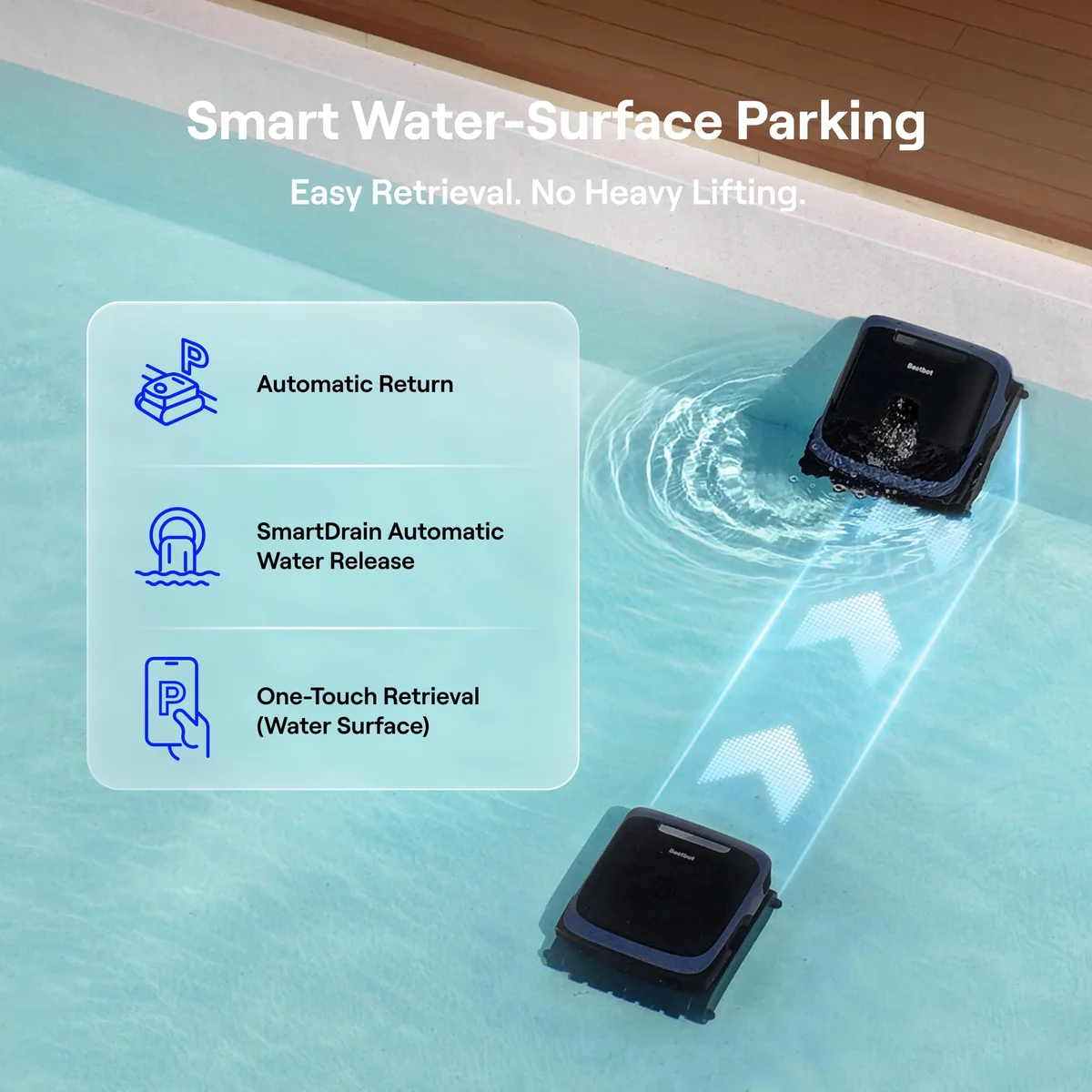
The AquaSense 2 has the neater ownership loop. At the end of a successful cycle it rises, approaches a nearby wall, drains much of its internal water, and waits for collection. Once its basket has been emptied and rinsed, the robot returns to a charging stand without requiring a plug to be inserted into a port.
That workflow is more than decoration. Independent reporting found the retrieval system unusually smooth, particularly compared with cleaners that stop on the pool floor and require a hook. The robot does not remember a launch point, return to a fixed home position, or dock itself, and a failed parking attempt can still leave it where the supplied hook is needed.
The product listing claims up to four hours of floor cleaning, up to 3.5 hours when walls and the waterline are included, a four-hour recharge, and coverage up to 3,230 square feet. It also identifies the base model’s cleaning zones as the floor, walls, and waterline. Surface parking should not be confused with surface skimming.
Double-pass waterline scrubbing is its strongest cleaning argument
The AquaSense 2 climbs to the waterline, scrubs a section, descends, and returns for another pass before moving along. That sequence is visible in direct evidence and can improve ordinary grime where the robot reaches. Buyers whose recurring annoyance is a developing scum line have a more concrete reason to prefer it than buyers attracted by broad language about intelligent mapping.
Complete coverage remains pool-dependent. A detailed test found good removal of ordinary debris from a dirty pool, yet some leaves needed more passes and a ledge beneath roughly six or seven inches of water was too shallow for dependable contact. MultiZone mode can apply more climbing effort across difficult transitions, but rounded stairs, shallow shelves, raised drains, return jets, and complex corners remain likely manual-cleaning areas.
The small filter system sets the ceiling
A two-liter basket is adequate for routine dirt but easy to overwhelm beneath trees or after a storm. It also makes the AquaSense 2 less pleasant for pool recovery, because large debris should be removed before the robot begins and the basket may need attention before a full cleaning job is finished.
The filtration problem is more serious than the capacity problem. Evidence supports useful pickup of ordinary dirt, sand, leaves, insects, hair, and dead organic matter, but very fine sand and silt can pass through or return to the water. A 150-micron screen is not a polishing filter for algae-sized residue, regardless of how much visible debris it retains.
This is why the AquaSense 2 belongs in an already controlled pool. It can maintain a floor, scrub reachable walls, and reduce manual vacuuming, but it should not be expected to rehabilitate cloudy water, cure algae, or clear years of accumulated fine sediment.
Its battery is credible, but its autonomy is easy to overstate
Owner reports broadly support a useful three-to-four-hour cleaning window, including completion of a 20-by-40-foot irregular pool with charge remaining. The compromise arrives afterward: recharging takes about as long as cleaning, and the robot cannot leave the water, empty itself, or return to its stand.
App-selected modes and logs are useful before deployment and after the robot reconnects near the surface. They do not create dependable underwater communication. A stored Eco routine can divide one charge across periodic floor sessions, but that delays human handling rather than delivering the indefinite weekly repetition available from a constantly powered corded cleaner.
Reliability remains unresolved
The owner record contains both a machine exceeding a year and 120 sessions without trouble and an evolving report of three failed units within eight months. Those accounts cannot establish a fleet-wide failure rate, but they are too far apart to support confident durability claims. A replacement warranty reduces financial exposure; it does not remove the inconvenience of packing and exchanging a heavy failed robot.
The AquaSense 2 therefore makes sense only when its specific conveniences will change behavior. If a charging plug or retrieval hook would make you postpone cleaning, the stand and surface parking can be worth accepting a smaller basket and narrower cleaning remit. If those deck-side irritations are minor, the Sora 70 earns more of its space by addressing more of the pool.
Runtime is close enough that the work envelope decides it
Both robots offer enough claimed battery life for one substantial maintenance cycle in many residential pools. Neither offers unlimited back-to-back cleaning, self-emptying, or true charger-to-pool autonomy. Choosing between them on runtime alone misses the larger ownership difference.
The Sora 70 spends its extra bulk on capacity and additional cleaning zones. The AquaSense 2 spends more of its design effort on the moment between retrieval and the next charge. One reduces the number of pool layers that need separate attention; the other makes the repeated deck routine tidier.
Navigation should be treated as a pool-specific fit question for both. Broad rectangular floors and generous wall transitions are favorable. Tight curves, protruding fittings, raised drains, narrow stairs, and barely submerged shelves turn “full coverage” into an aspiration. Buyers with a difficult pool should prioritize return terms and run every challenging transition while that protection still applies.
Beatbot Sora 70
Beatbot AquaSense 2 Cordless Robotic
Choose by the chore you most want to stop doing
Buy the Sora 70 when the surface is part of the mess
- Your pool collects floating leaves, insects, and grass that an underwater-only robot cannot reach.
- You need generous coarse-debris capacity because a small basket would interrupt ordinary maintenance.
- Your submerged shelf has close to eight inches of water and enough room for a large tracked robot to settle.
- You accept plug-in charging and can safely lift a bulky machine after it drains.
Buy the AquaSense 2 when handling friction is the real obstacle
- You want floor, wall, and waterline maintenance but already have floating debris under control.
- You value a charging stand enough to accept a smaller basket and narrower cleaning range.
- A double waterline pass matters more to you than shallow-area travel or active skimming.
- Your pool has uncomplicated transitions and only routine quantities of visible debris.
Walk away from both when the filter must polish the pool
- Your main complaint is powdery silt, pollen, dead algae, or fine material that clouds the water.
- You expect an app to steer the robot continuously while it is submerged.
- You need repeated scheduled cleaning without manual retrieval, emptying, and charging.
- You cannot comfortably control a large wet cleaner at the coping with both hands.
The better third answer may have a cable
A cordless design is valuable only if removing the cable matters more than the chores introduced by a battery. Buyers who prioritize fine filtration, immediate repeat cycles, and a meaningful weekly timer should compare the operating pattern in the Dolphin Nautilus CC Pro review before assuming either Beatbot is more autonomous.
If floating debris arrives continuously, a dedicated surface robot can work independently while an underwater cleaner handles the floor and walls. The guide to robotic skimmers versus pool vacuums explains when two specialists make more sense than the Sora 70’s all-in-one compromise.
Buyers who like Beatbot’s cordless approach but are not settled on either machine can use the Smart Pool Bots guide to the Beatbot range to compare the simpler Sora models and the more elaborate AquaSense variants without treating every additional mode as an automatic improvement.
The final call
The Sora 70 is the clear winner of this comparison. It does the important AquaSense 2 jobs, adds genuine surface collection and credible shallow-zone ability, and gives coarse debris substantially more basket space. Its fine-dust weakness is real, its app is not an underwater remote, and its size makes handling a consideration, but those drawbacks do not erase the extra cleaning it can perform.
Choose the AquaSense 2 only when its charging stand, double-pass waterline routine, and polished retrieval process solve a problem you value more than surface skimming or basket capacity. Otherwise, buy the Sora 70 for leaves and broad maintenance, or buy neither when fine filtration and unattended repetition are the actual assignment.