The best robotic pool cleaners for sand, silt, and fine debris
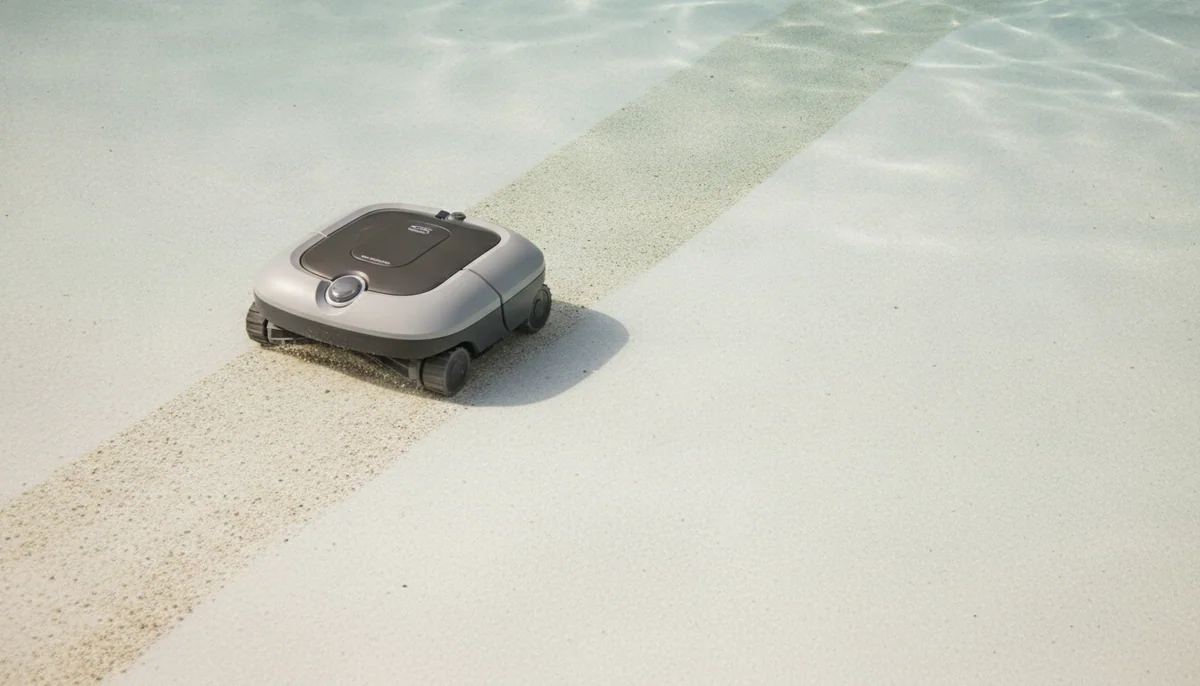
“Picks up sand” is one of the least useful promises in pool-cleaner marketing. A standard basket may catch visible grains while powdery silt passes through, swirls around the exhaust, or leaks out during retrieval. Fine sand is not one particle size, and a dirty basket containing grit does not prove that the faint brown film on the floor is gone.
The strongest choice here is the 2026 Aiper Scuba S1 because it combines a verified 3-micron secondary layer with a 180-micron outer basket, repeated reports of useful fine-particle capture, and strong open-floor coverage in comparative work. It is not a clean sweep: some sand returned to the water even with the insert installed, the fine layer is slow to rinse, and the wider S1 record contains enough charging, motor, and control failures to make the return policy part of the purchase.
The WYBOT C2 Vision is the more compelling alternative when a 10-micron insert is fine enough and a visually simple pool gives its routing a fair chance. The TALOSBO C1 is the value play, using a conventional basket plus foam to retain more silt than an ordinary mesh alone. Owners of flat above-ground pools can spend less on the PoolMr, provided they accept random coverage, repeated passes, and floor-only cleaning.
Do not buy by maximum runtime, advertised GPH, sensor count, or the word “AI.” A robot can run for hours while missing a cove, blowing powder ahead of its intake, or passing the same particles through an ordinary basket. If broad leaves are the real nuisance, use our guide to the best robots for leaves and floating debris instead; this ranking deliberately favors filtration over basket volume.
Fine debris has four chances to escape
A useful robot must travel across the dirty area, lift the particle without scattering it, retain it through every turn, and keep it inside while draining at the wall. The micron rating answers only part of the third problem. Filter sealing, exhaust turbulence, route gaps, surface texture, loading, and retrieval technique can reverse what looks like an easy specification-sheet decision.
| What you see | What usually matters | What can go wrong |
|---|---|---|
| Visible sand and grit | Reliable floor coverage, a well-seated basket, and enough intake flow | A 150- or 180-micron basket may catch coarse grains while passing the finest fraction |
| Powdery silt, pollen, ash, or dust | A verified secondary filter and calm pickup close to the intake | Jets or fast travel can suspend the material before it reaches the filter |
| Loose dead-algae residue | Chemical correction first, followed by fine filtration and frequent rinsing | The insert can pack quickly and lose flow before the outer basket looks full |
| Attached film on plaster or pebble | Brushing the material loose and moving it toward an open floor | A robot may drive over adhered sediment without dislodging it |
| Cloudy suspended material | The main circulation filter or an appropriate manual cleanup method | A floor robot may keep the haze moving instead of removing it |
Use two passes when leaves and silt arrive together
Start with the standard basket so leaves, acorns, and twigs do not plaster themselves against the fine medium. Empty the coarse load, install the verified fine insert, and run a floor-focused finishing cycle. Inspect the secondary layer before the main basket appears full because packed silt can reduce suction, runtime, and wall traction surprisingly early.
Floor mode usually beats feature mode
If the dirt is settled on the floor, spending battery on walls, the waterline, camera scans, or surface skimming solves the wrong problem. A systematic floor route is more valuable than a long automatic cycle, although steps, corners, drains, shelves, and compound slopes may still need to be brushed into the robot’s path. For pools dominated by those features, start with our guide to robots for steps and shallow shelves.
Retrieval is part of filtration
Bring the cleaner to the wall, lift it steadily, let it drain without shaking, and keep it as level as the design allows. Several otherwise capable machines lose a little fine material through seams, intake flaps, or drainage paths on the way out. Technique will not repair a poorly sealed filter, but careless lifting can undo a successful pass.
For a deeper explanation of how different particle types behave, see what robotic pool cleaners can actually pick up. If you are deciding between this self-contained approach and a cleaner powered by the pool pump, our robotic versus suction-side comparison explains the maintenance trade.
Every cleaner ranked for the fine-debris job
The winner comes first, followed by the rest of the eligible field in the site’s fixed product order. A lower card can still suit a particular pool, but ordinary baskets, uncertain filter packages, weak routing, retrieval leakage, or reliability problems prevent those machines from displacing the verified fine-filter leaders.
The Aiper Scuba S1 2026 is the best overall choice for loose fine sediment.
Its verified 3-micron secondary layer, 180-micron basket, and strong open-floor evidence give it the most convincing complete case for silt, dust, fine sand, and loose dead-algae residue.
The insert is laborious to rinse, some sand can still recirculate, awkward geometry can derail coverage, and the broader S1 reliability record makes a strong return path essential.
The Beatbot A100 Pro is an all-in-one cleaner for visible grit rather than a fine-sediment specialist.
Its broad floor, wall, waterline, and surface duties make sense for mixed routine debris, but the 150-micron filtration does not justify choosing it specifically for powdery contamination.
Fine dust may remain or escape, and close-platform reports of charging-contact corrosion add an ownership concern to an already weak filtration fit.
The ZYERCH SAT20-3P5S is a coarse-filter gamble that should not be bought for silt.
It can collect ordinary dirt and visible grit when healthy, but its 300-micron filter is the poorest technical match in this ranking for pollen, powder, and very fine sand.
A concentrated pattern of second-season failures, charging trouble, route deterioration, and sharply reduced runtime makes the weak filtration only half the problem.
The Beatbot AquaSense 2 Pro is a premium multifunction robot with ordinary fine-debris credentials.
It can ingest visible dirt and handle several cleaning zones, yet its 150-micron basket is not a substitute for the verified secondary filters fitted to the leaders.
Fine material can pass through or escape during retrieval, repeated cycles may leave coverage gaps, and the wet machine is heavy to lift.
The updated 180-minute Aiper Scuba S1 is the strongest alternative from the earlier S1 listing.
Its confirmed 3-micron layer and 180-micron basket give it a real advantage over standard-mesh competitors, especially on loose silt and small settled particles across an open floor.
The fine insert can fill early, cleaning it is messy, complex geometry causes misses or stranding, and charging or motor failures remain a credible risk.
The compact Aiper Scuba 2025 is a coarse-debris helper for a flat above-ground floor.
It is defensible only for scattered leaves and ordinary loose debris on smooth, taut liners because the record does not establish a genuine fine-filter system.
Smaller particles may remain or be discharged back into the water, while random travel and early battery problems weaken even its narrow use case.
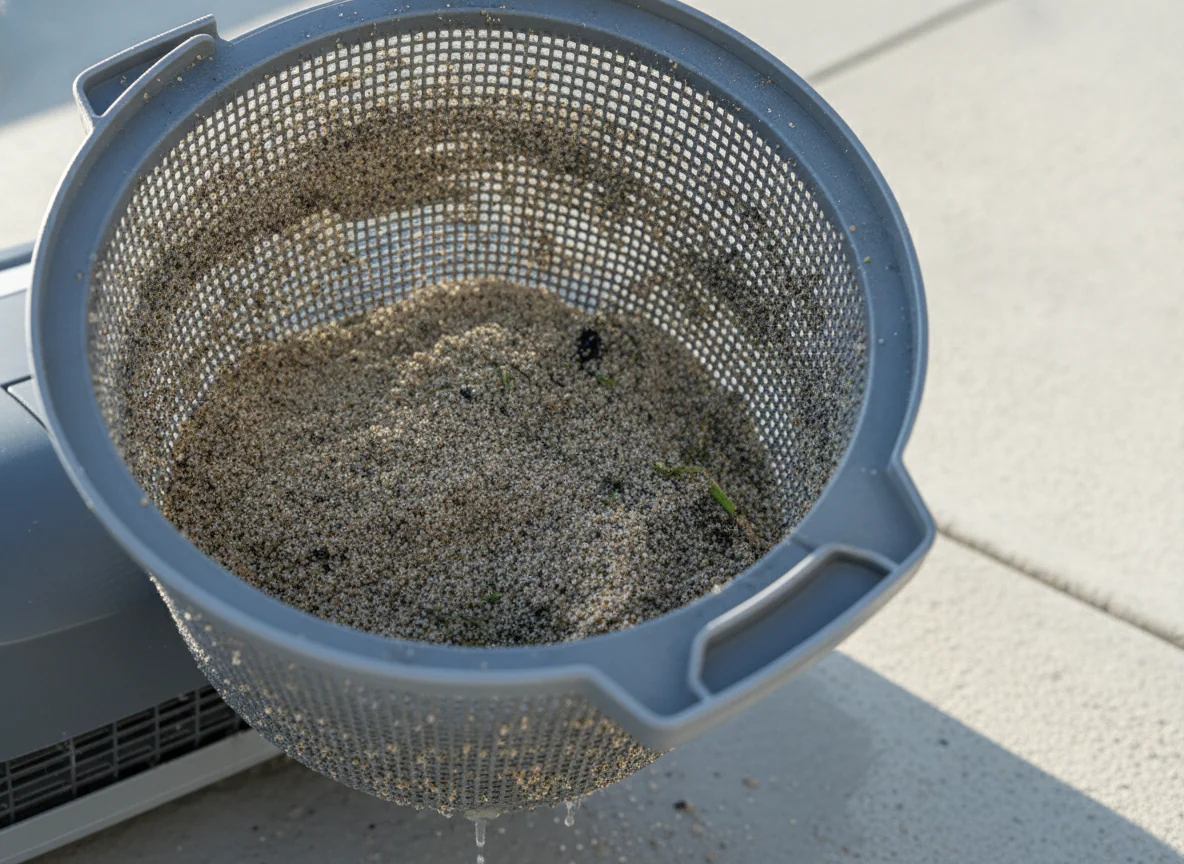
The BOTLUXE PC10 is a conventional maintenance cleaner rather than a polishing machine.
Its large 150-micron basket can handle routine dirt and some visible grit, but direct reports of missed sand and dead algae outweigh vague praise for tiny-particle pickup.
Unpredictable runtime, erratic coverage, an early no-movement failure, and an unclear parts path make the ownership proposition difficult to trust.
The Aiper Scuba V3 is best for visible debris that sometimes arrives with fine residue.
Its 3-micron insert can retain impressive dust and loose residue, while the camera is useful for conspicuous leaves and concentrated piles on a visually simple floor.
Comparative work found it kicking sand and silt back into suspension despite the insert, and its weak step coverage plus immature durability record keep it below both S1 listings.
The green Aiper Scuba is a promising fine-filter option with an unresolved identity problem.
Exact owners consistently praise its ultrafine insert for microparticles, settled grime, and algae residue, making it one of the more persuasive qualitative performers in the field.
The listing does not conclusively identify the model as an S3 or publish its filter rating, and early charging-cord and battery failures compound that uncertainty.
The iGarden K36 is worth considering only when the 60-micron insert is confirmed in the box.
That optional insert gives the K36 a credible middle tier between ordinary 150- or 180-micron baskets and the single-digit filters used by the strongest Aiper models.
Package contents vary, the insert can restrict flow and wall grip, owners disagree about very fine sediment, and early faults include flipping, short runtime, and control errors.
The iGarden KN35 is a routine cleaner for loose sand and small particles.
Its open-floor pickup is credible for ordinary dirt, insects, hair, and loose grit, but the standard 180-micron basket does not turn it into a true polishing cleaner.
Adhered silt may survive until manually brushed loose, large debris can be pushed ahead, and steps or raised fixtures can interrupt coverage.
The Lodoba SAT25 is a budget experiment for ordinary debris rather than powdery sediment.
Its tracks and wall-cleaning modes may suit leaves, bugs, dirt, and some visible sand in a conventional pool, but the filter rating is not established.
Direct accounts describe fine dust and silt as inconsistent, while the young product record leaves filtration, parts, warranty, and long-term support unresolved.
The WYBOT B1 is a lightweight robot for visible maintenance debris.
Its 180-micron basket can collect sand, pebbles, insects, and ordinary dirt, but the absence of an ultrafine secondary layer makes it a weak answer for serious silt.
Incomplete coverage, difficult latches, retrieval spillback, and an exact early water-ingress failure leave little reason to accept its filtration compromise.
The WYBOT A1 is a narrow budget pick for loose sediment on a flat floor.
Its 180-micron mesh plus textured foam can retain fine residue when the intake crosses it, which gives the A1 more value here than a mesh-only floor robot.
Random routing, no active brush, terrain sensitivity, fragile clips, and repeated stopping complaints prevent dependable whole-floor cleanup.
The Nepturox SAT25 is suitable for ordinary grit but unproven on true fine silt.
A healthy unit can collect leaves, grass, small stones, dirt, and some sand while also climbing walls, but no dependable micron rating supports a fine-debris award.
Fast movement can bounce sediment into suspension, and severe initial charging or electrical faults make the cleaner a risky experiment.
The Beatbot Sora 70 is a strong leaf-and-grit cleaner that misses the point of this ranking.
Its large basket, long floor cycle, wall coverage, shallow-area ability, and surface pickup make it attractive for broad mixed debris rather than powdery contamination.
A focused dust test left nearly as much fine material behind, and the standard 150-micron basket should not be confused with Beatbot’s separately discussed fine insert.
The PoolMr is the best budget helper for fine sediment on a simple above-ground floor.
Its 180-micron mesh and dense sponge have credible exact-owner support for capturing useful amounts of sand, silt, dirt, insects, and small organic debris over repeated passes.
It may stir a pile before collecting it, can leave some fine silt behind, has no wall cleaning, and lacks a verified long-term parts or service path.
The BUBLUE Bubot 300P proves that filtration cannot rescue an unreliable chassis.
Its dual-filter intake can recover fine dirt, sand, bugs, leaves, and grit from a smooth above-ground floor when the robot keeps moving.
Repeated edge stalls, very short failed runs, random coverage, and fine-material seepage during vertical retrieval disqualify it as a dependable recommendation.
The WYBOT C2 Vision is the best 10-micron alternative to the winning Aiper.
Its verified 10-micron insert, strong reports on dust, pollen, sand, and silt, plus dedicated floor modes create the second-best filtration case in the field.
The camera can overlook low-contrast powder or become confused by patterned finishes, the insert clogs under a coarse load, and long-term Vision-specific reliability remains unsettled.
The iGarden K70 is an endurance cleaner whose fine-filter package must be verified before purchase.
Its long floor cycle and organized routing could support a thorough finishing pass if the exact box includes the 50-micron layer described by the brand store.
Amazon documents a 180-micron basket, the exhaust can disturb fines, and seven hours of runtime is irrelevant once a smaller filter or four-liter basket loads.
The renewed Beatbot AquaSense 2 Ultra is a visible-debris flagship rather than a fine-filtration value.
A sound unit can hunt leaves and clean floors, walls, and the waterline effectively, but its camera and clarifier do not replace a verified fine-particle filter.
Renewed battery condition, sensor health, accessories, account status, and warranty eligibility are uncertain, while the wet machine can be exceptionally heavy.
The TALOSBO C1 is the best value option for a conventional pool with sand and silt.
Its 180-micron basket plus secondary foam has unusually concrete owner support for construction silt, fine white sand, pollen, hair, and routine debris.
The foam may reduce wall traction, the thin basket can pass material into the sponge, and oval or irregular pools expose serious route drift and missed areas.
The BUBLUE Bubot 800P Gen2 is a continuous-power option for ordinary sand and dirt.
Its cord, large twin baskets, brushes, and floor-to-waterline coverage permit repeated maintenance cycles without waiting for a battery to recharge.
The apparent 180-micron filtration is not specialist media, and cable knots, app failures, difficult retrieval, contaminated review evidence, and conflicting warranty language weaken the case.
The WYBOT C1 is credible for visible sand but not dependable for powdery residue.
Its 180-micron top-access basket, wall capability, and useful runtime make it a reasonable general cordless cleaner for a simple pool with routine debris.
Very fine dust may remain, overloaded baskets can spill during retrieval, complex features cause misses, and earlier C1 records include charging failures and difficult support cases.
The renewed Aiper Scuba N1 is too condition-dependent for a fine-debris recommendation.
The underlying N1 can collect fine sand, pollen, dirt, and loose settled material, so a documented healthy unit may still perform useful maintenance.
The renewed listing does not establish battery capacity, refurbisher, complete accessories, exact filter package, or warranty coverage, and base-model results include bypass and retrieval leakage.
Frequently Asked Questions
Why can a robotic cleaner pick up sand but leave silt behind?
Visible sand can be coarse enough for a 150- or 180-micron basket while powdery silt passes through, bypasses the seal, or is scattered by the exhaust.
Is a smaller micron rating always better?
No, because a finer layer improves retention only when it seals correctly, receives adequate flow, stays unclogged, and travels over the contaminated floor.
Should I leave the fine insert installed for leaves?
No, a coarse first pass followed by a fine-filter finishing pass preserves flow and prevents leaves from wasting the secondary layer’s limited capacity.
Can a robotic pool cleaner remove dead algae?
It can collect some loose residue after chemistry and brushing have dealt with the growth, but it cannot replace sanitation or reliably scrub attached algae from textured surfaces.
Will an app help the robot find invisible silt?
An app can select a useful floor mode before launch, but ordinary underwater connectivity disappears and cameras are generally better at spotting high-contrast leaves or piles than uniform powder.
Is one cleaning cycle enough for fine sediment?
Often not, because the first pass may suspend material or load the fine layer, so a filter rinse and another floor cycle after the particles settle can produce a better result.
Does more suction mean better fine-particle cleaning?
No, strong flow helps only when the intake captures the particle and the filter retains it instead of letting turbulence or bypass return it to the pool.
Is cordless automatically better for this job?
No, cordless operation removes the cable but adds finite runtime, recharge delays, battery aging, wet lifting, charging-port care, and manual redeployment.
Sources (4)
- Amazon listings and customer reviews
- Owner and reviewer video, 1 channel
- AI — Article — store.igarden.ai
- TALOSBO — Article — talosbo.com