The iGarden K36 has the cleaning hardware, but not the dependable record.
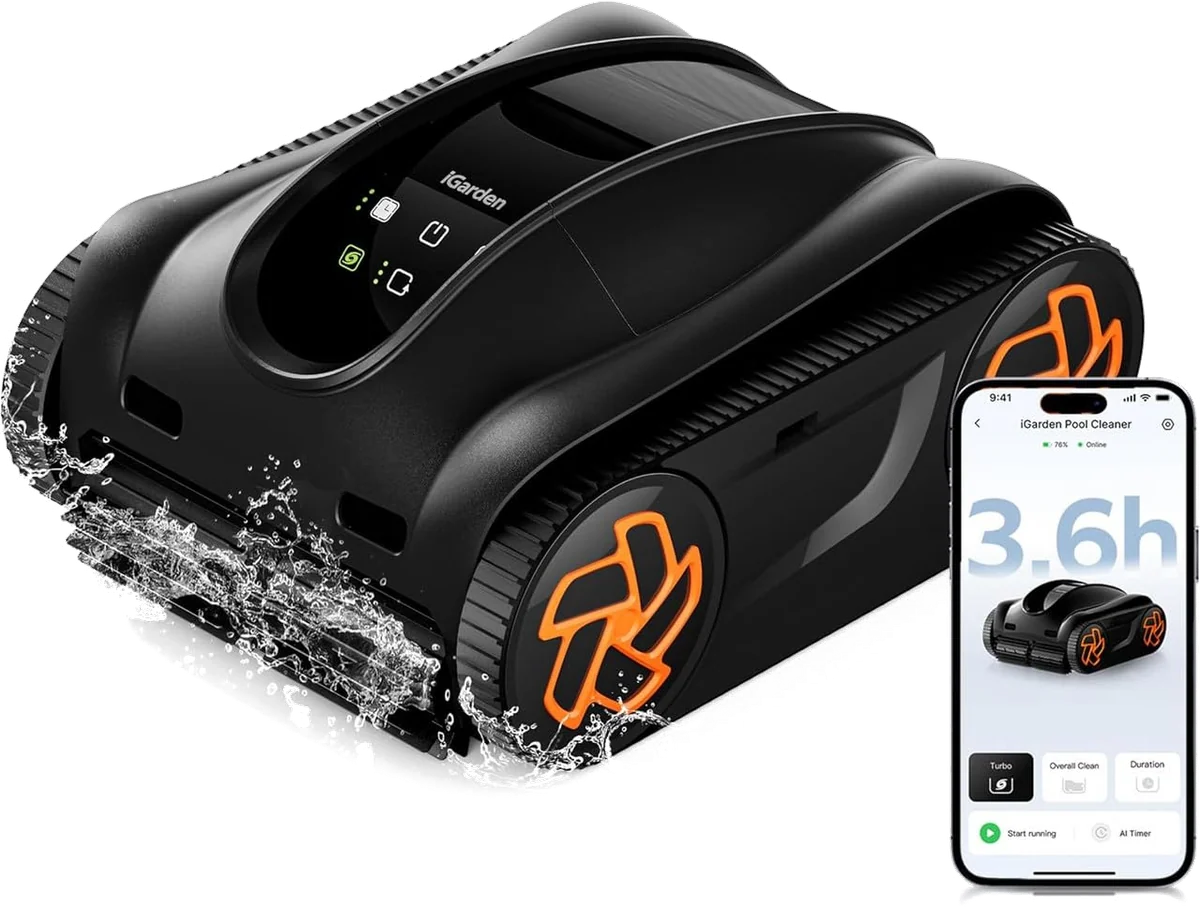
Buy the K36 only if you want cordless routine maintenance and will test it hard inside the return window; choose an established alternative if first-unit reliability, precise coverage or easy lifting matters more.
Use the return window as an acceptance test
A K36 that behaves properly can be a useful cordless maintenance assistant, but this is not a product to unpack after the easy-return period has passed. Test the exact unit, exact pool and exact filter package immediately.
- Fully charge it on a heat-safe surface and confirm that the charger indicator reaches its completed state.
- Run a floor-only cycle without Turbo, record the actual duration and inspect the pool for repeated missed strips.
- Run full coverage with clean walls and a clear exhaust, then watch whether it reaches the waterline without repeated falls.
- Check steps, corners, drains and shallow ledges rather than judging the result from the open floor.
- Pair the app, check for firmware updates and confirm that the physical controls still cover the jobs you intend to use.
- Inspect the promised filters and accessories, including whether the package actually contains a 60-micron insert.
- Verify auto-parking and retrieve the robot safely before deciding that its weight and handle design are acceptable.
- Return or replace the unit promptly if it wheelies, flips, throws an error, loses most of its rated runtime or repeatedly passes over ordinary debris.
The final position is deliberately conditional. Buy the iGarden K36 for long cordless floor maintenance, a large easy-access basket and credible wall capability only if you can tolerate a newer product’s uneven reliability record; otherwise, the convenience is not worth becoming the quality-control department.
The first job is identifying the machine. This is the K36 attached to ASIN B0GK16JJX5, not a generic verdict on every black iGarden K-series cleaner. The similar chassis makes it tempting to borrow claims from the K40, K60, K70, K Pro and K90, but their larger batteries do not belong in this review.
The “3.6H” in the product name is also narrower than it sounds. It corresponds to a rated floor-only ceiling of 220 minutes, not three hours and forty minutes of continuous floor, wall and waterline cleaning. Even iGarden’s Amazon copy disagrees with itself about full coverage, stating 135 minutes in one place and 150 minutes in another.
Underneath that muddled promise is a capable maintenance robot. A detailed K36 demonstration found strong pickup on an apparently clean floor, a useful top-loading basket and successful wall climbs once traction and filtration conditions were right. Direct owners likewise report good results on leaves and sand, including one floor-only runtime of roughly three to three and a half hours.
The trouble is consistency. Other K36 owners describe a one-hour battery, missed debris, repeated flipping, prolonged front-wheel “wheelies” and an Error 3 failure on the second attempted use. A responsive warranty department can rescue a bad purchase, but it cannot make the first machine dependable.
Key Specifications
The smart layer stops at the waterline
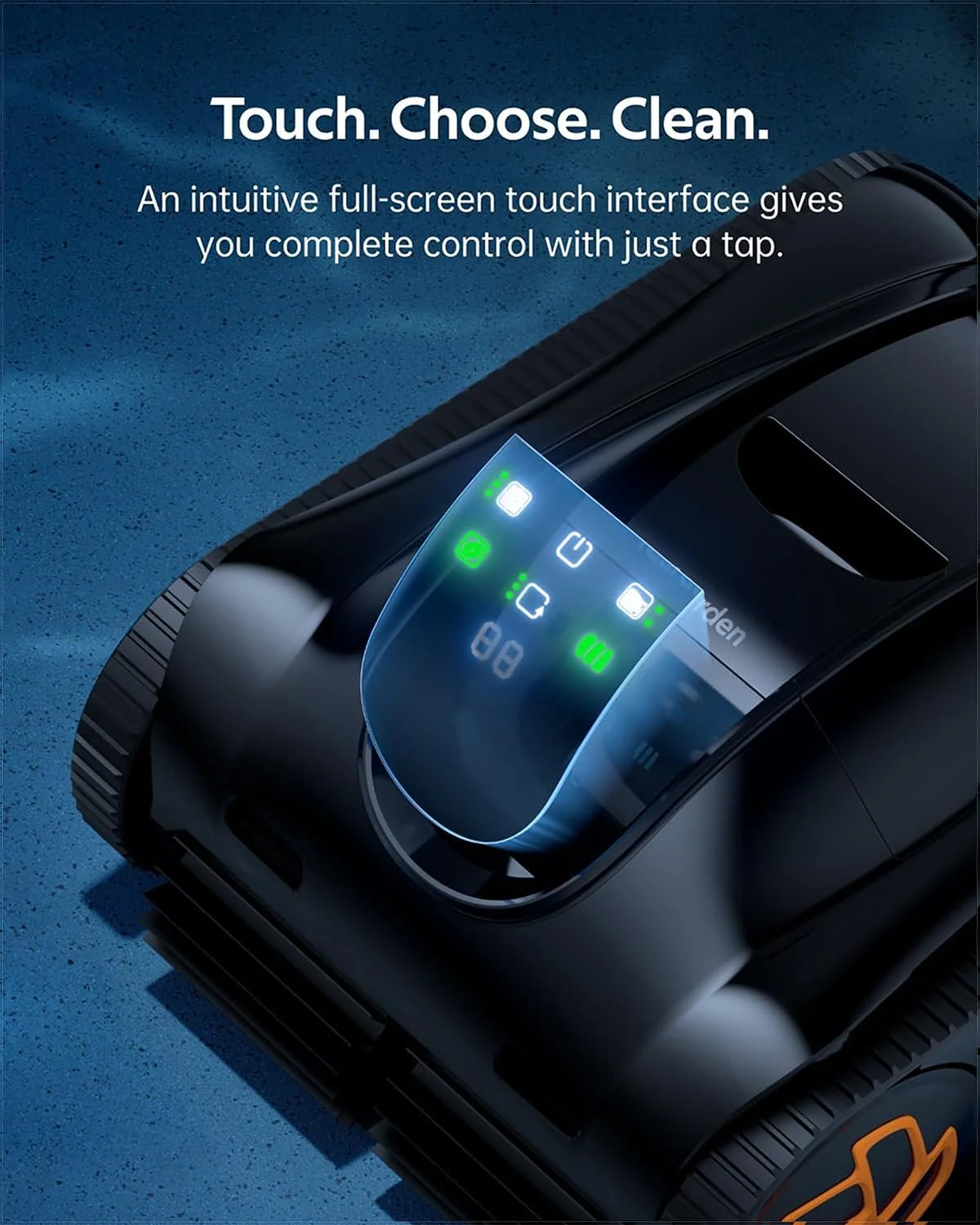
The K36 can be programmed from its top touchscreen, so the app is optional for normal cleaning. Core controls include duration, Turbo, cleaning mode and recurring intervals of 24, 48 or 72 hours. The icons and indicator dots are not self-explanatory, however, and bright sunlight makes the display harder to read.
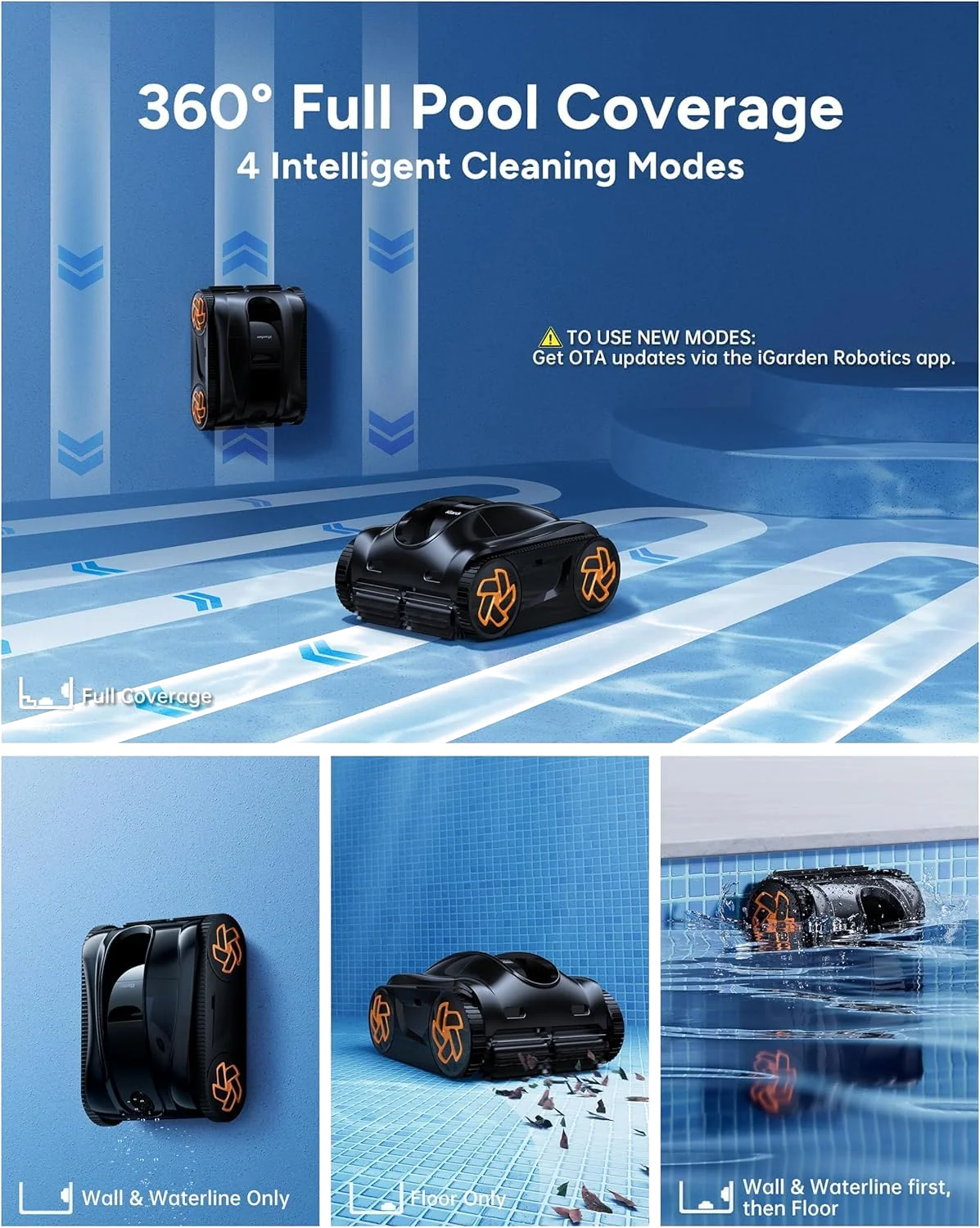
| Mode | What the robot attempts | When it makes sense |
|---|---|---|
| Floor only | It remains on the bottom and preserves the greatest possible runtime. | Use it for routine settled debris or when wall cleaning is unnecessary. |
| Wall and waterline only | It concentrates on vertical surfaces and the perimeter. | Use it to supplement a floor cycle rather than expecting full-pool coverage. |
| Walls first, then floor | It tackles walls and the waterline before spending the remaining cycle below. | This is the manual’s broadly useful sequence for conventional pools. |
| Full coverage | It starts on the floor, then attempts walls, waterline and accessible shallow ledges. | Use it when surface variety matters more than maximum endurance. |
Setup has a small but consequential trap. The underside rotary master switch wakes the electronics, after which the cleaning selections and start command are made on top. If the final start is not confirmed before submersion, the K36 can sit on the bottom doing nothing and must be retrieved for another attempt. Keep the quick-start guide nearby until that sequence becomes familiar.
The app is a setup panel, not a remote control
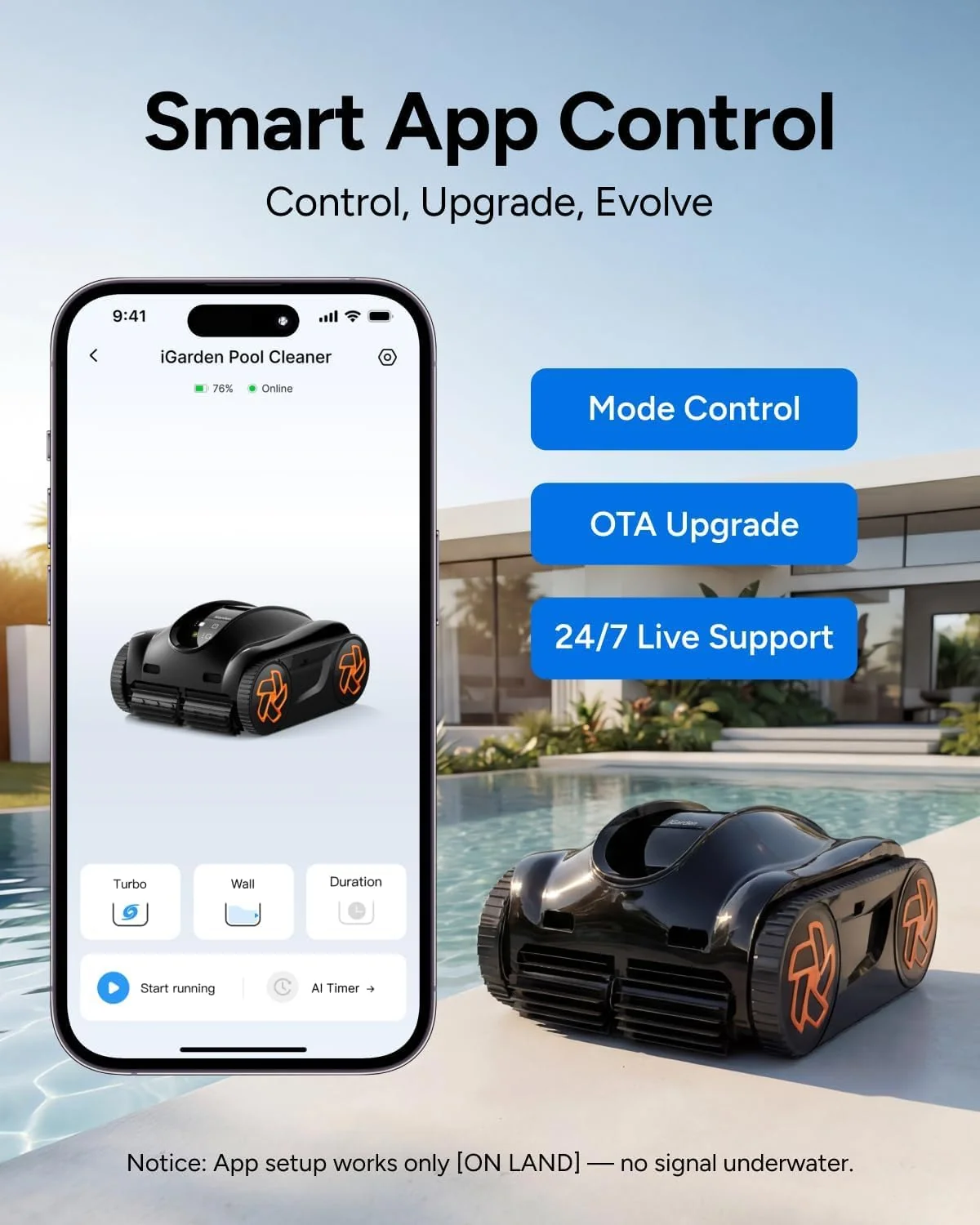
The app can select a mode, duration, Turbo setting and schedule, display battery information while connected, and provide firmware updates. Pairing uses Bluetooth and 2.4 GHz Wi-Fi, with account creation and device permissions added to the process. Some users find that convenient; others find the app basic, unreliable or unnecessary because the physical controls already cover the important jobs.
Water blocks the wireless connection. Once the robot is submerged, there is no dependable live battery view, route map, manual steering, recall command or mid-cycle mode change. The “AI” here means scheduling, sensors and path-planning logic, not camera recognition or a stored visual map.
Self-parking saves fishing, not lifting
When the battery falls below its threshold, the K36 is designed to stop beside a wall for retrieval. That is useful, but it is not a dock, a surface-return system or automatic charging. You still need to attach the included hook to your own pool pole, catch the recessed handle, pull the machine up and lift it onto the deck.
Strengths & Limitations
Strengths
- Healthy units provide unusually long floor-only endurance for a cordless cleaner.
- The 4-liter top-loading basket handles routine leaves, insects, hair, sand and settled dirt well.
- Physical controls keep normal cleaning available without an app account.
- The robot can climb suitable walls and reach the waterline when traction and flow are favorable.
- Cordless operation removes the floating cable and external power supply from the cleaning cycle.
- Customer support has a documented pattern of responding with troubleshooting, refunds and replacements.
Limitations
- Direct owners report serious first-unit faults, including flipping, wheelies, short runtime and an Error 3 failure.
- Its organized navigation can still leave wide strips, corners, steps and ledges untouched.
- Full-coverage runtime is much shorter than the headline floor-only maximum, and iGarden publishes conflicting figures.
- The app cannot steer, recall or meaningfully monitor the robot underwater.
- Retrieval is awkward because the cleaner is heavy, dark underwater and easy to catch in the wrong place.
- The charging port requires careful drying, and one tested power brick became hot enough to damage a table finish.
It cleans the floor better than it covers the pool
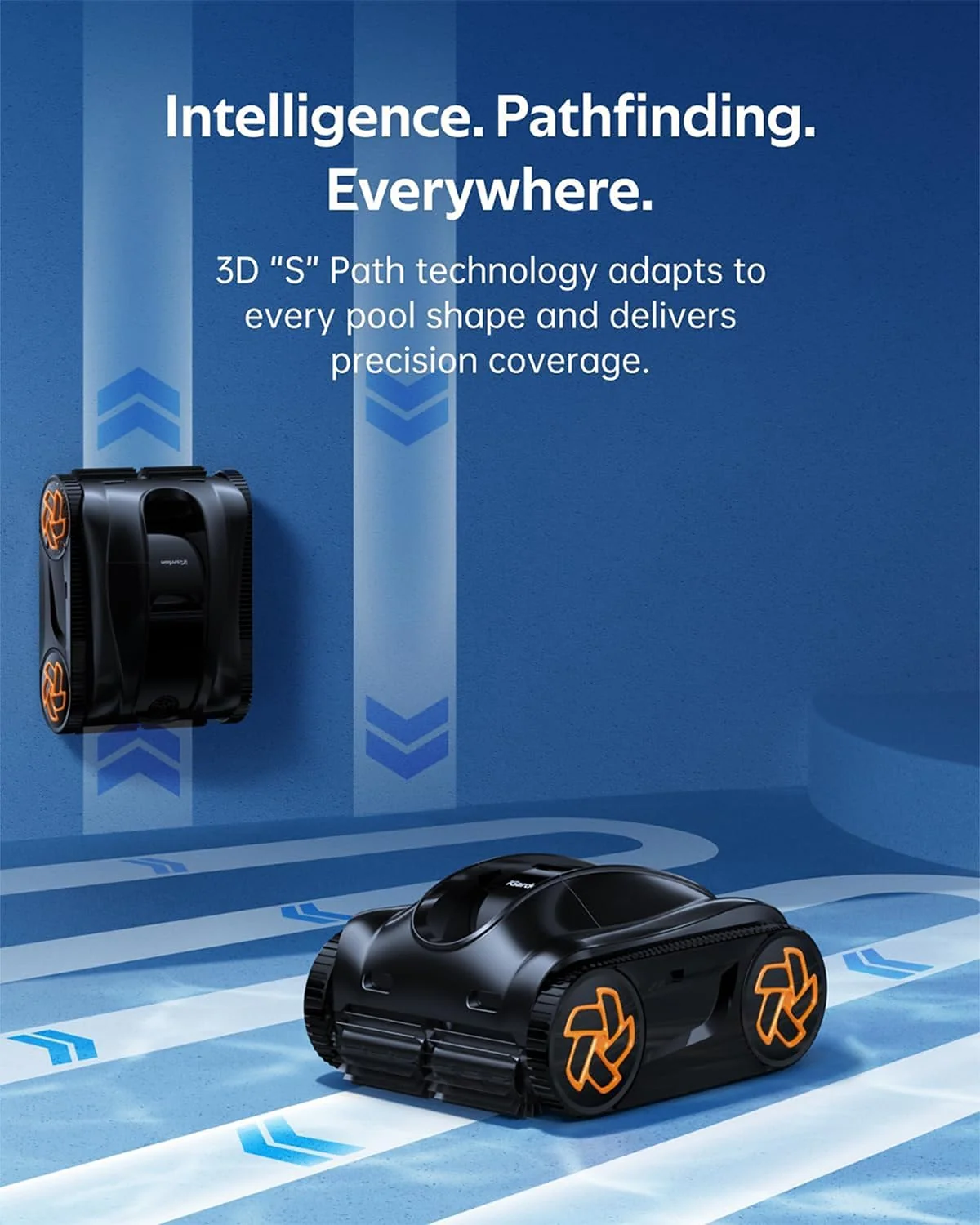
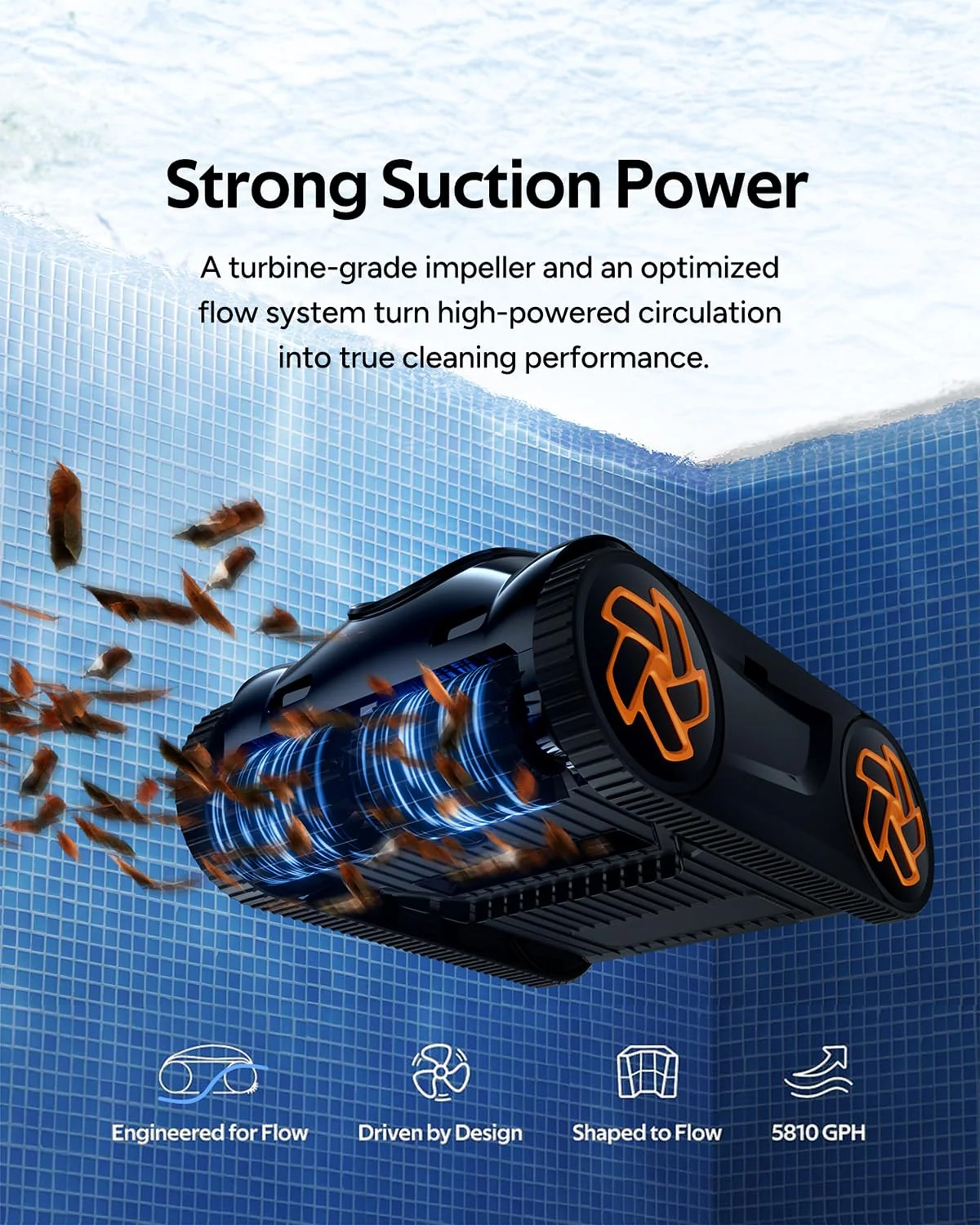
The K36’s best use is routine pickup of settled leaves, insects, hair, sand and ordinary dirt. Its three-motor system moves a claimed maximum of 5,810 gallons of water per hour, while Turbo increases flow for heavier debris. That GPH figure describes water movement rather than a measured pulling force, and “200%” does not prove that Turbo cleans twice as well.
In a healthy sample, the basic mechanism works. The robot moves slowly enough to draw material into its basket, and a detailed run recovered both visible debris and finer material from a floor that did not look particularly dirty. Turbo made the suction change apparent, but it did not make the robot travel faster and it consumed more battery.
Coverage is the weaker half of the equation. The K36 attempts organized horizontal and vertical passes, yet curves can send it diagonally and leave strips wider than the cleaner itself. A separate first-use run estimated that most starting debris had been removed after 75 minutes, but debris remained around the pool and wall coverage was incomplete.
| Surface or debris | Defensible expectation | Main qualification |
|---|---|---|
| Open pool floor | Good routine pickup of leaves, bugs, sand and settled dirt. | Loose pass spacing can require a longer cycle or another run. |
| Fine sediment | The standard basket catches some fine material, and one reviewed package included a finer insert. | Owners disagree about very fine sediment, and the finer insert can reduce flow and wall traction. |
| Walls and waterline | It can climb conventional walls and reach the waterline. | Algae, low charge, restricted filtration or an exhaust obstruction can cause falls and missed sections. |
| Steps and ledges | Broad, accessible areas may receive some cleaning in full-coverage mode. | Sharp steps, narrow shelves, corners and complex transitions remain unreliable. |
| Floating debris | None. | The K36 is a submerged vacuum, not a surface skimmer. |
The fine-filter tradeoff matters
The standard basket is a roomy 4-liter, 180-micron unit that suits ordinary maintenance debris. One exact K36 package also contained an interchangeable 60-micron insert capable of retaining finer sand, pollen and algae-sized material, but that accessory is absent from the Amazon description and may vary by package or revision. Confirm the box contents rather than assuming it is included.
More filtration is not automatically better. The 60-micron insert restricts water flow, and the detailed K36 evaluation improved wall climbing by removing it. Use the finer layer when the debris demands it, then return to the standard basket when traction and maximum flow matter more.
Wall climbing is real, but conditional
The K36 is not merely bumping against a wall and calling that climbing. Exact-model footage shows it rising to the waterline and negotiating a pool light. The same evidence also shows failed attempts, falls and broad gaps between climbs, especially before algae was brushed away and the restrictive insert was removed.
That distinction matters in a pool with recurring wall algae. The rubber rollers agitate the surface as the robot passes, but they do not replace chemistry or deliberate manual brushing. If the wall is already slippery, the tracks lose the grip needed to reach the tile line.
Who should accept the gamble
The K36 makes the most sense in a medium or smaller residential pool with conventional walls, limited shelf geometry and a debris load dominated by ordinary leaves, sand and settled dirt. It suits an owner who values a cordless deck, can comfortably retrieve 21.6 pounds plus draining water, and is willing to learn a slightly cryptic control sequence.
It is a poor match for a 10-foot diving pool because the supplied operating range stops at 8.2 feet. It also asks too much trust from anyone who needs perfect step coverage, live underwater control, camera-based mapping, consistently polished fine-sediment pickup or a machine that can remain unattended through heavy leaf fall.
For a broader view of battery-powered options, the site’s cordless cleaner guide separates cable-free convenience from the models that merely advertise it. If first-unit dependability matters more than eliminating a cord, compare the K36 with the established, simpler machine covered in our Dolphin Nautilus CC review. Owners with steps, shelves or an elaborate waterline should start with the guide to cleaners for shallow features rather than assume any tracked robot will master that geometry.
The practical value proposition is reduced vacuuming, not complete pool care. The K36 can automate much of the recurring floor work and some wall cleaning, but circulation, chemistry, surface skimming, basket rinsing and occasional manual attention remain yours. If that still removes the job you dislike most, the product has a defensible role.
Ownership gets physical at the pool edge
At 21.6 pounds dry, the K36 is not light. It becomes more awkward at the surface while retained water is still draining, and the black body can be difficult to see in a deep or shaded pool. The basket handle sits close enough to the carrying handle that a hurried owner can grab the wrong one, while the retrieval hook can scrape the glossy control panel.
Let the water drain before carrying it, and never lift the entire robot by the removable basket handle. Anyone with limited grip, shoulder strength or safe access to the water should treat retrieval as a buying criterion rather than an afterthought.
The basket is easy, until scheduling makes it easy to ignore
The top-loading basket pulls vertically from the body, opens for dumping and rinses with a hose. That is one of the K36’s better design choices, although the front latch on the detailed sample did not feel especially secure. Clean the basket after each substantial cycle because a loaded filter reduces flow, pickup and wall traction.
The 24-to-72-hour timer does not make the cleaner maintenance-free. Several short cycles on one charge are plausible when the pool has a light debris load, but a 4-liter basket can fill long before the battery is exhausted. Storm debris and large leaf piles should be skimmed out first.
Charge it dry and on a heat-safe surface
The rear charging connector sits behind a rubber cover, but one exact K36 evaluation found water around the port after use and did not treat that cover as an airtight seal. Rinse as directed, remove debris and allow the connector area to dry fully before attaching the proprietary charger.
The same evaluation measured the power brick at roughly 115°F and found that it damaged the finish beneath it. Charge on tile, metal or another heat-tolerant surface with ventilation, away from the pool, and use the brick’s red-to-green indicator rather than assuming the robot’s three displayed bars mean charging is complete.
Support is responsive because some buyers need it
Owner evidence presents a two-sided reliability story. Working units deliver long floor cycles and useful cleaning, while failed samples have flipped, run for only an hour, refused to collect debris or stopped with Error 3 after minimal use. The small retained review set cannot establish a defect rate, but the faults are serious enough that they should change how the product is bought.
iGarden support earns repeated praise for fast replies, refunds, replacements and upgrades, including a K36-specific replacement reportedly dispatched in less than a week. That recovery matters, yet some positive ratings describe the service resolution or a higher replacement model rather than successful K36 ownership. Verify the current written warranty and seller return terms instead of treating an upgrade anecdote as the contract.
Frequently Asked Questions
Will the K36 really run for 3.6 hours?
It is rated for up to 220 minutes in floor-only mode, while full coverage is shorter and iGarden’s own listing conflicts between 135 and 150 minutes.
Can it pick up fine sand and sediment?
The standard 180-micron basket handles visible sand and some fine dirt, while a 60-micron insert appeared in one exact K36 package but can reduce flow and should not be assumed to be included.
Does the K36 climb walls and clean the waterline?
It can reach the waterline, but algae, restricted filtration, low charge or an obstructed exhaust can impair traction and leave sections unfinished.
Will it clean steps and tanning ledges?
It may reach broad accessible steps or shelves in full-coverage mode, but narrow, sharp, rounded or complex features remain unreliable.
Can the app control the robot underwater?
No, because the submerged robot loses usable Wi-Fi and Bluetooth communication and completes the selected cycle autonomously.
Is the app required for ordinary cleaning?
No, because the touchscreen provides the core mode, duration, Turbo and scheduling controls, although the app handles firmware and device settings.
Does the K36 create a map of the pool?
No stored visual map, live route display or camera-based debris recognition is supported by the exact-model evidence.
Does self-parking bring the cleaner to the surface?
No, it generally stops near a wall for retrieval, after which the owner still needs a pole, hook and manual lift.
Can it remain in the pool for scheduled cleaning all week?
Several short scheduled cycles may fit within one charge, but basket capacity, debris load, chemical exposure and rinsing needs still require regular attention.
Is the K36 light enough for easy retrieval?
No, it weighs about 21.6 pounds dry and feels heavier at the surface until retained water drains.
Is this the same cleaner as the longer-runtime iGarden models?
No, the K36 is the approximately 3.6-hour floor-runtime tier and should not inherit the battery, flow or camera claims of K60, K70, K Pro, KN or M1 models.
What should happen if the robot flips, wheelies or shows Error 3?
Stop treating the behavior as normal, document it and use the seller return or manufacturer support process before the applicable deadline.
Sources (3)
- Amazon listings and customer reviews — Igarden K36
- Owner and reviewer video, 2 channels
- Trustpilot — Article — ca.trustpilot.com