AIPER Seagull SE 2025 review: a cheap helper with costly compromises
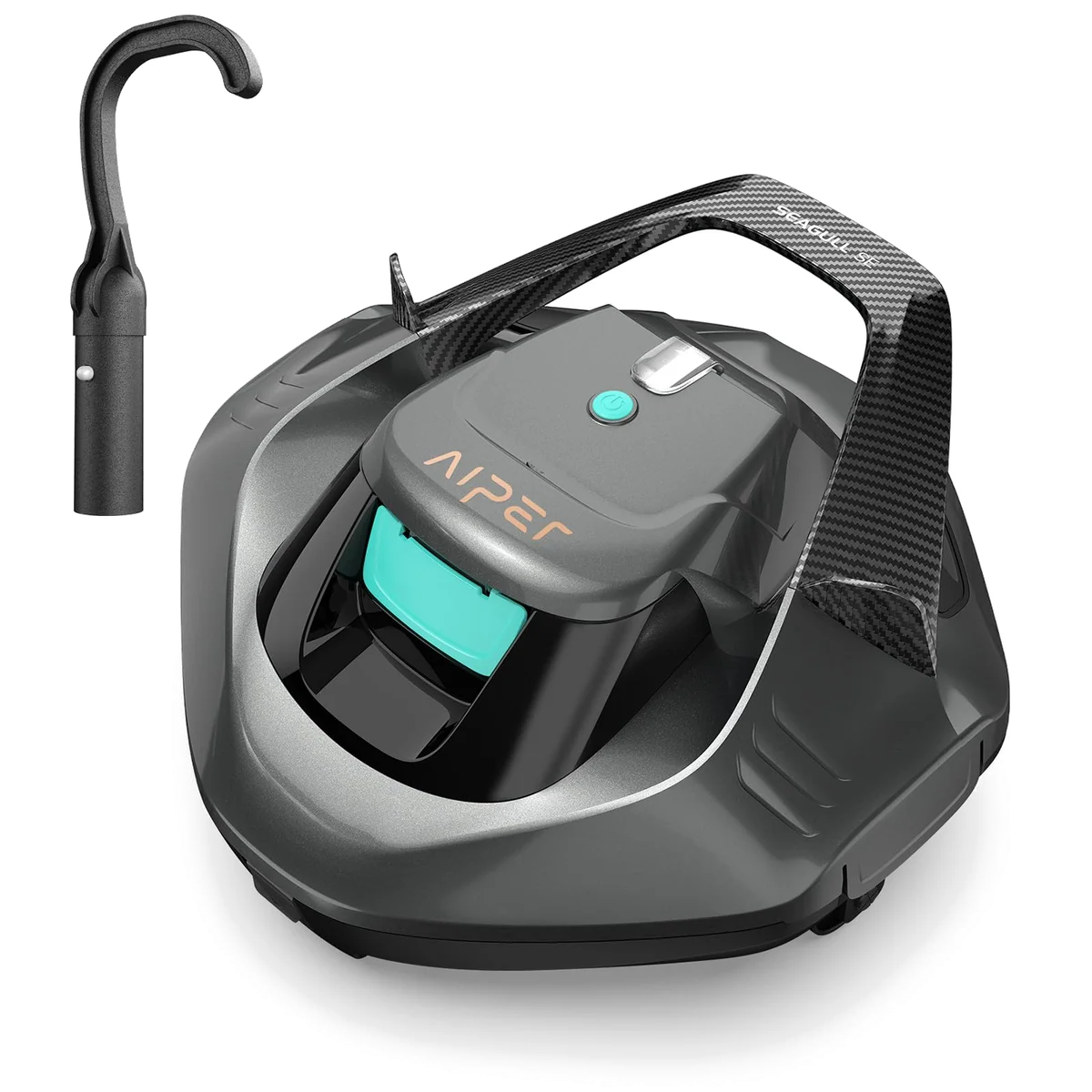
No for most buyers: choose the AIPER Seagull SE 2025 only for routine loose debris on a simple, genuinely flat above-ground pool floor.
The final word
The Seagull SE can collect real debris and save real effort, but only inside a narrow operating envelope. Its best work is maintenance, not restoration: loose material, open floor, calm water and modest expectations.
Most buyers should walk away because the compromises stack rather than cancel out. The random route reduces coverage, the flat mesh limits fine-debris removal, the floor-only design leaves major surfaces untouched, and the battery record makes even the useful performance difficult to trust over time.
The exception is the owner who knows exactly what is on the pool floor and wants an inexpensive cordless helper rather than a complete robotic cleaner. For that person, the Seagull SE can be adequate. Everyone else should buy for the pool they actually have, not for the word “robotic” on the box.
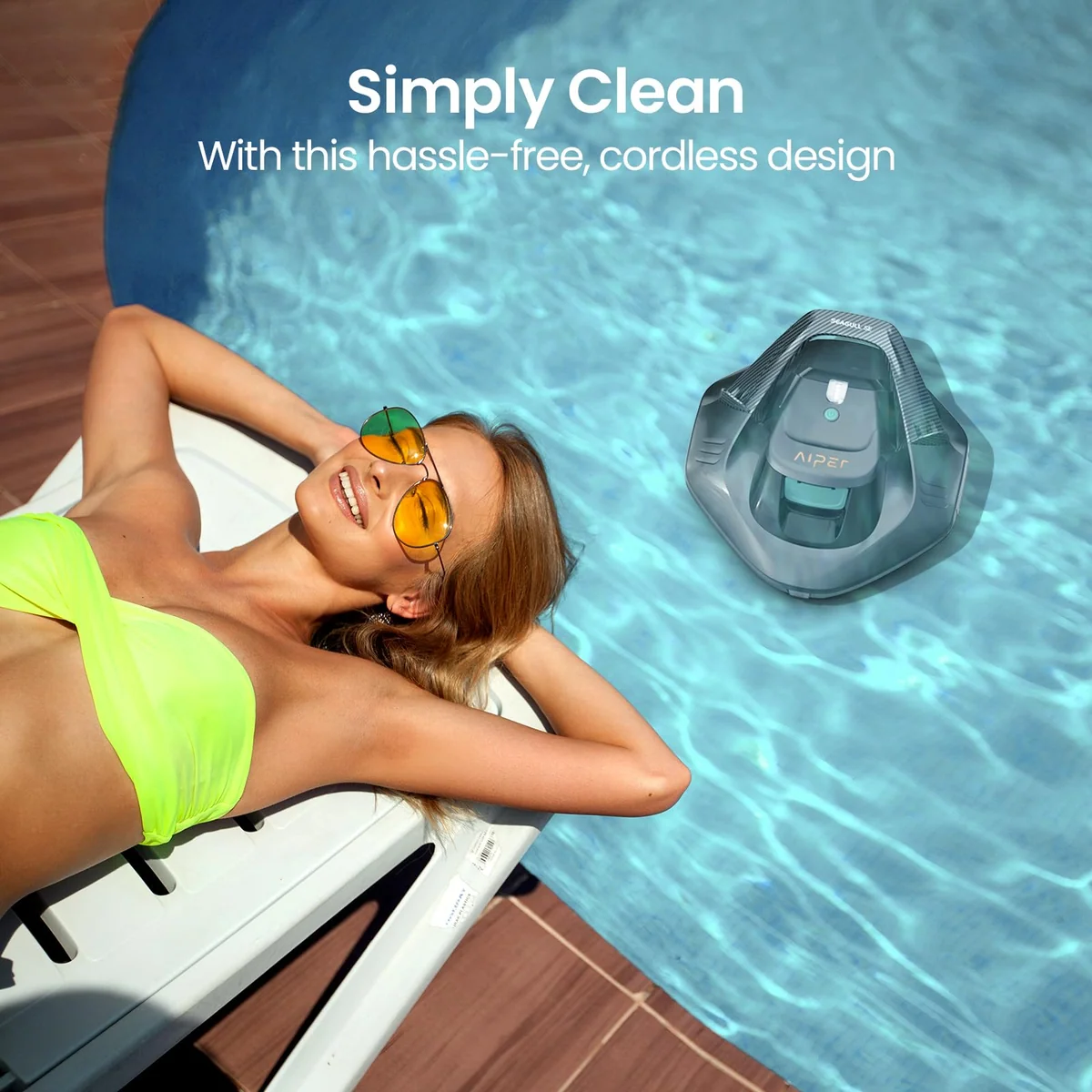
The Seagull SE makes a persuasive first impression because it removes the most irritating pieces of conventional pool cleaning: there is no hose to connect, no cable trailing across the deck and no pool pump providing suction. Charge it, switch it on, lower it into the water and let it roam while you do something else.
That convenience is real, but the word “robotic” does too much work here. The Seagull SE has no mapping, debris detection, app, remote control or planned route. Water drawn through the bottom provides suction, the exhaust propels the unit, and periodic reversals send it back across the floor. It is an autonomous floor sweeper, not a machine that knows where the dirt is or remembers where it has cleaned.
The distinction matters because this cleaner succeeds only when three things line up: its random path crosses the debris, its small wheels carry it across the floor, and its flat mesh retains what it ingests. Loose leaves, bugs, pine needles and ordinary grit can satisfy all three conditions. Fine silt, dead algae, liner wrinkles, slopes and obstacles expose the weaknesses quickly.
Key Specifications
A 40-foot claim cannot flatten a difficult pool
The advertised pool size is a compatibility ceiling, not a promise of complete coverage in one cycle. Exact owner reports from 21-, 22- and 24-foot round pools range from useful collection to repeated wall sticking, painfully slow uphill movement and wide missed areas. Diameter alone does not predict the result; floor shape, obstacles and debris type are more important.
A smooth, open, flat floor gives the random route its best chance. A slight incline may slow the robot enough to consume much of its charge, while another owner’s unit crossed a slope to a center drain without trouble. That disagreement should not be converted into a promise. Treat flat-bottom compatibility as the rule and any successful slope climbing as a bonus.
Wrinkled vinyl can interrupt brush contact or trap the small wheels. Raised drains, ladders, steps and awkward edges can also cause the machine to spend its battery pushing at the same obstacle. The Seagull SE cannot climb or clean walls, stairs, ledges or the waterline, so buyers seeking whole-pool coverage should start with our guide to robots built for walls and the waterline.
Self-parking is a stopping behavior, not a dock
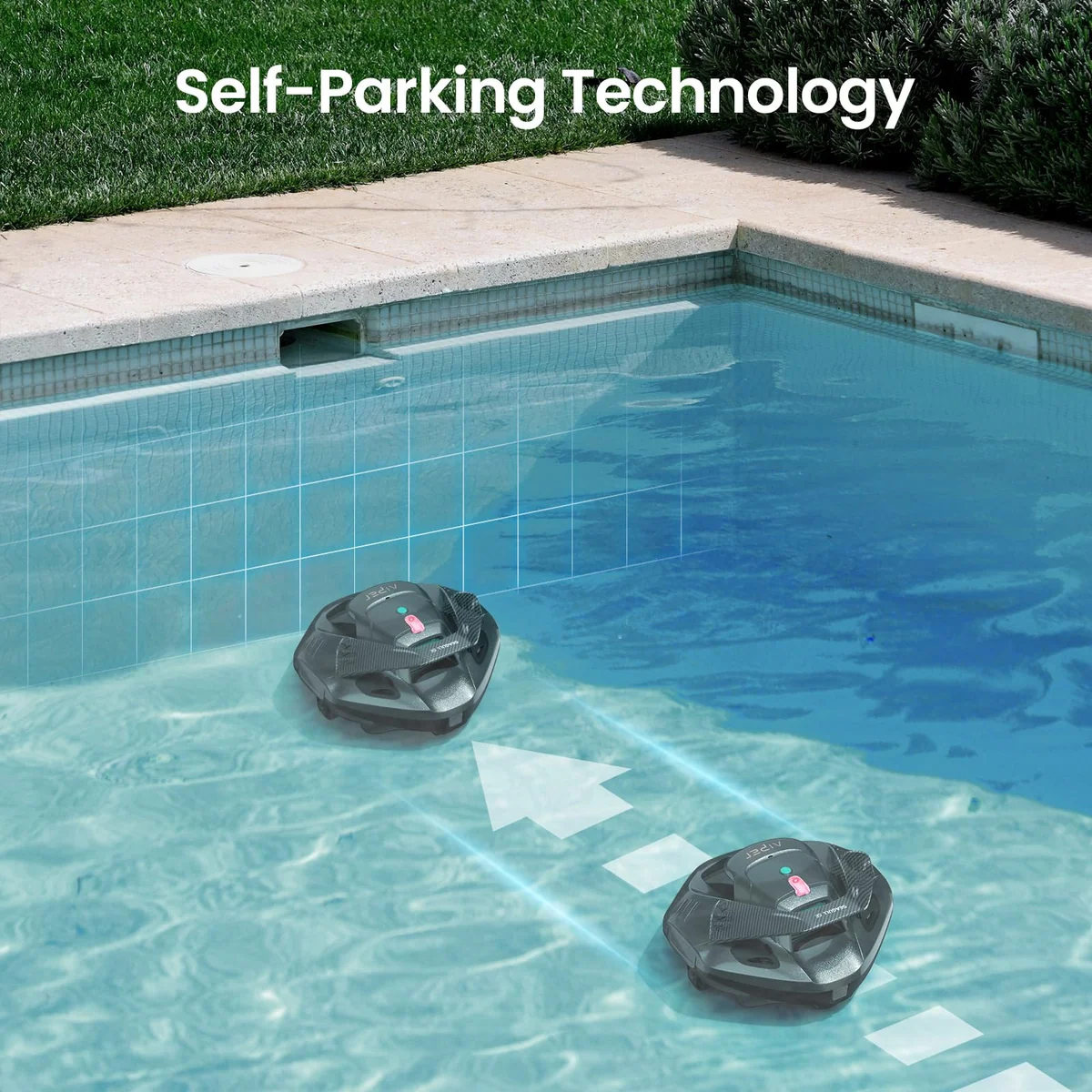
When the battery runs low, the Seagull SE is intended to stop near a wall so the included hook can retrieve it. It does not navigate to a charger, select a particular pickup point or guarantee that the final position will be convenient. “Self-parking” is useful shorthand only if the buyer understands that modest definition.
| Claim | What survives scrutiny |
|---|---|
| Powerful deep clean | Maintenance pickup of loose floor debris, without active scrubbing. |
| Tracks down debris | Collects debris only when its random route happens to cross it. |
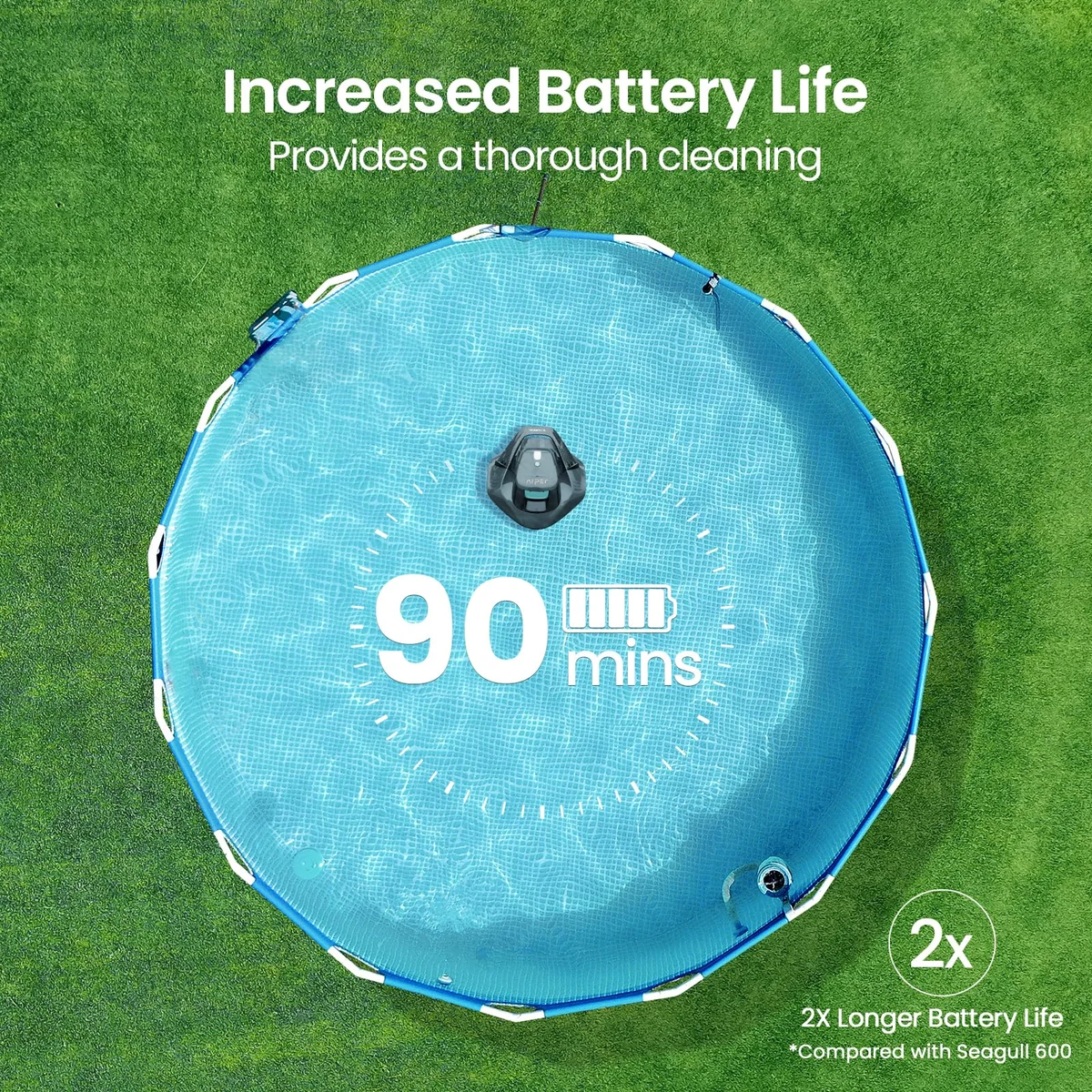
| Up to 90 minutes | Plausible for a healthy unit under easy conditions, but not consistent across owners. |
| Smart self-parking | Attempts to stop near an edge when the battery is low. |
| Pools up to 40 feet | Physical compatibility, not guaranteed one-cycle coverage. |
The runtime claim has genuine support. Some exact owners report about 90 minutes or longer, and several demonstrations reached roughly that duration. Others received only about 45 to 60 minutes or watched a unit die much sooner. A robot laboring on an incline or trapped against a wall may technically be running while accomplishing very little, so productive coverage matters more than the stopwatch alone.
Strengths & Limitations
Strengths
- Cordless operation removes the hose or power cable from the pool.
- Its light body is easy to carry, deploy and retrieve.
- It can collect useful amounts of loose leaves, bugs and coarse floor debris.
- A healthy unit can approach the advertised 90-minute runtime.
- The simple drop-in routine suits passive maintenance while the owner handles other jobs.
Limitations
- The flat mesh is unreliable for fine silt, dead algae and very fine sand.
- Random movement misses areas and provides no mapping or manual direction.
- It cannot clean walls, stairs, ledges or the waterline.
- Slopes, liner wrinkles, drains and ladders can slow or trap it.
- Exact owners report short runtimes, charging failures and complete power loss within months.
- The one-year warranty and weak evidence of readily available replacement parts limit long-term confidence.
The filter decides whether it cleans or merely stirs
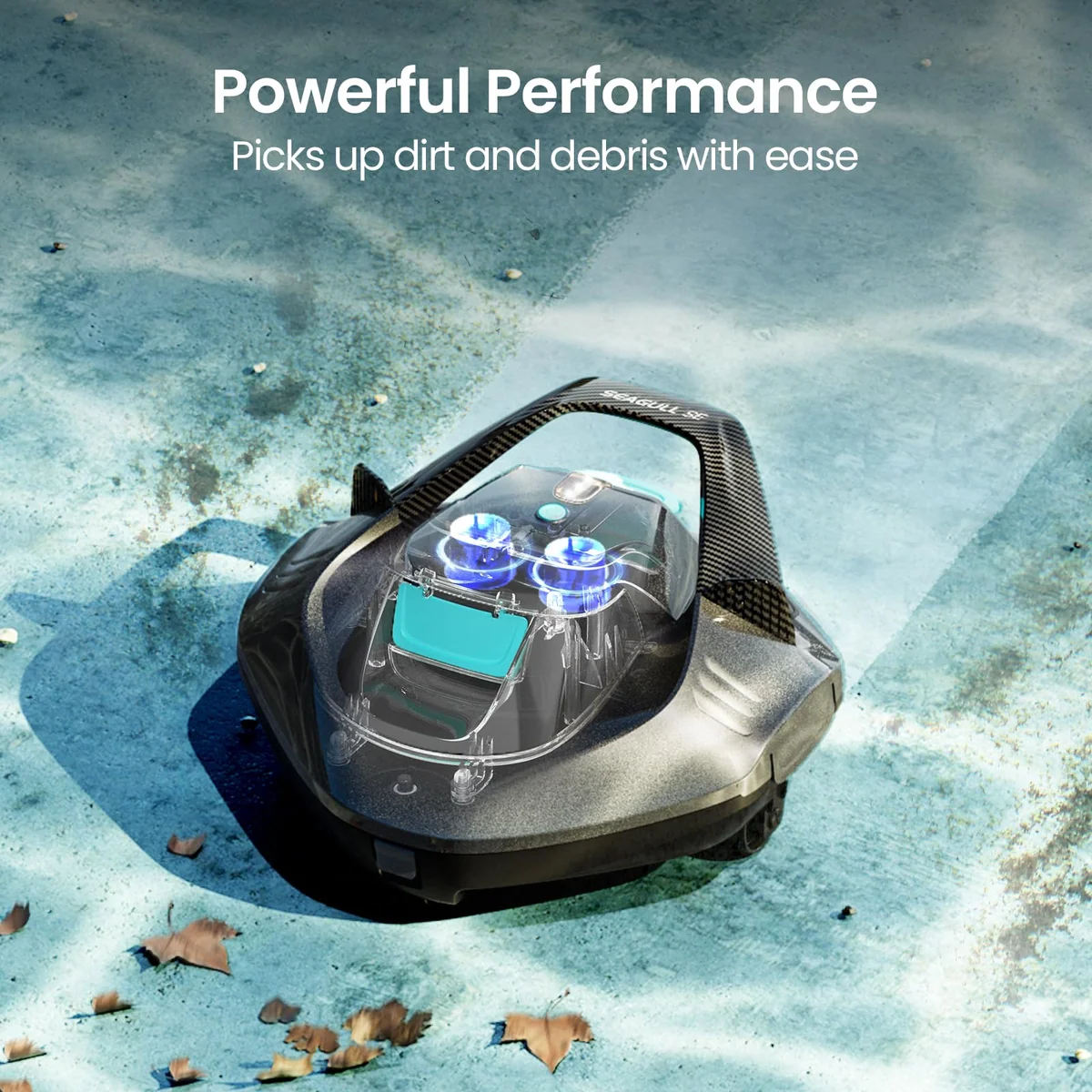
The fairest positive case is straightforward: when the Seagull SE crosses loose, collectable debris on a smooth floor, it can remove a useful amount. Exact and near-exact demonstrations show leaves and dirt in the lower tray, while detailed owners report successful pickup of small leaves, bugs, pine needles and miscellaneous floor debris. One demonstration also showed the cleaner stopping at an edge for retrieval after its run.
Coarse pickup is not the same as deep cleaning. The two underside brushes are passive pieces that disturb material near the intakes rather than motor-driven scrubbers. Deposits stuck to the liner may remain untouched, and the small openings can reject oversized leaves or wrappers even when the robot repeatedly drives over them.
Fine sediment is the decisive weakness
Sand reports appear contradictory until grain size and retention are separated. Some runs produce visible sand in the tray, so it is wrong to say the Seagull SE cannot collect any sand. Other owners watched fine material pass through the mesh, leave the pool looking temporarily clearer and then settle back onto the floor. A dedicated dead-algae demonstration reached the same conclusion: much of the material was being suspended rather than removed.
The practical dividing line is heavier debris versus fine debris. Expect a chance of success with visible grit and heavier grains; do not rely on this cleaner for silt, dust, pollen, dead algae or the finest sand. A critical independent assessment likewise found that the flat filter often left sand and silt behind, even though that publisher’s preference for competing corded cleaners gives reason to treat its broad conclusions cautiously.
| Debris or condition | Likely result | Buyer implication |
|---|---|---|
| Small leaves, bugs and pine needles | Often retained when the cleaner crosses them. | A credible routine-maintenance job. |
| Heavy visible sand or grit | Sometimes collected, with substantial variation between pools. | Possible help, not dependable filtration. |
| Fine silt and dead algae | Frequently passes through or becomes suspended. | Keep a manual vacuum available. |
| Stuck-on film | Static brushes provide little meaningful scrubbing. | Brush the pool separately. |
| Heavy leaf load | The small chamber can fill before the battery is exhausted. | Plan on a mid-cycle emptying. |
If fine sediment is the recurring problem, the useful comparison is not the suction number printed on a listing. Filtration and debris retention determine whether dirt leaves the pool, which is why our guide to robotic cleaners for sand, silt and fine debris treats the filter as a first-order buying decision.
Cheap only if the floor matches
The Seagull SE’s value case rests on buying less machine for a narrower job. In a small or medium above-ground pool that is already chemically clear, it may take routine leaves and bugs off a smooth floor with less effort than a handheld vacuum. An owner who accepts occasional missed spots, regular retrieval and manual follow-up can receive genuine labor savings.
The bargain collapses when the robot is asked to rehabilitate a dirty pool, retain fine sediment, negotiate irregular flooring or replace every other cleaning tool. Repeated charging or movement failures are especially damaging because the sealed battery system is not presented as ordinary user-serviceable equipment. A low initial outlay does not compensate for an unusable cleaner after one season.
If cordless convenience remains the priority, compare this model with the stronger candidates in our cordless pool-cleaner guide rather than assuming every battery-powered robot makes the same compromises. If dependable scrubbing and wall coverage matter more than avoiding a cable, our Dolphin Nautilus CC review explains what a corded wall-climbing alternative changes.
The broader lesson is that cordless and corded cleaners exchange different chores. The Seagull SE removes a cable from the water but adds retrieval, rinsing, drying and charging after each run. Our corded versus cordless comparison is the better next step for anyone still deciding which inconvenience they would rather own.
The battery is the real gamble
The strongest reason to hesitate is not random navigation or even mediocre fine filtration. It is the exact-product failure pattern. Retained owners describe a unit failing after two days, a replacement that stopped charging after two uses, another cleaner that charged but would not switch on within six months, and one that stopped holding a charge after roughly five months of seasonal use across two summers. The evidence is not mature enough to calculate an average lifespan, but it is already too consistent to dismiss as a single unlucky report.
AIPER did make several visible Amazon complaints right by sending replacements or upgrades, and some owners praised the resulting communication. That deserves credit. It does not erase the original failures, and it does not establish that an ordinary support claim will always receive the same quick or generous treatment.
The one-year warranty is therefore more than a line in the specifications. It defines a short documented protection window around a product whose recurring owner complaints involve the battery, charger or a machine that appears charged but will not run. Replacement brushes and other parts also appear difficult to source in some owner accounts.
Battery replacement is possible, not practical
A do-it-yourself battery repair has been demonstrated, but it required opening a sealed motor housing, adapting a third-party battery and restoring a watertight seal. That proves physical repair is possible for a skilled owner; it does not make the pack a normal consumer-replaceable part, and a poor reseal can create a new failure mode.
The routine that gives it the best chance
- Turn off the pool return if its current interferes with the cleaner’s route.
- Check the floor for ladders, pronounced wrinkles, raised drains and other likely traps.
- Retrieve the cleaner after its cycle, lift it level and allow water to drain.
- Open the clips, empty the lower chamber and rinse the mesh promptly.
- Let the charging area dry completely before connecting the supplied charger.
- Seal the charging port before the next immersion and store the unit shaded and dry.
AIPER’s own guidance says to remove a cordless cleaner after each cycle rather than leaving it immersed, then rinse it and store it in a shaded, dry place. The convenience here is drop-in cleaning, not permanent residence in the pool.
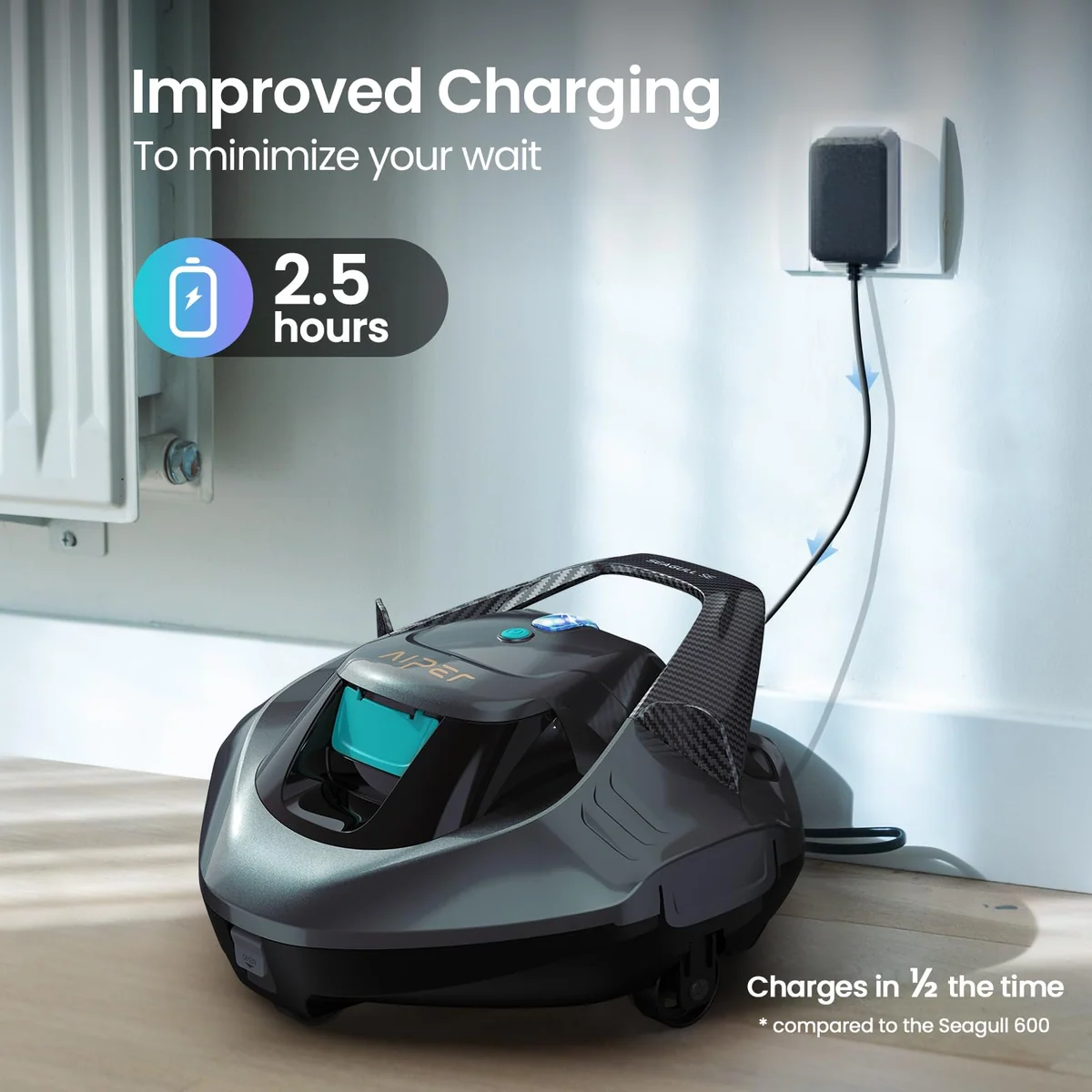
The exact charging demonstration shows the machine’s LEDs blinking during charging and becoming solid blue when full. It also reinforces the need to align the plug correctly and disconnect it before immersion.
Frequently Asked Questions
Does the AIPER Seagull SE climb walls?
No, it is a floor-only cleaner and should not be purchased for walls, stairs, ledges or the waterline.
Does it pick up sand and algae?
It may retain heavier sand grains, but fine sand, silt and dead algae can pass through the mesh or become suspended.
How long does its battery run?
A healthy unit can approach the advertised 90 minutes, although exact owners also report runs of about 45 to 60 minutes and premature shutdowns.
How can I tell when it is fully charged?
The exact charging demonstration shows blinking machine LEDs during charging and a solid blue indication when charging is complete.
What should I check if it will not charge or move?
Dry and inspect the charging port, verify the outlet and supplied charger, seat the plug correctly, clear the filter and intakes, allow a full charge and contact AIPER within the warranty period if the machine remains unresponsive.
Can the battery be replaced?
The battery is not presented as a routine user-serviceable part, and demonstrated replacements require opening and resealing a waterproof housing.
Can I leave the Seagull SE in the pool?
No, remove it after each cycle, rinse it and let it dry before charging or storing it in a shaded location.
Will one cycle clean a 40-foot pool?
The listing states compatibility up to 40 feet, but random movement and variable runtime mean one cycle cannot be assumed to cover the entire floor.
Is the AIPER Seagull SE worth buying?
It is worth considering only for a flat, maintained above-ground pool whose main problem is loose coarse debris rather than silt, algae or whole-pool scrubbing.
Sources (4)
- Amazon listings and customer reviews — Aiper Seagull Se
- Owner and reviewer video, 4 channels
- Poolbots — Article — www.poolbots.com
- Aiper — Article — aiper.com