Dolphin Proteus DX3 review: Good daily cleaning, uncertain long-term value
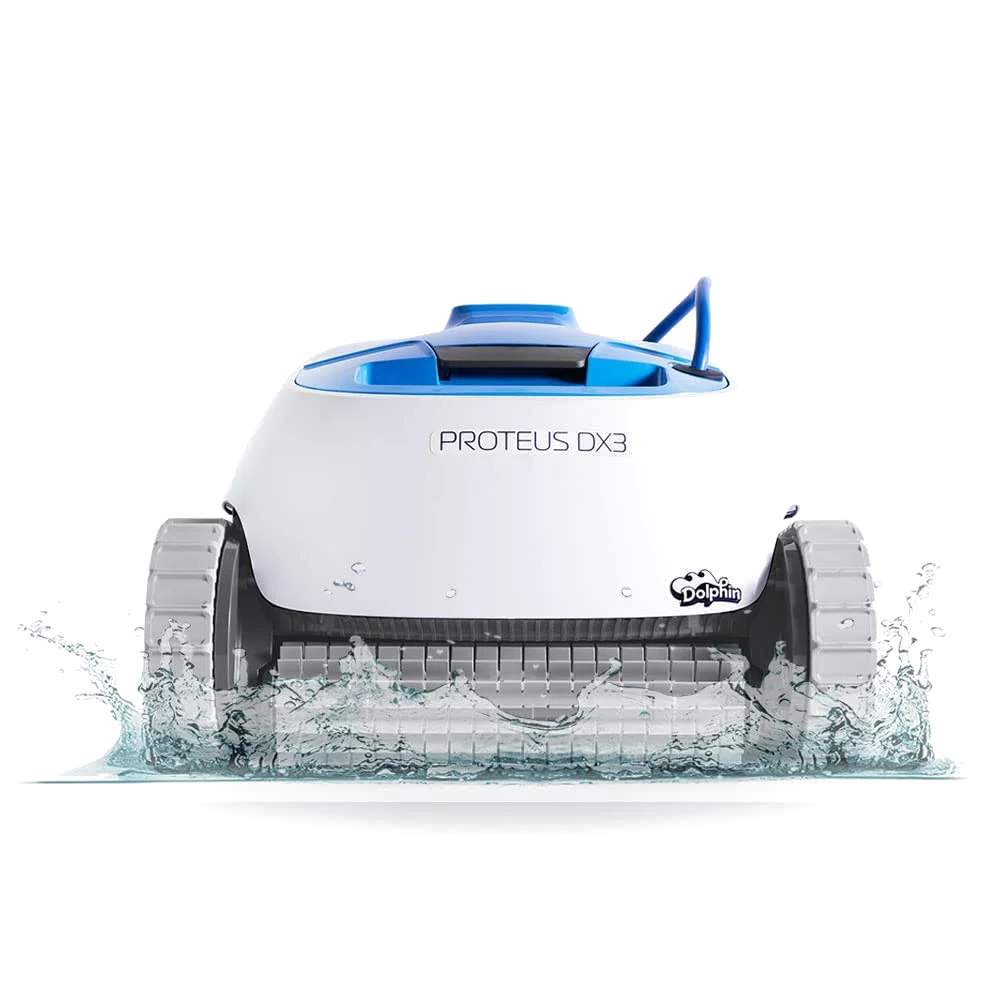
Buy the Dolphin Proteus DX3 for a conventional in-ground pool up to 33 feet when routine floor debris is the problem, but skip it if dependable waterline, step, or long-term repair economics matter more than simple corded cleaning.
Final verdict
The Dolphin Proteus DX3 is a good maintenance robot with a narrower job description than its marketing suggests. It is at its best gathering the everyday mess from a conventional in-ground pool while its owner does something better, then surrendering the waterline, steps, ledges, and awkward corners without much drama.
Buy it when that division of labor feels like relief and when service is close enough to make a component failure manageable. Skip it when complete feature coverage or predictable long-term repair costs are central to the purchase. Smart Pool Bots finds the cleaning case credible; the ownership case remains conditional.
The Proteus DX3 makes a persuasive bargain with a particular pool owner: hand it the repetitive floor work, then accept that the waterline, stairs, ledges, and occasional missed patch still belong to you. That is a meaningful reduction in maintenance, not the “pristine pool” guarantee suggested by the listing. Owners describe strong pickup of leaves, blossoms, sand, bugs, and routine dirt, while the least flattering reports identify the limits just as clearly: odd routing, incomplete wall coverage, cord twist, and component failures that can turn a simple machine into an expensive service problem.
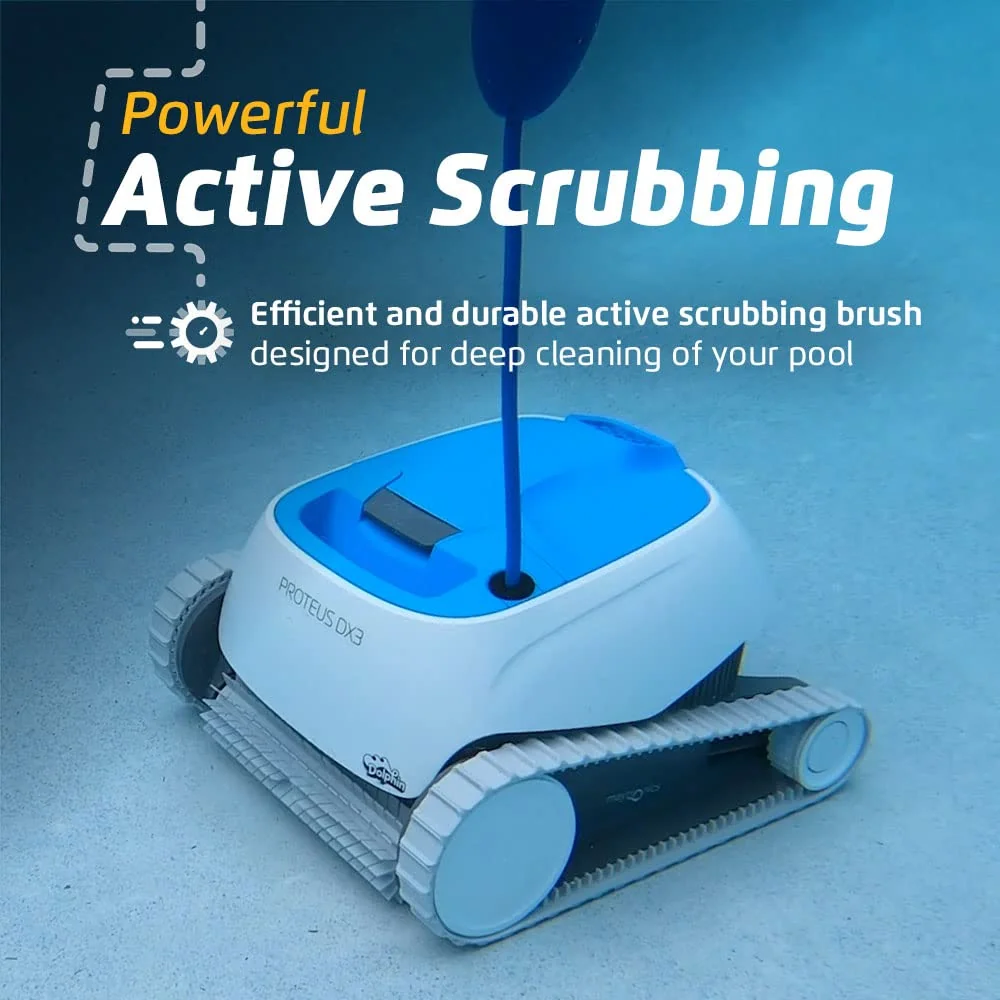
Its strongest argument is simplicity. The robot carries its own motor and filter, so it does not need a suction hose, booster pump, or connection to the pool’s filtration system. Submerge it, let trapped air escape, start the power supply, and it runs a normal maintenance cycle while the pool’s main filter remains free of the debris it collects. The top-loading basket then lifts out for emptying and rinsing. Those basics are supported far more convincingly than the grander promises about flawless coverage and effortless ownership.
Buy it for the ordinary mess
The DX3 makes the most sense in a small or medium in-ground pool where the recurring problem is material lying on the floor: leaves, oak tassels, windblown blossoms, bugs, sand, and ordinary grit. It is especially attractive if manual vacuuming is the chore you most want to reduce and you prefer dependable corded power over charging a battery between runs.
Walk away from the wrong promise
Do not buy it as a waterline specialist, a stair cleaner, a saved-map robot, or a machine that can be left unattended indefinitely. Complex ledges, raised drains, heavy leaf fall, very fine dead algae, and difficult access to repair service all weaken the case before the robot even enters the water.
Key Specifications
The useful conveniences are mechanical, not digital
The top-load basket gets the everyday design right
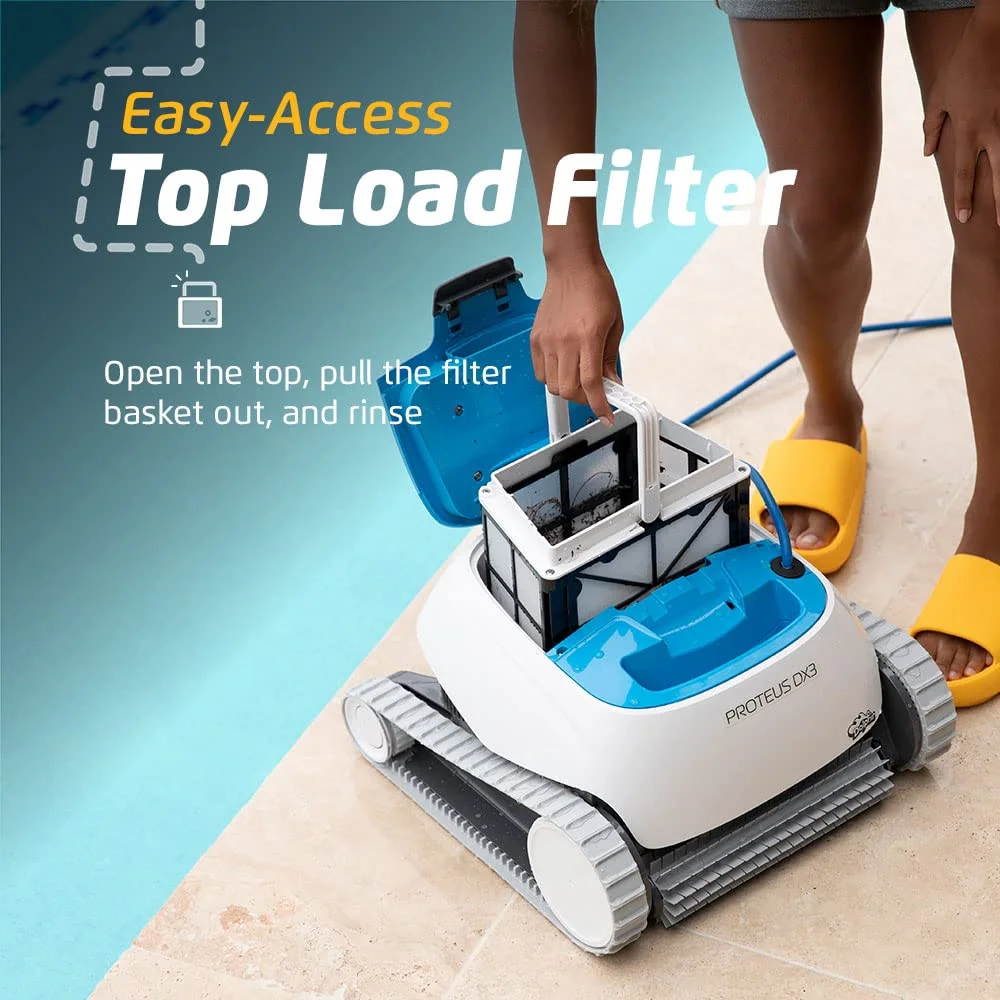
Open the lid, lift the basket, release the lower door, dump the load, and rinse the mesh. That sequence is the most consistently praised part of ownership. People moving from older bottom bags or more cumbersome robotic baskets notice the difference, and the visible debris provides an immediate answer to whether the cycle accomplished anything.
Easy access does not guarantee indestructible hardware. Reports from the wider Proteus owner record describe bottom doors that stop latching, handles that break, and debris spilling if the basket or robot tips during retrieval. Those accounts do not produce a DX3 failure rate, but they are reason enough to keep the unit level, avoid forcing the latch, and inspect the door before lowering a full basket back toward the pool.
The cord solves one problem and creates another
Corded operation means the DX3 is ready for another cycle without a recharge delay, but its approximately 50-foot cable has no anti-tangle swivel. Periodic twist removal is part of ownership, especially when the robot repeatedly turns in the same direction. Lay out only the cable needed to reach the farthest point, keep it free of sharp kinks, and measure the distance from the power-supply position rather than assuming a 33-foot pool automatically leaves abundant slack.
The power supply remains outside the water and needs a secure, protected position near an appropriate outlet. The cleaner should not share the pool with swimmers while operating. Anyone choosing between battery freedom and continuous corded power should read our corded versus cordless cleaner guide before deciding which inconvenience is easier to live with.
The scheduler is basic by design
There is no app, remote steering, saved map, full-basket notification, or return-to-edge lifting feature. Shared controller symbols and generic documentation have confused some owners, but the practical controls are straightforward: start the robot and, if wanted, select a daily, every-other-day, or every-third-day schedule that runs for seven days before it must be set again.
That limited scheduling is more useful than it first appears, although it should not be treated as permission to abandon the robot in the water for a week. A schedule cannot untwist the cord, empty the basket, free the machine from a drain, protect the power supply from weather, or remove the cleaner before chemical treatment.
Do not import DX4 or DX5i features into this review
| Feature | DX3 reviewed here | Commonly attributed to DX4 or DX5i |
|---|---|---|
| Rated pool length | Up to 33 feet | Longer-pool configurations |
| Cable | About 50 feet, no swivel | Longer cable with a swivel |
| Brushes | One active scrubber | Two scrubbers |
| Waterline behavior | May reach the top, but no sustained lateral scrubbing | Dedicated waterline hardware |
| Connectivity | No app or Wi-Fi | DX5i adds connected controls |
Reviews and sales pages frequently pool the Proteus family, which is how a DX3 can accidentally acquire a swivel cable, two brushes, a larger basket, dedicated tile-line movement, or phone control on paper. None of those features belongs to ASIN B083YZG3LV merely because a sibling model has it.
Strengths & Limitations
Strengths
- It removes ordinary leaves, blossoms, sand, bugs, and floor dirt well enough to reduce manual vacuuming substantially.
- The top-loading basket is straightforward to remove, empty, rinse, and inspect.
- Its active brush and wall climbing provide more surface agitation than a floor-only pickup robot.
- Corded power avoids recharge delays and keeps the robot ready for repeated cleaning cycles.
- The controls are simple for buyers who do not want another pool app.
Limitations
- Waterline, step, ledge, corner, and irregular-wall coverage is too inconsistent to replace manual brushing.
- The non-swivel cable can twist and requires periodic straightening.
- Its route can repeat areas, miss patches, and waste time around incompatible drain geometry.
- The standard filtration may struggle with extremely fine silt or dead algae.
- Power-supply and other component complaints make warranty terms, parts pricing, and local service unusually important.

What it cleans, and what it leaves for you
Leaves, blossoms, and routine floor debris are its best work
Ordinary organic debris is where the DX3 earns its keep. Owners report the basket collecting leaves, tree blossoms, oak tassels, palm fragments, insects, dirt, and sand. One owner even watched a leaf move toward the intake before the robot rolled over it, useful evidence that the machine creates real internal suction rather than merely sweeping debris around. Another replaced suction-side cleaners that struggled with leaves and found the DX3 substantially reduced the work needed to keep the bottom clean.
That competence has a physical limit. Large fronds, long sticks, and branches should be netted before a cycle because they can exceed the intake, obstruct the impeller, or consume too much basket capacity. The DX3 also has a smaller basket than the higher Proteus models, so a tree-heavy pool may require an interruption and rinse before the cycle is over.
Sand is plausible; microscopic dust is conditional
The standard mesh performs well on sand and ordinary fine dirt in several owner accounts. That makes the DX3 credible for windy properties, dusty yards, and pools that collect grit between scheduled maintenance visits. Very fine silt and dead algae are less predictable: some material may pass through the filter or be stirred back into the water, and the result can change with particle size, circulation, filter media, and the condition of the pool.
Treat this as a debris collector rather than a cure for cloudy water. A neglected or algae-filled pool still needs correct chemistry, circulation, brushing, and possibly finer filtration. The DX3 can participate in an opening clean, but the evidence does not support dropping it into a green pool and expecting one two-hour cycle to settle the matter. Model-specific user accounts consistently frame it as a maintenance cleaner, not a substitute for restoring water balance.
Wall climbing is real, but waterline cleaning is not dependable
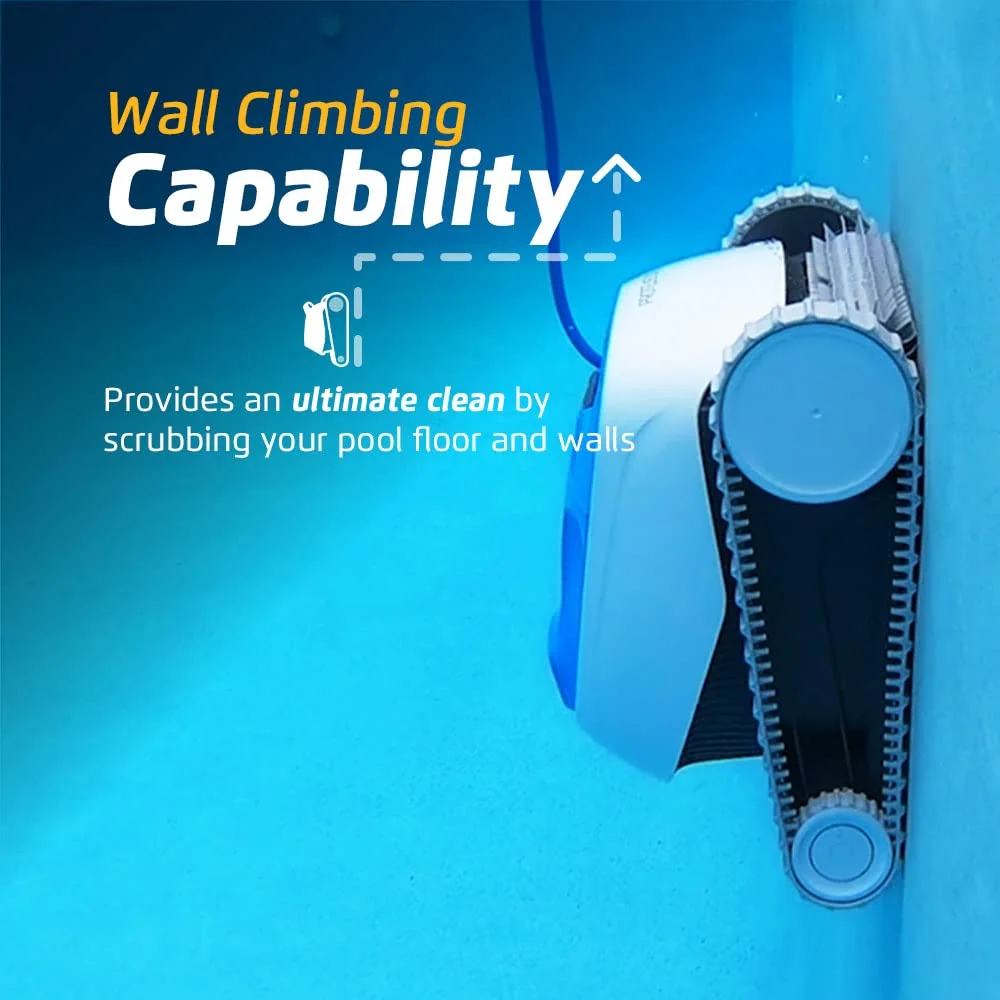
The robot does climb walls. Owners have seen it work along coves, slopes, the curved transition between floor and wall, and portions of vertical surfaces. Some units reach a bench or briefly touch the top of the wall. That does not make the DX3 a dedicated waterline cleaner: it lacks the lateral waterline system used by other Proteus models, and detailed owner accounts say the tile-line ring still needs manual brushing.
Wall results depend on traction, finish, algae, wall angle, water level, and geometry. A slick surface can stop the tracks from holding, while an irregular wall may send the robot back to sections it has already visited. If removing the tile-line ring is a non-negotiable requirement, use our guide to robots designed for walls and waterline cleaning instead of stretching the DX3 beyond its honest brief.
The route looks foolish before the result looks useful
Expect stops, reversals, abrupt turns, wheelies, and repeated visits to the same area. That behavior can make the DX3 look lost during the first twenty minutes, yet several owners still found the floor acceptably clean at the end of a cycle. One retained report estimated about 90 percent floor coverage in roughly two hours, while another advised watching several cycles before judging which parts of an individual pool it reliably reaches.
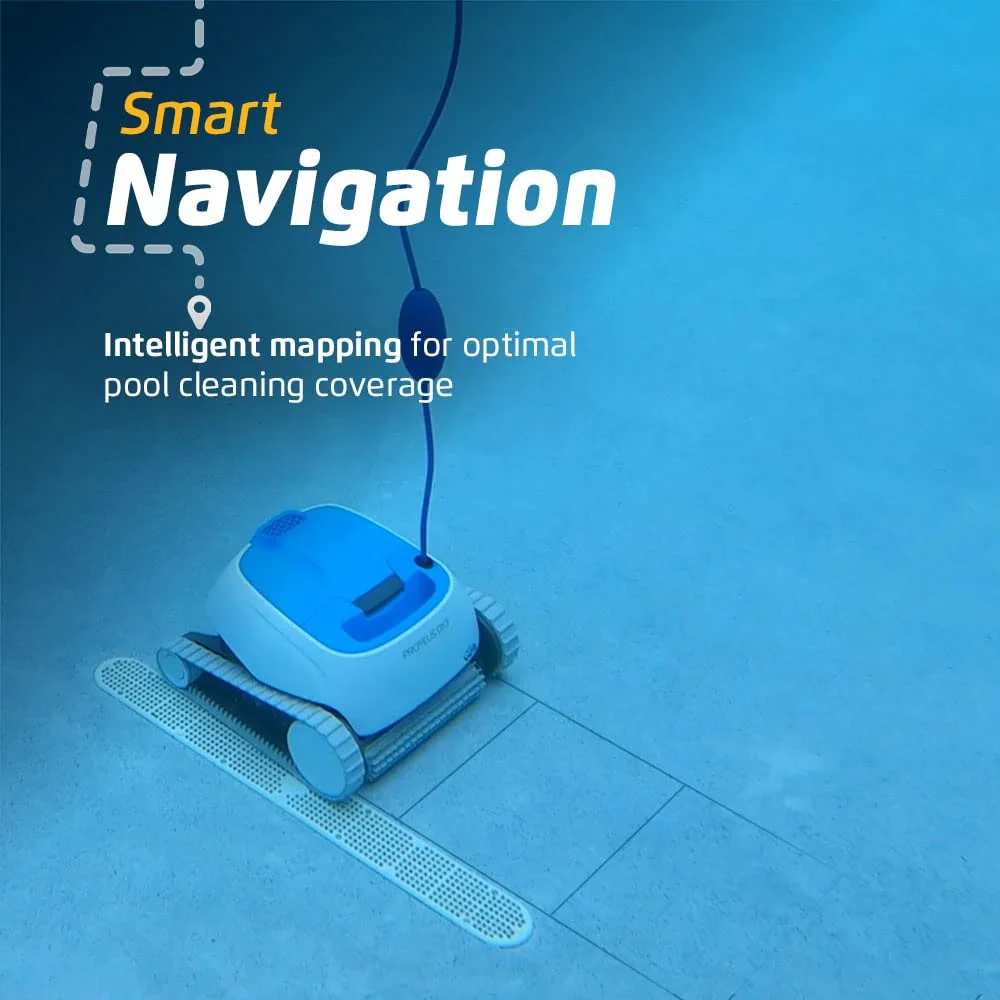
Whatever route calculation occurs is not persistent room-vacuum mapping. The robot does not build a saved plan of the pool and return with a learned route next time. Judge it by the debris left after multiple runs, not by whether its path forms satisfying rows.
Steps, ledges, and raised drains expose the geometry problem
Steps are the clearest coverage limitation. A DX3 may touch a broad lower step, climb onto a bench, or visit a swim-up seat, but owners also describe attempts that end with the robot backing away or nearly tipping. Narrow treads and shallow shelves do not provide enough submerged room for consistent maneuvering. Plan to brush those surfaces toward the floor, where the robot has a better chance of collecting what settles.
Raised or domed main drains deserve similar caution. Tracked Dolphin cleaners can high-center when the drain profile meets the underside at an awkward angle, wasting cycle time or requiring a rescue. The available reports do not establish that every DX3 will stick, but they make drain shape a sensible compatibility check. Watch the first few cycles, especially if a prominent drain sits in the robot’s most traveled path.
For a deeper explanation of why walls, steps, shelves, and drains behave so differently, see our guide to what robotic pool cleaners can realistically climb.
Is the Proteus DX3 worth buying?
Yes, for the owner who values time saved over feature completeness. The record supports a substantial reduction in manual floor vacuuming, easy filter cleanup, useful wall assistance, and strong everyday debris pickup. It does not support paying for a fantasy of total automation. You still net the surface, manage water chemistry, brush steps and the tile line, empty the basket, straighten the cable, and intervene when pool geometry defeats the route.
The fit is strong when
- Your in-ground pool is no longer than 33 feet.
- Leaves, blossoms, sand, bugs, and ordinary floor dirt are the main problems.
- You are happy to brush steps and the waterline yourself.
- You prefer corded readiness to battery charging.
- Your drains are low profile and the pool has conventional geometry.
- You have a secure power-supply location and practical repair access.
The fit is weak when
- Your pool exceeds the stated length limit.
- Reliable tile-line, stair, or tanning-ledge cleaning is essential.
- Fine dead algae or microscopic silt is the primary debris problem.
- You expect saved mapping, app control, manual steering, or edge retrieval.
- A raised central drain is already known to catch wheeled equipment.
- Shipping a failed unit or sourcing a major module would be difficult.
The right comparison is not “robot versus no work.” It is the DX3 plus a short list of remaining chores versus doing nearly all floor cleaning manually. If that exchange suits the pool, the machine has a coherent reason to exist. If waterline performance or complex-feature coverage drives the purchase, start with our in-ground robotic pool cleaner recommendations rather than buying the DX3 and resenting its design limits.
Buyers choosing between this model and the similarly sized Dolphin Nautilus CC can use our direct Nautilus CC versus Proteus DX3 comparison, which keeps family-name anecdotes from becoming a substitute for comparing the exact products.
The expensive uncertainty lives outside the basket
Cleaning performance is not the most serious objection to the DX3. The larger concern is whether the power supply, cable, motor module, drive components, and filter hardware remain economical to support after the easy early months. The exact Amazon review record includes a particularly important failure account from an owner who replaced two power boxes and again had a robot that ran for only about five minutes before stopping, with most controller buttons no longer working.
That is an individual report, not a measured failure rate. It cannot justify declaring every DX3 unreliable, just as four months of trouble-free use cannot establish long life. The evidence spans early failures, repeat controller trouble, and satisfied multi-year Dolphin owners, so a firm lifespan claim would be false precision.
Service access belongs in the buying decision
Before purchasing, verify the current warranty terms, whether the seller must be authorized, where the nearest service point is, who pays freight, and how major modules are handled. The captured DX3 listing did not establish those details. Local support matters because shipping a wet-use electrical appliance is more disruptive than carrying a small consumer gadget back to a counter.
Family-level Proteus evidence shows why this question matters. A long-term DX4 owner described control-unit, motor, cord, filtration, track, and brush costs that made further repair less rational than replacement. Those exact figures and that sibling model must not be transferred to the DX3, but the underlying lesson survives: price the large modules and confirm parts access before assuming a repairable-looking robot will be economical to repair.
Start with safe checks, then stop
If a DX3 moves briefly and quits, first check the protected outlet, controller connection, visible cable damage, a full or poorly seated basket, cord tangles, a drain hang-up, and an obvious intake or impeller obstruction. Repeated shutdowns, dead buttons, electrical trips, internal drive trouble, or anything requiring motor-module disassembly belong with authorized support, particularly while warranty coverage may apply.
Care cannot erase defects, but neglect makes a poor bet worse
After a cycle, retrieve the machine by bringing the handle within reach and lifting by that handle rather than hauling the robot from the water by its cable. Let it drain, rinse the basket, inspect the intake, relax cable twists, and store the cleaner shaded without crushing the brush or tracks. Remove it before shock treatment and keep the controller protected from rain. Our robotic pool cleaner maintenance guide covers the routine without pretending care can prevent every controller or motor failure.
Frequently Asked Questions
Does the Dolphin Proteus DX3 clean the waterline?
It can climb walls and may touch the top, but it does not provide dependable sustained waterline scrubbing.
Will the DX3 clean pool steps or a tanning ledge?
It may reach a broad lower step, bench, or seat, but those shallow surfaces are not reliable coverage zones.
Does it pick up leaves and sand?
It performs well on ordinary leaves, blossoms, sand, and routine fine dirt, although large fronds and branches should be removed first.
Can it remove dead algae?
Results on extremely fine dead algae are inconsistent, so chemistry, the pool’s main filtration, and possibly finer robot media still matter.
Does the DX3 learn or save a map of the pool?
No persistent saved mapping is supported, even if the robot adjusts direction while an individual cycle is running.
Does the DX3 have Wi-Fi or an app?
No, the reviewed DX3 uses basic power-supply controls rather than connected or remotely steered operation.
How long does a normal cleaning cycle take?
A routine cycle takes about two hours, while a dirty opening may require repeated runs and basket cleaning.
Can the cable tangle?
Yes, the DX3 lacks an anti-tangle swivel, so owners should expect to relax twists periodically.
Can it get stuck on a main drain?
It can high-center on some raised or domed drain covers, although the risk depends on the drain’s profile and placement.
How long should a Proteus DX3 last?
The available owner evidence does not support one dependable lifespan because it includes both early component failures and satisfactory multi-year use.
Which replacement parts should a buyer check before purchase?
Confirm availability for model 99996114-LSB power supplies, cables, filters, tracks, brushes, and major drive components rather than assuming every Proteus-family part is interchangeable.
Sources (3)
- Amazon listings and customer reviews — Dolphin Proteus Dx3
- Owner reports across r/swimmingpools threads
- Owner and reviewer video, 4 channels