Buy the Betta SE if sun and surface debris are your pool’s daily constants.
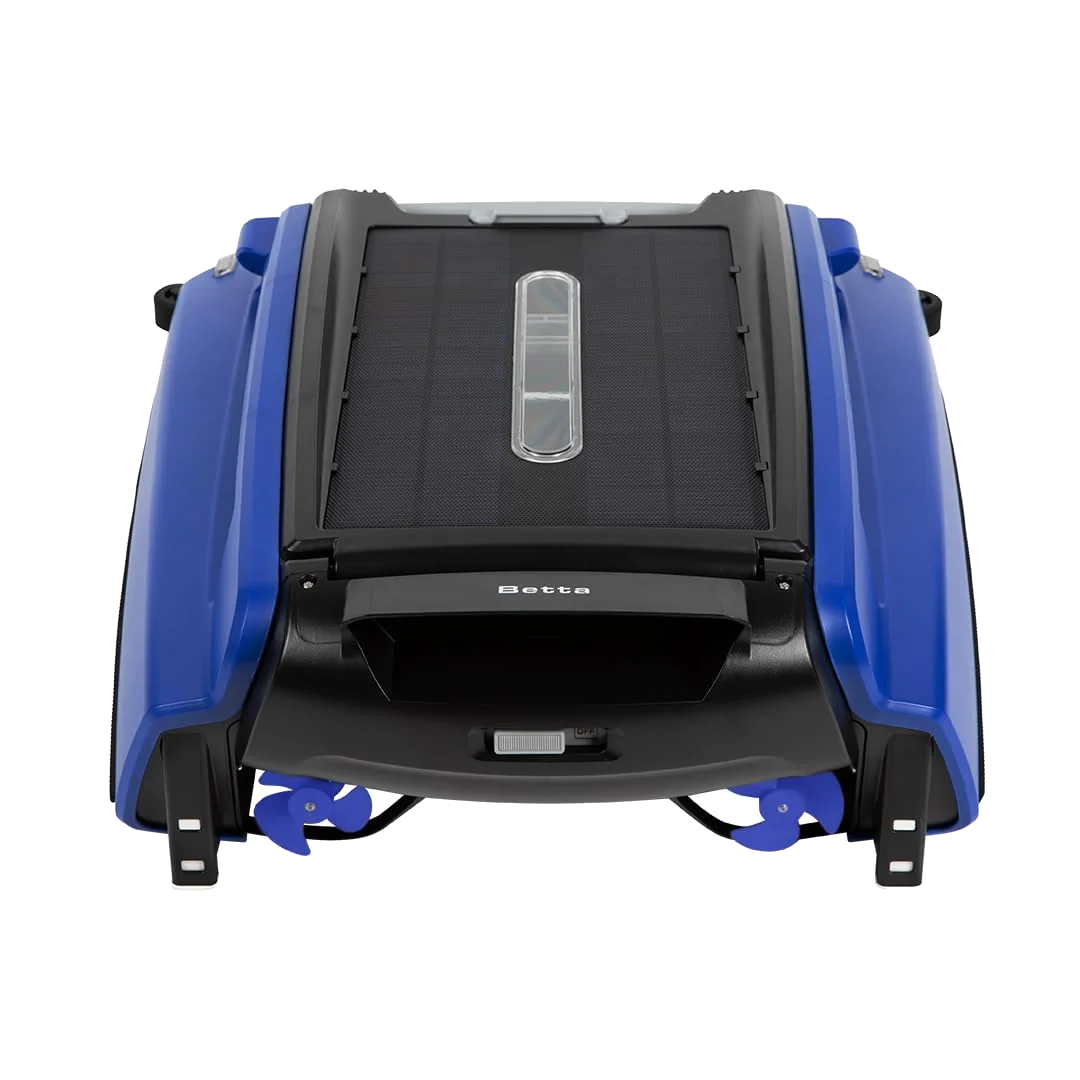
Buy the Betta SE for a sunny, open pool that collects leaves, pollen, bugs, or pet hair every day; choose a different skimmer if shade is routine, and buy a floor robot first if settled debris is the bigger problem.
Smart Pool Bots’ final take
The Betta SE is an easy recommendation for the right pool and an easy rejection for the wrong one. Buy it when direct sun is dependable and surface debris is a recurring nuisance, choose the SE Plus when backup charging matters, and put the money toward a floor cleaner first when the real problem is below the waterline. Its appeal is not that it does everything; it is that, in a sunny pool, it can quietly remove one tedious job from the day.
The Betta SE is a floating robotic surface skimmer, despite the broader “pool cleaner” language attached to the product. It intercepts material while it is still on the water, but it does not vacuum the floor, scrub walls or the waterline, circulate and filter the water, or manage pool chemistry. Think of it as a tireless replacement for the hand net, not a substitute for the pump or a submerged cleaner.
That distinction decides whether this is a clever purchase or an expensive misunderstanding. If only one robot fits the budget, a floor-cleaning machine usually tackles the harder manual job first; the Betta makes more sense as the second robot, catching organics before they sink and become work for the floor cleaner. Our guide to surface skimmers versus pool vacuums separates those two jobs in more detail.
Key Specifications
It works because it is always in the way
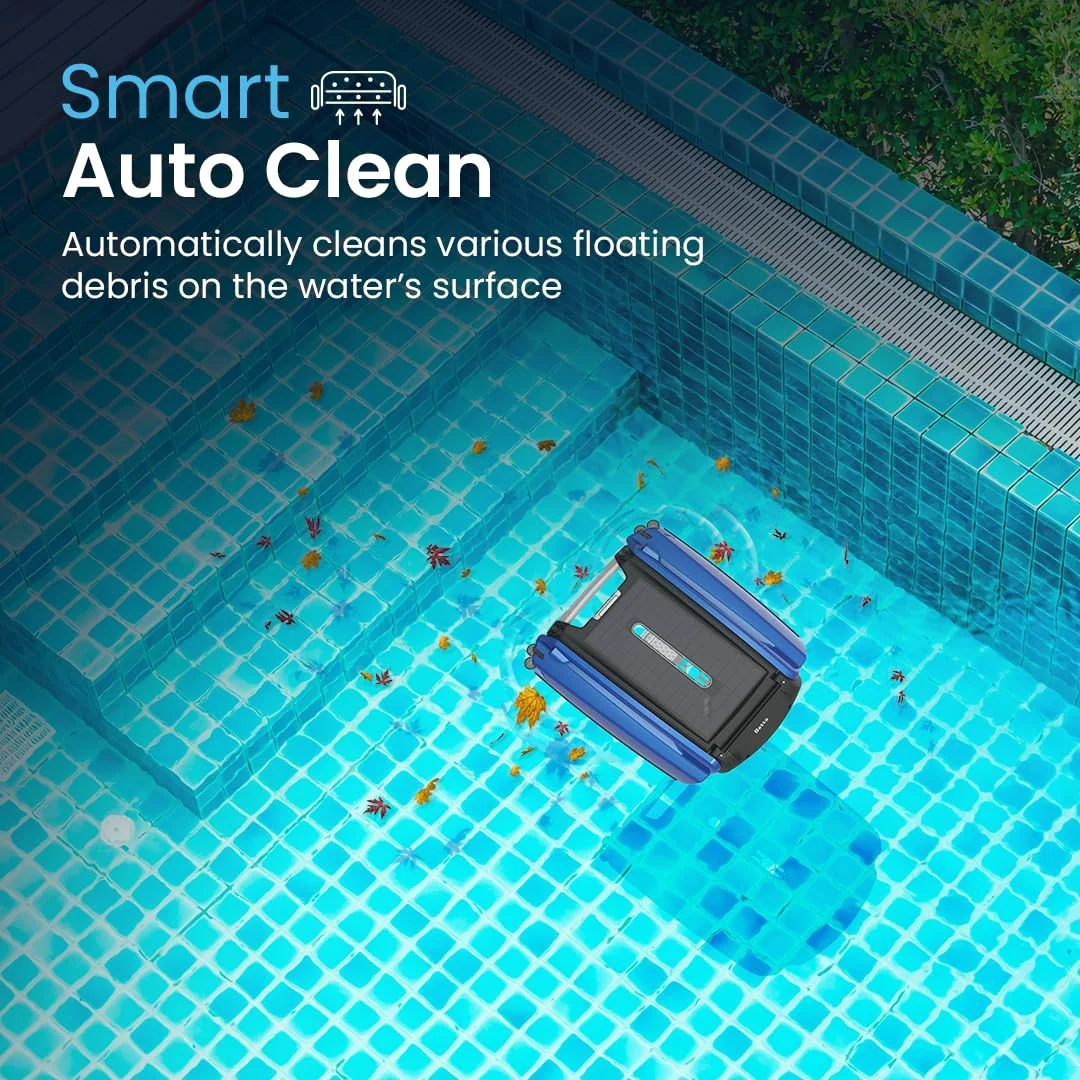
The Betta does not need a heroic first pass. It patrols for hours, lets random movement create coverage, and repeatedly places its front intake between floating debris and the bottom of the pool. Leaves, blossoms, bugs, pollen, grass and pet hair are the right targets; sand, silt and anything already settled are outside its reach. Exact-SE demonstrations and owner reports support the basic proposition that persistent surface collection sharply reduces routine netting.
Sunlight is the whole charging plan
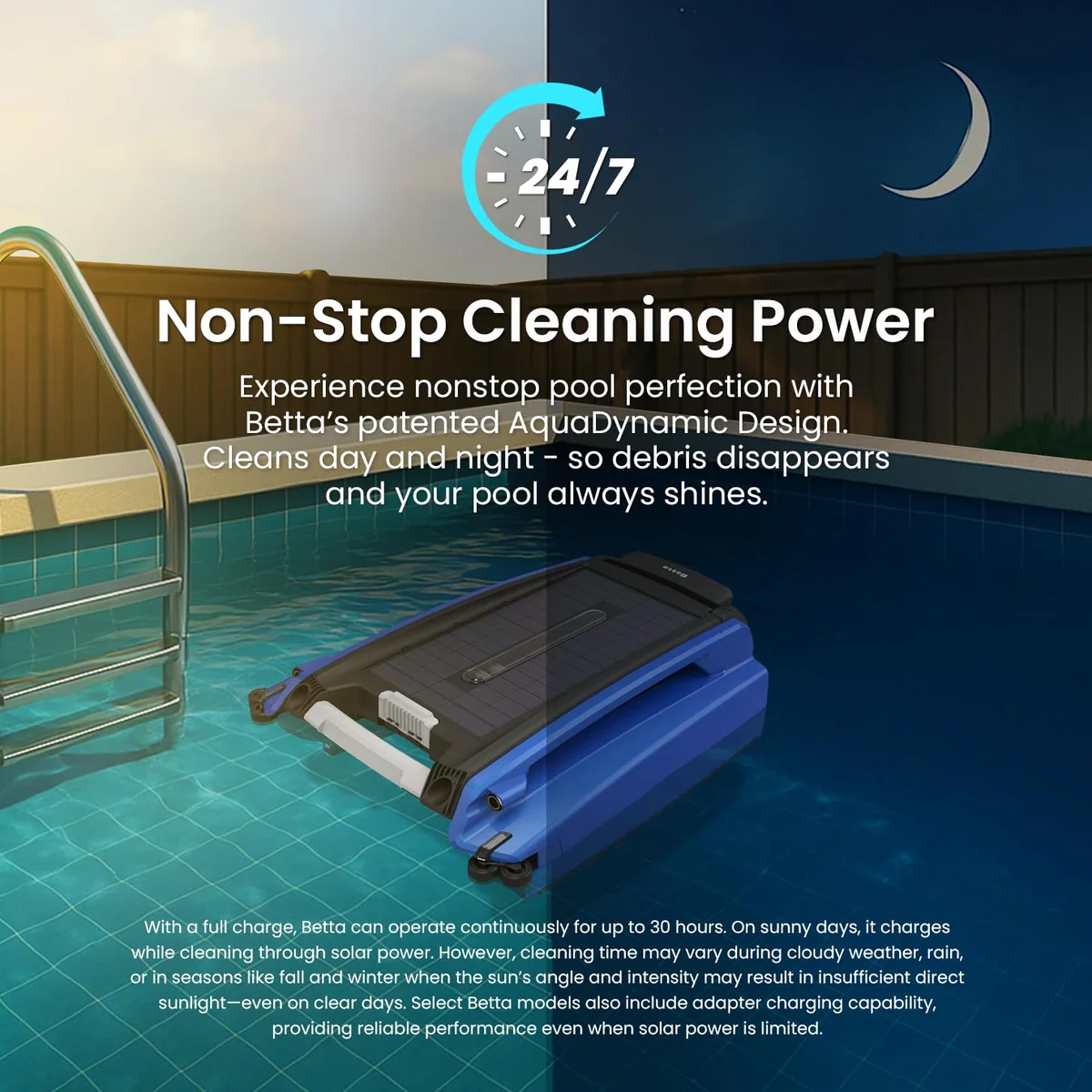
The solar panel covers the top of the machine and charges an internal battery while the skimmer works. Betta claims more than 30 hours of operation from one charge and a 5–6 hour recharge in direct sun, but those are manufacturer specifications rather than controlled independent measurements. The real-world record is encouraging in bright, open pools: owners report operation through the day and into the night, sometimes for long stretches without manual intervention.
“Solar powered” does not mean weatherproof energy. Stored charge can carry the SE through a night or a cloudy spell, but several rainy or overcast days can eventually stop it, and the base SE has no plug-in fallback. Shade from trees, a screened enclosure, low winter sun or a pool beside a tall building therefore matters more than any headline runtime number.
The basket is the best piece of the design
Debris enters at the front and lands in a fine 200-micron mesh basket beneath the top cover. You can bring the skimmer to the edge, open the cover, lift the basket by its handle, empty it and rinse it without hoisting the whole machine onto the deck. That top access is faster and cleaner than wrestling with a bottom-loading bin.
Basket capacity still depends on what the yard throws at it. Several days between emptying may be realistic in light conditions, while a windstorm, heavy leaf fall or daily swimming dogs can make it a daily task. One household with two large shedding dogs reported that the basket continuously captured fur without wrapping it around the propellers, although that remains a demanding owner experience rather than a universal promise.
There is one avoidable mess: keep the unit level if you lift the entire skimmer from the water. The basket is open at the top, and captured material can spill back into the pool when the body is tipped. Docking it and removing only the basket is the better routine.
Physical controls beat unnecessary complexity here
There is no app, account, gateway or Wi-Fi setup. A physical switch starts automatic operation, and an included wireless remote can steer the skimmer toward a concentrated pile or bring it to the edge for emptying. Most owners are unlikely to use the remote often, which is a compliment: the point is to switch the Betta on and let it roam.
Strengths & Limitations
Strengths
- It quietly intercepts leaves, bugs, pollen, blossoms and floating pet hair before much of that debris sinks.
- Solar charging removes the routine of retrieving and plugging in the machine after each cleaning cycle.
- The top-access 200-micron basket is quick to remove, empty and rinse from the pool edge.
- Physical controls and an included remote avoid app accounts, gateways and Wi-Fi setup.
- Its current listing supports both freshwater and saltwater pools.
Limitations
- It cannot vacuum the floor, scrub walls or replace the pool’s circulation and filtration system.
- Several cloudy days or persistent shade can stop the solar-only SE because it has no plug-in backup.
- Random navigation can leave tight edges untouched and can become troublesome around skimmer mouths, shelves, cords or hoses.
- The open-top basket can spill captured debris if the entire machine is lifted at an angle.
- Owner records document both an early electrical failure and propulsion-motor failures after several months.


The real test is whether debris sinks before Betta finds it
On its proper job, the evidence is convincing. Deliberately added leaves were recovered in a multi-day check, other demonstrations show mixed surface debris entering the basket, and long-term owners describe far less material reaching built-in skimmers and floor robots. The result is not a perfectly choreographed clean; it is a steadily cleaner surface with fewer organics left to waterlog and descend.
| Debris | Confidence | What to expect |
|---|---|---|
| Floating leaves and blossoms | High | These are the clearest use case, including substantial loads around unscreened pools. |
| Bugs, pollen and grass | High | The fine basket captures them once the intake crosses their path. |
| Floating pet hair | Promising | Heavy-shedding dog owners provide strong practical support, but pool flow and hair load will vary. |
| Debris against tight edges | Inconsistent | Random coverage may eventually reach it, though a hand net can finish stubborn corners sooner. |
| Settled sand, silt and algae | None | The Betta remains at the surface, so a vacuum, floor robot and normal pool care still handle these jobs. |
Random coverage is patient, not precise
The SE does not map the pool or march through deliberate lanes. Its sensors, front rollers and programmed reversals help it slow, turn and escape ordinary encounters, but contact with walls is normal and every particle will not be collected on the first circuit. This design succeeds through repetition rather than intelligence.
That is enough for a conventional rectangular or gently curved pool with room to wander. It is less convincing when the shape creates traps, when debris hugs tight corners, or when surface currents repeatedly push the skimmer away from one side. The remote can correct a temporary miss, but it does not turn the machine into a mapped cleaner.
Where it can get stuck or confused
- Built-in skimmer mouths: some pools pull the Betta toward the opening, although the included foam bumper can block the trouble spot.
- Steps and tanning ledges: the small anti-stranding feet help, but success depends on the depth and geometry of the shelf.
- Cords and hoses: simultaneous use with a corded floor cleaner may work, but the base SE lacks the anti-tangle hardware introduced on later Betta models.
- Incorrect water height: recessed walls or overhanging tile can prevent the guide wheels from meeting the wall cleanly, while excessively high water can reduce the sensors’ view of the boundary.
- Small round pools: Betta officially excludes round pools under 14 feet and advises restarting the unit if circling begins.
If a cord repeatedly catches the skimmer, alternate the two robots rather than expecting them to negotiate forever. If navigation becomes erratic without an obvious obstacle, clean the sensor lenses before assuming the electronics have failed; one documented circling problem disappeared after the sensors were wiped.
It is worth buying only when it replaces a real chore
The value case is measured in netting avoided, not in a crowded feature list. A pool beneath shedding trees, beside a dusty yard or used by furry dogs can demand attention every day, and the retained owner record includes households that had been spending an hour or more manually clearing the surface. In that setting, constant interception is meaningful labor-saving equipment rather than a novelty.
A screened pool with little floating debris presents the opposite case. If the built-in skimmer already clears the surface before material sinks, another machine adds basket cleaning and another object in the water without solving much. The same applies when the pool is shaded so heavily that the SE cannot replenish what it consumes.
Choose the model by sunlight, not by ambition
The base SE is the clean choice for dependable direct sun: it offers the established basket, motors, sensors and remote without an app or charging ritual. The Betta SE Plus is the safer alternative for regular shade, long cloudy stretches or winter use because it adds external charging backup while retaining essentially the same surface-cleaning concept. Our SE versus SE Plus comparison isolates that decision without pretending the more complicated model automatically cleans better.
Buyers who want app control, scheduled runs or more deliberate low-light energy management should also look beyond the base Betta rather than forcing a simple machine to satisfy a smart-home brief. The robotic pool-skimmer shortlist is the better next step when solar backup, connectivity or unusual pool geometry outweigh the SE’s simplicity.
The repair story is reassuring, but the failures still count
The most concerning early report involved a unit that stopped after exactly two weeks, blinking red before losing power. The owner returned it and reported that the replacement was running strongly six weeks later. That outcome is encouraging for one replacement, but it does not erase the original failure or establish a fleet-wide defect rate.
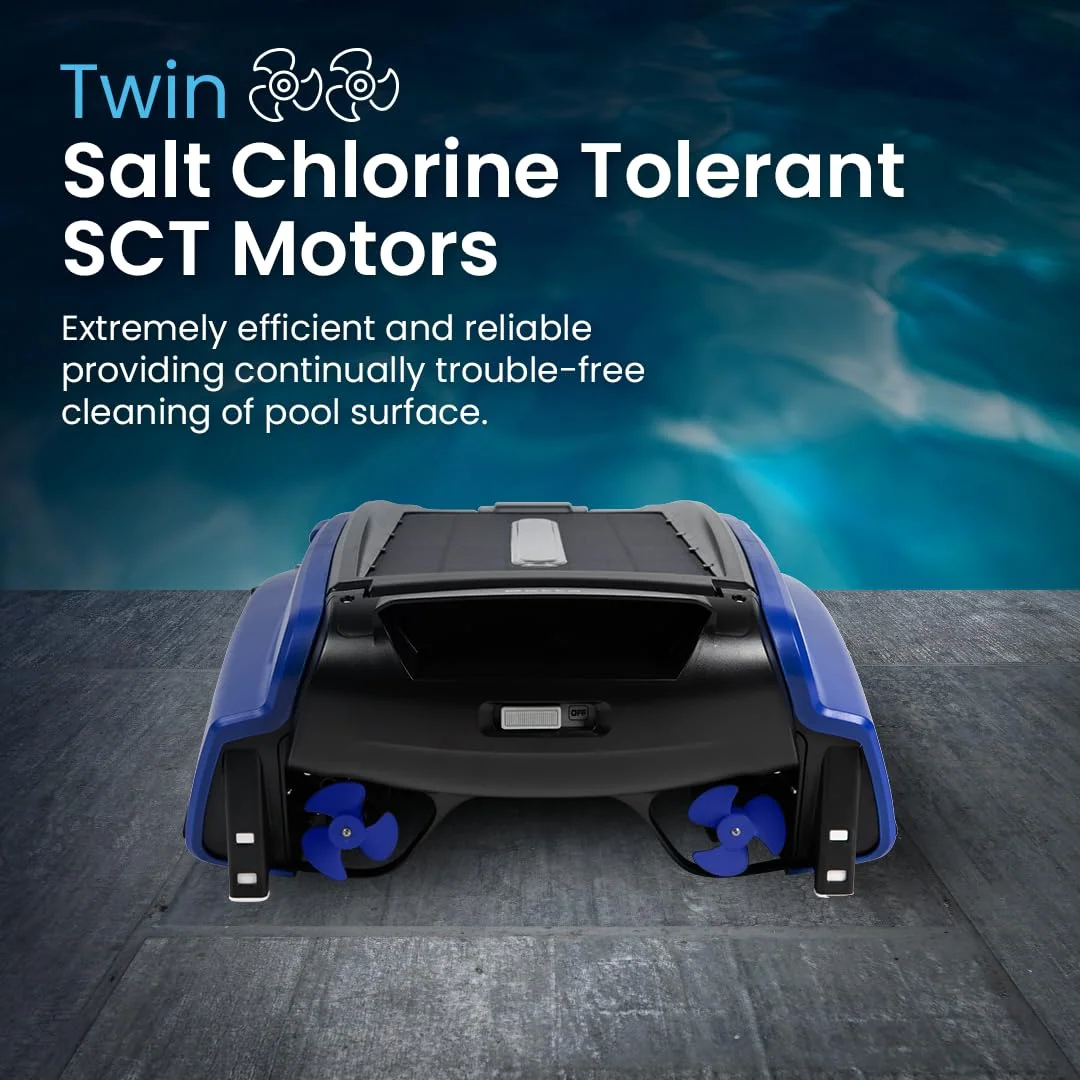
Propulsion trouble is documented more than once. In one repair, a rear motor began binding after a few months; Betta supplied replacement motors, propellers and the removal tool, and the owner restored operation without replacing the complete skimmer. Another owner diagnosed a rear propeller that would not turn freely, installed a motor-and-propeller kit and returned the unit to service.
That modularity is a genuine advantage, not permission to ignore a stalled propeller. Hair, twine or plant fibers wound around the shaft can imitate a failed motor, so the first check is whether both rear propellers rotate freely after the unit has had enough sun to charge. If cleaning the shaft does not restore movement, contact Betta with the serial number before improvising with lubricants or opening unrelated parts.
The longer record contains better news. One owner reported nearly continuous operation over two years, then received replacement anti-stranding feet and bought a guide-wheel set when wear eventually appeared. That is a useful sign that small external parts exist and support can be responsive, although one strong support experience is not a warranty promise for every buyer.
Small maintenance prevents avoidable drama
- Empty and rinse the basket before it is packed solid, which may mean every few days in ordinary conditions and much more often after storms or heavy leaf fall.
- Keep the solar panel exposed, wipe dirty sensor lenses and occasionally rinse grime from the underside.
- Inspect both propeller shafts when one side weakens, binds or stops, and remove wrapped hair or plant fibers before diagnosing a dead motor.
- For long-term storage, remove the skimmer, rinse it with clean water, dry it fully and keep it indoors at room temperature away from high heat.
Severe neglect occasionally produces a cheerful survival story, but it is not maintenance guidance. A durable owner’s unit survived winter exposure and pressure washing; the official storage instructions still call for rinsing, drying and indoor storage. Follow the instructions, not the anecdote.
The same caution applies while swimming. Some owners leave the machine working around people, but the retained instructions reported by an owner advise removing it because swimmer-generated waves can release material from the basket. Quiet operation does not override current safety and operating guidance.
Sources (3)
- Amazon listings and customer reviews — Betta Se
- Owner and reviewer video, 5 channels
- Thepoolnerd — Article — www.thepoolnerd.com