Dolphin Nautilus CC vs Proteus DX3: the Nautilus is the safer buy
Choose the Dolphin Nautilus CC for most pools up to 33 feet, and consider the Proteus DX3 only when its basic seven-day scheduling option matters more than the stronger case for the Nautilus.
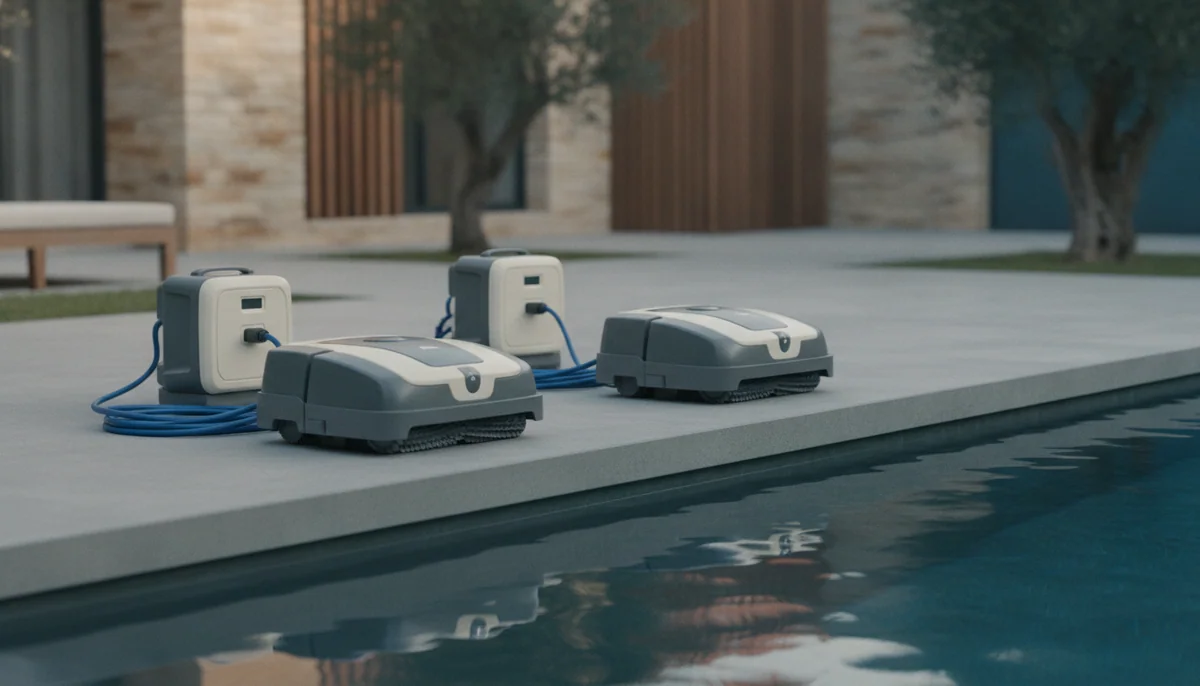
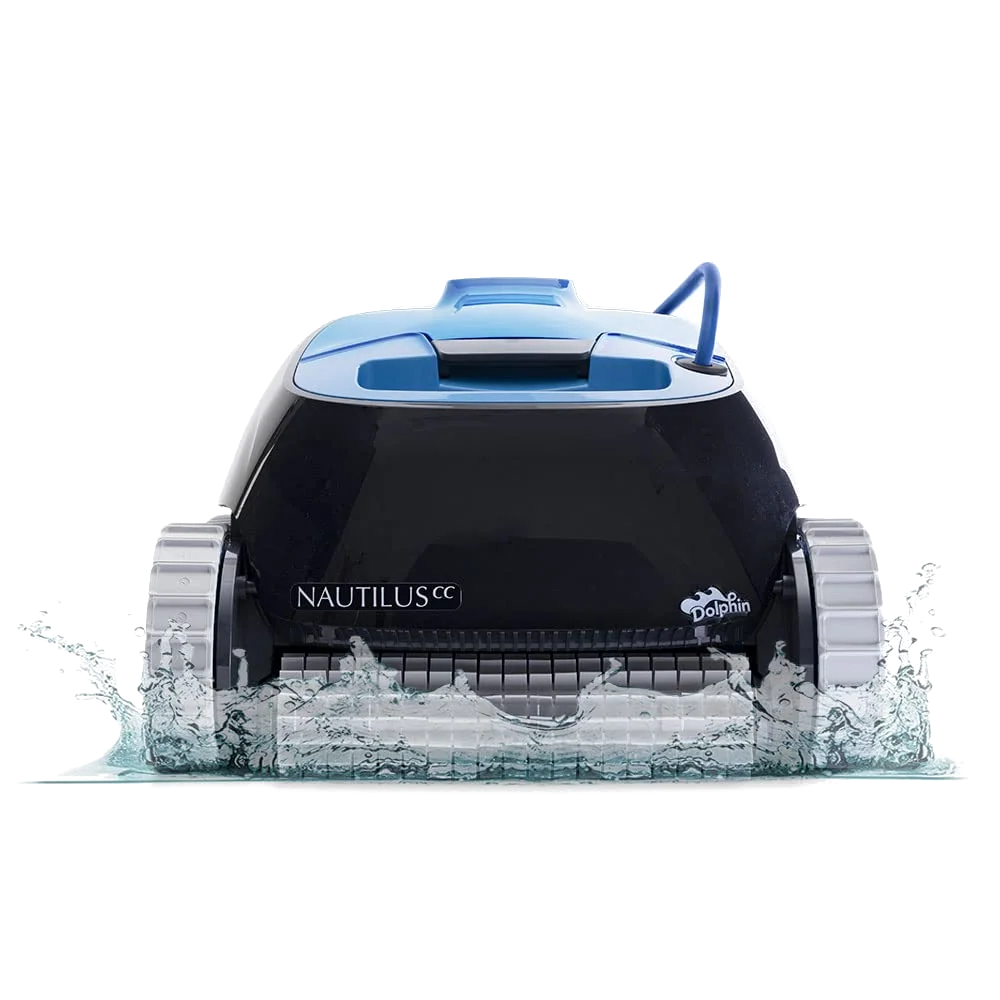
Dolphin Nautilus CC
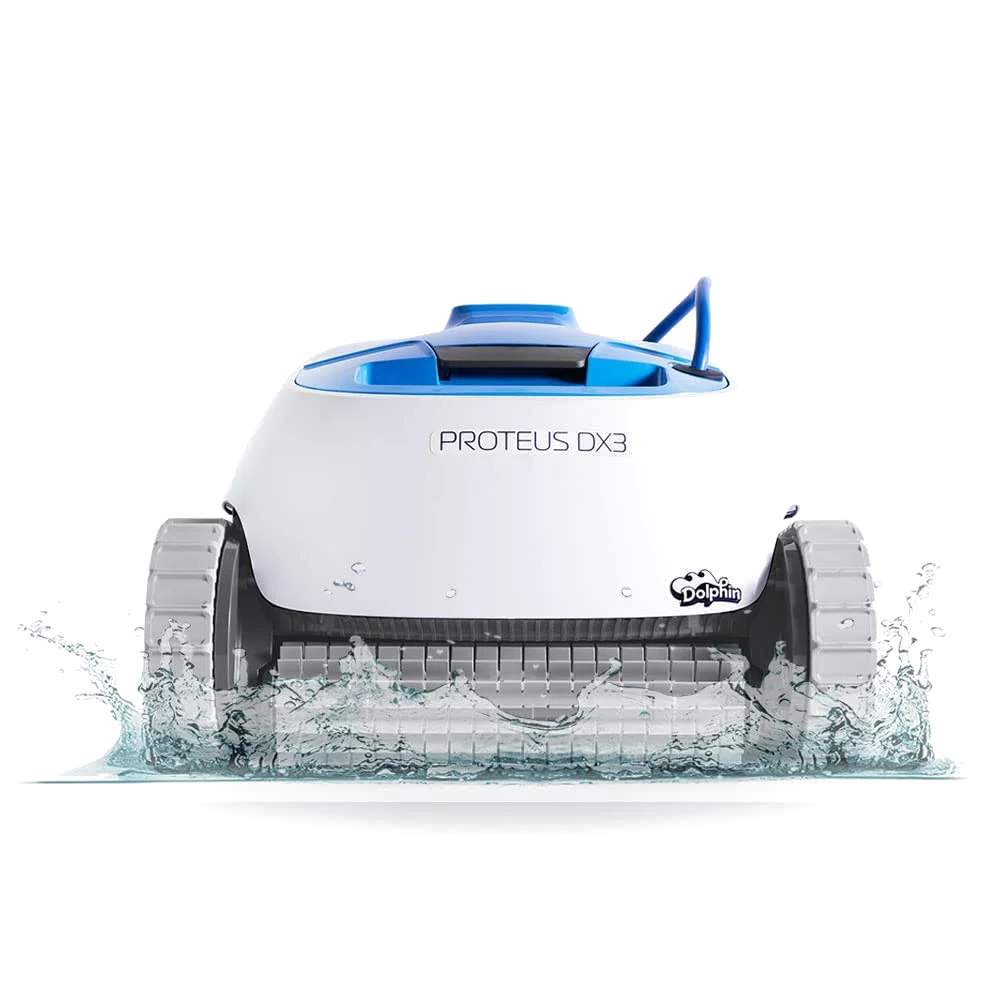
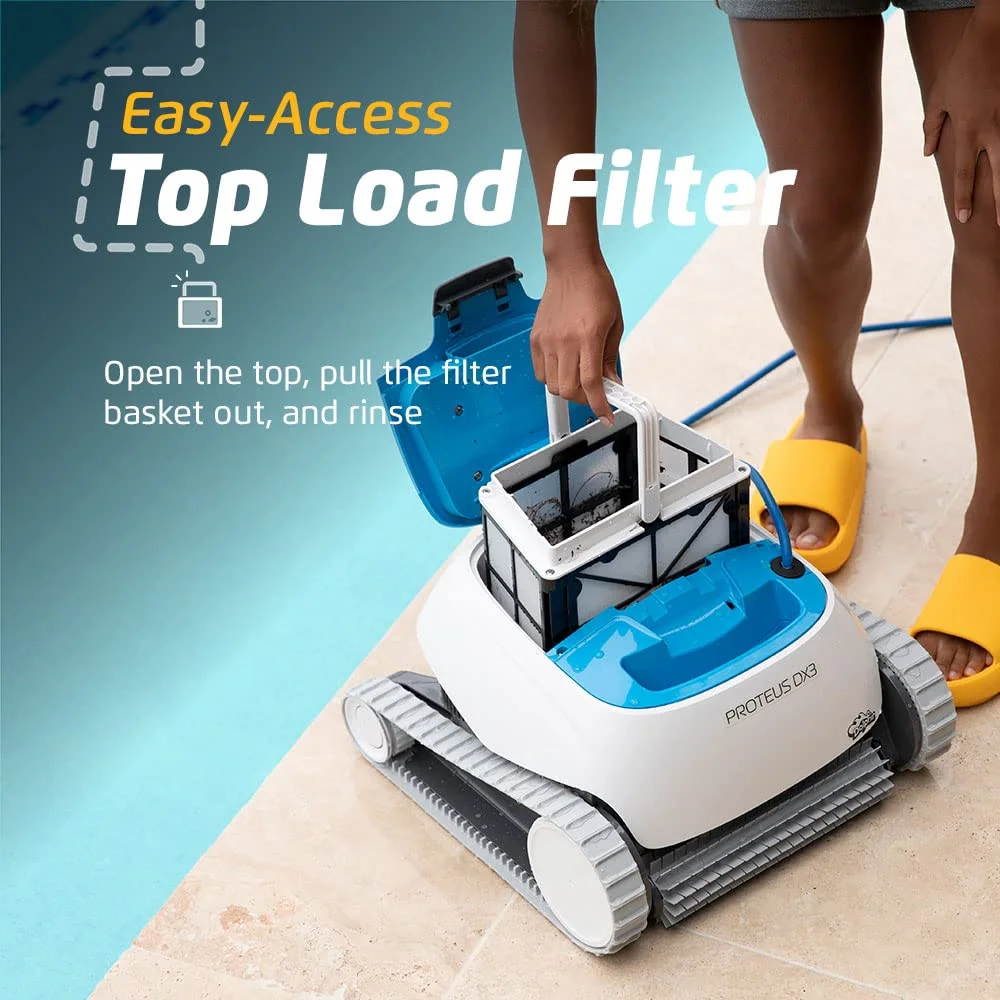
Dolphin Proteus DX3
These two Dolphins are close enough to make the comparison look like a choice between colors. Both use corded power, run an approximately two-hour cycle, scrub with an active brush, climb walls, collect debris in a top-load basket and target pools no longer than 33 feet. Neither is the answer for app control, saved mapping, dependable stair coverage or sustained travel along the waterline.
The meaningful differences appear at the edges of that shared design. The Nautilus CC is listed for both above-ground and in-ground pools, while the Proteus DX3 is sold specifically for in-ground pools. The DX3 can also repeat its cycle daily, every other day or every third day for one week; the current base Nautilus CC requires a manual start.
Scheduling is the DX3’s only persuasive functional advantage, and it is less liberating than it sounds. A weekly setting cannot empty the basket, straighten the cable, retrieve a robot caught by awkward geometry or protect the cleaner during chemical treatment. If the owner already plans to remove and rinse the machine after each run, pressing the Nautilus CC’s start button is a small concession.
The ownership evidence breaks the tie. The retained Nautilus CC accounts include cord wear, filter-handle damage, clogging and occasional early failures, so it is not a durability saint. They also include exact-model machines still cleaning after two or three years, with tracks, brushes, wheels and cables replaced as wear accumulated. The smaller DX3 record contains useful cleaning reports but also a serious account of repeated power-box failures and a robot that would run only briefly before stopping. Neither set reveals a failure rate, yet the DX3 gives Smart Pool Bots less reason to accept two nearly identical cleaners as equally safe bets.
Best overall
Dolphin Nautilus CC: the more defensible choice for routine floor debris, simple operation and either an above-ground or in-ground pool within its size limit.
Best narrow exception
Dolphin Proteus DX3: the alternative for a conventional in-ground pool when a basic repeating schedule is genuinely useful.
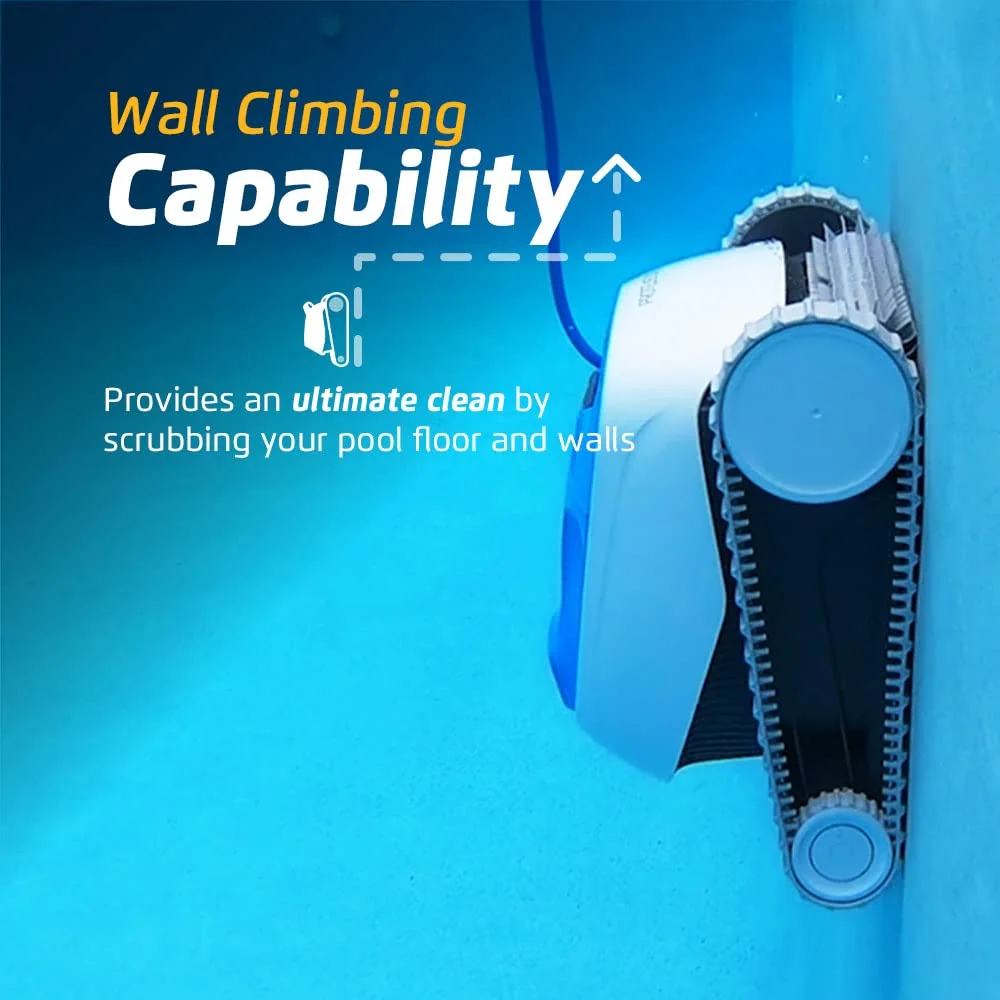
Dolphin Nautilus CC
Dolphin Proteus DX3
At a Glance
| Feature | Editor's Pick Dolphin Nautilus CC | Dolphin Proteus DX3 |
|---|---|---|
| Price Range | $500–$1,000 | $500–$1,000 |
| Check Price on Amazon | Check Price on Amazon |
The comparison turns on compatibility, scheduling and ownership risk
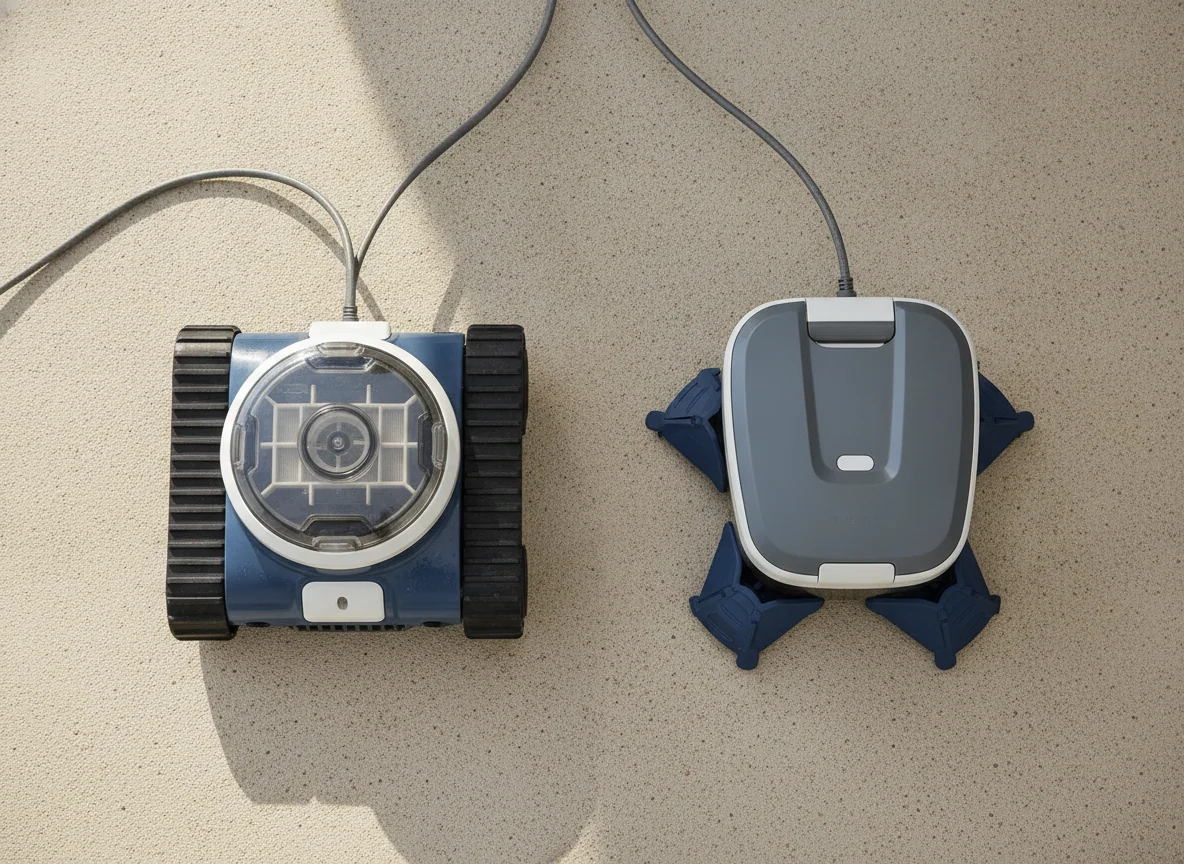
Cleaning performance does not create much daylight between these models. Their owner records support competent pickup of common floor debris such as leaves, bugs, dirt and sand, with useful wall climbing in straightforward pools. Both can miss isolated patches, revisit clean areas and struggle with steps, benches, sharp corners or shallow shelves. A buyer expecting orderly lawn-mower rows will be disappointed by either machine, even when the floor looks good after the full cycle.
| Decision point | Dolphin Nautilus CC | Dolphin Proteus DX3 | Why it matters |
|---|---|---|---|
| Pool type | Above-ground or in-ground | In-ground | The Nautilus has the broader stated application. |
| Maximum pool length | Up to 33 feet | Up to 33 feet | Neither is the right starting point for a longer pool. |
| Normal cycle | Approximately two hours | Approximately two hours | Routine cleaning speed is effectively a draw. |
| Starting and scheduling | Manual start on the current base model | Daily, every other day or every third day for seven days | The DX3 can begin unattended, but still needs physical care between cycles. |
| Cable | Approximately 50 feet without a swivel | Approximately 50 feet without a swivel | Twist management is part of owning either cleaner. |
| Waterline | May reach the surface during a climb | May reach the surface during a climb | Neither provides dependable sideways tile-line scrubbing. |
| Digital controls | No app or remote steering | No app or remote steering | Both are deliberately basic corded robots. |
| Evidence concern | Cord wear, tangling and a short current warranty | Power-supply complaints and uncertain repair economics | The Nautilus has the stronger, though still imperfect, ownership case. |
Floor cleaning is the shared strength
The Nautilus CC has the deeper exact-model record for ordinary debris. Owners describe it collecting leaves, acorns, pebbles, sand, silt and general dirt, sometimes leaving only material trapped in square corners or at the wall base. The DX3’s retained accounts describe a similar result with leaves, oak tassels, blossoms, bugs, sand and windblown grit. Heavy debris can fill either basket, and microscopic dust or dead algae may call for finer filtration and correct water chemistry rather than another optimistic cycle.
Neither robot should be chosen as a whole-pool detailer. Wall climbing means the machine can travel up a vertical surface; it does not mean it will hold the tile line and scrub sideways around the perimeter. Steps and ledges are even less reliable because shallow water and narrow treads leave too little room for consistent maneuvering. Buyers who consider the scum line the main problem should skip both and start with our guide to robots built for walls and waterline cleaning.
The cord is a draw, not a reason to choose one
Both machines trade battery charging for cable handling. That gives them continuous access to external power, but neither exact model has an anti-tangle swivel. The cable can twist as the robot repeatedly turns, and the usable reach also depends on pool depth, outlet location and the safe position of the power supply. Measure from the intended supply location to the farthest submerged point instead of assuming the 33-foot label settles the question.
If a floating cord is already the objection, changing from the Nautilus CC to the DX3 does not solve it. Our explanation of corded and cordless pool robots lays out the real exchange between cable management, charging, runtime and battery aging.
The DX3 scheduler is useful, but easy to overvalue
The DX3’s controller can repeat a cycle daily, every other day or every third day, then requires the schedule to be set again after seven days. That is a real feature difference, particularly for a pool that gathers light debris between uses. It is not app control, remote steering or permanent automation, and the machine still needs its basket rinsed and cable relaxed.
The current base Nautilus CC is simpler: connect it, lower it into the water and press the start button for one cycle. Older instructions and owner accounts sometimes describe repeating timer settings, but those controls should not be imported into the current model. Anyone buying the Nautilus specifically for scheduling risks purchasing the right cleaner for the wrong reason.
The Nautilus CC is the better default.
It earns first place by delivering the same core floor-cleaning brief as the DX3 while supporting both above-ground and in-ground pools and carrying the more reassuring exact-model ownership record.
Its non-swivel cord can tangle and wear, while manual starts, inconsistent steps and incomplete waterline work keep it far from hands-off automation.
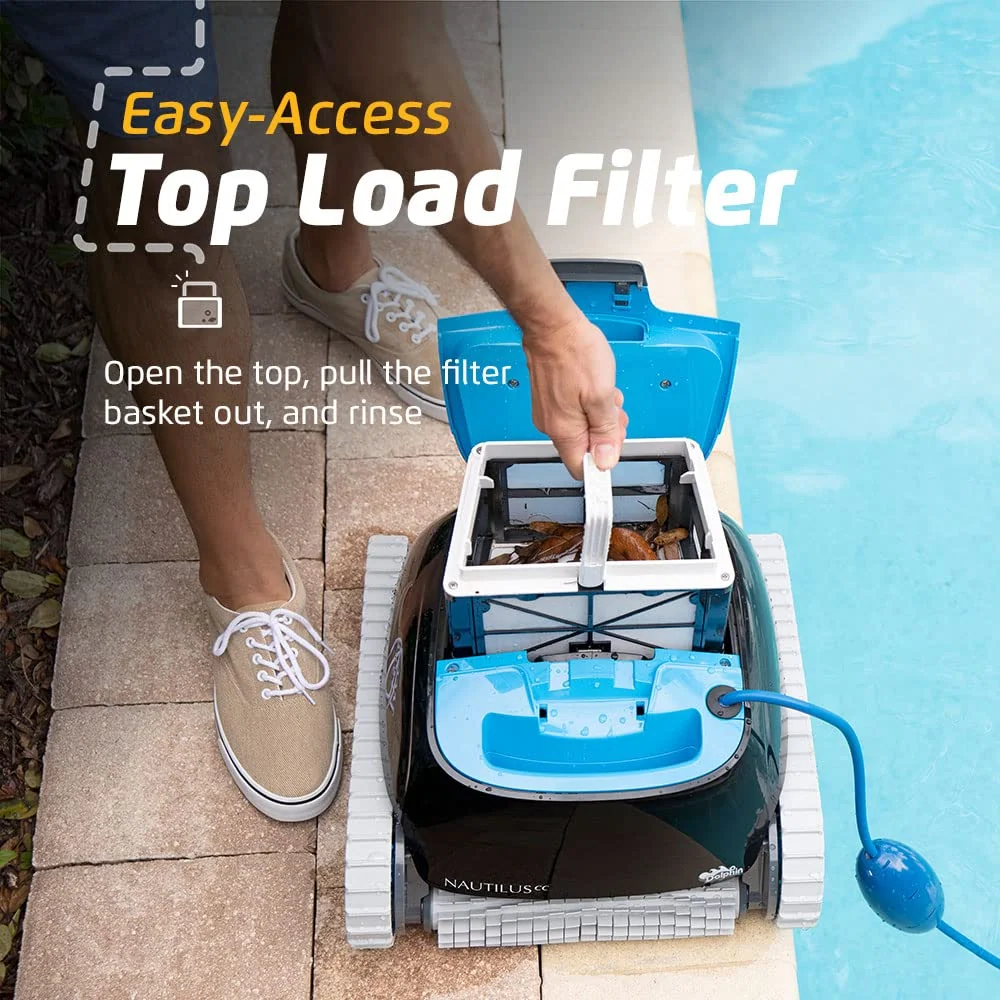
Choose this model for a straightforward pool within the stated length limit when the main goal is to stop manually vacuuming routine floor debris. Its top-load basket is easy to reach, and the robot’s relatively simple construction has allowed mechanically comfortable owners to replace tracks, brushes, wheels and a worn cable rather than discard a working unit. The current one-year warranty still leaves meaningful long-term risk with the buyer.
The full Dolphin Nautilus CC review covers filter choices, cable care, repair clues and the pool geometry most likely to frustrate it.
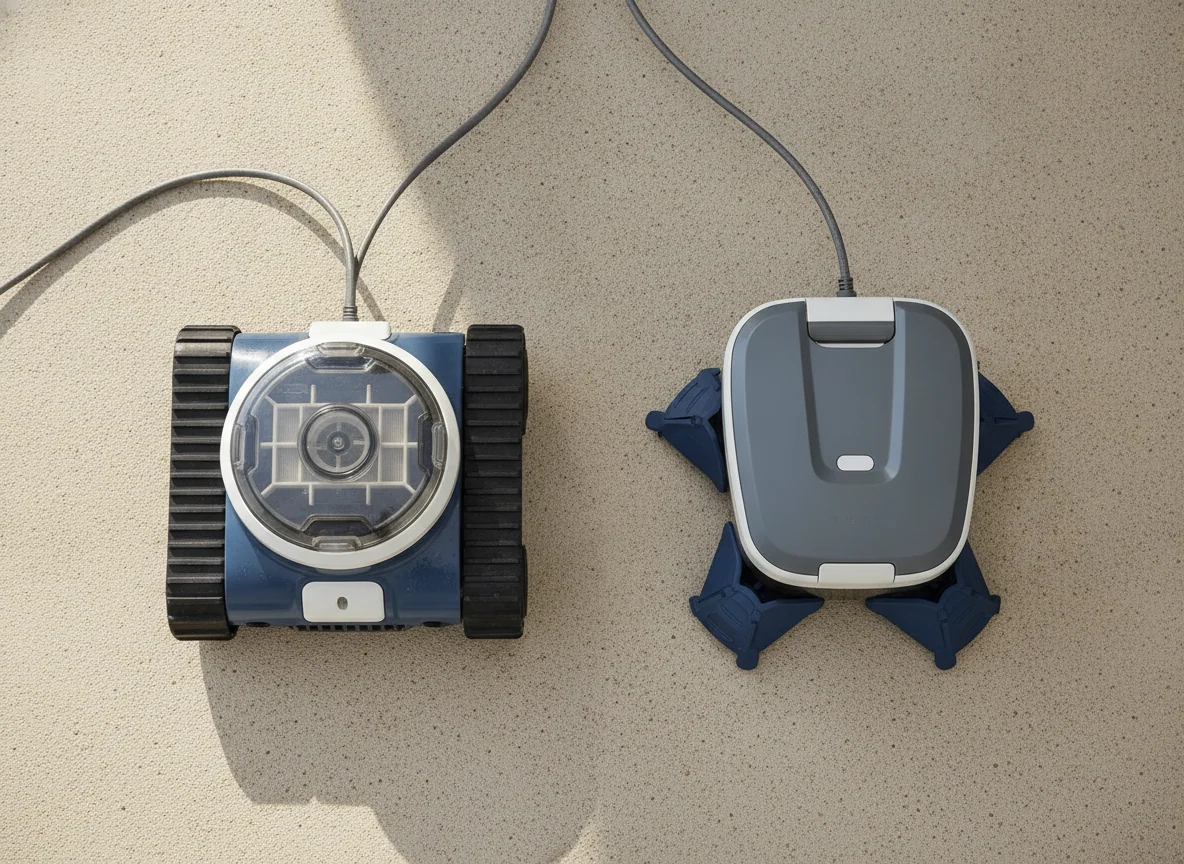
The Proteus DX3 is the scheduler’s alternative.
It deserves consideration for a conventional in-ground pool when a simple one-week repeating schedule will be used often enough to outweigh the Nautilus CC’s broader compatibility.
Its erratic route, non-swivel cable and retained report of repeated power-box failures make service access and replacement-part economics unusually important.
The DX3 can collect the everyday mixture that makes manual pool vacuuming tedious, including leaves, blossoms, insects, sand and ordinary dirt. Owners also report easy basket cleaning and useful wall assistance, but the record does not justify expecting complete waterline, step or ledge coverage. Its scheduler is the reason to buy it over the Nautilus CC, not a claim that it cleans more thoroughly.
Read the full Dolphin Proteus DX3 review before committing if controller durability, drain compatibility or access to service could turn a failure into an expensive shipping problem.
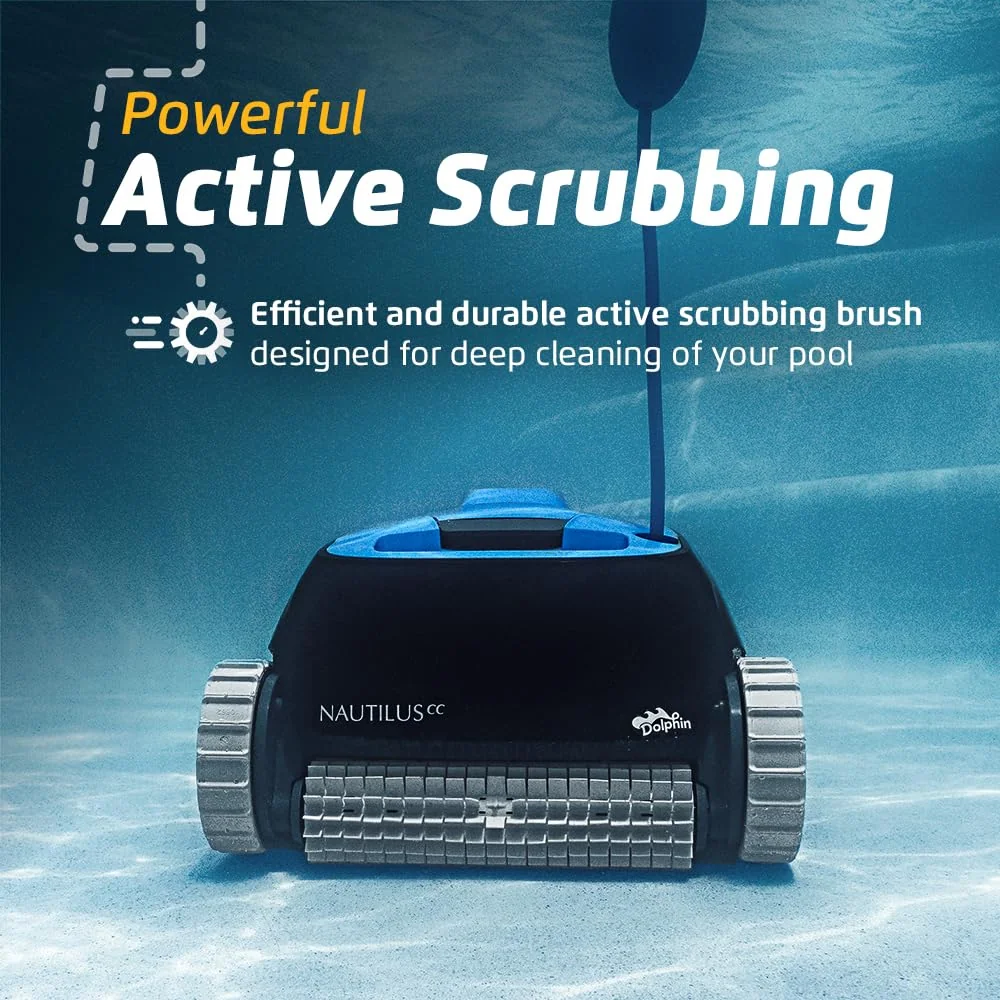
Dolphin Nautilus CC
Dolphin Proteus DX3
Match the robot to the pool, not the family name
Buy the Nautilus CC when simplicity is the point
- Your above-ground or in-ground pool is no longer than 33 feet.
- Leaves, dirt, bugs, sand and ordinary floor debris create most of the work.
- You expect to remove, rinse and restart the robot after each cycle.
- You can brush steps, corners and the waterline without resenting the machine.
- You accept periodic cord straightening and eventual wear-part replacement.
Choose the DX3 only for its narrow advantage
- Your pool is in-ground, conventional in shape and within the stated size limit.
- A daily, every-other-day or every-third-day schedule would reduce a real maintenance burden.
- You have a protected power-supply location and practical access to service.
- You understand that scheduled starts do not eliminate basket and cable care.
- You are comfortable accepting a thinner long-term ownership record.
Skip both when the missing capability is the point
Neither model is a clever shortcut to premium Dolphin behavior. A longer or geometrically complex pool, persistent waterline buildup, app control, dependable step coverage or freedom from a floating cable calls for a different class of cleaner. Compare the wider field in our Dolphin robot recommendations, or examine the Nautilus CC and CC Pro comparison if connected controls and waterline work are driving the upgrade.
Do not confuse either base model with its better-equipped siblings
The Nautilus name also appears on the CC Plus, CC Pro and CC Supreme, while the Proteus line includes the DX4 and DX5i. Features attached to those siblings do not migrate backward because a retailer groups the products or an owner shortens the model name. Confirm the exact ASIN and model number before relying on a claim about Wi-Fi, cable swivels, waterline hardware, brush count or pool length.
That warning matters most when shopping for parts. The Nautilus CC here is model 99996113-US, and the Proteus DX3 is model 99996114-LSB. Match replacement filters, cables, power supplies, tracks and brushes to the exact model rather than buying from a family-level description. Routine care is covered in our robotic pool cleaner maintenance guide.
The verdict remains uncomplicated after the specifications, limitations and owner evidence are put in the same frame: buy the Nautilus CC for the ordinary 33-foot-pool job, and move to the DX3 only when its limited scheduler is a feature you will actually use.
Frequently Asked Questions
Which model is better for an above-ground pool?
The Nautilus CC is the appropriate choice because its listing covers above-ground and in-ground pools, while the Proteus DX3 is specified for in-ground pools.
Does either robot provide dependable waterline cleaning?
No, both may reach the surface while climbing but neither should be treated as a dedicated robot that travels sideways along the tile line.
Which cleaner can run on a repeating schedule?
The Proteus DX3 can repeat daily, every other day or every third day for seven days, while the current base Nautilus CC uses manual starts.
Will either machine clean stairs and tanning ledges reliably?
No, each may reach a broad lower surface by chance, but steps and shallow ledges remain inconsistent coverage zones.
Do these models have a cable swivel?
No, both use an approximately 50-foot floating cable without an anti-tangle swivel, so periodic straightening is part of ownership.
Can either cleaner pick up leaves and sand?
Yes, both have owner evidence supporting routine leaf, dirt and sand pickup, although heavy debris can fill the basket and extremely fine material may escape standard filtration.
Does either model have Wi-Fi or app control?
No, these exact base models use external power-supply controls rather than phone connectivity or remote steering.
Which robot has the better long-term record?
The Nautilus CC has the more reassuring retained record, although cord wear and early failures mean its advantage should not be mistaken for a measured reliability guarantee.
Ready to Choose?
Sources (3)
- Amazon listings and customer reviews — Dolphin Nautilus Cc and Dolphin Proteus Dx3
- Owner and reviewer video, 2 channels
- Thepoolnerd — Article — www.thepoolnerd.com