Betta SE Plus beats the SE when sunshine stops cooperating
Buy the Betta SE Plus unless your pool receives dependable direct sun and you are comfortable letting the skimmer stop when its solar reserve runs out; the standard SE cleans the surface similarly, but it has no adapter-charging escape hatch.
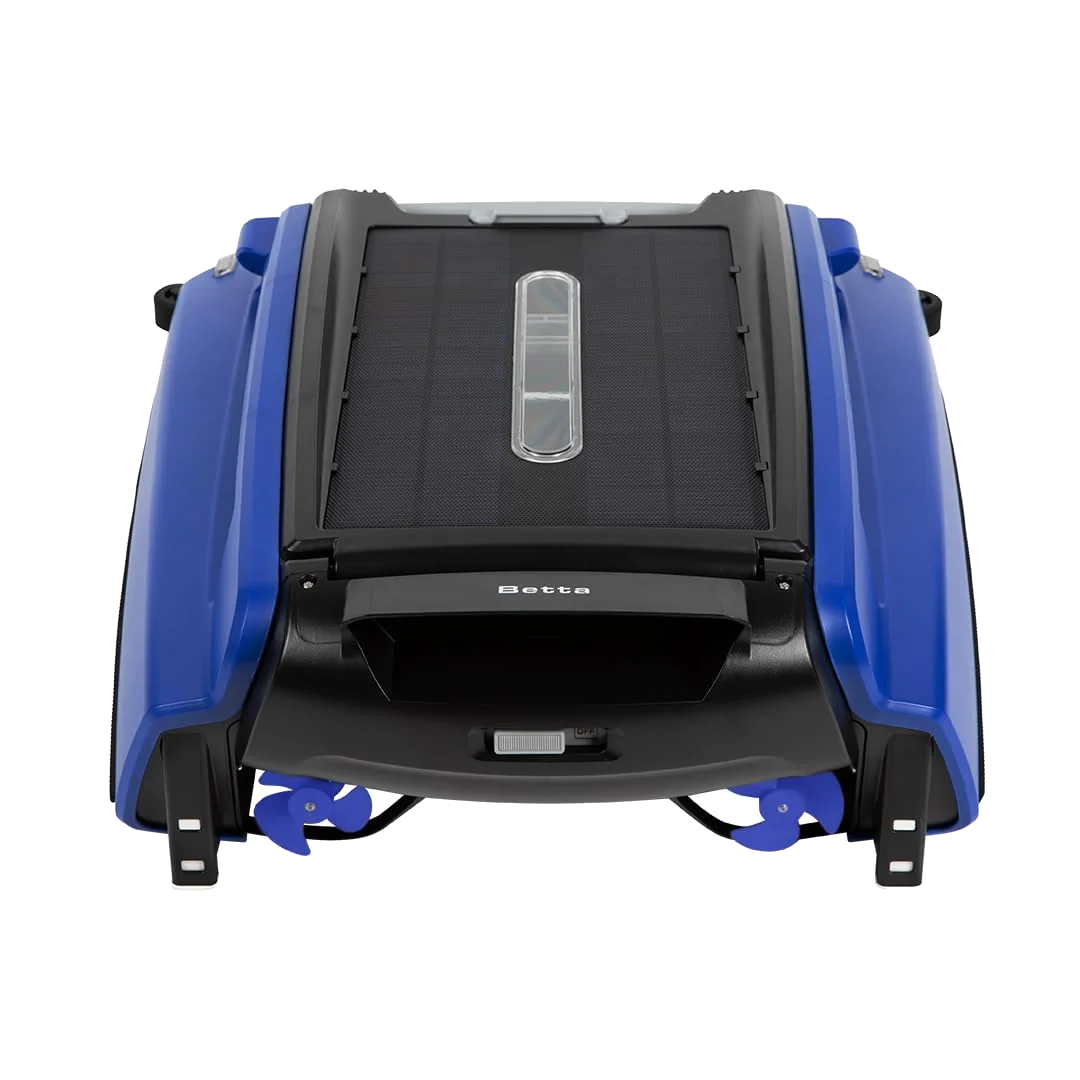
Betta SE
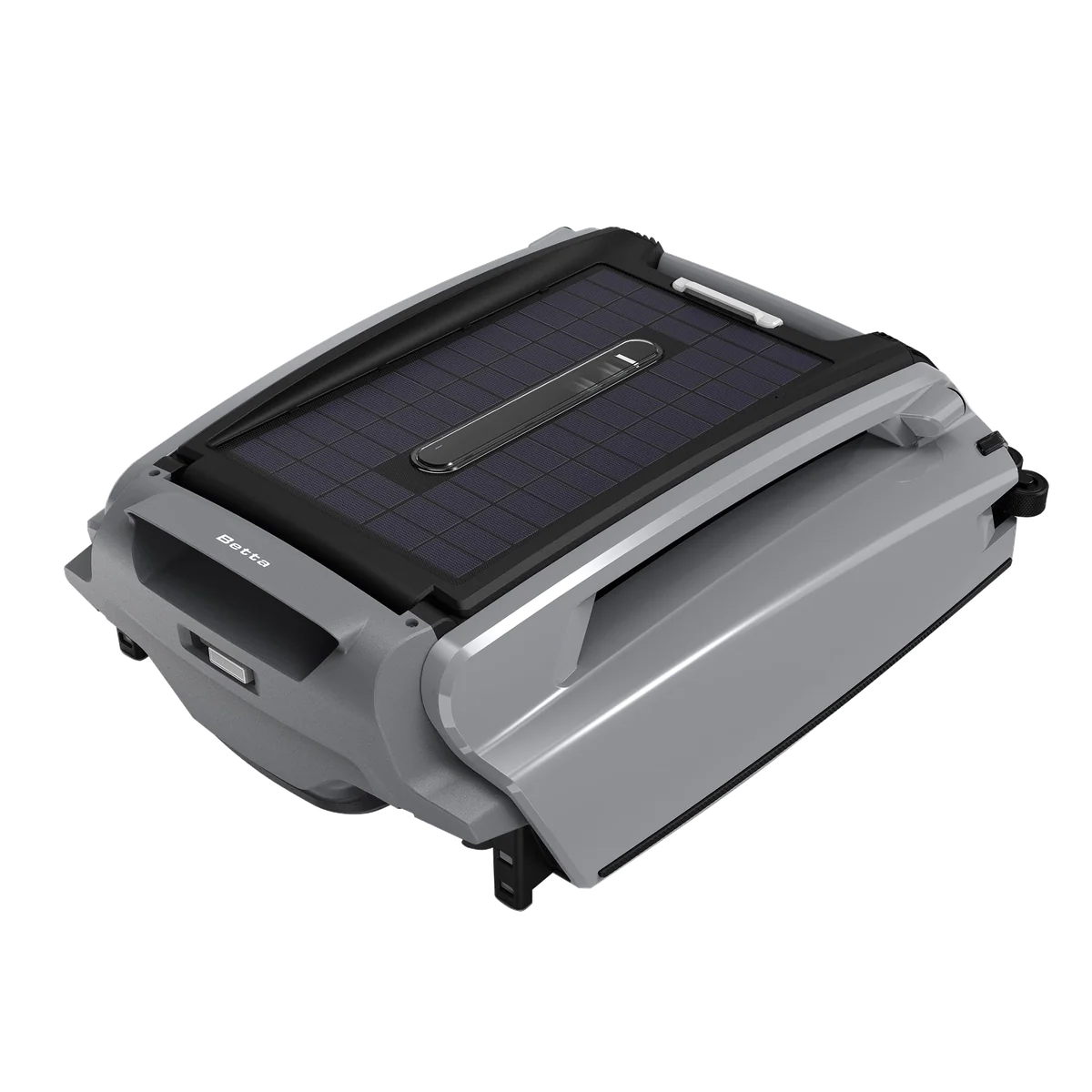
Betta SE Plus
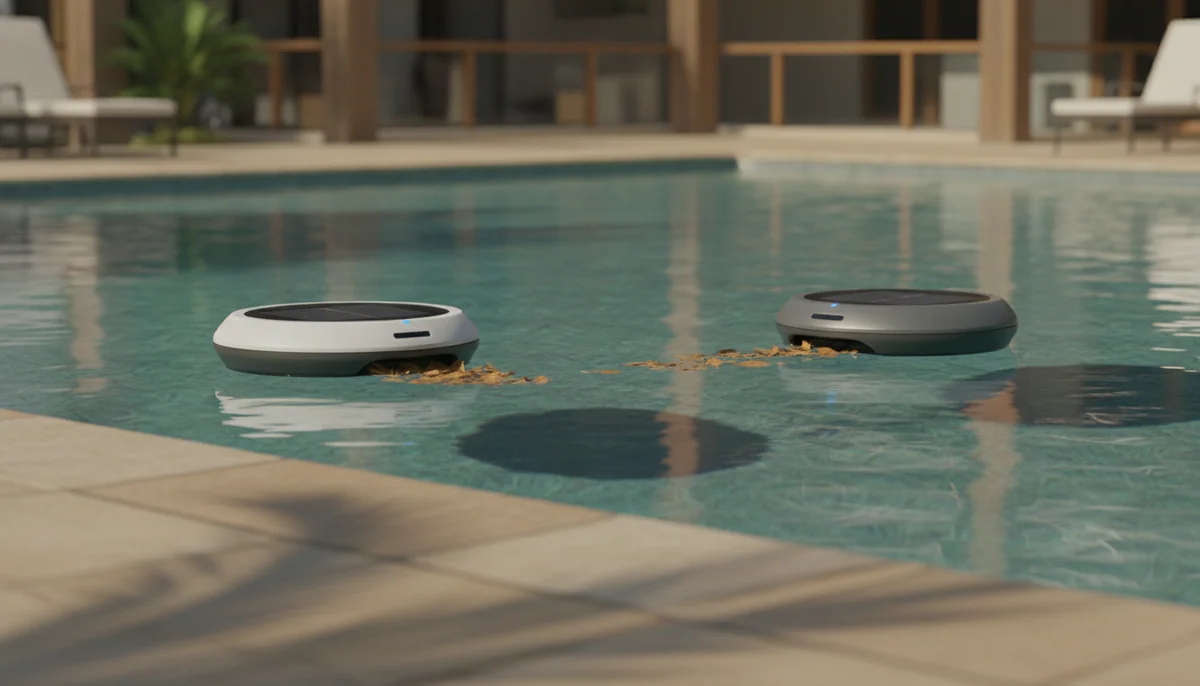
The model names make this look like a contest between an ordinary machine and a more ambitious one. It is not. The Betta SE and Betta SE Plus are closely related robotic surface skimmers built around the same patient idea: roam the water, draw floating debris into a fine basket, and keep doing it long enough that leaves, pollen, bugs, blossoms, and hair are intercepted before they sink. Neither model vacuums the floor, climbs walls, scrubs the waterline, or replaces the pool’s pump and filter.
The Plus wins because it can be charged from an adapter when sunlight is not enough. That does not make it collect leaves faster or navigate corners more intelligently. It makes ownership less dependent on the forecast, surrounding buildings, tree shade, and the short days of winter. The regular SE remains the sharper choice only when those conditions are reliably favorable and solar-only operation is part of the appeal rather than a risk.
Choose the SE Plus
Pick it for partial shade, cloudy stretches, winter operation, or any pool where a depleted battery would turn solar convenience into waiting.
Choose the SE
Pick it for a sunny, open pool when you want the same basic surface-skimming job without paying for charging flexibility you are unlikely to use.
If settled grit, algae, or leaves on the bottom are the main problem, buy neither as your first robot. Start with a conventional cleaner from the robotic pool cleaner guide, or read how a surface skimmer differs from a pool vacuum before choosing which chore deserves automation.
Betta SE
Betta SE Plus
At a Glance
| Feature | Betta SE | Editor's Pick Betta SE Plus |
|---|---|---|
| Price Range | $200–$500 | $200–$500 |
| Check Price on Amazon | Check Price on Amazon |
The Plus changes the power plan, not the cleaning job
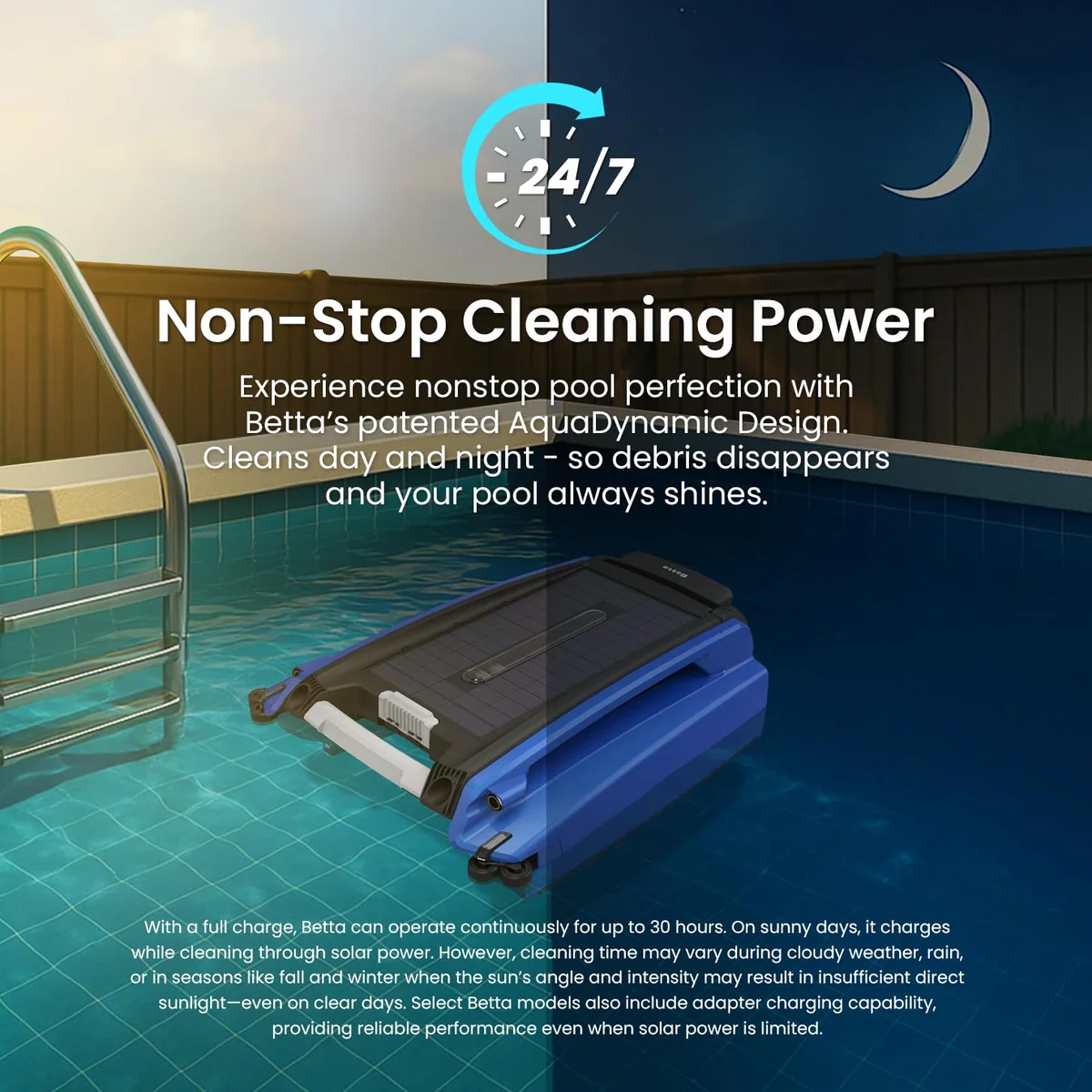
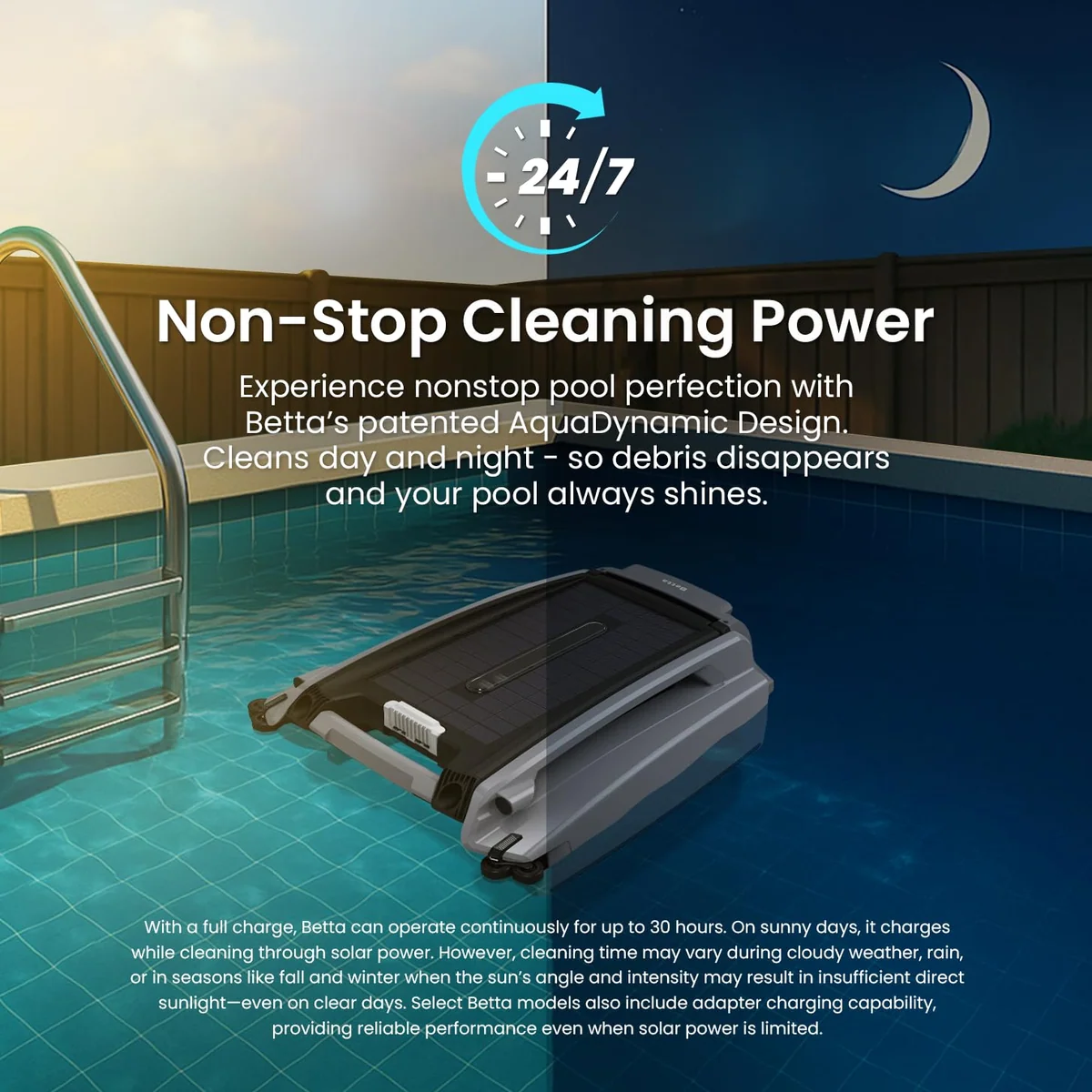
Betta specifies more than 30 hours of operation per charge for both models and a solar recharge period of five to six hours in direct sunlight while they clean. Those are manufacturer claims, not guaranteed runtimes in every yard. The decisive specification is that the SE Plus can also use its supplied adapter, with a stated 3.5-hour charge, while the standard SE depends on its solar panel.
That difference is easy to dismiss during a bright summer afternoon. It becomes much more important after several gloomy days, beneath a screened enclosure, beside tall trees, or late in the season when the sun is low. Exact-model SE Plus owners describe continuous summer operation on solar power, but the retained record also includes a unit that stopped after two consecutive cloudy days and a long-term owner who needed supplemental charging during winter. The adapter is not there because solar charging never works; it is there because solar conditions do not remain ideal all year.
| Question | Betta SE | Betta SE Plus | Why it matters |
|---|---|---|---|
| How does it recharge? | Solar charging only | Solar charging or the supplied adapter | The Plus can recover on demand when weather or shade leaves the battery depleted. |
| What does it clean? | Floating surface debris | Floating surface debris | Neither replaces a floor vacuum, wall cleaner, waterline scrubber, pump, or filter. |
| What catches the debris? | Top-access 200-micron basket | Top-access 200-micron basket | Both target fine material such as pollen and hair as well as larger floating leaves. |
| How does it navigate? | Automatic roaming with a handheld remote | Automatic roaming with a handheld remote | Neither maps the pool, so repetition and moving water create coverage over time. |
| What helps around shallow areas? | Anti-stranding hardware | Listing specifies a shallow-water safeguard | The Plus has the clearer on-paper advantage around stairs and ledges, although pool geometry still determines whether it becomes trapped. |
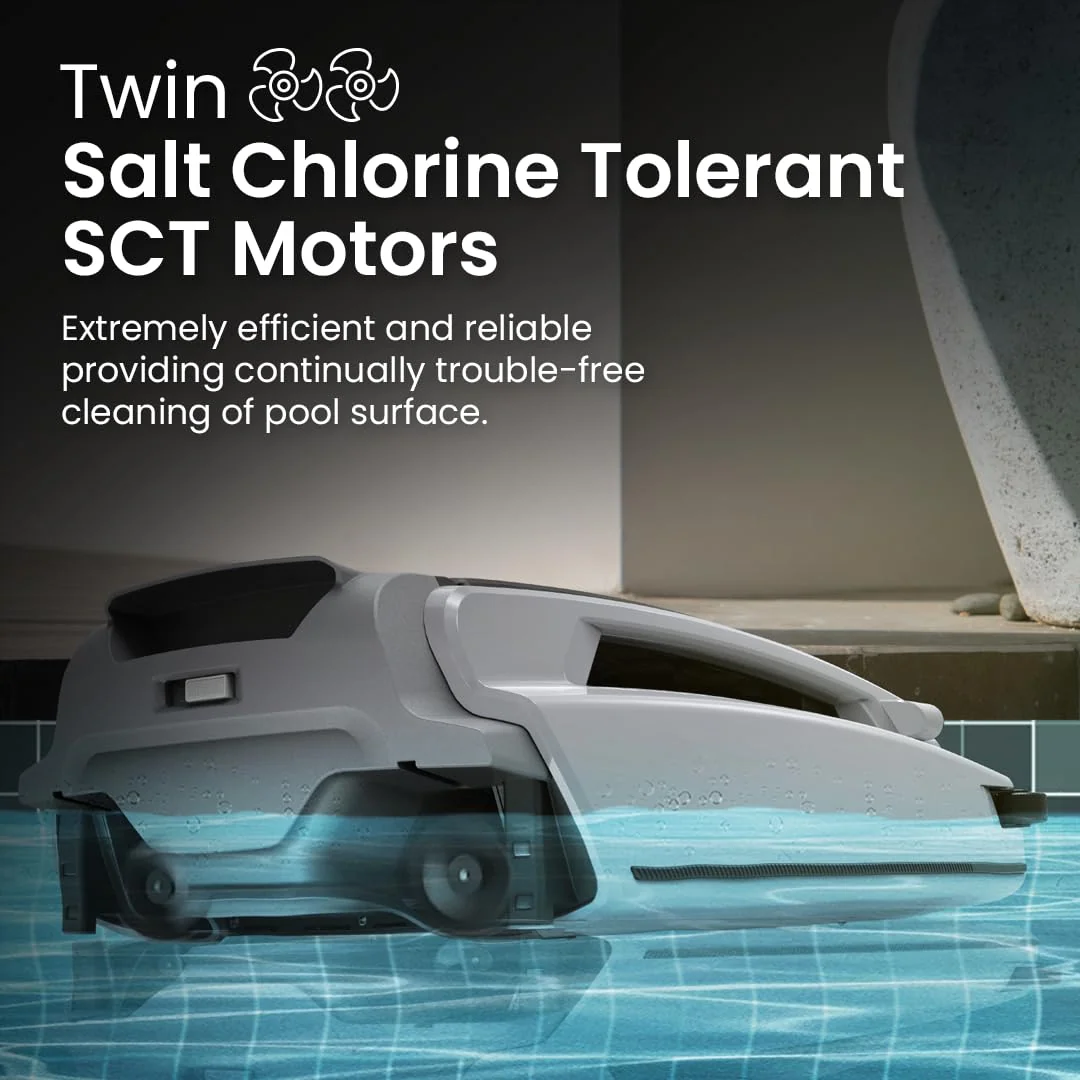
| Which pool water is supported? | Freshwater and salt-chlorinated pools | Chlorine and salt-chlorinated pools | Both listings emphasize salt-chlorine-tolerant propulsion motors. |
Surface performance is close enough that sunshine should decide
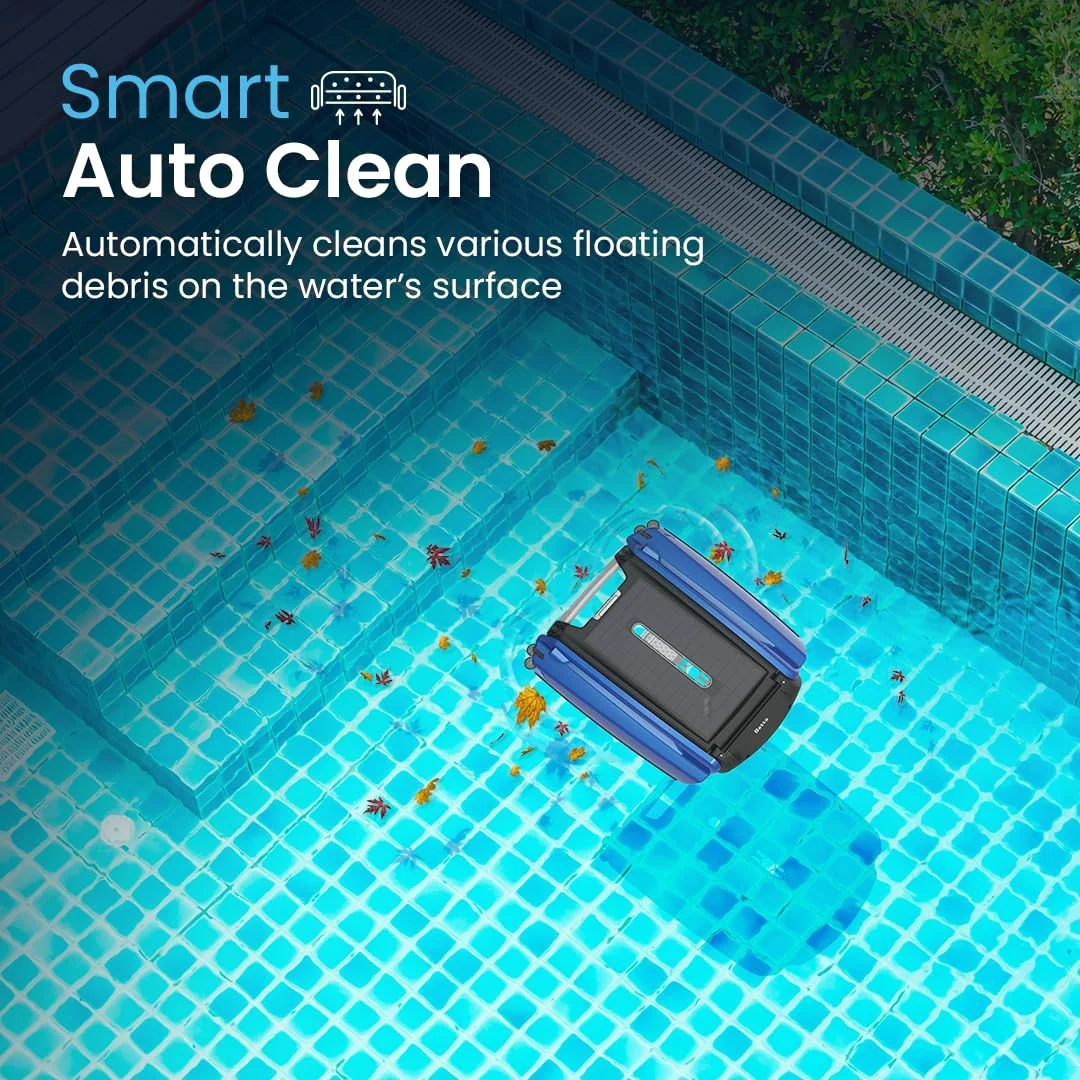
Both machines succeed through persistence rather than an elegant route. They wander, turn near obstacles, reverse, and eventually cross paths with debris that is also moving under wind and return flow. Watching either model for five minutes can make its path look wasteful; leaving it to patrol for hours is the point. Owners of both versions report sharply reduced hand-net work and substantial collection of leaves, insects, pollen, blossoms, grass, and floating pet hair.
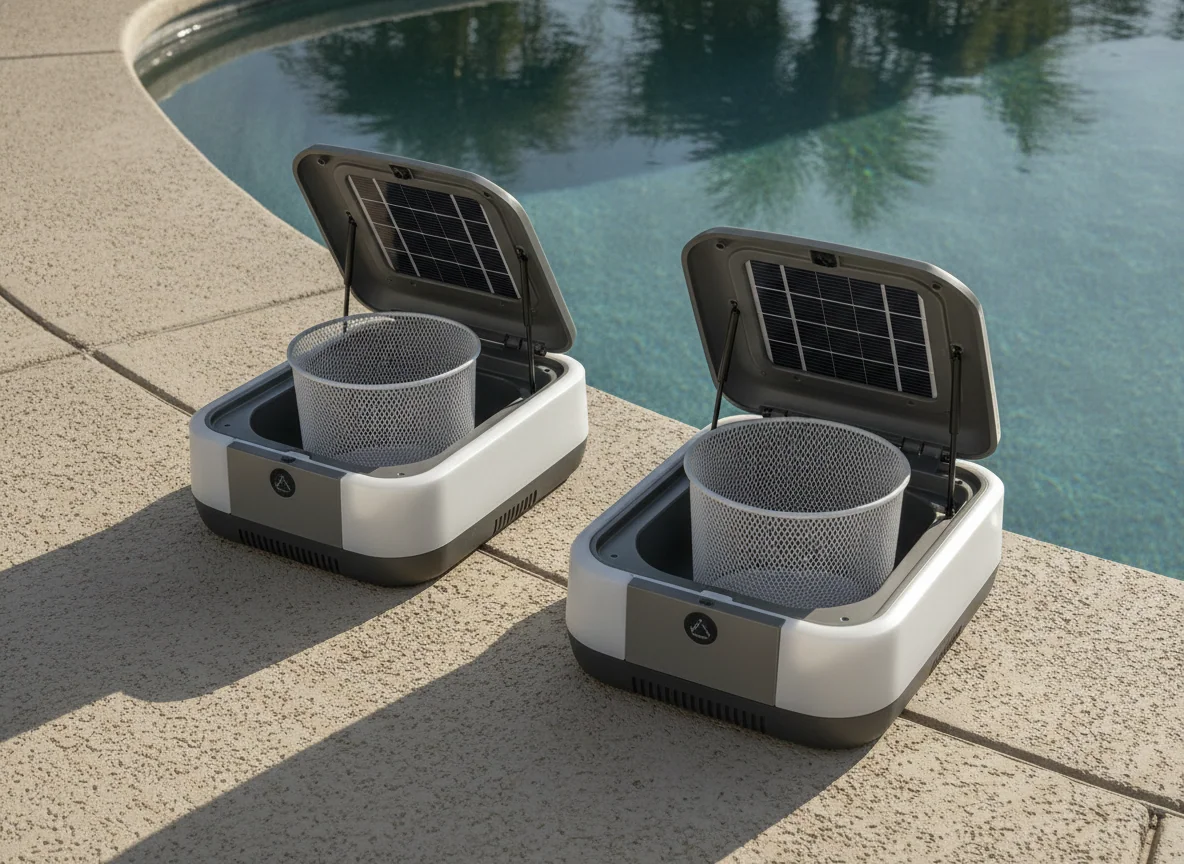
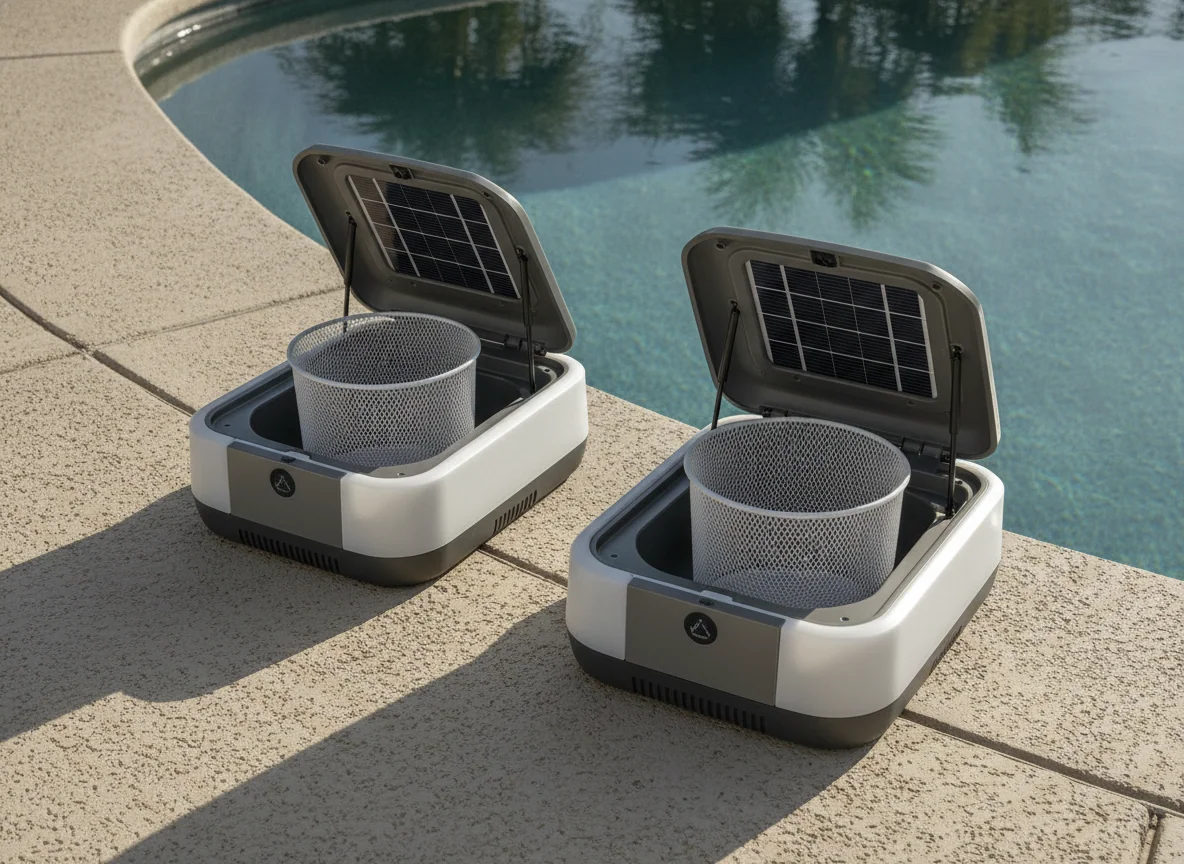
The 200-micron basket is central to that result. It can retain material that slips through a coarse hand net, and its top access lets you bring the skimmer to the edge, open the cover, lift the basket, and rinse it without turning the entire robot over. Conditions dictate the emptying schedule. A lightly exposed pool may allow several days between rinses, while heavy leaf fall, storms, or swimming dogs can make basket cleaning a daily job.
Neither model catches every leaf on first contact. The Plus record includes an owner who found that some leaves were pushed aside or escaped during a reversal, while owners of both models describe corners and tight edges that sometimes need a quick manual finish. That does not erase the labor savings, but it does define them accurately: these robots reduce routine skimming through repeated passes rather than producing a mapped, edge-perfect clean.
The pool can create more trouble than the model choice
Built-in skimmer openings
A strong current can pull either robot against the pool’s skimmer mouth, so the supplied foam bumper may be necessary while the circulation pump is running.
Cleaner hoses and cords
Floating hoses and cables can catch the hull, which makes alternating the surface robot and floor cleaner safer than asking them to negotiate unattended.
Steps, shelves, and furniture
Anti-stranding hardware helps, but shallow ledges, submerged chairs, bubblers, and unusual wall shapes still deserve observation during the first few cycles.
The included remote can steer either model toward a concentrated patch, bring it to the edge, or correct a temporary navigation miss. It is a useful retrieval tool, not a substitute for mapping. There is no app, route history, scheduling interface, or detailed battery dashboard on either product. Buyers who want those controls should compare the broader field in the robotic pool skimmer shortlist rather than assuming the Plus adds a smart-home layer.
The ranked choice
The Betta SE Plus is the safer solar skimmer for imperfect weather.
The adapter gives the Plus a dependable recovery route without changing the quiet, persistent surface-cleaning formula that makes the Betta useful.
Its random route can still miss corners or become trapped by skimmer suction, hoses, cords, shelves, and pool furniture.
This is the model Smart Pool Bots would choose for most buyers because the charging port protects the purchase from predictable changes in weather and season. Solar can still perform the routine work, while the adapter waits for the occasional week when the sky does not cooperate. The listing also specifies a shallow-water safeguard, although no hardware can guarantee clean escapes from every tanning ledge or submerged obstacle.
The Betta SE is the cleaner choice for a consistently sunny pool.
The standard SE delivers the same basic top-access basket, automatic roaming, remote control, and surface-only debris collection without introducing plug-in charging.
Persistent shade or several cloudy days can eventually stop it because sunlight is its only charging route.
Choose the SE when the pool receives strong direct sun and the absence of a charging routine is precisely what you want. Its owner record includes successful long-term operation, easy basket care, and dramatic reductions in manual skimming, but it also documents early electrical failure and propulsion-motor trouble in individual units. Those failures do not establish a universal defect, yet they are a reason to inspect stalled propellers and use support rather than assuming a motionless robot merely needs more sun.
Betta SE
Betta SE Plus
Buy for the debris you have, not the robot you wish this were
Buy the SE Plus when solar conditions vary
The Plus makes sense beneath intermittent tree shade, during cloudy seasons, around pools used into winter, or anywhere a stopped skimmer would be more irritating than occasionally plugging it in. It is also the more defensible choice when you cannot predict how much direct sun the pool will receive after landscaping matures or neighboring shade changes.
Buy the SE when direct sun is dependable
The standard model earns its place beside an open pool that receives strong sunlight and repeatedly collects floating leaves, pollen, insects, blossoms, grass, or pet hair. Its lack of adapter charging is acceptable only when the site itself supplies the reliability.
Skip both when the problem has already sunk
A Betta can intercept debris before it reaches the bottom, but it cannot retrieve sand, silt, algae, or waterlogged leaves from the floor. Buyers with one robot in the budget should usually automate that harder submerged job first, especially if the surface is already handled adequately by the built-in skimmer.
Pause when the pool is full of traps
Permanent pressure-cleaner hoses, corded robots, aggressive skimmer suction, tight corners, low coping, elaborate shelves, and in-water furniture can turn constant operation into constant rescue. Some interference can be solved by staggering schedules or fitting a bumper, but an awkward pool should be observed before either Betta is trusted alone.
The honest value calculation
Do not judge either model by a temporary price difference. Ask how often someone currently uses a hand net, how much material reaches the bottom before the built-in skimmer catches it, and how often weak sunlight would interrupt a solar-only machine. If floating debris is a daily chore, the Betta concept can remove meaningful work. If skimming already takes two easy minutes or the pool is heavily screened, either model may add more basket care than value.
The Plus wins this comparison because charging resilience has practical value while its extra complexity is modest. The SE remains a sensible exception for bright, open pools where sunlight is so reliable that the adapter would spend its life in a drawer.
Frequently Asked Questions
Does the Betta SE Plus clean better than the Betta SE?
No, the evidence supports broadly similar surface skimming, while the Plus mainly improves charging flexibility and adds a listed shallow-water safeguard.
Can the regular Betta SE be charged from an outlet?
No, the standard SE listing specifies solar operation, while adapter charging is a defining feature of the SE Plus.
Will either Betta run at night?
Either model can continue after sunset when it has stored enough energy, but weather, shade, and season determine how long that reserve lasts.
Do these robots clean the pool floor?
No, both models collect floating surface debris and leave the floor, walls, waterline, circulation, filtration, and chemistry to other equipment.
Can both models work in a salt-chlorinated pool?
Yes, both listings describe salt-chlorine-tolerant motors for salt-chlorinated pools, which should not be interpreted as approval for seawater.
Which model is better for a shaded pool?
The SE Plus is the better choice because its adapter can recharge the battery when shade prevents the solar panel from keeping up.
Will the SE Plus avoid every shallow ledge?
No, its listed shallow-water safeguard can reduce beaching risk, but ledge depth, furniture, water level, and pool geometry still affect whether it becomes trapped.
Do the Betta SE and SE Plus have phone apps?
No, both rely on automatic operation and a handheld remote rather than phone-based mapping, scheduling, or battery monitoring.