The renewed Aiper Scuba N1 turns a useful cleaner into a battery gamble.
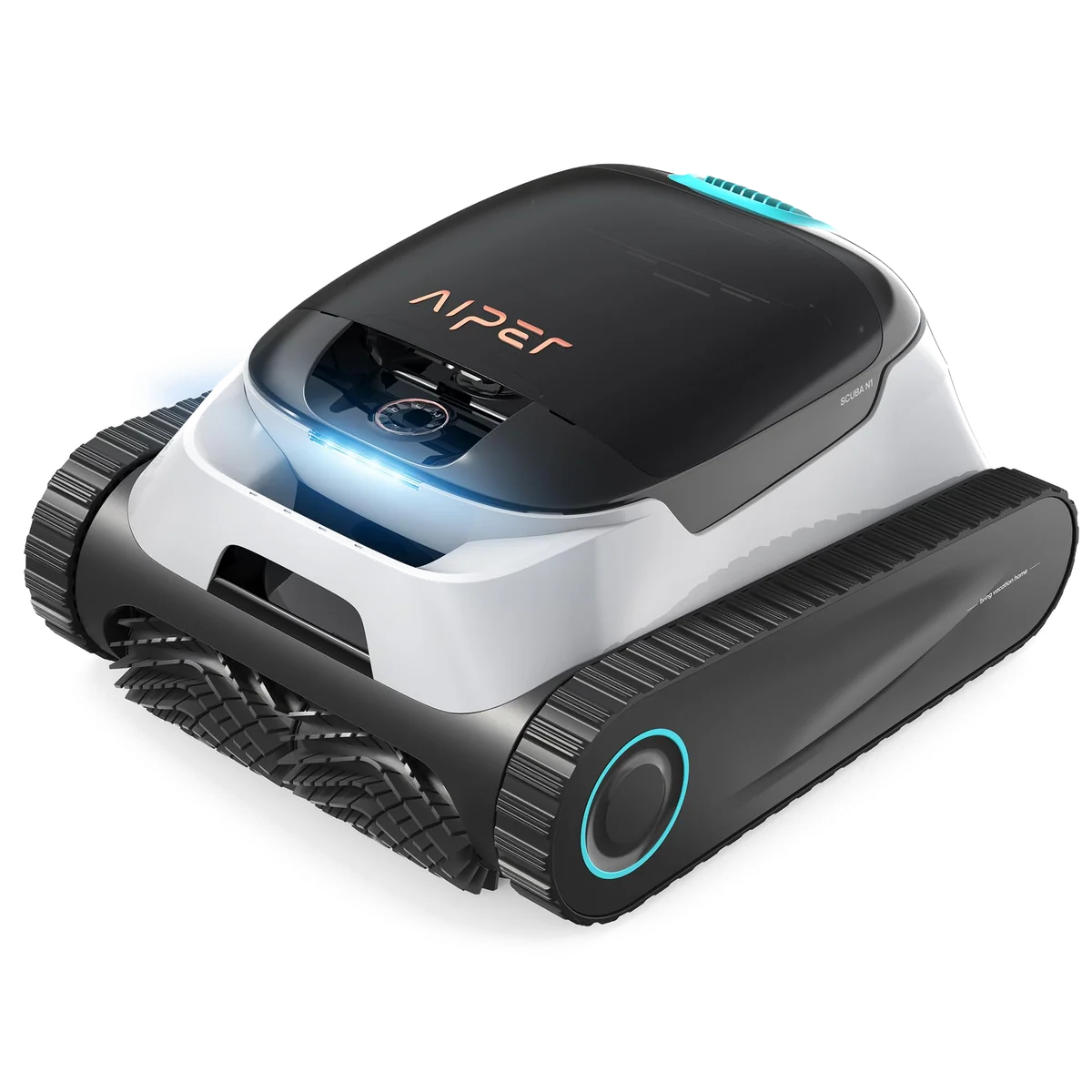
Skip this renewed Scuba N1 unless the seller gives you clear battery, warranty, accessory, and return protections in writing.
Final verdict
The base Scuba N1 is capable enough to earn loyal owners. Its best version of the job is simple: make regular floor cleaning easier, climb conventional walls when geometry allows, and spare the owner from wrestling with a cable. It is not a reliable substitute for all brushing, all spot cleaning, or all human attention.
This renewed offer asks for an additional leap of faith without supplying the facts needed to price that leap. Unless the seller closes the battery, warranty, accessory, and return-policy gaps before checkout, Smart Pool Bots recommends walking away. A clearly protected unit can be a calculated convenience purchase; an undocumented one is a sealed battery gamble with a pool cleaner attached.
The cleaner itself is not the central problem. Exact-model owners have reported strong floor coverage, useful wall climbing, waterline cleaning, and enough debris pickup to retire the manual vacuum from routine duty. The problem is that this particular offer is a renewed cordless machine, while the supplied listing does not identify the refurbisher, describe the renewal work, confirm battery testing or replacement, specify the included accessories, or establish the protection that applies after purchase.
Those omissions reach the component that matters most. A tired battery does not merely shorten a convenience feature; it reduces the area the cleaner can cover before it must be hauled out, drained, charged, and sent back for another attempt. A sealed pool robot with uncertain battery history is not equivalent to a scratched toaster with a fresh inspection sticker.
There is another warning in the listing itself. Two of its five bullets call the N1 a “Scuba S1,” its mode names do not line up neatly with the language owners use, and its 4,500-gallon-per-hour flow claim differs from the 80-gallon-per-minute figure in Aiper’s instructional material. That does not prove the robot is defective, but it does mean the seller’s copy is a poor foundation for deciding exactly what has been renewed and supplied.
Who should still consider it
The narrow exception is a buyer who values freedom from a cable above immaculate one-cycle coverage, has a fairly conventional pool, accepts occasional manual brushing, and can verify a meaningful return window plus written coverage for the renewed battery. Without those safeguards, the discount is compensation for an unknown rather than a bargain.
Key Specifications
Cordless freedom still comes with a cord of chores
Avoiding a floating cable or suction hose is the N1’s clearest advantage. Owners who had used Dolphins or pressure-side cleaners repeatedly preferred the cleaner deployment, simpler basket access, and ability to swim without a hose or power cord occupying the pool. Some judged the N1’s cleaning less thorough than a Dolphin and still preferred living with it.
Cordless does not mean hands-off. The routine becomes carry, lower, retrieve, drain, empty, rinse, charge, and redeploy. During a heavy cleanup, waiting for a recharge can be more disruptive than rinsing a corded cleaner and immediately returning it to the water. The corded-versus-cordless guide explains that trade in category terms; here it decides whether the N1’s main compromise will feel liberating or tedious.
Eco mode is periodic maintenance, not a weekly autonomous clean
In Eco mode, Aiper says the robot performs a 45-minute floor clean every 48 hours while it remains in the pool. That schedule can help with light summer debris, but an independent reviewer found it unable to keep pace with heavier falling material. It also creates an ownership tension: the feature invites prolonged submersion, while cautious owners remove the cleaner after a cycle to reduce exposure and preserve service life.
Retrieval rewards patience
The hook makes a robot stranded beyond arm’s reach recoverable, and the body sheds much of its water quickly after it reaches the surface. It is still heavy during the first lift. Keep it level, raise it slowly, and allow it to drain before carrying it away; tilting or yanking it up can return captured dirt to the pool.
Strengths & Limitations
Strengths
- Cordless operation removes the floating cable or hose from the pool.
- Floor-only mode has produced excellent routine coverage for some exact-model owners.
- The top-loading basket is easier to service than many bottom-access filter systems.
- The tracked body can climb ordinary walls and reach the waterline in compatible pools.
- Successful runs have collected leaves, pollen, hair, dirt, and fine sand.
Limitations
- The renewed listing does not document battery condition, refurbisher identity, included accessories, or warranty coverage.
- Navigation can repeat lanes, miss patches, and struggle with curved transitions or shallow shelves.
- Fine debris may clog the filter, bypass it, or leak back into the pool during retrieval.
- Wall climbing does not eliminate manual algae brushing on every finish.
- Every cycle ends with lifting, draining, rinsing, charging, and redeployment.
- Replacement filters, batteries, seals, and other parts may be difficult to obtain.
The floor is where the N1 makes its best case
The strongest exact-model account came from an owner using the N1 after a full year. Floor-only mode was estimated to cover the entire bottom, while the mixed full-clean program reached about 95 percent overall; that owner preferred two floor passes to spending battery time on a single combined floor-and-wall pass. That is both a compliment and the best operating advice in the record: give this robot a focused job.
Other base-N1 reports support its usefulness for ordinary maintenance. One basket became completely packed with leaves and dirt during an initial cleanup, while a second-season owner in a 32 × 16-foot vinyl pool reported successful pickup of opening-season algae and pollen, competent navigation through a sloped deep end, and waterline access. A filmed run also ended with fine sand, dirt, and hair visible in the filter and no remaining dust cloud on the floor.
That is not the same as proving the listing’s promise of ultra-fine debris removal in one pass. An independent review found significant small debris left behind and needed multiple cycles for a complete clean, while owners elsewhere described repeated strips, fast filter loading, bypass, and dirt leaking back into the water during retrieval. Retail feedback contains similar complaints about sand, algae, and leaves escaping or collecting around fans and tracks, although that review pool mixes several N1-family variants and cannot establish an exact failure rate for this model.
| Task | What survives scrutiny | Where expectations should stop |
|---|---|---|
| Routine floor debris | Leaves, dirt, pollen, hair, and some fine sand have all been recovered successfully. | A heavy opening clean can fill the basket before the cycle ends. |
| Fine material | The fine filter can produce a visibly cleaner floor in favorable conditions. | Clogging, bypass, weak pickup, and retrieval leakage make one-pass results unreliable. |
| Full-pool coverage | Ordinary floors and walls can receive broad coverage. | Repeated lanes, wandering paths, shelves, steps, and curved transitions remain credible failure points. |
| Automation | A charged cycle can remove most routine vacuuming from the weekly chore list. | The robot still needs retrieval, draining, basket rinsing, charging, and redeployment. |
Wall climbing works better than wall scrubbing
The base N1 can climb many conventional walls and reach the waterline. Aiper’s instructions show the caterpillar-tread design performing that movement, and exact-model owners independently report successful climbs to the tile line. Reaching a surface, however, is not the same as cleaning every version of it well.
A verified owner with a textured pebblecrete pool said the robot collected floor debris and completed multiple floor-and-wall rounds, yet its brushing did not disturb established algae. Manual wall brushing remained necessary. Another demonstrated run showed the N1 climbing ordinary walls while curved stairs repeatedly diverted it away from a shallow shelf. Buyers with benches, tanning ledges, curved transitions, or textured finishes should therefore treat wall and waterline capability as access, not a promise that every surface will be scrubbed clean.
Smart navigation is the most inflated claim
WavePath 2.0 sounds like mapping, but the evidence looks more like route logic that sometimes produces good coverage. Some owners saw orderly, nearly complete passes; others watched the machine repeat one strip, wander away from an apparent grid, miss deep-end debris, or lose its route around awkward geometry. The practical distinction matters: the N1 can eventually clean a large share of a compatible pool, but a buyer should not assume it knows which patches it has already missed.
A discount cannot substitute for buyer protection
The renewed N1 becomes interesting only when its condition-adjusted saving is large enough to justify uncertain runtime and limited repair options. That calculation cannot be made from the product name alone. A smaller discount with a documented battery standard and uncomplicated return process can be better value than a deeper discount attached to vague renewal language.
For a protected purchase, the underlying cleaner has a defensible niche: routine floor maintenance in a conventional pool for someone who hates cables more than missed patches. For an unprotected purchase, the likely savings are exposed to a single failure in the most expensive convenience system, the sealed rechargeable powertrain.
If cleaning thoroughness matters more than cordlessness, read the Dolphin Nautilus CC review before accepting the N1’s compromises. If a cable is a firm deal-breaker, the cordless robotic pool cleaner guide provides a broader field than gambling on this one renewed offer.
The renewed battery is the risk the listing does not price for you
Exact-model durability evidence points in both directions. One N1 remained useful after a year, and another owner described a strong second season. A verified base-N1 buyer, however, reported a battery failure after roughly three months, followed by an unsatisfactory replacement and eventual retailer refund. These accounts do not establish a failure rate, but they show why the condition of a renewed battery is decision-critical.
The supplied listing does not say that the battery was replaced, capacity-tested, or restored to any stated threshold. It also does not identify the refurbisher or confirm whether the ordinary new-product warranty follows this ASIN. An “up to 150 minutes” specification describes the model’s claim; it does not disclose the remaining capacity of the individual renewed unit arriving at the door.
Parts availability makes a marginal unit harder to rescue
Owners have struggled to locate replacement fine-filter media, and broader Aiper reports describe sealed battery work, moisture inside compartments, and unavailable repair parts. Some of those repair complaints concern sibling or unspecified Aiper models, so they cannot be assigned as failures of this exact N1. They still matter to the purchasing logic because a renewed machine is more dependent on repairability than a documented new one.
Verify these terms before buying
- Who renewed the unit and what work was completed?
- Was the battery replaced, or was its remaining capacity tested?
- What minimum runtime is guaranteed on arrival?
- Which charger, retrieval hook, brushes, basket, and fine-filter media are included?
- Does the written warranty cover the battery, seals, motor, and charger?
- Who pays return shipping if the cleaner arrives weak, leaking, or dead?
Frequently Asked Questions
Is a renewed Aiper Scuba N1 worth buying?
It is worth considering only when a substantial condition-adjusted saving comes with written battery coverage, a complete accessory list, and an uncomplicated return window.
Are the base Scuba N1 and Scuba S1 the same cleaner?
Aiper reportedly described the 2024 base N1 and S1 as functionally equivalent apart from possible color differences, but inconsistent retailer copy and later variants make exact listing verification essential.
Does the Scuba N1 clean walls and the waterline?
It can climb many ordinary walls and reach the waterline, but shelves, curved transitions, textured finishes, and established algae can still require manual attention.
Can it collect sand and other fine debris?
It can capture fine sand and dust in favorable conditions, although filter clogging, bypass, incomplete pickup, and retrieval leakage prevent a dependable one-pass promise.
How long should the renewed unit run?
The model is advertised for up to 150 minutes, but the supplied listing gives no condition-specific runtime guarantee for the battery inside an individual renewed unit.
Can it be left in the pool in Eco mode?
Eco mode is designed around a 45-minute floor cycle every 48 hours, but prolonged submersion trades retrieval convenience for additional chemical and water exposure.
Is this cleaner suitable for every above-ground and in-ground pool?
No universal fit is established because the exact listing makes a broad compatibility claim while another major retailer limits its description to in-ground pools and owner results vary with geometry.
Does it skim leaves from the water surface?
No, the Scuba N1 is an underwater vacuum for submerged surfaces rather than a robotic surface skimmer.
Sources (7)
- Amazon listings and customer reviews — Aiper Scuba N1 Renewed
- Owner reports across r/pools threads
- Owner and reviewer video, 2 channels
- Walmart listing
- Homedepot — Article — www.homedepot.com
- Roboticreviews — Article — www.roboticreviews.com
- Au — Article — www.productreview.com.au