Aiper Scuba N1 vs Scuba S1: Buy the upgraded S1, not the renewed gamble
Buy the 2026 Scuba S1 for a relatively simple pool; skip the renewed Scuba N1 unless its battery, warranty, accessories, and return rights are guaranteed in writing.
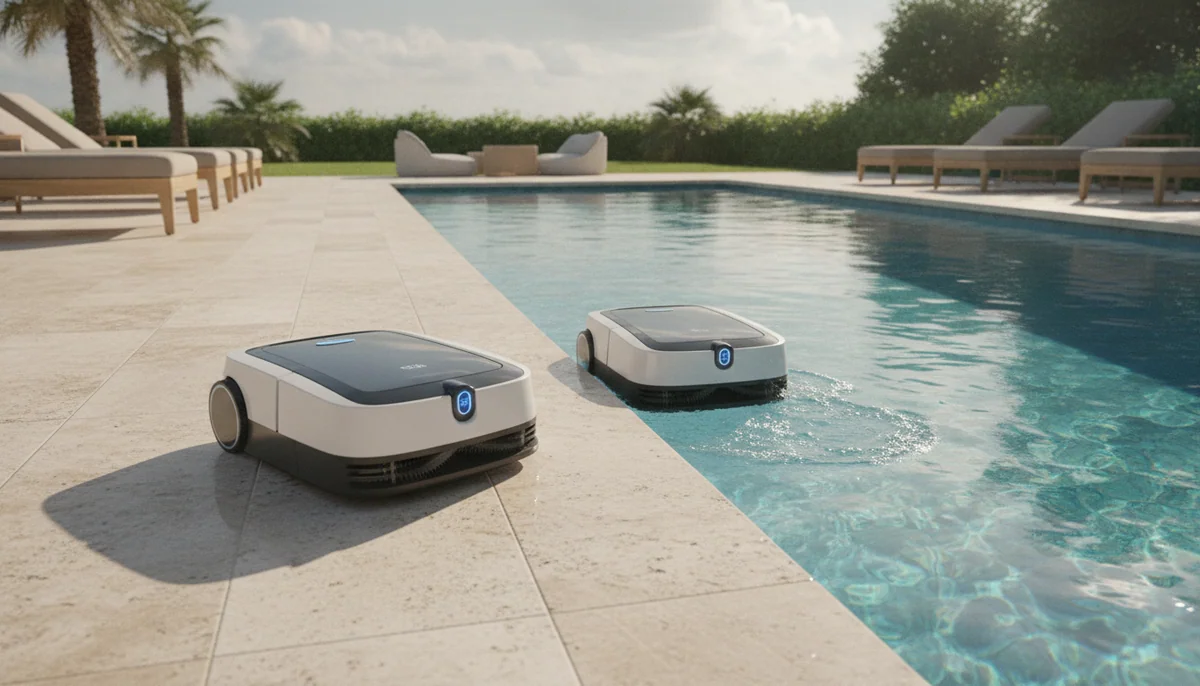
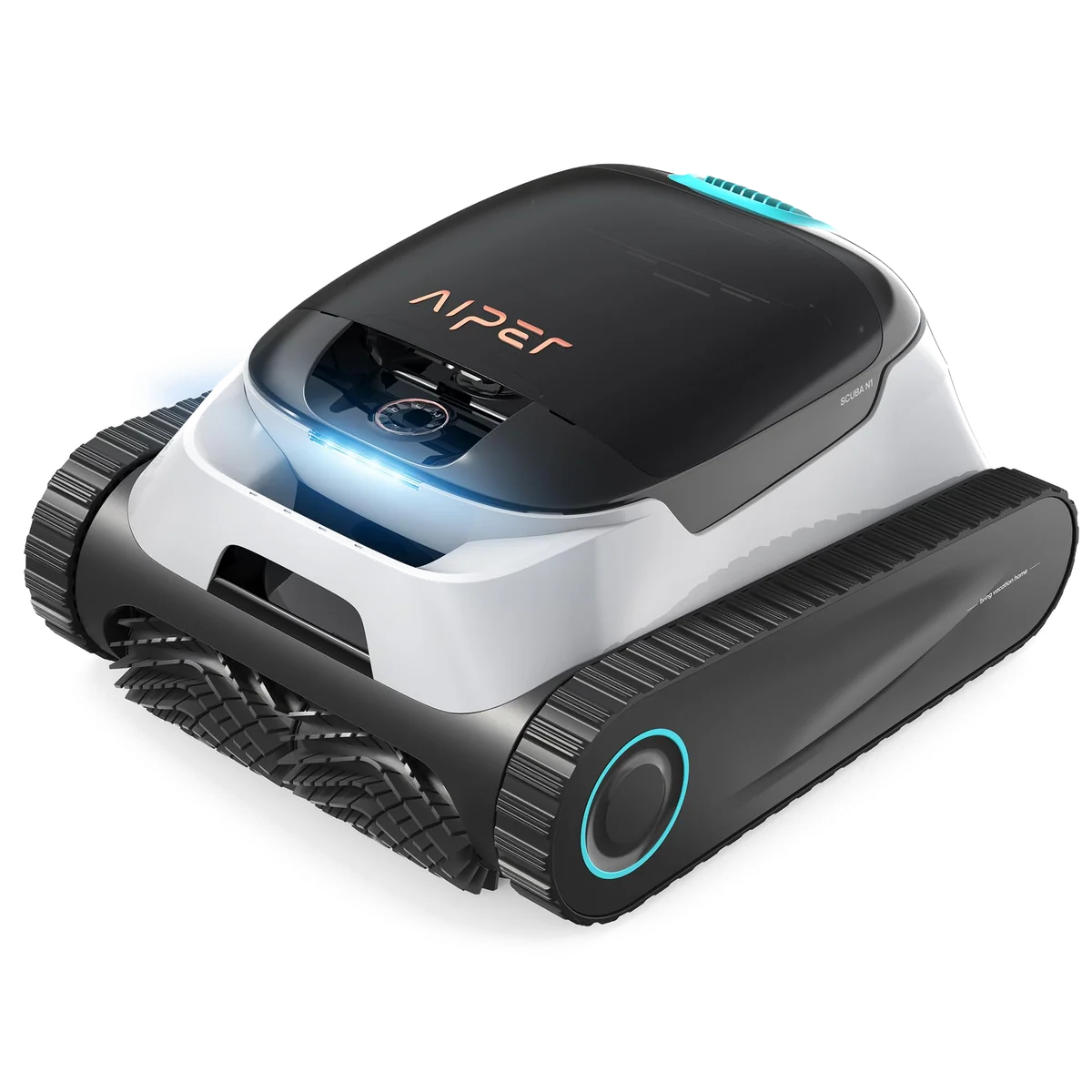
Aiper Scuba N1 renewed
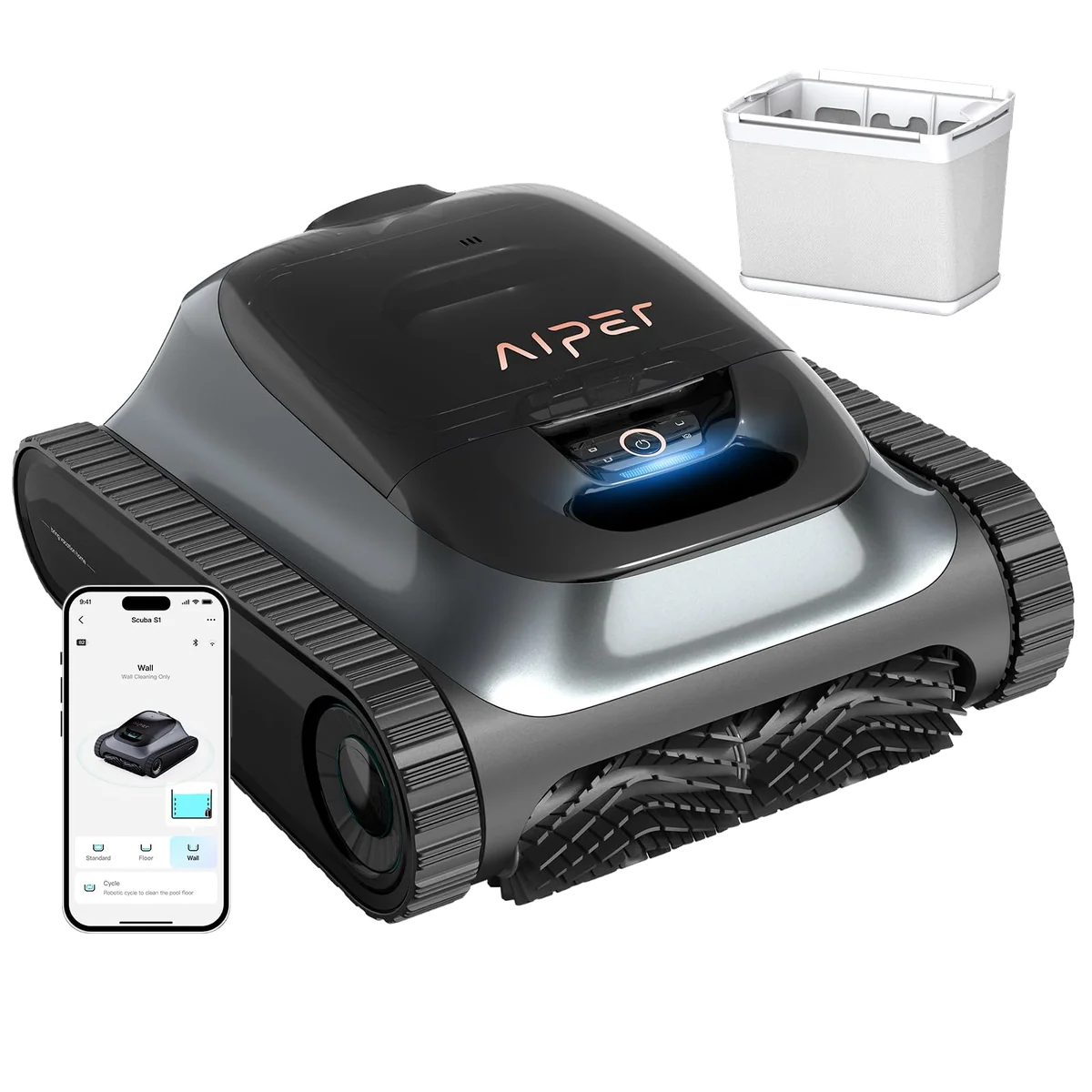
(2026 Upgrade) Aiper Scuba S1
The names make this look like a close contest between neighboring models, but the two offers are separated by more than one letter. The Scuba S1 here is the black 2026 upgrade with app support, dual filtration, shallow-area claims, and mode-specific runtime figures. The Scuba N1 is a renewed 2024 machine whose listing does not identify the refurbisher, document the battery’s remaining capacity, or establish exactly what protection follows the unit.
There is a genuine naming trap underneath that distinction. Aiper reportedly described the original base N1 and S1 as functionally equivalent apart from possible color differences, but that historical explanation does not make these exact ASINs equivalent today. The current S1 has a documented feature set that the renewed listing cannot borrow merely because its seller repeatedly calls the N1 a “Scuba S1” in the marketing copy.
Neither cleaner is a suction-side model, despite the category language that sometimes follows Aiper products around retailer catalogues. Both are self-contained cordless robots with their own motors, filters, and rechargeable power, rather than hose-driven cleaners powered by the pool pump. Readers deciding between those fundamentally different systems should start with the robotic versus suction-side cleaner guide.
The decision in three lines
- Choose the S1 when the pool has an open floor, ordinary walls, limited obstacle geometry, and fine settled debris.
- Consider the renewed N1 only when written protections make its unknown battery history a risk you can reverse.
- Choose neither when steps, ledges, compound slopes, attached spas, or long-term repairability matter more than avoiding a cable.
At a Glance
| Feature | Aiper Scuba N1 renewed | Editor's Pick (2026 Upgrade) Aiper Scuba S1 |
|---|---|---|
| Price Range | $200–$500 | $200–$500 |
| Claimed runtime | Up to 150 minutes | — |
| Check Price on Amazon | Check Price on Amazon |
The S1 wins on the details that survive the model-name fog
The upgraded S1 is not a flawless cleaner. Its advantage is that the useful parts of its specification are clearer, its fine-debris system is better defined, and the unit is not presented as renewed without a renewal standard. That is enough to win this comparison, although pool geometry and cordless reliability keep the recommendation conditional.
The upgraded Scuba S1 is the one to buy for a simple pool.
The S1 wins with a documented 3-micron secondary filter, up to 180 minutes in its standard cleaning modes, app scheduling, and a listed two-year warranty.
Its wall grip, step coverage, route quality, and long-term reliability remain too dependent on pool geometry and the individual unit.
The runtime headline needs translating before it earns any credit. The listing assigns up to 270 minutes to Eco maintenance, while Auto, Floor, Wall, and Scheduled modes are listed for up to 180 minutes. That is still a meaningful advantage over the N1’s 150-minute model claim, but it is not a four-and-a-half-hour deep-clean promise.
Filtration is the S1’s strongest practical distinction. Its replaceable 3-micron insert sits inside a 180-micron basket, giving fine dust, sand, silt, and loose algae a better chance of staying in the robot instead of passing through a coarse screen. The tradeoff arrives at the hose: exact-listing owners describe the insert loading quickly in dirty water, requiring a rinse before the outer basket appears full, and sometimes allowing debris around an imperfect seal.
Open floors are the safest bet. Owners report orderly S-pattern movement, strong collection of ordinary debris, and successful climbing in compatible cement, oval, kidney-shaped, and above-ground pools. The same exact-listing record also includes repeated routes in a free-form pool, a shell stranded on wide steps after its tracks lost contact, weak waterline scrubbing against attached deposits, and a walking-motor error after one successful run.
Reliability is therefore a reason to use the return window aggressively, not a reason to pretend the cleaner cannot work. One exact-S1 owner reported a battery failure at ten months, followed by a warranty repair that was still operating more than seven months later. That is evidence both that support can produce a useful outcome and that cordless ownership can include downtime before the warranty becomes relevant.
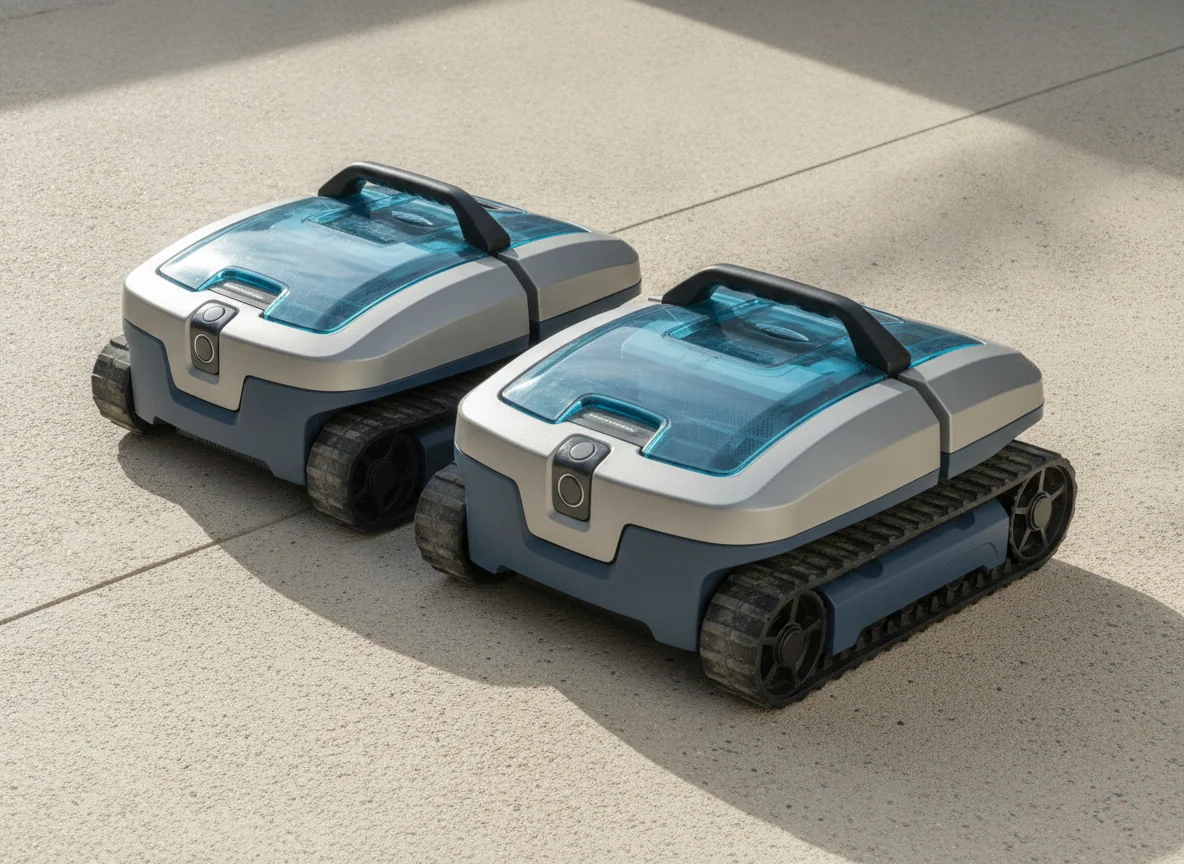
The renewed Scuba N1 is only for a protected bargain hunter.
The underlying N1 can provide useful floor cleaning and ordinary wall access, but this renewed offer does not document the condition of the battery that makes those capabilities possible.
An undocumented refurbisher, uncertain battery capacity, unclear accessory contents, and difficult repair prospects leave too much ownership risk with the buyer.
The N1 itself is not useless. Exact-model owners have reported broad floor coverage, pickup of leaves, pollen, hair, dirt, and some fine sand, plus successful climbing in compatible pools. A year-long owner preferred focused floor passes to a combined floor-and-wall cycle, which captures the N1’s best role: give it a straightforward horizontal job instead of asking one battery charge to prove every claim.
Its limits are equally concrete. Independent evidence found that small debris could require multiple cycles, while curved stairs and shallow shelves could redirect the robot before it cleaned the intended area. A verified owner also reported that the N1 collected floor material yet failed to disturb established algae on textured walls, so wall access should not be confused with forceful wall scrubbing.
The renewed listing makes those ordinary compromises harder to accept because it withholds the condition facts that should accompany a rechargeable machine. It advertises up to 150 minutes and four modes, while Aiper’s instructional material describes Eco operation as a 45-minute floor clean every 48 hours. Neither claim tells the buyer how much capacity remains in the individual battery being shipped.
The copy itself deserves skepticism. Two marketing bullets call the product a Scuba S1, the listing does not identify who performed the renewal, and it gives no condition-specific runtime floor for the unit that arrives. A returnable, battery-covered N1 can be a calculated convenience purchase; a vaguely renewed N1 is simply a sealed powertrain with an unknown past.
| Decision factor | 2026 Scuba S1 | Renewed Scuba N1 | Advantage |
|---|---|---|---|
| Listing condition | 2026 upgrade listing that is not labeled renewed | 2024 model explicitly sold as renewed | S1 |
| Standard-mode runtime claim | Up to 180 minutes in Auto, Floor, Wall, or Scheduled mode | Up to 150 minutes, with no condition-specific guarantee for the renewed battery | S1 |
| Longest runtime headline | Up to 270 minutes in Eco maintenance | Periodic 45-minute Eco floor cleaning every 48 hours | S1, with a mode caveat |
| Fine filtration | Replaceable 3-micron insert plus 180-micron basket | Fine filtration is discussed, but no micron rating is documented in the exact listing | S1 |
| Claimed cleaning zones | Floor, walls, waterline, and shallow areas deeper than 12 inches | Floor, walls, and waterline | S1 on paper |
| Controls | Physical controls plus app modes, logs, updates, Eco settings, and a weekly plan | Four selectable modes, including periodic Eco operation | S1 |
| Most serious drawback | Geometry-sensitive coverage and unresolved cordless reliability risk | Unknown renewed-battery condition and weak condition disclosure | Neither |
More sensors do not make awkward geometry disappear
The S1 listing names 11 sensors and dual-path routing, while the N1 listing promotes WavePath 2.0 navigation. Those labels do not establish stored mapping, visual recognition, or awareness of every missed patch. In practice, route logic can look impressively systematic on a broad floor and still fail when a step lifts the tracks, a curved transition interrupts traction, or a deep-end break changes the robot’s angle.
This is why the S1’s claimed shallow-area cleaning does not settle the steps question. A shelf deeper than 12 inches may satisfy the stated depth threshold and still present the wrong width, approach angle, or track contact. Buyers whose main maintenance problem is a tanning ledge or compound staircase should use the site’s guide to cleaners for steps, ledges, and shallow shelves rather than treating a zone label as proof.
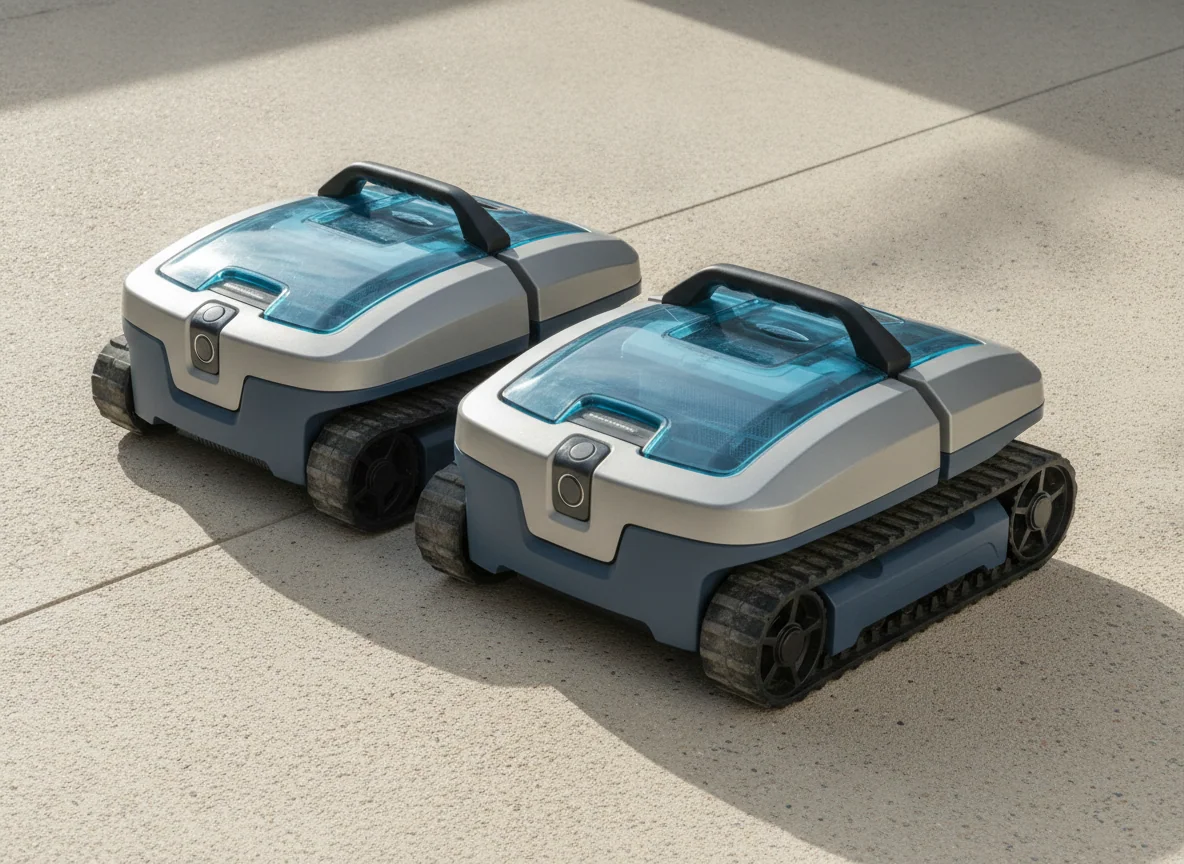
Cordless convenience changes the chores rather than removing them
Both cleaners eliminate the floating power cable, pool-pump hose, and deck-side control box during a run. Both also need to be hooked from the water, lifted until they drain, carried away, opened, rinsed, dried around the charging connection, recharged, and deployed again. The S1’s longer claimed runtime reduces the chance that a normal cycle ends early, but neither machine can empty its own filter or replenish its battery underwater.
That ownership loop is pleasant when cables are the problem and irritating when immediate back-to-back cleaning matters. The corded versus cordless comparison explains the category trade; in this matchup, it is the reason the S1 can be the clear winner without being the right cleaner for every buyer.
Match the purchase to the pool you actually own
Buy the S1 for an open, ordinary pool
The best fit is a rectangular, oval, kidney-shaped, or otherwise uncomplicated pool with a broad reachable floor, conventional wall transitions, relatively few steps, and recurring deposits of grit, dust, silt, or small leaves. That owner values cable-free deployment, can manage the wet lift, and accepts an occasional brush pass on steps or attached waterline buildup.
Entertain the N1 only with written protection
The renewed N1 makes sense only if the seller identifies the renewal work, confirms the battery standard, lists every included accessory, covers the rechargeable powertrain, and provides a return process that does not punish the buyer for a weak unit. Without all five, a discount cannot be judged against the condition risk it is supposed to compensate for.
Skip both when the obstacles are the job
A broad tanning ledge, narrow stair treads, circular spa section, compound slope, sharp deep-end break, difficult wall finish, or heavy attached buildup puts too much emphasis on the least dependable parts of these cleaners. The robot may still touch those areas, but incidental contact is not the same as repeatable cleaning.
Skip both when battery ownership is the objection
Buyers who want immediate repeat cycles, straightforward long-term power delivery, or freedom from charging should compare the corded Dolphin Nautilus CC before paying for cordless convenience. A cable is visible and occasionally annoying, but it does not arrive with an unknown state of charge or require several hours between runs.
Use the return window as a pool-specific test
No specification can tell you whether the floor-to-wall transition in your pool matches the tracks on either robot. Run the chosen cleaner early, inspect the entire floor after a cycle, place ordinary debris near corners and the starting area, watch its widest step or shelf, verify repeated waterline contact, and confirm that the filter still has usable flow before the outer basket is full.
For the S1, also test app pairing, charging, every relevant mode, and the behavior of the fine insert. For a renewed N1, record the runtime immediately and repeat the same mode under similar conditions before the easiest return option expires.
The S1 is the better Aiper because it gives the buyer more useful cleaning hardware and fewer unanswered condition questions, but the renewed N1 should remain out of the cart until its battery history stops being a mystery.
Frequently Asked Questions
Are the Scuba N1 and Scuba S1 the same cleaner?
Aiper reportedly treated the original 2024 base models as functional equivalents apart from possible color differences, but the exact renewed N1 and upgraded 2026 S1 listings compared here have materially different condition disclosures, runtime language, filtration, controls, and claimed cleaning zones.
Which cleaner is better for sand, silt, and fine dust?
The S1 is the stronger choice because its exact listing specifies a replaceable 3-micron layer, although that insert can load quickly and still needs careful rinsing after a dirty run.
Does the Scuba S1 run for 270 minutes in every mode?
No, the 2026 listing assigns up to 270 minutes to Eco maintenance and up to 180 minutes to Auto, Floor, Wall, and Scheduled operation.
Will either Aiper clean steps and tanning ledges?
Either robot may reach part of a compatible step or shelf, but track contact, tread width, approach angle, curves, and water depth make complete feature cleaning too inconsistent to promise.
Can the S1 app control the robot while it is underwater?
The app is useful for setup, mode selection, schedules, logs, and updates, but ordinary Wi-Fi and Bluetooth should not be treated as dependable live underwater control.
Is the renewed Scuba N1 worth buying?
It is worth considering only when the seller documents the battery condition, renewal work, included accessories, written warranty, and uncomplicated return rights for the individual renewed unit.
Is either model a suction-side pool cleaner?
No, both are self-contained cordless robotic vacuums rather than hose-driven cleaners that draw power through the pool’s circulation system.
Which Aiper should most buyers choose?
Most buyers choosing only between these exact listings should take the upgraded S1 for a simple pool and reject the renewed N1 unless unusually strong buyer protections neutralize its battery risk.
Ready to Choose?
Sources (5)
- Amazon listings and customer reviews — Aiper Scuba N1 Renewed and 2026 Upgrade Aiper Scuba
- Owner reports across r/pools, r/swimmingpools threads
- Owner and reviewer video, 1 channel
- Roboticreviews — Article — www.roboticreviews.com
- Au — Article — www.productreview.com.au