Aiper Scuba S1 vs WYBOT C1: The S1 wins, with conditions
Choose the Aiper Scuba S1 for a relatively simple pool with fine settled debris, and skip the WYBOT C1 unless its lower-cost proposition comes with an easy return path and you can tolerate thinner evidence on durability.
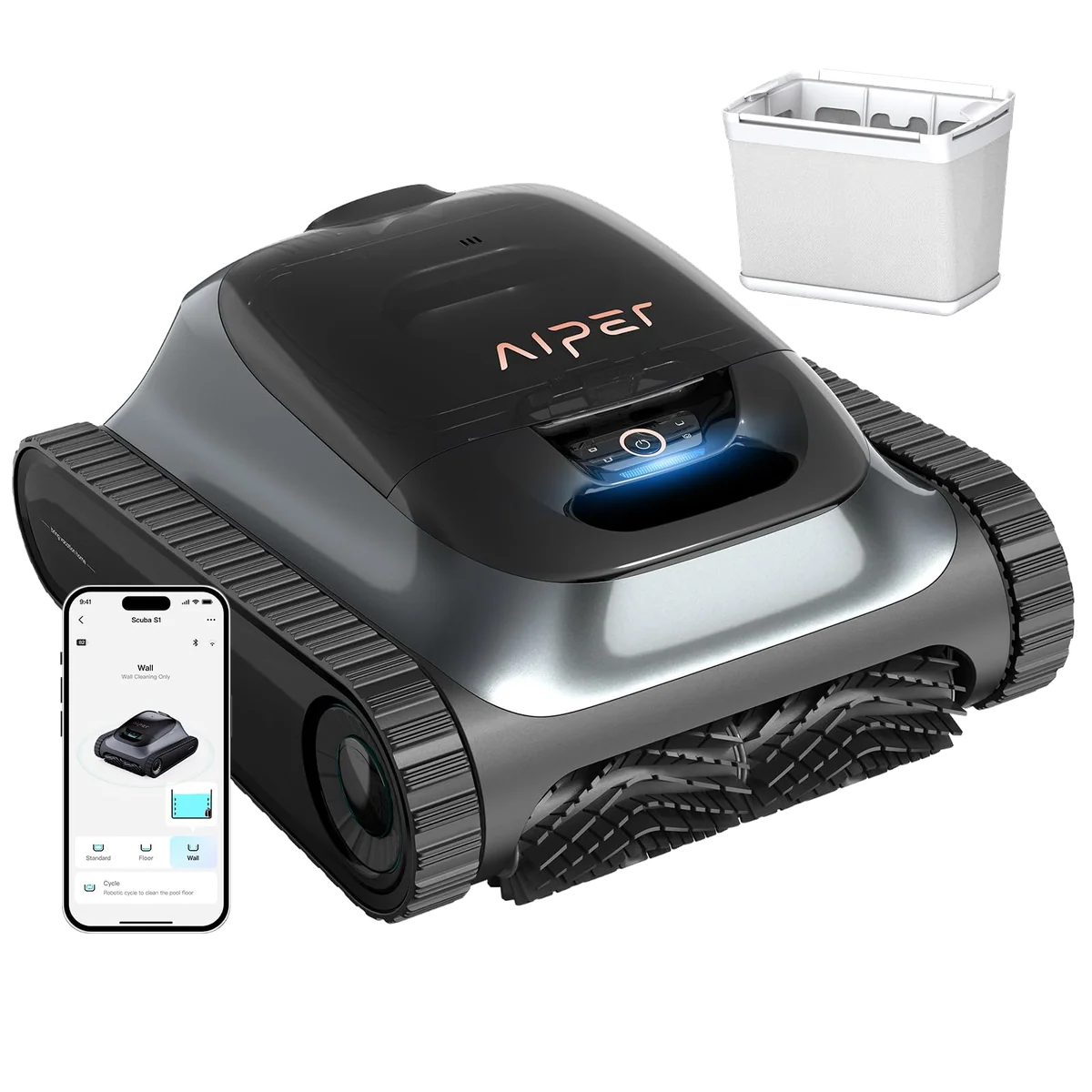
(2026 Upgrade) Aiper Scuba S1
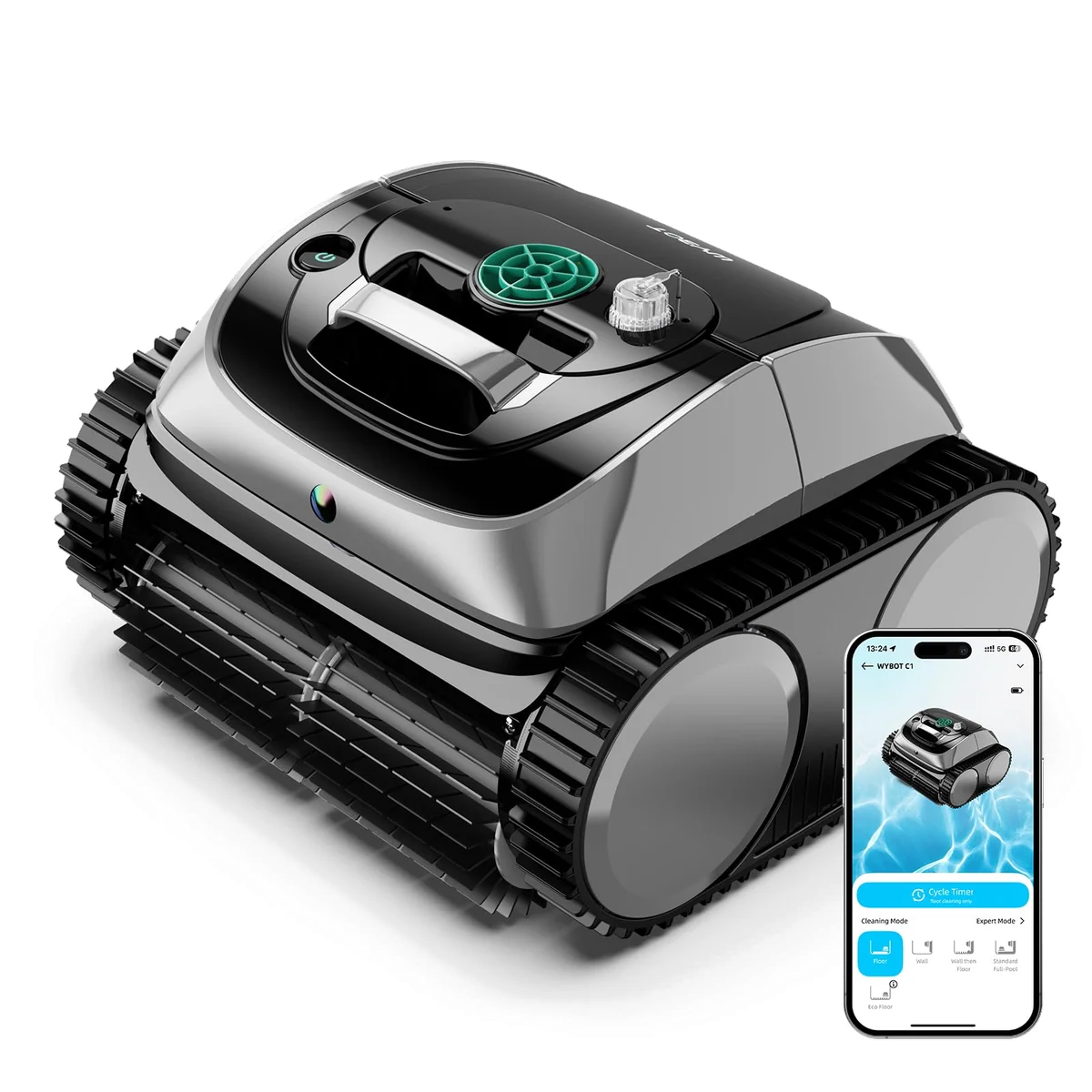
WYBOT C1
This is not a choice between one excellent robot and one useless one. Both can collect ordinary floor debris, climb suitable walls, avoid a floating cable, and turn a grim afternoon with a manual vacuum into filter-rinsing duty. The difference is confidence: the Scuba S1 has the more useful filtration system, the longer published runtime allowances, and a deeper exact-product record, while the C1 asks the buyer to accept more uncertainty for a simpler specification.
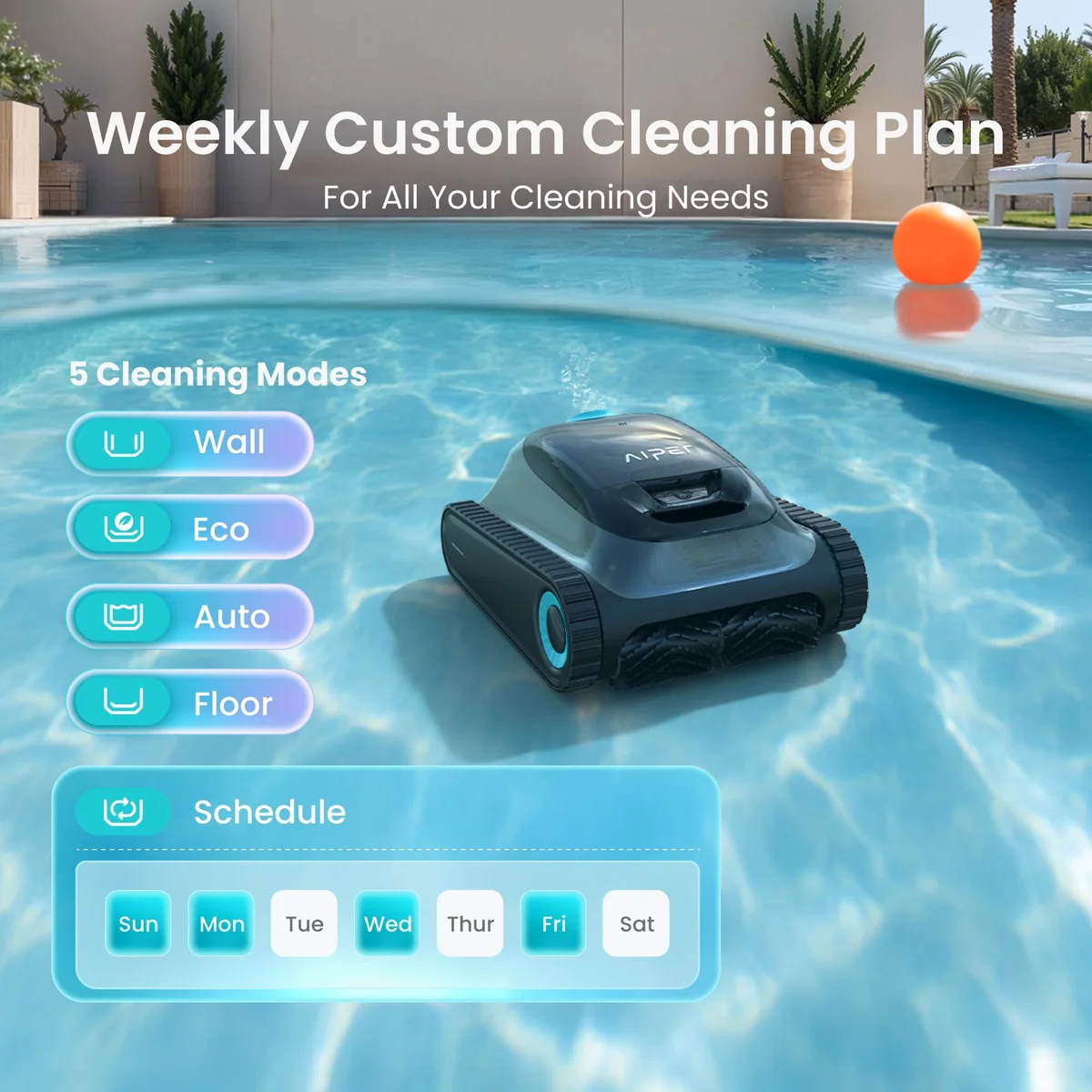
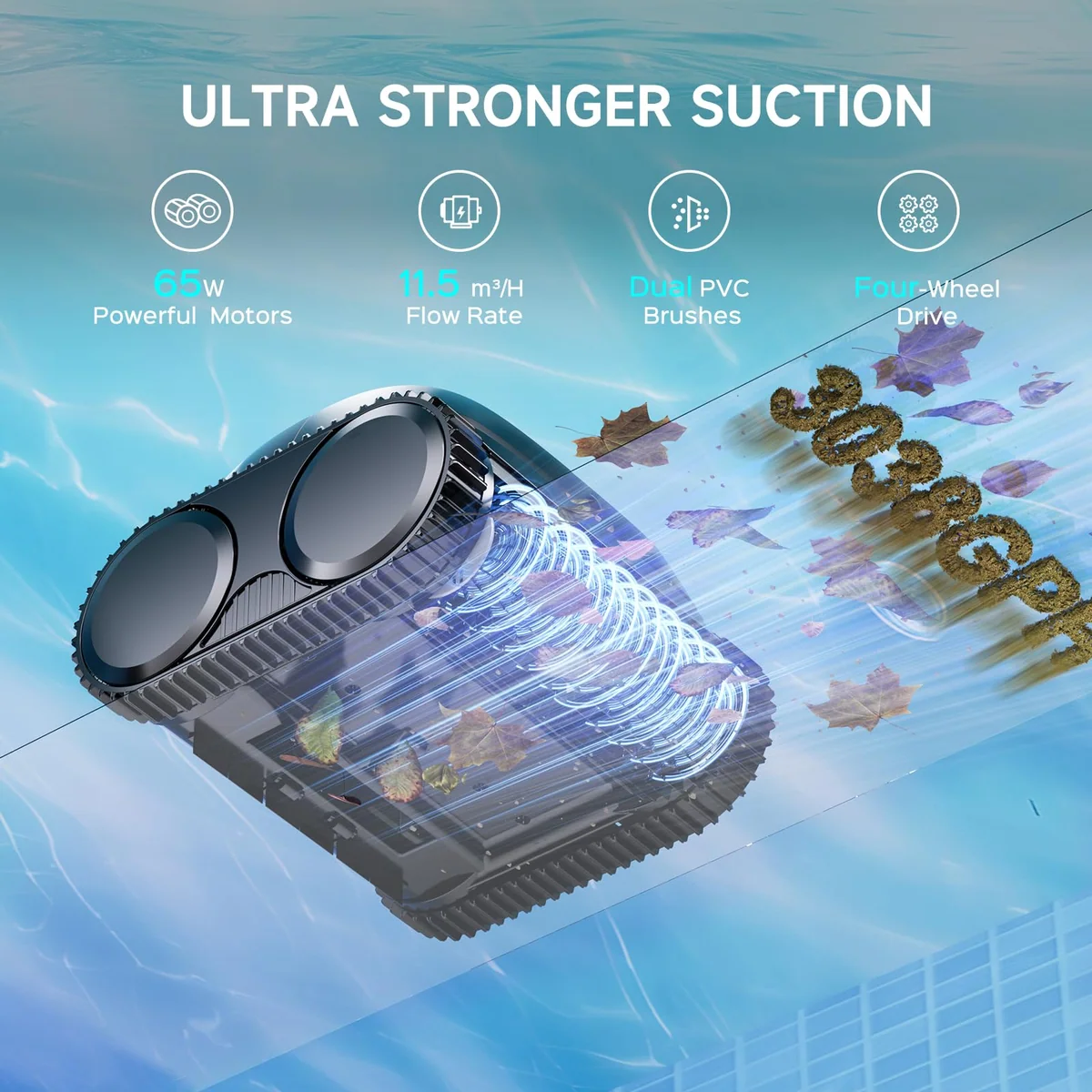
The Aiper wins because its strengths address the harder maintenance problem. A removable 3-micron layer sits inside its 180-micron basket, giving fine dust, sand, and silt somewhere to go instead of relying on a coarse screen alone. Its current listing assigns up to 180 minutes to the standard cleaning modes and up to 270 minutes to Eco maintenance, although that headline figure should not be mistaken for a four-and-a-half-hour deep-cleaning run.
The WYBOT C1 counters with a listed maximum of 160 minutes, a 180-micron filter, gyroscope-guided floor and wall patterns, and claims for floor, wall, waterline, and step coverage. Those are respectable promises, but the exact owner record retained for this revision contains only four reviews. Three praise its cleaning, including pickup of sand and large leaves, while the fourth says the battery could not finish the pool and the app required a dedicated 2.4 GHz connection.
The practical result is a narrow but meaningful hierarchy: buy the S1 when its filtration and longer operating window solve problems your pool actually has, and treat the C1 as a conditional bargain rather than an equivalent cleaner with fewer digits on the receipt.
(2026 Upgrade) Aiper Scuba S1
WYBOT C1
At a Glance
| Feature | Editor's Pick (2026 Upgrade) Aiper Scuba S1 | WYBOT C1 |
|---|---|---|
| Price Range | $200–$500 | $200–$500 |
| Claimed runtime | — | Up to 160 minutes |
| Check Price on Amazon | Check Price on Amazon |
The specifications look close until the debris gets small
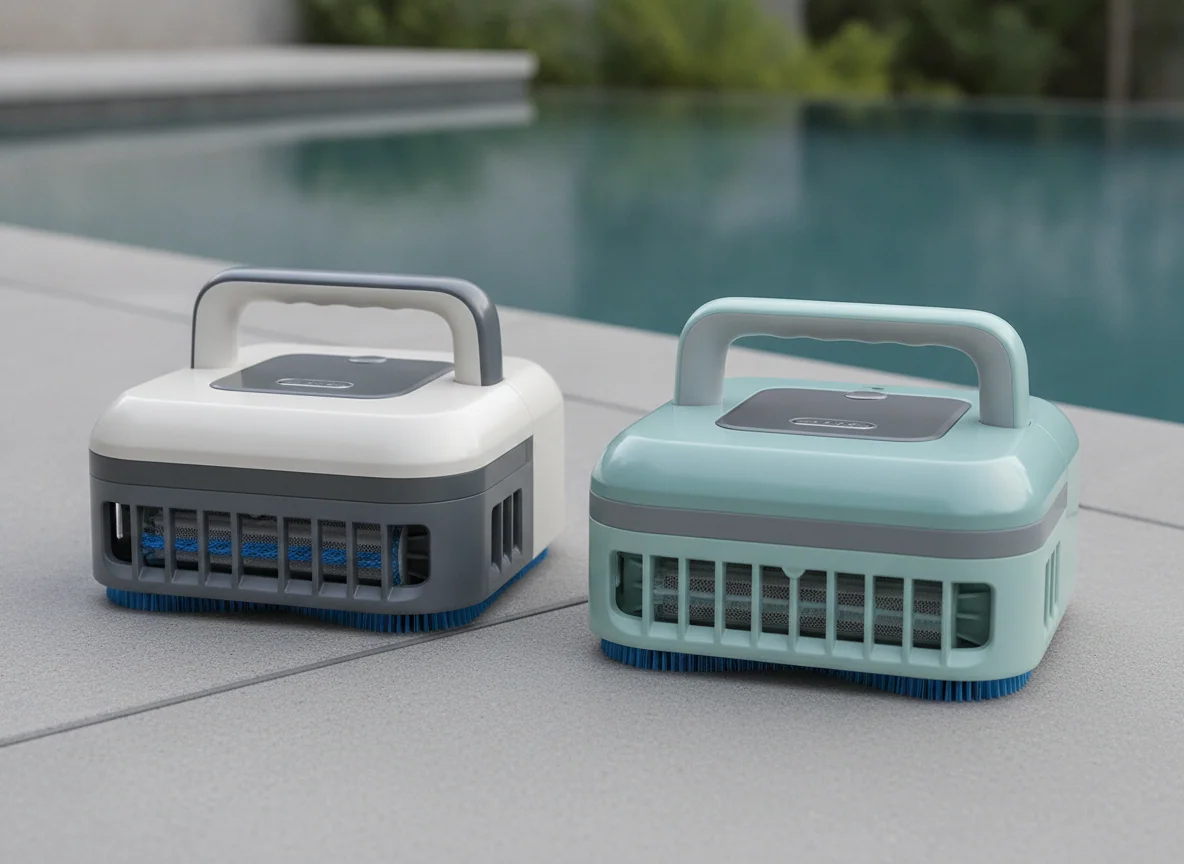
Marketing compresses both robots into the same four-zone story, but the filter changes what that story means. The C1’s 180-micron screen is suited to routine dirt, visible sand, and leaves that fit through the intake. The S1 adds a much finer secondary layer, which makes it the more credible choice when the recurring nuisance is settled dust or silt rather than a few leaves after a windy afternoon.
| Buying question | Aiper Scuba S1 | WYBOT C1 | Who has the edge? |
|---|---|---|---|
| What filtration is listed? | Replaceable 3-micron insert plus a 180-micron basket | 180-micron filter screen | Aiper for fine settled debris |
| How long can a cycle run? | Up to 180 minutes in standard modes or 270 minutes in Eco maintenance | Up to 160 minutes after a listed four-hour charge | Aiper, with an important Eco-mode caveat |
| What surfaces are promised? | Floor, walls, waterline, and shallow areas deeper than 12 inches | Floor, walls, waterline, and steps | Neither, because pool geometry can defeat both claims |
| What does the app do best? | Mode selection, schedules, logs, and updates before or between runs | Mode selection, scheduling, and updates when a compatible connection is available | Neither app should be treated as a dependable underwater remote |
| What is the main ownership risk? | Geometry-sensitive coverage plus an uneven durability record | Incomplete coverage plus thin long-term evidence and difficult support risk | Aiper is the less uncertain choice, not a risk-free one |
Runtime is useful only when the route is productive
A long battery claim cannot rescue a robot that repeats the same open lane, spends too much time attempting an awkward wall, or loses traction on a shelf. The S1’s advantage is therefore not simply 270 versus 160. It is the combination of more available time, a dedicated floor mode, and filtration that can make each successful pass more valuable.
That advantage disappears quickly in the wrong pool. Curved stairs, attached circular spas, compound slopes, broad tanning ledges, raised drains, and sharp shallow-to-deep transitions can leave either tracked cleaner balancing on its shell, backing away, or returning to an already-cleaned section. Buyers whose main problem is submerged architecture should start with the guide to robots for steps, tanning ledges, and shallow shelves rather than choosing between two machines whose best evidence comes from simpler surfaces.
The app belongs on the deck
Both manufacturers attach useful setup functions to their apps, including mode selection and software updates. Water is still hostile to ordinary Wi-Fi and Bluetooth communication, so neither product should be purchased as though a phone will steer it around a missed corner after submersion. Configure the run before launch, keep the physical controls in mind, and regard any live progress display as a bonus rather than the foundation of the purchase.
Scheduling also has a hard physical limit. Neither robot charges itself, empties its basket, rinses its filter, or climbs out of the pool. If unattended repeat cleaning is the goal, the real decision may be battery versus cable, which the site’s corded and cordless robot guide addresses directly.
Choose the Aiper Scuba S1 for a simple pool with persistent fine debris.
Its secondary 3-micron filter, systematic floor routing, and longer listed operating windows make it the stronger all-around cordless cleaner in this comparison.
Complex steps and transitions can expose weak coverage, the fine insert requires extra rinsing, and the wider ownership record leaves a real reliability concern.
Choose the WYBOT C1 only for routine cleaning in an uncomplicated pool.
Its exact owners support useful pickup of sand and leaves, and its top-access cordless format keeps an ordinary maintenance cycle straightforward.
The 160-minute maximum may not finish a large or awkward pool, while the exact revision has too little history to quiet concerns about battery life, electronics, and support.
Pool shape should overrule the logo
The S1 buyer has an open floor and a hose full of silt
The strongest fit is a rectangular, oval, or gently shaped pool with a broad unobstructed floor, continuous walls, few steps, and recurring deposits of grit or fine sediment. That buyer values cable-free operation, can manage retrieval and filter rinsing, and accepts that steps and stubborn waterline buildup may still need a brush.
The distinction is particularly important for fine debris. A filter can load before the outer basket appears full, so the S1 owner gains better particle capture but also assumes more frequent inspection and a slower rinse. That is a worthwhile trade when silt is the problem and needless labor when the pool mostly collects large leaves.
The C1 buyer is deliberately accepting more uncertainty
The C1 makes sense for a maintained pool with ordinary leaves and dirt, simple walls, enough margin for one battery cycle, and a retailer that makes an early problem easy to reverse. Its cleaning case is plausible; its carefree-ownership case is not.
Buyers should be especially cautious near the advertised pool-size limit. Wall attempts, route repetition, heavy debris, and step negotiation consume the same finite charge needed for the open floor, and a missed section cannot receive another full run until the battery has been retrieved, dried, and recharged.
Neither product is a suction-side cleaner
The category language around pool equipment is messy, but these are self-contained cordless robots with motors, batteries, brushes, and internal debris baskets. A suction-side cleaner attaches to the pool’s plumbing and uses pump-generated flow through a hose. If that is the comparison you meant to make, read the site’s explanation of robotic cleaners versus suction-side cleaners before evaluating either battery robot.
Walk away from both when the pool is mostly exceptions
A staircase across the full width, a large tanning ledge, a raised spa, several benches, sharp depth changes, or a demanding waterline makes the weakest part of each robot the center of the job. The S1 remains the better bet of the two, but “better” is not the same as well matched.
Buyers who can accept a cable in exchange for continuous power should consider the Dolphin Nautilus CC assessment. Buyers committed to battery power can see how these models sit in the wider cordless robotic cleaner field, while brand loyalists can compare the S1 with other models in the Aiper guide or examine the C1 alongside the WYBOT range.
The final call
The Aiper Scuba S1 wins this comparison because it offers the more consequential cleaning advantage, particularly for fine debris, without giving up the basic floor, wall, and waterline abilities that make the C1 attractive. Buy it conditionally for a simple pool, keep realistic expectations for steps and waterline deposits, and choose the C1 only when accepting greater uncertainty is a conscious part of the deal.
Frequently Asked Questions
Which cleaner is better for sand and silt?
The Aiper Scuba S1 is the stronger choice because its replaceable 3-micron layer is substantially finer than the WYBOT C1’s listed 180-micron screen.
Does the Aiper really run for 270 minutes?
The current listing assigns up to 270 minutes to Eco maintenance, while Auto, Floor, Wall, and Scheduled modes are listed at up to 180 minutes.
Will either robot reliably clean steps and a tanning ledge?
No, both may reach compatible features, but step width, depth, angle, shell clearance, and tread contact make that coverage too geometry-dependent to promise.
Can either app control the cleaner underwater?
Both apps are most credible for setup, mode selection, schedules, logs, or updates before a run rather than dependable live control after submersion.
Which one is the safer purchase for a large pool?
The Aiper has the stronger runtime case, but neither machine should be assumed to finish a large or complicated pool solely because its listed area or battery maximum appears sufficient.
Are these robots powered by the pool pump?
No, both are cordless robotic cleaners with their own batteries, motors, filtration, and debris baskets.
Which model would Smart Pool Bots buy?
Smart Pool Bots would choose the Aiper Scuba S1 for a simple pool with fine settled debris, provided the seller offers enough time to verify coverage and reliability in that exact pool.