The WYBOT C1 cleans well, but trust is harder to earn
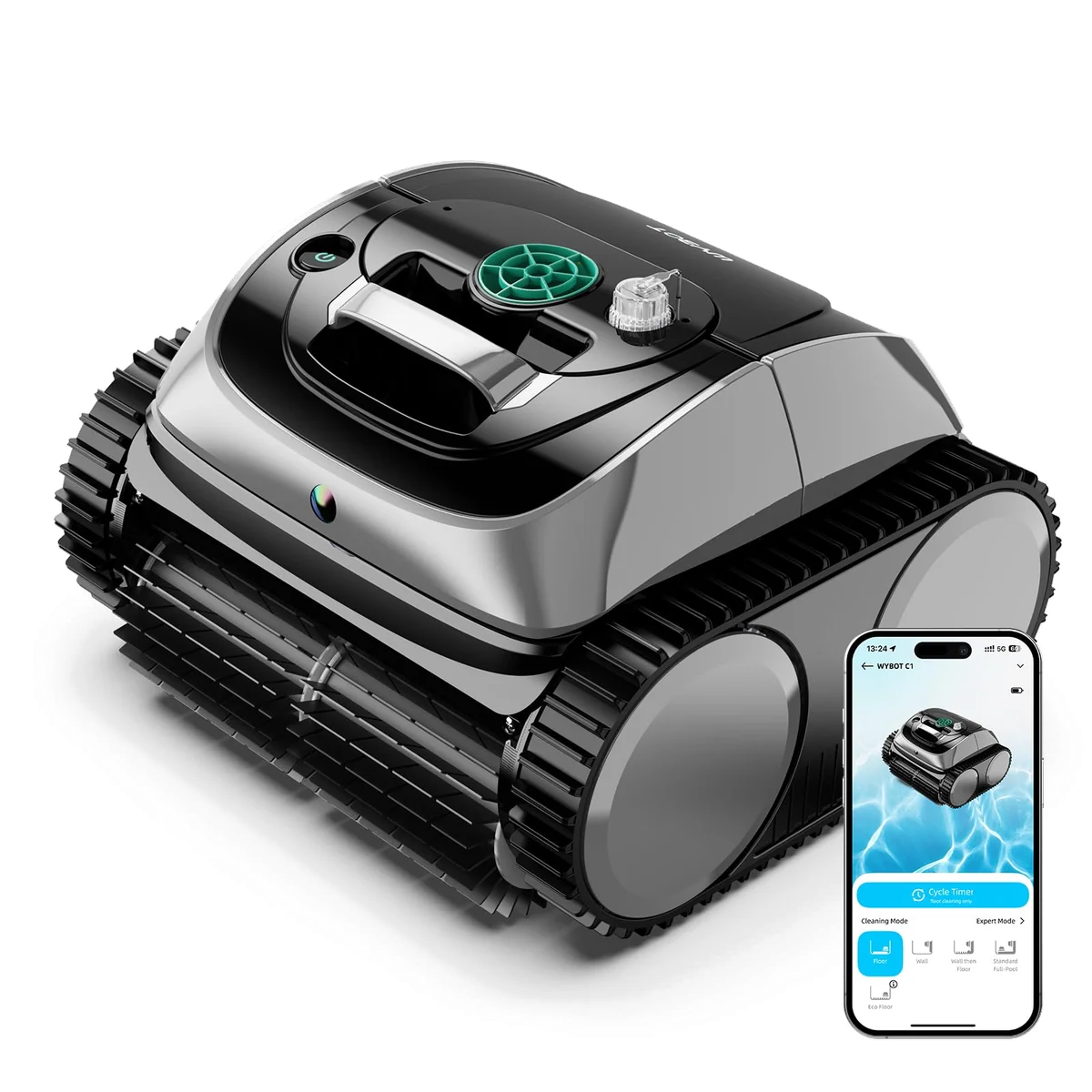
Do not buy the WYBOT C1 for set-and-forget reliability, but consider it for a simple pool if cordless convenience matters enough to accept manual charging and a credible risk of difficult after-sales support.
The final call
The WYBOT C1 earns a qualified yes for cleaning and a no for carefree ownership. Buy it only when the pool is geometrically simple, one charge is likely to be enough, cordless operation genuinely solves a problem, and the seller offers a painless route out if the battery or electronics fail.
Everyone else should pass, especially buyers who need dependable steps and shelf coverage, repeat storm-cleanup cycles, live underwater control, proven longevity, or support that can be counted on after the return window closes.
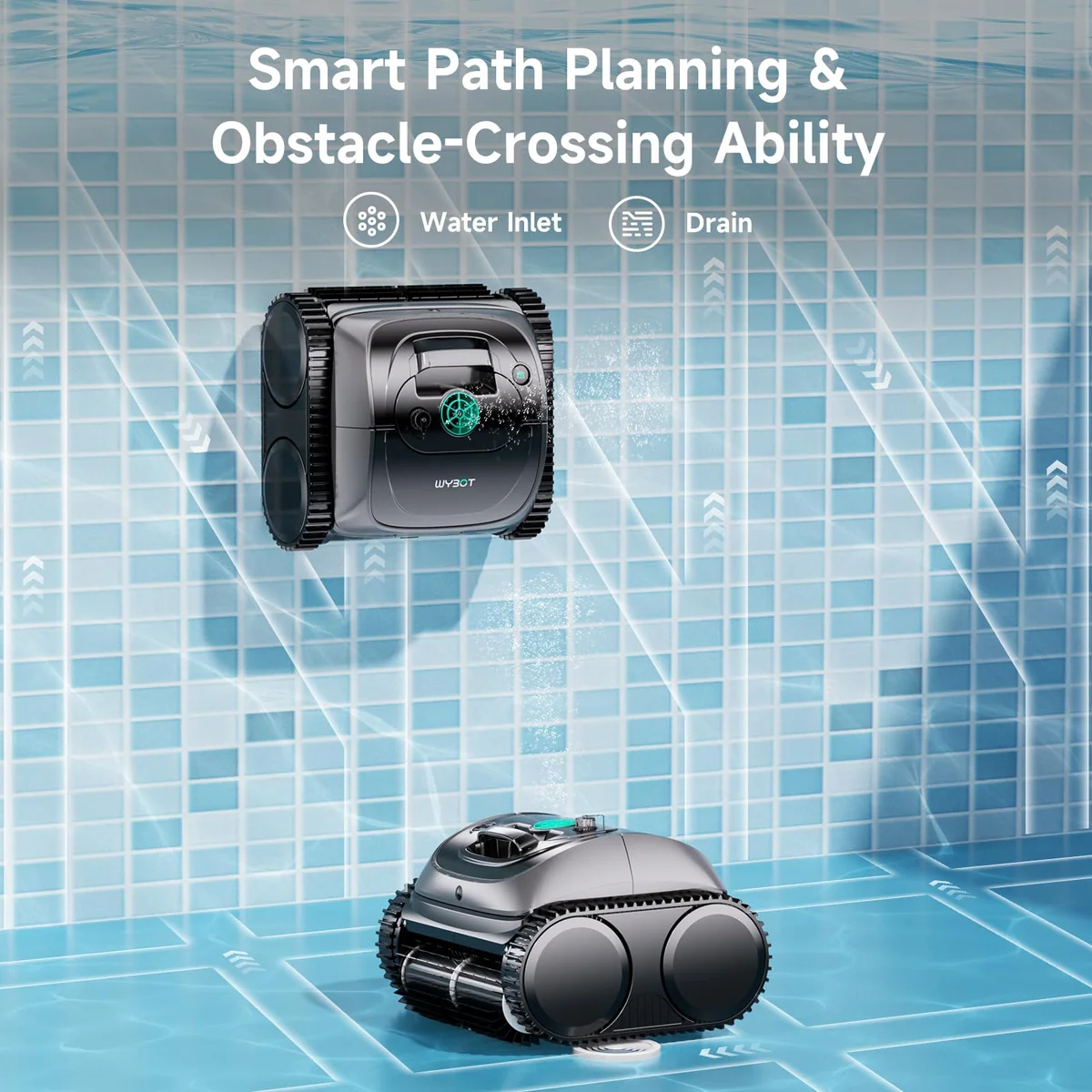
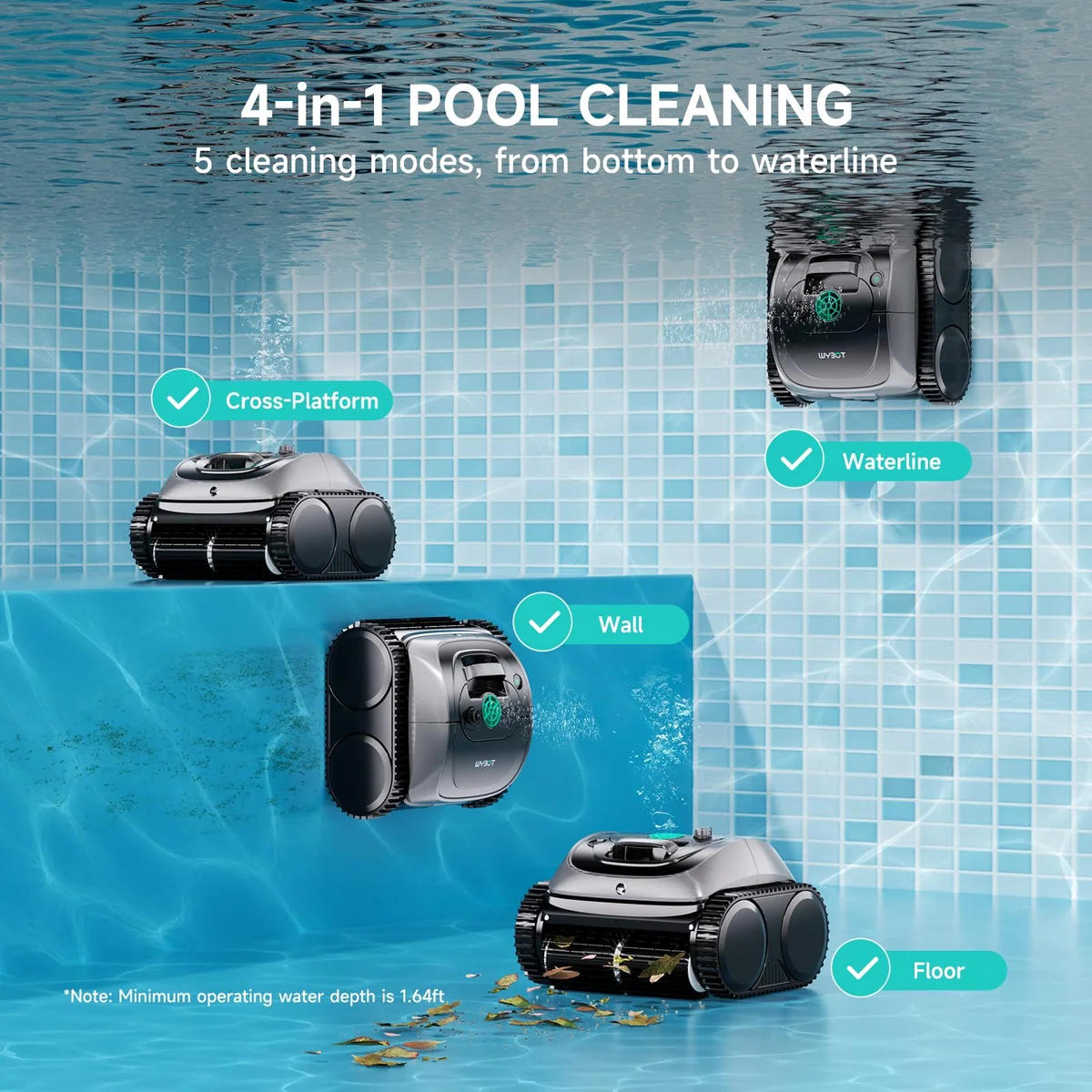
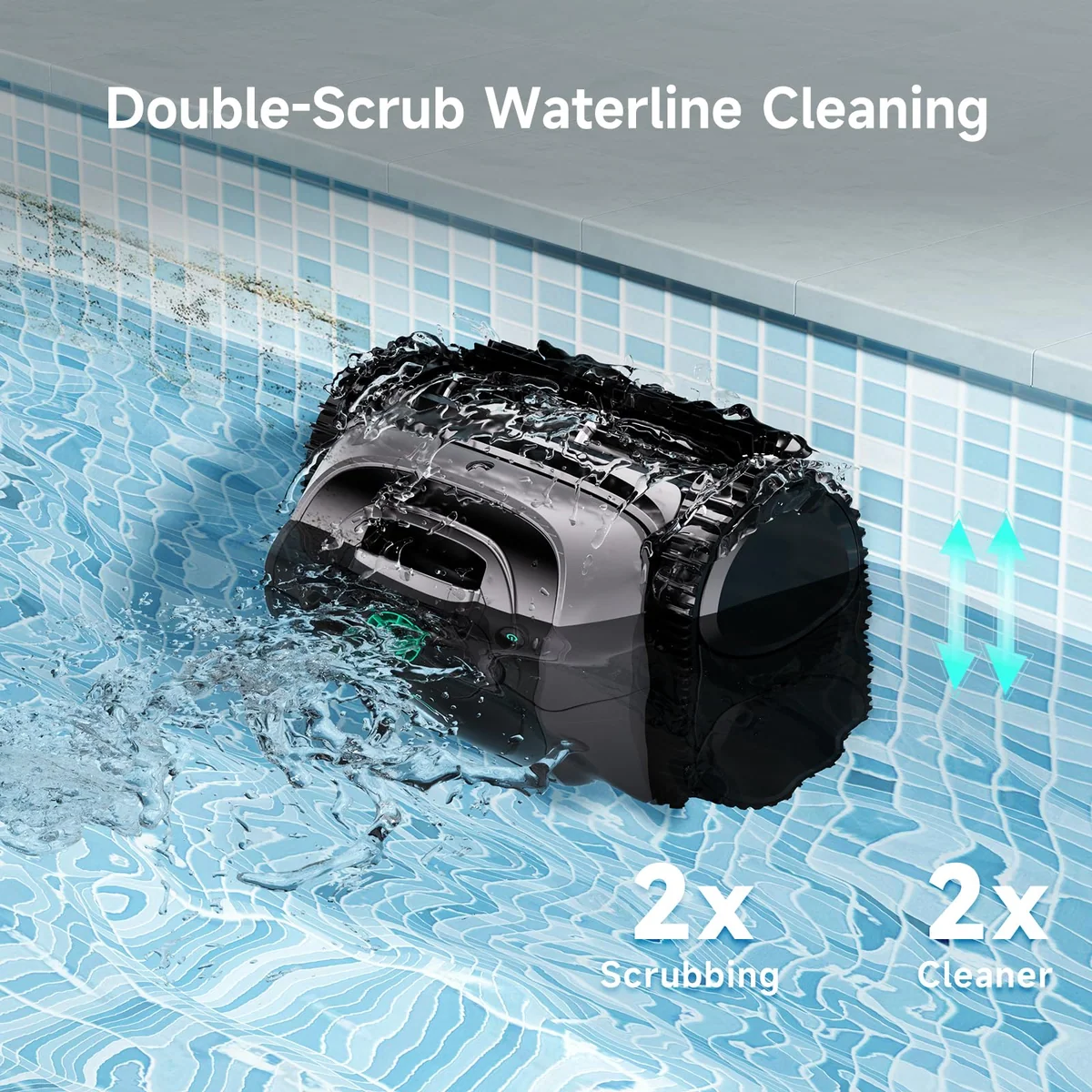
The C1 has the makings of an easy recommendation: no floating cord, a top-access filter, wall and waterline modes, and enough claimed runtime for a substantial pool. Its listing also promises floor, wall, waterline, and step cleaning, using separate floor and wall path patterns rather than random wandering. That is an ambitious package for one cordless machine.
The exact product record produces a split-screen result. Three of the four retained owners were highly positive about cleaning, including pickup of sand and large leaves, while the lone critical owner said the battery could not cover the whole pool and required a dedicated 2.4 GHz Wi-Fi setup. Four ratings cannot settle reliability, but the disagreement already exposes the two questions that matter: how well does it clean when running, and how safe is it to own beyond the return window?
Smart Pool Bots finds the first answer encouraging and the second unresolved. Open floors, ordinary dirt, routine leaves, and uncomplicated walls are the favorable case. Stairs, broad shelves, benches, unusual transitions, heavy debris, and an expectation of live app control are where the proposition starts to fray.
Key Specifications
The app is a setup panel, not a submarine remote
The app’s useful job is choosing the cleaning plan before launch. The exact-product reviews describe it as manageable or easy once configured, but one owner could connect only through 2.4 GHz Wi-Fi and had to revive an old router for the task. That is not a minor footnote if the pool equipment area has weak coverage or the home network does not expose a compatible band.
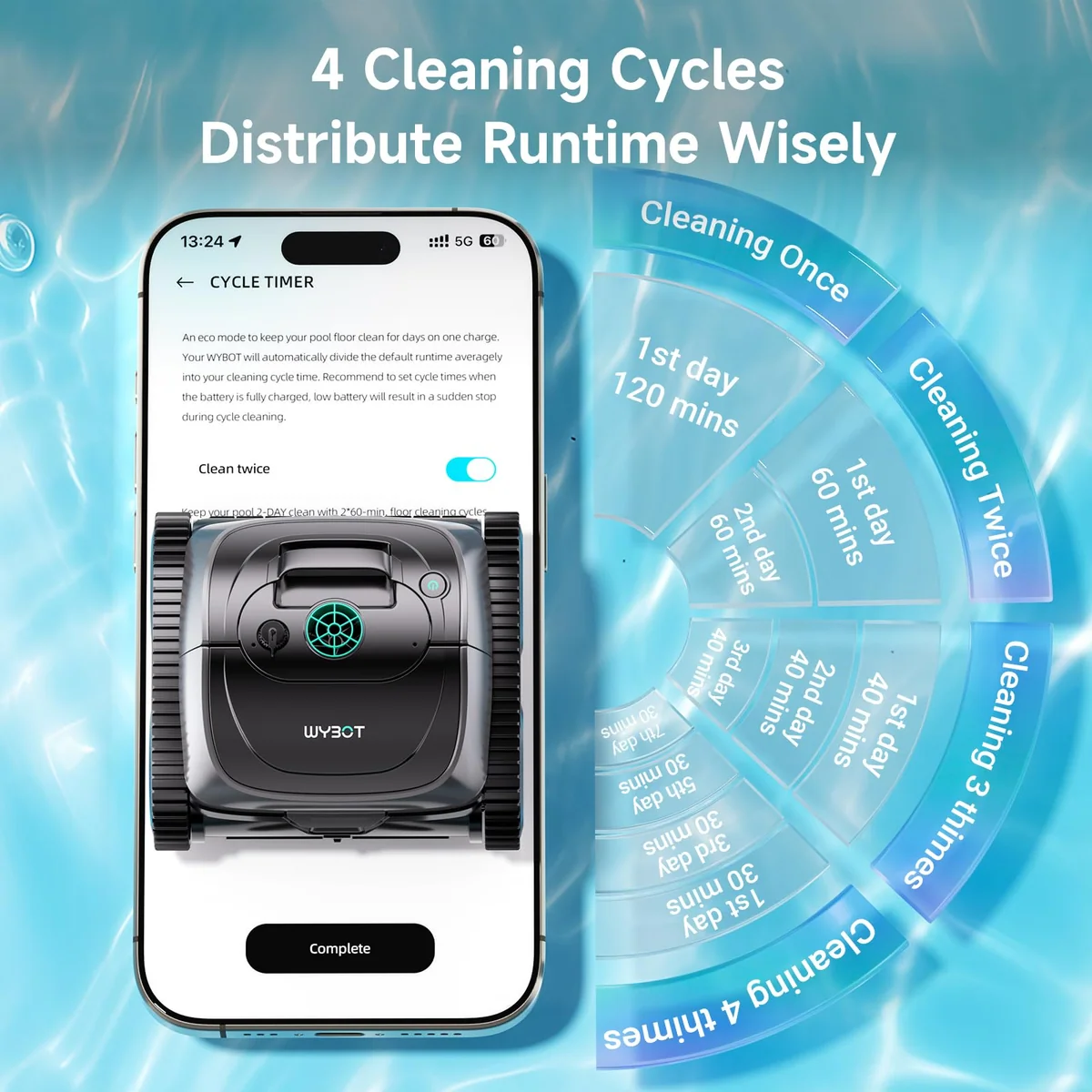
The listing goes further, promising scheduling, customized modes, remote progress tracking, and firmware updates. The supplied evidence verifies the mode-selection idea much better than live underwater tracking. Earlier C1 and C1 Pro users commonly lost communication after submersion, configured the run in advance, and reported missing progress information or completion alerts. No exact-product owner in the retained record demonstrates reliable live monitoring underwater.
Treat scheduling with the same restraint. A cordless timer does not charge the battery, lower the cleaner into the pool, retrieve it, or empty the filter. Anyone expecting vacation-grade weekly automation should first read the practical differences between corded and cordless pool robots.
The ordinary routine is simple, but it is still a routine
After a run, the owner retrieves the unit, lets trapped water drain, opens the top, rinses the filter, allows the cleaner to dry, and charges it in a dry place. Exact-product feedback supports the easy filter cleaning, while C1-family demonstrations repeatedly show straightforward top access and warn that the charging-port cap must be secured before submersion.
That routine is the price of removing the cord from the water. It is appealing when the alternative is untangling cable or hose, but it prevents the C1 from becoming a cleaner that can be ignored for a week.
Strengths & Limitations
Strengths
- Open floors and routine maintenance debris are its strongest cleaning case.
- Wall and waterline cleaning can be convincing in pools with simple continuous surfaces.
- The top-access filter and cordless form make an ordinary cleaning cycle easy to manage.
- Exact-product reports support pickup of sand and at least some large leaves.
Limitations
- Steps, shelves, benches, and awkward shallow transitions can derail coverage.
- The advertised runtime may not finish a large or complicated pool on one charge.
- The app appears more useful before launch than while the cleaner is underwater.
- Earlier C1 reports raise credible concerns about electrical or battery failures and difficult support.
The cleaning is the easy part
Open floors play to its strengths
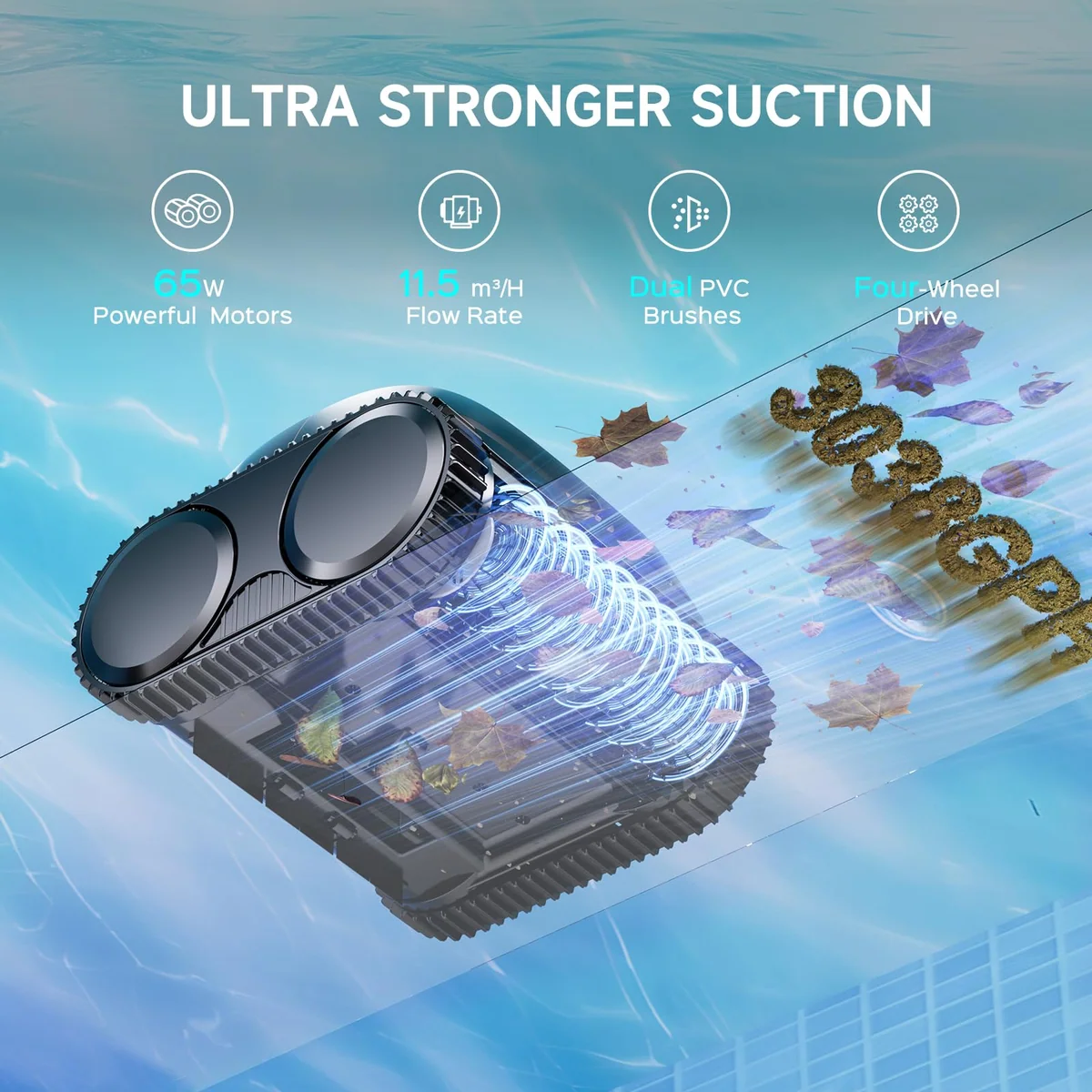
Routine floor cleaning is the most defensible reason to want the C1. Exact-product owners report pickup of fine sand and large leaves, while earlier C1 demonstrations show visible collection of dirt, grass, leaves, and sand from open floors. Those demonstrations concern earlier C1 specifications, so they cannot prove that every performance detail transfers to this revision, but they support the same broad cleaning pattern seen in the exact reviews.
The strongest long-duration positive account concerns an earlier C1 used frequently in a 16-by-30-foot rectangular pool. It continued picking up leaves and maintained roughly the same useful runtime at almost one year, although peak leaf fall required multiple basket loads. That is a meaningful counterweight to the failure reports, not a guarantee for this ASIN.
Walls are plausible; steps are conditional
Earlier C1 videos show controlled wall climbing and waterline contact in straightforward pools, and another C1-family demonstration describes strong pickup alongside wall and waterline cleaning. The evidence is encouraging for continuous walls, but it remains short-term and does not verify every claim made for the exact revision.
Steps are the weak link in the advertised four-part coverage. Earlier C1 owners describe missed stairs, sun shelves, shallow sections, and a deep-end seat that could trap the robot; C1 Pro reports are mixed, with some successful stair navigation and other machines failing to climb a bench or merely blowing debris off steps. The fair answer is not that the C1 never cleans steps, but that stair geometry decides whether it can.
Pool shape matters more than the coverage claim
Open rectangular or gently curved floors are the low-risk environment. Full-width seats, tanning ledges, angled stairs, rough waterfall lips, pronounced shallow-to-deep transitions, and tight circular edges can create repeated passes in one area while another stays dirty. Active currents can make this worse: one earlier C1 test visibly drifted while a filling hose and circulation disturbed its intended path.
Sand is realistic; dead algae is not a safe promise
The exact listing calls its 180-micron screen “ultra-fine,” and an exact-product owner says the cleaner collected fine grains of sand. Earlier C1 evidence also shows ordinary fine dirt and sand in the filter, but other owners report that very fine dust remained or needed another pass. The sensible boundary is clear: expect useful pickup of visible sand and maintenance dirt, not guaranteed removal of the finest silt or dead algae.
A similar qualification applies to leaves. The C1 can collect them, including some large leaves, but a storm load can fill the basket before the pool is finished. One long-term owner found that an overfilled basket could hold the intake flap open and release debris during retrieval, so unusually heavy leaf fall calls for pre-skimming, an intermediate empty, or another run.
If falling leaves are the pool’s defining problem rather than an occasional load, the broader guide to robotic cleaners for leaves and floating debris is a better starting point than treating the C1’s maximum runtime as a substitute for basket capacity.
A maximum runtime is not a coverage guarantee
The listing’s 160-minute figure is explicitly an upper limit. One exact owner reported as much as two and a half hours, while another said the charge was insufficient to finish the pool. Earlier C1 accounts range from a diminished run of roughly 90 minutes to a repeatable two-hour cycle, which shows why pool area alone cannot predict completion.
Wall climbing, heavy debris, route repetition, and a complicated shallow end all consume the same finite charge. A clean, simple pool may finish comfortably; a pool near the advertised area limit may need another four-hour charging interval before the missed section gets a second chance.
Value depends on who carries the risk
The C1 makes the most sense when its cost is meaningfully below a more established corded alternative and the seller assumes the early-failure risk through a straightforward return or replacement policy. In that situation, its competent floor cleaning, useful wall coverage, and cord-free pool surface can justify the manual charging routine.
The argument weakens as the price gap narrows. A battery is both the source of convenience and an additional wear item, a missed first pass cannot be followed immediately by another long cycle, and live underwater app control remains unproven for the exact model. Buyers who care more about continuous power than a clear water surface should compare the corded Dolphin Nautilus CC assessment before deciding.
For another cordless perspective, the site’s Aiper Scuba S1 and WYBOT C1 comparison keeps the trade within the same battery-powered category. Buyers deciding whether to stay with the brand but move up should use the C1 and C2 Vision comparison rather than assuming that a newer name automatically resolves the C1’s ownership risks.
Who has the best chance of liking it
The favorable buyer has a maintained pool with an open floor, simple walls, routine leaves and dirt, enough time for one charge to finish, and no objection to retrieving and rinsing the cleaner after every run.
Who should pass
Look elsewhere if the pool has broad steps, a tanning ledge, a full-width seat, difficult shallow transitions, dense seasonal leaf fall, or a need for reliable multi-year service and unattended scheduling.
The first season is the real test
The exact ASIN has too little owner history to answer the longevity question. Its four retained reviews can tell us that the product has cleaned well for several buyers and disappointed another on runtime, but they cannot establish a dependable battery lifespan or failure rate.
Earlier C1 evidence cuts both ways. The best positive account describes frequent use approaching one year with stable runtime and effective leaf pickup. Other C1 owners report units that stopped charging, stopped turning on, or died after roughly ten uses to several months. A newer C1-branded account describes one unit replaced after seven months and the replacement failing after another six months.
Those reports are not purchase-verified failure statistics, and they involve C1 units from more than one specification generation. They therefore do not prove that B0H8D66MY8 will fail. They do establish a credible risk signal that the thin exact-product record has not yet disproved.
Support is part of the product
The associated support reports make an early fault more consequential. C1 owners describe phone contacts that opened email cases rather than solving problems, repeated requests for videos or proof of purchase, slow replies, difficult return arrangements, and conversations that stopped before resolution. There are positive exceptions, including a quick replacement, but the recurring pattern is strong enough that Smart Pool Bots would not rely on manufacturer support alone when choosing where to buy.
A retailer with a clear return path materially improves the proposition. C1 Pro evidence includes a weak-battery unit replaced promptly by the retailer, while other C1 accounts describe far more effort when resolution depended on remote support. The safest purchase channel is the one that makes a failure easy to reverse, not merely the one that presents the lowest initial cost.
Frequently Asked Questions
Will the C1 clean steps and a sun shelf?
Sometimes, but mixed C1-family reports make stair and shelf geometry a much stronger predictor than the listing’s broad step-cleaning claim.
Will the advertised 160 minutes finish a large pool?
It may finish a simple pool, but exact owners already range from roughly two and a half hours of operation to an incomplete pool that required recharging.
Can the app control or track the cleaner underwater?
The listing promises remote tracking, but the supplied C1-family evidence supports configuring modes before launch more strongly than reliable communication after submersion.
Does the C1 require 2.4 GHz Wi-Fi?
One exact-product owner says it did and needed an older router, so buyers should confirm that their poolside network exposes a usable 2.4 GHz connection.
Will it pick up sand, fine dust, and dead algae?
Sand and ordinary fine dirt are realistic targets, while the finest dust and dead algae remain inconsistent and should not be guaranteed by the 180-micron filter claim.
Can the C1 stay in the pool between cycles?
Plan to retrieve, empty, rinse, dry, and charge it after each cycle rather than treating it as a permanent in-pool appliance.
Is this model clearly intended for above-ground pools?
The listing title markets above-ground use while its first feature says the cleaner is designed specifically for inground pools, so owners of soft-sided or unusual above-ground pools should not assume compatibility from the title alone.
Sources (4)
- Amazon listings and customer reviews — Wybot C1
- Owner reports across r/pools, r/swimmingpools threads
- Owner and reviewer video, 3 channels
- Bestbuy — Article — www.bestbuy.com