The WYBOT C2 Vision beats the C1, but its filter deserves the credit
Buy the C2 Vision over the C1 when its 10-micron filtration solves a real fine-debris problem; otherwise, neither is an easy recommendation because the camera is conditional and the C1 carries the more troubling ownership record.
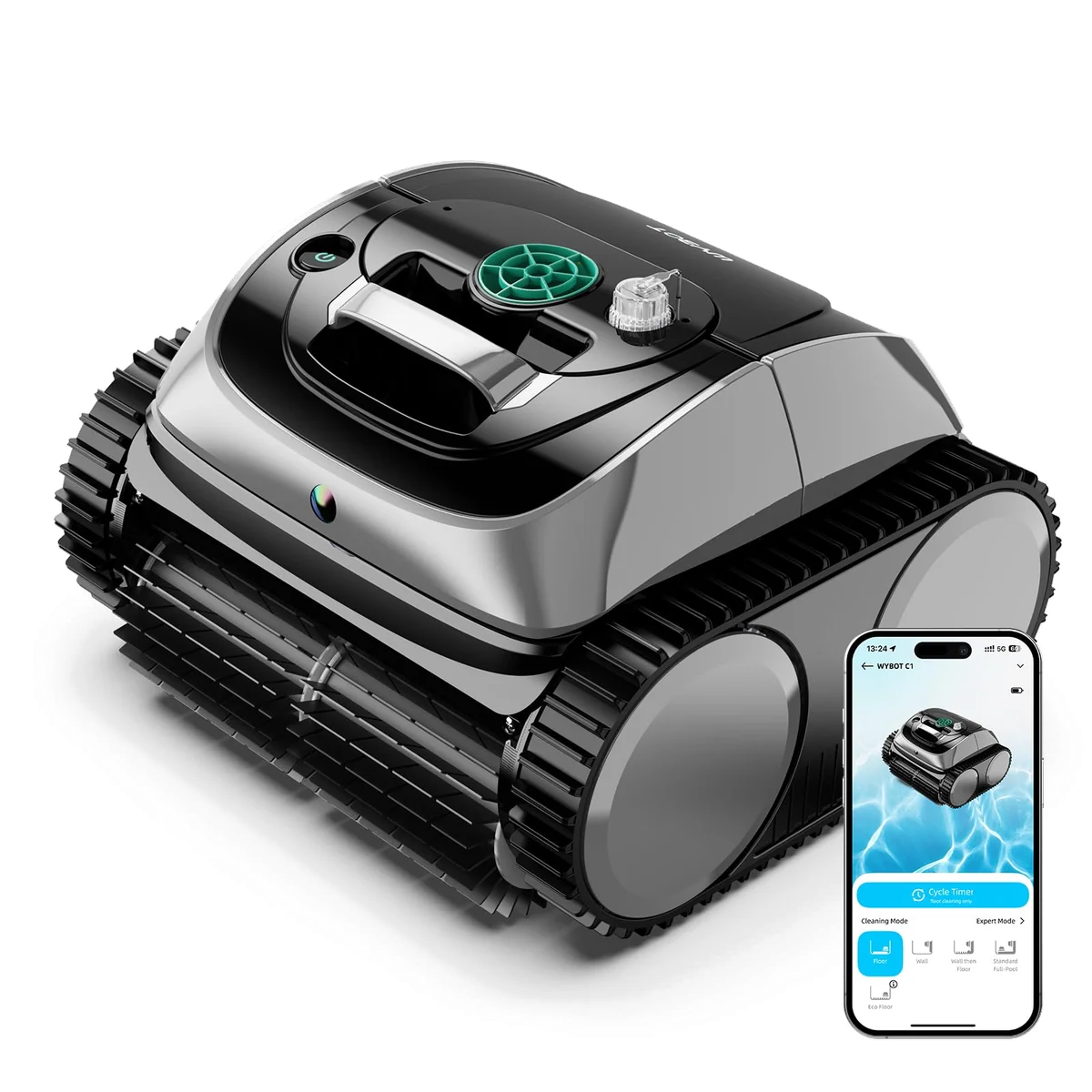
WYBOT C1
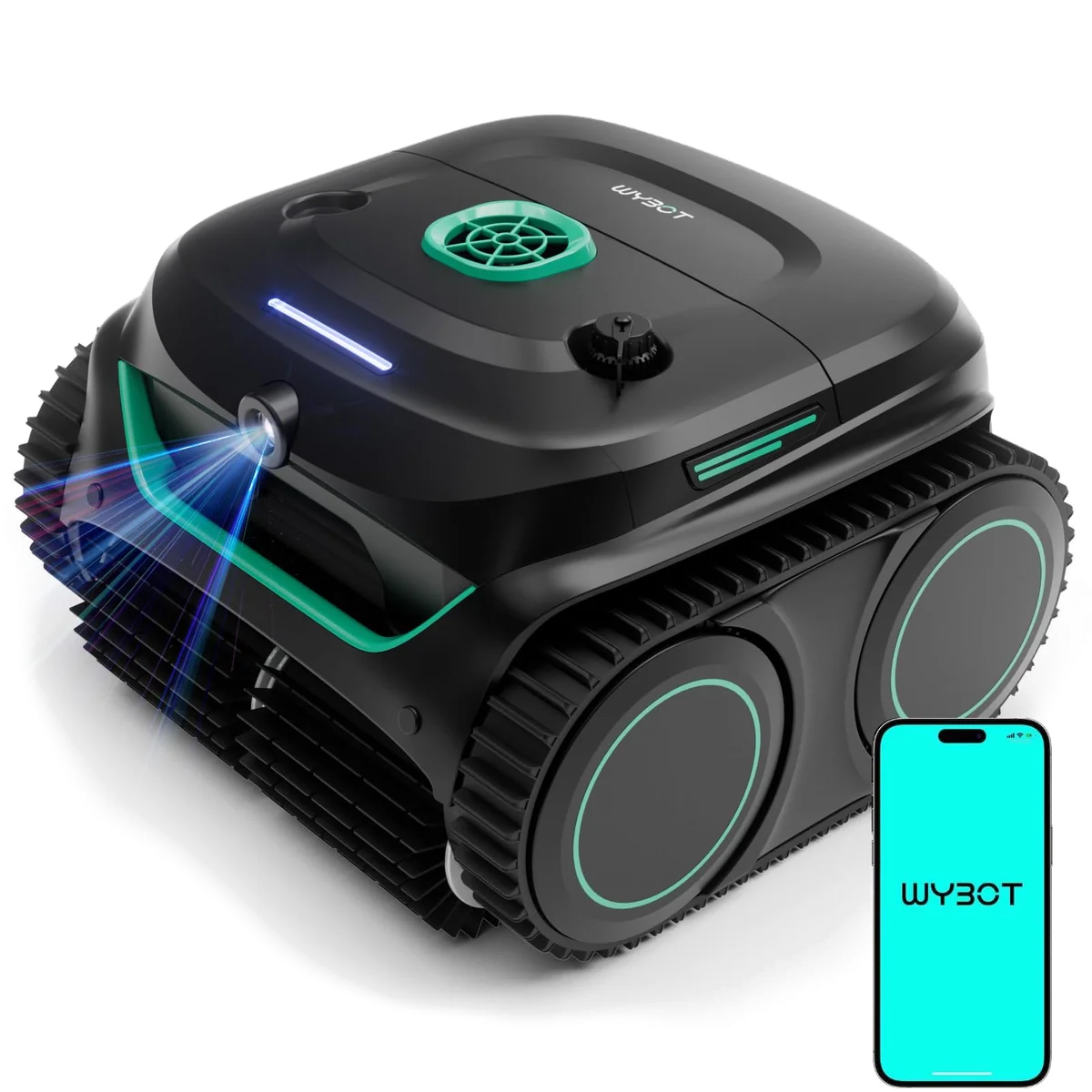
WYBOT C2 Vision
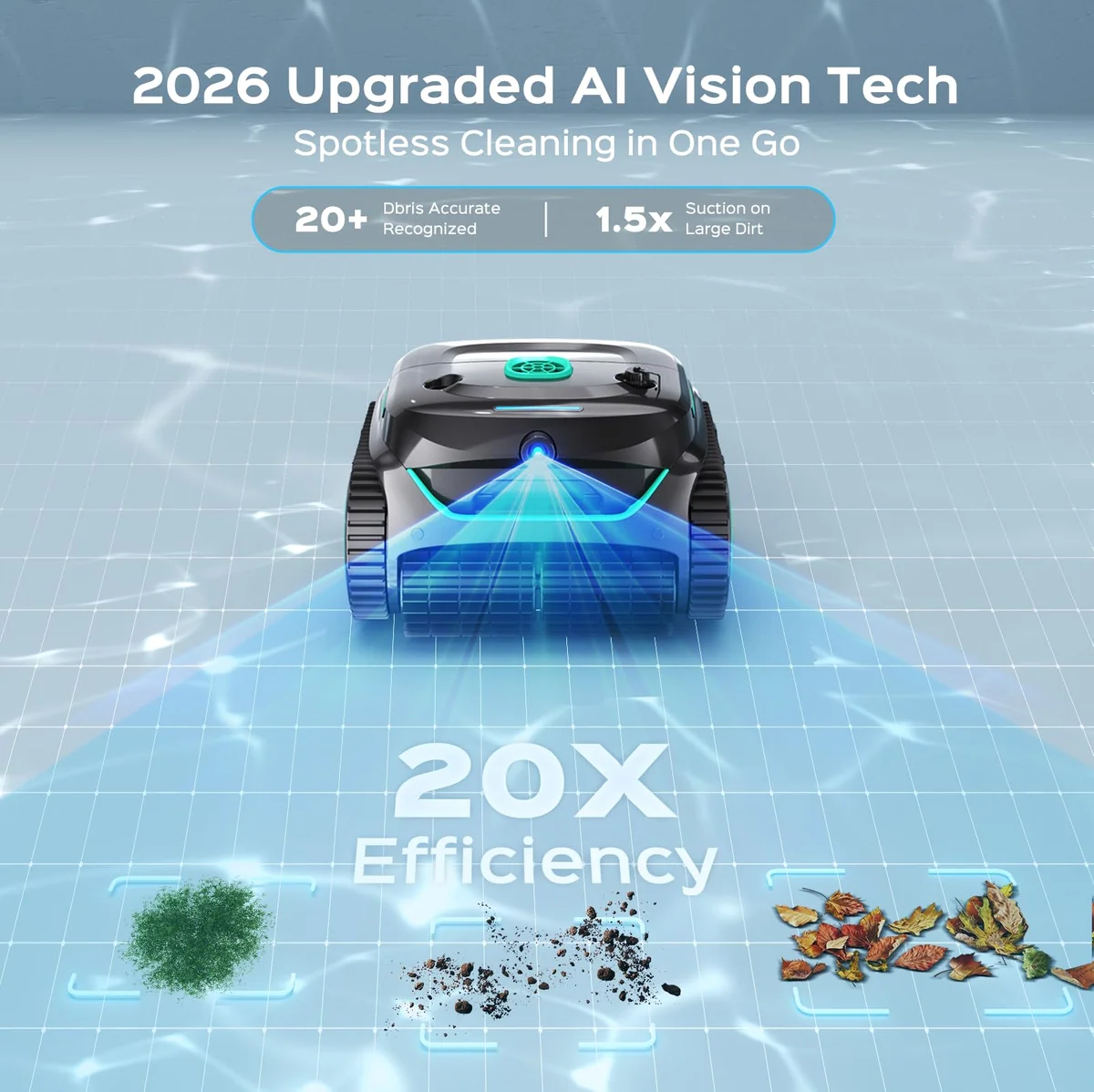
The word “Vision” makes this comparison sound as if a camera settles everything. It does not. The C2 Vision can recognize obvious debris, revisit dirty patches and improve its routing after several cycles, but contrasting drains, stains and multicolored finishes can distract it. Its decisive advantage is less glamorous: a removable 10-micron filter that captures sediment the C1’s 180-micron basket is more likely to miss.
The C1 offers a plausible counterargument. It promises floor, wall, waterline and step cleaning, up to 160 minutes of runtime, systematic route patterns and app-selected modes without adding a camera to the equation. Exact-model owners have praised its pickup of sand and large leaves, yet another could not finish the pool on one charge and needed a dedicated 2.4 GHz Wi-Fi arrangement.
That leaves a choice between two different kinds of uncertainty. The C2 Vision asks whether your pool is visually simple enough for its camera and physically deep enough for its wall-climbing ambitions. The C1 asks whether adequate cleaning today is worth accepting a thinner exact-model record and a broader family history that includes charging failures, dead units and difficult support.
Smart Pool Bots gives the C2 Vision first place because it has the more useful cleaning ceiling, not because “AI” makes it autonomous. Buyers who only want uncomplicated cordless floor maintenance should not assume that either model is automatically the best value; the wider WYBOT cleaner guide is the better place to compare the brand’s other compromises.
WYBOT C1
WYBOT C2 Vision
At a Glance
| Feature | WYBOT C1 | WYBOT C2 Vision |
|---|---|---|
| Price Range | $200–$500 | $500–$1,000 |
| Claimed runtime | Up to 160 minutes | Up to three hours in Eco Floor mode, with standard cleaning reported at about two hours |
| Check Price on Amazon | Check Price on Amazon |
The winner depends on what remains after an ordinary pass
Both machines can handle routine leaves, sand and maintenance dirt on open floors. The meaningful separation appears after the basket has collected the obvious material. If the floor still wears a haze of pollen, silt or fine dust, the C2 Vision can add its ultra-fine insert for a second-stage cleanup. If the remaining problem is a broad stair, shallow shelf or awkward transition, neither specification sheet provides a dependable answer.
Choose the C2 Vision when fine debris matters more than camera hype.
It wins by combining credible floor, wall and waterline cleaning with a 10-micron insert that gives settled dust and silt somewhere to stay.
Its camera can be confused by colored drains, stains and varied finishes, while shallow shelves and upper steps remain conditional.
The filter is the upgrade you can rely on
The C2 Vision pairs a conventional 180-micron basket with a removable 10-micron insert. The basket is the sensible first choice for leaves, seeds and small twigs; the insert belongs in a later floor-focused cycle when fine sand, pollen, dust or silt is the target. Exact owners report strong fine-debris pickup, but they also warn that the finer layer can clog quickly in a heavily loaded pool.
This staged approach is less effortless than leaving both filters installed forever, yet it is materially more capable than asking a 180-micron screen to catch everything. Buyers whose main frustration is sediment should also compare the broader recommendations for pool robots that target sand, silt and fine debris.
The camera helps only when dirt looks like dirt
Dirt-Hunting is best understood as targeted floor cleaning. It can concentrate on visible piles instead of tracing every wall and waterline, which is useful when leaves or sediment gather in predictable pockets. The evidence is much weaker for subtle particles, and one exact owner found that differently colored drains, stains and several shades of blue sent the system after the wrong visual cues.
Routing may improve with repetition. An owner with a long fiberglass pool, seating and a tanning ledge reported that early cycles were repetitive before the robot became more effective after five or six complete runs. That supports patience during setup, not the listing’s undefined promise of efficiency improving by as much as 20 times.
Long runtime belongs to a restricted mode
The headline three-hour result applies to Eco Floor, which conserves energy by omitting walls and the waterline. Exact owner reports put standard cleaning closer to two hours, including one account of about 140 minutes. The C2 Vision can therefore outlast the C1’s published maximum in its least demanding mode, but the comparison narrows once both robots are asked to climb and scrub.
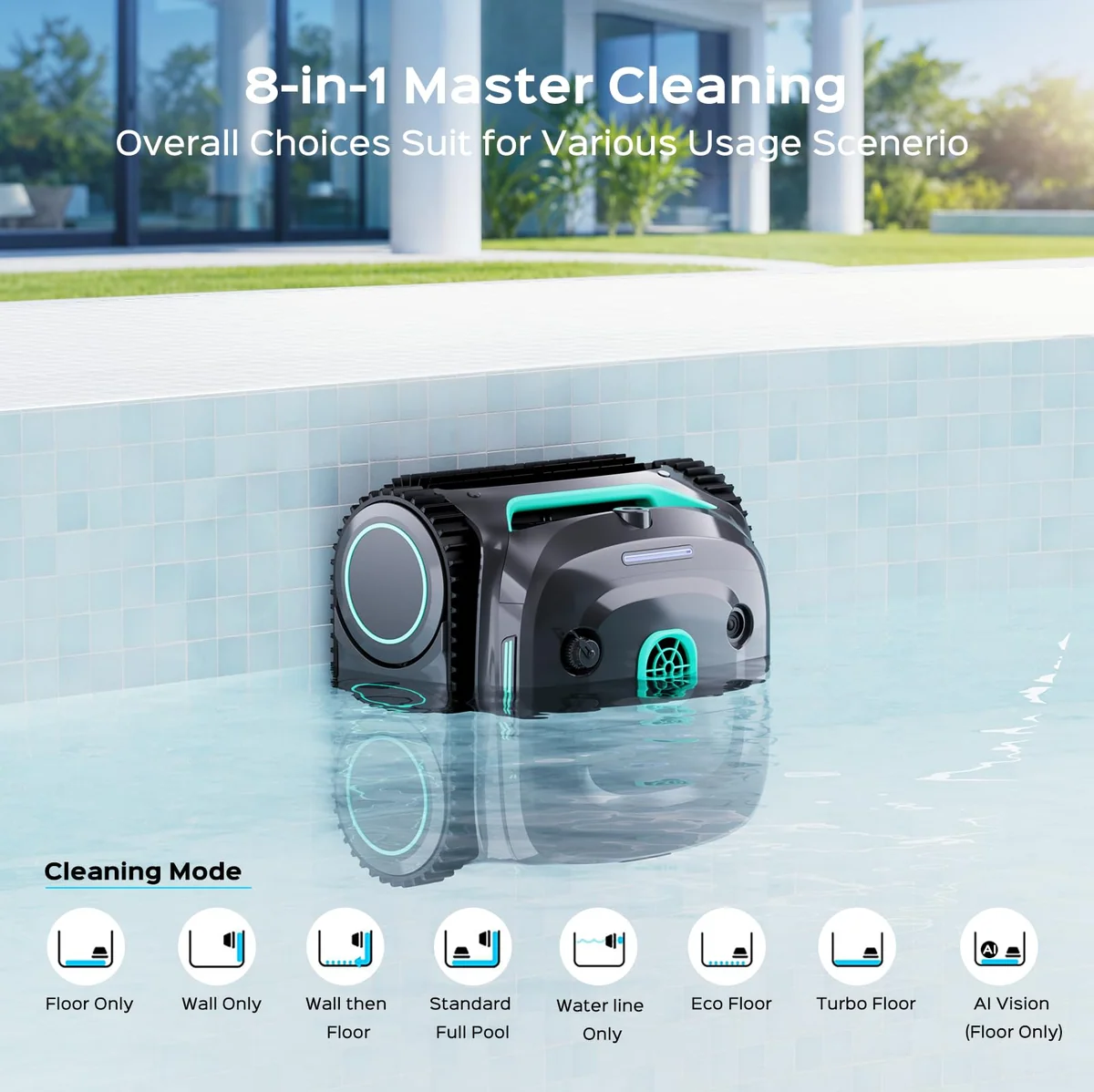
Eight app modes and six selectable route patterns provide more control than the C1’s simpler pitch, although that control must be configured before submersion. The app does not turn the camera into a live underwater feed or make ordinary Wi-Fi and Bluetooth behave like submarine radio.
Early evidence supports performance, not longevity
The two-year warranty is useful on paper, but the exact review set is still too young to establish a dependable battery, camera or electronics lifespan. One owner reported a machine that worked on the first day and did not move on the second, while the same record contains several successful early experiences. That is a reason to test every mode promptly and preserve an easy return route, not enough evidence to calculate a failure rate.
Choose the C1 only when the simpler machine fits a simpler pool.
It can clean open floors, ordinary walls, sand and routine leaves without charging extra complexity to a camera that your pool may not suit.
The C1’s inconsistent coverage, finite one-cycle battery and unresolved durability record make it the riskier machine to own.
Its best case is straightforward maintenance
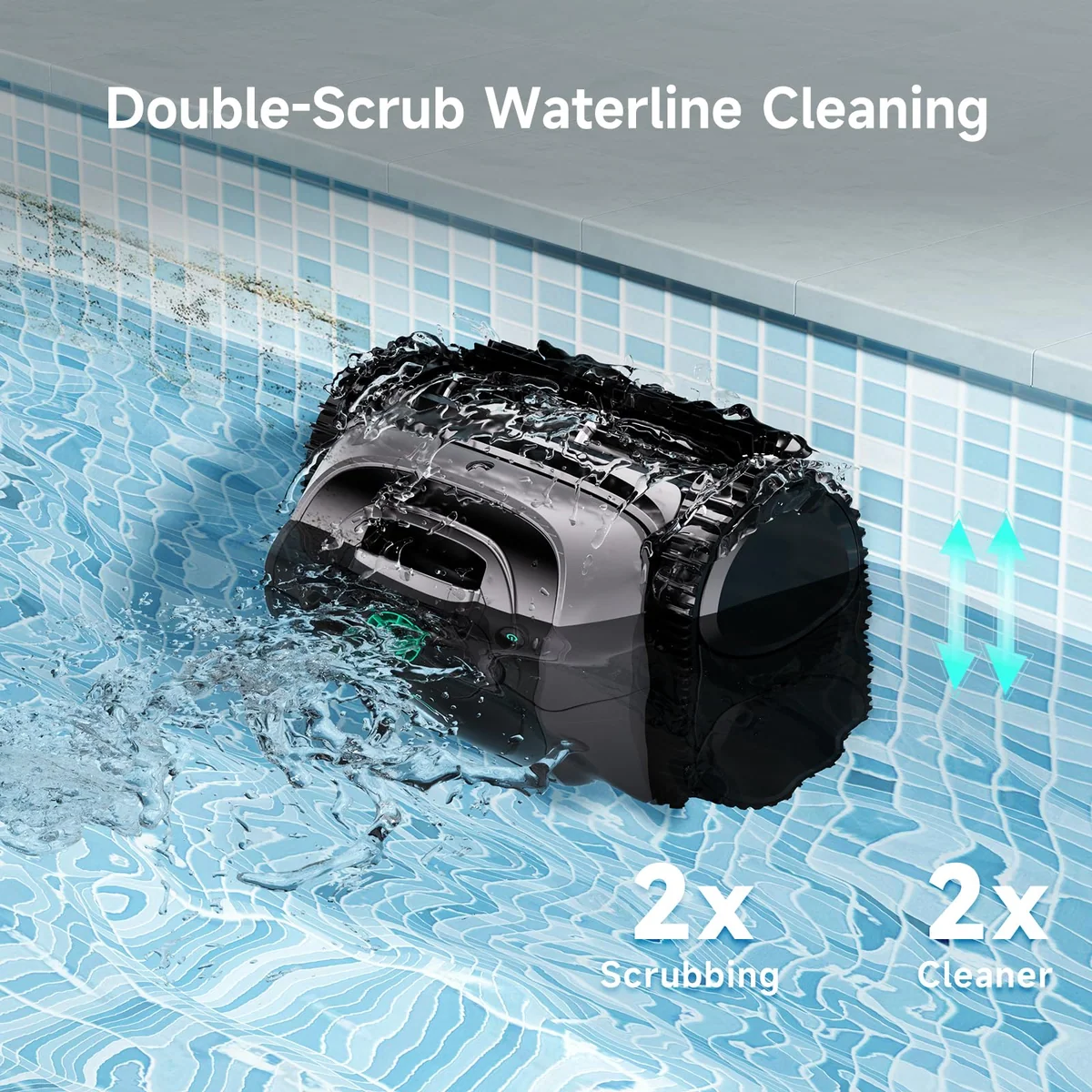
The C1’s exact listing promises systematic floor and wall paths, up to 160 minutes on a four-hour charge, coverage up to 1,614 square feet and suction through a 180-micron filter. Three of four retained exact-model owners were strongly positive about cleaning, including pickup of fine sand and large leaves. The fourth still thought it cleaned reasonably well, but said the battery could not cover the whole pool.
Those results make sense together. Open floors, continuous walls and routine debris give the robot the best chance of completing a useful pass. Repeated routes, wall climbing, a large footprint and complicated transitions consume the same stored charge, so an advertised maximum runtime is not a promise that every corner will be finished.
Steps are a claim, not a dependable advantage
WYBOT advertises floor, wall, waterline and step cleaning, but the wider C1 record makes steps and shallow architecture conditional. Broad benches, sun shelves, seats, tight corners and abrupt depth changes can leave the machine repeating one area while another stays dirty. The C2 Vision does not solve that physics problem merely by seeing more of it.
The app is another setup task
One exact C1 owner needed a stronger signal near the house before programming worked correctly, while another had to find an old router because the app required a 2.4 GHz network. The useful expectation is pre-run mode selection, not reliable progress tracking after the cleaner disappears underwater.
This limitation is not unique to the C1. Cordless robots remove a cable from the deck but still need retrieval, drainage, filter rinsing, drying and charging between full cycles. The practical distinction is covered in the site’s guide to corded and cordless robotic pool cleaners.
Ownership risk breaks the tie against it
The exact C1 review set is too small to establish long-term reliability, so the concern comes from the broader C1 family record. It includes an encouraging account of frequent use approaching one year with useful runtime intact, but also reports of machines that stopped charging, stopped turning on or failed after weeks or months.
Support reports make that uncertainty more costly. Owners describe repeated requests for videos and proof of purchase, slow email exchanges, difficult return arrangements and unresolved cases, although successful replacements also exist. The full WYBOT C1 assessment explains why Smart Pool Bots treats a clear retailer return process as part of the product rather than an administrative detail.
| Buying question | WYBOT C2 Vision | WYBOT C1 | Decision |
|---|---|---|---|
| Fine dust, pollen and silt | Includes a removable 10-micron insert behind the 180-micron basket. | Uses a 180-micron screen with credible sand pickup but less protection against the finest sediment. | C2 Vision wins clearly. |
| Leaves and routine debris | Handles leaves, seeds and small twigs with the standard basket. | Exact owners report useful pickup of sand and large leaves. | Neither has a decisive advantage for ordinary loads. |
| Camera-assisted targeting | Can revisit visible debris but may misread stains, drains and color changes. | Has no camera and relies on systematic route patterns. | C2 Vision wins only in a visually consistent pool. |
| Maximum runtime claim | Approaches three hours in floor-only Eco mode, with ordinary cleaning reported nearer two hours. | Claims up to 160 minutes after a four-hour charge. | Mode and pool geometry matter more than the larger number. |
| Walls and waterline | Provides dedicated modes and credible climbing on compatible surfaces. | Can climb straightforward walls and reach the waterline. | C2 Vision offers better control, not guaranteed better access. |
| Steps and shallow shelves | Lower submerged steps may be reachable, while upper steps and ledges remain difficult. | Broader C1 evidence shows inconsistent results on stairs, benches and shelves. | Neither is the safe choice for shallow architecture. |
| Ownership confidence | Long-term evidence is immature, with one immediate failure in an otherwise positive early set. | Older family reports contain a more developed pattern of charging, electronics and support problems. | C2 Vision is the less troubling bet, not a proven durable one. |
WYBOT C1
WYBOT C2 Vision
Match the cleaner to the pool you actually have
Buy the C2 Vision for settled fine debris
Its ideal pool has an open floor, a light and visually consistent finish, conventional walls and a recurring layer of dust, pollen, fine sand or silt. Visible debris pockets give Dirt-Hunting something meaningful to target, while the 10-micron insert deals with particles the camera may not recognize individually.
Consider the C1 for simple, routine cleaning
The favorable C1 pool is smaller than the published limit, geometrically uncomplicated and maintained often enough that leaves never become a basket-filling storm load. The owner should value a cord-free deck, tolerate manual charging and buy through a seller that makes an early failure easy to reverse.
Skip both for architecture above the waterline
Broad tanning ledges, full-width benches, upper steps and very shallow shelves can sit outside the practical reach of either robot. A camera cannot create traction or submersion, so buyers with these features should start with the site’s guide to cleaners for steps, ledges and shallow shelves.
Choose corded power for repeat unattended cycles
Neither machine recharges underwater, empties its own filter or becomes a permanent pool appliance. If weekly automation and immediate consecutive cycles matter more than removing a floating cable, the Dolphin Nautilus CC review presents the more relevant alternative.
The buying rule
Pay for the C2 Vision when its fine filter addresses debris you can name and its camera suits the finish you can see. Choose the C1 only when the pool is simple, the expected workload is modest and the purchase channel protects you from its less settled ownership record. If neither description fits, walk away rather than asking an app mode to overcome the pool’s geometry.
Frequently Asked Questions
Is the C2 Vision better than the C1?
Yes for fine filtration and configurable cleaning, but only a visually consistent pool can turn the camera into a dependable advantage.
Which model is better for sand, silt and fine dust?
The C2 Vision is the stronger choice because its removable 10-micron insert reaches much finer than the 180-micron filtration specified for the C1.
Does the C2 Vision’s camera provide live underwater video?
No; the camera supports onboard debris recognition rather than a live feed or normal underwater remote control.
Will either robot clean a tanning ledge and upper steps?
Neither is dependable for very shallow architecture because adequate submersion, traction and the shape of each transition matter more than the advertised coverage list.
Does the C2 Vision always run longer than the C1?
No; its longest result belongs to floor-only Eco mode, while ordinary full-pool cleaning is reported closer to two hours and the C1 claims a maximum of 160 minutes.
Can either model run a truly hands-free weekly schedule?
No; both still require a person to retrieve the robot, clean the filter, dry the charging area and restore the battery between full cycles.
Which model has the safer reliability record?
The C2 Vision has fewer developed warning signals, but its short history is not enough to prove durability and the C1’s broader family record makes a protective return policy especially important.
Ready to Choose?
Sources (2)
- Amazon listings and customer reviews — Wybot C1 and Wybot C2 Vision
- Owner reports across r/swimmingpools, r/pools threads