WYBOT C2 Vision: a sharp cleaner with a shortsighted camera
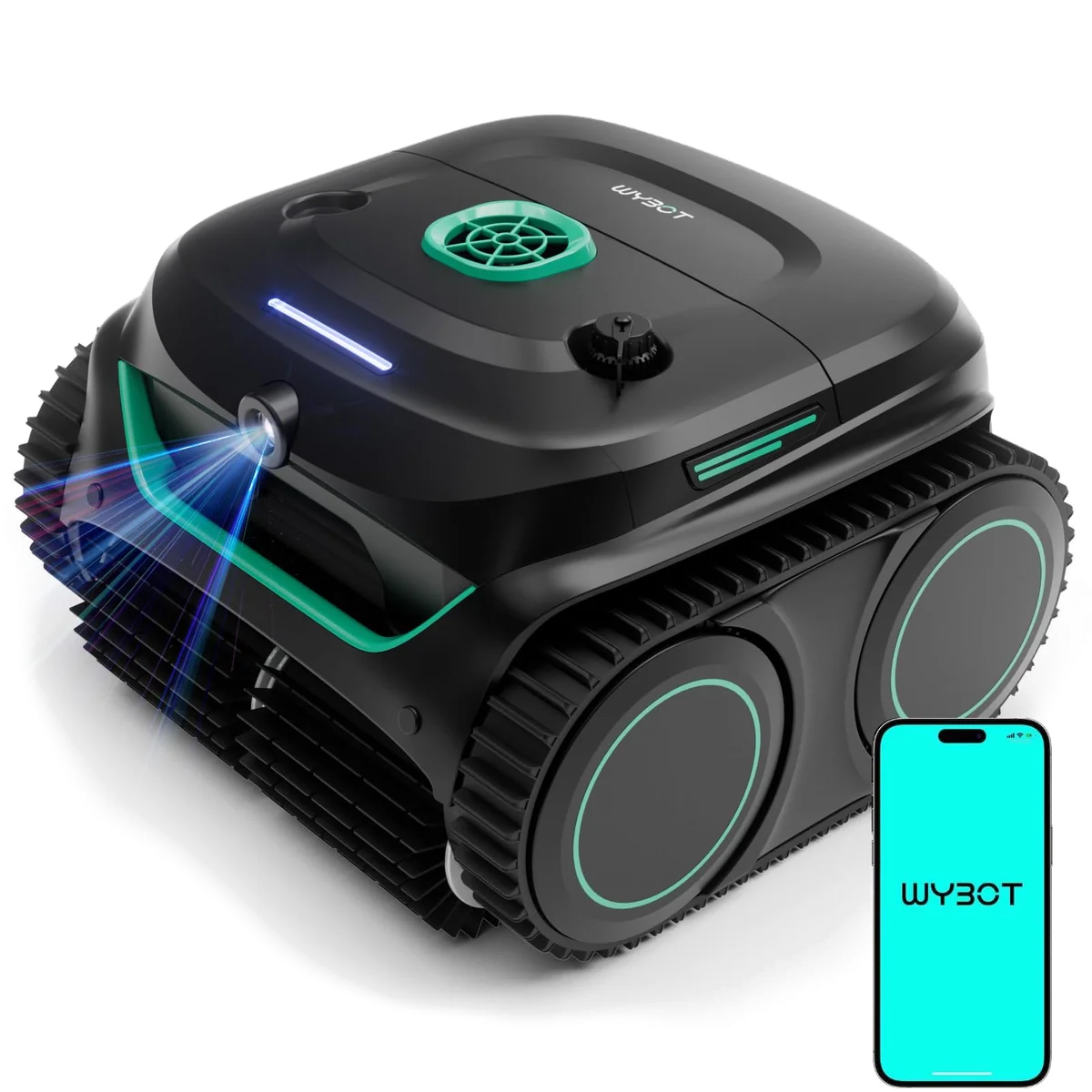
Buy the WYBOT C2 Vision for a light, visually uniform pool with concentrated floor debris; skip it for multicolored finishes, shallow shelves or genuinely unattended cleaning.
The final call
The WYBOT C2 Vision earns a qualified recommendation because the cleaner beneath the AI story is capable. Its dual filtration addresses genuinely difficult fine debris, its dedicated wall and waterline modes are useful, and its cordless format removes the cable from the cleaning cycle.
Buy it when your pool is visually simple enough for the camera to help and your routine already accommodates retrieval and charging. Skip it when the finish itself can fool vision, shallow architecture dominates the pool, or “scheduled” means you expect full autonomous cycles without touching the machine. The camera can save time in the right water, but the filter is what makes this robot worth owning.
The camera is neither a fraud nor the revolution advertised on the box. In direct C2 Vision evaluations, Dirt-Hunting returned to obvious piles until they were gone, and exact-model owners describe efficient targeted cleaning in open pools. The same record shows where the illusion breaks: fine particles are less likely to be recognized, contrasting drain covers and stains can distract the system, and route learning may take several cycles.
That makes this a narrower recommendation than its feature list suggests. Smart Pool Bots would buy it for the filter first, the wall and waterline modes second, and the camera third. The 10-micron insert attacks the dust, pollen, fine sand and silt that ordinary baskets tend to return to the water; the camera is useful when that debris forms something visually obvious enough to find.
Key Specifications
The camera can find dirt, but it cannot understand your pool
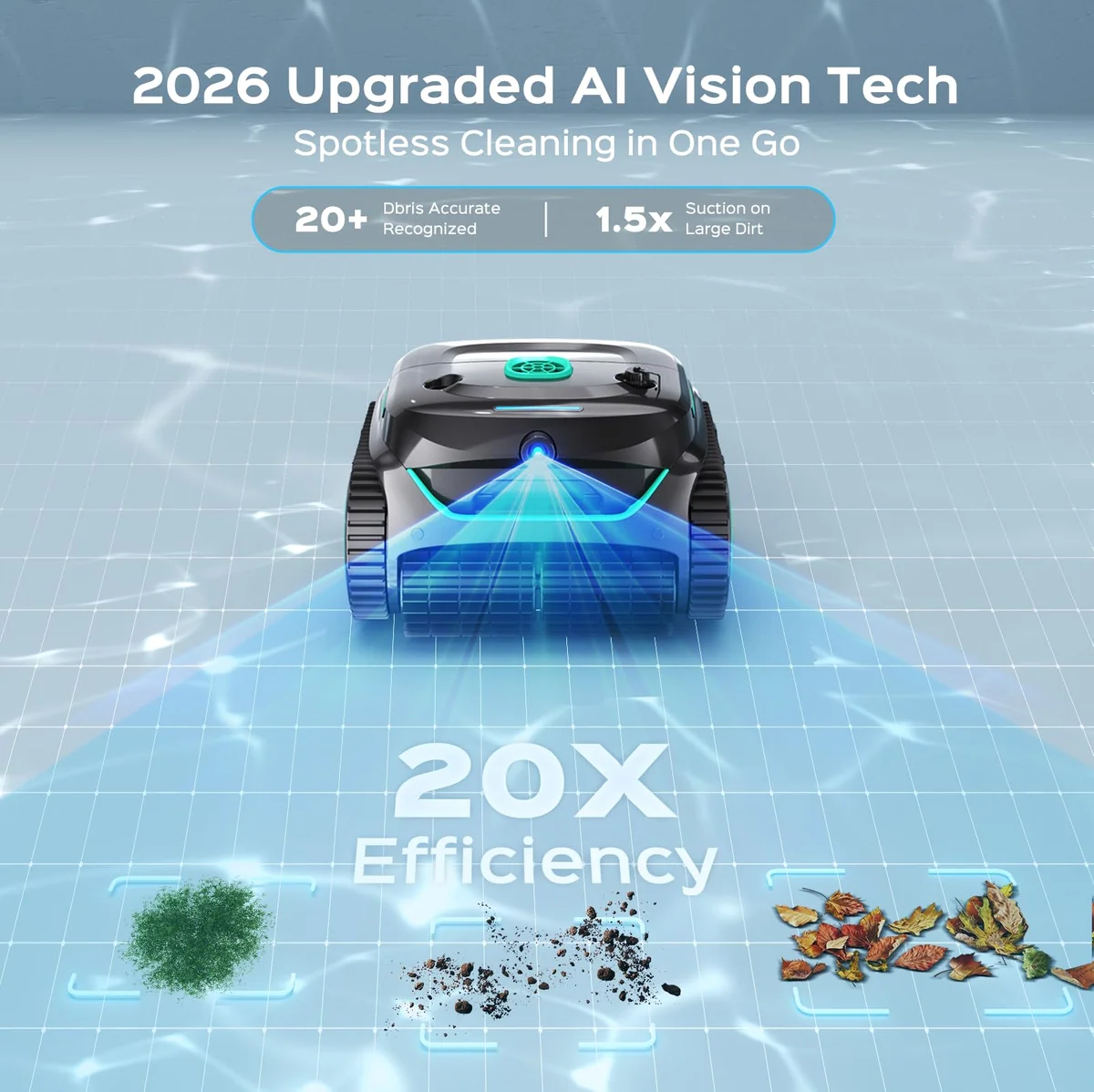
Dirt-Hunting is a floor-focused spot-cleaning mode. It looks for visible debris, revisits the area and keeps working there instead of tracing a complete floor-wall-waterline route. That distinction matters: it can shorten a cleanup when one corner has collected leaves or sediment, but it is the wrong mode when the job is a guaranteed pass over every surface.
The strongest results come from conspicuous targets. Testers saw the robot concentrate on deliberately placed dirt and repeatedly approach visible material, while another evaluation found detection much more dependable with leaves and insects than with fine particles. The filter can therefore collect fine dust exceptionally well even when the camera is not especially good at identifying it.
Pool color is the hidden specification. One exact-model owner found that differently colored drains, stains and several shades of blue confused the AI enough to leave substantial coverage unfinished. In a clean, open pool with a visually consistent finish, the same owner found that the robot could identify dirty areas without spending battery on the entire floor.
Learning requires patience, not faith
There is credible evidence that routing improves. An owner with a 40-foot fiberglass pool, seating and a tanning ledge reported repetitive early runs followed by noticeably better routes after five or six complete cycles. Other direct Vision evaluations also needed several cycles or setting changes before coverage became more complete.
The seller goes much further, claiming that the robot learns debris and obstacle features during its first month and can become up to 20 times more efficient. No baseline, pool condition or repeatable measurement accompanies that multiplier in the supplied record, so it should not enter a buying decision. A camera that becomes more useful after several runs is believable; a 20-fold transformation is marketing without a ruler.
What the Vision premium actually buys
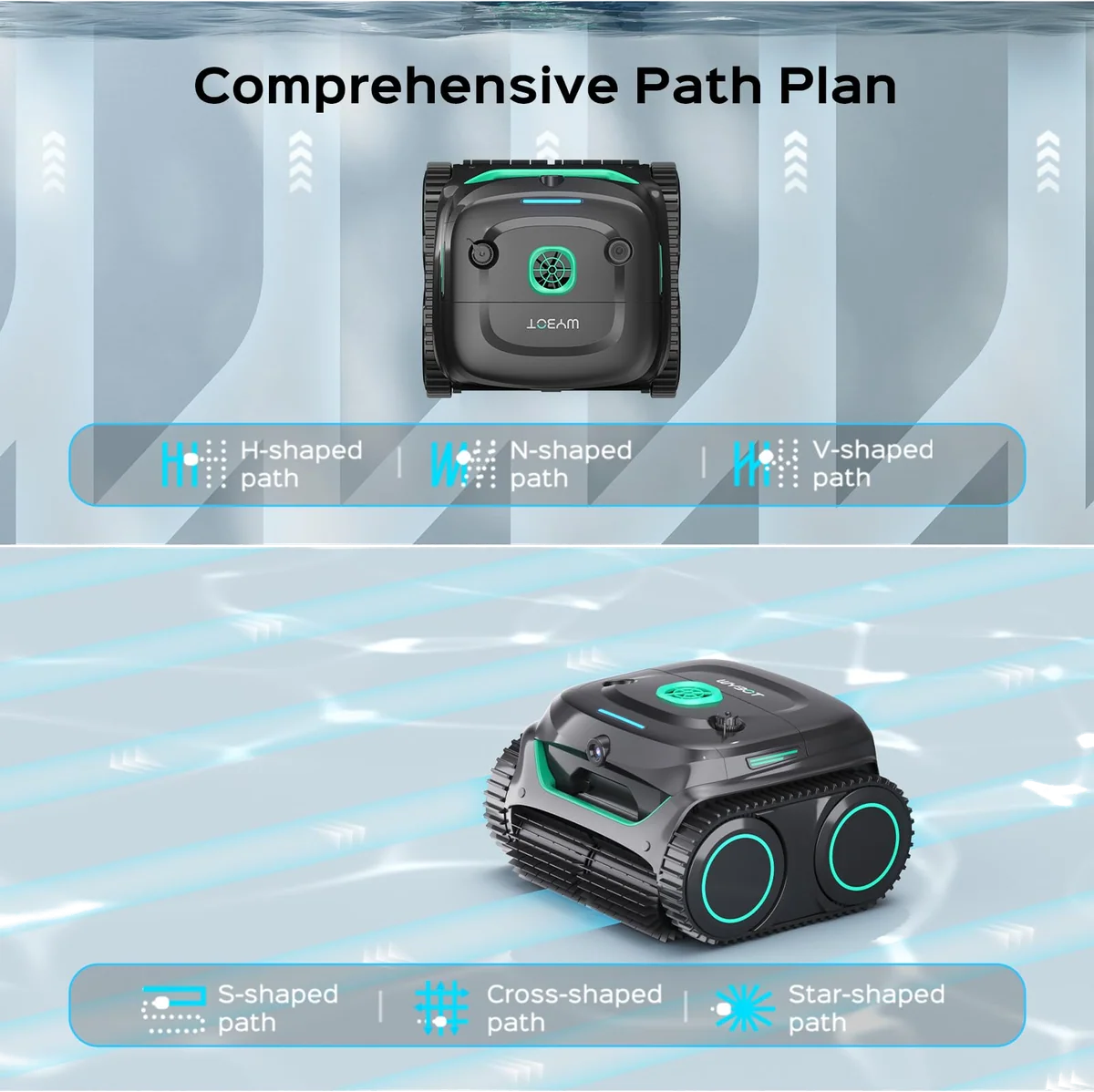
The meaningful additions are the forward camera, Dirt-Hunting and adaptive routing, not a completely different category of cleaner. If you mainly want scheduled whole-pool passes in a simple rectangular pool, those additions have less work to do. If you are deciding whether they justify the extra complexity, our WYBOT C1 and C2 Vision comparison isolates the differences without treating “AI” as an automatic upgrade.
The filter is the feature that closes the sale
The standard basket handles leaves, seeds and small twigs, while the removable 10-micron insert goes after the material that makes a floor look dusty again shortly after cleaning. Exact-model owners singled out fine-dust performance, and separate Vision evaluations recovered extra sand and suspended material from pools that already looked clean after a conventional pass.
There is a catch worth respecting. The ultra-fine insert is intended for the aggressive floor-cleaning context, and it can clog quickly when the pool is carrying a heavy load of leaves or coarse debris. Start with the ordinary basket when the pool is genuinely dirty, then fit the finer layer for the sediment left behind. This is effective staged filtration, not a permanent two-layer setting for every cycle.
| Pool area | What the evidence supports | What still needs help |
|---|---|---|
| Open floor | Strong pickup of settled dust, pollen, sand, leaves and small debris, with selectable systematic routes. | Single cycles can leave patches, especially when color changes or fittings interfere with navigation. |
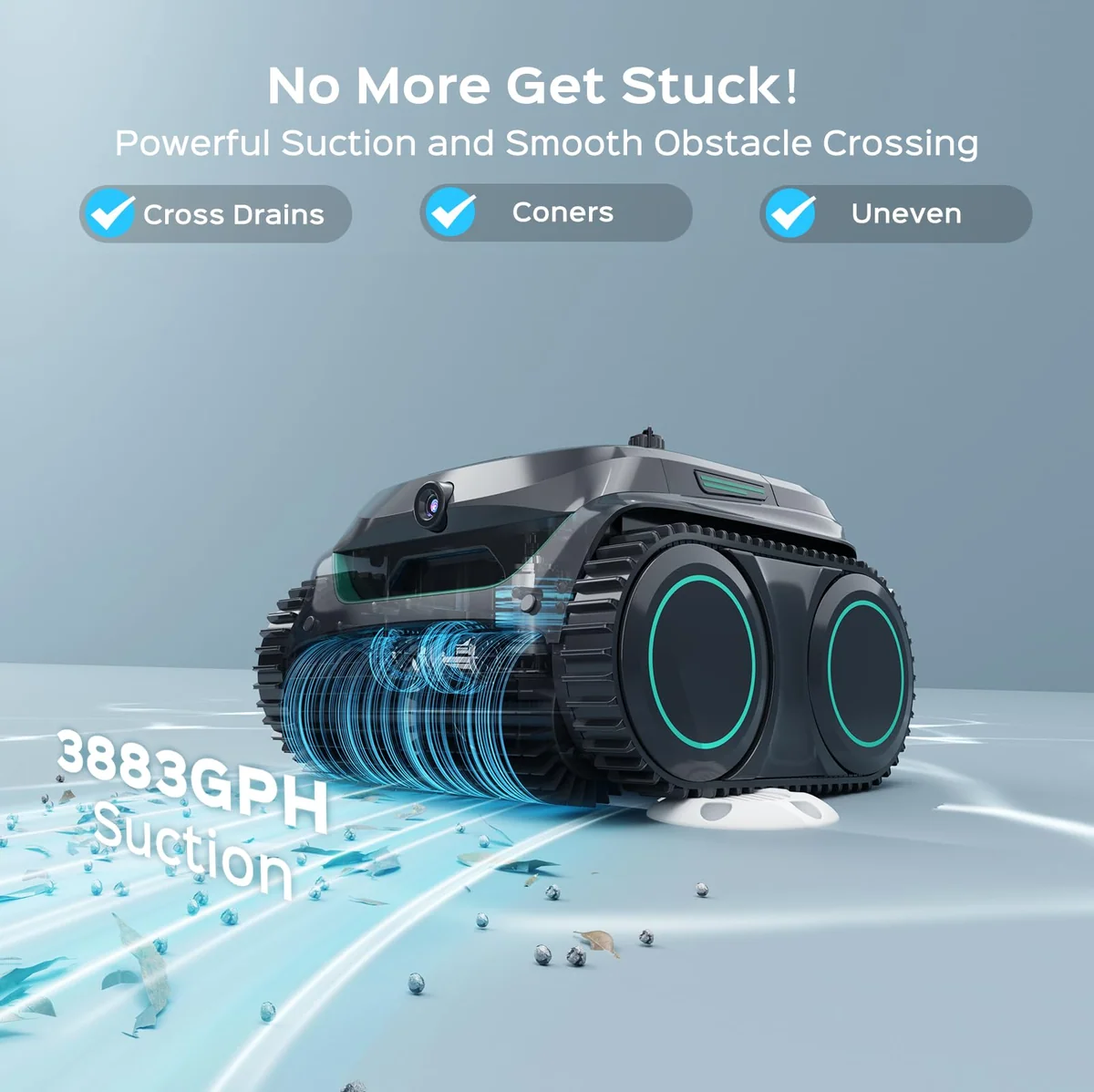
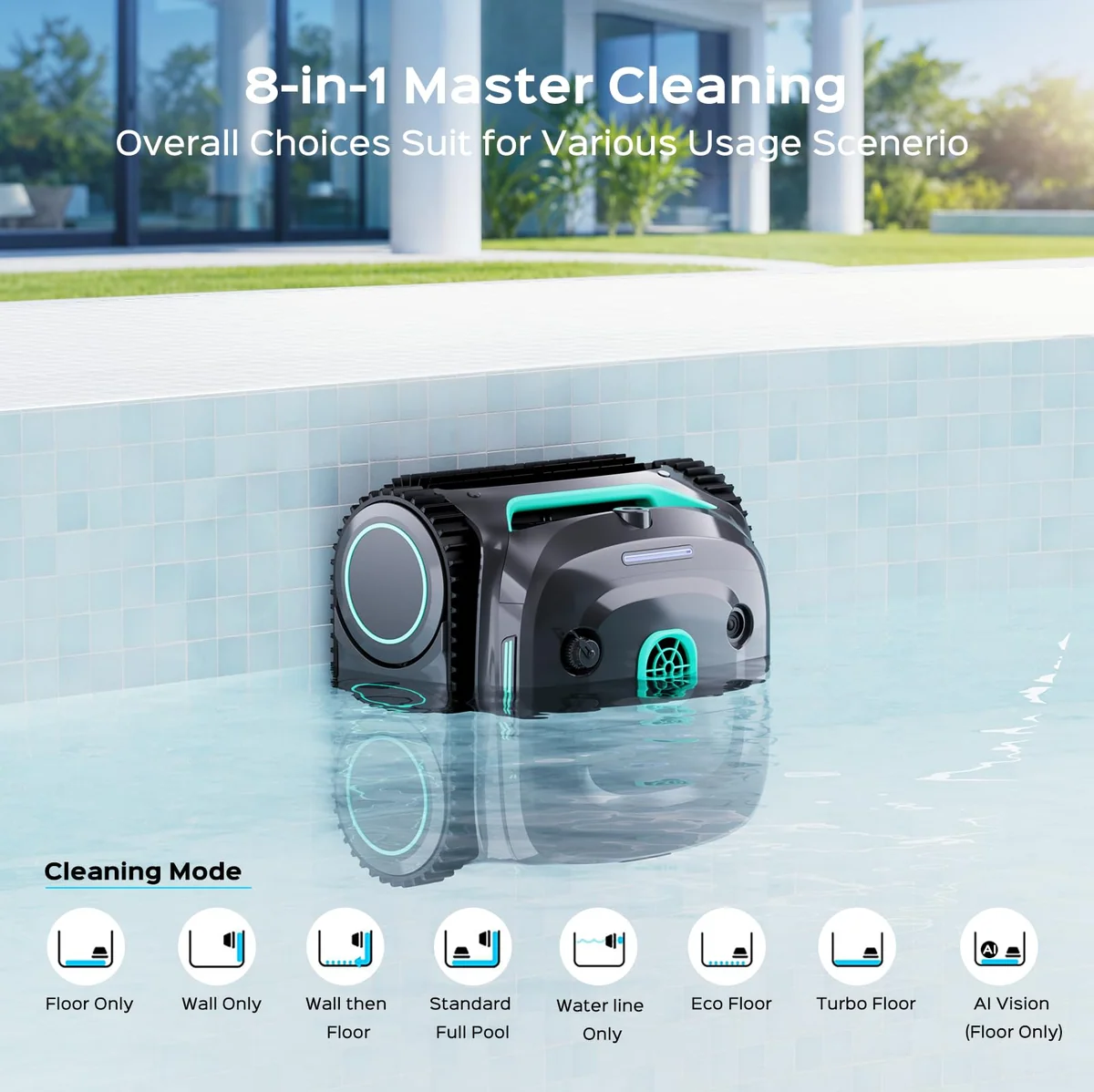
| Walls and waterline | Dedicated modes and credible climbing performance on fiberglass and other compatible surfaces. | Slippery finishes may need the supplied foam blocks, and corners remain less consistent. |
| Steps and seats | Lower, deeply submerged steps may receive useful coverage after the robot learns the layout. | Upper steps, tight corners and very shallow shelves can defeat traction or propulsion. |
| Water surface | No skimming function is provided. | Floating leaves still belong to the pool skimmer, a net or a separate robot. |
Three hours has an asterisk
Eco Floor can approach three hours because it leaves the walls and waterline alone. Exact-model owner reports place ordinary full cleaning nearer two hours, including one account of roughly 140 minutes, while a detailed Vision evaluation measured about 135 minutes in Standard Full Pool mode. The long headline runtime is real in the mode built to achieve it, not a universal cycle length.
Mode names do not always behave like timers. In one repeated evaluation, the nominal one-hour Turbo setting continued for about 100 minutes, and Dirt-Hunting removed a test pile early but kept running until the battery was nearly depleted. A replacement unit behaved similarly. That is welcome if maximum cleaning matters, but wasteful if the point of targeted vision was to finish quickly and preserve charge.
Cordless is not the same as hands-free
No floating power cable is a real convenience. The C2 Vision can be carried to the pool, configured and submerged without arranging a cord across the deck or watching for tangles. It is a good trade when cable management is the part of pool cleaning you resent most.
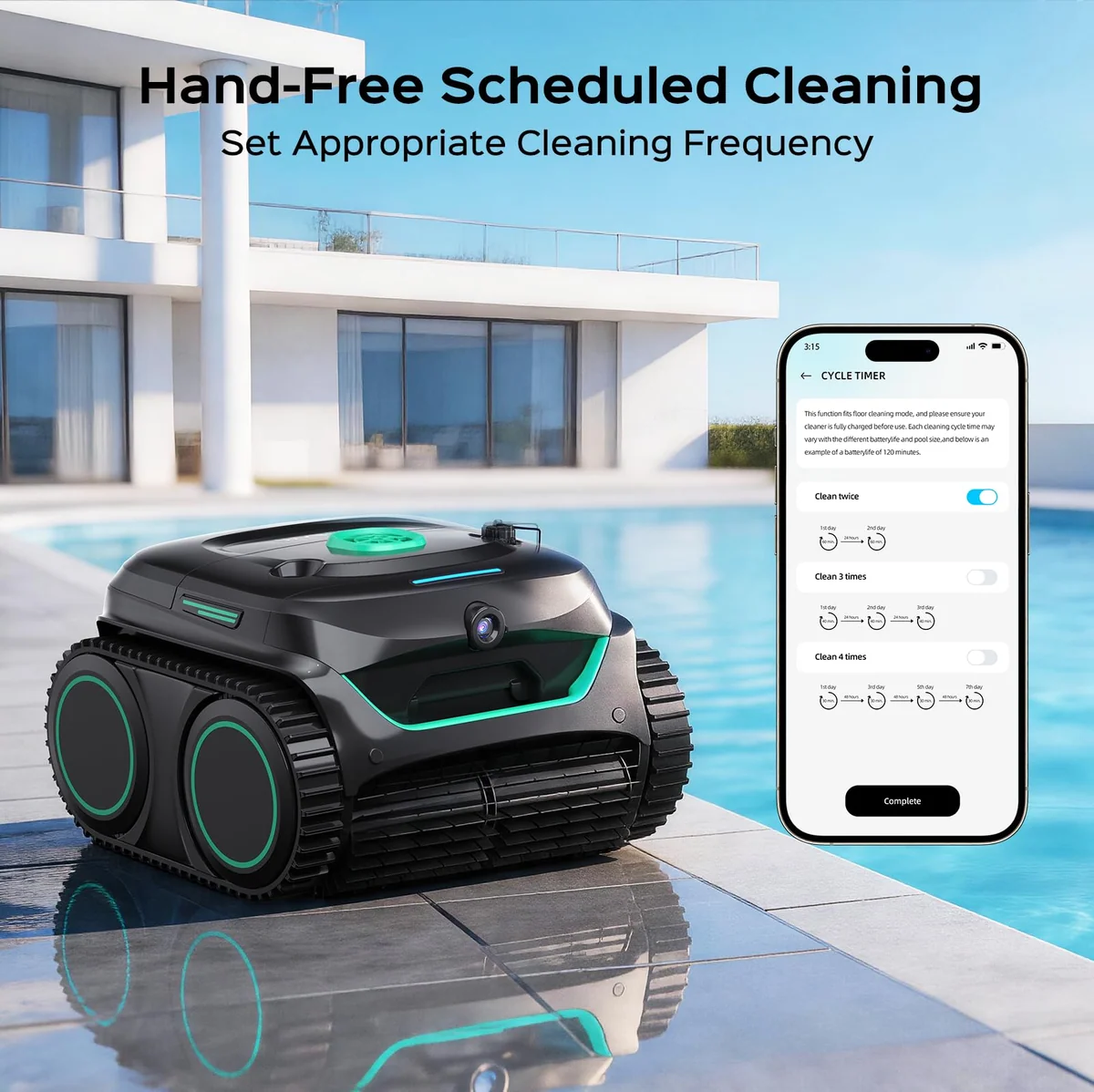
The scheduled-cleaning claim deserves much less enthusiasm. Timer options divide one stored charge among shorter floor or Dirt-Hunting runs; the robot cannot recharge underwater, and a person still has to retrieve it, drain it, rinse the filters, dry the charging area and plug it in again. The schedule delays that interaction rather than eliminating it.
The app also stops being a remote control once the cleaner is submerged. Modes and route patterns must be transferred beforehand, with no live camera feed, progress map or ordinary underwater steering afterward. Several exact-model owners found the app straightforward, but the record also includes delayed starts that looked like failure, a Wi-Fi password problem and pairing friction. Bluetooth configuration was enough for at least one owner when Wi-Fi was not.
Choose this cordless arrangement when one long run followed by retrieval fits your routine. Choose a corded cleaner when you value repeat full-length cycles and true weekly automation more than an empty pool deck. Our guide to corded and cordless pool robots explains why removing the cable can reduce one nuisance while adding a charging routine.
The pool it suits
The best match is an open in-ground pool with a light, consistent finish, visible pockets of debris and regular dust, pollen or silt on the floor. Walls and a conventional waterline give the dedicated modes useful work, while an owner comfortable with app setup can exploit the route choices rather than settling for the last mode used.
The pool it will disappoint
Look elsewhere if the finish is stained or multicolored, the design depends on shallow tanning ledges and upper steps, or the pool becomes dirty enough to need consecutive full cycles. It is also the wrong tool for floating debris or for anyone expecting a robot that can remain deployed and recharge itself.
Buyers still drawn to the brand but unconvinced by the camera should start with our guide to the best WYBOT pool cleaners; shoppers whose priority is fine sediment rather than AI should compare the broader field in our fine-debris cleaner recommendations.
New intelligence means new failure points
Early construction reports are broadly positive, but the long-term evidence is not mature enough to prove what the camera, battery or charging port will look like after several seasons. The optical lens must remain clean and unscratched, the charging cap must be secured before immersion, and the battery adds a wear item that no short review can settle. The robot may save brushing time, but it does not remove the ordinary care described in our robotic pool cleaner maintenance guide.
The exact-model review record includes a unit that worked on its first day and did not move on its second. That is a serious outcome, but one report in a small set cannot establish a failure rate. The same set contains successful early use across vinyl and fiberglass pools, so the honest conclusion is uncertainty rather than either panic or reassurance.
The two-year warranty helps on paper. There is also a documented case in which support requested videos and replaced a Vision unit after unexpected runtime behavior, although the replacement ultimately behaved much like the first machine. Support acted, but that episode also shows why a buyer should preserve the receipt, record the serial details and test every mode while the return path is still simple.
Retrieval is ordinary rather than futuristic. Low-battery edge parking has worked for some owners, but the robot does not surface or dock itself; it remains underwater and comes out with the supplied hook on a standard pole. Let it drain before lifting, because owners find it much more manageable after the trapped water has escaped.
Frequently Asked Questions
Will the C2 Vision collect leaves floating on the surface?
No; it vacuums submerged surfaces, so floating debris still requires the pool skimmer, a net or a separate skimming robot.
Can I steer the robot or watch its camera underwater?
No; configure the mode before submersion because ordinary Bluetooth and Wi-Fi communication do not provide live underwater control or a camera feed.
Does the cleaner return to the same spot after every cycle?
No; some units park near an edge or shallow corner, but the exact stopping point is not guaranteed and retrieval still requires the hook.
Should the 10-micron insert remain installed for every cleaning cycle?
No; reserve it for appropriate fine-debris floor cleaning because a leaf-heavy or very dirty pool can clog it quickly.