The Beatbot AquaSense 2 Pro tries to replace two robots, but only nails half the job
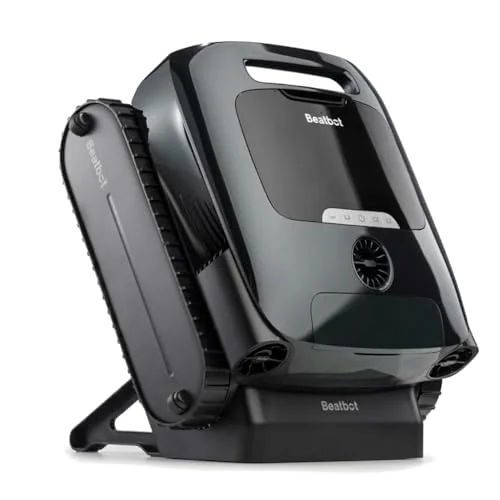
Most buyers should skip the AquaSense 2 Pro because its floor cleaning and cordless design are compelling, but inconsistent coverage, disputed skimming and a heavy manual recharge routine make sense only for someone determined to use one cordless machine for both underwater cleaning and surface debris.
A clever luxury for the right pool, not the default premium pick
The AquaSense 2 Pro is easy to admire. It is polished, cordless, ambitious and capable of turning an acorn-covered pool into a manageable one. Floor cleaning, wall traction, long runtime and edge parking can make ordinary maintenance noticeably easier.
The problem is that its identity depends on the functions least able to justify premium expectations. Skimming is inconsistent, clarification is a consumable extra, underwater app control does not exist, shallow features remain troublesome and the included filter is ordinary where fine-debris buyers need something exceptional. Smart Pool Bots would choose it only for a buyer who refuses a cord, can handle the lift and genuinely wants occasional surface cleaning from the same machine.
For everyone else, choose the better specialist: a strong floor robot when underwater cleanliness matters most, or a dedicated surface skimmer when falling leaves are the real enemy.
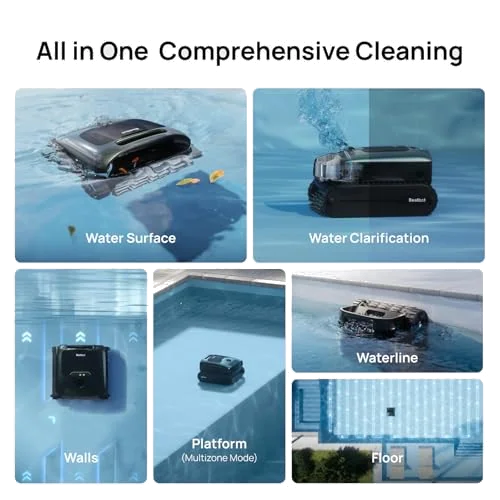
The AquaSense 2 Pro is built around a seductive proposition: drop one cordless machine into the pool and let it vacuum the floor, climb the walls, scrub the waterline, skim floating debris and dispense clarifier. That scope is real. The mistake is assuming all five jobs are equally accomplished.
Floor cleaning is the convincing part. Owners describe it lifting leaves, acorns, pollen and ordinary bottom debris, and one severe tree-debris case went from repeatedly clogged pool equipment to a clear floor and surface. Other owners watched it leave the same floor patches untouched, fail to reach the waterline or lose directly to less expensive robots on fine dirt. The disagreement is too sharp to dismiss as nitpicking.
This is specifically the AquaSense 2 Pro, model PRCFDS02G, not the base AquaSense 2, the older AquaSense Pro or the camera-equipped AquaSense 2 Ultra. The base model already handles floors, walls and the waterline; the 2 Pro primarily adds automatic surface skimming, surface steering, clarifier dispensing and greater claimed endurance. The Ultra sits above it with more sophisticated navigation and a better-developed surface intake. Shoppers trying to untangle the names can see how the tiers differ in our AquaSense 2 Ultra and 2 Pro comparison.
In other words, do not buy the 2 Pro merely because you want a capable cordless pool vacuum. Buy it only if the combined cleaner-and-skimmer workflow is valuable enough to tolerate the compromises that combination brings.
Key Specifications
Five jobs, three important asterisks
| Feature | What survives scrutiny | What does not |
|---|---|---|
| Five-in-one cleaning | Floor, wall, waterline and surface cleaning are real physical tasks. | The fifth function dispenses clarifier rather than scrubbing another part of the pool. |
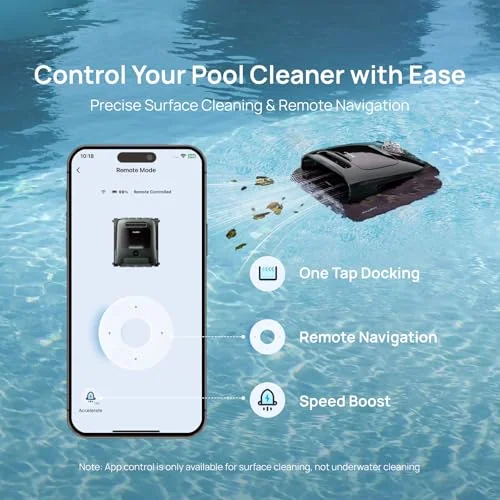
| App control | Setup, modes, updates, records, surface steering and edge parking are supported. | There is no dependable live steering or mode control while the robot is submerged. |
| Surface parking | The robot can rise, move to an edge, notify the owner and drain retained water. | It does not climb onto the deck, return to its charger or eliminate the lift. |
| Water clarification | An included agent is dispensed to bind suspended particles for later filtration. | It does not sanitize water, balance chemistry or replace the pool’s circulation filter. |
The skimmer works, but it is not a Betta in disguise
Surface mode can collect floating leaves, bugs and visible clumps, and phone steering is useful when debris gathers in one corner. The problem is retention and consistency. In a direct demonstration, captured material could escape when the Pro slowed, reversed or met a wall, while corners and shallow shelf edges remained dirty. Exact owners range from calling the surface clear to calling surface performance pathetic.
The right expectation is occasional all-in-one skimming, not continuous patrol. A pool beneath trees may accumulate new debris while the Beatbot is underwater, draining or spending hours on its charging dock. If the surface is the daily battle, a dedicated model from our robotic skimmer guide can stay focused on that one job.
“App-controlled” stops at the waterline
Beatbot states the limitation in the listing: directional app control is available only during surface cleaning. Once the robot descends, water attenuates the Wi-Fi and Bluetooth signal, so underwater rescue commands, real-time steering and mid-cycle corrections are not dependable features. The app remains useful for pairing, firmware, mode selection, cleaning records and controls after the robot surfaces.
That is not merely an app bug, but the advertising can still create the wrong expectation. Someone buying a remote-controlled underwater vacuum will not receive one. Our explanation of why pool-cleaner apps lose contact underwater covers the limitation in more detail.
Clarification is a consumable convenience
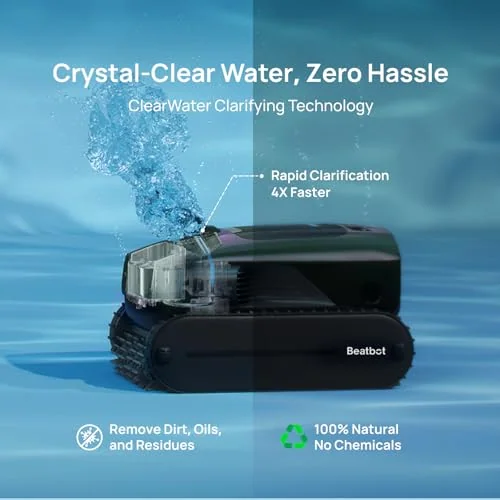
The included kit uses a crab-shell-derived clarifying agent intended to bind suspended particles so the robot or pool filter can capture them. Beatbot makes ambitious speed and treatment-capacity claims, but the supplied evidence does not independently validate those figures. This is automated dosing of a familiar clarifier mechanism, not a replacement for chlorine, water testing, algae treatment or filter maintenance.
Its value is also tied to replacement supply. One exact-product owner found the needed fluid unavailable, and owners of related models question whether the visible improvement justifies an ongoing consumable. Treat the dispenser as a bonus if you already use clarifier, not as the reason to choose this robot.
Strengths & Limitations
Strengths
- Floor cleaning can be excellent on leaves, acorns, insects and ordinary visible debris.
- Cordless operation removes cable tangles, a deck transformer and an underwater tether.
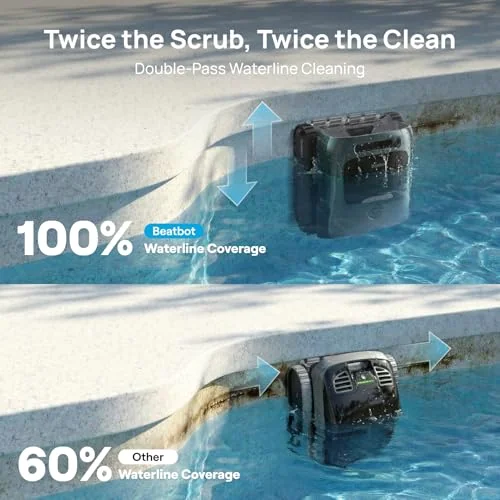
- Wall climbing and double-pass waterline scrubbing work well in compatible pool geometry.
- Surface parking and SmartDrain make retrieval easier than lifting a water-filled robot from the pool floor.
- Surface steering helps target visible floating leaves and move the robot toward an accessible edge.
- Long claimed runtimes give the robot a plausible chance to cover a large residential pool in one mode-specific cycle.
Limitations
- Coverage can remain incomplete even after repeated cycles and apparent mapping.
- The 150-micron mesh is a weak fit for pools dominated by fine sand, silt, ash or dead algae.
- Surface skimming may miss pollen, lose captured debris during reversals or neglect shallow edges.
- App steering does not work while the robot is performing its underwater cleaning.
- Shallow steps, tanning ledges, benches, jets and unusual transitions can require manual cleanup or rescue.
- The robot remains a substantial lift after drainage, especially with a full basket.
- Every depleted cycle ends with manual removal, basket rinsing and several hours on the charging dock.
- The clarifier adds a consumable without replacing water testing, sanitation or the main pool filter.
The floor is its strongest argument
When the robot crosses debris, the suction and brush system can produce an impressively clean floor. The strongest exact-product accounts include mixed leaves, bugs, pollen and heavy acorn loads, while several owners report more than four hours of operation from a charge. Even the most disappointed long-form Reddit owner conceded that floor pickup, including fine dirt, was good.
Coverage is the catch. One owner with a small pool said the robot performed poorly for its first five or six cycles and then appeared to understand the layout. Another gave it a full month and still watched it revisit the same edge until the battery died, hang against walls and require manual redirection. A replacement unit in a simple 20-by-40-foot vinyl pool reportedly repeated the original machine’s missed sections. “It will learn” may describe some pools, but it is not a safe reason to let a retailer’s return period expire.
Good navigation is not the same as complete coverage
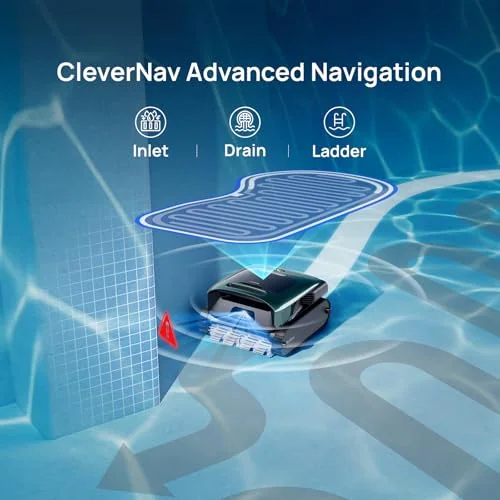
The sensor-guided S-pattern on floors and N-pattern on walls can look orderly while still bypassing corners, steps or strips of dirt. A tidy route on the app is evidence that the robot moved methodically, not proof that every patch was scrubbed.
Walls and the waterline depend on geometry
Straight walls and conventional transitions give the AquaSense 2 Pro its best chance. Several exact-product owners praise its wall and waterline work, and the listing specifies a double waterline pass. The contrary reports are substantial, though: slipping before the waterline, half-floating against a wall, snagging near return jets and repeatedly struggling with small steps.
MultiZone mode sends more power to the tracks and can help on a submerged bench, steep ledge or multilevel section. It cannot repeal geometry. In comparative demonstrations, the Pro reached a ledge waterline in MultiZone mode after failing in standard mode, but it could not traverse a much shallower shelf with only several inches of water. A wide, deeply submerged step is a plausible cleaning surface; a Baja shelf or shallow tanning ledge should still be treated as manual territory.
The 150-micron basket sets the fine-debris ceiling
The included dual-layer basket is suitable for leaves, insects, hair and plenty of visible dirt. It is not equivalent to a pleated ultra-fine filter. Direct criticism of the 2 Pro describes fine material passing through the mesh, a basket that clogs quickly and dirt escaping during retrieval, while exact-product owners disagree about performance on sand-like debris.
That apparent contradiction makes sense. A robot can pick up fine dirt when it traverses the patch yet still leave a hazy pool because the mesh, route or retrieval process fails to retain everything. If silt, ash, dead algae or desert dust is the dominant problem, start with our guide to robots for sand, silt and fine debris rather than assuming the largest feature list contains the best filter.
The real comparison is one generalist versus two specialists
The AquaSense 2 Pro earns its keep by collapsing two machines into one body. That saves deck space and removes the cord, but it also forces one battery, one basket and one route plan to serve the floor, walls, waterline and surface. An all-in-one machine is elegant when every task is needed only periodically. It becomes less convincing when surface debris falls constantly or fine sediment demands specialized filtration.
The sharpest exact-product comparison came from an owner who ran a Beatbot, an Aiper and a Dolphin in the same 20-by-40-foot vinyl pool. The Dolphin reportedly removed fine dirt in one cycle that remained after repeated Beatbot runs, climbed more reliably and covered the pool more completely; the Aiper then took second place as the better cordless value. That is one owner’s result rather than a controlled lab verdict, but it exposes the standard a premium cleaner must meet.
If surface cleaning is not essential, a simpler corded machine deserves serious consideration. Our Dolphin Nautilus CC review covers a far more conventional floor-and-wall cleaner, while the corded versus cordless guide explains the trade between cable management and charging downtime.
If leaves and insects are the primary nuisance, pairing a dedicated skimmer such as the Betta SE with a separate underwater cleaner gives each device one clear job. It means owning two machines, but the skimmer can remain on surface duty while the vacuum is charging or cleaning below.
Buy it if the cable is the deal-breaker
- You want one cordless device to handle ordinary underwater debris and periodic surface leaves.
- Your pool has mostly conventional walls, generous curves and adequately submerged steps.
- You are comfortable lifting roughly 24 to 25 pounds before allowing for residual water and debris.
- You clean once or twice a week and accept retrieving, rinsing and recharging after each serious cycle.
Walk away if supervision is the deal-breaker
- You expect live underwater steering, automatic self-charging or genuinely zero-touch daily cleaning.
- Your pool is dominated by shallow shelves, tight steps, protruding jets or awkward multilevel geometry.
- Your main problem is fine silt, dead algae, ash, pollen haze or continuous surface fallout.
- You care more about consistent cleaning per dollar than about combining several functions in one shell.
Buyers who still prefer the single-machine approach should also compare the rest of the lineup in our Beatbot pool-cleaner guide. The 2 Pro is not automatically the rational middle tier: the base model can be enough when skimming is unnecessary, while the Ultra’s navigation and improved surface hardware may matter in a genuinely complex pool.
Cordless freedom creates a different maintenance routine
There is no cable to untangle, but the labor has not vanished. At the end of a cycle, the owner waits for drainage, lifts the robot, opens and rinses the basket, lets the charging contacts dry as directed and returns the unit to its dock. A second cleaning in a heavily soiled or very large pool may have to wait through the recharge. For someone running one or two maintenance cycles a week, that can be a fair exchange; for daily automation, it becomes the central chore.
Basket capacity can become the practical runtime limit before the battery does. The machine that advertises hours of operation may need attention much sooner during acorn season, after a storm or when opening a neglected pool. Robotic cleaners are maintenance machines, not pool-restoration equipment, and forcing one through a huge initial debris load is a good way to turn its long runtime into repeated emptying.
The warranty sounds better than the support record
Beatbot advertises three-year full-machine replacement protection rather than repair. Exact-product reviews show that promise working in at least one serious case: a unit suffered water ingress after eight days, the owner sent it back and Beatbot supplied a replacement that was working properly ten days into the update. Another exact owner reported a swift resolution after initial problems.
The company-wide picture is less tidy. Owners of various Beatbot models report successful replacements and upgrades, but others describe slow once-daily communication, repeated video requests, long periods without a cleaner or difficulty getting return instructions. Those mixed-model reports do not establish an AquaSense 2 Pro failure rate, yet they do show why “full replacement” should not be translated into “frictionless replacement.”
Long-term durability remains unsettled. Much of the exact-owner evidence covers only several uses, a few weeks or the first replacement period. One owner noticed cosmetic discoloration after two or three uses, but that isolated observation cannot establish how the coating, battery, motors or seals will age. The unanswered questions are the expensive ones: battery replacement cost, parts availability and support after the initial warranty period.
Routine care still matters. Rinse the basket, clear hair and fibers from the brushes and intakes, keep charging contacts clean and dry, and avoid storing a wet machine indefinitely. Our robotic pool-cleaner maintenance guide covers the habits that protect filtration, traction and battery life.
Frequently Asked Questions
Can the AquaSense 2 Pro be steered underwater?
No, directional app control is limited to surface cleaning, so the robot cannot be remotely steered through its submerged floor or wall cycle.
Does the AquaSense 2 Pro replace a dedicated surface skimmer?
It can collect visible floating leaves and bugs, but disputed pollen pickup, corner coverage and debris retention make a dedicated skimmer the safer choice for continuous surface fallout.
Will it clean steps and tanning ledges?
It can clean some broad, deeply submerged steps in MultiZone mode, but very shallow shelves, small steps and awkward transitions remain unreliable.
Does it pick up fine sand and silt?
Results vary because some owners report good fine-dirt pickup while the included 150-micron mesh and direct testing indicate that the finest sediment can pass through or escape.
Does surface parking return the robot to its charging dock?
No, surface parking brings the robot to a pool edge and drains water for retrieval, after which the owner must lift, clean and place it on the deck charger.
Can one charge clean the largest advertised pool?
Beatbot claims coverage up to 3,875 square feet and up to five hours underwater, but debris load, cleaning mode, repeated routes and basket capacity can prevent a full combined routine from finishing in one charge.
Is the clarifier a substitute for pool chemicals and filtration?
No, the dispenser helps bind suspended particles for capture but does not sanitize the water, balance chemistry, kill established algae or replace the circulation filter.
Is the AquaSense 2 Ultra automatically worth choosing over the 2 Pro?
No, the Ultra’s camera-led navigation and improved skimming are most relevant to complex pools or heavy surface debris, while a conventional pool may not benefit enough to justify moving above the Pro tier.
Sources (5)
- Amazon listings and customer reviews — Beatbot Aquasense 2 Pro
- Owner reports across r/pools threads
- Owner and reviewer video, 2 channels
- Thepoolnerd — Article — www.thepoolnerd.com
- Trustpilot — Article — www.trustpilot.com