The AquaSense 2 Pro beats the A100 Pro, but this is no safe premium buy
Skip both for most pools, but choose the AquaSense 2 Pro if cordless operation is non-negotiable and you genuinely want occasional surface cleaning from the same robot.
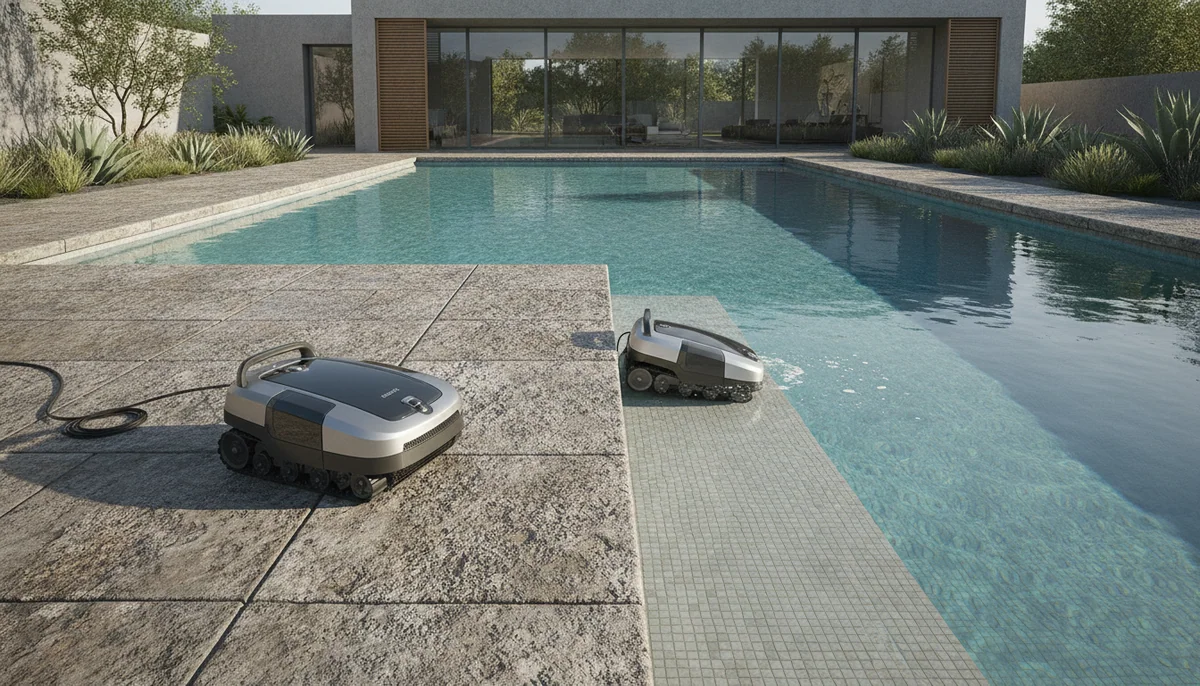
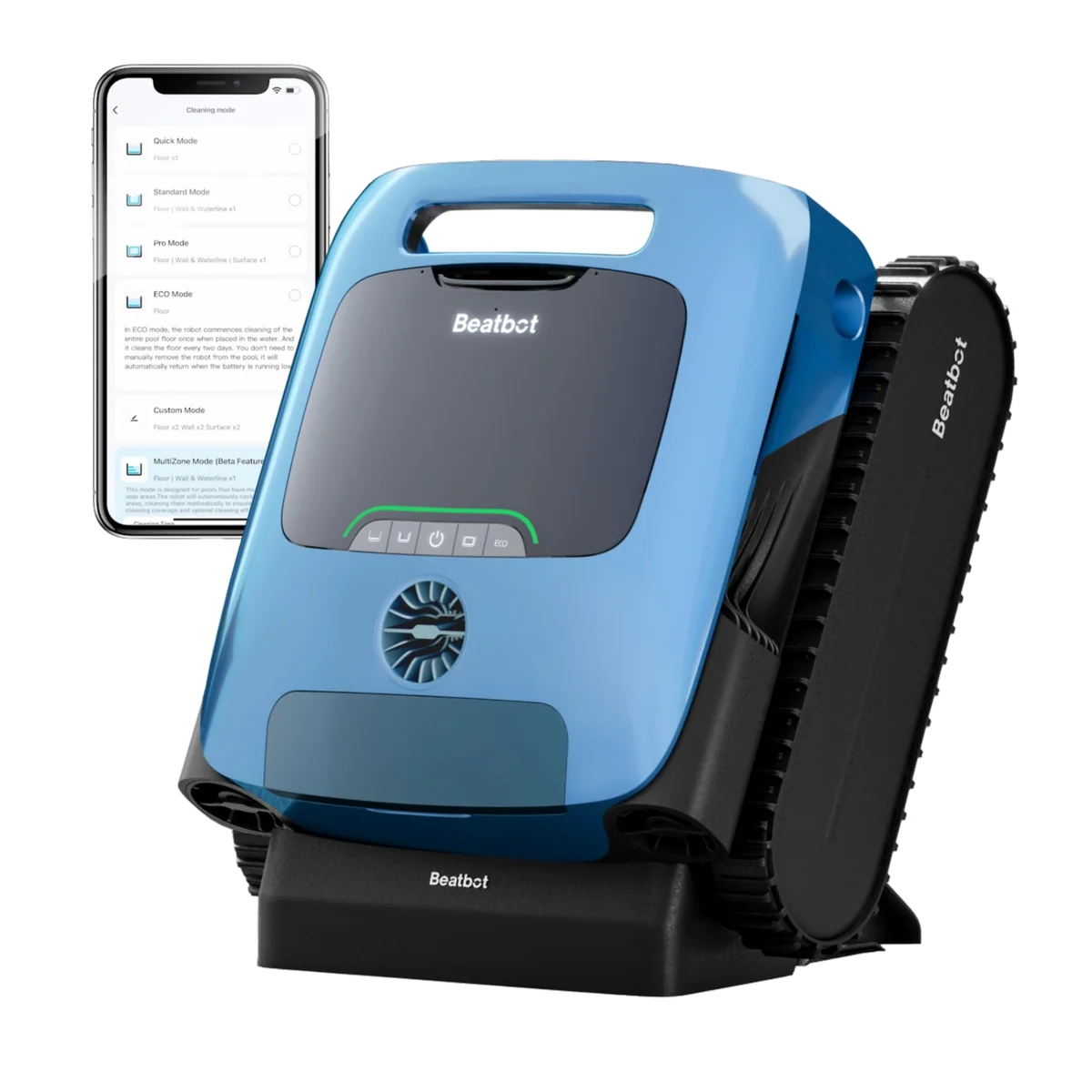
Beatbot A100 Pro
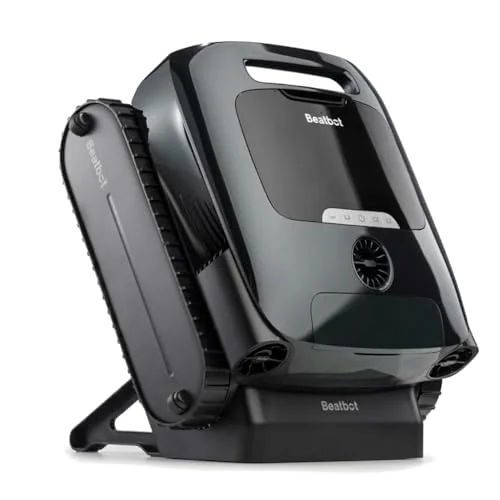
Beatbot AquaSense 2 Pro
These two Beatbots make almost the same grand promise: one cordless machine will vacuum the floor, climb the walls, scrub the waterline, collect floating debris, and dispense clarifier. The AquaSense 2 Pro wins because it turns that promise into a more coherent workflow, with documented surface steering, edge parking, separate endurance claims for surface and underwater work, and a larger stated coverage area. That is a relative victory, not an enthusiastic recommendation.
The A100 Pro is the awkward one to identify. Amazon calls it the Beatbot 92055 A100 Pro while placing HTH in the brand field, and its specifications closely resemble Beatbot’s older AquaSense Pro platform: nine motors, 5,500 GPH claimed flow, a 150-micron basket, surface cleaning, and a claimed maximum runtime of 9.5 hours. The listing does not establish that it is simply the older platform under another label, so performance findings from that design family are useful context rather than proof of identical hardware or firmware.
The exact owner evidence also favors caution rather than certainty. Only two retained A100 Pro reviews were available, and they split between praise for multi-zone cleaning and surface retrieval, and a report that the machine stopped retaining debris after a few months. The AquaSense 2 Pro has a broader exact-model record, but that record is sharply divided over coverage, wall climbing, fine debris, skimming, weight, and early failure. More evidence makes the 2 Pro easier to judge; it does not make its faults disappear.
The decision is therefore narrower than the feature lists suggest. Pick the AquaSense 2 Pro when combining periodic underwater cleaning and surface pickup in one cordless body is the goal. If the real goal is the cleanest floor, continuous skimming, strong fine-particle filtration, or minimal lifting and charging, neither machine solves the right problem.
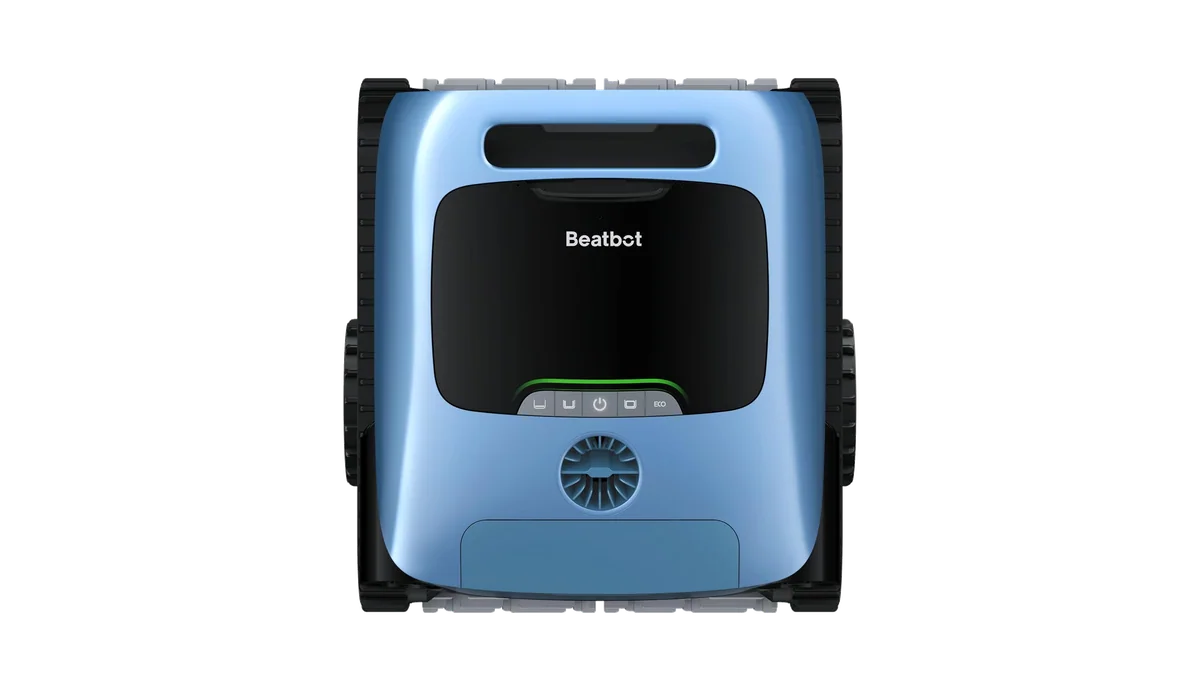
Beatbot A100 Pro
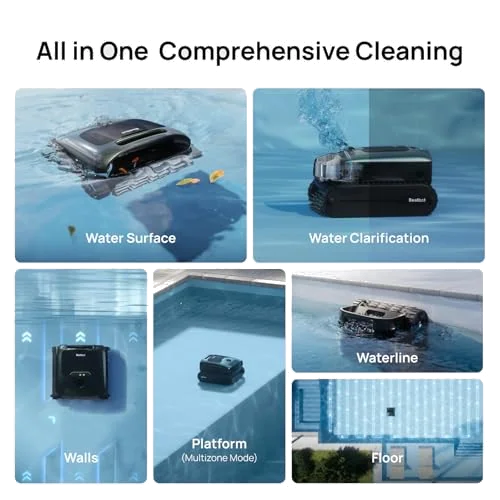
Beatbot AquaSense 2 Pro
At a Glance
| Feature | Beatbot A100 Pro | Editor's Pick Beatbot AquaSense 2 Pro |
|---|---|---|
| Price Range | Under $200 | Under $200 |
| Claimed runtime | — | Up to 5 hours underwater or 11 hours in surface mode |
| Check Price on Amazon | Check Price on Amazon |
The 2 Pro wins on workflow, not on flawless cleaning
Below the waterline, the machines are more alike than their names imply. Both claim floor, wall, and waterline cleaning; both rely on a 150-micron filtration system; both surface for easier retrieval; and neither should be treated as a live, remotely driven underwater vacuum. Their meaningful differences emerge at the surface, in the way runtime is described, and in how much exact-model evidence exists.
| Decision point | AquaSense 2 Pro | A100 Pro | What it means |
|---|---|---|---|
| Underwater cleaning | Floor, walls, waterline, and clarifier dispensing | Floor, walls, waterline, and clarifier dispensing | Neither earns the decision through its basic zone count. |
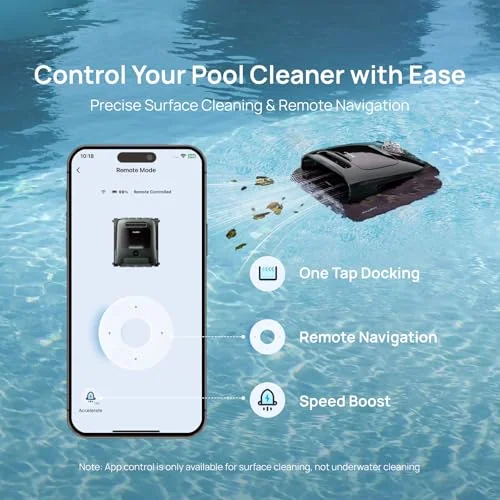
| Surface workflow | Surface steering from the app, tap-to-park controls, and automatic edge parking are explicitly described. | Surface pickup and surface retrieval are claimed, but the listing gives less detail about directing the robot toward debris. | The 2 Pro gives its imperfect skimmer more useful controls. |
| Claimed endurance | Up to 11 hours on the surface or five hours on floors and walls | Up to 9.5 hours, with the listing using broader language about cleaning zones | The figures are not directly comparable because the A100 Pro claim does not separate modes as clearly. |
| Advertised pool area | Up to 3,875 square feet | Up to 3,299 square feet | The 2 Pro has the stronger large-pool claim, but coverage quality still depends on route behavior and geometry. |
| Included filtration | Dual-layer 150-micron basket | 150-micron dual filtration | Neither specification establishes a specialist advantage on silt, ash, dead algae, or the finest dust. |
| Exact owner record | Broader and strongly mixed | Very small and evenly split | The 2 Pro is easier to assess, while the A100 Pro carries greater uncertainty. |
The feature and coverage comparison comes from the two product listings, while the reliability and cleaning judgments come from the retained exact-model owner reports rather than from the marketing claims alone.
Skimming decides the matchup and weakens both candidates
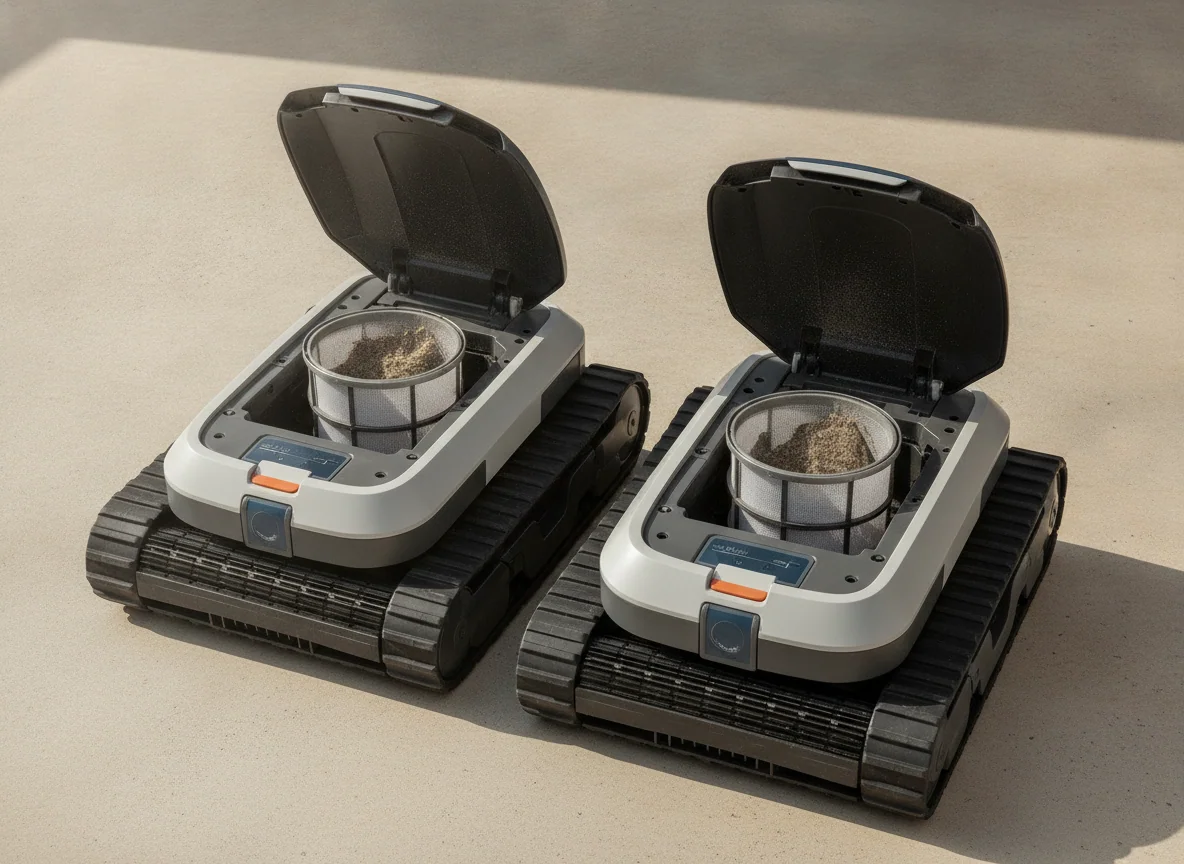
A combination cleaner has to justify itself through the job a conventional pool vacuum cannot do. For both of these robots, that job is surface collection. The AquaSense 2 Pro is better equipped for it because the owner can steer it while it remains on the surface, target visible debris, and send it toward an accessible edge. Exact owners nevertheless disagree dramatically, ranging from reports of clear surfaces to blunt complaints that surface performance was poor. Debris can also be missed around edges, steps, and corners, which are precisely where floating material tends to gather.
The A100 Pro has less evidence behind its skimming claim. Its closest documented platform collected material that reached the center of the intake, but floating leaves could move around the robot or be pushed toward the pool’s built-in skimmers instead. One exact A100 Pro owner praised surface cleaning, yet two retained reviews cannot establish that result as typical.
This leaves the 2 Pro as the better occasional skimmer, not a dependable replacement for a machine dedicated to surface patrol. If leaves, insects, or blossom fallout arrive throughout the day, compare purpose-built options in the Smart Pool Bots guide to robotic pool skimmers instead of paying for an all-in-one claim that still leaves the wall skimmers working.
Floor pickup can be strong while coverage remains incomplete
Both designs are most persuasive on broad underwater surfaces. The 2 Pro has exact owner reports of collecting leaves, acorns, insects, pollen, and ordinary floor debris, while the closely related platform behind the A100 Pro has produced strong pickup of leaves and visible sand. The limitation is traversal rather than suction alone: a robot cannot collect debris it repeatedly bypasses.
The 2 Pro’s sensor count and structured S-shaped floor routes do not guarantee complete cleaning. Exact owners describe both successful adaptation after several cycles and repeated misses that survived a month of use or even a replacement unit. The A100 Pro listing makes similarly ambitious mapping claims without enough exact-model reporting to show how consistently those claims survive different pool shapes.
Steps, tight corners, curved transitions, protruding fittings, and shallow tanning shelves remain difficult territory. The 2 Pro offers a higher-traction MultiZone mode for adequately submerged features, but neither record supports assuming that every step or ledge will become automatic. Buyers whose pools are defined by shallow architecture should start with the site’s guide to cleaners for steps, tanning ledges, and shallow shelves.
The filter specification produces a draw
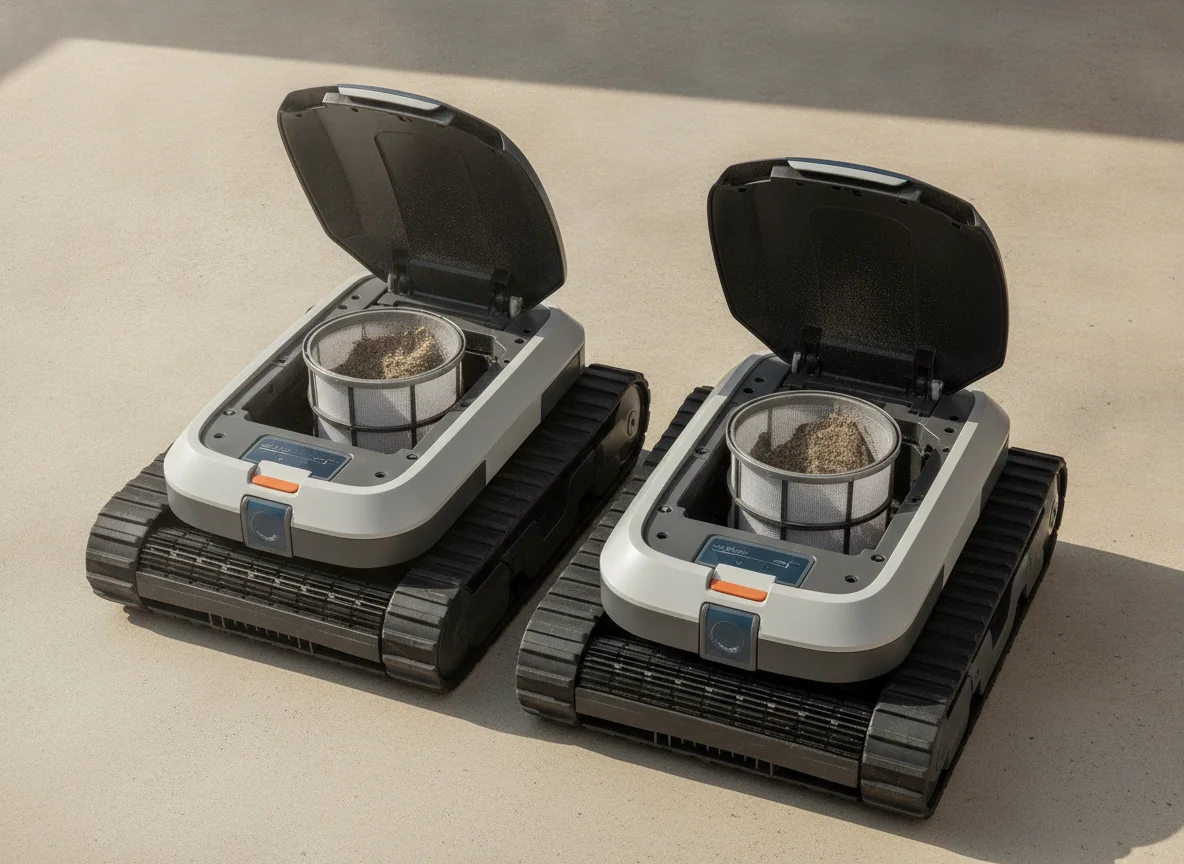
A 150-micron basket is sensible for leaves, insects, hair, acorns, and plenty of visible grit. It is not proof of exceptional retention for fine silt, ash, dead algae, or suspended dust. Exact AquaSense 2 Pro reports conflict on fine debris, and the A100 Pro’s closely related platform has also required follow-up vacuuming after fine-dust events.
Particle size, basket seating, pool texture, route coverage, and debris released during retrieval can all produce a floor that looks improved without being fully clean. If fine sediment is the recurring nuisance, the relevant comparison is not between these two Beatbots but among robots selected for sand, silt, and fine-debris control.
Cordless does not mean hands-off
Each cycle still ends with retrieval, drainage, basket cleaning, drying, and placement on a deck charger. Surface parking removes the need to fish a robot from the deep floor, but it does not lift the machine over the coping or return it to the dock. The AquaSense 2 Pro weighs roughly 24 to 25 pounds dry, and the closely matching A100 Pro platform is around 24 pounds before retained water and debris are considered.
This matters more than an extra hour on a runtime claim. A long cycle is useful only if the basket does not fill first, the route does not repeat itself, and the owner is comfortable handling the wet machine afterward. Buyers comparing cordless convenience with uninterrupted power should read the corded and cordless pool-cleaner tradeoffs before deciding that the absence of a cable automatically means less work.
The ranking
The AquaSense 2 Pro is for the buyer who insists on one cordless cleaner and skimmer.
It takes first place because its explicit surface steering, edge parking, mode-specific endurance claims, and larger stated pool coverage make the combined workflow more convincing than the A100 Pro’s version.
Its inconsistent route coverage, disputed skimming, ordinary 150-micron filtration, substantial lift, and manual recharge routine keep it from becoming the default premium recommendation.
The A100 Pro is for the buyer who values long cordless cycles more than a well-documented surface workflow.
It retains a credible case for broad floor, wall, and waterline maintenance, plus surface retrieval and a claimed maximum runtime of 9.5 hours.
The exact record is too thin to dismiss unreliable skimming, debris-retention failure, awkward underwater control, and charging-contact durability concerns inherited from the closely related platform evidence.
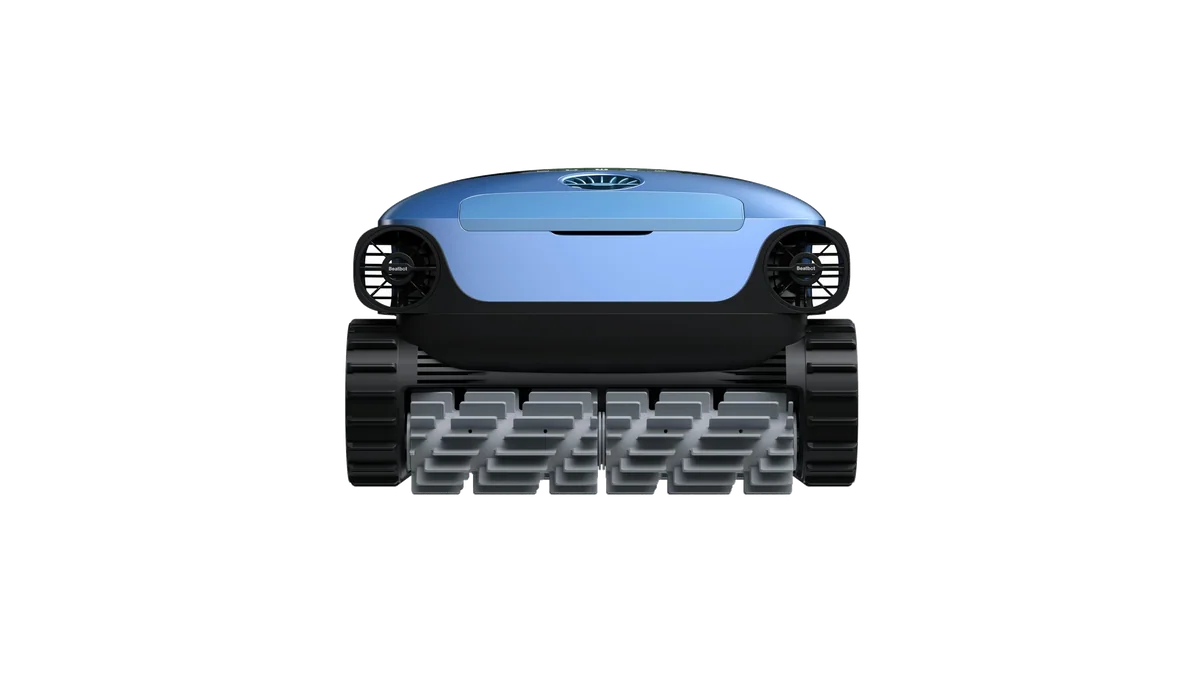
Beatbot A100 Pro
Beatbot AquaSense 2 Pro
Choose around the chore you actually want to eliminate
Choose the AquaSense 2 Pro
- You refuse to manage a deck cable and accept charging after each serious underwater cycle.
- You want occasional surface pickup without storing a second robot.
- Your pool has broad floors, conventional walls, and few shallow architectural features.
- You can comfortably lift a large wet cleaner after it parks and drains at the edge.
- You will judge route coverage during the return period instead of waiting indefinitely for the robot to learn.
Choose the A100 Pro only in a narrow case
- You have a clear retailer or warranty route for this unusually labeled retail edition.
- Broad underwater maintenance matters more than precise surface targeting.
- You accept that its headline runtime is not presented on the same mode-specific basis as the 2 Pro’s claims.
- You are prepared to monitor debris retention, charging contacts, and end-of-cycle parking closely.
Choose neither
- Your pool’s main problem is fine silt, ash, dead algae, or persistent pollen haze.
- Leaves fall continuously enough to justify a dedicated surface patrol.
- Steps, tight corners, shallow shelves, rails, and unusual transitions dominate the pool.
- You expect live underwater steering, automatic self-charging, or a genuinely zero-touch weekly routine.
- A heavy wet lift would be unsafe or painful even after the robot drains at the edge.
The specialist route is less glamorous and often more rational
If surface debris is only occasional, a conventional underwater cleaner can avoid paying for a compromised skimming system. The Dolphin Nautilus CC review covers a simpler corded floor-and-wall robot, while the site’s inground pool cleaner guide compares broader alternatives by the work they perform below the surface.
If falling leaves are the daily enemy, a dedicated skimmer paired with a separate vacuum gives each machine one job. The Betta SE review explains that specialist approach, and the skimmer and pool-vacuum guide helps determine which layer of the pool needs automation first.
Buyers committed to Beatbot can compare the rest of the range in the Smart Pool Bots Beatbot guide. The A100 Pro should not win merely because its claimed maximum runtime is longer, and the AquaSense 2 Pro should not win merely because it performs more named tasks. In this matchup, the 2 Pro is the better-designed compromise, while neither is the stronger answer when one cleaning problem clearly matters more than all the others.
The AquaSense 2 Pro wins this comparison, but the sensible purchase is still to skip both unless cordless all-in-one convenience matters more than dependable specialization.
Frequently Asked Questions
Is the AquaSense 2 Pro better than the A100 Pro?
Yes, it is the better all-in-one choice because its surface controls, edge-parking workflow, mode-specific endurance claims, and exact-model evidence are clearer, although its cleaning remains inconsistent enough to make the recommendation narrow.
Can either Beatbot be steered while cleaning underwater?
No, the 2 Pro limits directional app control to surface mode, and the closely related platform evidence behind the A100 Pro shows that submerged communication is not dependable.
Does either model replace a dedicated robotic skimmer?
No, both can collect floating debris under favorable conditions, but inconsistent interception, edge coverage, and debris retention make a dedicated skimmer safer for continuous surface fallout.
Which model is better for fine sand and silt?
Neither has a decisive advantage because both advertise 150-micron filtration and the available evidence shows mixed retention of the finest sediment.
Does surface parking eliminate heavy lifting?
No, surface parking improves access and allows drainage, but the owner must still lift the wet robot over the coping, clean its basket, and carry it to the charging dock.
Are the A100 Pro and the original AquaSense Pro the same machine?
The supplied specifications show a close relationship, but the available listings do not establish identical hardware, firmware, or branding, so exact equivalence should not be assumed.
Ready to Choose?
Sources (4)
- Amazon listings and customer reviews — Beatbot A100 Pro and Beatbot Aquasense 2 Pro
- Owner reports across r/pools threads
- Pcworld — Article — www.pcworld.com
- Lifehacker — Article — lifehacker.com