The AquaSense 2 Pro is the safer Beatbot, but neither is an easy buy
Skip both by default because the AquaSense 2 Pro is the less risky choice rather than a complete one, while the renewed AquaSense 2 Ultra earns consideration only for a strong owner whose complex, leaf-prone pool can exploit its camera-guided navigation.
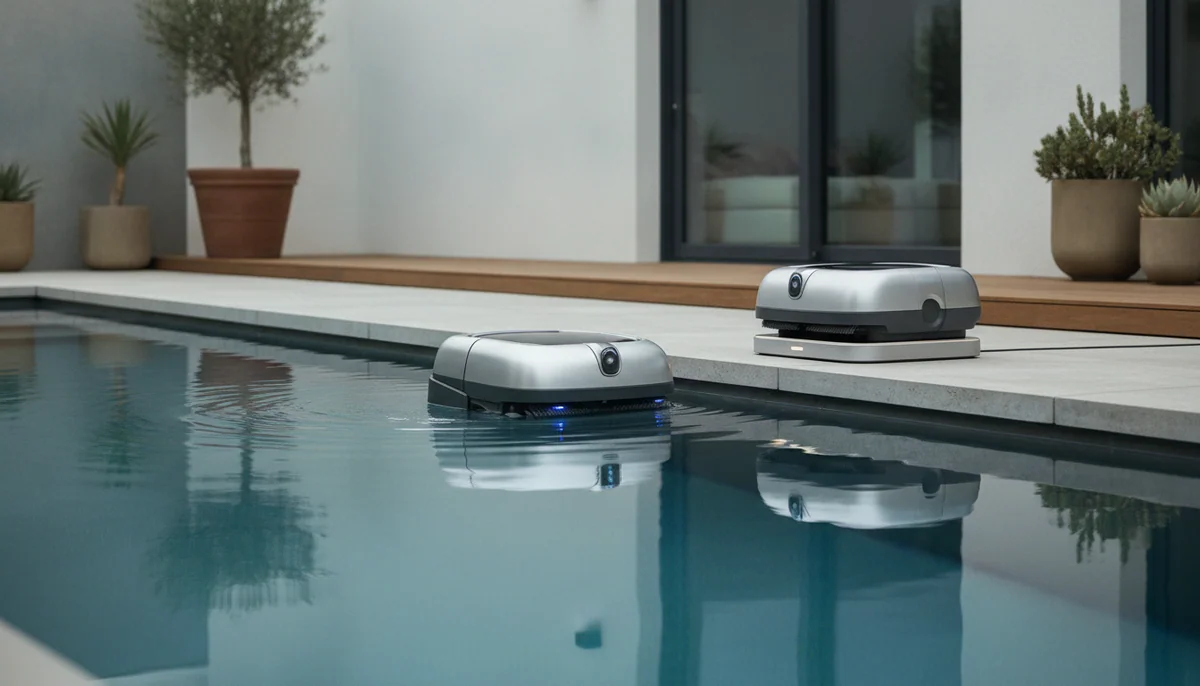
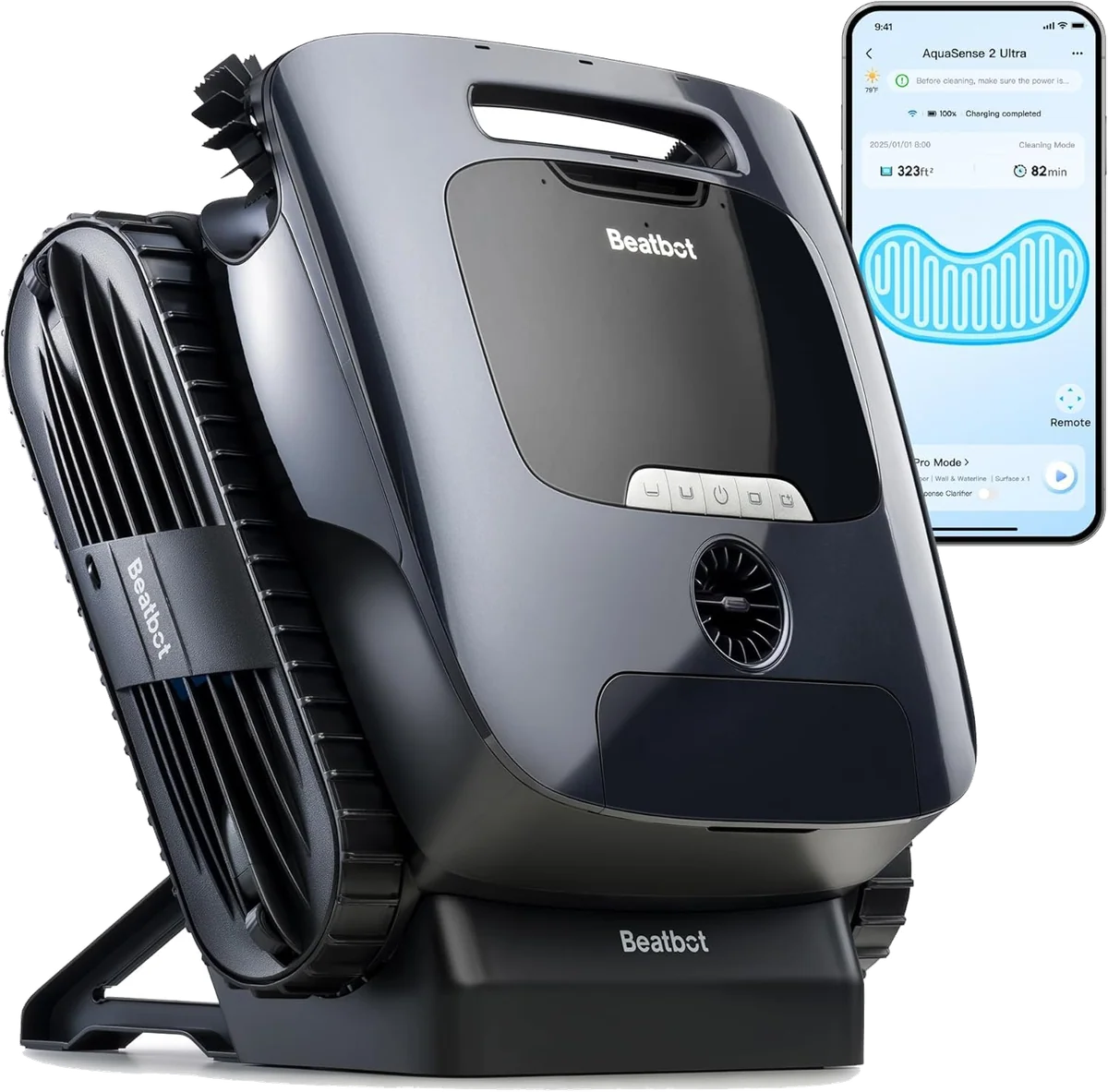
Beatbot AquaSense 2 Ultra
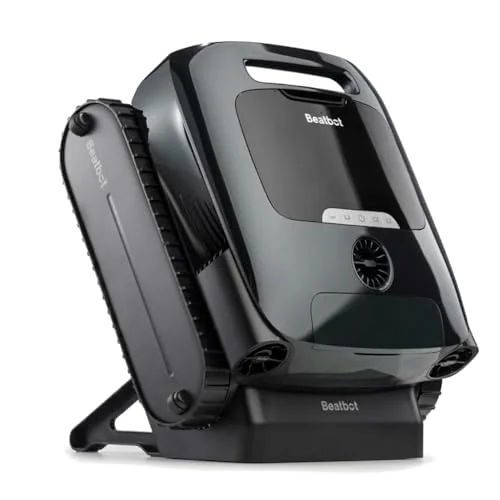
Beatbot AquaSense 2 Pro
The model names suggest a simple contest between good and better. The actual decision is stranger. The AquaSense 2 Pro is a new all-in-one cleaner with ambitious but inconsistent skimming, while the AquaSense 2 Ultra sold through this listing is renewed, substantially heavier and dependent on a camera system whose condition matters to its value. The Ultra is the more intelligent robot; the Pro is the more sensible purchase for most people choosing between these two.
That is not an enthusiastic endorsement of the Pro. Its strongest job is ordinary underwater cleaning, yet owner reports disagree sharply about complete floor coverage, wall climbing and fine-debris retention. Its surface mode can collect leaves and bugs, but it does not establish that one robot can replace both a dependable floor cleaner and a dedicated skimmer.
The renewed Ultra makes a better case for itself when visible leaves, odd transitions and a complicated route are the problems. Independent evaluation found purposeful debris hunting after the planned pass, which is the clearest reason to pay for its camera and larger sensor package. That advantage comes inside a roughly 29-pound machine whose surface test captured only about 40 percent of floating debris. Intelligence improves the floor work; it does not rescue the five-in-one promise.
The decision in thirty seconds
- Choose the Pro
- Your pool has conventional walls and transitions, ordinary leaves are the main debris, and you want the lower-condition-risk route into Beatbot’s combined cleaning concept.
- Choose the renewed Ultra
- Your large or irregular pool defeats simpler routing, visible plant debris is the priority, and you can verify battery health, sensor clarity, accessories and replacement coverage.
- Choose neither
- You need continuous surface patrol, pleated ultra-fine filtration, reliable shallow-shelf cleaning, live underwater control or a machine that is easy to lift.
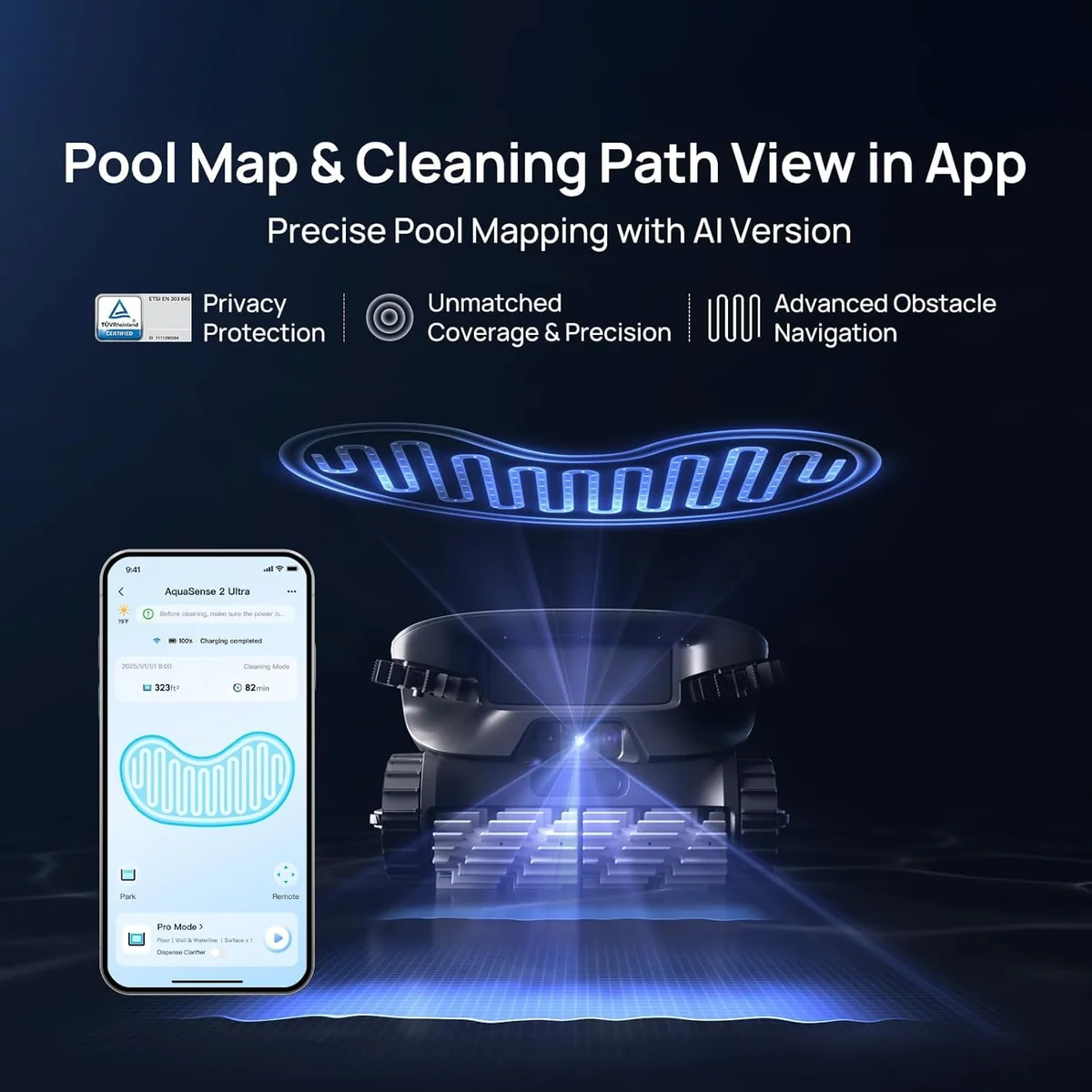
Beatbot AquaSense 2 Ultra
Beatbot AquaSense 2 Pro
At a Glance
| Feature | Beatbot AquaSense 2 Ultra | Beatbot AquaSense 2 Pro |
|---|---|---|
| Price Range | $1,500–$3,000 | Under $200 |
| Claimed runtime | About five hours on the floor or up to ten hours skimming | Up to 5 hours underwater or 11 hours in surface mode |
| Check Price on Amazon | Check Price on Amazon |
The Ultra upgrades navigation, not the whole cleaning experience
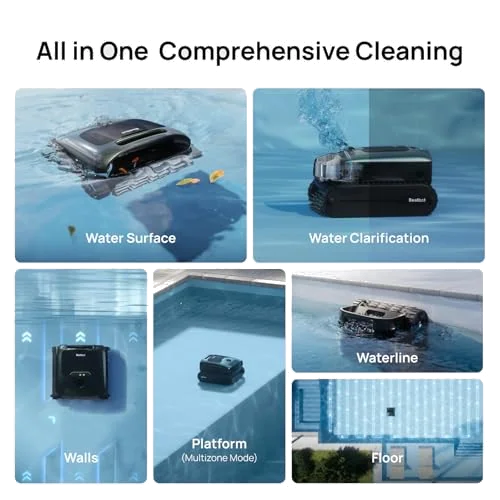
Both machines occupy the same broad category: large cordless robots intended to clean the floor, walls and waterline, skim the surface, dispense clarifier and park near an edge for retrieval. Both listings claim as much as five hours of underwater runtime, and both rely on manual removal and deck charging after a serious cycle. The Pro claims as much as eleven hours in surface mode, while the Ultra listing emphasizes artificial-intelligence mapping, obstacle avoidance and plant-debris detection rather than a fundamentally different ownership routine.
| Decision point | AquaSense 2 Pro | AquaSense 2 Ultra Renewed | Why it matters |
|---|---|---|---|
| Navigation hardware | Four-core processor, 22 sensors and planned S- and N-shaped routes | Four-core processor, 27 sensors, a front camera and AI-guided visible-debris search | The Ultra has the stronger case in irregular pools and where missed leaves are easy for a camera to recognize. |
| Floor cleaning | Strong pickup when it reaches debris, with conflicting reports about complete coverage | Persuasive visible-debris pickup and observed return attempts for leaves missed on the first route | The Ultra’s advantage is targeted recovery rather than a guarantee of spotless fine filtration. |
| Surface skimming | Useful for occasional leaves, but retention and edge coverage are inconsistent | Long-running supplemental mode with a controlled result of about 40 percent capture | Neither should replace a dedicated skimmer beneath trees that shed continuously. |
| Shallow features | Some submerged benches are plausible, but small steps and tanning ledges remain unreliable | Strong walls and waterline do not prevent missed stairs and Baja shelves | Extra intelligence cannot create traction or water depth where the geometry denies it. |
| App behavior | Surface steering, setup, modes, updates and completed-run information | Surface steering, setup, modes, updates, route maps and completed-run information | Neither provides dependable live control after it submerges. |
| Purchase condition | Standard retail listing | Renewed listing | The Ultra requires inspection of the battery, sensors, account status, accessories and written protection terms. |
| Handling | Heavy even after its drainage system has done its work | About 29 pounds dry and considerably more demanding while water drains | Lifting ability can settle the comparison before navigation features become relevant. |
The camera is the Ultra’s one decisive hardware advantage
A planned route can look orderly without being complete. That distinction matters because Pro owners have described opposite outcomes: some saw excellent pickup and improved routing after several cycles, while others watched replacement units miss the same floor sections in simple rectangular pools. The Pro can be an effective vacuum when it crosses the dirt, but its map should not be mistaken for proof that it crossed everything.
The Ultra adds a front camera and a broader group of sensors, then uses them to detect plant debris and make deliberate collection attempts. In an independent floor test, it cleared the initial debris load and found nine of ten leaves added while it continued running, missing the last as the battery neared depletion. That is meaningful progress over merely drawing a route in an app.
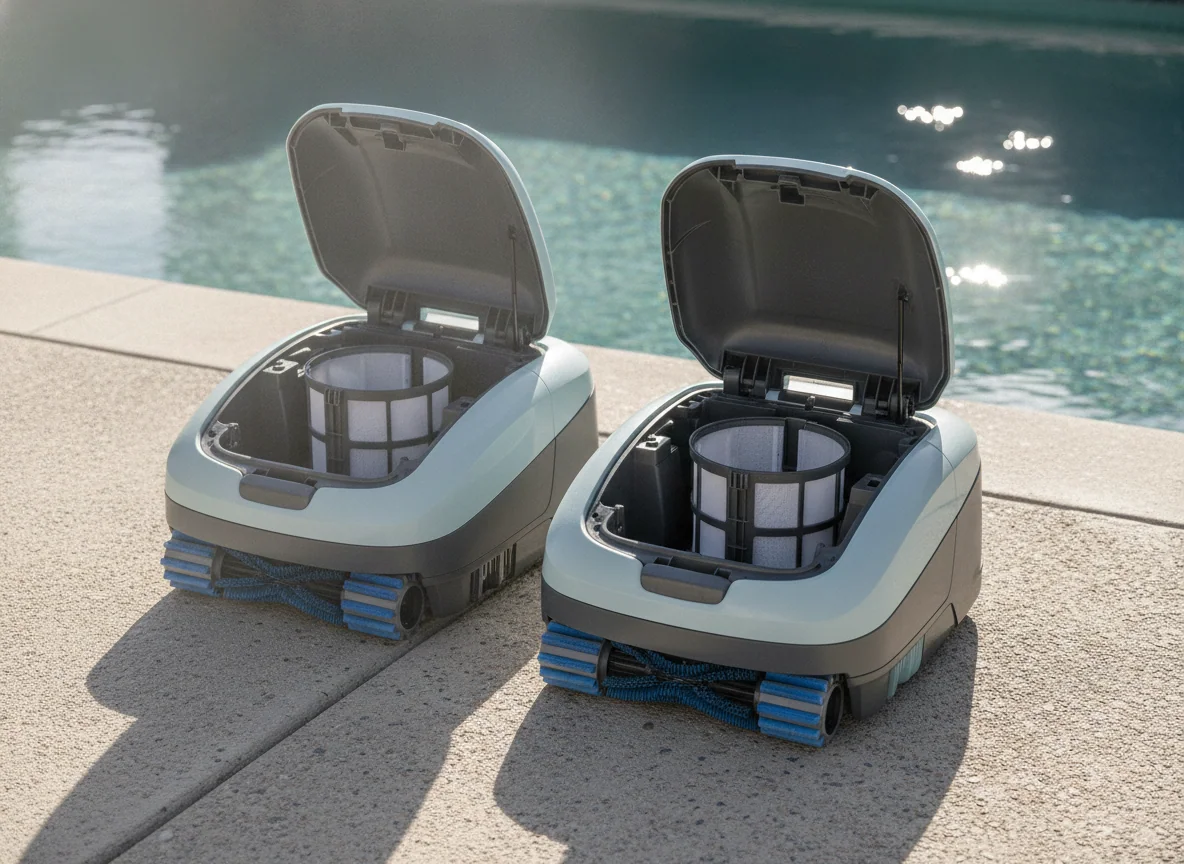
Camera guidance still favors things a camera can see. Leaves, berries and nuts are better targets than a film of silt or dead algae blending into the floor. Evidence for the Ultra’s finest filtration is less persuasive than its visible-debris record, and the Pro’s included 150-micron basket likewise falls short of a pleated ultra-fine system. Owners fighting dust, ash or persistent haze should leave this comparison and use the site’s guide to cleaners for sand, silt and fine debris.
Surface mode is not the reason to upgrade
Beatbot calls each machine a five-in-one cleaner, but the jobs are not equally accomplished. The floor, walls and waterline are credible cleaning surfaces. Surface skimming is a convenience mode, and clarification is automated dispensing of a consumable rather than another scrubbed surface.
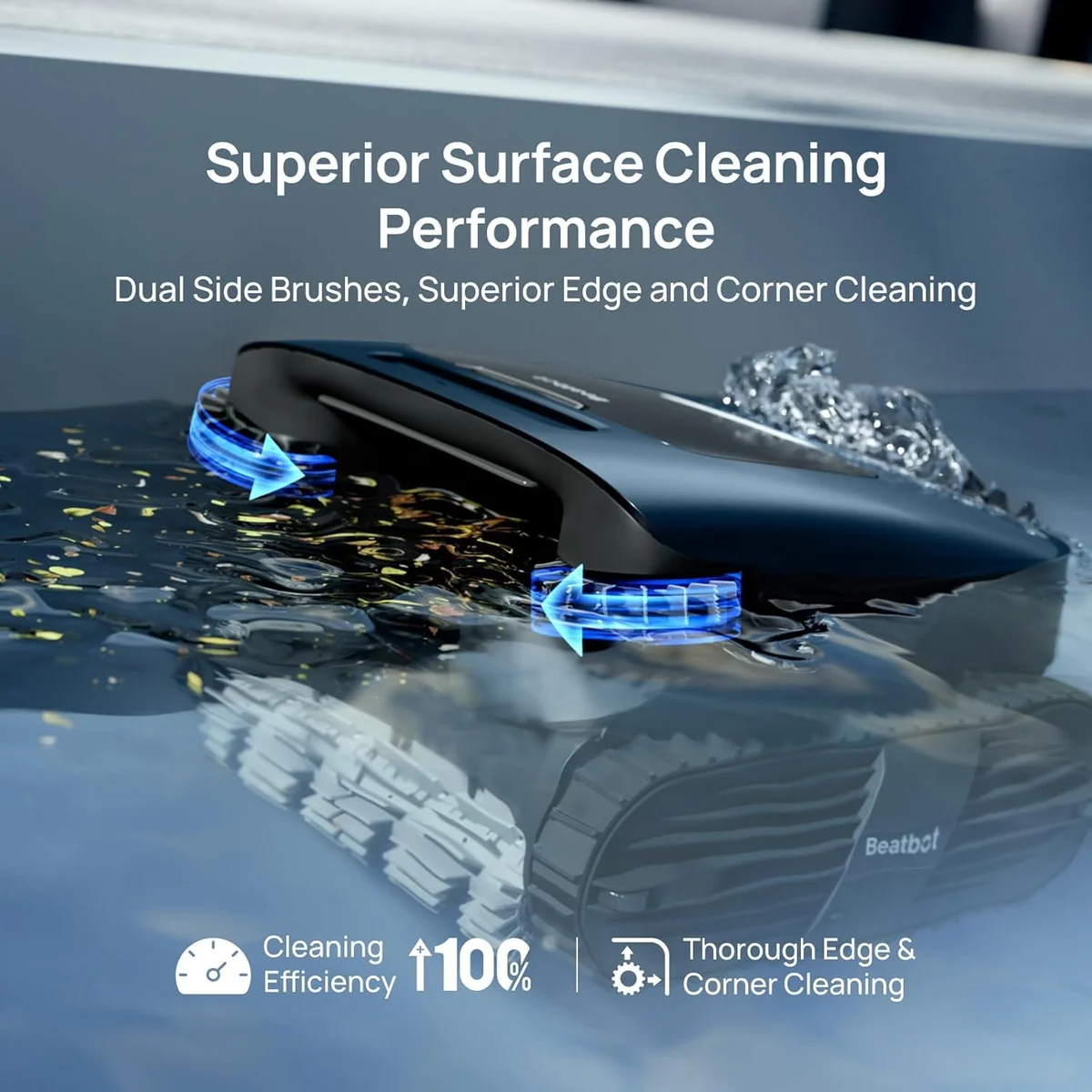
The Ultra’s controlled skimming result is the most sobering evidence in the comparison. Its bow wave pushed floating material away, and it collected only about 40 percent of the test debris. The Pro’s record is less neatly quantified but no more reassuring: owners report results ranging from a clear surface to poor pickup, while its basket can release debris when the robot slows, reverses or reaches a wall.
A few floating leaves after an underwater cycle are within the useful range of either machine. Constant pollen, insects and tree fallout are not. For that problem, compare the site’s dedicated robotic skimmers, which can patrol while a separate vacuum is cleaning below or sitting on its charger.
The app cannot follow either robot underwater
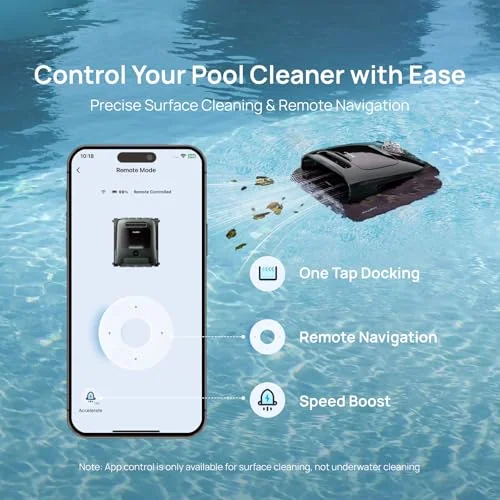
App control is easiest to misunderstand because the useful controls change when the robot dives. The Pro listing explicitly limits directional control to surface cleaning. The Ultra can also be called toward an edge while floating, but normal Wi-Fi and Bluetooth communication disappear after submersion, leaving configuration and post-run information rather than live steering.
This makes the Ultra’s route map interesting rather than operational. You cannot watch an incomplete pass, take control and drive the robot over the missed patch while it remains on the floor. Buyers expecting that kind of remote control should read how pool-cleaner apps behave underwater before treating either specification sheet as a promise of live intervention.
Renewed condition changes which machine deserves first place
If both products were new and equally protected, the Ultra’s stronger navigation would be easier to justify for a difficult pool. They are not being sold on equal terms here. The relevant Ultra listing is renewed, so evidence from a sound new machine describes the design’s potential without establishing the remaining capacity of the battery in the box, the clarity of its sensor windows or the completeness of its accessories.
That distinction is especially important because the Ultra depends on its sensors to earn the upgrade. The listing promises a charging dock, retrieval equipment, side-brush hardware and a clarifying-agent kit, while its replacement language needs to be confirmed for the renewed serial number rather than assumed from a headline. Inspect the camera and sensor windows in daylight, pair the app, check account binding, run every cleaning mode and test surface parking while returning the machine is still straightforward.
The weight is a veto, not a minor inconvenience
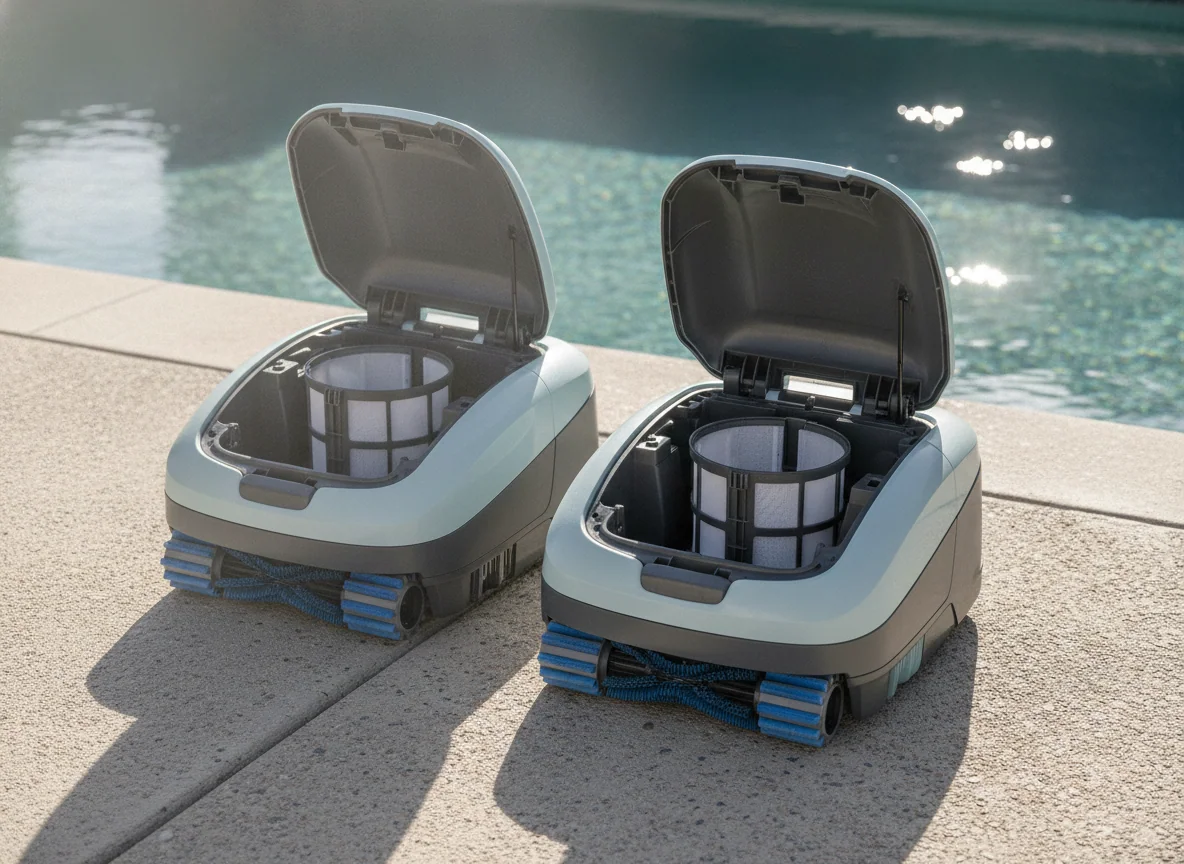
The Pro is already a substantial machine, and the Ultra is roughly 29 pounds before entering the pool. Surface parking and drainage reduce retained water, but neither robot climbs onto the deck or returns itself to the charging dock. Anyone with back, shoulder, balance or grip limitations should reject both rather than counting on an app feature to solve a physical lift.
Beatbot AquaSense 2 Ultra
Beatbot AquaSense 2 Pro
Pick the compromise that matches the pool
The Pro ranks first because its disadvantages are easier to understand at purchase. It asks the buyer to accept uncertain coverage, ordinary fine filtration, inconsistent skimming and a heavy recharge routine, but it does not add the unknown battery and sensor history of a renewed flagship. A conventional pool with moderate visible debris gives it the best chance to look competent.
The AquaSense 2 Pro is the safer choice for a conventional pool.
Choose it when one cordless machine for capable underwater cleaning and occasional surface pickup matters more than perfect coverage or specialist filtration.
Its inconsistent routing, unreliable skimming and heavy manual recharge routine make the all-in-one promise less automatic than it sounds.
The Ultra belongs to a narrower buyer. Its camera-guided leaf hunting can justify the added complexity when the pool is large, irregular or visibly littered with plant debris, but only if the owner can lift it and evaluate a renewed unit rather than merely admire the flagship specification sheet.
The renewed AquaSense 2 Ultra is the specialist for difficult, leafy pools.
Choose it only when camera-guided debris hunting solves a real coverage problem and the battery, sensors, accessories and written protection all pass inspection.
Its roughly 29-pound dry weight, weak skimming and uncertain refurbishment history turn the smartest cleaner here into the riskier purchase.
There is a better answer for several common buyers
Neither Beatbot is the natural choice for continuous surface debris. A dedicated skimmer paired with a separate underwater cleaner uses two devices, but each can work while the other is charging or cleaning elsewhere. That division is less elegant on the deck and more convincing in a pool beneath trees.
Neither is the obvious answer for fine sediment, either. A corded cleaner can trade battery handling for sustained power and access to stronger fine-filter options. The comparison in our corded versus cordless guide helps decide whether a cable is genuinely worse than lifting and recharging a large robot after every cycle.
Finally, shallow shelves and steps remain a pool-geometry problem rather than a model-tier problem. The Ultra’s camera does not give it legs, and the Pro’s MultiZone mode cannot cross every ledge with only a few inches of water. Owners whose dirt collects on benches, tanning ledges or irregular steps should start with the site’s guide to robots for steps and shallow shelves, while expecting some manual cleanup even from the better candidates.
The final call
Buy the AquaSense 2 Pro if choosing between these exact listings and the pool is conventional enough not to need a camera-led flagship. Buy the renewed Ultra only when its visible-debris intelligence answers a specific problem and you can verify the condition of the hardware that provides it. Otherwise, skip the seductive five-in-one pitch and choose specialists that are better at the jobs your pool actually creates.
Frequently Asked Questions
Is the AquaSense 2 Ultra better than the AquaSense 2 Pro?
The Ultra has stronger camera-led navigation and visible-debris detection, but the renewed condition, greater weight and weak surface capture make the Pro the safer purchase for most conventional pools.
Can either Beatbot replace a dedicated surface skimmer?
No, both can collect occasional floating debris, but inconsistent capture and retention make a dedicated skimmer more dependable for continuous leaves, insects or pollen.
Can either robot be steered while cleaning underwater?
No, app steering is a surface function, while submerged operation is limited to the selected automatic mode and any information the robot reports after resurfacing.
Which model is better for leaves on the pool floor?
The Ultra has the stronger case because its camera can identify visible plant debris and return for missed leaves, provided the renewed unit’s battery and sensors are healthy.
Which model is better for fine sand or silt?
Neither is the strongest fit because the Pro’s 150-micron basket and the Ultra’s mixed fine-filtration evidence are less convincing than a cleaner designed around pleated ultra-fine media.
Does the Ultra clean steps and tanning ledges better?
Its navigation may help in complex geometry, but independent evaluation still found dirt left on stairs and a Baja shelf, so shallow features remain unreliable.
What should be checked before buying the renewed Ultra?
Verify battery runtime, sensor clarity, app-account status, charging, diving, parking, every included accessory and the written replacement terms while the return window remains open.