Choose the Beatbot Sora 70 over the AquaSense 2 Pro
Buy the Beatbot Sora 70 if you want one cordless robot for ordinary debris above and below the water, but choose neither machine when fine silt, truly unattended cleaning, or easy lifting is the priority.
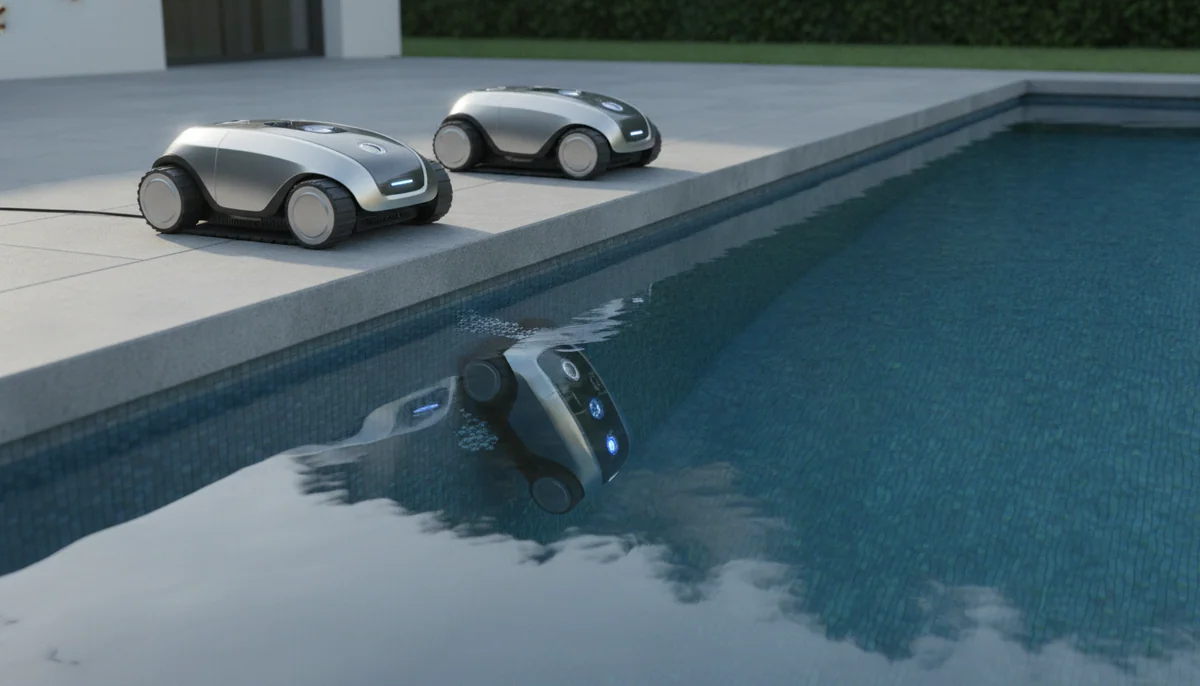
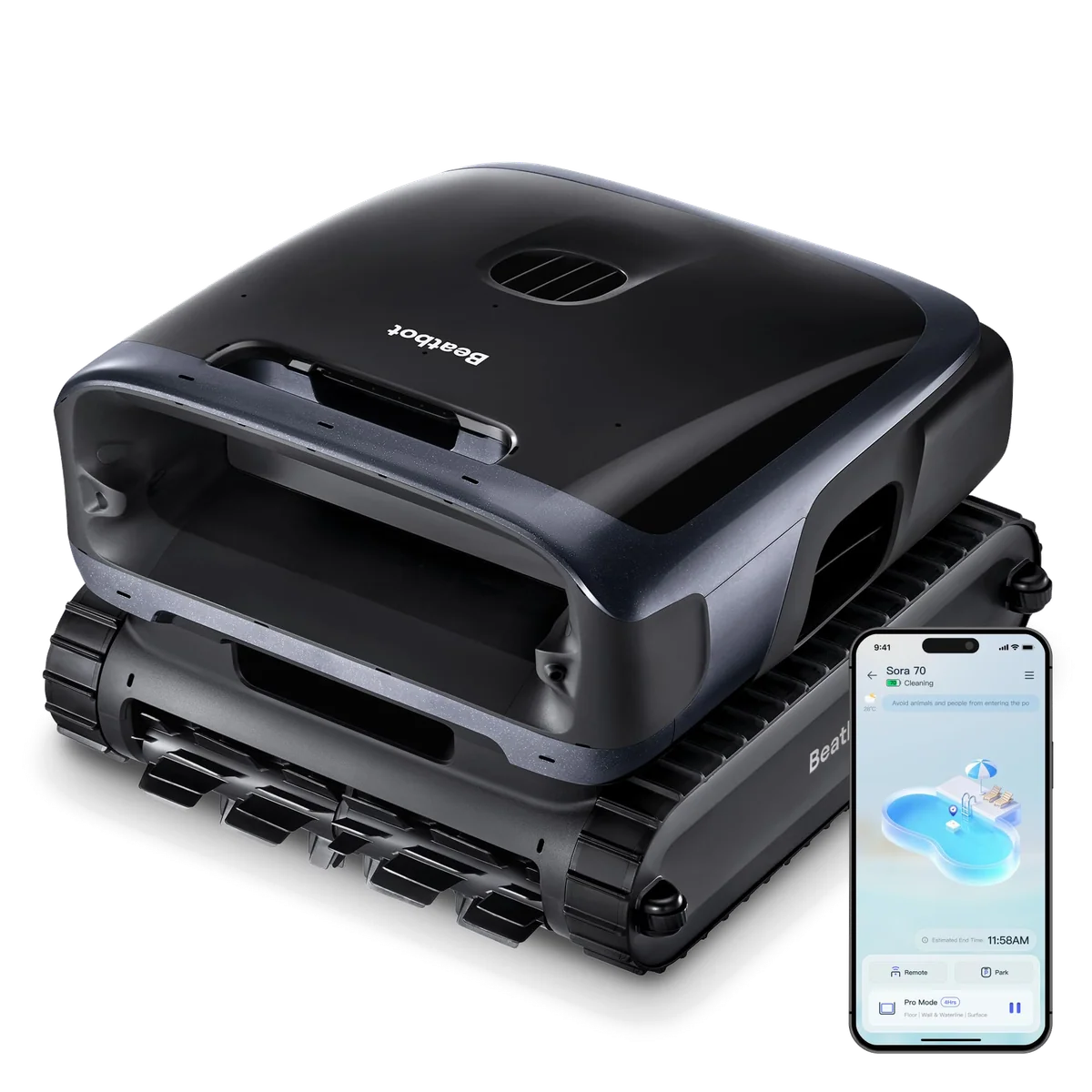
Beatbot Sora 70
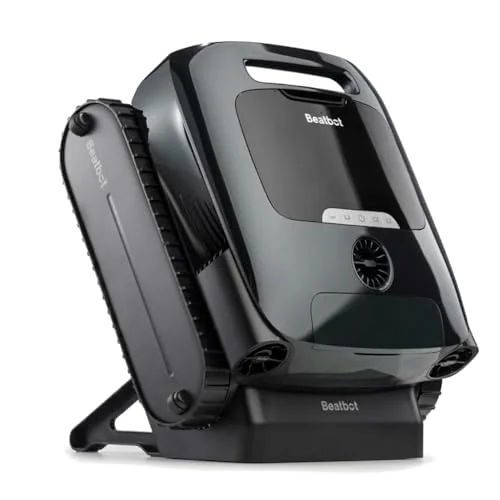
Beatbot AquaSense 2 Pro
The Sora 70 wins this comparison, and it does so without winning every specification. The AquaSense 2 Pro carries the larger advertised coverage figure, promises much longer surface runtime, and adds a clarifier dispenser. Those extras sound like the makings of a flagship. The evidence instead points to a machine whose underwater cleaning can be strong but whose surface collection, route coverage, and fine filtration do not consistently support its broader promise.
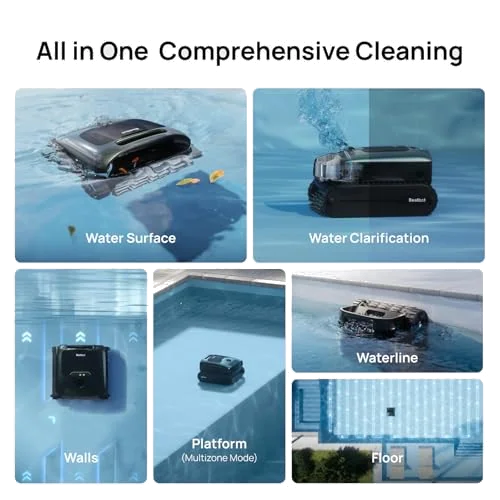
The Sora 70 has fewer ambitions and a clearer reason to exist. It vacuums the floor, climbs walls, works the waterline, reaches qualifying shallow areas, and rises to skim floating material with its JetPulse system. Direct demonstrations and attributable owner reports support all of those functions, although pool geometry and debris type still determine how complete the result will be.
This is not a victory for “AI,” app polish, or a higher flow-rate number. It is a victory for the robot whose distinctive hardware solves more of the problems that justify owning an expensive all-in-one cleaner. The Sora 70’s six-liter basket, shallow-zone ability, useful burst skimming, and surface parking form a coherent package. The AquaSense 2 Pro’s fifth function is clarifier dispensing, while the skimming function that should distinguish it has the weaker record.
Neither model is the answer to every pool. Both lose their app connection underwater, both require a person to retrieve and recharge them, and both rely on standard filtration that deserves skepticism around powdery sediment. If the pool bottom turns brown with fine dust after every windy day, start with the site’s cleaners for sand, silt, and fine debris rather than assuming the winner here is automatically suitable.
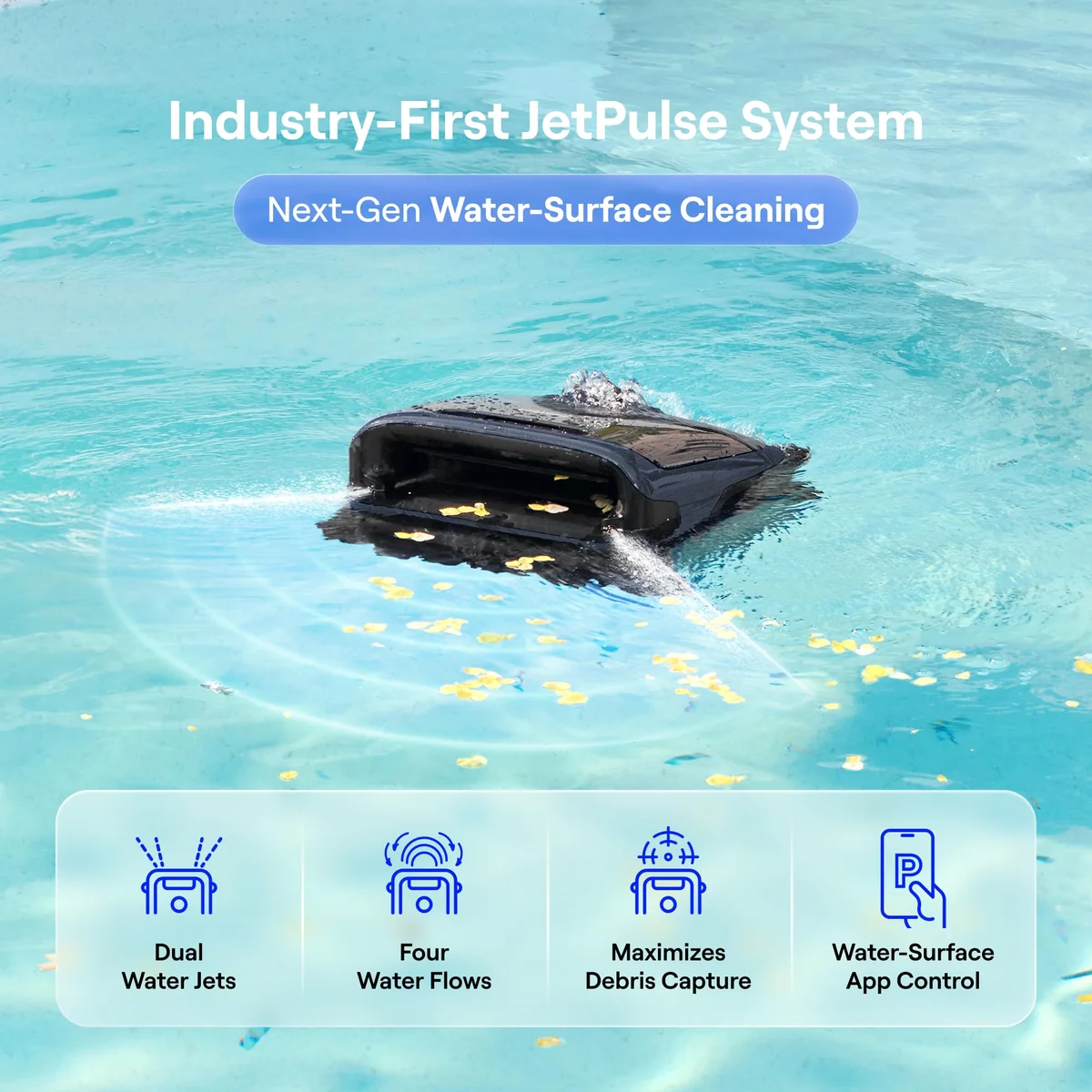
Beatbot Sora 70
Beatbot AquaSense 2 Pro
At a Glance
| Feature | Beatbot Sora 70 | Beatbot AquaSense 2 Pro |
|---|---|---|
| Price Range | $1,000–$1,500 | Under $200 |
| Claimed runtime | Up to five hours on the floor and seven hours on the surface | Up to 5 hours underwater or 11 hours in surface mode |
| Check Price on Amazon | Check Price on Amazon |
The ranking is decisive, but the reason is not raw power
Choose the Sora 70 for coarse debris, shallow zones, and useful surface cleanup.
The Sora 70 earns first place by combining a six-liter basket, demonstrated wall and waterline work, qualifying shallow-area travel, and a skimming mode that adds practical value rather than another label.
Its standard basket is an uncertain match for powdery silt and pollen, while narrow steps, shelves below the stated eight-inch threshold, and underwater app control remain genuine limitations.
Choose the AquaSense 2 Pro only when maximum cordless endurance matters more than consistency.
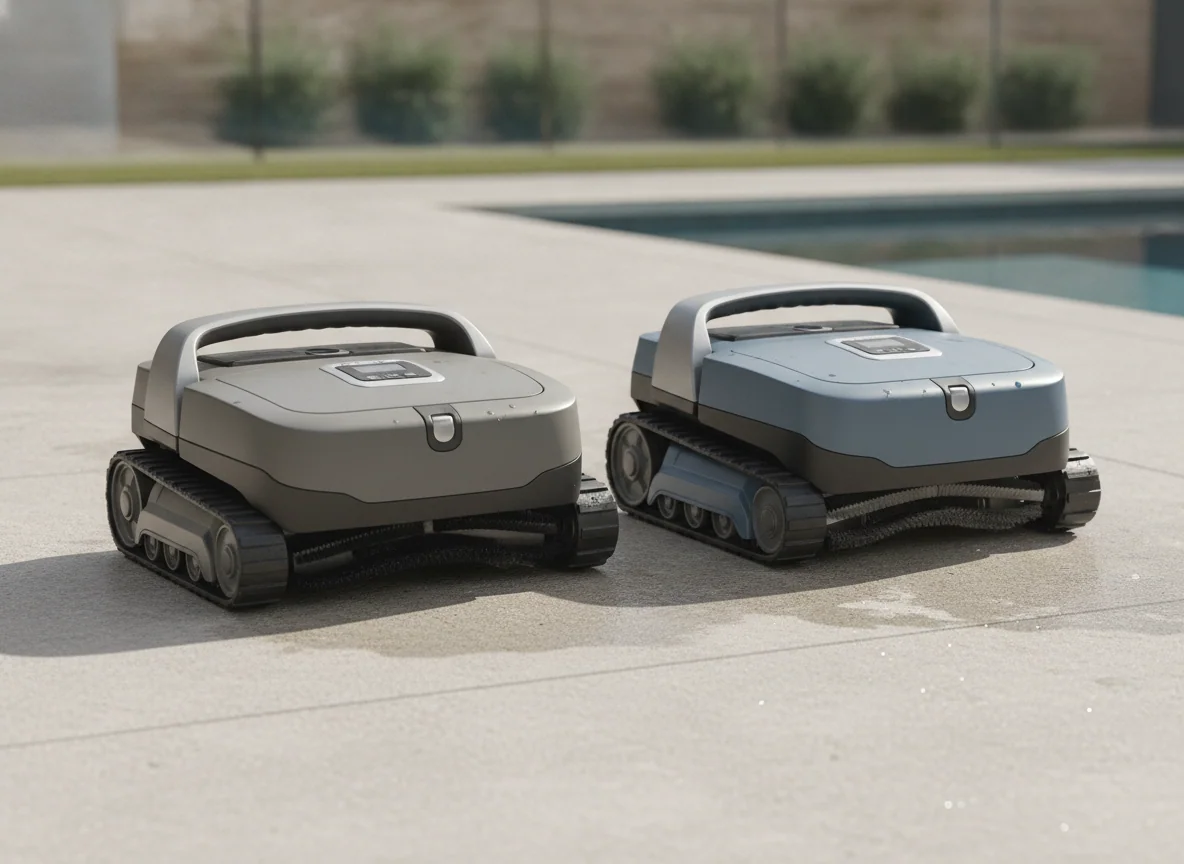
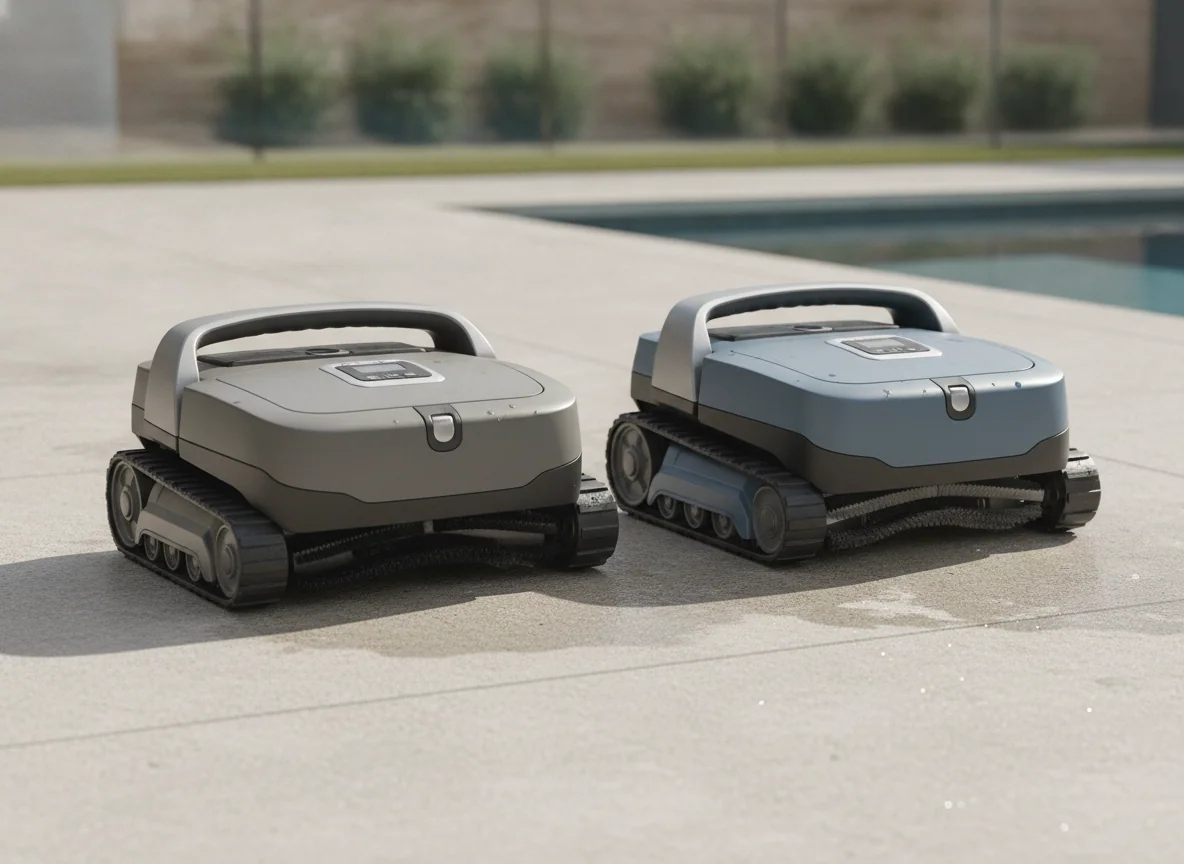
The AquaSense 2 Pro can clean floors, walls, and the waterline effectively while offering periodic surface collection, edge parking, and clarifier dispensing from one cordless body.
Its premium proposition is weakened by missed floor sections, disputed skimming, ordinary 150-micron filtration, unreliable shallow-feature coverage, and a substantial manual lift after every cycle.
What the specification sheet gets right, and what it cannot settle
Beatbot rates the Sora 70 for pools up to 3,200 square feet and claims as much as five hours of floor cleaning from its 10,000 mAh battery. The AquaSense 2 Pro raises the advertised pool area to 3,875 square feet and claims up to five hours underwater or eleven hours on the surface. Those numbers establish intended scale and possible endurance, not a guarantee that either robot will cover every strip of a large pool before its battery or basket reaches a limit.
| Decision point | Beatbot Sora 70 | Beatbot AquaSense 2 Pro | Advantage |
|---|---|---|---|
| Underwater zones | Floor, walls, waterline, and shallow areas down to a claimed eight inches. | Floor, walls, waterline, and some submerged multilevel areas. | Sora 70 for pools with broad, adequately submerged shelves. |
| Surface cleaning | JetPulse-assisted skimming with direct evidence of useful bug and leaf collection. | Long claimed surface runtime, but mixed evidence for retention, edges, pollen, and corners. | Sora 70 for occasional all-in-one skimming. |
| Debris basket | Six-liter top-access basket suited to substantial coarse debris loads. | Dual-layer 150-micron basket suited to leaves, insects, hair, and ordinary visible dirt. | Sora 70 for basket capacity. |
| Very fine sediment | Conflicting results with dust, silt, and pollen through the standard basket. | Conflicting pickup reports and direct criticism of the included 150-micron mesh. | Neither. |
| App control | Configuration and surface steering, with normal communication lost underwater. | Configuration and surface steering, with directional control explicitly limited to surface mode. | Neither. |
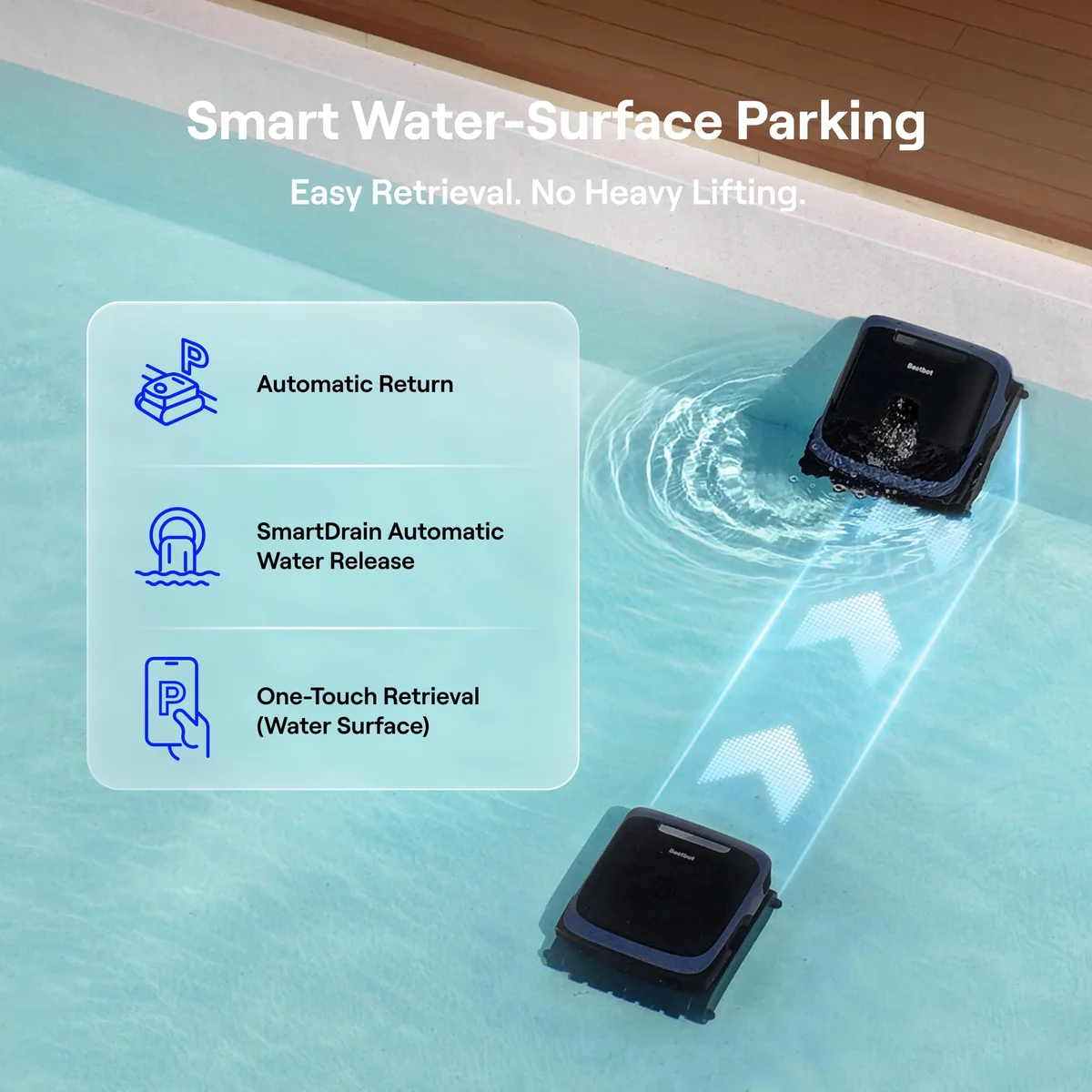
| After-cycle handling | Surfaces, parks near an edge, drains, and still requires manual removal and charging. | Surfaces, parks near an edge, drains, and still requires manual removal and dock charging. | Roughly even. |
| Extra treatment | No standard clarifier-dispensing proposition. | Dispenses an included clarifying agent intended to bind suspended particles. | AquaSense 2 Pro only for owners who already want automated clarifier dosing. |
Claimed coverage deserves particular caution because the AquaSense 2 Pro’s larger number can tempt owners of large pools. Coverage is not simply area divided by runtime. A robot can spend five hours moving and still repeat one route, miss a cove, slip before the waterline, or revisit an edge while dirt remains elsewhere. Exact-product reports include both owners who saw the route improve after several cycles and owners who continued to see the same missed sections after repeated runs or a replacement machine.
The Sora 70 is not immune to wandering or missed geometry, but its comparative case rests less heavily on perfect mapping. It has credible evidence for collecting coarse debris, climbing ordinary walls, scrubbing at the waterline, traversing suitable submerged seating, and returning to the edge. That is a more defensible set of expectations than treating either robot as a machine that studies a pool until no manual cleanup remains.
The surface decides this contest
Both robots ask the buyer to pay for one body that works above and below the water. That makes surface performance central, not a bonus that can be forgiven when it disappoints. A good floor robot with mediocre skimming is still a good floor robot, but it is no longer a persuasive replacement for separate underwater and surface cleaners.
The Sora 70’s skimmer has the clearer job description
The Sora 70 rises, moves across the surface on propellers, and uses paired water jets to influence floating debris near its intake. Direct reviewers with very different final opinions both found that the mode collected bugs and leaves, while owners describe it as especially useful for a fast cleanup before swimming. That agreement matters because it survives outside a uniformly positive account.
It is still an intermittent skimmer. Heavy leaf loads can obstruct flow before the basket is nominally full, broad leaves may be pushed away by the jets, and every minute spent on the surface draws from the same battery that serves the floor and walls. Anyone fighting continuous fallout should compare this compromise with a machine from the dedicated robotic skimmer guide.
The AquaSense 2 Pro promises longer patrols than its intake earns
The AquaSense 2 Pro can collect floating leaves and bugs, and its surface steering helps when debris gathers in a visible patch. The weakness is what happens around reversals, walls, corners, and shallow shelf edges. Direct comparison evidence showed captured material escaping when the robot slowed or changed direction, while exact owners split sharply between a clear surface and disappointing skimming.
Eleven claimed hours on the surface sounds commanding, but endurance does not repair weak retention or neglected edges. The longer-running skimmer loses this category because the shorter-running one has the more credible evidence that floating debris stays part of the cleaning result.
Fine dirt produces a draw that should worry buyers
Leaves make for satisfying basket photographs, but fine sediment is where expensive robots expose their filters. Both models can pick up visible dirt when they cross it. Neither record supports treating the included basket as an ultra-fine specialist for ash, dead algae, cement dust, pollen haze, or powdery silt.
The Sora 70 produced sharply different outcomes across debris types. Several accounts found sand and small particles in the basket, yet a focused settled-dust test ended with little retained material and much of the floor still visibly dirty. Its six-liter capacity is valuable for volume, but capacity and particle retention answer different questions.
The AquaSense 2 Pro has the same fundamental tension. Some owners report good pickup of pollen and ordinary bottom debris, while others watched fine dirt remain after multiple cycles or pass through the basket. Direct criticism of the product family’s 150-micron filtration reinforces the concern.
Clarifier dispensing does not give the AquaSense 2 Pro a filtration victory. The agent is intended to bind suspended particles into material that the robot or pool filter can capture, but it does not transform the basket into finer media, sanitize the water, kill algae, or replace the circulation system. It also creates a consumable dependency, and an exact-product owner reported being unable to obtain the required fluid when it was needed.
The app is a deck tool, not an underwater remote
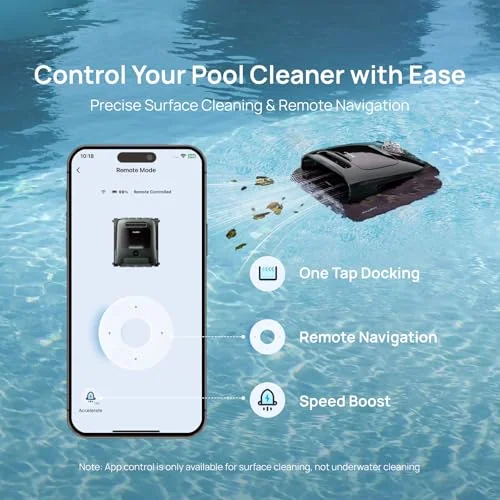
Both robots pair with an app for setup, firmware, mode selection, cleaning records, battery information after reconnection, surface steering, and parking commands. Once either machine sinks, ordinary wireless communication through the water disappears. You cannot dependably steer it toward missed dirt, change its route, or recall it from the bottom.
Beatbot explicitly limits AquaSense 2 Pro directional control to surface cleaning, which at least makes the boundary clear in the listing. The Sora 70 behaves the same way in practice. Buyers expecting to watch live progress and correct a route from a lounge chair should read why pool-cleaner apps lose contact underwater before treating app control as a deciding feature.
Cordless scheduling has a related limit. Neither robot can leave its charger, enter the pool, empty its basket, dry its charging connection, and recharge itself. A stored routine may change what happens after deployment, but a person still begins and completes the ownership cycle. The practical choice between this routine and a cable is covered in the site’s corded versus cordless comparison.
Shallow water gives the Sora 70 its second clear win
Sora’s claimed eight-inch minimum is not permission to ignore geometry, but it is supported by more than brochure language. A direct test showed the Sora 70 crossing submerged seating and continuing toward the true waterline, while an owner reported repeat cleaning on a broad tanning ledge at roughly 7.5 inches of water. Another five-inch shelf remained essentially out of reach, which sets an honest boundary around the success.
The AquaSense 2 Pro can use MultiZone mode to attack a deeply submerged bench or multilevel section with more track power. It still struggles on very shallow shelves, small steps, and abrupt transitions, and exact owners repeatedly name steps as a weak point. Buyers should measure water depth and usable tread area instead of assuming a robot that climbs walls can settle onto every horizontal feature.
For pools built around tanning ledges, broad steps, and benches, the Sora 70 is the more promising of these two, but no robot earns a universal claim across all shallow geometry. The site’s guide to cleaners for steps, ledges, and shallow shelves explains why water depth, tread width, approach angle, and traction matter as much as the mode name.
Beatbot Sora 70
Beatbot AquaSense 2 Pro
Who should buy which Beatbot
Buy the Sora 70
Choose it when leaves, insects, grass, twigs, ordinary grit, and periodic floating debris create most of the work. It is also the better candidate when a broad tanning ledge or submerged seating area holds at least about eight inches of water. You must still accept manual deployment, a bulky wet lift, charging after serious cycles, and uncertain filtration of the finest particles.
Buy the AquaSense 2 Pro
Choose it only when you insist on one cordless body, value its longer claimed surface endurance, and already see automated clarifier dosing as useful. Its best pool has conventional walls, generous curves, deeply submerged transitions, and ordinary visible debris. The buyer also needs enough patience to verify coverage during the return window rather than assuming repeated cycles will always teach the robot what it missed.
Buy neither for fine sediment
Powdery silt, ash, dead algae, and persistent pollen haze demand filtration evidence stronger than either standard basket provides. A large flow number can move more water while still returning tiny particles to the pool. Choose by filter media and demonstrated retention, not by battery size or the number of cleaning modes.
Buy neither for continuous surface fallout
One machine cannot skim while it is cleaning the floor, sitting on a charger, or waiting to be redeployed. A dedicated surface robot can patrol independently while a separate underwater cleaner handles the bottom. The skimmer versus vacuum guide helps decide whether one generalist or two specialists better matches the pool.
A cord can be the more convenient choice
Cordless design removes tangles and keeps a power cable out of the water, but it replaces cable management with lifting, rinsing, drying, charging, and redeployment. A corded cleaner makes more sense when the owner wants immediate back-to-back cycles, a real weekly timer, and no battery wait between runs. The Dolphin Nautilus CC Pro review covers an honest alternative for buyers who value repeatable underwater maintenance more than surface skimming.
Do not pay for the wrong tier
Buyers who do not need surface cleaning should not treat either all-in-one model as the default Beatbot choice. The Beatbot lineup guide separates the company’s floor-focused models from its skimming and camera-equipped tiers, while the Sora 30 and Sora 70 comparison shows what the larger basket and active surface hardware add.
The final call
The Sora 70 is the better purchase because its distinctive features have the stronger practical case: a cavernous basket for coarse debris, credible shallow-water reach, useful surface collection, and convenient edge parking. The AquaSense 2 Pro wins the endurance claims and offers clarifier dispensing, but those advantages do not outweigh its inconsistent coverage and weaker skimming record. Choose the Sora 70 for a leaf-prone pool with compatible geometry, and walk away from both when fine dust or hands-off automation is the real requirement.
Frequently Asked Questions
Which robot is better for leaves and floating bugs?
The Sora 70 is the better choice because its larger basket and JetPulse surface mode have the more convincing evidence for coarse debris collection above and below the water.
Which model is better for fine sand and silt?
Neither is a dependable fine-particle specialist because both records include conflicting results with small sediment and limitations tied to standard filtration.
Can either Beatbot be steered while it cleans underwater?
No, both apps lose dependable communication after submersion, and the AquaSense 2 Pro listing explicitly restricts directional control to surface mode.
Which robot is more likely to clean a tanning ledge?
The Sora 70 has the stronger evidence on broad ledges with roughly eight inches of water, but very shallow shelves and narrow steps remain unreliable for both robots.
Does the AquaSense 2 Pro’s clarifier make it clean better than the Sora 70?
No, the dispenser can help bind suspended particles but does not improve route coverage, replace fine filter media, sanitize the pool, or remove the need for the circulation system.
Can either robot clean the pool every day without help?
No, a person must still deploy, retrieve, rinse, dry, recharge, and redeploy either cordless robot even when an app stores cleaning settings.
Which model is easier to retrieve?
Both surface, approach an edge, and drain before lifting, so neither has a decisive retrieval advantage and both remain substantial wet machines.
Ready to Choose?
Sources (2)
- Amazon listings and customer reviews — Beatbot Sora 70 and Beatbot Aquasense 2 Pro
- Owner and reviewer video, 4 channels