The Nepturox SAT25 Can Clean Well, but Reliability Makes It Hard to Recommend
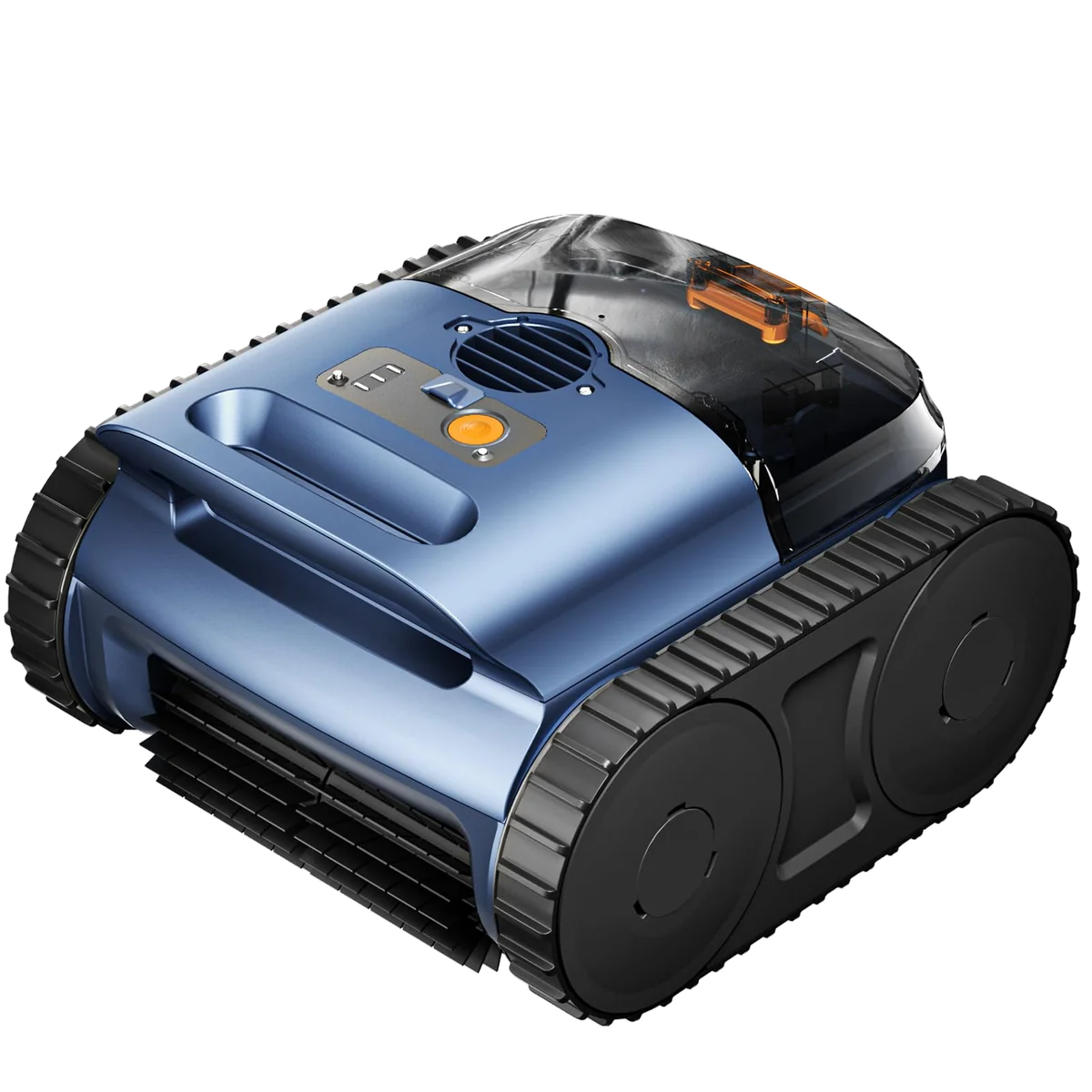
Skip the Nepturox SAT25 unless cord-free wall cleaning matters enough to accept a meaningful risk of an immediate return and unresolved long-term support.
The bottom line
A functional Nepturox SAT25 appears capable of doing real work. It can reduce routine vacuuming, handle common debris, climb accessible walls and spare the owner from managing an in-water cord. That is enough to reject the idea that inexpensive cordless robots are automatically useless.
It is not enough to recommend this one broadly. Serious first-unit failures, a middling captured rating, inconsistent navigation reports, unsettled fine-debris performance and missing answers about the warranty, parts and battery service make the ownership risk more important than the feature count. Smart Pool Bots would pass unless cordless convenience is the overriding requirement and the buyer is fully prepared to inspect, test and possibly return the unit immediately.
That is a harsh verdict for a cleaner whose functional examples appear genuinely useful. The SAT25 has picked up leaves, small particles and ordinary settled debris for owners, and several accounts support its ability to climb walls rather than merely patrol the floor. Cordless operation also removes the hose or floating cable that makes some pool cleaners more irritating than the work they are meant to save.
The problem starts before cleaning does. Among the nine retained owner reviews, two people received first units with severe electrical or charging failures: one would not hold a charge or operate unplugged, while another sparked at the charging connection and never started. The second owner received a functional replacement, but its box omitted the retrieval hook supplied with the original unit. Two failures in a group this small cannot establish a dependable failure rate, yet they are far too serious to dismiss as minor setup complaints.
Amazon also showed a captured aggregate of 3.8 stars from 240 ratings. That score does not identify which component disappoints buyers, so it cannot prove a widespread electrical defect, poor navigation or weak filtration. It does, however, sit awkwardly beside listing language that promises intelligent mapping, comprehensive coverage and dependable performance.
The decision in one minute
Consider the SAT25 only if the pool is already maintained, the main debris is leaves and ordinary grit, and returning a defective unit would be an inconvenience rather than a crisis. Pass if dependable weekly automation, verified fine filtration, accessible replacement parts or an established service path matters more than avoiding a cord.
Key Specifications
What the SAT25 gets right when it works
It tackles the part of pool care a robot can realistically reduce
A robotic cleaner carries its own drive, intake, brushes and debris basket, so it can work independently of the pool’s suction or return plumbing. The practical payoff is less manual vacuuming and brushing, not the disappearance of pool maintenance. The circulation system, sanitizer, water balance and main filter still have their jobs, while floating leaves may still require a skimmer. Our guide to how robotic pool cleaners work explains that division of labor in more detail.
Working SAT25 units have handled that narrower assignment credibly. The strongest owner account describes successful pickup of very small particles and larger leaves, a fine-feeling mesh basket that is easy to empty, and a substantial reduction in manual work after repeated cycles. Other owners praise the simple drop-in routine and the absence of a cable or pressure-side connection.
A direct product demonstration adds useful visual evidence without settling long-term performance. The robot left a visible clean path, climbed steps and a wall, and returned with grass, dirt, sand and small rocks in its basket; the same demonstration showed straightforward top access for removing and rinsing the filter.
The tracks are more convincing than the sonar story
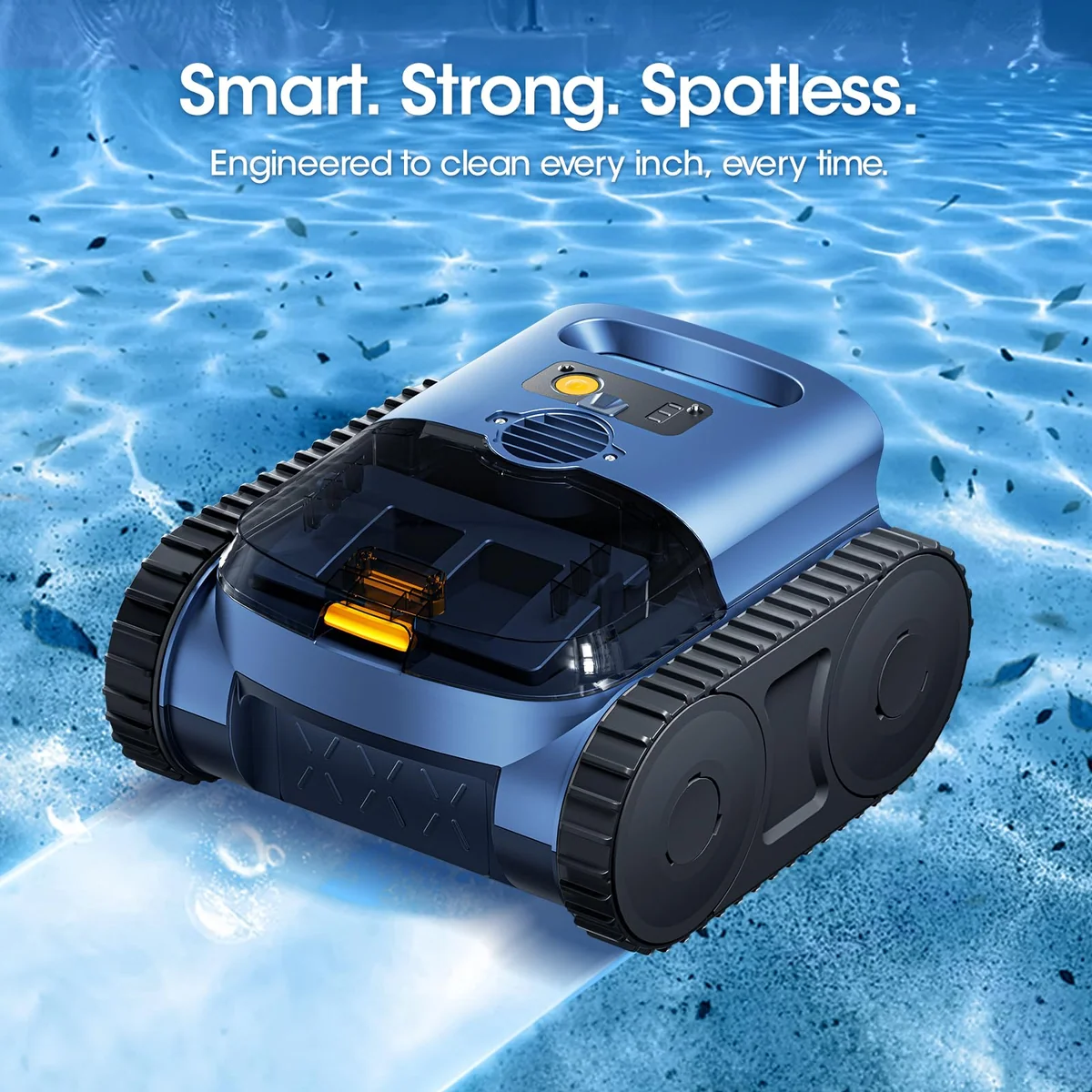
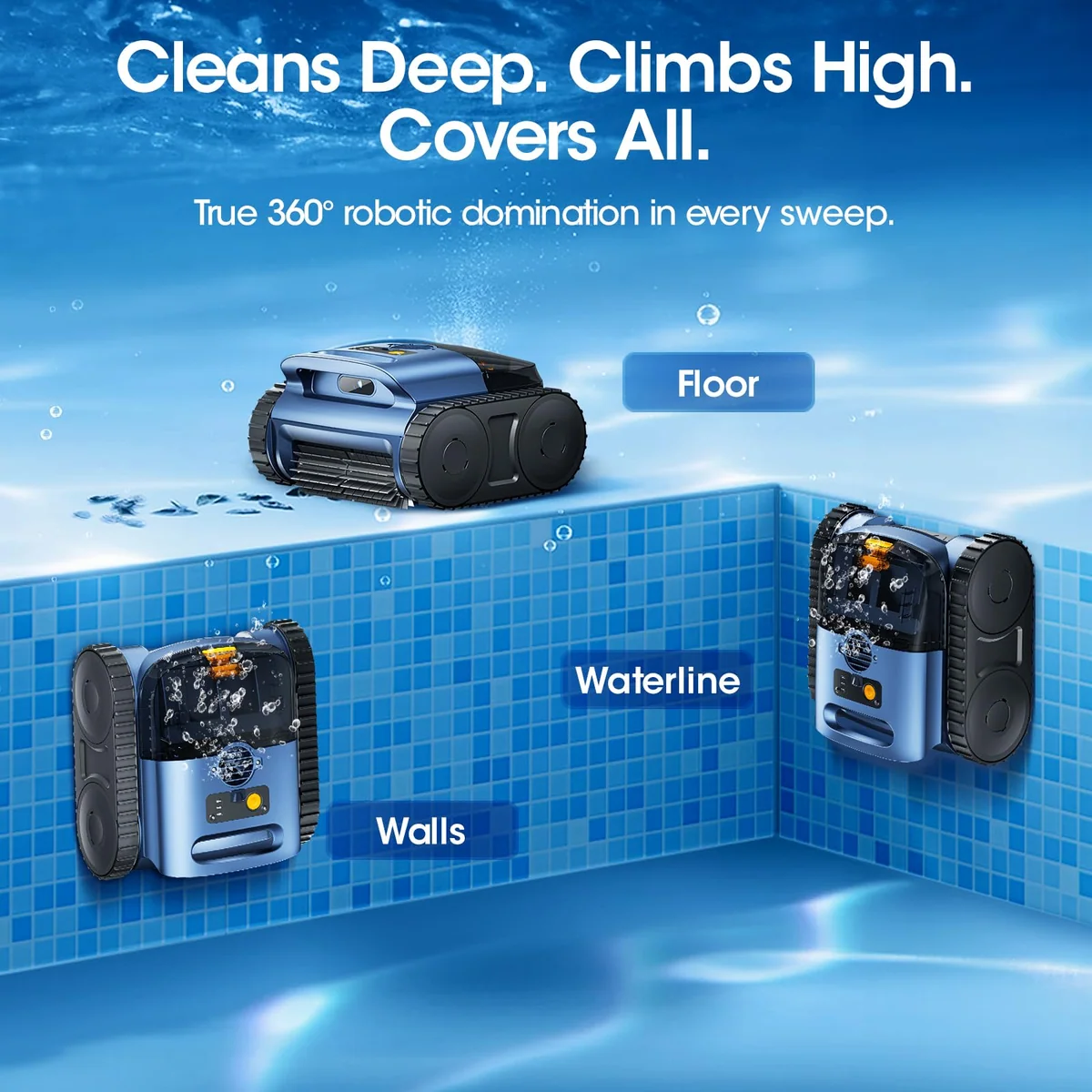
Wall climbing is the SAT25’s best-supported premium feature. Multiple owners saw it hold against shallow-end and deep-end walls, and direct product footage shows successful floor-to-wall and step transitions. A separate product review also observed planted track movement and waterline contact.
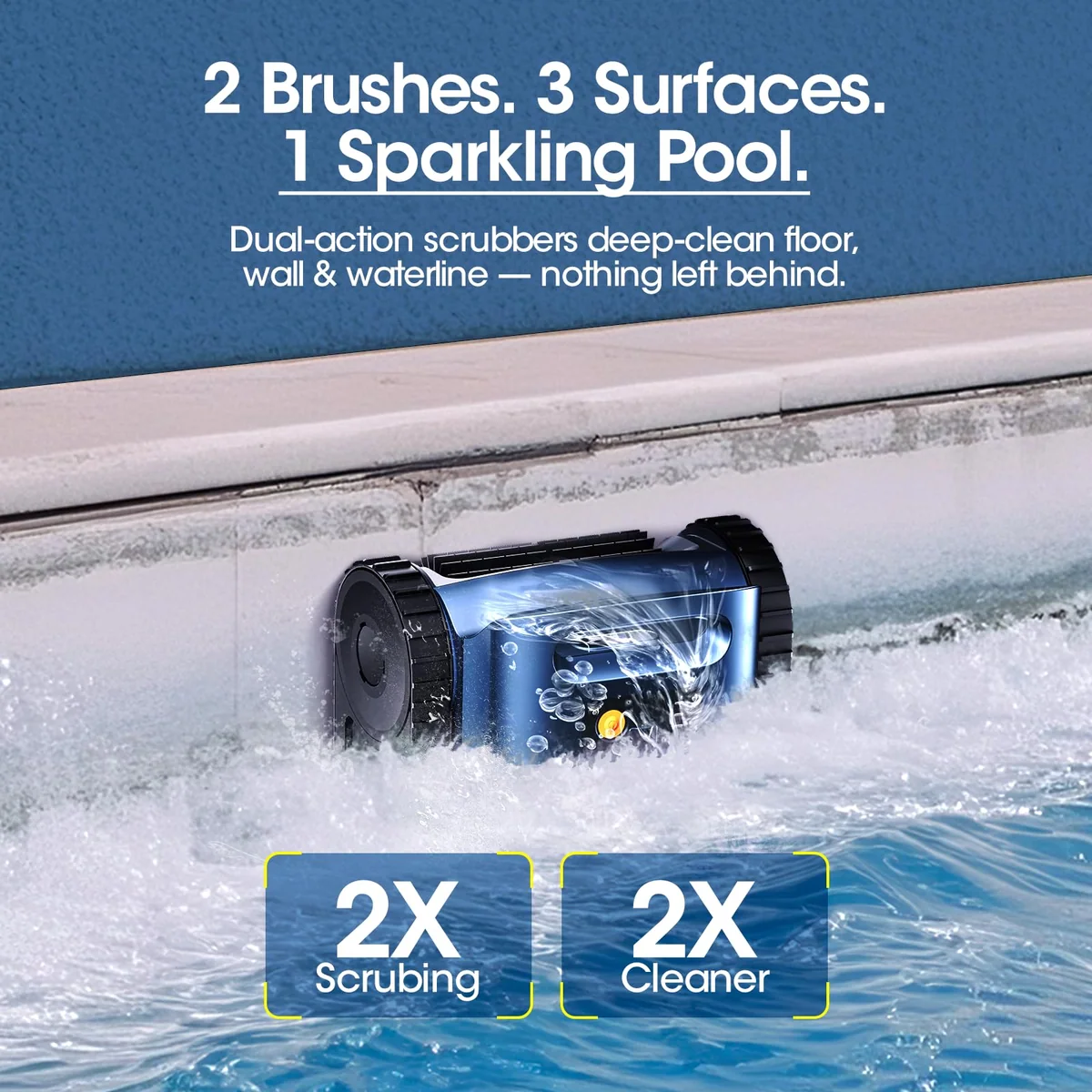
There are conditions attached. One owner found that wall climbing stopped after only a modest amount of debris entered the basket, then returned after the basket was emptied. Another account describes decent rather than exceptional algae scrubbing, and the direct review warns that slick algae can reduce traction. The SAT25 is therefore better suited to preventing routine buildup than stripping an established layer from a neglected wall.
Owners of vulnerable finishes should pay particular attention. One reviewer found a small amount of pool-surface material in the basket after the rubber brushes worked the walls. That does not establish a general surface-damage problem, but it is enough reason to inspect an older or deteriorating finish after the first short cycle rather than assuming the listing’s broad compatibility claim settles the question.
The controls favor simplicity over software
The operating routine is refreshingly plain: charge the cleaner, choose floor-only, wall-only or combined cleaning, submerge it until trapped air escapes, and release it. Afterward, hook it out, allow it to drain, remove the basket, clean the mesh, dry the charging area and recharge. The direct demonstrations support those physical modes and that workflow.
There is no supported app, live map, remote steering, underwater status view or weekly scheduler. That absence can be a virtue for anyone tired of pairing appliances with a phone, but it prevents the advertised navigation from showing its work. Buyers who want schedules, notifications or manual spot control should treat the SAT25 as a basic autonomous appliance, not a connected pool-management system.
Strengths & Limitations
Strengths
- Cordless operation removes the hose or floating power cable from the cleaning cycle.
- Functional units show credible pickup of leaves, grit and routine settled debris.
- Track-driven wall climbing has stronger support than most of the listing’s other premium claims.
- Three physical cleaning modes keep operation simple for buyers who do not want an app.
Limitations
- Two retained owners received first units with severe charging or electrical failures.
- The warranty, replacement-parts supply and battery-service path remain unclear.
- Navigation can repeat areas or struggle around drains, stairs and skimmers.
- Fine-sediment performance is unsettled because pickup reports conflict with a resuspension complaint.
- Retrieval still requires lifting, draining, basket cleaning, dry-port charging and redeployment.
The claims that survive contact with the evidence
| Claim | Evidence | Buyer’s reading |
|---|---|---|
| 150-minute runtime | The listing states 150 minutes, while several owners informally report roughly two to three hours. | Use 150 minutes for planning and treat longer reports as welcome variation, not a promise. |
| Sonar navigation | One observer saw organized movement, but an owner saw repeated passes, apparently random routing and recurring drain hang-ups. | Sensor-guided movement is plausible; complete mapped coverage is not established. |
| Wall and waterline cleaning | Wall climbing has repeated support, while waterline contact is visible and algae scrubbing receives mixed marks. | Expect useful maintenance on accessible walls, not complete removal of established growth. |
| Fine-debris pickup | Some accounts show or describe sand and small-particle capture, but another owner says the cleaner resuspends sediment by moving too quickly. | Promising for ordinary grit, but unproven for fine silt, pollen and dead algae. |
| Pools up to 2,150 square feet | The number comes from the listing, with no supplied one-cycle coverage test at that size. | Do not size the purchase at the advertised ceiling when complete coverage on one charge is essential. |
| Easy retrieval | Some units finish near an edge and a hook is expected, but one replacement omitted the hook and one owner’s cleaner stopped on the bottom. | Assume a pole and hook will be necessary, then check the box immediately. |
Navigation is the weakest major performance claim
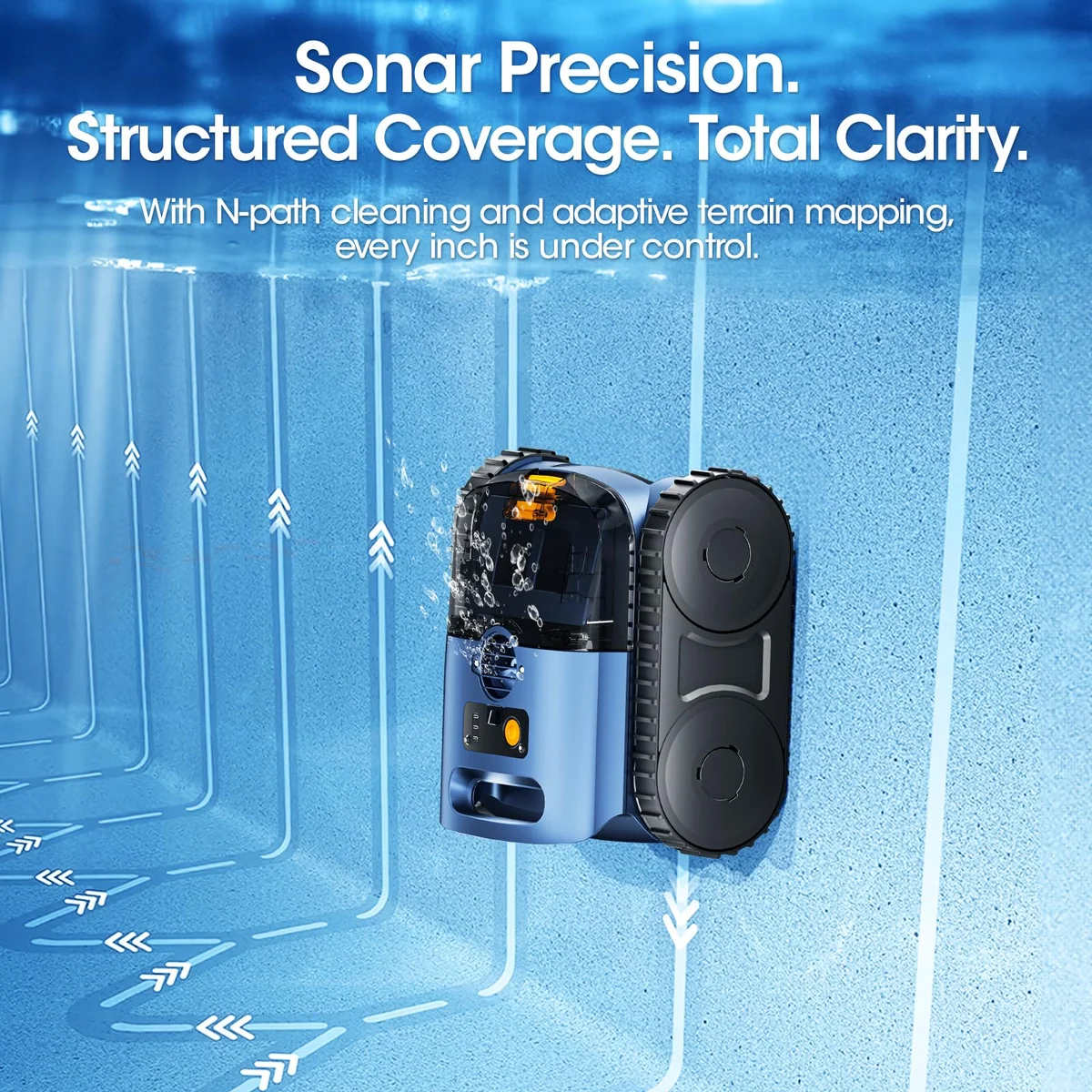
The listing says the SAT25 scans and maps a pool, plans efficient routes and avoids repeating them. It does not explain the sonar hardware, show a map, publish coverage results or describe what happens when an obstacle interrupts the route.
The direct evidence is split. One product reviewer thought its movement looked more deliberate than a basic bounce-and-reverse cleaner, while an owner saw it revisit the same area repeatedly and hang over a main drain more than once. A second owner occasionally saw stair and skimmer hang-ups, though the robot usually escaped without help.
Treat “sonar” as the name of an advertised navigation system, not proof that every section will be covered once. Even strong robots usually leave something behind because pool shape, obstacles, debris placement and wall-cleaning time all affect a cycle. Independent category testing commonly finds less than complete pickup, even among capable machines.
A raised main drain deserves a supervised trial. If the SAT25 repeatedly stalls there, reducing pump speed or switching the pool pump off during the robot’s cycle may reduce the force holding a cleaner near the drain, provided doing so is appropriate for the pool’s operating setup.
Sand in the basket does not prove fine filtration
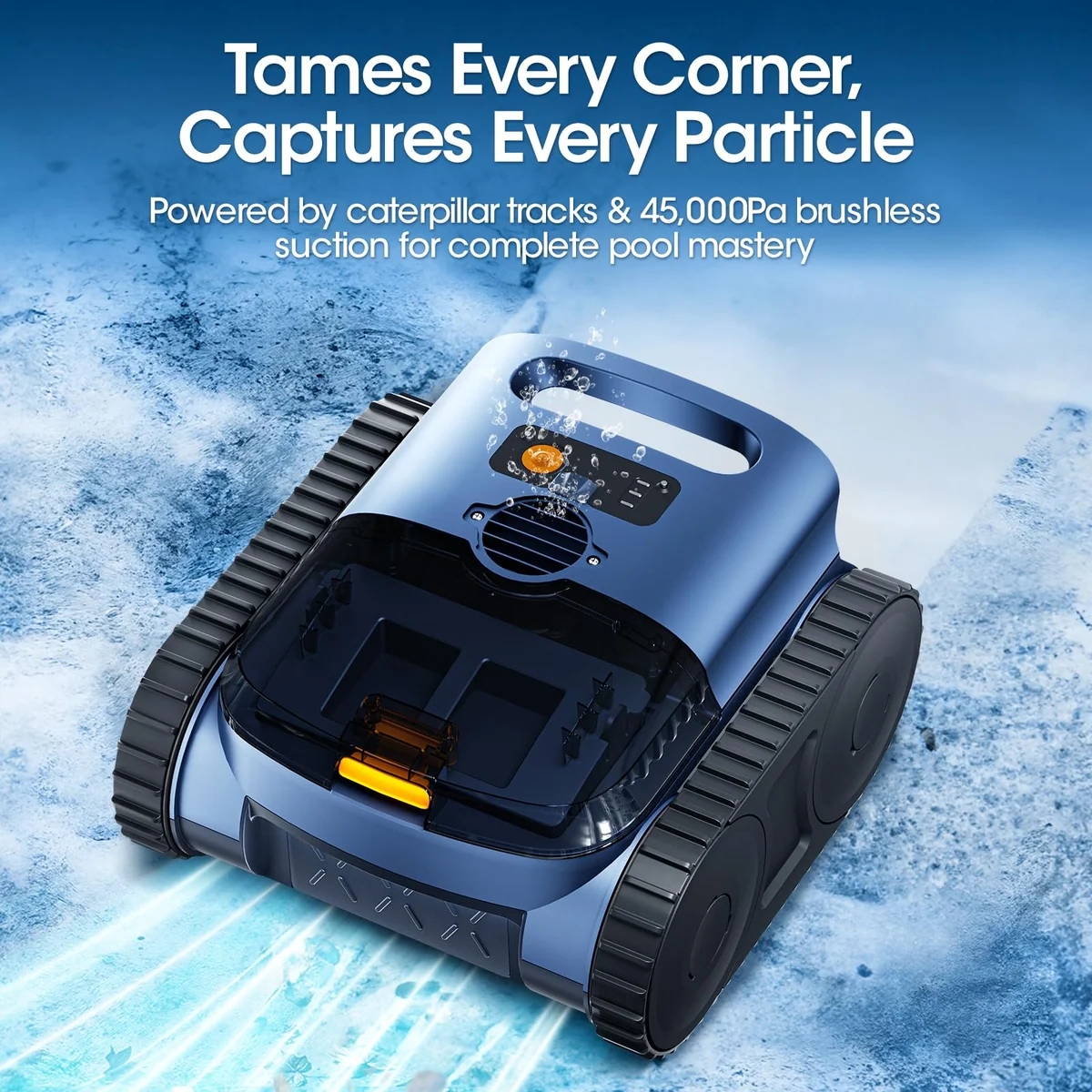
The evidence supports pickup of visible dirt, grass, leaves, rocks and at least some sand. What it does not supply is a dependable micron rating, basket volume or controlled retention test. A robot can lift fine material from the floor, leave a clean-looking track and still exhaust particles smaller than its mesh back into the water.
That distinction matters most in dusty pools. The complaint that the SAT25 moves quickly enough to stir sediment deserves equal weight beside the successful sand-pickup reports. Buyers dealing primarily with silt, pollen or dead algae should look at cleaners selected specifically for fine-debris filtration rather than treating motor wattage as a substitute for a verified filter specification.
Runtime is adequate, but coverage is not the same measurement
The advertised 150 minutes is a useful cleaning window for a cordless machine, and several owners report at least two hours or roughly three hours in informal use. Those reports could reflect mode selection, loose timing or variation between units, so Smart Pool Bots would plan around the stated 150 minutes rather than promote the longest anecdote as the true specification.
A large pool can consume that window without receiving a complete pass. Climbing walls, revisiting sections, escaping obstacles and carrying a filling basket all compete with floor coverage. The 2,150-square-foot figure is therefore a manufacturer ceiling, not evidence that a complex pool of that size will be thoroughly cleaned on one charge. Owners of genuinely large pools should compare options built for greater coverage margin.
Who can justify taking the risk
The SAT25 makes the most sense for an owner replacing a hose-based or manual vacuum routine in a maintained residential pool. Ordinary leaves, grass and grit are a better match than persistent silt, and walls with light routine film are a better match than slick algae or neglected buildup. Above-ground use also has direct owner support, although the listing’s broad compatibility language should not be read as approval for every soft-sided wall, liner condition or pool geometry.
It also suits a buyer who regards the lack of software as relief rather than deprivation. Pressing a physical control and dropping the cleaner into the water is simpler than managing accounts, firmware and underwater connection limits. The trade is that nothing documented here schedules the next run, reports a stall, displays the route or calls the robot to the surface.
The poor fit is clearer. Do not choose this model for a pool near its advertised maximum if one-cycle coverage is non-negotiable. Avoid it when fine silt is the primary problem, when an older finish cannot tolerate experimental scrubbing, or when a prominent drain or complicated shelf layout already traps cleaners. It is also the wrong purchase for anyone who cannot comfortably use a pole and lift the robot after allowing it to drain.
Buyers still interested in battery power should compare the SAT25’s risk profile with the tested and established options gathered in our cordless robotic pool cleaner guide. If predictable ownership matters more than removing the cable, the Dolphin Nautilus CC review examines a simpler corded alternative from a better-established product line.
The bargain is not “premium cleaning for less”
The honest bargain is capable routine cleaning at a lower barrier to entry in exchange for taking on more uncertainty about quality control, filtration, battery life, parts and support. That can be rational for a tolerant buyer with a straightforward pool and an easy return process. It is not rational for someone buying once and expecting years of documented serviceability.
The first week matters more than the feature list
Long-term evidence for the SAT25 is not mature enough to establish battery longevity, track life, brush availability or reliable manufacturer support. The listing does not state a warranty term, repair channel, replacement-battery policy or spare-parts catalog. One retained owner explicitly worried about whether the company would honor support over time, while another published an exchange in which a representative asked for a three-star review to be raised to four stars after a replacement arrived.
“If you want a four-star review, stop shipping a product over which you exercise no quality control.”
That exchange does not prove every support interaction will be poor, but it damages confidence precisely where a new product needs to earn it. A sturdy shell and impressive first cycle cannot answer what happens when a charger, track, basket, brush or internal battery needs replacement.
An arrival-day inspection checklist
- Inspect the charging port and cable before connecting them. Confirm that both are dry, undamaged and properly seated, then watch for normal indicator behavior without sparks, heat or unusual noise.
- Verify every box component. Check for the charger, instructions, retrieval hook and a charging-port cover that fits without improvised cutting or repositioning.
- Run a short, supervised floor cycle. Make sure the cleaner powers on, sinks after trapped air escapes, moves both tracks and collects debris.
- Test wall climbing with a nearly empty basket. Observe the floor-to-wall transition, waterline contact and behavior around the main drain, steps and skimmer.
- Inspect the finish and recovered debris. Look for pool-surface material in the basket and watch whether the exhaust lifts fine sediment faster than the intake captures it.
- Complete a full recharge promptly. Do not wait until the return period is nearly over to discover that the battery will not hold a usable charge.
After each run, retrieve the robot rather than treating the pool as permanent storage, let water drain before lifting, clean the basket and dry the charging connection before recharging. A direct review estimates the SAT25 at roughly 14 pounds dry and notes that the first part of the lift feels substantially heavier while water remains inside.
Frequently Asked Questions
Does the Nepturox SAT25 create a dependable map of the pool?
The listing claims scanning and mapping, but the supplied evidence does not confirm a visible map, complete coverage or consistently non-repetitive routing.
Can the SAT25 clean walls and the waterline?
It has credible evidence for wall climbing and waterline contact, but a filling basket, slick algae and awkward geometry can reduce its effectiveness.
How long does the Nepturox SAT25 run on one charge?
The official claim is up to 150 minutes, although several owners informally report runtimes of roughly two to three hours.
Is the SAT25 a hands-free pool cleaner?
It cleans autonomously during a cycle, but the owner must still retrieve it, let it drain, clean the basket, dry the charging area, recharge it and put it back.
Will the SAT25 remove algae from a neglected pool?
It may loosen light wall film, but it does not replace chemical correction, circulation, filtration and manual brushing for established algae.
Is Nepturox the same brand as Neptune or Neobot?
No, this review covers the Nepturox SAT25 sold under ASIN B0GRB4FQ1D, so specifications from similarly named Neptune and Neobot cleaners do not apply.
Sources (3)
- Amazon listings and customer reviews — Nepturox Sat25
- Owner and reviewer video, 3 channels
- Pcworld — Article — www.pcworld.com