The Beatbot Sora 30 Is the Best Robotic Pool Cleaner for Most Vinyl Liner Pools
A vinyl liner does not need a robot with the softest marketing language; it needs a machine that can stay planted without depending on rough plaster for traction, negotiate the pool’s actual transitions, collect the debris that falls there and finish without turning every wrinkle, drain or curved step into a trap.
The vibrant-orange Beatbot Sora 30 earns our overall recommendation because its owner record includes successful cleaning in a vinyl-lined inground pool with steep walls, curved edges and substantial elevation change. That owner reported effective pickup, strong battery life and no trouble at the drain, stairs or unusual corners. Other Sora 30 owners describe credible floor, wall and waterline cleaning, easy basket access and useful surface parking after a cycle.
The important caveat is filtration. The included basket is rated at 150 microns, which suits leaves, insects, grass and ordinary visible dirt better than storm dust, pollen, dead algae or cloud-forming silt. Beatbot sells finer filtration separately, and one exact owner reported that the robot repeatedly lost contact with the floor and shut down after the optional filter was installed.
Buy it when the liner is not the only challenge
The Sora 30 makes sense when a vinyl pool also has steep walls, a deep end, curved transitions or a broad tanning ledge that cheaper floor cleaners tend to ignore. Its platform system is advertised for submerged areas with roughly eight inches of water, although the robot still needs enough width and a workable approach for both tracks.
Skip it when the pool is simple or dusty
A flat above-ground pool that only needs its floor vacuumed does not justify paying for shallow-platform sensors, wall climbing and surface parking. A pool plagued by powdery sediment needs a cleaner chosen for dependable fine filtration rather than a machine whose standout talent is negotiating complex geometry.
Vinyl compatibility is not a single yes-or-no specification. A successful report from one liner pool shows that a cleaner can work in that environment, but it cannot guarantee the same result on every seam, wrinkle, cove, drain cover, staircase or aging surface. The first cycle should therefore be treated as a fit inspection, not a ceremonial launch followed by three unattended hours.
At a Glance: All Robotic Pool cleaners for Vinyl Liner pools Compared
| Feature | Editor's Pick Beatbot Sora 30 | Nepturox SAT25 | Lodoba SAT20 Pro | Beatbot Sora 30 Pool Vacuum | Dolphin E10 |
|---|---|---|---|---|---|
| Price Range | $500–$1,000 | $200–$500 | $200–$500 | $500–$1,000 | $500–$1,000 |
| Claimed runtime | Up to 300 minutes of floor cleaning from a 10,000 mAh battery | Up to 150 minutes | Up to 190 minutes | — | — |
| Check Price on Amazon | Check Price on Amazon | Check Price on Amazon | Check Price on Amazon | Check Price on Amazon |
The ranked choices, including the duplicate Sora 30 color
This shortlist contains five listings but only four distinct cleaner designs because the two Sora 30 ASINs are color variants of the same RCMPM021 model. We rank the orange listing as the editorial winner, then retain the blue listing because it is a separate product offered on this page; there is no supported performance reason to buy one color over the other.
1. Beatbot Sora 30 — The vibrant-orange Beatbot Sora 30 is our best overall pick.
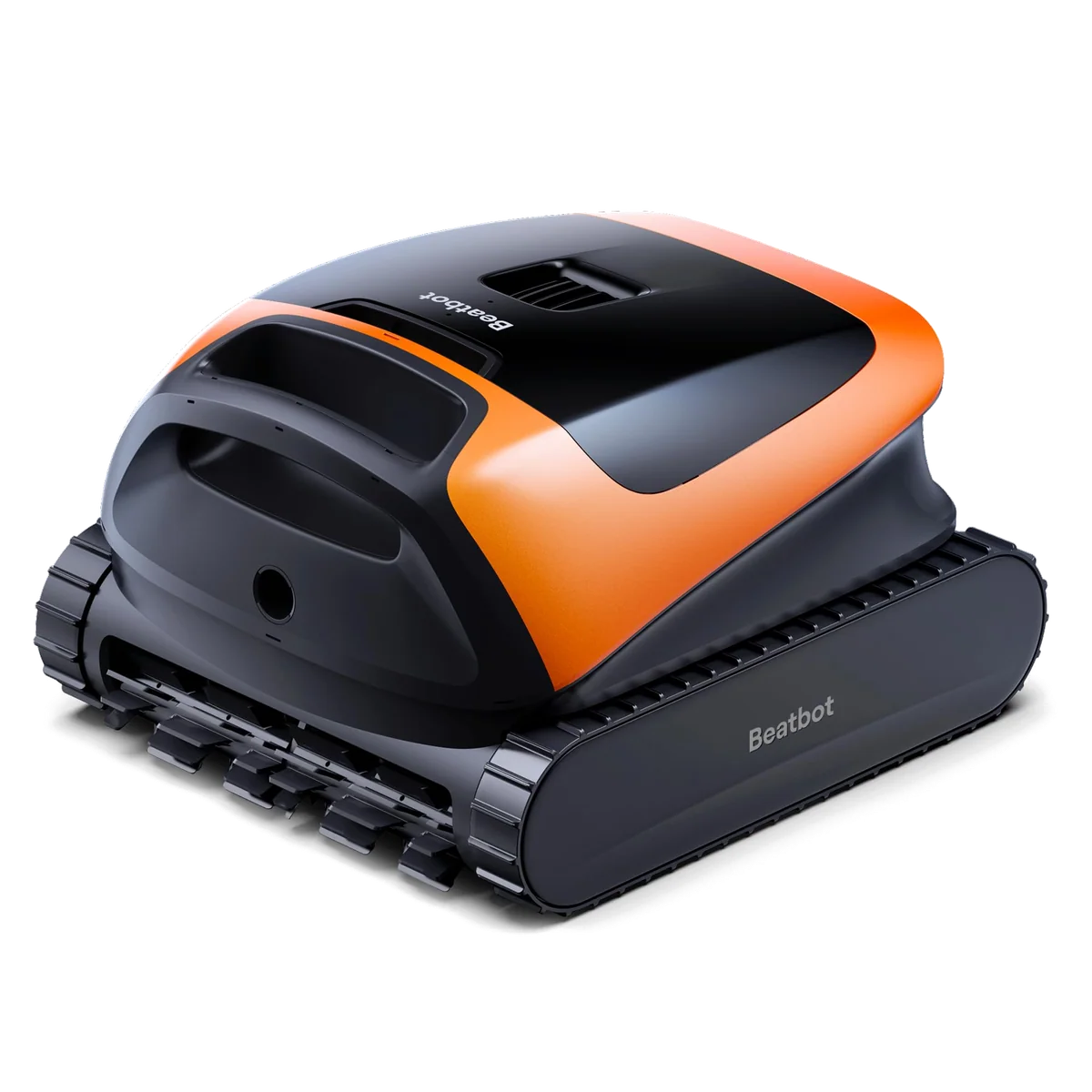
The Sora 30 earns first place with credible vinyl-pool performance, capable floor and wall cleaning, unusually useful shallow-platform coverage, a large top-load basket and surface parking that can reduce the strain of retrieval.
The included 150-micron filter is poorly matched to persistent fine silt, and the app, detachable cover and separately sold ultra-fine filter introduce avoidable frustration.
This is the most convincing match for an inground vinyl pool whose shape matters as much as its finish. One exact owner used the cleaner in a vinyl-lined pool that ran from a three-foot shallow end to an eight-foot deep end with steep walls and curved edges. The robot cleaned effectively, had ample endurance and did not become trapped on that pool’s drain, stairs or corners.
Other owners add support for routine leaves, grass, insects, petals, seed pods and visible dirt. Several describe strong wall climbing and waterline contact, while large-pool reports indicate that a three-hour mixed-surface cycle can leave substantial charge in reserve. Those accounts do not prove perfect coverage at the advertised 3,229-square-foot ceiling, but they make the battery claim more credible than a specification alone.
Its special reason to exist is a broad submerged shelf or ledge. Beatbot advertises platform cleaning down to about eight inches of water, using front-facing and downward sensors to recognize approaches and drop-offs. Narrow curved steps remain less dependable because the cleaner still needs room to plant both tracks, turn and remain submerged.
Surface parking is useful but not magical. The robot is designed to rise, drain and remain afloat when a normal cycle ends or its charge becomes low, yet owner reports show that Eco mode or an incomplete return can still leave the retrieval hook in service. The app is best regarded as a deck-side configuration and notification tool, not a live underwater remote control.
Strengths
- Qualifying tanning ledges and broad shallow platforms receive unusually credible cleaning coverage.
- Floor, wall and waterline performance is convincing for routine leaves, bugs and ordinary dirt.
- The 10,000 mAh battery has substantial reserves in several large-pool owner reports.
- The 5-liter top-access basket is spacious and simpler to rinse than many multi-part filter assemblies.
- Surface parking and drainage can make retrieval much easier than pulling a water-filled robot from the bottom.
- Cordless operation removes the cable without sacrificing credible wall climbing or long runtime.
Limitations
- The included 150-micron filter is a poor match for persistent pollen, storm dust, dead algae and the finest silt.
- The optional ultra-fine filter is separate, and one owner reported a severe mobility failure after installing it.
- The app cannot provide dependable live communication while the cleaner is submerged.
- Narrow steps, curved approaches and shallow shelves below about eight inches remain uncertain territory.
- Parking can fail or leave the floating robot out of reach, so the retrieval hook is still necessary.
- The detachable cover, unusual toggle and proprietary plug expose cost-cutting in daily use.
- Long-term battery durability and owner-serviceable replacement economics are not established.
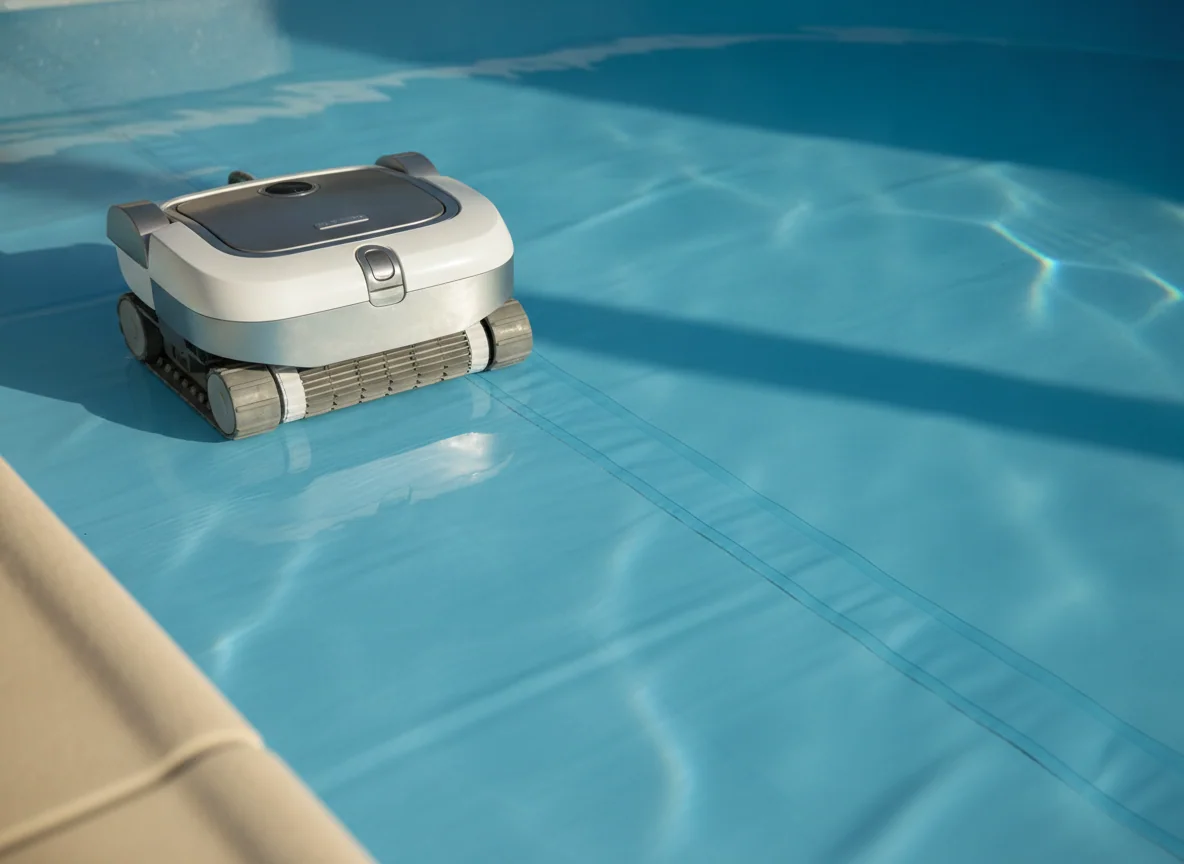
2. Nepturox SAT25 — The Nepturox SAT25 is a capable gamble rather than a safe second choice.
A working SAT25 can collect ordinary leaves and grit, climb walls and provide simple cordless operation in a vinyl-compatible design.
Severe first-unit charging failures, inconsistent navigation and unanswered questions about warranty service, parts and battery replacement make ownership risk its defining feature.
Nepturox lists vinyl among the SAT25’s intended surfaces and supplies floor-only, wall-only and combined modes. Owners of functional units describe useful debris pickup, straightforward basket care and credible wall climbing, so this is not merely a shell built around an ambitious feature list.
The evidence becomes much less comfortable at the charger. Two retained owners received first units with serious electrical or charging failures: one would not hold a charge or run unplugged, while another sparked at the charging connection and never started. The replacement in the second case worked, but its package omitted the retrieval hook and the support exchange focused on changing the owner’s rating.
Vinyl owners also have a reason to supervise the brush action. One owner found a small quantity of pool-surface material in the basket after wall cleaning. That does not prove a liner-damage pattern, but it is enough to justify a short first cycle and a careful inspection of the surface, recovered debris and high-contact areas before regular use.
Choose the SAT25 only if removing the cord is important, the pool is straightforward, the return process is practical and an early exchange would be irritating rather than disastrous. It is a poor foundation for unattended weekly maintenance when dependable support matters more than a long specification sheet.
Strengths
- Cordless operation removes the hose or floating power cable from the cleaning cycle.
- Functional units show credible pickup of leaves, grit and routine settled debris.
- Track-driven wall climbing has stronger support than most of the listing’s other premium claims.
- Three physical cleaning modes keep operation simple for buyers who do not want an app.
Limitations
- Two retained owners received first units with severe charging or electrical failures.
- The warranty, replacement-parts supply and battery-service path remain unclear.
- Navigation can repeat areas or struggle around drains, stairs and skimmers.
- Fine-sediment performance is unsettled because pickup reports conflict with a resuspension complaint.
- Retrieval still requires lifting, draining, basket cleaning, dry-port charging and redeployment.
3. Lodoba SAT20 Pro — The Lodoba SAT20 Pro is the value pick for a simple vinyl pool.
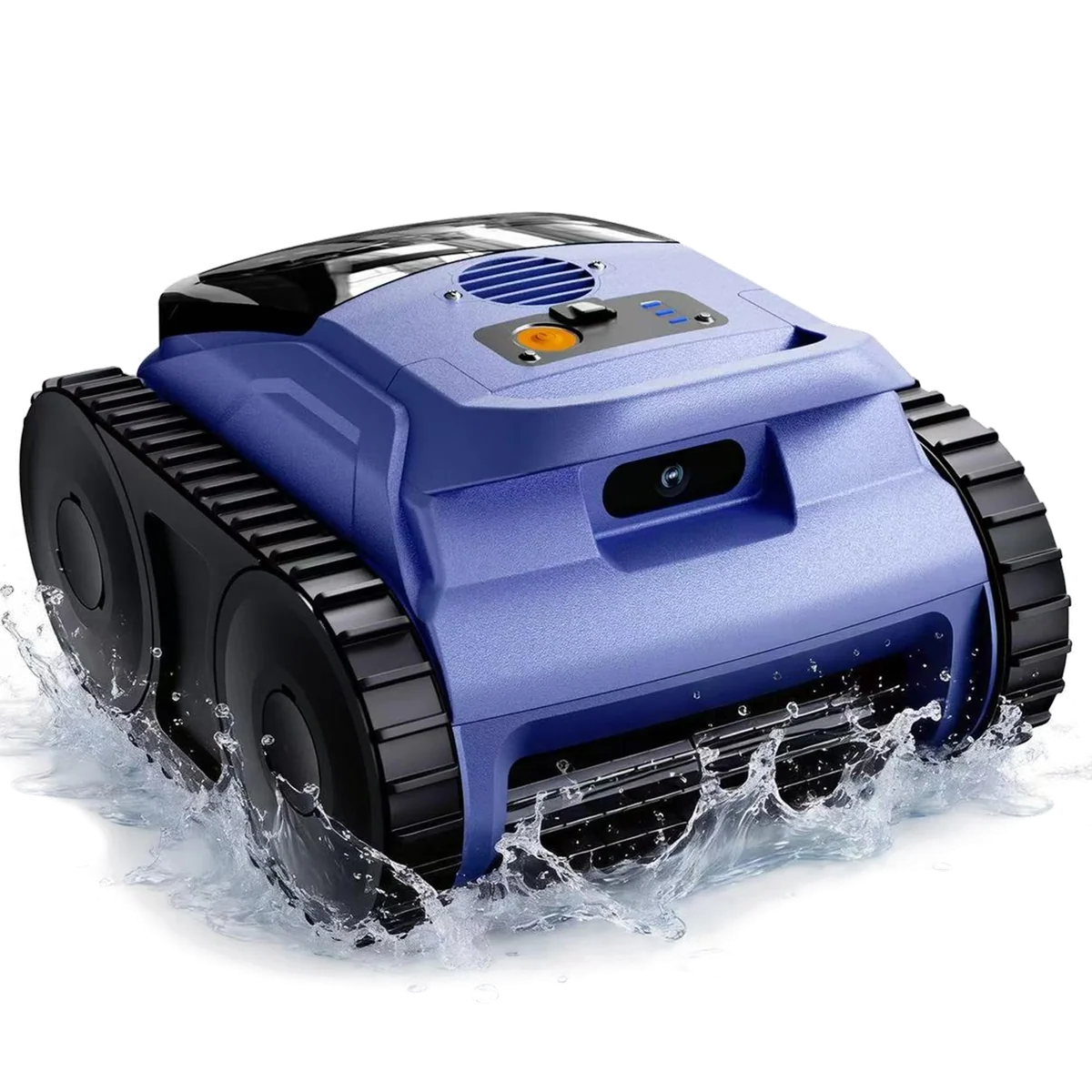
The SAT20 Pro has direct evidence of collecting leaves and sand while climbing and scrubbing the waterline in an above-ground vinyl pool.
Its route can look random, its intake can push debris ahead, and drains, rounded stairs and unreliable edge parking can return the owner to the cleaning cycle.
Lodoba advertises the SAT20 Pro for vinyl, tile and concrete, with floor, wall and combined modes, up to 190 minutes of runtime and a stated 2,150-square-foot pool limit. The listing’s numerical claims have not been independently verified here, but the exact owner record does support genuine cleaning rather than empty movement.
The most relevant report comes from an above-ground vinyl pool. That owner saw wall and waterline scrubbing, useful basket pickup and successful redirection around a ladder and return jets. Another owner reported substantial sand collection, while owners with sloped walls and conventional floors also described useful results.
Geometry decides whether the lower barrier to entry remains good value. One owner reported main-drain hang-ups on about half of the runs, another saw occasional sticking on rounded stairs, and a dissatisfied owner watched the robot repeatedly redirect and push debris without leaving a visibly clean floor. The cleaner also failed to park within easy reach in one deep-end report.
The SAT20 Pro is reasonable for a patient buyer who can challenge it with the actual drain, cove, steps and farthest retrieval point while a return remains simple. It is not the model to buy when the entire purpose is dependable unattended cleaning or when replacement batteries, charging components and local repair support must already be documented.
Strengths
- Setup is simple, with mode selection and drop-in cordless operation.
- Exact owners report useful pickup of leaves, bugs, sand and ordinary debris.
- Wall climbing and waterline scrubbing work well in several compatible pools.
- There is positive evidence from an above-ground vinyl pool and a pool with sloped walls.
- The feature set is ambitious for a value-positioned full-coverage cleaner.
Limitations
- Navigation can look random and may repeat clean areas while missing dirty ones.
- The robot can push debris ahead instead of capturing it in some conditions.
- Main drains and rounded stairs can trap it, while edge parking is not dependable.
- Every cycle still requires retrieval, basket care and battery charging.
- Warranty terms, replacement parts, battery service and repair support remain unverified.
- An owner identified the charging-port attachment as a potentially fragile critical part.
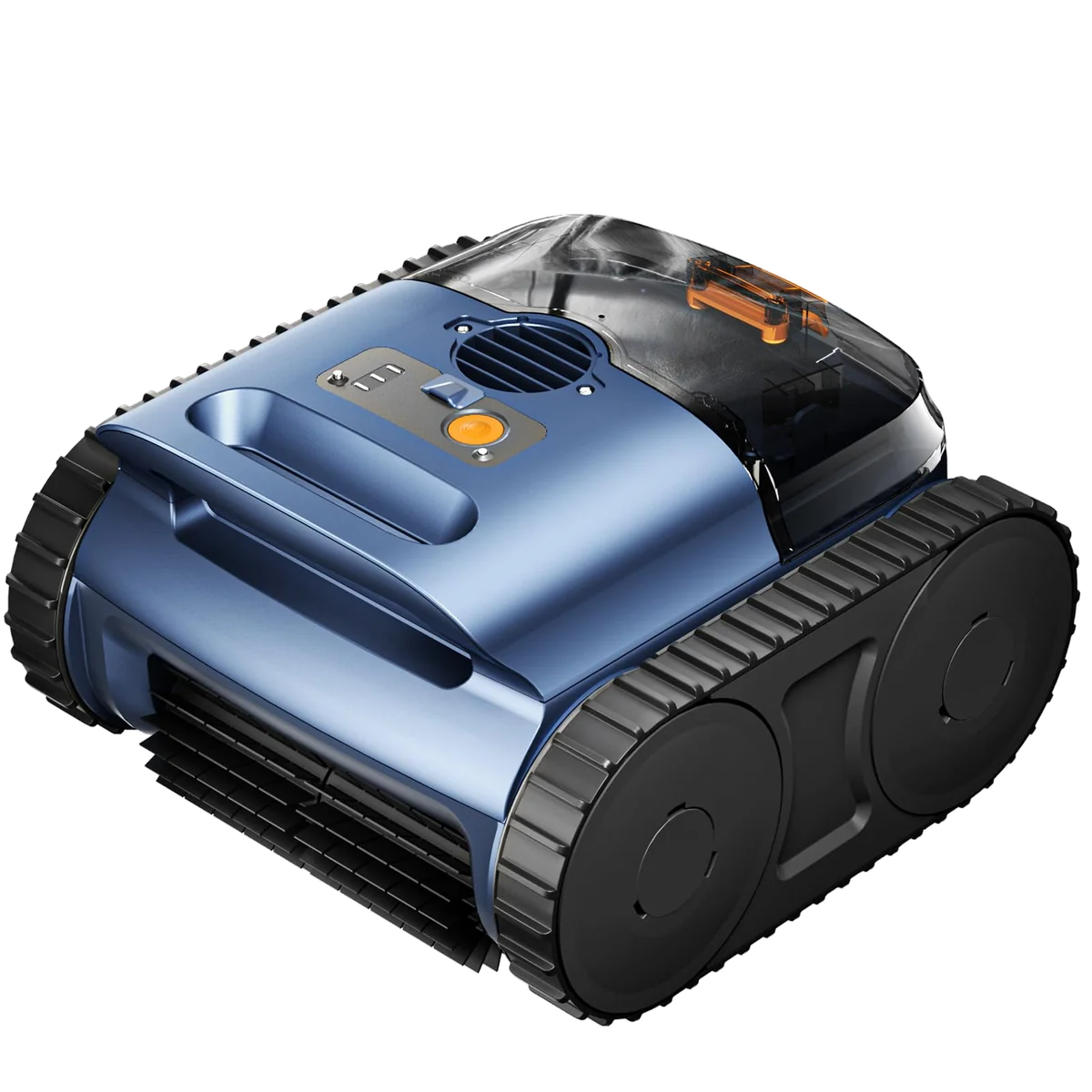
4. Beatbot Sora 30 Pool Vacuum — The deep-blue Beatbot Sora 30 is the same recommendation in another color.
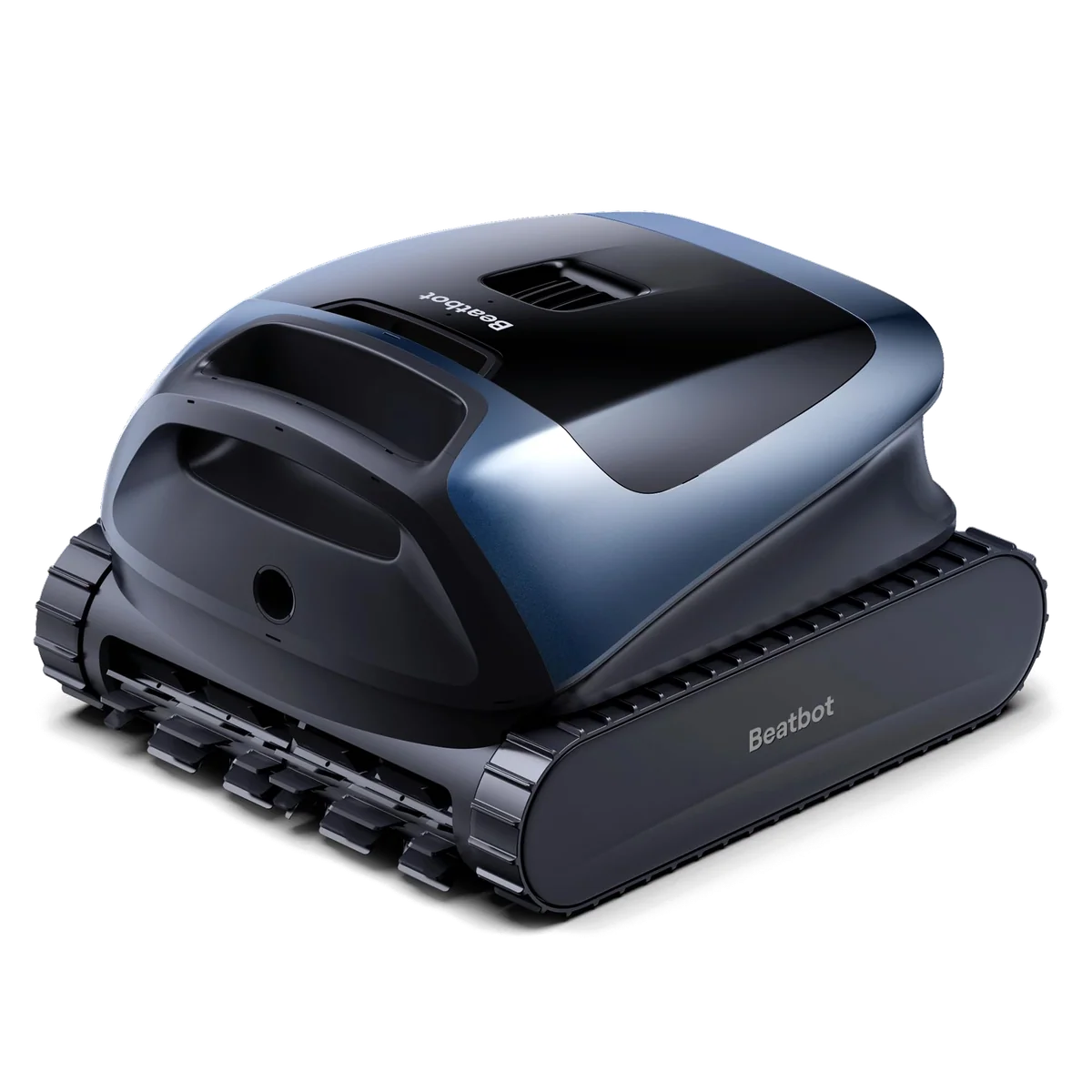
The blue Sora 30 shares the winning model’s credible vinyl-pool cleaning, platform coverage, long cordless cycles, five-liter basket and surface-parking system.
It also shares the ordinary 150-micron filtration, app friction, awkward startup delay and unresolved long-term battery economics, with no documented performance advantage over orange.
The deep-blue listing carries the same RCMPM021 model identity and the same central specifications as the orange listing, including the 10,000 mAh battery, stated five-hour floor runtime, 3,229-square-foot pool rating and platform-cleaning claim. Color is the meaningful distinction in the supplied product record.
Its exact listing’s owner material includes the same especially relevant vinyl-lined inground report: strong cleaning on steep walls and elevation changes, excellent endurance and no observed trouble with that pool’s drain, stairs or corners. It also preserves the less flattering evidence about random-looking logic, a cheap-feeling removable cover, app frustration and a failure associated with the optional ultra-fine filter.
Treat the two Sora 30 cards as variants, not as a meaningful first-versus-fourth comparison. If both versions are otherwise equally suitable, choose by preferred color and purchase terms rather than imagining that the shell color changes brushes, sensors, filtration or liner behavior.
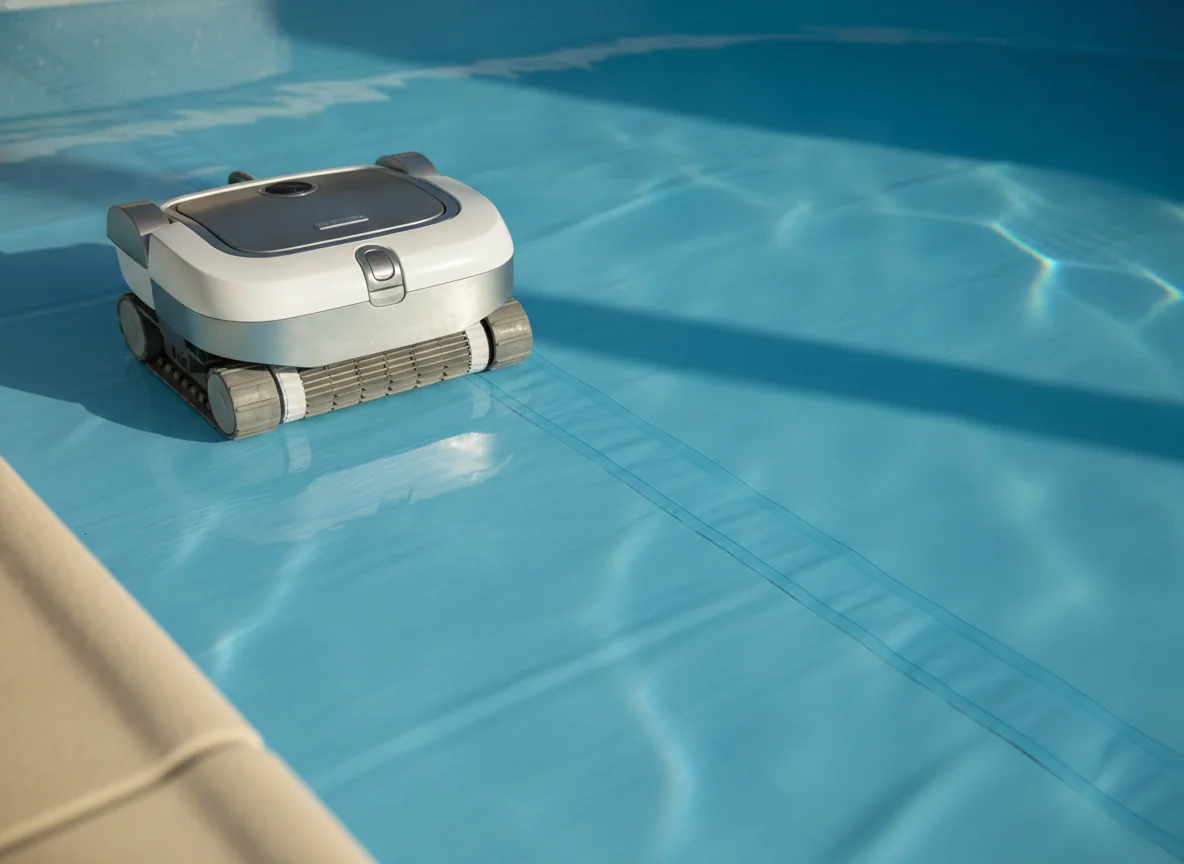
5. Dolphin E10 — The Dolphin E10 is the straightforward floor-only choice for a small above-ground pool.
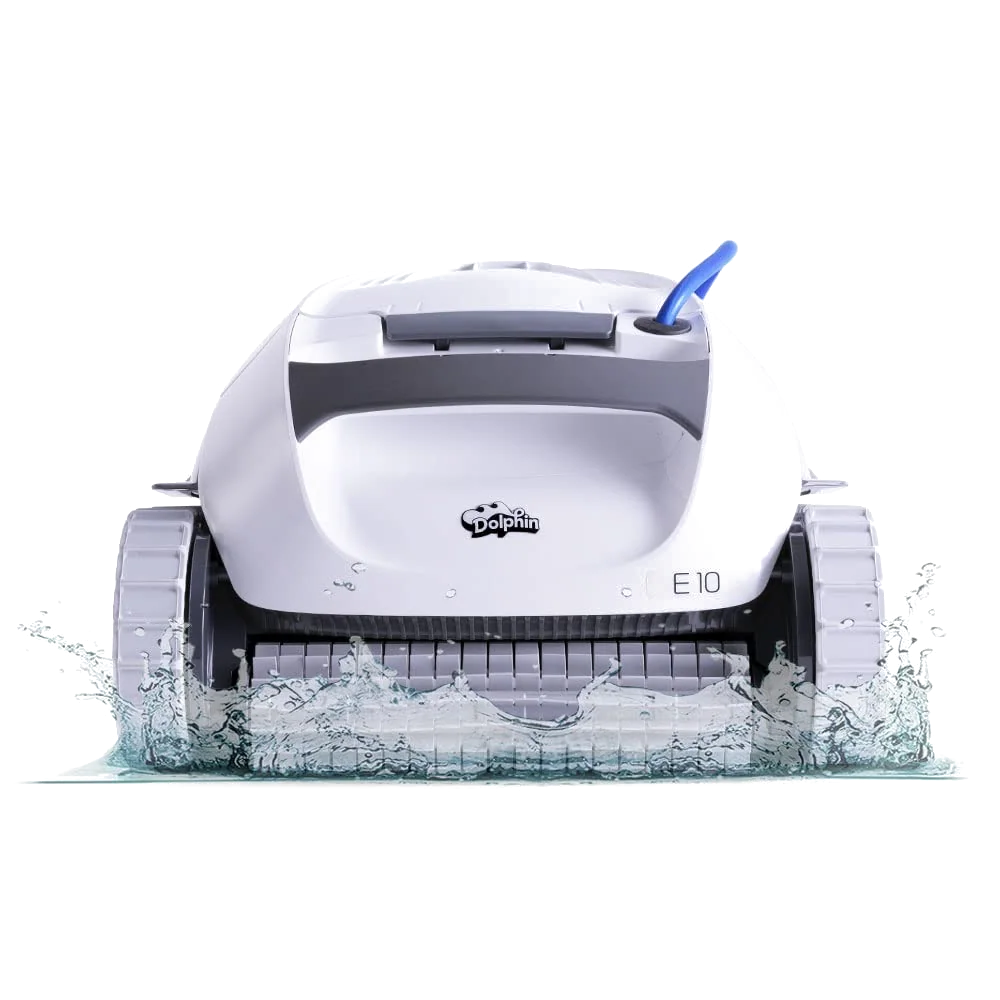
The E10 combines an active floor brush, useful pickup of leaves and sand, repeatable corded power and an easy top-load basket for simple above-ground vinyl pools.
It does not provide verified wall or waterline cleaning, and cable tangles, far-side reach, lid faults, debris leakage and poor support follow-through all appear in the exact owner record.
The E10 is best understood as an automatic floor vacuum rather than a miniature version of every more capable Dolphin. The current listing specifies a 1.5-hour corded cycle, an active scrubber, top-load filter access and use in above-ground pools up to 30 feet long.
Its direct vinyl evidence is useful within that narrow brief. An owner of a 30-by-15-foot oval above-ground pool reported strong pickup of leaves, sand and other debris across a floor with uneven spots. The same report also found that the cable needed untangling after every use and did not quite provide enough reach for the far-side edges.
Wall cleaning is not part of the supported recommendation, so the E10 belongs in a flat, uncomplicated pool where floor debris is the recurring burden. It avoids charging delays and battery aging, but the owner still positions the power supply, manages the cable, starts each cycle, retrieves the robot and rinses the basket.
Inspect the lid and latch before deployment. Exact reports include broken latch tabs on arrival, a cover that sometimes opened during cleaning, debris released back into the pool during retrieval and a unit that stopped after six weeks before support failed to deliver a promised power component. These complaints are not a measured failure rate, but they are serious enough to affect the buying decision.
Strengths
- The active brush and suction handle ordinary floor debris well.
- The top-load basket makes routine emptying and rinsing unusually straightforward.
- Corded power permits another cycle without waiting for a battery to recharge.
- The simple controls avoid app setup and connectivity problems.
- Direct owners report a meaningful reduction in manual vacuuming.
Limitations
- The verified cleaning brief stops at the floor.
- The cable can tangle or limit far-side reach near the advertised pool-size ceiling.
- The included filtration package is not clearly established for dead algae and very fine silt.
- The directly reviewed E10 lacked a weekly scheduler.
- Exact-product reports include lid faults, debris leakage during retrieval, an early failure, and poor support follow-through.
Our #1 Pick: Beatbot Sora 30
Check Price on AmazonVinyl evidence mattered more than the word “compatible”
Smart Pool Bots ranked these cleaners from the exact product listings and retained owner accounts supplied for each ASIN. Manufacturer surface claims were treated as a starting point, not a verdict. Direct reports from vinyl-lined pools carried more weight because they reveal whether a machine actually negotiated a liner pool’s walls, slopes, fittings and retrieval routine.
The Sora 30 and Lodoba SAT20 Pro have the strongest directly relevant reports. The Sora account covers a vinyl-lined inground pool with steep walls, curved edges and elevation change, while the Lodoba account covers an above-ground vinyl pool with a ladder and return jets. The E10 has positive evidence from a large oval above-ground pool, but its supported job stops at the floor.
| Criterion | What earned credit | What lost credit |
|---|---|---|
| Vinyl-pool fit | Exact reports of useful movement and cleaning in a liner pool | A broad compatibility claim without evidence from relevant geometry |
| Cleaning scope | Credible floor pickup plus wall, waterline or broad-ledge coverage where needed | Paying for features that do not address the pool’s actual surfaces |
| Obstacle behavior | Successful transitions, drain crossings, recovery and reachable end-of-cycle parking | Repeated drain hang-ups, rounded-step sticking or deep-end stranding |
| Debris match | A basket suited to leaves, bugs, grit and ordinary settled dirt | Unverified fine filtration or movement that resuspends light sediment |
| Ownership | Simple basket care, credible endurance and a documented warranty where supplied | Electrical failures, fragile charging parts, uncertain service or failed support follow-through |
We did not reward runtime in isolation
A long battery claim is useful only if the cleaner spends that time capturing debris from the surfaces that matter. Repeated passes, wall-climbing time, escape attempts, a filling basket and awkward geometry can consume a cycle without producing complete coverage. The Sora 30’s large-pool owner reports support useful endurance, while the Lodoba and Nepturox records show why runtime cannot rescue random routing or fixture problems.
We kept the two Sora colors separate without pretending they are different machines
Both Sora 30 listings had to be represented because both are products sold by this page. Their matching model identity and specifications make them one cleaning recommendation in two colors, so the editorial winner records one ASIN while the prose makes the shared hardware explicit.
Match the robot to the liner pool you actually own
“Vinyl pool” is too broad to finish the decision. A flat-bottomed round above-ground pool, a 30-foot oval with floor undulations and a deep inground pool with coves, slopes and a tanning ledge place very different demands on the same robot. Start with the surfaces and transitions that consume your manual cleaning time.
A simple floor favors a simple cleaner
If the pool is above ground, the wall does not need robotic scrubbing and the recurring problem is leaves or grit on an open floor, the Dolphin E10’s narrow brief can be an advantage. It starts without charging, actively brushes the bottom and provides top-load filter access, but its cable reach must be checked from the intended power-supply position rather than inferred from pool length alone.
The broader above-ground robotic cleaner guide is the better next step if none of this page’s wall-climbing models fits a simple soft-sided or flat-bottomed pool.
Slopes, coves and walls favor tracks with evidence behind them
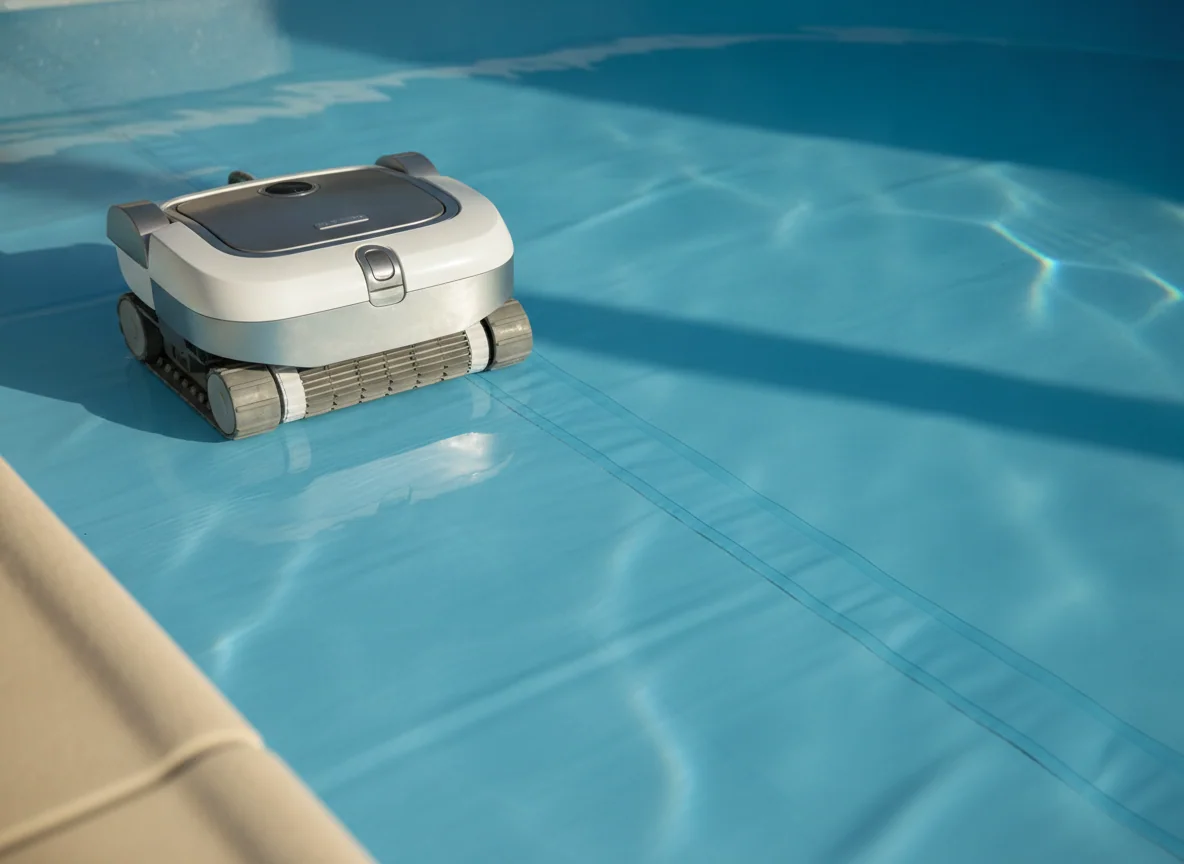
A listing that says “wall climbing” does not tell you whether the robot can establish traction at your floor-to-wall transition. The Sora 30 has the most persuasive evidence here because a vinyl-lined inground report includes steep walls and substantial elevation change. The Lodoba has a successful vinyl report too, but its record also contains rounded-stair sticking and drain hang-ups.
If walls and the waterline are the main reason for buying, compare this shortlist with the dedicated guide to robotic cleaners for walls and waterline rather than assuming every tracked machine spends equal time scrubbing vertically.
A tanning ledge must be measured at the water
Beatbot’s roughly eight-inch threshold refers to water depth over the platform, not the construction drawing’s shelf depth. Width, turn space, the approach angle and fixtures such as bubblers still matter. A broad submerged shelf is the Sora 30’s strongest reason to command more attention than a basic cleaner; a narrow tread or nearly dry sun shelf is not the same task.
Pools dominated by steps, ledges and shallow shelves deserve the more specialized shortlist of robots for complex shallow areas.
Leaves and fine silt require different filters
Leaves, insects, grass and visible grit need a generous basket, a one-way intake and enough flow to capture debris without clogging. Powdery dust, pollen and dead algae need much finer media and careful attention to whether the robot remains planted when that media restricts flow. The Sora 30’s five-liter, 150-micron basket is attractive for the first job and unconvincing for the second.
Readers fighting seasonal leaf loads should use the guide to robotic cleaners for leaves and floating debris, while dusty pools should start with the shortlist for sand, silt and fine particles. An underwater vacuum also does not replace a surface skimmer, regardless of whether its parking routine brings it to the top after cleaning.
Cordless removes the cable but adds a charging ritual
The Sora 30, SAT25 and SAT20 Pro keep a floating power cable out of the pool, which can be valuable around steps, swimmers and existing surface robots. The trade is physical deployment, retrieval, drainage, basket care, drying the charging area and waiting for the battery to recharge. Their apps and navigation systems do not eliminate those jobs.
The E10 answers the opposite annoyance. It is ready for another cycle without waiting on a battery, but its cord can tangle and restrict far-side reach. The site’s corded and cordless comparison separates in-water convenience from the work that moves onto the deck.
The first cycle should challenge the pool’s worst feature
- Inspect the liner before deployment. Record existing wrinkles, loose areas, worn printing, vulnerable seams and any place where debris already collects.
- Start with a short supervised floor run. Confirm that both tracks remain planted, the exhaust does not simply scatter sediment and the basket retains what the intake collects.
- Watch the main drain and floor-to-wall transition. A cleaner that repeatedly stalls on the drain or cannot establish grip at the cove is not suited to that pool merely because it succeeds on open floor.
- Test broad steps and ledges from more than one approach. One successful climb does not prove that the robot can turn, remain submerged and cover the entire shallow area.
- Inspect the basket and liner after wall cleaning. Stop using the wall mode if the recovered material suggests that the cleaner is removing surface material rather than ordinary debris.
- Let the cycle end without assistance. Verify where the robot stops, whether it drains as expected and whether the supplied hook can reach it from a safe position.
- Complete a recharge or cable-storage routine immediately. Early charging faults, fragile connectors and persistent tangles are fit problems, not chores to postpone until the return period is nearly over.
Once a cleaner proves compatible, keep its basket clear and remove stringy debris from the intake and brushes. The site’s pool-robot maintenance guide covers the routine that preserves flow, traction and predictable retrieval.
The final call
Choose the Beatbot Sora 30 when the vinyl pool combines ordinary debris with steep walls, a deep end, curved transitions or a usable submerged ledge. Choose the Lodoba only when value matters enough to accept greater navigation and ownership uncertainty, choose the E10 when floor cleaning is genuinely the whole job, and pass on the Nepturox unless an easy return process makes its reliability gamble tolerable.
Frequently Asked Questions
Can a robotic pool cleaner be used on a vinyl liner?
Yes, several models here have listing or owner support for vinyl pools, but the cleaner still needs to be checked against the liner’s condition, seams, wrinkles and pool geometry.
Which cleaner on this page has the strongest vinyl-pool evidence?
The Beatbot Sora 30 has the strongest overall evidence because an exact owner reported effective cleaning in a vinyl-lined inground pool with steep walls, curved edges and elevation changes.
Are the orange and blue Beatbot Sora 30 different cleaners?
No documented performance difference appears between the two listings, which identify the same RCMPM021 model and matching core specifications.
Will the Beatbot Sora 30 clean a tanning ledge?
It can clean a broad platform with roughly eight inches or more of water when the approach and turning space suit the robot, but narrow steps and awkward curves remain less dependable.
Which model is best for a simple above-ground vinyl pool?
The Dolphin E10 is the clearest floor-only choice when cord management is acceptable, while the Lodoba SAT20 Pro is more suitable when wall and waterline cleaning are also required.
Do these robots remove floating leaves?
No, these are primarily underwater vacuums, and the Sora 30’s surface parking brings it up for retrieval rather than turning it into a continuous floating-debris skimmer.
Which robot is best for pollen, dead algae or very fine silt?
None is an uncomplicated first choice for persistent ultra-fine debris because the supplied records leave filtration questions unresolved or document meaningful accessory limitations.
Does a cordless cleaner run without owner involvement?
No, cordless models automate the underwater cycle but still require deployment, retrieval, basket cleaning, a dry charging connection and recharging before another full run.
Can the Dolphin E10 clean vinyl walls and the waterline?
No verified wall or waterline coverage supports that purchase, so the E10 should be chosen for floor cleaning rather than full-surface maintenance.
What should I inspect during the first cleaning cycle?
Watch the drain, coves, seams, wrinkles, steps and wall transitions, then inspect both the liner and recovered debris before allowing longer unattended cycles.
Our Top Pick
The Beatbot Sora 30 earns the top spot. The vibrant-orange Beatbot Sora 30 is our best overall pick.