Beatbot Sora 30 vs Sora 10: the ledge decides it
Buy the Sora 30 if a properly submerged tanning ledge or difficult transition is worth cleaning, but choose the Sora 10 for an uncomplicated pool because the shared suction claim does not justify upgrading by itself.
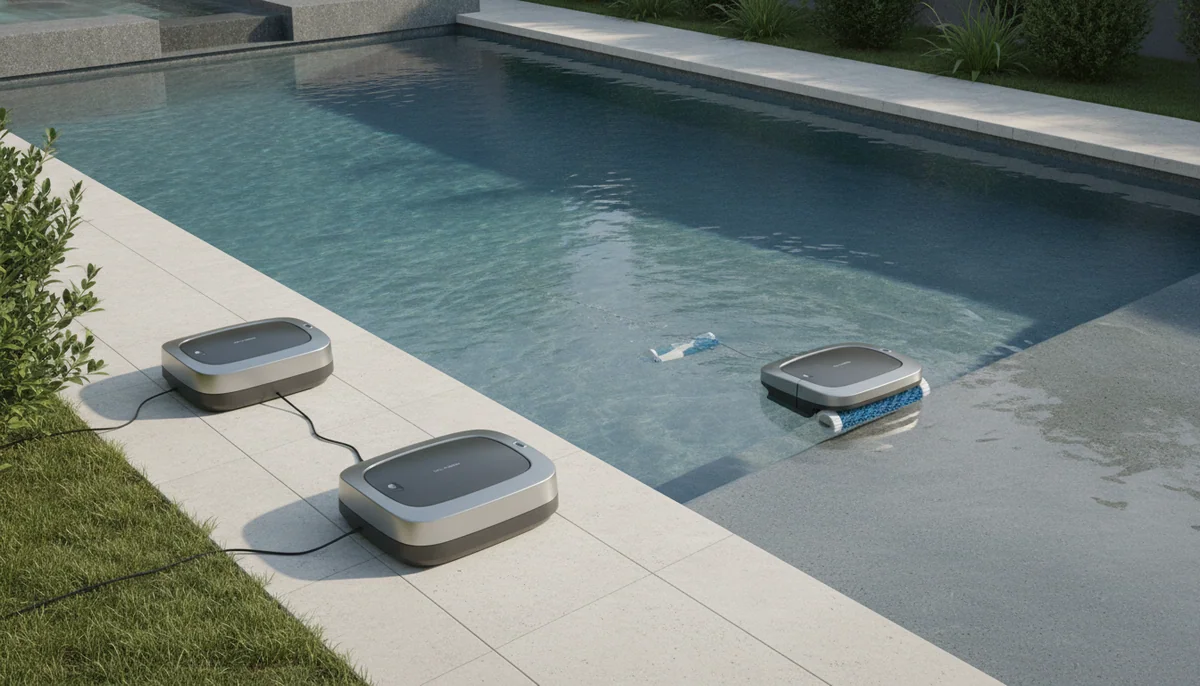
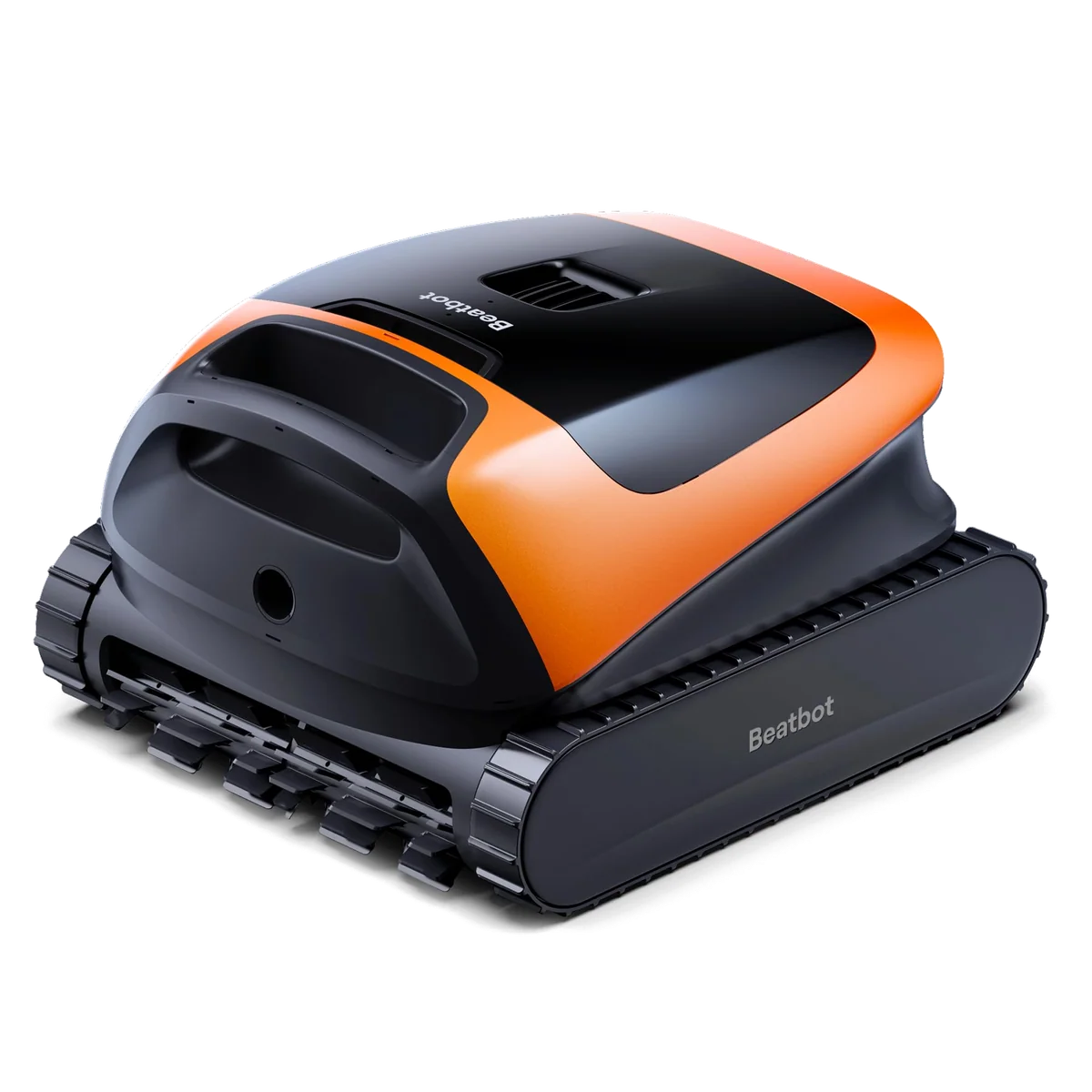
Beatbot Sora 30
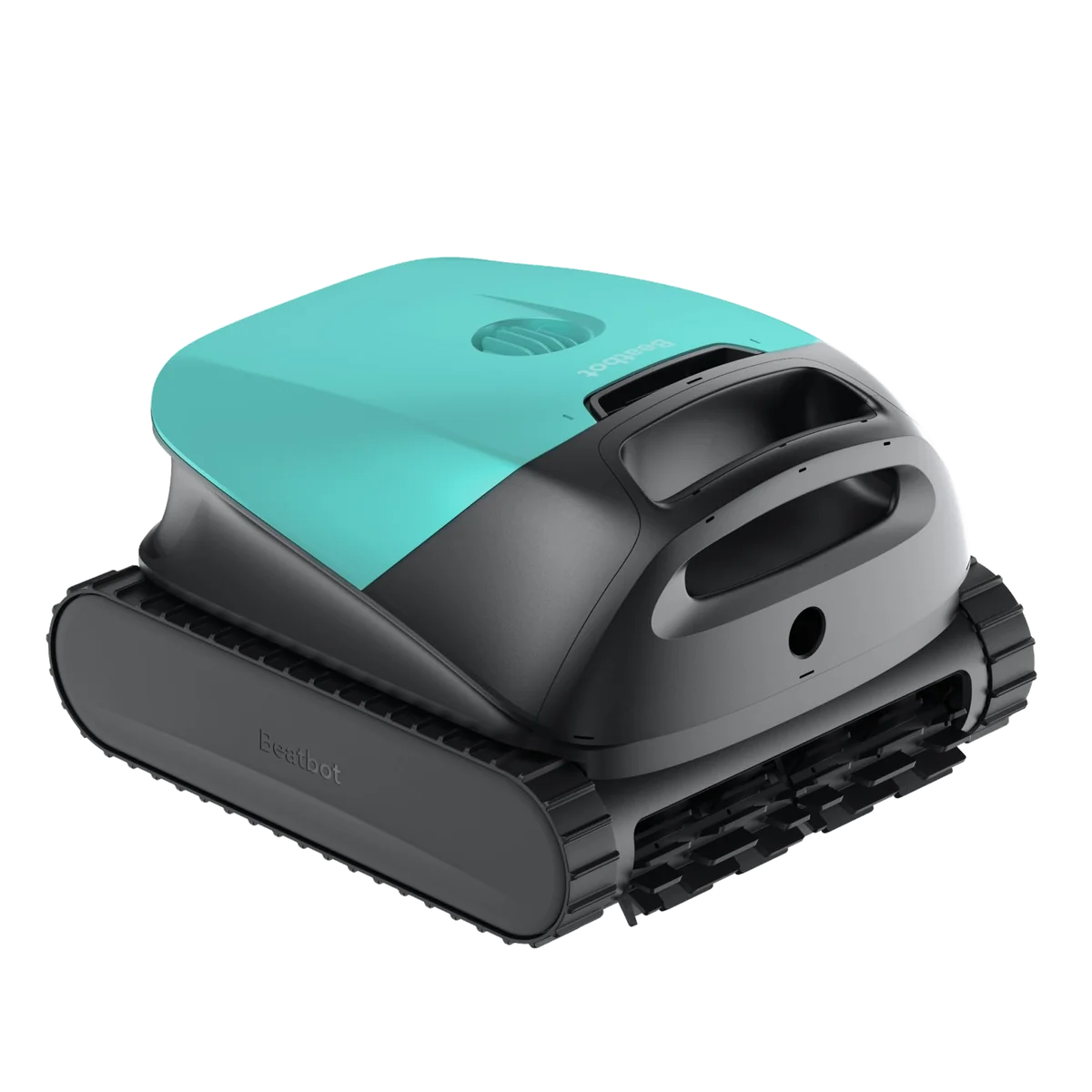
Beatbot Sora 10 Cordless Pool
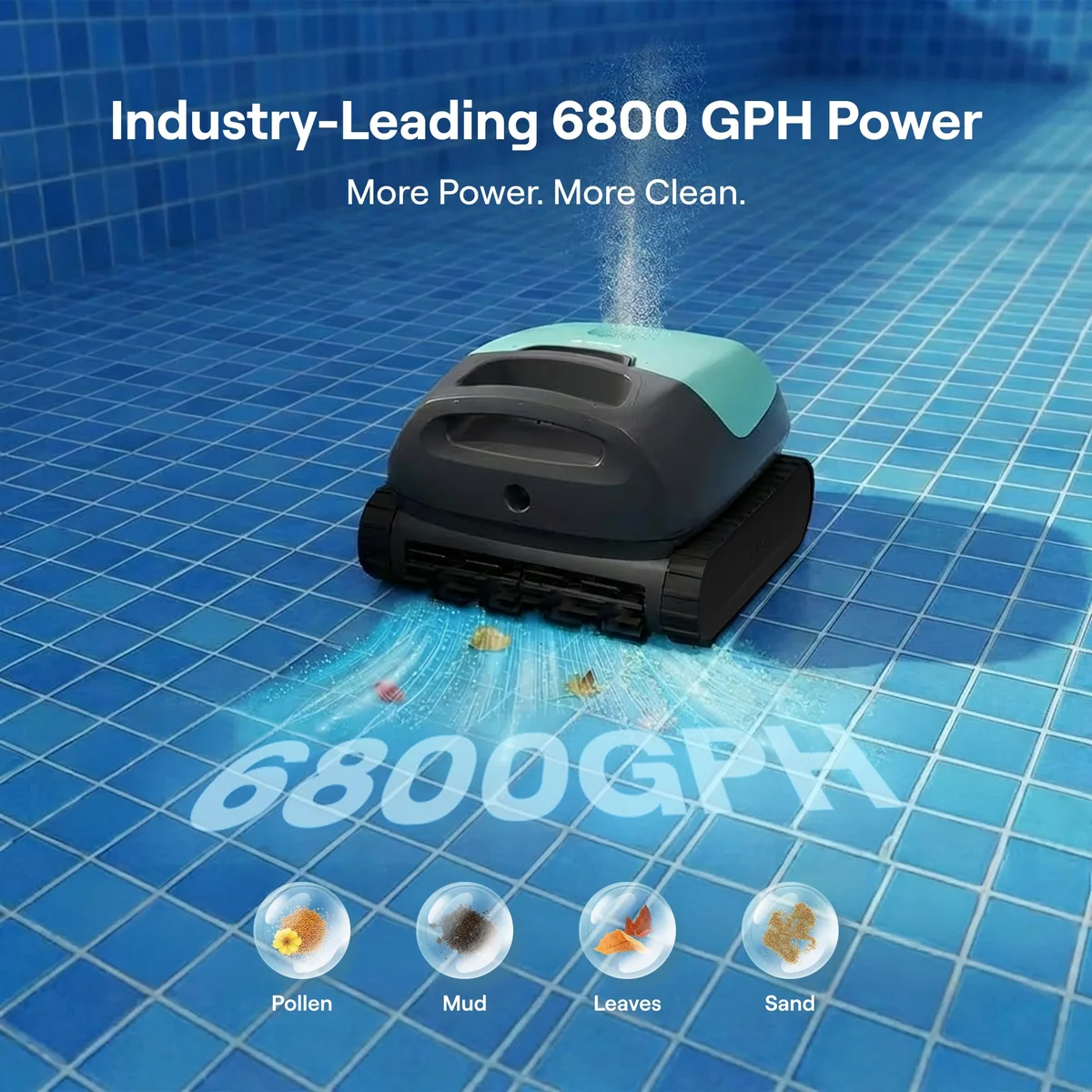
The model numbers suggest a familiar ladder: spend more, get more cleaning power. That is not what separates these two Beatbot robots. Both carry the same manufacturer-stated 6,800-GPH flow figure and both are cordless floor, wall and waterline cleaners with five-liter baskets, so the Sora 30 does not win by vacuuming with a bigger number. It wins by adding the sensing, brush arrangement, battery capacity and persistent surface parking that matter in a pool with awkward elevations.
The Sora 10 is the better-value machine when those additions have no useful job. Its long runtime and ordinary-debris pickup can work well on an open floor with straightforward walls, but its wandering coverage and brief waterline-parking window make it a poor substitute for deliberate navigation or dependable retrieval. The Sora 30 is more capable, not universally more sensible.
There is also a naming wrinkle worth resolving before it becomes a buying decision. The Vibrant Orange and Deep Blue products below are two listings for the same Sora 30 model, not two performance tiers. Their place ahead of the Sora 10 reflects the comparison verdict; the color order is not a claim that orange cleans better than blue.
Choose the Sora 30
Your pool has a broad tanning ledge, a complex shallow zone, difficult transitions or a deep end that makes bottom retrieval especially unwelcome.
Choose the Sora 10
Your pool is geometrically simple, routine leaves and visible dirt are the main debris, and eliminating an operating cable matters more than complete one-cycle coverage.
Choose neither
Your priority is floating debris, microscopic silt, self-charging automation or dependable live control while the cleaner is underwater.
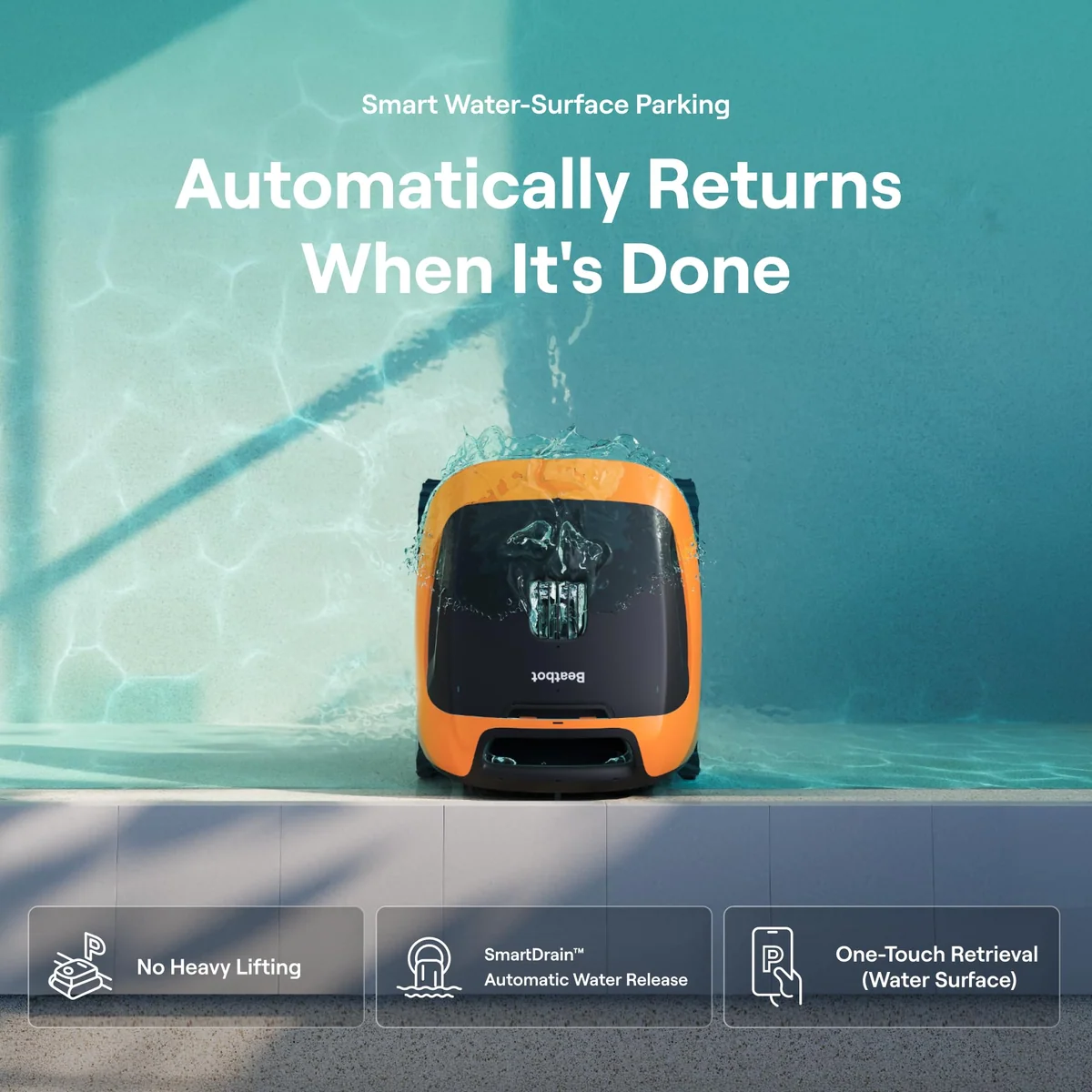
Beatbot Sora 30
Beatbot Sora 10 Cordless Pool
At a Glance
| Feature | Beatbot Sora 30 | Beatbot Sora 10 Cordless Pool |
|---|---|---|
| Price Range | $500–$1,000 | $200–$500 |
| Claimed runtime | Up to 300 minutes of floor cleaning from a 10,000 mAh battery | — |
| Check Price on Amazon | Check Price on Amazon |
The upgrade buys geometry, not suction
A broad shelf is not merely one more surface in a pool. It presents a climb, a depth change, an exposed edge and limited turning room, all while the cleaner must remain sufficiently submerged to maintain traction and flow. The Sora 30 was built around that problem. The Sora 10 may mount a compatible shelf, but its route does not treat the shelf as a zone that deserves a focused pass.
That difference should carry more weight than the model hierarchy. Paying for the Sora 30 makes sense when its extra hardware will address a recurring hand-brushing chore. Paying for it to clean the same open rectangle as the Sora 10 is harder to defend, especially because both standard baskets share the same coarse-filtration limitation.
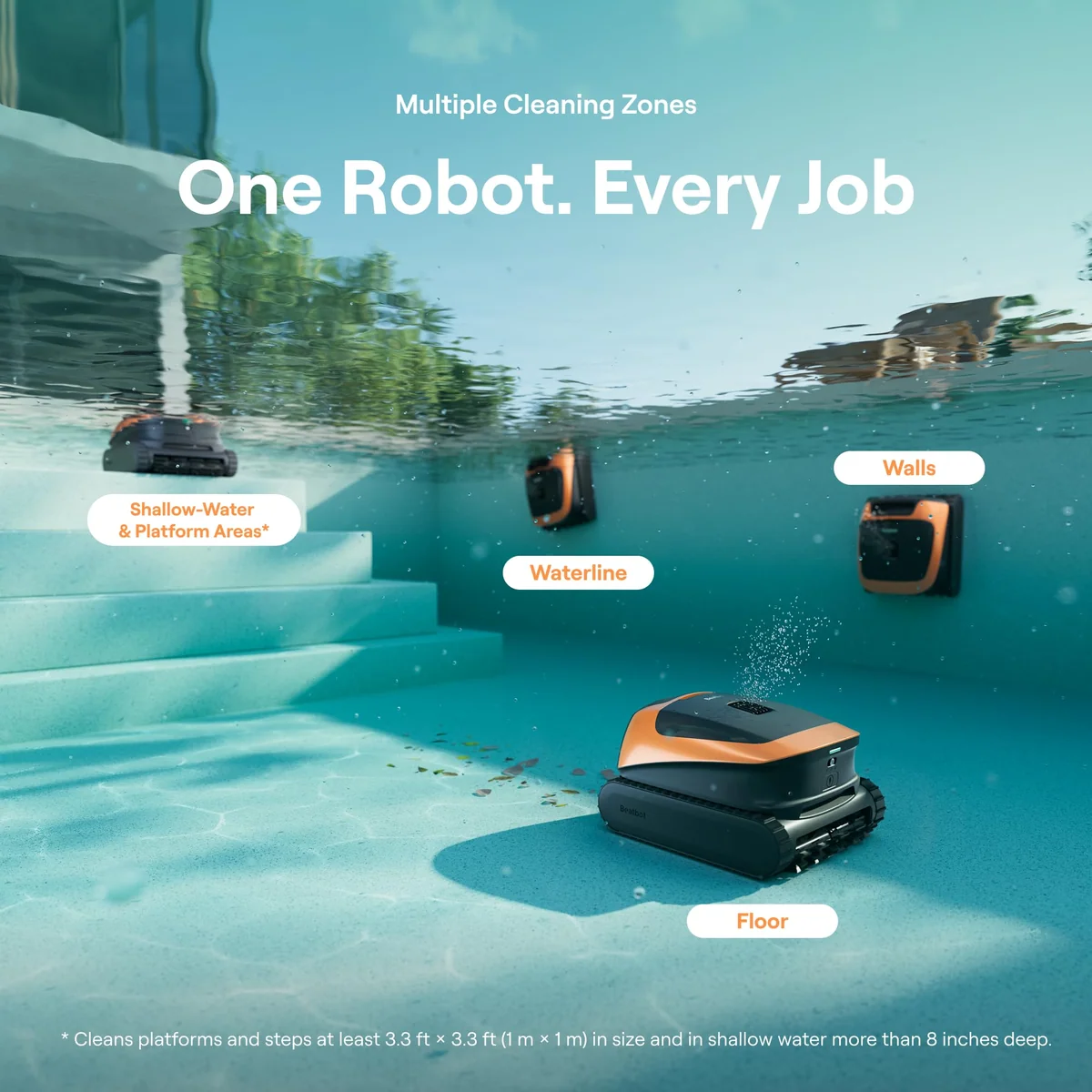
The Vibrant Orange Sora 30 is the best fit for broad ledges and complicated transitions.
It earns first place by making shallow-platform cleaning and drained surface retrieval materially more credible than they are on the Sora 10.
Its included 150-micron filter is poorly suited to persistent pollen, storm dust, dead algae and the finest silt.
Its shelf advantage is real, but geometry still gets a vote
Beatbot rates the Sora 30 for shallow areas down to about eight inches, compared with about twelve inches for the Sora 10. More important than the four-inch difference is the downward-facing sensor and targeted response at a platform edge. Direct demonstrations showed the Sora 30 mounting a roughly 14-inch-deep shelf, recognizing the drop, reversing and continuing to clean instead of immediately falling back into the main pool.
Eight inches is a threshold, not a magic password. Both tracks still need a usable approach, the body needs room to remain submerged, and the robot needs enough shelf area to turn. A wide Baja shelf with ten or fourteen inches of water is a strong use case; a narrow curved tread, a six-inch sun deck or a shelf crowded with loungers and bubblers is not.
The Sora 30 also has front and rear brush groups, while the Sora 10’s simpler hardware concentrates the upgrade decision on transition handling rather than raw pickup. This is why Smart Pool Bots favors the 30 for irregular fiberglass pools, multi-level entries and ledges that currently require regular brushing. For a conventional floor and straight walls, the distinction becomes much less valuable.
Parking is the other upgrade you can feel after every cycle
The Sora 30 is designed to rise, move toward the edge, drain internal water and remain floating after a completed cycle or low-battery event. Owners repeatedly found that draining before the full lift made removal easier, particularly when replacing a corded cleaner that had to be hauled upward while still full of water.
“Smart Surface Parking” is still not docking. Circulation can move the floating robot away from the coping, Eco mode has left at least one owner reaching for the hook, and an incomplete parking sequence can leave a heavy, waterlogged retrieval. The Sora 30 gives you a persistent floating target rather than the Sora 10’s short appointment at the waterline, but the included hook should remain within reach.
The standard basket is for maintenance debris
The five-liter top-access basket suits leaves, insects, grass, petals, twigs and visible settled dirt. It is roomy, simple to lift out and easier to rinse than many multipart filter assemblies. Its 150-micron mesh is not a polishing filter, however, so a large flow claim cannot turn it into a dependable answer for haze-forming dust or dead algae.
The optional ultra-fine filter does not erase that concern. One exact-model owner reported that the rear of the cleaner lifted from the floor after the accessory was installed, followed by repeated attempts to move and an eventual shutdown. That is one detailed failure report rather than proof of a universal defect, but it is serious enough to rule out the Sora 30 when ultra-fine filtration is the central reason for purchasing.
The app deserves similarly modest expectations. It can select modes, install firmware, retain records and deliver completion notifications while connectivity is available. It cannot make Wi-Fi or Bluetooth travel reliably through pool water, so submerged cleaning remains autonomous rather than remotely steerable.
The Deep Blue Sora 30 is the same winning cleaner in a different finish.
Choose this listing when Deep Blue is your preferred finish because its cleaning zones, battery, basket, rated flow and platform hardware match the orange Sora 30.
It carries the same coarse standard filter, imperfect app behavior and geometry-dependent performance as the orange version.
This is a color decision, not a technical compromise
The Deep Blue listing identifies the same RCMPM021 model and repeats the same core specification set: floor, wall, waterline and platform cleaning; a 10,000-mAh battery; up to 300 minutes of rated floor runtime; a five-liter basket; and coverage intended for large residential pools. There is no documented performance reason to rank one Sora 30 color above the other.
The retained customer material also repeats the same underlying owner accounts associated with the orange listing. Those reports support strong routine pickup, credible wall climbing, substantial battery reserves and easier drained retrieval, while also recording app frustration, cheap-feeling lid plastic and the ultra-fine-filter failure described above. Duplicated review text is not extra corroboration merely because it appears under a second ASIN.
Treat this card as an alternate buying route to the same winner. Pick between the two Sora 30 listings by finish and the terms shown at checkout, not by imagining a hidden motor, navigation or filtration difference that the product record does not establish.
The Sora 10 is the leaner choice for an open pool with ordinary debris.
It earns a qualified recommendation because its long battery life, large basket and credible wall climbing can maintain a simple pool without an operating cable.
Its wandering route, uncertain shallow-zone coverage and unreliable ten-minute retrieval window can leave both dirty patches and an awkward hook job.
The vacuum is more convincing than the navigation
The Sora 10 is not weak when it reaches debris. Published testing found it collecting more than 95 percent of seeded organic and synthetic debris in roughly two hours, then removing the remaining floor material during a third hour. Leaves, bugs, twigs, sand and other visible debris also appear across demonstrations and owner reports.
The problem is where it travels. One complete-cycle demonstration ran for roughly 275 minutes yet estimated only about 80 percent pool coverage. The robot revisited familiar areas while leaving other patches insufficiently cleaned, which explains how owners can report both impressive basket contents and a floor that never looks entirely finished.
Long runtime compensates by giving the machine more opportunities to wander across a missed patch. It does not make the route systematic. An owner with a clear, open pool may be satisfied after one long run, while another pool may need a second deployment simply because a corner or strip never received a visit.
Straight walls suit it better than curved transitions
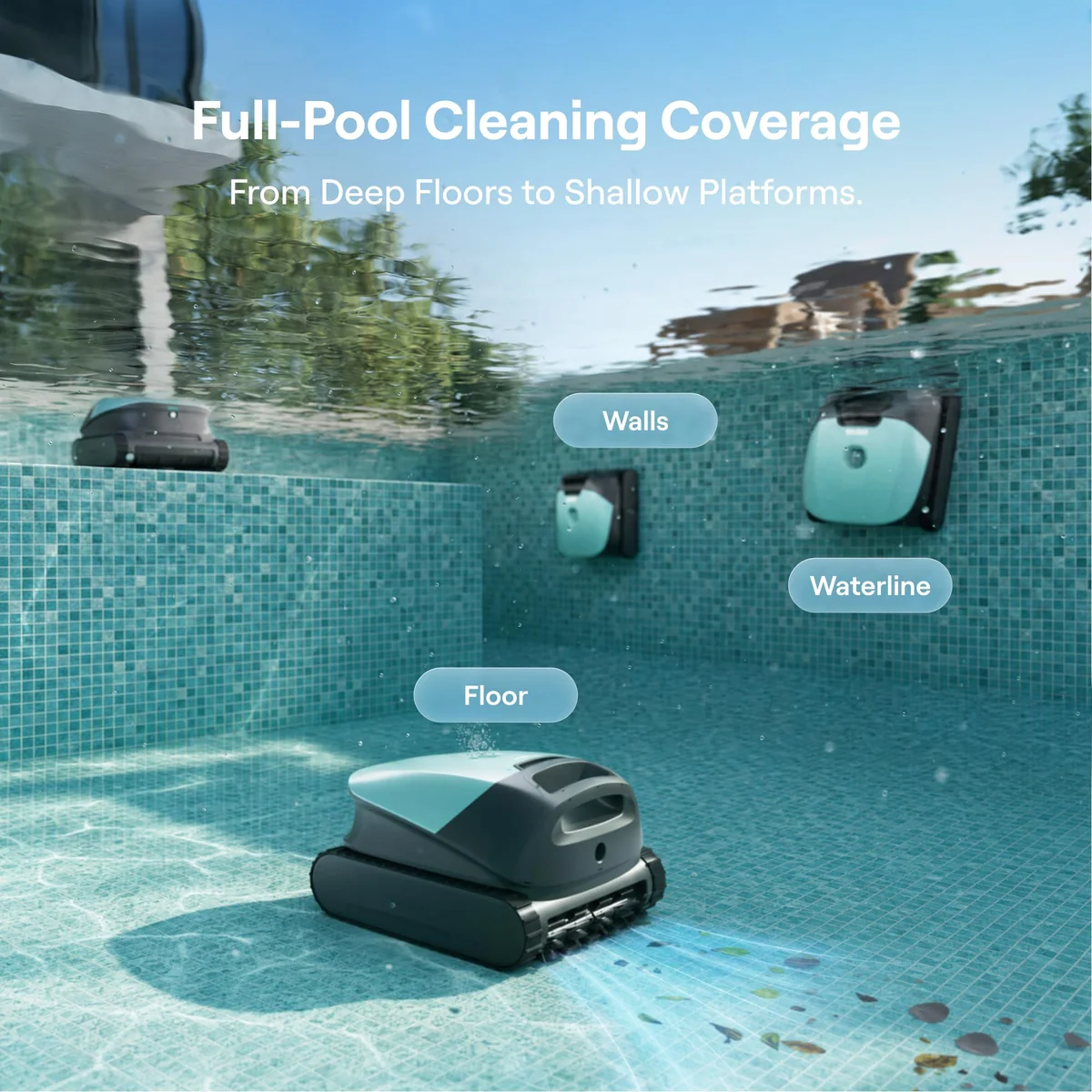
The Sora 10 has credible climbing ability on straight or gently concave walls, including slick tile in favorable owner reports. Tight convex curves and radiused steps are more troublesome because the center brush can touch while one or both tracks lose useful contact. It may reverse successfully rather than beach itself, but avoiding a trap is not the same as cleaning the surface.
Beatbot describes shallow-area operation down to twelve inches. There are genuine examples of the cleaner mounting broad shelves near that depth, but there are also reports of missed steps, untouched sundecks and benches visited too rarely to matter. Unlike the Sora 30, the Sora 10 lacks the additional sensing and targeted platform behavior that make a ledge central to the cleaning plan.
Waterline parking is useful only when you catch it
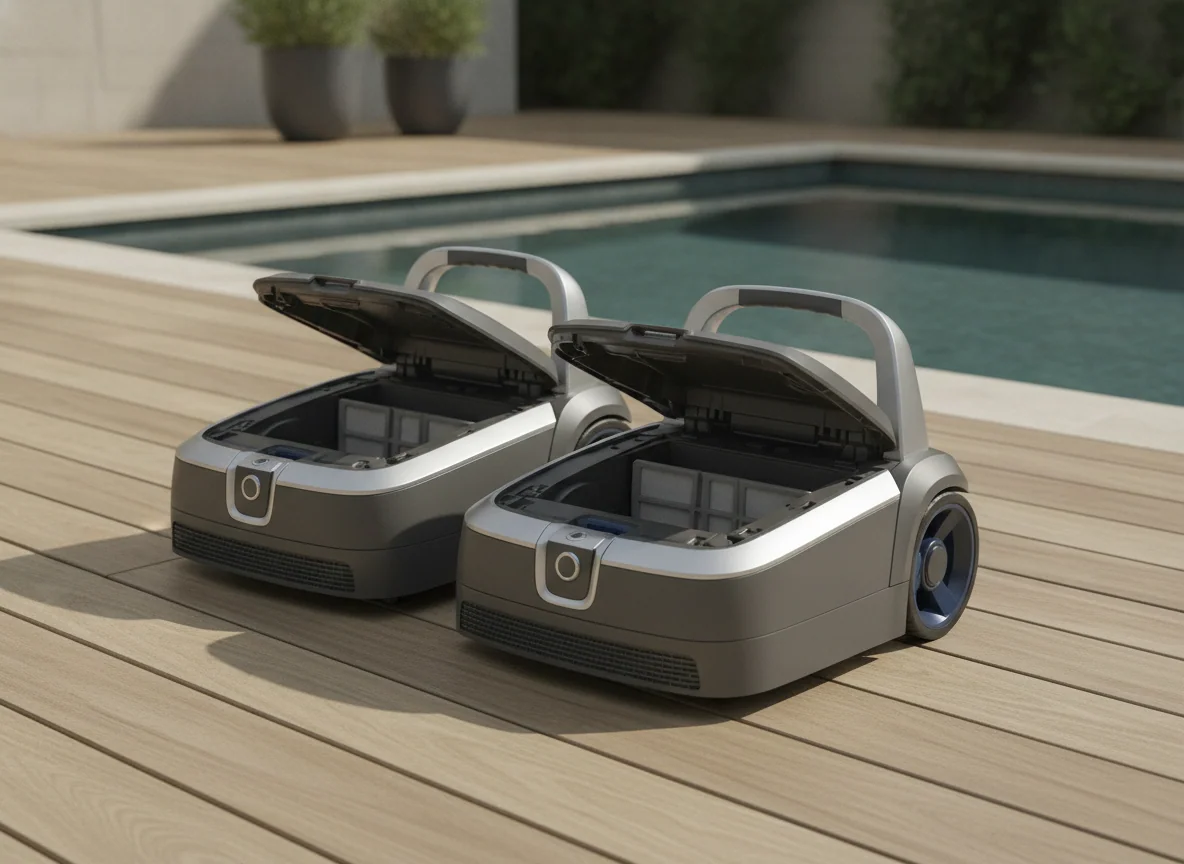
At cycle end, the Sora 10 is meant to hold at the waterline for ten minutes. That can make retrieval easy if you are already nearby, but it is not a persistent float, a return to the shallow end or a summon command. Once the window closes, the cleaner sinks and the hook becomes necessary.
Retained owner reports include cleaners that died in the deep end, never parked successfully or failed to return consistently. Other owners were happy enough with the cleaning to tolerate the hook. This is the decisive convenience gap between the models: the Sora 30’s drained surface return is not infallible, but the Sora 10 asks the owner to notice a brief retrieval opportunity that may not appear at all.
Its included filtration has the same basic ceiling
The Sora 10 also ships with a five-liter, 150-micron basket. That is a useful combination for leaf volume and easy rinsing, but buyers dealing with sand, pollen, dead algae or very fine dust may need the optional three-micron filter. Owner reports describe improved capture with that accessory, while others found fine dirt remained with the standard setup.
Adding filtration does not repair route coverage, step geometry or parking behavior. It simply changes what the robot can retain when it passes over the material, so the Sora 10 remains best understood as a long-running cordless vacuum for a forgiving pool rather than a low-cost version of the Sora 30’s ledge system.
Beatbot Sora 30
Beatbot Sora 10 Cordless Pool
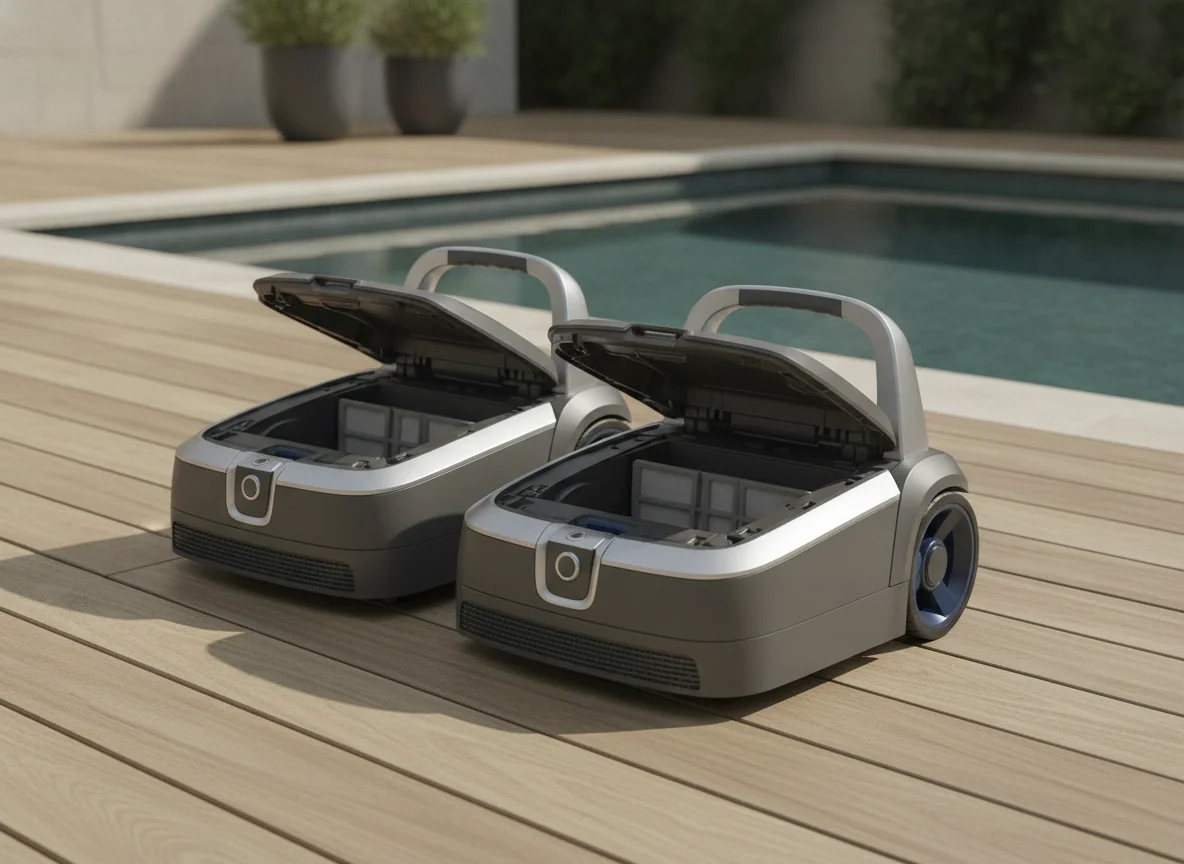
Measure the pool before comparing the badges
Start at the shallow feature that bothers you most. Measure the water above it, then inspect the width, approach angle, edge shape and permanent obstacles. A broad shelf with at least about eight inches of water creates a defensible reason to buy the Sora 30. A collection of cramped curved treads does not become robot-friendly merely because one point meets the advertised depth.
For a tanning ledge
Choose the Sora 30 when the shelf is broad enough for both tracks to mount and turn. Its downward sensing and platform behavior address the exact transition the Sora 10 approaches by chance. If steps and shelves dominate your decision, the site’s guide to cleaners for steps and tanning ledges places that geometry ahead of generic suction claims.
For a plain rectangle
Choose the Sora 10 when the pool offers an open floor, straight walls and enough time for a long wandering cycle. An independent multi-cleaner comparison found strong leaf pickup and substantial endurance, but also reinforced that its route and 150-micron filtration remain the limiting factors.
For deep-end retrieval
Choose the Sora 30 if lifting a robot from the bottom would be difficult or unsafe. Its ability to rise, drain and remain floating is a more meaningful daily upgrade than an app animation, although no buyer should discard the retrieval hook.
For fine dust and dead algae
Choose neither on the strength of the included filter. Both standard baskets are designed around everyday debris rather than pool polishing, and the Sora 30 carries an unresolved exact-owner failure involving its optional ultra-fine accessory. Start instead with the site’s cleaners selected for sand, silt and fine debris.
For floating leaves
Neither robot actively patrols the water surface. The Sora 30’s “fourth zone” is a qualifying shallow platform, and rising for retrieval is not skimming. Compare the Sora 30 with the surface-cleaning Sora 70, or use the guide to robotic skimmers and underwater vacuums before expecting one machine to do the other’s job.
For hands-off scheduling
Neither model recharges itself or maintains dependable underwater communication. Eco mode divides one stored charge into short maintenance sessions, while every fresh cycle still ends with retrieval, basket rinsing, drying and charging. Readers choosing between operational freedom and repeatable scheduled power should compare corded and cordless pool robots.
The shortest honest answer
The Sora 30 is the better robot, but the Sora 10 can be the better purchase. Spend up when a real shelf, difficult transition or deep-end retrieval problem gives the extra hardware work to do. Save the upgrade when your pool is simple, then accept that the Sora 10 may need another run, a manual step brushing or a retrieval hook.
Frequently Asked Questions
Does the Sora 30 have more suction than the Sora 10?
No, both carry the same manufacturer-stated 6,800-GPH flow figure, so the Sora 30 upgrade is principally about sensing, brushes, battery capacity and retrieval behavior.
Which model is better for a tanning ledge?
The Sora 30 is the stronger choice because it targets qualifying shallow platforms down to about eight inches, while the Sora 10’s twelve-inch claim produces less dependable shelf coverage.
Which model is easier to retrieve?
The Sora 30 is easier to retrieve because it is designed to rise, drain and remain afloat, whereas the Sora 10 normally holds at the waterline for only ten minutes before sinking.
Do the orange and blue Sora 30 models clean differently?
No documented performance difference separates the Vibrant Orange and Deep Blue listings because both identify the same Sora 30 model and core specification set.
Can either cleaner remove floating leaves?
No, both are underwater vacuums, and the Sora 30 rises to the surface for parking rather than patrolling it as a skimmer.
Can the Beatbot app control either robot underwater?
No, the app is useful for setup, mode selection, firmware and synchronized records, but submerged Wi-Fi and Bluetooth communication is not dependable enough for live steering.
Which model is better for fine silt?
Neither is an easy recommendation with its included 150-micron basket, and the Sora 30 is particularly difficult to endorse for this job because one owner reported a severe mobility failure with its optional ultra-fine filter.
Is the Sora 10 enough for an above-ground pool?
It can be enough for an open above-ground pool with compatible walls and ordinary debris, but oval geometry, fine sand and missed patches can still expose its filtration and routing limits.
Ready to Choose?
Sources (3)
- Amazon listings and customer reviews — Beatbot Sora 30 and Beatbot Sora 10 Cordless
- Owner and reviewer video, 4 channels
- Pcworld — Article — www.pcworld.com