The WYBOT A1 Is a Floor Sweeper, Not a Full Pool Cleaner
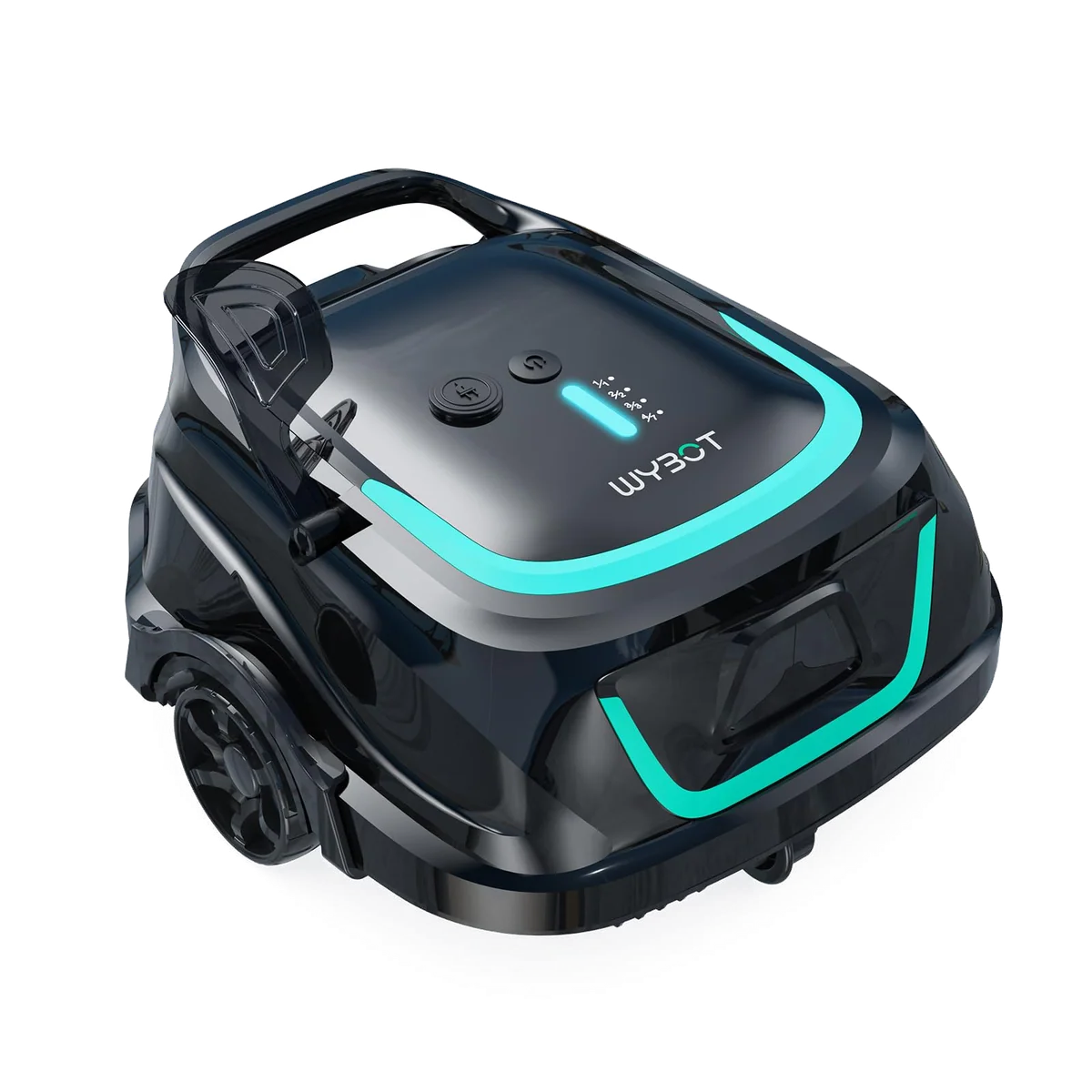
Buy the WYBOT A1 only for a flat, obstacle-light pool where loose floor debris is the job; everyone expecting wall cleaning, scrubbing, or reliable mapped coverage should skip it.
Final call
Smart Pool Bots would buy the WYBOT A1 for one narrow assignment: frequent collection of loose sand, silt, bugs, and small leaves from a smooth, flat, obstacle-light pool floor. In that setting, its light cordless body and fine secondary filter can eliminate a meaningful share of manual vacuuming.
Skip it if the pool has a deep end, meaningful slope, wrinkled liner, raised drain, fixed ladder, heavy leaves, or algae that needs scrubbing. Skip it as well if reliable parts, proven long-term durability, and responsive support matter more than a low-effort cleaning cycle. The A1 is a useful floor sweeper when everything around it is easy, and too compromised to recommend when the pool asks for anything harder.
First, make sure this is the A1 you are buying
That identity matters because the A1 name has followed more than one revision. Much of the independent material covers an older 120-minute version, and one prominent critical write-up names a different ASIN altogether. Those older records still reveal the design’s recurring behavior, but they cannot silently replace the specifications attached to WY26A1-PRO.
The useful product hiding behind the naming confusion is simple: a light, self-contained vacuum that drives across the floor and collects loose material through a dual-layer filter. It has no submerged cable to untangle, no app to configure, and no hose to connect. Once a cycle ends or the battery runs low, it attempts to stop beside the wall so the supplied hook can reach it.
That convenience is the entire case for buying it. The A1 is not a smaller version of a wall-climbing premium robot. It does not map the pool, scrub the surface, clean the waterline, or confirm that every section of floor received a pass. Smart Pool Bots considers it a maintenance helper for a cooperative pool, not an autonomous replacement for every other cleaning tool.
Key Specifications
The pool floor decides this purchase
The A1 moves more like a wind-up toy than a navigator. It drives until a wall, obstacle, or resistance makes it reverse or redirect, then continues until the selected cycle ends. It has no mapped route and no awareness that a section was missed, so a long runtime is not the same thing as complete coverage.
The listing itself excludes slopes over 15° and significant bottom wrinkles. Owner experience suggests that even smaller imperfections can matter: creases, dished areas, drains, ladders, and low spots have all trapped or delayed A1 units, sometimes until the owner intervened.
A floor that gives the A1 a chance
- Flat or nearly flat from edge to edge
- Tight liner with few raised seams or puckers
- No ladder, drain cover, or step in its travel path
- Small or medium area where another cycle is acceptable
- Mostly loose, recently settled debris
A floor that turns it into supervision
- Deep end or abrupt depth transition
- Bowl-shaped base or meaningful slope
- Wrinkled vinyl, soft folds, or a dished center
- Raised drains, steps, tanning ledges, or a fixed ladder
- Heavy leaves or attached algae
Above-ground does not automatically mean suitable. A round pool with a smooth, taut floor is close to the ideal; a nominally flat vinyl pool with wrinkles can still strand the machine. Vinyl owners should compare that risk with the models in our guide to robotic cleaners for vinyl-liner pools.
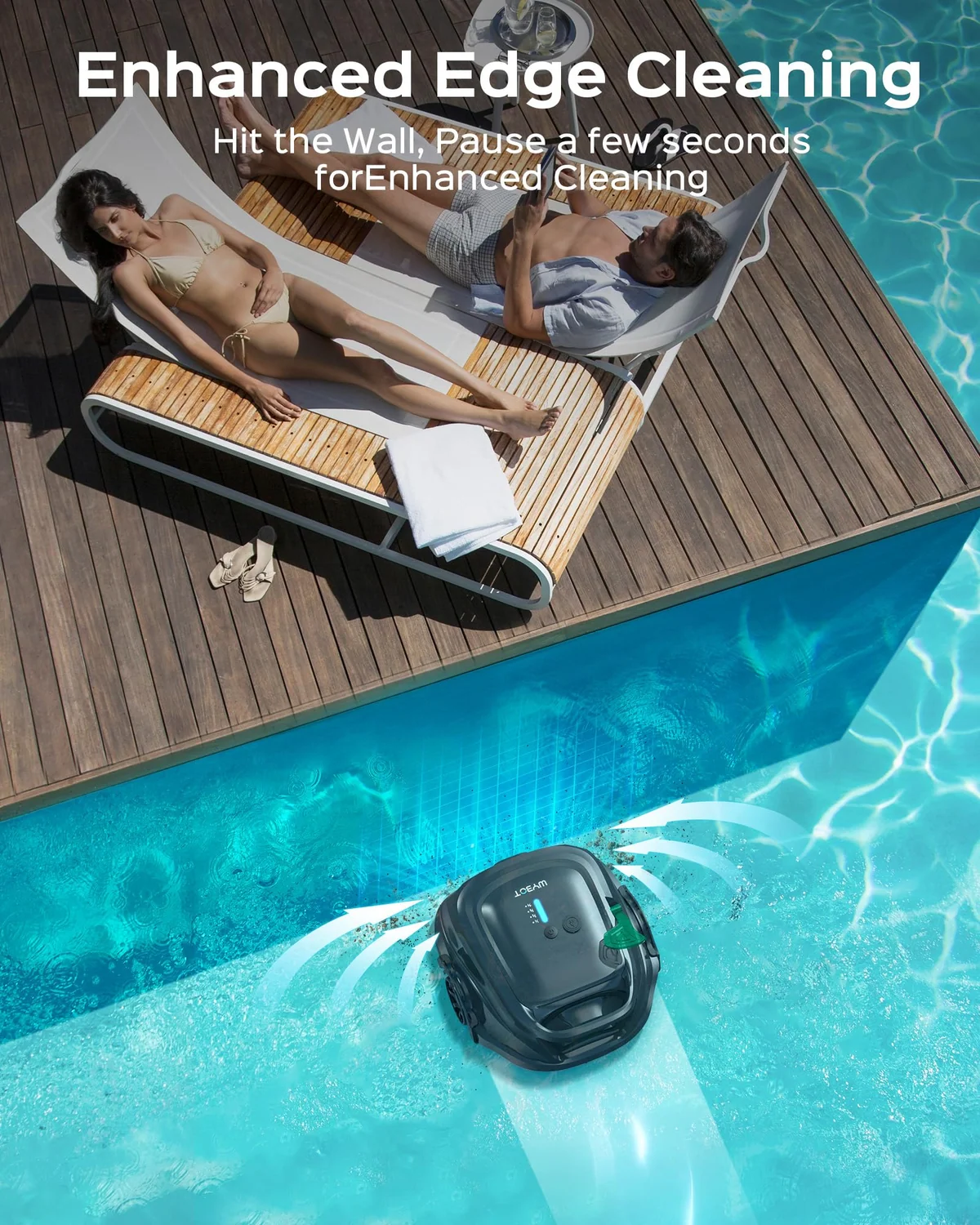
The wall pause and low-battery parking are useful, but neither makes the navigation intelligent. Parking means stopping near a wall, not returning to a chosen dock or lifting itself onto the deck. The box generally supplies a retrieval hook rather than a complete pole, so confirm that a compatible pool pole is already on hand.
Strengths & Limitations
Strengths
- The cordless body avoids a floating power cable, hose setup, and tangles.
- The dual-layer filter is useful for loose fine sediment that reaches the inlet.
- The light body is easier to lower and retrieve than many full-size corded robots.
- Filter rinsing is straightforward once the housing is aligned correctly.
Limitations
- Random travel can repeat routes while leaving other parts of the floor untouched.
- The lack of an active brush leaves attached algae and grime behind.
- Wrinkles, slopes, drains, ladders, and floor transitions can stop or trap it.
- Owners report early shutdowns, charging failures, broken clips, and other durability problems.
- It cannot clean walls or the waterline.
Loose debris is the A1’s one convincing trick
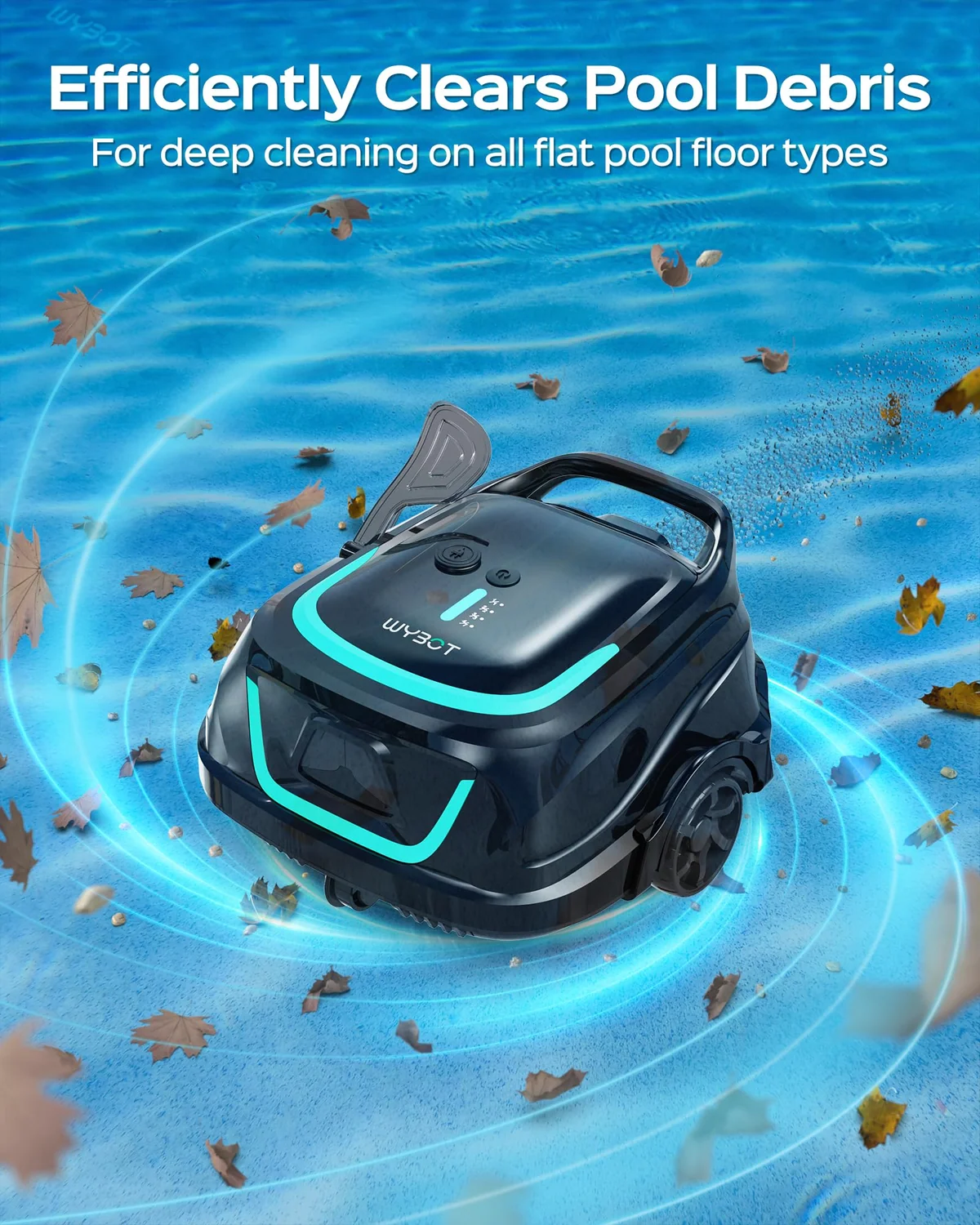
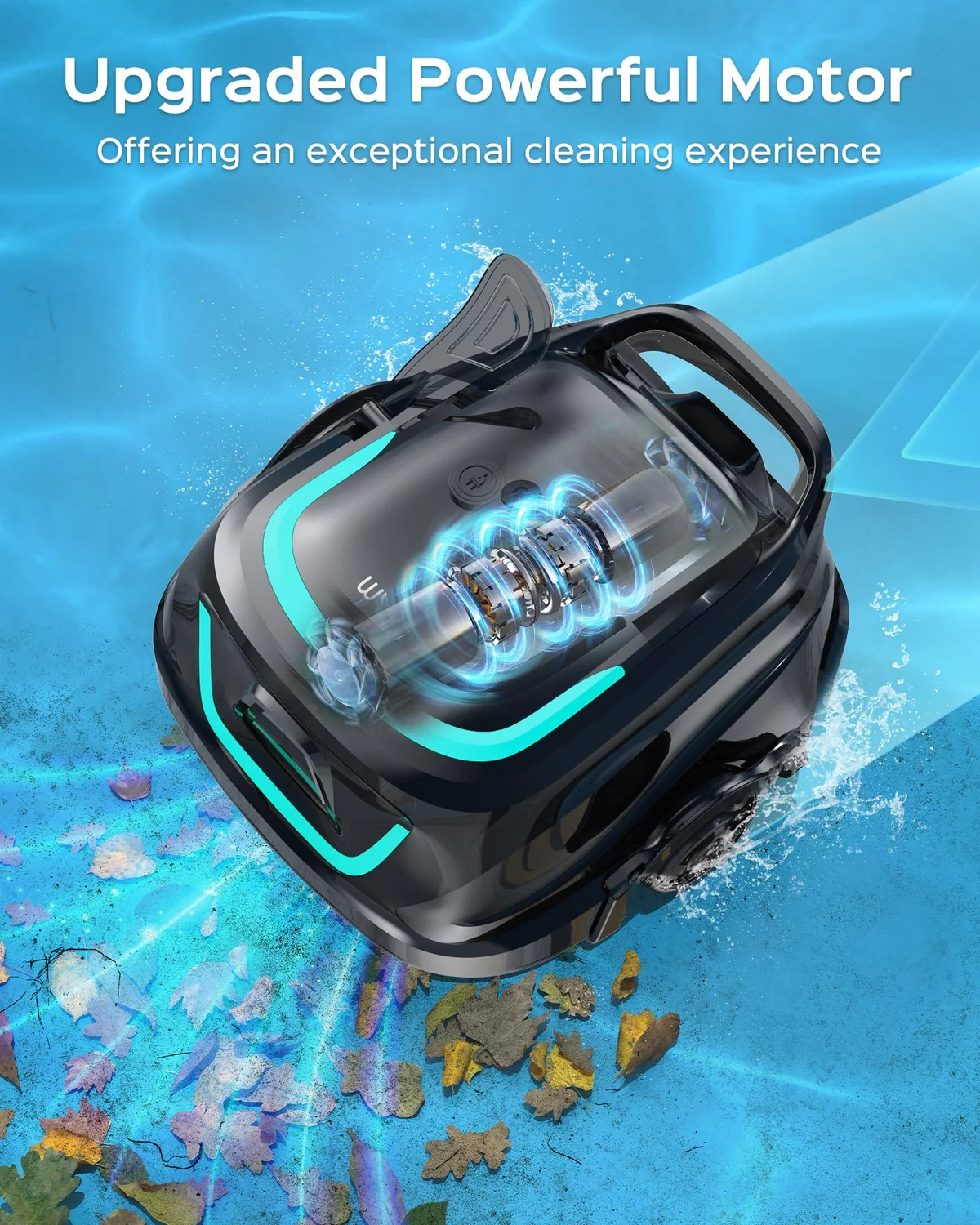
When the A1 crosses loose dirt, it can collect a surprising amount of it. Demonstrations show the filter holding fine residue, small debris, pebbles, and larger loose pieces after a cycle, while exact-model owners report useful results during routine cleaning and even the messy opening of a 24-foot round pool.
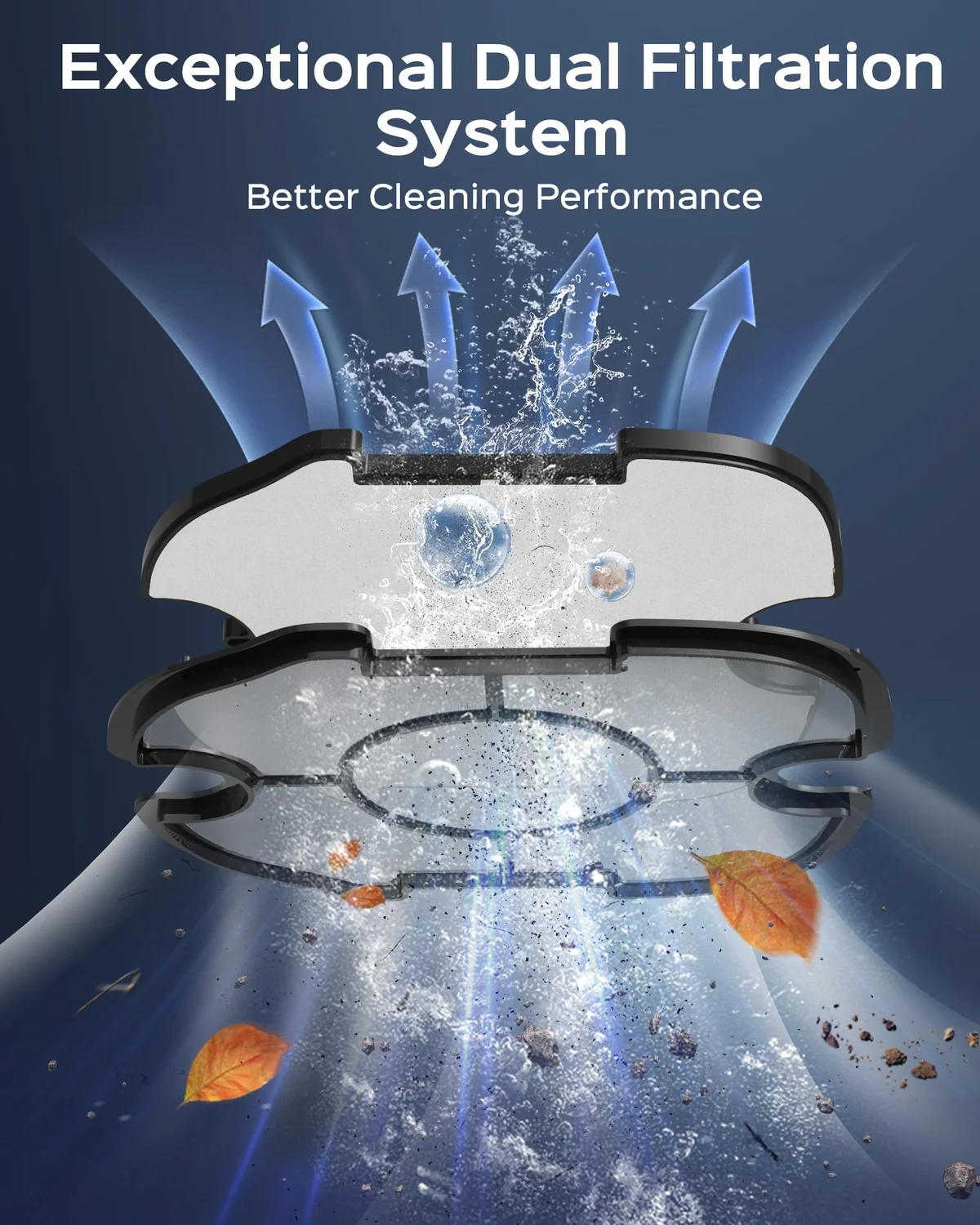
The dual filter is more than decorative specification copy. A 180 μm mesh layer catches ordinary debris while the foam layer retains finer material that might pass through a basic basket. WYBOT claims this arrangement improves filtration efficiency by as much as 50 percent, but the listing supplies no named baseline or test method, so that percentage should not drive the purchase.
| Cleaning job | Honest expectation | What sets the limit |
|---|---|---|
| Sand, silt, bugs, and loose dirt | The A1 is credible when it passes directly over them. | Random travel can leave untouched patches. |
| Small leaves | Reasonable for a light, recently settled layer. | The inlet and filter area are not built for a heavy fall. |
| Large leaves and bulky debris | Some pieces may be captured, but results are inconsistent. | Owners report limited capacity and difficulty with larger leaves. |
| Loose or dead algae | Particles may be vacuumed after they settle. | Several cycles can be necessary. |
| Attached algae or grime | Poor fit. | There is no active scrubbing brush. |
| Walls and waterline | Not cleaned. | The A1 is a floor-only machine. |
Large debris is where the tidy marketing story comes apart. Some demonstrations show the A1 swallowing loose stones and sizable pieces, yet critical testing and owner accounts describe weaker pickup on large leaves, a small debris area, and suction that becomes less useful as the filter loads. Skimming the largest leaves first gives this robot a much fairer job.
The missing brush is the harder limit. Suction can remove material resting on the surface, but it cannot agitate green growth or dirt bonded to the floor. If algae is visible as a coating rather than loose dust, brush it first or choose a machine with active scrubbing. Our guide to what robotic cleaners can actually collect explains why particle type matters as much as advertised flow.
A bargain only if the pool already cooperates
The A1 earns its keep by removing the bulk of loose floor debris without requiring a hose, submerged cable, or directed manual pass. That is genuine labor saved for the right owner. For the wrong owner, cordless convenience merely swaps cable management for charging, retrieval, filter rinsing, repeated cycles, and the occasional rescue nudge.
Do not value it as a discounted wall-climbing robot because it is not one. Value it against the manual vacuum sessions it can realistically prevent. A flat-floor owner who wants frequent maintenance between deeper cleanings can get useful work from it; a large or irregular pool owner who needs assured coverage is buying the wrong class of machine.
Use the return window as a pool-fit test
The A1’s suitability cannot be settled from square footage alone, so the first cycles should answer the questions that matter in the actual pool.
- Charge it fully and confirm that it completes a meaningful cycle rather than stopping within minutes.
- Watch whether it crosses the liner seams, wrinkles, drain, and shallow transitions without assistance.
- Check whether it repeatedly traces one route while ignoring another area.
- Make sure low-battery parking leaves it close enough for the retrieval hook.
- Rinse the filter once, then verify that both side clips close securely without force.
- Inspect the charging cap, wheel, paddle, tabs, and latches for cracking or poor fit.
- Record the seller’s return deadline and verify the warranty terms for this exact ASIN.
If the pool fails that test, spending more on the same floor-only idea will not fix the geometry. Readers who need active brushing and wall coverage should start with our Dolphin Nautilus CC assessment, while shoppers committed to cordless simplicity can compare the broader field in our cordless robotic cleaner guide.
Those deciding between WYBOT’s entry models should also read the A1 and B1 comparison before treating the two names as interchangeable.
The bigger risk is not pickup; it is keeping the machine alive
Cleaning ability and ownership confidence split sharply here. A functioning A1 can gather plenty of debris, but the exact-ASIN record contains two one-star reviews, and both describe stopping, shutting off, or completing only part of a crossing. That is a small sample, yet the agreement between the complaints is difficult to dismiss.
The larger Best Buy review set belongs to a different A1 model and therefore cannot establish a failure rate for WY26A1-PRO. It does, however, repeat the same categories of trouble: machines stopping after a few minutes, failing after one use, losing charge, breaking a wheel, or becoming difficult to reassemble after filter cleaning. The pattern is relevant to the design even if the exact frequency remains unknown.
Longer-running accounts do exist. One owner used an A1 nearly every day in a 24-foot round pool and continued to praise its cleaning, but also reported that one retaining clip had broken and worried about closing the shell if the matching clip failed. That is the A1 story in miniature: useful daily labor paired with hardware that does not inspire long-term confidence.
The filter housing needs patience, not force
After rinsing, the filter must sit fully in its recess and the upper shell must come down squarely over its locating nubs before the side latches will close. A detailed demonstration visibly required repositioning the top before it seated properly. If a latch resists, reopen the unit and check alignment rather than squeezing harder against a clip that owners already describe as fragile.
Warranty language is not stable across A1 revisions
One A1 source describes two years of warranty coverage, while another gives one year for a different ASIN. Neither settles the terms for B0GMPZZJRS, so verify the exact seller’s written coverage before buying, save the order record, and do not let the return deadline pass while an intermittent stoppage is still being diagnosed.
For routine care, rinse both filter layers after every debris-heavy run, dry the charging port before connecting the charger, reseal the rubber cap firmly before submersion, and store the robot away from standing pool chemicals and direct sun. Our maintenance guide covers the habits that matter beyond this model.
Frequently Asked Questions
Who is the A1 actually good for?
It suits an owner with a flat, obstacle-light pool who wants frequent pickup of loose floor debris and accepts that some manual cleaning will remain.
Does the A1 climb walls?
No, the A1 cleans the floor only and does not climb walls or scrub the waterline.
Can it remove algae?
It may collect loose or dead algae particles after they settle, but it cannot scrub attached green growth because it has no active brush.
Is its navigation genuinely smart?
No, its intelligence is limited to cycle control, reversing at boundaries, pausing near edges, and parking near a wall rather than mapping or learning the pool.
How long should one charge last?
The exact listing rates WY26A1-PRO for up to 130 minutes, while older A1 evidence ranges from roughly one hour to around two hours and defective units may stop far sooner.
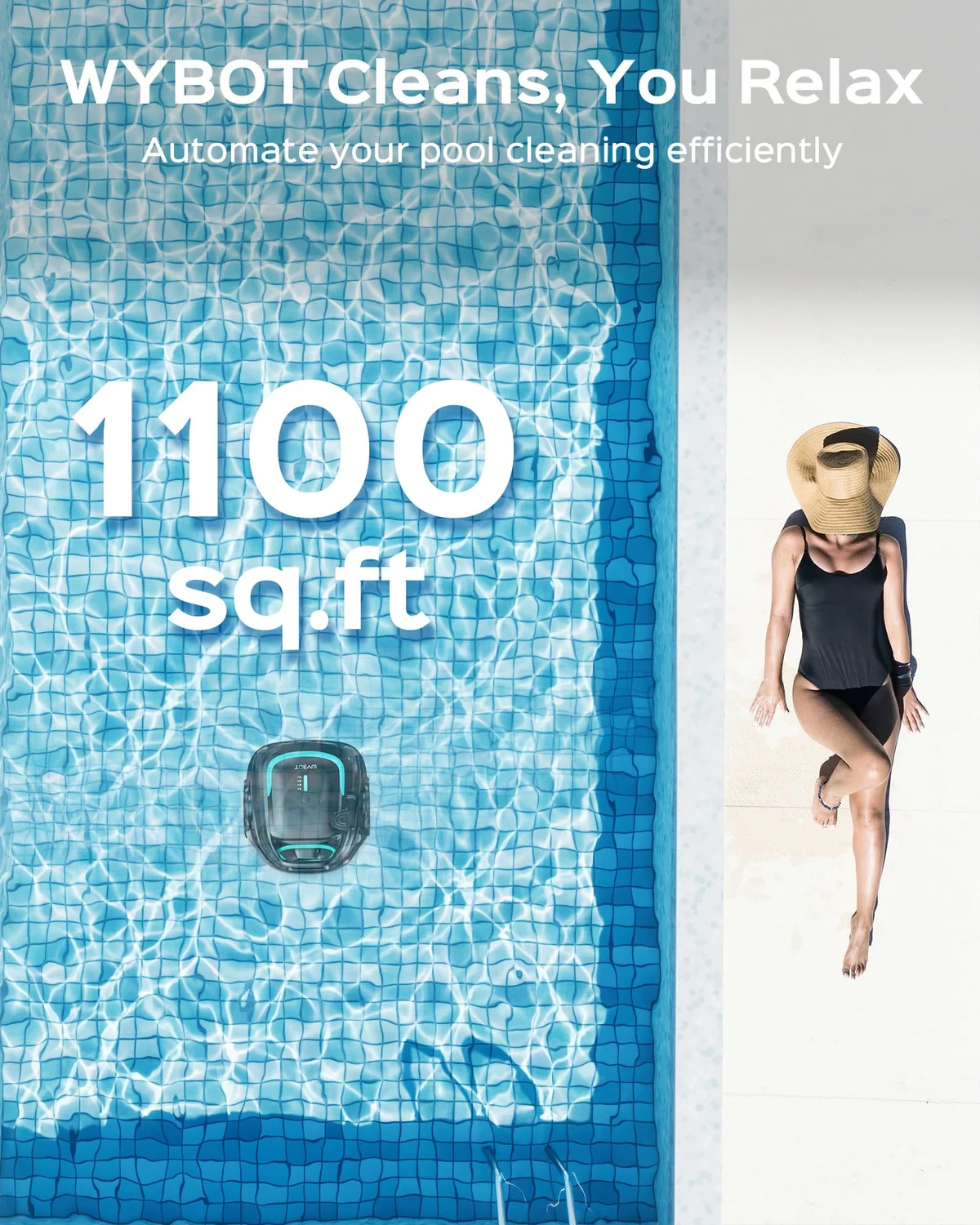
Will one cycle clean all 1,100 square feet?
No complete-coverage guarantee is supported because 1,100 square feet is a rated maximum and random travel may revisit clean areas, miss others, or lose time at obstacles.
Does the A1 need an app?
No, reliable A1 records show on-unit controls rather than Wi-Fi, Bluetooth, mapping, or app control.
What should be checked immediately after purchase?
Confirm meaningful runtime, reliable movement across the real pool floor, reachable self-parking, sound wheels and latches, a secure charging cap, and easy housing closure before the return deadline passes.
Sources (5)
- Amazon listings and customer reviews — Wybot A1
- Owner reports across r/swimmingpools threads
- Owner and reviewer video, 3 channels
- Roboticreviews — Article — www.roboticreviews.com
- Bestbuy — Article — www.bestbuy.com