The Aiper Scuba S1 beats the Ecovacs Ultramarine P1 for most simple pools
Choose the Aiper Scuba S1 for the better all-round balance, and choose the Ecovacs Ultramarine P1 only when stubborn silt matters more than weight, filter convenience, steps, or proven ownership history.
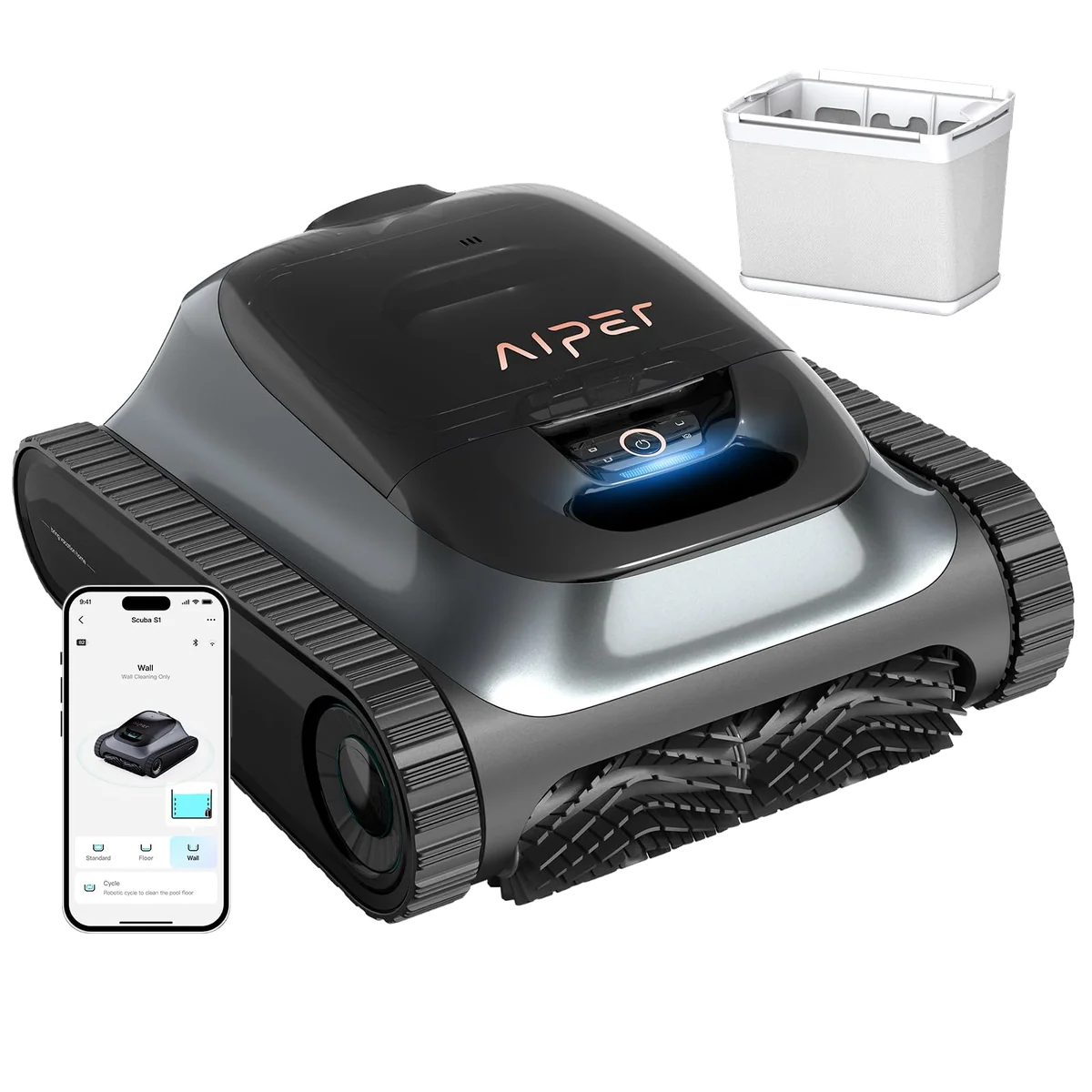
(2026 Upgrade) Aiper Scuba S1
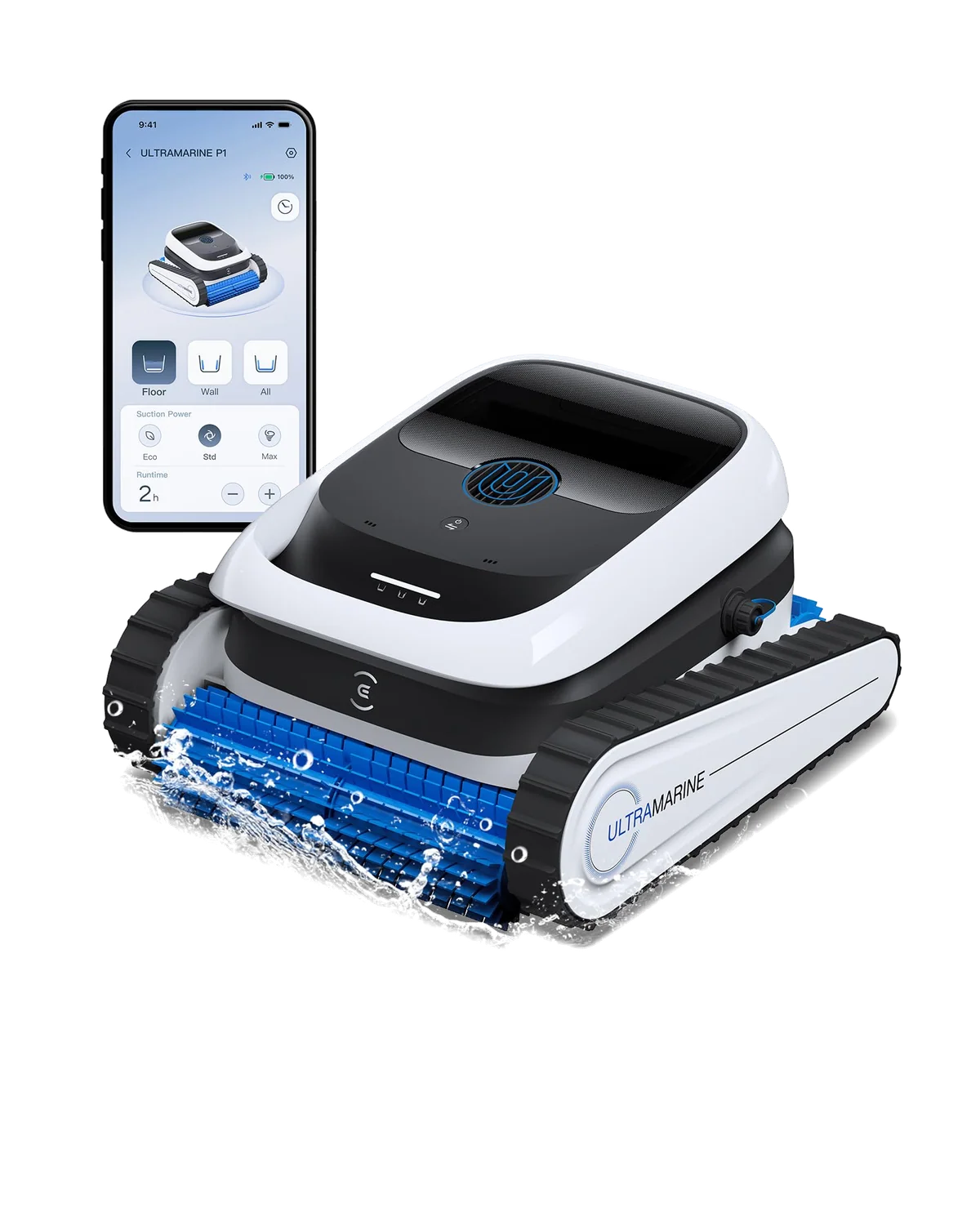
ECOVACS Ultramarine P1 Cordless Robotic
This contest looks close because both machines promise cordless movement, structured routes, wall cleaning, app setup, and a 3-micron secondary filter. It stops looking close when the whole ownership routine enters the picture. The updated Scuba S1 offers the more useful combination of floor coverage, incidental step and bench access, long maintenance cycles, and less punishing retrieval, even though its wall grip and reliability record prevent an easy endorsement.
The Ultramarine P1 has the more memorable specialty. Its fine filter has repeatedly collected sand, silt, pollen, dust, and settled dead algae that ordinary baskets can recirculate, while comparative evidence found it especially aggressive at the waterline. That strength comes inside a heavy first-generation robot with a cramped filter, limited feature coverage, Bluetooth-only communication, and no established multi-season record.
Smart Pool Bots therefore gives the S1 the overall win, but not permission to coast. Buyers with curved stairs, abrupt slopes, wide shelves, or a low tolerance for battery-related risk should treat “winner” as the better of these two choices rather than proof that either one suits the pool. A broader field is available in our guide to the best cordless robotic pool cleaners.
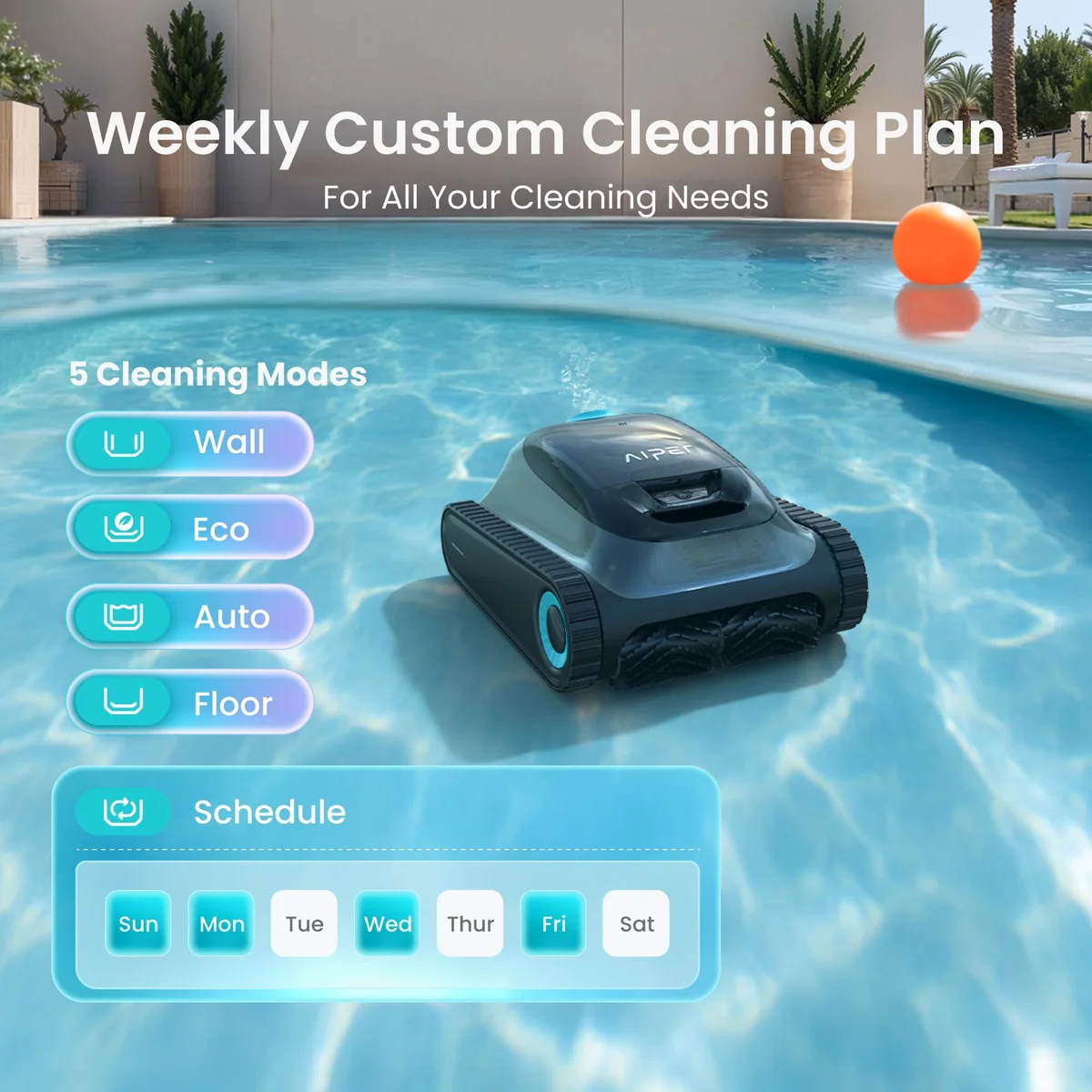
(2026 Upgrade) Aiper Scuba S1
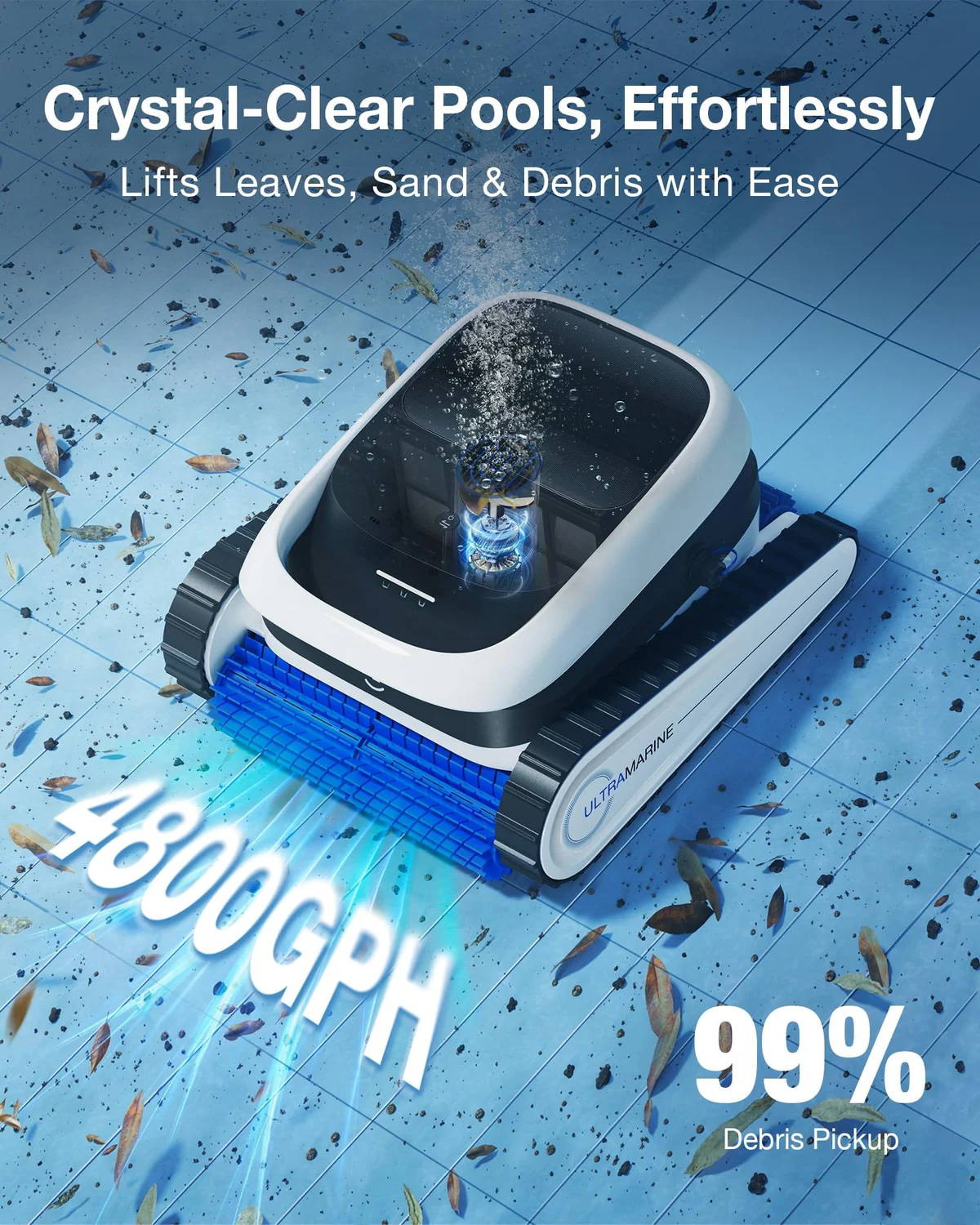
ECOVACS Ultramarine P1 Cordless Robotic
At a Glance
| Feature | (2026 Upgrade) Aiper Scuba S1 | ECOVACS Ultramarine P1 Cordless Robotic |
|---|---|---|
| Price Range | $200–$500 | $200–$500 |
| Check Price on Amazon | Check Price on Amazon |
The decision turns on more than suction
On an open floor, both robots can be excellent. A standardized comparison measured 99 percent floor coverage from each machine, so buyers should not choose between them by assuming one simply vacuums and the other navigates. The meaningful separation appeared beyond the floor: the S1 reached 86 percent of the walls and 62 percent of the combined stair and bench area, while the P1 reached 81 percent and 38 percent respectively in that pool.
Those percentages are not universal promises. A separate direct comparison favored the P1 for brush contact, wall climbing, and aggressive collection of sand, fine material, and larger leaves, while finding the particular S1 slow and inconsistent on the walls. Pool finish, wall angle, filter loading, and the floor-to-wall transition can reverse what looks decisive on a specification sheet.
| Buying concern | Aiper Scuba S1 | Ecovacs Ultramarine P1 |
|---|---|---|
| Open-floor cleaning | Excellent tested coverage with orderly routing in a compatible pool. | Excellent tested coverage with structured passes across simple geometry. |
| Fine sand and silt | A removable 3-micron layer provides genuine fine-debris capability. | The strongest reason to buy it, supported by comparative and owner evidence. |
| Walls and waterline | Capable but sensitive to grip, finish, angle, and transitions. | Potentially vigorous, although the fine insert can interfere with climbing. |
| Steps and benches | Partial coverage is plausible, but manual brushing remains necessary. | Less dependable, with reports of missed features and immobilization on steps. |
| Handling | The easier machine to retrieve after water drains from the shell. | Approximately 23 pounds dry and substantially heavier during the initial lift. |
| App experience | Useful for pre-launch modes, schedules, logs, and updates. | Useful for pre-launch settings but compromised by Bluetooth-only communication. |
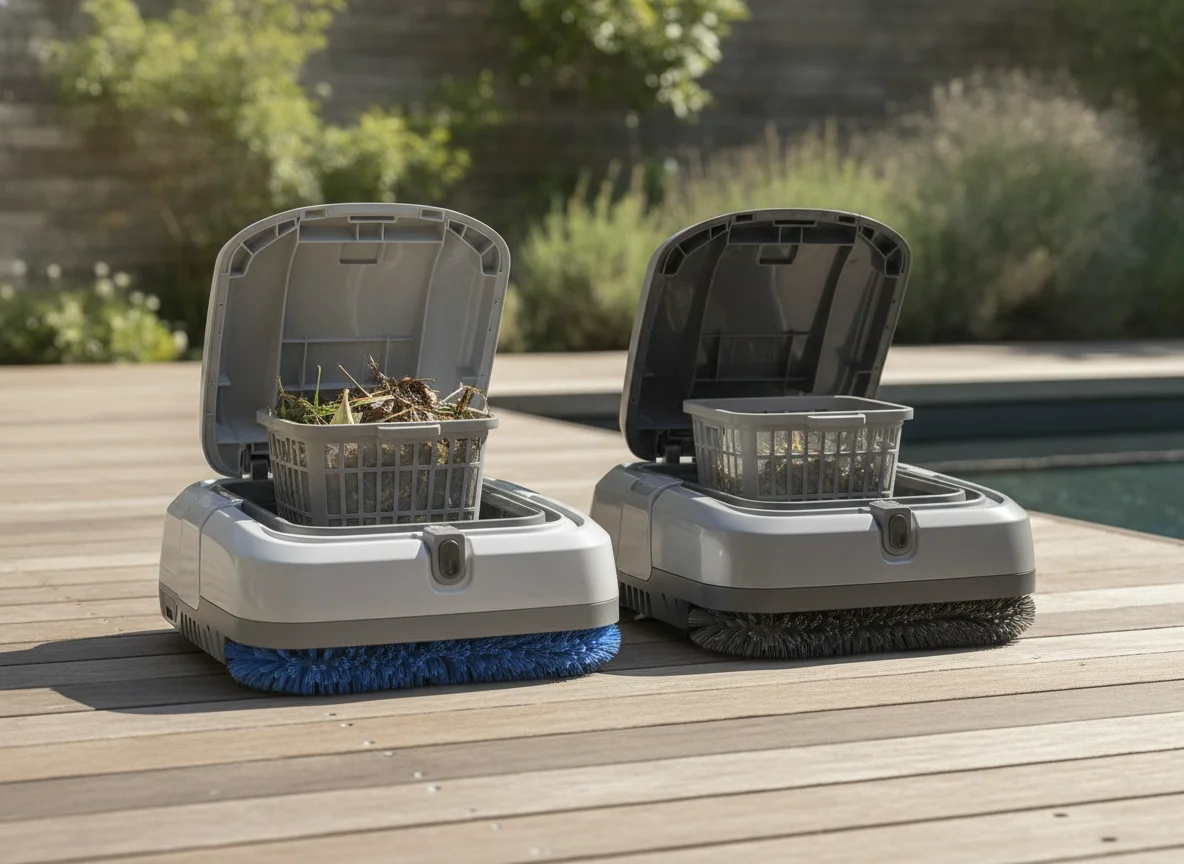
The Aiper Scuba S1 is the better all-rounder for a straightforward pool.
It wins by pairing excellent floor coverage with longer Eco maintenance runtime, better tested access to steps and benches, and easier retrieval than the P1.
Its wall performance depends heavily on pool geometry, and the detailed owner record contains enough motor, charging, control, and water-ingress failures to make easy return rights essential.
The exact black 2026 listing matters. Its headline maximum of 270 minutes belongs to Eco maintenance, while Auto, Floor, Wall, and Scheduled modes are listed for up to 180 minutes. The same listing specifies a replaceable 3-micron layer inside a 180-micron basket, four-zone cleaning, app support, and a two-year warranty.
In a simple rectangular, oval, or gently shaped pool, those features form a coherent package. Floor mode concentrates battery time on settled debris, the fine insert handles dust and silt, and Auto mode adds walls and the waterline when the transitions provide enough tread contact. The S1 also has the more credible chance of reaching part of a broad bench or step, although no buyer should expect it to clean an entire staircase.
Its drawback is not a minor missed corner. Exact-listing owners describe opposite outcomes, from systematic coverage and strong fine-particle collection to repeated routes, stranded tracks, an overloaded secondary filter, and an immediate walking-motor error. That variance makes the first few cycles a pool-compatibility test rather than a victory lap.
The Ecovacs Ultramarine P1 is the specialist for persistent fine sediment.
It earns second place because its 3-micron insert and forceful brush contact can outperform broader rivals when sand, silt, pollen, dust, or settled dead algae is the recurring problem.
Its small awkward filter, heavy wet retrieval, unreliable stair coverage, underwater Bluetooth blackout, and immature ownership record make it a poor default choice.
Ecovacs lists up to 180 minutes of runtime, a 4,800-gallon-per-hour flow claim, a 180-micron basket with a 3-micron insert, and SmartNavi routing for floors, walls, and slopes. The same listing quietly supplies the most useful boundary: this is a daily-maintenance robot, not a machine for heavy-duty restoration.
The P1 is most persuasive after an ordinary filter has already failed the visual test. Retained owners describe repeated fine-filter cycles removing barely visible grit and a settled dead-algae cloud, sometimes over several days rather than in one dramatic pass. That is a narrow job, but it is a job many affordable cordless cleaners do badly.
The filter that creates this advantage also complicates the robot. Its nested opening is narrow, the pleats need thorough rinsing, and loaded media can restrict flow enough to hurt wall climbing. One owner found that the P1 climbed only after the fine insert was removed, which creates an inconvenient choice between its best filtration and its best vertical performance. Heavy leaves magnify the problem by consuming the small available capacity.
The filters need different expectations
Both machines are unusual in offering removable 3-micron media, but neither should run its fine layer blindly through every mess. Fine filtration trades flow and capacity for particle retention. A basket packed with leaves, algae, or silt may still look impressive when opened while the cleaner has spent the latter part of its cycle moving water poorly.
The sensible routine starts with the 180-micron basket for leaves and coarse debris, followed by a separate floor-polishing cycle with the fine insert. That approach preserves suction for the first pass and keeps restrictive media available for the material it was designed to catch. If large leaves are the dominant problem rather than occasional intruders, neither machine is the natural specialist; our guide to robots for leaves and floating debris starts with capacity instead.
Loose dead algae can be collected after chemistry has killed and settled it, but neither cleaner treats an active bloom. Attached algae, scale, and stubborn waterline deposits still require the appropriate pool chemistry and, often, manual brushing. The robot removes debris; it does not make the water sanitary.
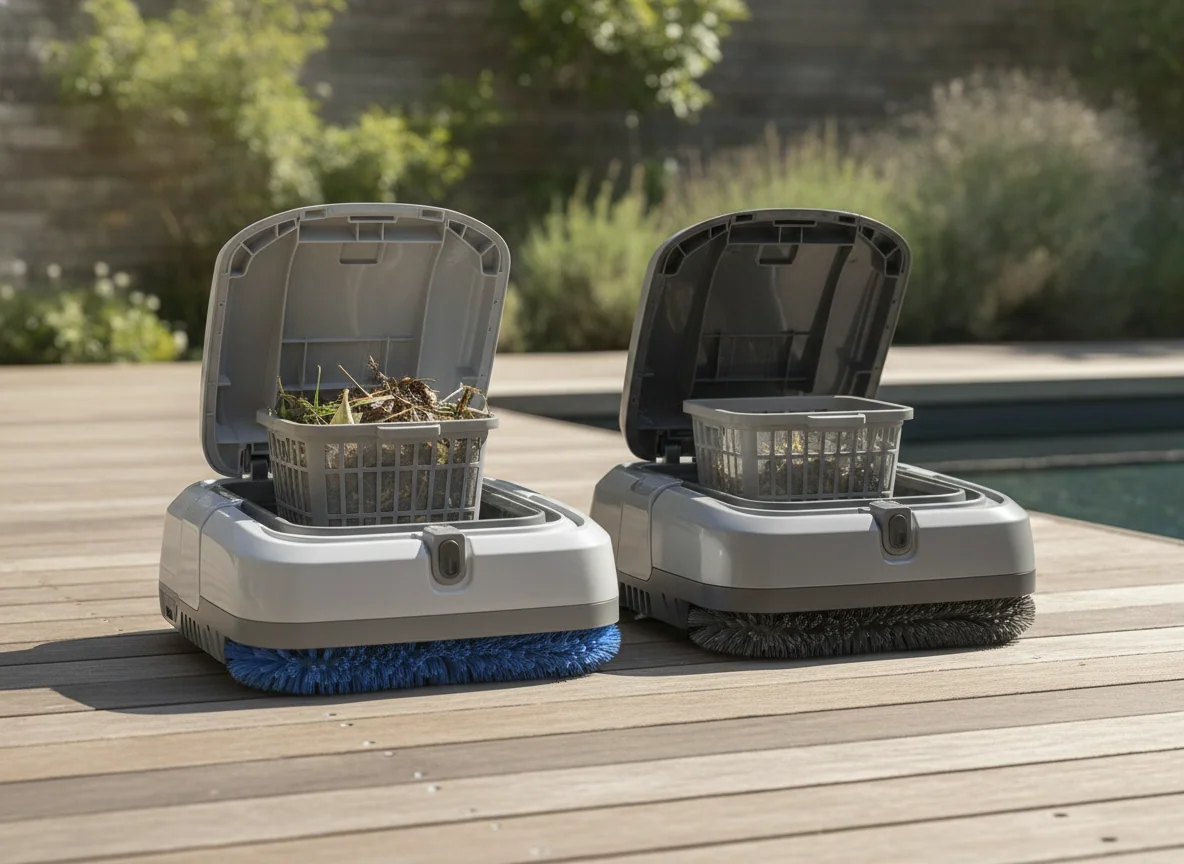
Neither app follows the robot underwater
The S1 app has the broader practical role before launch, including mode selection, an Eco schedule, logs, and firmware updates. The P1 app also selects surface, power, timing, and pool settings. Once either machine is submerged, ordinary wireless communication through water becomes the limiting fact.
The P1 suffers more from that limitation because its listing presents the app as remote control while the hardware uses Bluetooth. It cannot reliably provide a live map, steering, a stuck alert, remaining time, or a completion message from inside the house. The S1 should not be mistaken for an underwater remote either, but its physical mode selection and pre-launch scheduling make the disconnection less damaging to the core job.
Buyers deciding whether any phone-connected feature is worth paying for should read how pool-cleaner apps behave underwater. In this comparison, navigation quality, filter design, and retrieval effort deserve more weight than the app badge.
Cordless freedom ends at the pool edge
Neither robot has a dock, surface-return system, self-emptying basket, or automatic recharge. Every substantial cycle ends with locating the machine, reaching it with a hook, lifting while water drains, rinsing one or two filter layers, drying the charging area, and connecting a cable.
The S1 is the more manageable choice. Comparative measurement put it near 39 pounds during the initial water-filled pull and near 20 pounds after draining. The P1 is approximately 23 pounds before the extra water involved in retrieval, and owner reports consistently identify the first lift over the pool edge as awkward.
That difference should settle the purchase for anyone with limited grip, shoulder strength, balance, or safe access around the coping. Cordless removes a cable from the water; it does not remove physical work. Our corded and cordless comparison explains the larger trade when recharging and retrieval sound worse than managing a floating power lead.
Match the cleaner to the pool, not the feature count
Choose the S1 for a simple pool that still has a few features
The best match is an accessible residential pool with a broad open floor, conventional walls, limited stairs, and recurring deposits of grit, small leaves, or fine sediment. The owner wants to avoid a power cable, can rinse a secondary filter, and accepts brushing the awkward surfaces the robot misses.
Use the return window to check the entire floor, wall grip, waterline contact, slope transitions, and behavior around the widest step. Also confirm charging, app pairing, filter fit, and mode selection before assuming a good first run proves every route.
Choose the P1 when the pool floor keeps looking dusty
The P1 makes sense when fine sand, silt, pollen, dust, or dead algae repeatedly passes through an ordinary basket and the pool otherwise presents an uncomplicated floor. It also suits a buyer willing to separate coarse cleaning from fine polishing rather than expecting both filters to swallow a leaf-heavy mess at once.
Do not make this choice primarily for stairs, shallow shelves, live app supervision, or low-effort handling. The P1 can climb suitable walls and scrub the waterline vigorously, but its filter configuration and pool finish can decide whether that behavior appears consistently.
Walk away from both when geometry is the main problem
Compound stairs, a circular spa, broad tanning ledges, a beach entry, sharp depth breaks, intersecting slopes, raised drains, and crowded fittings can defeat structured movement without defeating the motor. A longer battery merely gives the robot more time to repeat an unproductive route.
Start instead with cleaners selected for steps, tanning ledges, and shallow shelves, or compare the S1 with Aiper’s camera-equipped alternative in our Scuba S1 and Scuba V3 analysis.
The Aiper Scuba S1 is the machine Smart Pool Bots would choose for the broader set of ordinary pool-maintenance jobs, while the Ecovacs Ultramarine P1 remains the sharper but less complete answer to a stubborn fine-debris problem.
Frequently Asked Questions
Which cleaner is better for sand and silt?
The Ultramarine P1 has the stronger fine-debris case, although both machines include removable 3-micron filtration and may require more than one polishing cycle.
Which robot is more likely to clean steps?
The Scuba S1 achieved better stair-and-bench coverage in comparative testing, but neither machine is dependable enough to replace manual step brushing.
Can either app control the cleaner while it is underwater?
No, both apps are primarily pre-launch configuration tools because ordinary Bluetooth and Wi-Fi signals do not provide dependable underwater communication.
Does the Scuba S1 run for 270 minutes in every mode?
No, the 2026 listing assigns up to 270 minutes to Eco maintenance and up to 180 minutes to Auto, Floor, Wall, and Scheduled modes.
Is the Aiper Scuba S1 a suction-side cleaner?
No, the S1 is a self-contained cordless robot with its own motors and filter basket rather than a hose-powered cleaner that relies on the pool pump.
Which machine is easier to lift from the pool?
The Scuba S1 is easier to handle after draining, while the P1 weighs about 23 pounds dry and feels substantially heavier during the initial water-filled lift.
Can either robot remove algae?
Both can capture some loose dead algae with their fine filters, but neither replaces correct water treatment or manual brushing for an active or attached bloom.
Should the fine filter stay installed for leaf cleaning?
No, a coarse-basket pass followed by a separate fine-filter polishing cycle usually preserves flow and capacity better when both large leaves and fine sediment are present.